 Listicle
Affordable Alternatives to Hardwood Flooring: 2026 Guide
Table of Contents
- Why Homeowners Choose Affordable Alternatives to Hardwood Flooring
- Luxury Vinyl Plank vs Laminate: Which Budget Option Wins?
- Top Affordable Flooring Alternatives Compared
- Cost of Installing Laminate Flooring Per Square Foot
- How to Install Peel and Stick Vinyl Planks Yourself
- Durable Flooring for Pets and Kids on a Budget
- Long-Term ROI and Resale Value of Affordable Flooring
- Health Considerations: VOC Emissions and Indoor Air Quality
Affordable Alternatives to Hardwood Flooring: 2026 Guide
Last Updated: June 29, 2026
When homeowners consider flooring renovations, hardwood often comes to mind as the gold standard. The reality? Hardwood flooring carries a steep price tag that puts it out of reach for many budgets. Solid hardwood installation costs between $8-15 per square foot, while quality alternatives deliver comparable aesthetics at half the price. This guide explores the most practical and affordable alternatives to hardwood flooring that don't compromise on durability, style, or longevity.
Modern luxury vinyl planks, engineered hardwood, and laminate options now offer wood-like appearances so convincing that most people can't tell the difference at first glance. Below, we'll compare the top contenders, break down installation costs, and show you which options work best for your specific situation.
Why Homeowners Choose Affordable Alternatives to Hardwood Flooring
The decision to skip solid hardwood isn't about settling for less, it's about making a smarter financial decision. Solid hardwood demands refinishing every 7-10 years at a cost of $1,500-$3,000 for a typical home. It's also susceptible to water damage, scratches from pets and furniture, and temperature fluctuations that cause cupping and warping.
Affordable alternatives eliminate these headaches. Luxury vinyl planks and laminate flooring offer waterproof or water-resistant surfaces, superior scratch resistance, and minimal maintenance. They're also significantly easier to install, which means lower labor costs.
Luxury Vinyl Plank vs Laminate: Which Budget Option Wins?
The choice between luxury vinyl plank (LVP) and laminate depends on your primary concern: water resistance or budget.
LVP is 100% waterproof, making it ideal for kitchens, bathrooms, basements, and homes with pets. Laminate is water-resistant (not waterproof) but typically costs 15-25% less per square foot. For dry rooms like bedrooms and living areas, laminate delivers excellent value.
LVP Durability and Water Resistance
Luxury vinyl planks have transformed the budget flooring market. Modern LVP features rigid core construction, which prevents flexing and ensures stability on uneven subfloors. The wear layer, typically 12-20 mils thick, resists scratches, stains, and dents from heavy furniture and pet claws.
Premium LVP uses embossed-in-register (EIR) texture, which creates realistic wood grain patterns that shift from plank to plank, mimicking authentic hardwood variation. COREtec Luxury Vinyl Plank exemplifies this category, with rigid core construction paired with attached cork underlayment for sound dampening. Its 100% waterproof core means spilled wine, pet accidents, or bathroom moisture won't compromise the material. Click-lock installation makes DIY projects feasible.
Laminate Flooring Benefits and Limitations
Laminate flooring consists of a photographic wood layer bonded to a high-density fiberboard core. This flexibility in design allows laminate to replicate virtually any wood species or grain pattern.
Shaw RevWood demonstrates advanced laminate technology, with H2O Plus technology providing 24-hour surface water protection. Its AC4 wear rating ensures scratch and dent resistance rivaling some LVP options. The limitation: laminate isn't fully waterproof. Prolonged exposure to moisture causes swelling and delamination. Installation also requires a perfectly flat subfloor.
Laminate typically runs $0.50-$1.50 per square foot less than comparable LVP. For budget-conscious homeowners renovating dry rooms, this difference adds up quickly.
Top Affordable Flooring Alternatives Compared
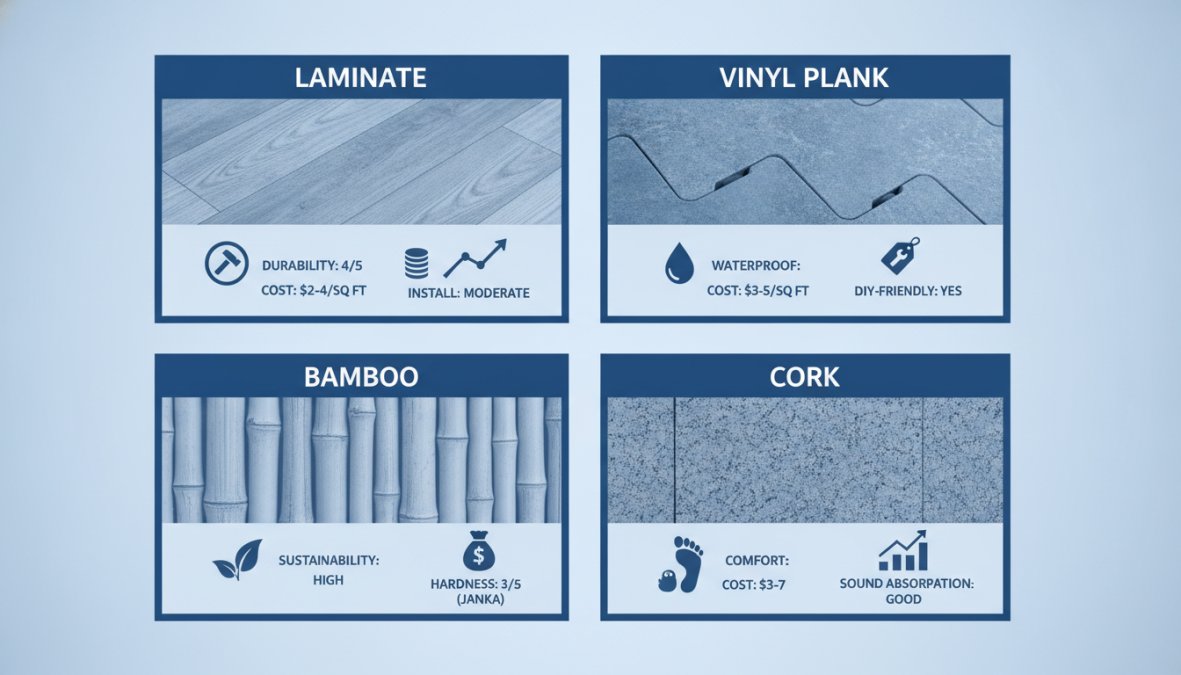
| Flooring Type | Water Resistance | Durability | Installation | Best For |
|---|---|---|---|---|
| Luxury Vinyl Plank | Fully waterproof | Excellent (20+ years) | DIY-friendly click-lock | Kitchens, bathrooms, basements |
| Laminate | Water-resistant surface | Very good (15-20 years) | DIY-friendly click-lock | Bedrooms, living rooms, offices |
| Engineered Hardwood | Moderate (if sealed) | Good (20-30 years) | Professional recommended | Basements, kitchens with proper subfloor |
| Bamboo | Moderate (strand-woven) | Excellent (25+ years) | Professional recommended | Any room (if properly sealed) |
| Cork | Poor (needs sealing) | Moderate (10-15 years) | Professional recommended | Bedrooms, offices, low-traffic areas |
| Wood-Look Tile | Fully waterproof | Excellent (30+ years) | Professional recommended | Kitchens, bathrooms, entryways |
Luxury Vinyl Planks: Waterproof and DIY-Friendly
Luxury vinyl planks dominate the affordable flooring market because they solve the problems homeowners actually face. Mannington Adura Luxury Vinyl offers a practical middle ground, with ScratchResist technology and Microban antimicrobial surface. Available in both plank and tile formats, it adapts to various design preferences.
The DIY installation advantage is significant. Click-lock systems allow planks to snap together without adhesive, and damaged planks can be replaced easily. A homeowner with basic tools can install 200-300 square feet per day. Professional installation adds $1-$3 per square foot but ensures proper subfloor preparation.
One consideration: LVP can feel colder underfoot than hardwood. Adding quality underlayment with thermal properties mitigates this and improves sound dampening.
Laminate Flooring: Budget-Friendly with Realistic Grain Patterns
Quick-Step Laminate has built its reputation on easy installation and consistent quality. The Uniclic installation system allows planks to lock at angles, reducing installation time and enabling DIY projects. Scratch Guard technology provides superior wear resistance.
Laminate delivers authentic wood aesthetics at the lowest price point among quality options. Hand-scraped and distressed finishes appeal to homeowners seeking rustic aesthetics.
Installation requires careful subfloor preparation. Any high spots or moisture must be addressed before laminate goes down. Floating floor systems accommodate minor subfloor irregularities better than glue-down methods.
Engineered Hardwood: A Middle Ground Option
Engineered hardwood consists of a real hardwood veneer bonded to a plywood or high-density fiberboard base. This construction makes it more stable than solid hardwood, particularly in basements or kitchens where moisture fluctuates.
The advantage: engineered options tolerate moisture better and won't cup or warp as easily. The disadvantage: the veneer is thin (2-4mm), meaning it cannot be refinished multiple times. For homeowners who want real wood but need moisture tolerance, engineered hardwood bridges the gap.
Bamboo Flooring: Sustainable and Durable
Bamboo flooring appeals to eco-conscious homeowners seeking durability without the environmental impact of harvested hardwood. Bamboo regenerates in 3-5 years, making it highly renewable.
Strand-woven bamboo, where fibers are compressed under extreme pressure, achieves hardness ratings exceeding most hardwoods. CALI Bamboo offers products with Janka hardness ratings above 1,400 (compared to 1,290 for red oak). The catch: water resistance depends entirely on the finish. Proper sealing and maintenance are non-negotiable.
Cork Flooring: Comfort and Eco-Friendly Appeal
Cork offers comfort, sound dampening, and sustainability. The material is harvested from cork oak bark without harming the tree.
Wicanders Cork Flooring provides natural thermal and acoustic insulation. The cushioned surface feels warm underfoot, a significant advantage for bedrooms and offices. The limitation: cork is prone to dents from heavy furniture and sharp heels. Moisture resistance is poor, making it best suited for low-traffic areas.
Wood-Look Tile and Ceramic: Durability Meets Style
Ceramic and porcelain tiles with wood-look patterns deliver hardwood aesthetics with tile durability. They're fully waterproof, scratch-resistant, and suitable for any room.
Modern wood-look tiles feature realistic grain patterns and hand-scraped textures. Larger plank sizes reduce the visual impact of grout lines. The trade-off: tiles feel colder underfoot, and grout lines require periodic maintenance.
Cost of Installing Laminate Flooring Per Square Foot
Material costs for quality laminate range from $1.50-$4 per square foot. Budget options start around $0.75 per square foot but sacrifice durability. Premium laminate runs $3-$4 per square foot.
Professional installation typically costs $3-$8 per square foot, depending on subfloor preparation needs. DIY installation eliminates labor but requires tools and careful technique.
Total installed cost for quality laminate: $4.50-$12 per square foot. Compare this to solid hardwood at $8-$15 plus installation ($3-$8), bringing hardwood to $11-$23 per square foot installed.
How to Install Peel and Stick Vinyl Planks Yourself
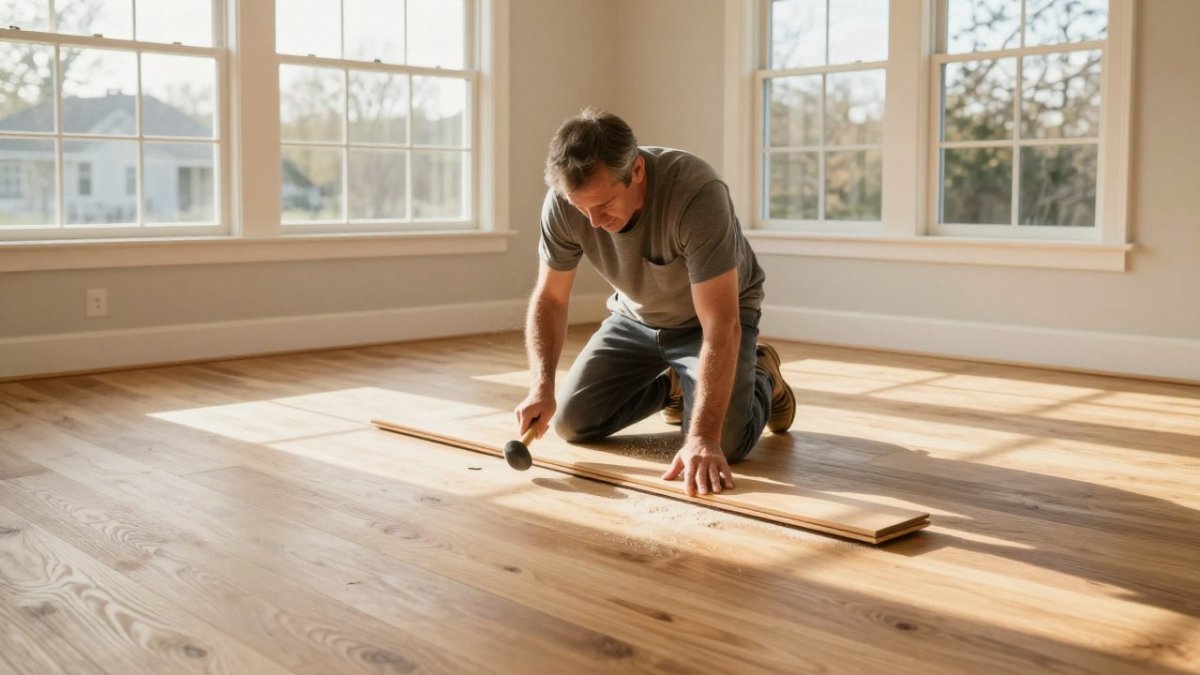
Peel-and-stick vinyl planks represent the easiest DIY flooring option. No special tools or clicking mechanisms, just clean adhesive backing. This method works well for small projects, rentals, or testing a new aesthetic.
Subfloor Preparation and Underlayment
Success depends entirely on subfloor preparation. The surface must be clean, dry, and level.
Remove existing flooring if necessary. For concrete subfloors, seal with a moisture barrier and allow full curing. Any moisture reading above 3% will cause peel-and-stick planks to fail. Sweep, vacuum, and wipe the subfloor with a damp cloth, allowing complete drying before proceeding.
Underlayment is optional but recommended for sound dampening and minor subfloor irregularities.
Step-by-Step Installation Process
Begin in the corner farthest from the main entry. Dry-lay your first row without removing adhesive backing, using spacers (typically 1/4") to maintain consistent gaps from walls. These gaps accommodate natural expansion and contraction.
Once positioned correctly, peel back the adhesive backing in sections and press firmly, working out air bubbles with a rubber roller. Stagger seams between rows, offsetting each row by at least 6 inches.
Continue row by row, maintaining consistent spacing from walls. The final row typically requires cutting planks lengthwise. Allow the adhesive to cure for 24 hours before walking on the floor.
Common Installation Mistakes to Avoid
The most frequent error: insufficient subfloor preparation. Dust, debris, or moisture under planks causes lifting within weeks. Spend time cleaning and sealing the subfloor, this single step prevents 90% of installation problems.
Second mistake: ignoring expansion gaps. Vinyl expands and contracts with temperature changes. Without gaps, planks buckle and separate.
Third error: not staggering seams. Aligned seams create visible lines and weak points.
Durable Flooring for Pets and Kids on a Budget
Families with active children and pets need flooring that withstands abuse while remaining affordable. Scratch resistance and easy cleaning matter most.
Scratch Resistance and Wear Layer Performance
The wear layer determines scratch resistance. Luxury vinyl planks typically feature 12-20 mil wear layers, providing protection comparable to hardwood. Laminate wear layers are measured by AC4 and AC5 ratings, indicating residential and commercial durability respectively.
Strand-woven bamboo offers hardness exceeding most hardwoods. For homes with large dogs or multiple children, look for flooring with 20+ mil wear layers in vinyl or AC5 ratings in laminate.
Pet-Friendly and Easy-to-Clean Options
Luxury vinyl planks rank first for pet-friendly flooring. They're waterproof, scratch-resistant, and easy to clean. Laminate works well for pets in dry environments but fails if accidents aren't cleaned immediately.
Tile and wood-look ceramic excel for pet homes. They're completely waterproof and extremely scratch-resistant. Cork and bamboo are less ideal for pets, scratching more easily and requiring proper sealing.
Long-Term ROI and Resale Value of Affordable Flooring
Many homeowners worry that choosing alternatives to hardwood will hurt resale value. The reality is more nuanced. Quality laminate, vinyl, or tile in good condition often outperforms poorly maintained hardwood at resale.
Real estate agents report that buyers care more about overall condition and aesthetic appeal than the specific flooring material. A beautifully maintained vinyl plank floor beats a scratched, worn hardwood floor every time.
The financial advantage of affordable alternatives becomes clear over 15-20 years. You save on installation, avoid refinishing costs, and replace the floor only if you want a style change. Hardwood requires refinishing every 7-10 years, adding significant long-term costs.
Health Considerations: VOC Emissions and Indoor Air Quality
Volatile organic compounds (VOCs) off-gas from some flooring materials, potentially affecting indoor air quality. Laminate flooring can emit formaldehyde during and after installation. Look for FloorScore or GreenGuard certifications, which verify low VOC emissions.
Modern luxury vinyl planks from reputable manufacturers meet strict emissions standards. Phthalates have been largely eliminated from quality products. Bamboo from suppliers offering low-VOC and formaldehyde-free options provide peace of mind. Natural cork also emits minimal VOCs.
Proper ventilation during and after installation reduces VOC exposure. Open windows, use exhaust fans, and allow 48-72 hours of ventilation before normal occupancy.
Choosing affordable alternatives to hardwood flooring doesn't mean compromising on quality, durability, or aesthetics. Luxury vinyl planks deliver waterproof protection and realistic wood grain at a fraction of hardwood's cost. Laminate provides budget-friendly beauty for dry rooms. Engineered hardwood, bamboo, cork, and tile each solve specific problems that solid hardwood cannot.
Hamptons carpet one floor and Home helps homeowners navigate these choices with expertise grounded in years of serving Suffolk County. Our team understands local climate challenges, moisture concerns, and aesthetic preferences that shape the right choice for your home. Whether you're renovating a kitchen, finishing a basement, or updating your entire home, we guide you toward flooring that delivers durability, beauty, and lasting value without the hardwood price tag.
Frequently Asked Questions
What is the cheapest affordable alternative to hardwood flooring?
Laminate flooring is typically the most budget-friendly option, costing $0.50-$2 per square foot before installation. Basic peel-and-stick vinyl planks and entry-level luxury vinyl plank (LVP) options are also cost-effective. While laminate offers excellent value, consider durability and moisture resistance for your specific room before choosing based on price alone.
How much does it cost to install laminate flooring per square foot?
Professional laminate installation typically ranges from $3-$8 per square foot, depending on subfloor condition, labor rates in your area, and whether underlayment is needed. DIY installation can eliminate labor costs entirely. Material costs range from $0.50-$3 per square foot, making laminate one of the most affordable alternatives to hardwood flooring for budget-conscious homeowners.
Is luxury vinyl plank better than laminate for moisture-prone areas?
Yes, luxury vinyl planks (LVP) offer superior moisture resistance and are 100% waterproof, making them ideal for kitchens, bathrooms, and basements. Laminate is water-resistant on the surface but can swell if exposed to prolonged moisture. LVP's wear layer and rigid core construction also provide better durability in high-traffic areas, though both are affordable alternatives to hardwood.
Can I install peel-and-stick vinyl planks myself without professional help?
Yes, peel-and-stick vinyl planks are among the most DIY-friendly flooring options. They require minimal tools and no adhesive or click-lock system. Proper subfloor preparation, ensuring it's clean, dry, and level, is critical for success. Most homeowners can complete a room in a day, making this an excellent budget-friendly alternative if you're willing to invest time in preparation.
What affordable flooring is best for homes with pets and children?
Luxury vinyl plank (LVP) and laminate with high wear layers offer excellent scratch resistance for active households. LVP is fully waterproof, making it ideal for accidents, while engineered hardwood and bamboo provide durability without hardwood's maintenance demands. Cork offers cushioning comfort but dents easily. Choose based on your pet's size, traffic patterns, and your tolerance for maintenance.
This article was written using GrandRanker