 Listicle
Benefits of Hardwood Floors in Suffolk County Homes
Table of Contents
- Why Hardwood Floors Suit Suffolk County Properties
- Hardwood Flooring Pros and Cons for Coastal Homes
- Best Hardwood Flooring for High-Traffic Areas
- Hardwood Flooring Maintenance in a Sandy, Humid Climate
- Hardwood Floors and Home Resale Value
- Installation Planning, Local Costs, and Avoiding Surprises
- Conclusion: Choosing the Right Hardwood for Your Property
- Frequently Asked Questions
Last Updated: October 12, 2026
Why Hardwood Floors Suit Suffolk County Properties
Hardwood floors are a natural fit for many Suffolk County homes because they handle daily wear well, clean up easily, and add lasting value in a market where buyers notice flooring first.
The case for wood starts with durability. Wood flooring is available in different styles, and it is described as a renewable material that can serve a home for decades (PC Wood Floors on reasons to install wood floors).
Here is what most guides get wrong: they treat every hardwood floor as the same product. In practice, the species, the construction, and the finish decide whether a floor thrives in a coastal home or fails within a few seasons.
Below, we break down the pros and cons, the best choices for high-traffic rooms, and how to plan installation with realistic expectations.
Hardwood Flooring Pros and Cons for Coastal Homes
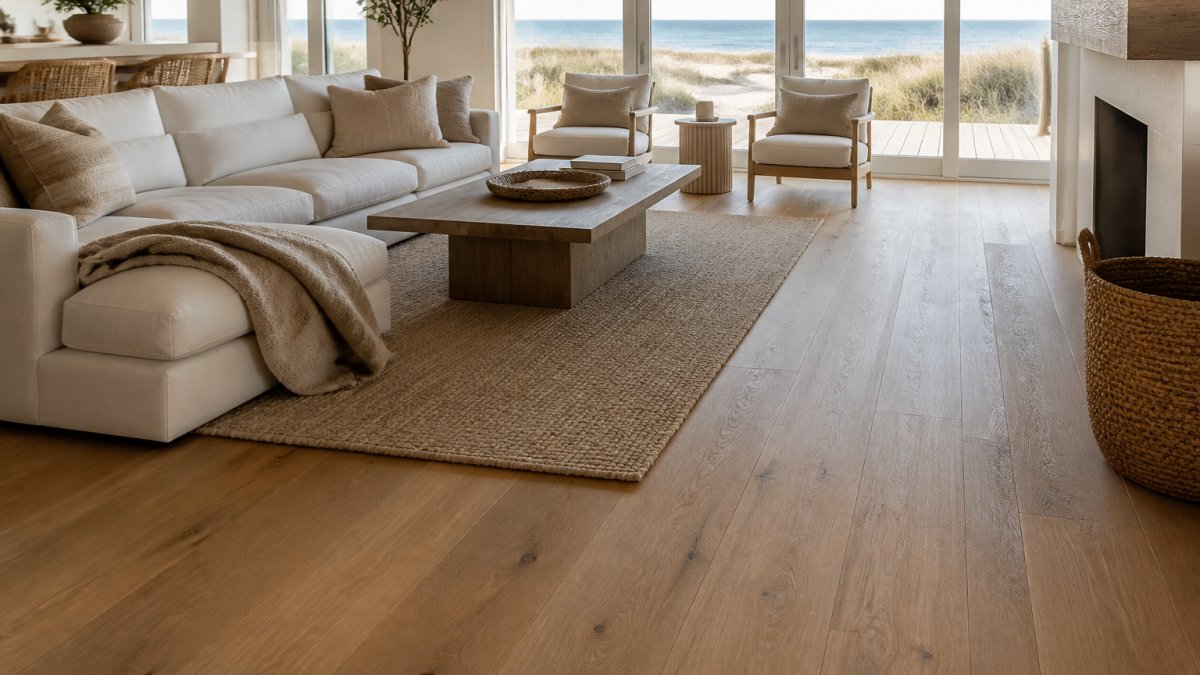
Weighing hardwood flooring pros and cons for a coastal property comes down to three factors: moisture behavior, maintenance, and long-term value. Wood expands and contracts as humidity shifts, so the construction method matters more near the shore than it does inland.
Pros:
- Long service life, often spanning multiple owners
- Simple cleaning with a damp mop or vacuum
- Warmer underfoot than tile or stone
- Style flexibility across wood species and finishes
- Strong buyer appeal at resale
Cons:
- Solid wood can cup or warp when indoor humidity swings
- Sand and grit act like sandpaper on a finish
- Refinishing is periodic, not one-and-done
- Water leaks and pet accidents need fast attention
A common mistake is choosing a floor by color alone. In practice, the finish and the core construction determine how well the floor tolerates a beach house.
Solid vs. Engineered Hardwood: Which Handles Humidity Better
Engineered hardwood generally handles humidity better than solid hardwood because its plywood core resists the swelling and shrinking that solid planks experience. Solid hardwood is milled from a single piece of wood, so it moves more as moisture levels change. Engineered wood bonds a real wood surface to a stable core, which improves dimensional stability in rooms with fluctuating humidity.
For Suffolk County properties near the water, that stability is the deciding factor in many rooms. Solid hardwood still has a place, particularly on upper floors with controlled humidity, and it can be refinished more times over its life. Engineered hardwood offers fewer refinishing cycles but better resistance to cupping and warping.
| Factor | Solid Hardwood | Engineered Hardwood |
|---|---|---|
| Moisture stability | Lower; moves with humidity | Higher; stable core resists movement |
| Refinishing cycles | More over its lifespan | Fewer, limited by wear layer |
| Best rooms | Bedrooms, upper floors | Basements, kitchens, coastal rooms |
| Subfloor options | Plywood or wood subfloor | Wood or concrete subfloor |
Best Hardwood Flooring for High-Traffic Areas
The best hardwood flooring for high-traffic areas combines a harder wood species with a durable finish. Oak and hickory rank among the tougher domestic species, while softer woods like pine dent more readily under constant foot traffic. The finish protects the wood surface, so a factory-applied aluminum oxide finish typically outlasts a thin site-applied coat.
Think about where the traffic actually comes from. Entryways, hallways, and kitchen paths take the brunt of everyday wear and tear, while bedrooms see far less. If you have pets, scratches show more on glossy finishes than on matte or oil-rubbed surfaces.
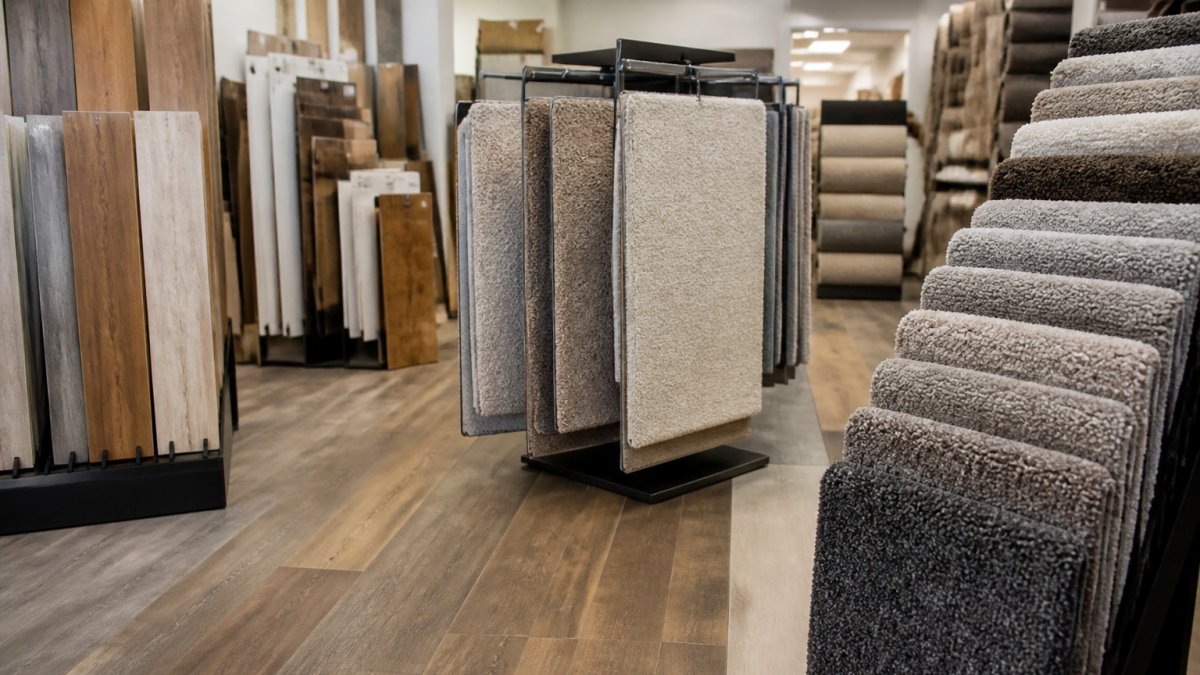
For allergy sufferers, hardwood offers an advantage over wall-to-wall carpet: the surface holds less dust and dander, and it wipes clean. That combination of durability and easy cleaning is why wood remains a leading flooring option for busy households.
Hardwood Flooring Maintenance in a Sandy, Humid Climate
Hardwood flooring maintenance in a sandy, humid climate starts with two habits: keep grit off the surface and keep indoor humidity steady. Sand tracked indoors acts like abrasive paper underfoot, grinding finish away with every step. Humidity control prevents the seasonal swelling that leads to cupping.
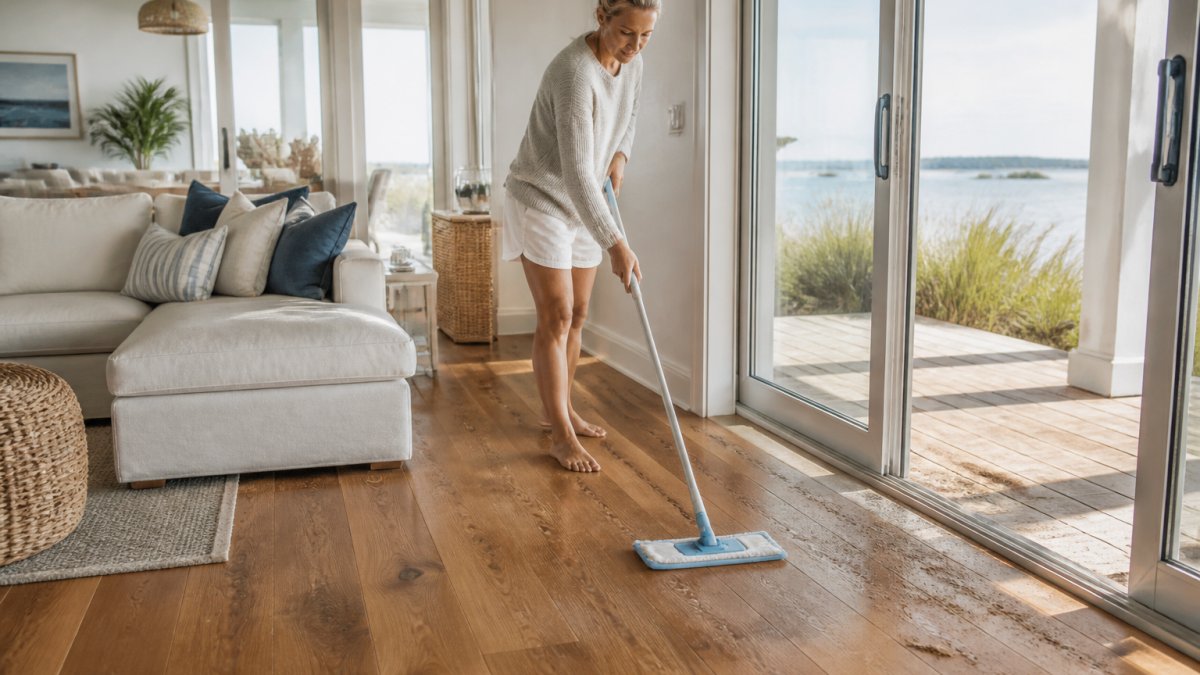
A practical routine looks like this:
- Place mats at every exterior door and shake them out weekly
- Sweep or vacuum with a soft brush head every few days
- Wipe spills promptly; standing water is the enemy
- Run a dehumidifier or air conditioning to hold humidity in a moderate range
- Use felt pads under furniture legs to prevent scratches
Seasonal climate changes matter here more than in inland markets. Homes that sit empty through humid months often show the worst movement, so arrange ventilation or dehumidification even when no one is staying there.
Hardwood Floors and Home Resale Value
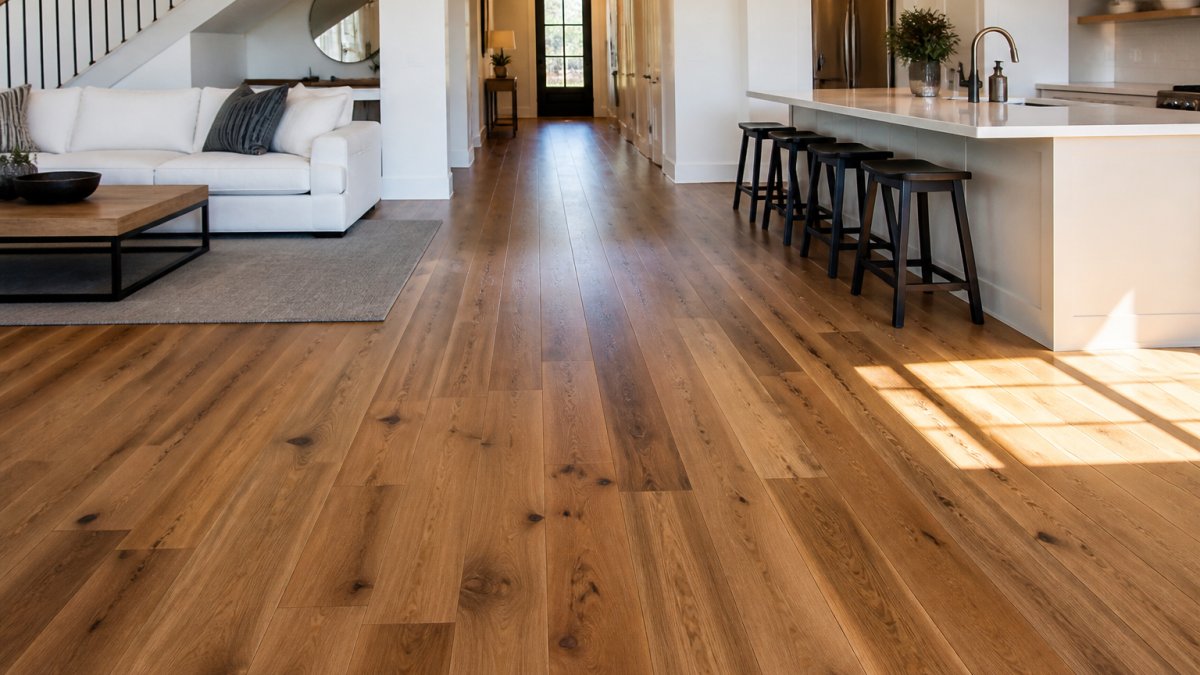
Hardwood floors and home resale value connect because buyers read wood as a sign of a well-kept home. Real estate agents frequently note that homes with real wood floors often sell faster and command higher final purchase prices (Traditional Hardwood Floors on the financial power of installation).
The strongest returns often come from refinishing rather than full replacement. One real estate resource reports roughly 118% cost recovery for new hardwood and about 147% for refinishing existing hardwood (Clever Real Estate on hardwood and home value).
What the national numbers miss is why wood floors carry a particular premium in this market. Three local forces drive the return:
- Older housing stock. A large share of homes here were built before 1970, and many still have original strip oak hidden under carpet or vinyl. Buyers touring these homes expect to see that wood restored, not covered. A refinished original floor reads as character; a new laminate reads as a cost-cutting substitute.
- Buyer profile. A meaningful slice of purchases are second homes and move-up trades, and those buyers tend to weight finish quality and authenticity more heavily than first-time buyers chasing the lowest price per square foot. Real wood signals a home that has been maintained rather than flipped.
- Comparable competition. In neighborhoods where most listings already show wood, carpet or worn vinyl becomes a visible deduction in a buyer's mind. In neighborhoods where wood is rare, it becomes a differentiator. Either way, the floor affects how a listing is positioned against its comps.
The return also depends on execution. A poorly installed floor with visible gaps, uneven seams, or a finish that clashes with the home's era can hurt a listing rather than help it. The resale premium attaches to floors that look intentional and well done, which is why installation quality matters as much as the material choice.
One caution on timing: refinishing a floor right before listing means the finish may still be curing during showings, and the smell can linger. Most sellers get better results refinishing a few weeks ahead of listing so the floor has settled and the home shows clean.
Installation Planning, Local Costs, and Avoiding Surprises
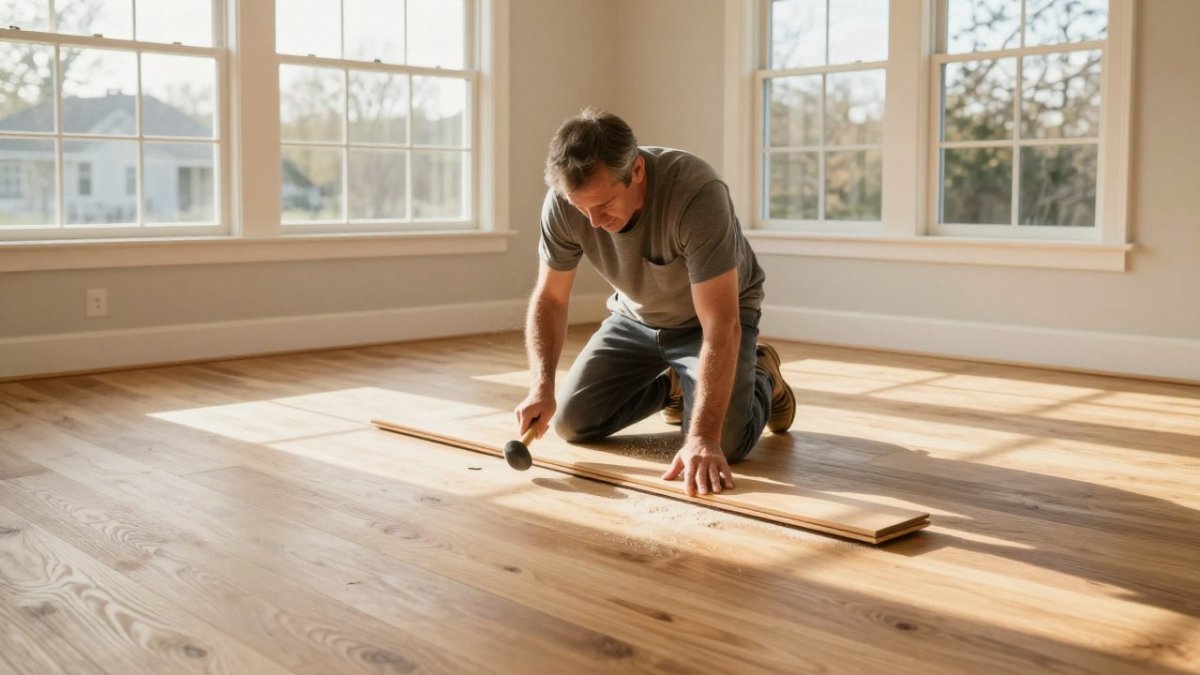
Installation planning determines whether a project runs smoothly or turns into a weeks-long disruption. The subfloor is where most surprises hide.
On cost, published industry guidance puts hardwood installation in a broad range of about $6 to $25 per square foot including materials and labor (Hallmark Floors installation cost guide).
What drives cost here:
- Subfloor condition. Older homes often have out-of-level joists, squeaky boards, or a previous floor laid over the original. Leveling, sistering joists, or removing a second layer adds labor before any wood goes down.
- Slab and basement rooms. Concrete subfloors need moisture testing and often a vapor barrier or an engineered product rated for slab installation. Skipping this step is the most common cause of a floor that cups within a year.
- Historic and older-home constraints. Homes with original trim, narrow doorways, or plaster walls can require custom transitions and careful removal to avoid damaging surrounding finishes.
- Access and staging. Tight driveways, multiple stories, and long carries add time. So does moving furniture and protecting finished areas during sanding.
- Species and grade. A wide-plank exotic or a high-grade domestic species costs more per square foot than a standard strip oak, and wider planks show subfloor imperfections more, which can require more prep.
Timeline expectations. A typical single-room installation runs a few days once materials are on site, while a whole-home project with subfloor work and finishing can stretch across one to several weeks. Refinishing alone is usually faster than a full tear-out and install.
A simple planning checklist:
- Measure each room and note doorways and transitions
- Ask for subfloor inspection and moisture testing in writing
- Confirm whether old flooring removal and disposal are included
- Request a written scope that lists every line item
- Agree on a schedule that accounts for your family's routine
- Ask how dust will be controlled during sanding
- Confirm who moves furniture and appliances, and who re-installs them
- Ask what happens if subfloor repairs are discovered mid-project
Questions worth asking every contractor:
- Will you test the subfloor for moisture, and will I get the results in writing?
- Is the price fixed, or is there a change-order process for hidden conditions?
- What is the acclimation period for the wood before installation?
- Who handles permits if any are required?
- What does the workmanship warranty cover, and for how long?
Solid versus engineered hardwood also affects planning for local properties. Concrete subfloors and radiant heating systems call for engineered wood, which handles the heat and the slab moisture far better than solid planks.
Conclusion: Choosing the Right Hardwood for Your Property
The right hardwood for a Suffolk County home balances moisture resistance, traffic tolerance, and long-term value, and no single floor wins on every count. Match engineered wood to damp or slab-based rooms, choose a harder species for busy hallways, and budget for subfloor work before you fall in love with a sample.
We serve homeowners across Suffolk County with hardwood flooring guidance, installation, and refinishing. We help you compare solid and engineered options, plan around your family's schedule, and understand what your subfloor needs before work begins. Get started with us and choose a floor built for coastal living.
Frequently Asked Questions
Do hardwood floors add value to a home?
Hardwood floors can support resale value, though the exact return varies by market and condition. One real estate resource reports roughly 118% cost recovery for new hardwood and 147% for refinishing existing hardwood, meaning refinishing often recoups more than it costs. In Suffolk County, where buyers frequently compare homes with wall-to-wall carpet, hardwood signals less deferred maintenance. The gain comes from buyer perception as much as the floor itself, so condition and installation quality matter.
What are three disadvantages of hardwood flooring?
First, hardwood reacts to moisture. In coastal Suffolk County homes, humidity swings can cause warping or cupping if the subfloor and indoor climate are not managed. Second, it scratches. Sand tracked in from the beach and pet claws leave marks that show more on glossy finishes. Third, it costs more upfront than carpet or luxury vinyl plank. The trade-off is lifespan: a solid hardwood floor can be refinished multiple times, while most alternative floors are replaced rather than restored.
Are hardwood floors easy to maintain?
Routine hardwood flooring maintenance is simple: sweep or vacuum grit, then damp-mop with a manufacturer-approved cleaner. The real work is prevention. Place mats at every entry to catch sand, keep indoor humidity steady, and felt-pad furniture legs. Avoid wet mopping and steam cleaners, which force moisture into seams. In beachfront properties, a quick dry sweep after windy days prevents abrasive sand from grinding into the finish underfoot.
How long do hardwood floors last?
Solid hardwood can last for decades and be refinished multiple times as it wears. Engineered hardwood has a shorter refinishing life because its top wear layer is thinner, but it handles humidity swings with more dimensional stability, which matters in coastal homes. Actual lifespan depends on wood species, finish quality, traffic, and how well moisture is controlled. A flooring professional can assess your subfloor and recommend an option matched to your property.