 Listicle
Coastal Flooring Trends 2026: Warm Woods & Matte Finishes
Table of Contents
- The Shift From Cool Gray to Warm Natural Wood
- 2026 Flooring Trends Redefining Coastal Interiors
- Best Flooring for Coastal Homes: Material & Performance
- Waterproof Flooring for Coastal Homes: Moisture & Sand
- Flooring Colors for 2026: Warm Neutrals and Sea-Inspired Tones
- Room-by-Room Flooring Choices for Coastal Living
- Installation, Maintenance, and Long-Term Care
- Frequently Asked Questions
Last Updated: October 10, 2026
The Shift From Cool Gray to Warm Natural Wood
Coastal flooring trends in 2026 shift decisively from cool grays to warm, natural wood tones that feel grounded and connected to nature rather than stark and minimalist.
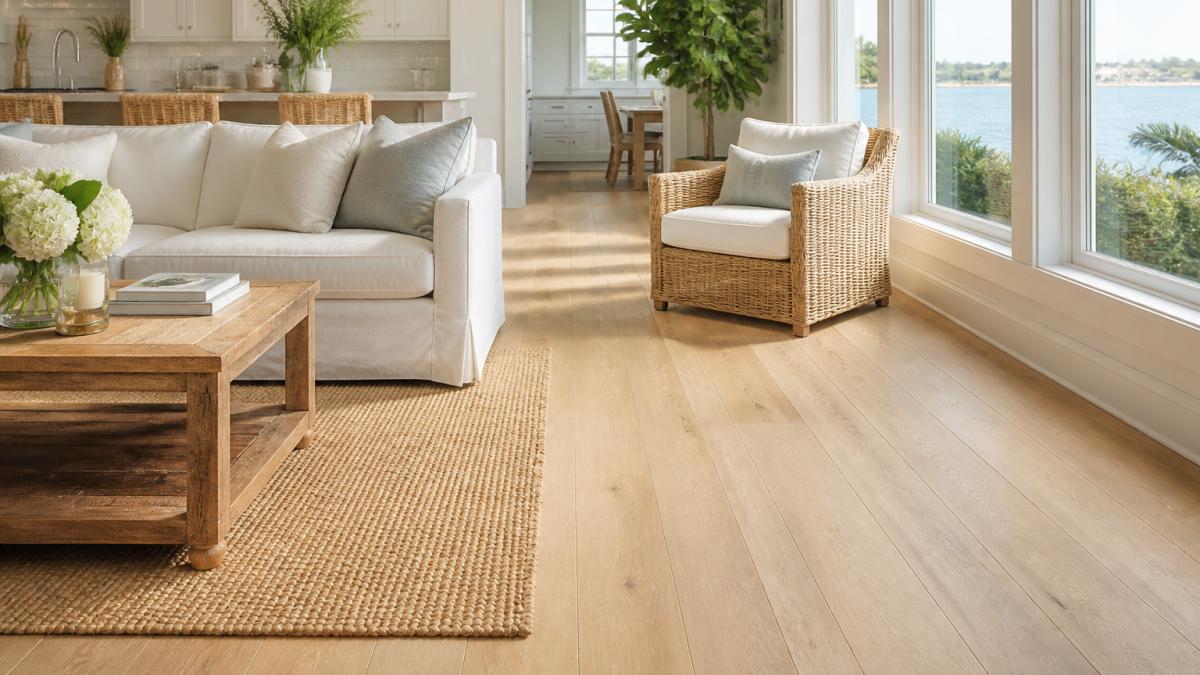
According to Beach House Flooring's 2026 trend analysis, natural midtone wood looks such as birch and white oak with subtle graining are now the preferred choice for coastal homes. The warmth in these woods creates an inviting foundation that pairs beautifully with soft furnishings and natural light.
2026 Flooring Trends Redefining Coastal Interiors
Coastal flooring trends encompass finish, grain visibility, plank width, and tactile quality, elements that work together to create calm, grounded spaces.
Wide Planks and Matte Finishes
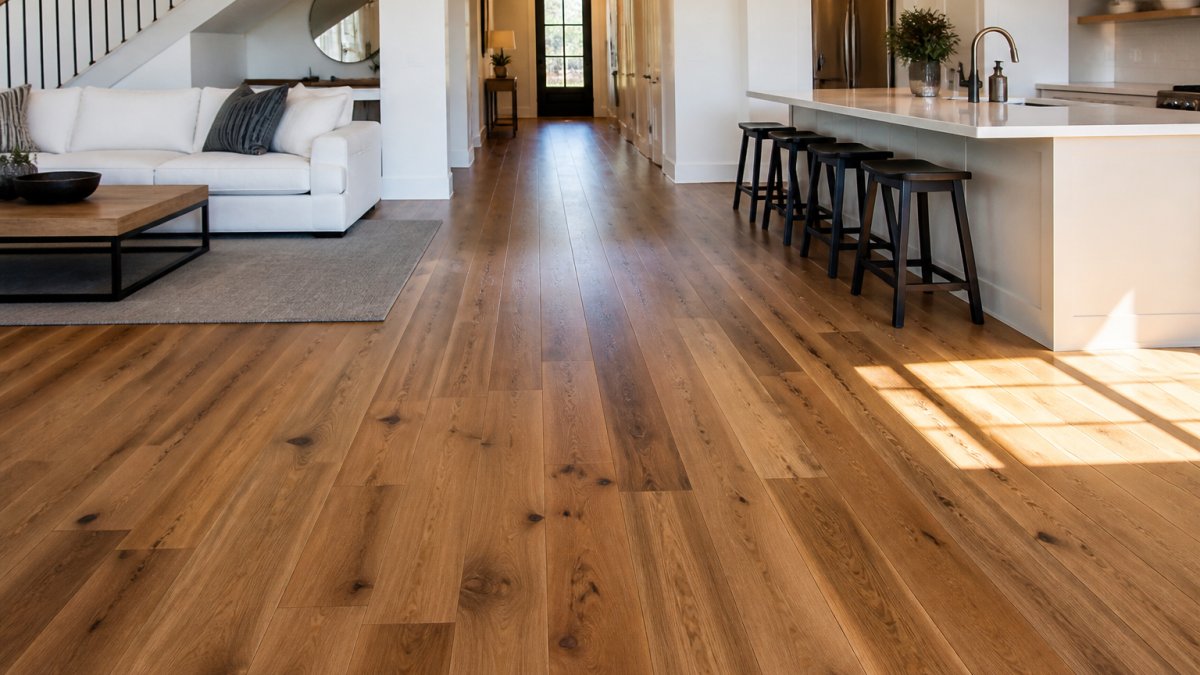
Wide-plank flooring (5-9 inches) creates visual continuity, while matte finishes eliminate glare and showcase natural grain.
Matte finishes perform better in coastal environments, hiding sand and salt residue while requiring less frequent cleaning than glossy surfaces.
Natural Grain and Subtle Texture
Modern coastal flooring celebrates visible grain as evidence of authenticity, allowing natural variations to show without artificial distressing.
Best Flooring for Coastal Homes: Material & Performance
Coastal flooring must balance aesthetics with performance against salt air, moisture, sand, and high foot traffic.
Solid Hardwood: White Oak and Birch
White oak and birch are the top material choices for warm, natural coastal flooring. White oak (1200 Janka) offers visible grain and warm honey tones; birch (1260 Janka) provides a lighter grain with similar warmth.
Solid hardwood can be refinished multiple times over 25-30 years but expands and contracts with humidity, risking cupping and warping in coastal climates. Requires humidity monitoring and moisture barriers.
Engineered Hardwood: Stability with Real Wood
Engineered wood has a real hardwood veneer bonded to a plywood core, reducing cupping and warping risk compared to solid hardwood.
Engineered white oak and birch maintain solid wood aesthetics with better moisture performance. Limited refinishing (1-2 times) reduces lifespan to 15-25 years.
Luxury Vinyl Plank (LVP): 100% Waterproof Protection
Modern wood-look LVP replicates white oak or birch grain convincingly and is 100% waterproof, making it ideal for entryways, kitchens, and bathrooms.
LVP resists scratches and stains with minimal maintenance. Trade-offs: no patina development, 10-20 year lifespan, non-refinishable, and slightly softer underfoot feel than wood.
Tile and Stone: Maximum Durability
Porcelain tile resists salt air, moisture, and sand completely, lasts 25+ years, and requires minimal maintenance.
Tile's aesthetic trade-offs include cooler feel, noise, and higher installation costs. Best reserved for kitchens, bathrooms, and entryways.
Comparison Summary
| Material | Janka Hardness | Waterproof | Lifespan | Refinish Potential | Installation Cost | Maintenance Burden | Best For |
|---|---|---|---|---|---|---|---|
| Solid Hardwood (White Oak) | 1200 | No | 25-30 years | Multiple times | $8-15/sq ft | High (humidity monitoring) | Living rooms, bedrooms if subfloor is well-protected |
| Engineered Hardwood | 1200 (veneer) | Moderate | 15-25 years | 1-2 times | $5-10/sq ft | Moderate | Transitional spaces, moderate-moisture areas |
| Luxury Vinyl Plank | N/A (plastic) | Yes | 10-20 years | None | $3-7/sq ft | Low | Entryways, kitchens, bathrooms, high-traffic zones |
| Porcelain Tile | N/A (ceramic) | Yes | 25+ years | N/A | $8-15/sq ft | Low | Kitchens, bathrooms, entryways |
Waterproof Flooring for Coastal Homes: Moisture & Sand
Coastal environments present unique challenges that go beyond occasional water spills. Salt air, persistent humidity, sand abrasion, UV exposure, and storm surge create conditions that degrade flooring faster than inland homes experience. Understanding how these factors affect different materials is essential for choosing flooring that will perform reliably.
Salt Air and Oxidation
Salt spray deposits microscopic crystals that accelerate oxidation, causing traditional finishes on solid hardwood to break down faster than in inland homes.
Engineered hardwood with factory finishes resists salt air better than site-applied finishes. LVP and tile are unaffected by salt air.
Humidity Fluctuations and Wood Movement
Coastal humidity causes wood to expand and contract, creating gaps or cupping in solid hardwood.
Engineered hardwood moves less than solid wood; LVP and tile are unaffected by humidity.
Solid hardwood requires moisture barriers, 7-14 day acclimation, and year-round humidity control (35-55% RH) to prevent failure in coastal homes.
Sand Abrasion and Tracked-In Debris
Sand tracked indoors scratches finishes; salt crystals mixed with sand create an aggressive abrasive paste when moistened.
LVP and tile resist sand abrasion; hardwood requires daily sweeping and prompt cleanup. Entry mats and transition zones with waterproof flooring protect wood floors.
Storm Surge and Flood Risk
Solid hardwood is vulnerable to flood damage; engineered hardwood offers some protection but can fail if water seeps into seams.
LVP and tile are flood-resilient and can be submerged without permanent damage. In flood-prone zones, waterproof flooring on ground floors is practical.
UV Exposure and Color Fading
UV rays fade wood color unevenly.
Factory-finished engineered hardwood resists fading better than site-finished solid wood. UV-blocking window treatments help protect all flooring.
Maintenance and Protective Measures
Best practices: install waterproof flooring in entryways; use moisture barriers beneath all flooring; maintain 35-55% humidity; sweep daily; damp-mop only; clean spills immediately; inspect seasonally; refinish solid hardwood periodically.
For waterproof options, maintenance is simpler: damp mopping and occasional deep cleaning with pH-neutral cleaners keep the surface fresh. The key is using minimal water and ensuring thorough drying to prevent moisture from accumulating at seams or edges.
Flooring Colors for 2026: Warm Neutrals and Sea-Inspired Tones
The coastal interior design trends for flooring in 2026 embrace a specific palette: warm neutrals anchored by natural wood, with accent tones inspired by the sea and landscape.
Soft Taupe, Sea-Foam Green, and Forest Tones
While flooring itself remains in the warm wood family, accent materials and complementary surfaces introduce softer coastal tones. Soft taupe works beautifully with warm wood, creating a cohesive, soothing environment. Sea-foam green and deep forest tones bring the natural landscape indoors without overwhelming the space. These colors work best in smaller doses: area rugs, built-in cabinetry, or accent walls rather than as primary flooring choices.
Warm Charcoal and Midtone Woods
Warm charcoal is emerging as a sophisticated alternative to cool gray for coastal homes. It provides depth and contrast without the coldness of traditional charcoal. Midtone woods, those falling between light blonde and rich chocolate, offer versatility and pair well with both light and darker furnishings.
The key distinction in 2026 is that all these colors carry warmth. Cool undertones are being replaced by golden, honey, amber, and warm gray tones throughout the coastal palette.
Room-by-Room Flooring Choices for Coastal Living
Different spaces in a coastal home have different demands. A thoughtful approach considers both aesthetics and function for each room.
Living Rooms and Bedrooms
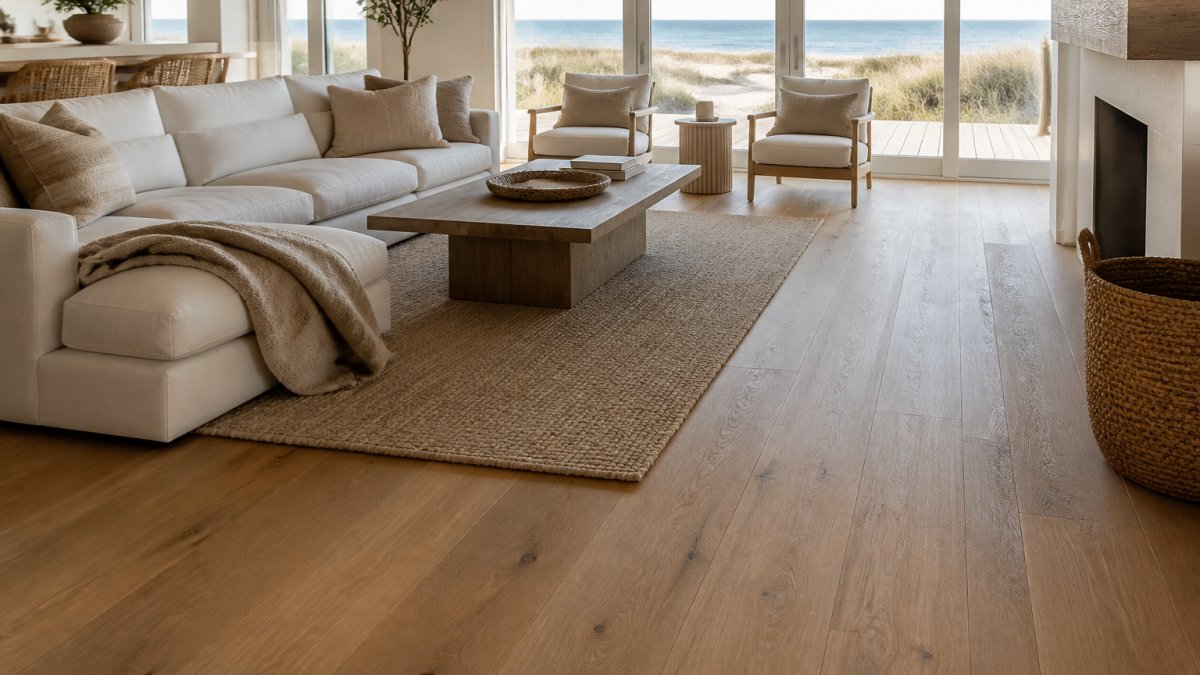
Living rooms and bedrooms are where warm wood flooring truly shines. These are spaces meant for relaxation and gathering, where the aesthetic of the flooring matters as much as its durability. Solid white oak or engineered birch in a matte finish creates the foundation for calm, inviting spaces. Wide planks and visible grain reinforce the natural, grounded feeling that defines 2026 coastal design.
Bedrooms benefit especially from the warmth and softness of natural wood. The color and texture create a cocoon-like environment that feels restorative. Area rugs add additional softness and can introduce the sea-inspired accent colors mentioned above.
Kitchens and Entryways
Kitchens and entryways demand more practical solutions. These high-traffic, high-moisture areas benefit from waterproof flooring for coastal homes. Waterproof engineered wood or luxury vinyl plank in warm wood tones can maintain visual continuity with living areas while providing superior protection.
Entryways especially should prioritize easy cleaning and moisture resistance. A waterproof option allows you to wipe away sand and salt spray without worry. Many coastal homeowners use a transition zone: warm wood in the main living space, waterproof alternatives in the entry, kitchen, and bathrooms.
Installation, Maintenance, and Long-Term Care
The durability of coastal flooring depends as much on proper installation and maintenance as on material choice. Installation quality directly affects how well flooring performs in coastal conditions.
Professional installation ensures proper subfloor preparation, moisture barriers, and acclimation to the coastal environment. Rushed or improper installation can lead to cupping, warping, or gaps, especially in homes exposed to salt air and humidity fluctuations.
Maintenance in coastal homes should focus on preventing moisture accumulation. Regular sweeping removes sand and salt crystals that can scratch surfaces. Prompt cleanup of spills prevents water from seeping into seams. Seasonal humidity control helps stabilize wood flooring and prevents movement.
For waterproof options, maintenance is simpler: damp mopping and occasional deep cleaning keep the surface fresh. The key is using minimal water and ensuring thorough drying.
Coastal flooring in 2026 reflects a shift toward warmth, authenticity, and durable beauty. Whether you're choosing warm white oak for your living room or waterproof engineered wood for your kitchen, the best decision starts with understanding both your aesthetic preferences and your home's specific coastal demands. Hamptons carpet one floor and Home serves all of Suffolk County with flooring solutions designed for coastal living. We can help you select materials that balance the natural warmth and texture you're seeking with the moisture resistance and durability your coastal property requires. Visit us to explore samples and discuss your specific installation needs.
| Room Type | Best Material | Finish | Plank Width | Key Benefit |
|---|---|---|---|---|
| Living Rooms & Bedrooms | Solid or engineered white oak / birch | Matte | 5-9 inches | Warmth, natural grain, aesthetic appeal |
| Kitchens | Waterproof LVP or engineered wood | Matte | 5-9 inches | Moisture resistance, easy cleaning |
| Entryways | Waterproof LVP or engineered wood | Matte | 5-9 inches | Salt/sand tolerance, durability |
| Bathrooms | Waterproof LVP | Matte | 5-9 inches | 100% waterproof protection |
Frequently Asked Questions
What are the main coastal flooring trends for 2026?
The biggest shift in 2026 is moving away from cool grays and whitewashed woods toward warm natural wood tones like white oak and birch with subtle grain. Wide planks and matte finishes dominate the trend, creating a calm, organic look. Coastal palettes now emphasize warm neutrals, sea-foam greens, forest tones, and warm charcoals instead of stark minimalism. These choices reflect a design philosophy that prioritizes warmth, natural texture, and restrained styling over the cooler, heavily processed looks of previous years.
Is waterproof flooring necessary for coastal homes?
Yes, waterproof or water-resistant flooring is essential for coastal properties. Salt air, moisture, humidity, and sand tracked indoors all pose durability challenges. Look for flooring with strong moisture resistance, sealed finishes, and materials proven to withstand high humidity and salt exposure. Wide-plank wood-look options with matte finishes offer both the 2026 aesthetic and practical protection. Ask your flooring installer about climate-specific recommendations for your specific location and household traffic patterns.
Which wood species work best for coastal interior flooring?
White oak and birch are the recommended choices for 2026 coastal interiors. Both offer warm, natural midtone colors with subtle graining that align with current trends. White oak is particularly durable and naturally resists moisture and salt air better than softer woods. Birch provides a lighter, warmer aesthetic while still offering solid performance. Both species work well in matte or low-sheen finishes and pair beautifully with organic textures and warm neutral palettes typical of coastal design.
What flooring colors complement a coastal interior in 2026?
Warm neutrals and sea-inspired tones dominate 2026 coastal palettes. Soft taupe, sea-foam green, deep forest tones, and warm charcoal create calm, restful interiors. Natural wood finishes in warm midtones replace the cooler grays and whitewashed looks of the past. These colors work best with matte finishes and wide planks that emphasize natural texture. Pair flooring colors with soft furnishings, woven materials, and organic textures to complete the warm, grounded coastal aesthetic.