 Listicle
Best Area Rugs for Beach House Living Rooms
Table of Contents
- What to Look for in a Beach House Living Room Rug
- Top Area Rugs for Beach House Living Rooms: Comparison Table
- Durable Coastal Rugs for High Traffic: Top Picks
- Jute vs Synthetic Rugs for Beach Homes
- How to Clean Sand from Area Rugs
- Rug Pads and Acoustic Benefits: What Competitors Miss
- Budget-Friendly and Eco-Friendly Coastal Rug Options
- Conclusion
- Frequently Asked Questions
Last Updated: September 10, 2026
What to Look for in a Beach House Living Room Rug
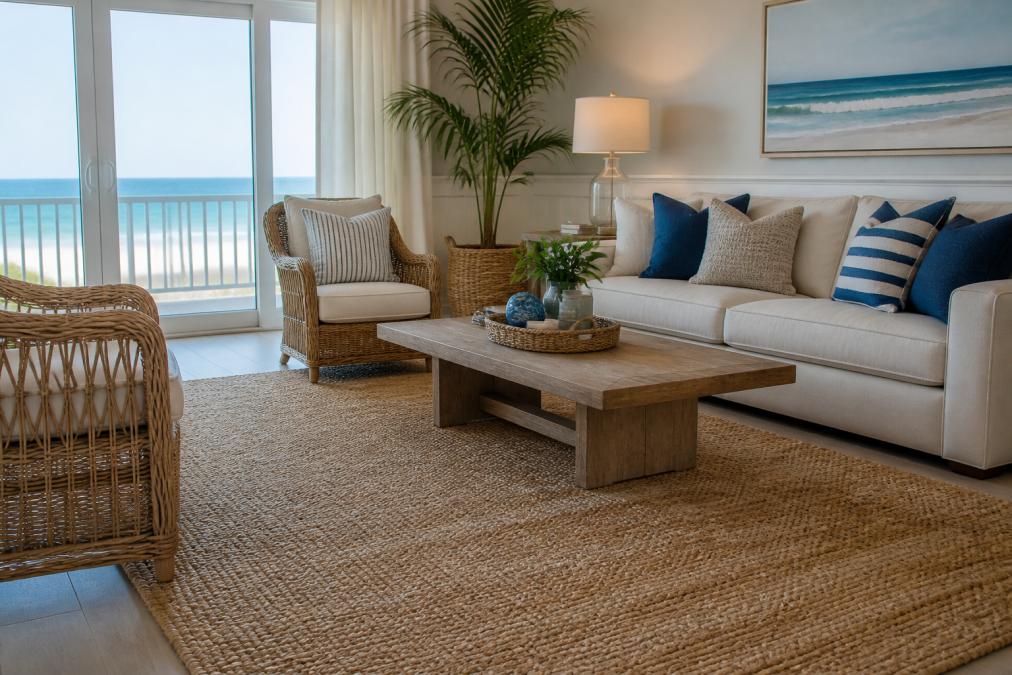
The best area rugs for beach house living rooms balance three things at once: material performance in sand and humidity, correct sizing for high-traffic layouts, and a palette that reads coastal without looking themed. We see the same mistake repeatedly in coastal homes: buyers prioritize color and pattern, then watch a beautiful rug mat down or stain within a single summer season.
A coastal living room rug is a floor covering engineered or selected for sandy, humid, salt-air conditions, which means fiber choice and pile height matter more than the design on top. According to Atlanta Designer Rugs' 2026 coastal rug guide, market offerings for coastal rugs start at $299, with blue-and-white flatweaves and low-pile power-loomed rugs in sand, sea-glass, and driftwood tones leading 2026 demand.
Below, we break down the top picks, materials, and cleaning methods so you can choose once and choose right.
Material Performance in Sandy, Humid Environments
Natural fibers like jute, sisal, and seagrass handle sand well because grit sits on the surface rather than working into a deep pile. Wool adds softness and stain resistance but costs more. Synthetic options, including indoor-outdoor polypropylene, win on moisture resistance and cleanability.
The trade-off is feel. Flatweave and low-pile constructions vacuum clean in seconds but lack plushness. High-pile rugs feel better underfoot and trap sand where your vacuum can't reach it.
Size and Placement for High-Traffic Living Rooms
An 8x10 rug is the standard recommendation for high-traffic coastal living rooms, per community sizing guidance from the Facebook Home Design Group. Front legs of sofas and chairs should sit on the rug, with 12 to 18 inches of bare floor visible around the edges in larger rooms.
For open-concept layouts, runners in walkways and a second layer near sliding doors reduce how much sand reaches the main seating area.
Top Area Rugs for Beach House Living Rooms: Comparison Table
| Rug | Starting Price | Material | Best For |
|---|---|---|---|
| Loloi Coastal-Palette Area Rug | $299 | Wool and viscose blends | Designer coastal interiors |
| Momeni Coastal Collection | $299 | Durable synthetics | High-traffic family rooms |
| Safavieh Indoor/Outdoor Coastal | $90 | Polypropylene | Indoor-outdoor versatility |
| Cottage & Bungalow Coastal Rugs | $69 | Mixed natural fibers | Curated boutique styling |
| Amazon Modern Coastal Washable | $89.99 | Low-pile synthetic | Machine-washable convenience |
| Seagrass Natural Fiber Rugs | $150 | Seagrass | Organic, breezy foundations |
| Low-Pile Power-Loomed Flatweave | $299 | Power-loomed synthetics | Easy vacuuming in sand |
| Willis Outlet Cotton Coastal Rugs | $120 | Cotton | Soft, casual comfort |
| Beach Life Bliss Coastal Rugs | $100 | Varies by vendor | Unique, non-mass-market designs |
Durable Coastal Rugs for High Traffic: Top Picks
Durable coastal rugs for high traffic share one trait: low pile height with a tight weave. Sand stays on top, vacuums lift it cleanly, and the backing resists moisture creep from humid air.
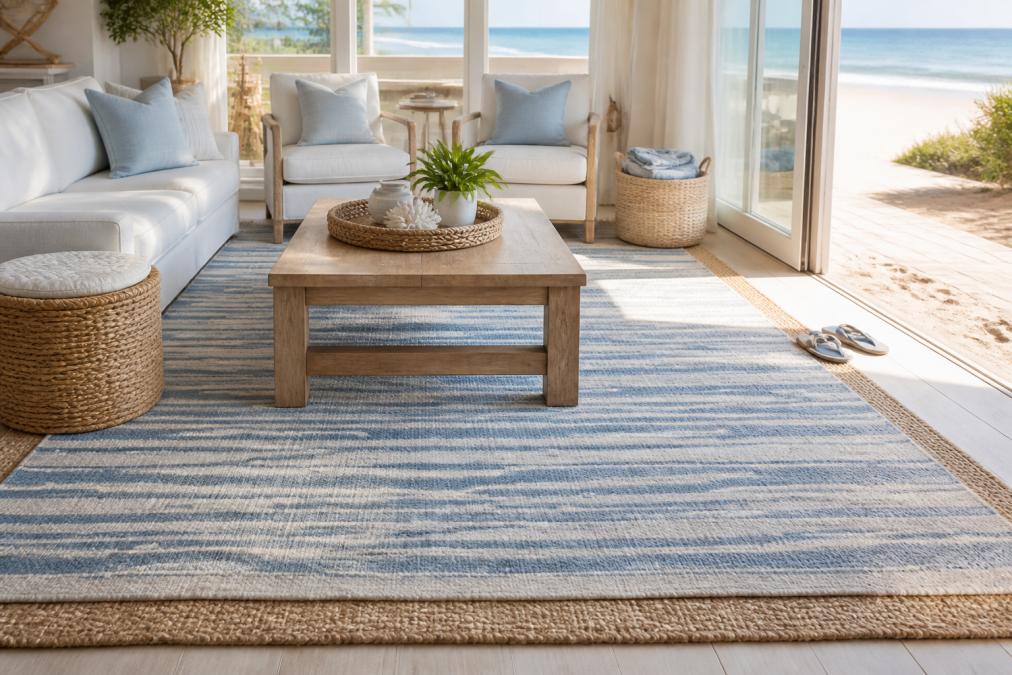
Loloi Coastal-Palette Area Rug
Loloi's coastal collection targets homeowners who want a designer look without custom pricing. Seafoam and sandy beige palettes pair with varied sizing, which matters in irregular beach house floor plans. The $299 entry point buys genuine design quality. Where it falls short: budget shoppers will find comparable durability for less.
Momeni Coastal Collection
Momeni builds for households that actually use the living room. Stain-resistant construction and patterns ranging from abstract to traditional coastal make this the strongest pick for families with kids and dogs. The one drawback is retail availability; you may need to order rather than buy off the floor.
Safavieh Indoor/Outdoor Coastal Rugs
Safavieh's indoor-outdoor line solves a specific coastal problem: rugs that move between a screened porch and the living room without degrading. At $90 to start, it's the most affordable way to test a layout before committing. The synthetic texture won't fool anyone who wants wool, but it shrugs off salt air and tracked-in moisture.
Jute vs Synthetic Rugs for Beach Homes
Jute wins on aesthetics and sustainability; synthetic wins on maintenance. That's the honest summary of jute vs synthetic rugs for beach homes.
Jute and sisal are breathable, lightweight, and biodegradable, and their organic texture is exactly what 2026 coastal design trends call for, per Coastal Cottage Amelia's 2026 trend report. The catch: jute stains if liquids sit, and it can't be machine washed.
Synthetics like polypropylene handle spills, hose off outdoors, and cost less. What most guides miss is that cheap synthetics can off-gas and feel plasticky underfoot. Spend up on a denser weave if you go synthetic.
How to Clean Sand from Area Rugs
Cleaning sand from area rugs starts with prevention: a coarse doormat outside and a second absorbent mat inside capture most grit before it reaches the living room. From there, the routine changes depending on fiber, because sand behaves differently on a flatweave than it does on a cut pile.
Why sand is harder on coastal rugs than inland rugs
Beach sand is not just grit. It carries salt, which is hygroscopic, it pulls moisture from humid air and holds it against the fiber and the backing. That is why a rug that vacuums clean in a dry climate can develop a musty odor near a sliding door after a wet summer. Salt residue also acts as an abrasive, so tracked-in sand grinds floor finish and wears down backing faster than the same volume of household dust.
Fiber-by-fiber cleaning routine
- Jute, sisal, and seagrass: Vacuum with suction only, no beater bar, which frays the weave. Shake flatweaves outdoors weekly. Never saturate; moisture causes jute to brown and seagrass to mildew. Blot spills immediately and air dry flat.
- Wool and wool-viscose blends: Sprinkle baking soda, let sit 15 minutes, then vacuum to lift fine grit. Viscose is the weak point in these blends, it spots with water, so treat any spill with a dry cloth first and a wool-safe cleaner second.
- Polypropylene and other indoor-outdoor synthetics: These are the only coastal rugs you can hose off. Take them outside, rinse, and air dry flat in shade. Skip the dryer, which can warp the backing.
- Cotton: Machine washable in cold water on a gentle cycle, but it stains more readily than synthetics and shrinks if dried on heat. Air dry flat.
The pet and child stress-test most guides skip
Beach houses are high-traffic by definition, and the two biggest stressors are pets and kids. A few practical tests before you commit:
- Sand-and-salt exposure: Rub a pinch of sand into a corner sample, vacuum once, and check whether grit remains in the weave. Tight, low-pile constructions pass; deep plush piles fail.
- Stain resistance: Drip water on the sample. If it beads, the fiber has a stain treatment. If it soaks in immediately, expect blotting to be a race against time.
- Pet claws and traffic: Run a fingernail across the weave. If fibers snag and pull, a dog's nails will do the same. Flatweaves and dense power-loomed synthetics hold up best.
- Odor retention: Salt and humidity trap odors in natural fibers more than synthetics. If you have pets, a washable synthetic or an indoor-outdoor polypropylene is the lower-risk choice.
Seasonal deep-clean cadence
- Vacuum daily during peak season, using slow passes without the beater bar on natural fibers
- Shake flatweave and indoor-outdoor rugs outdoors weekly
- Sprinkle baking soda on wool rugs, let sit 15 minutes, then vacuum to lift fine grit
- Blot spills immediately; never rub, which drives stains deeper into the weave
- Deep clean washable rugs monthly in cold water; air dry flat, never in a dryer
- At the end of each summer, do a salt-residue rinse on synthetic rugs and a professional clean on wool
Washable rugs and indoor-outdoor options are the primary maintenance solutions cited for beach environments, per discussions in the Facebook Home Design Group.
Rug Pads and Acoustic Benefits: What Competitors Miss
Two things most coastal rug guides skip entirely: rug pads and acoustics. Both matter in beach houses, which tend to have open-concept layouts, hard flooring, and tall ceilings that bounce sound.
A quality pad adds grip, extends rug life by absorbing foot traffic, and blocks sand from grinding against your floor. In open-plan living rooms, a rug with a pad measurably reduces echo and footfall noise, which matters when bedrooms sit above the living area.
If you're coming from bare floors, expect the difference to be immediate. Rooms feel quieter and warmer within a day of installation.
Budget-Friendly and Eco-Friendly Coastal Rug Options
Eco-friendly coastal rugs come down to fiber sourcing, and most guides stop at "jute is renewable." Here is what actually separates a genuinely sustainable coastal rug from a greenwashed one, plus how to think about cost over the life of the rug, not just at checkout.
What "sustainable" actually means on a rug label
- Renewable and rapidly harvested: Jute, sisal, seagrass, and coir regrow quickly and need little irrigation. These are the lowest-impact natural options.
- Recycled content: Look for rugs made from recycled PET (often labeled rPET), which diverts plastic bottles from landfills and performs like polypropylene in humid, sandy rooms.
- Undyed or low-impact-dyed wool: Wool is renewable and biodegradable, but conventional dyeing is water- and chemical-intensive. Undyed or naturally dyed wool is the lower-impact choice.
- Certifications worth checking: GREENGUARD Gold (low chemical emissions), OEKO-TEX Standard 100 (tested for harmful substances), and GOTS (organic textile processing). If a label says "eco" with no certification, treat it as marketing.
The cost-per-year math
A $69 cotton rug that lasts two summers costs about $35 per year. A $299 wool flatweave that lasts eight years costs about $37 per year, roughly the same, but with better feel and less replacement waste. Budget-friendly does not always mean cheaper over time; it means lower upfront risk. For beach properties, the honest framing is: buy cheap if you expect sand and salt to destroy the rug, buy durable if you want to keep it.
Budget picks that hold up
- Striped cotton flatweaves: Inexpensive enough to replace seasonally, and a trade-off Houzz forum contributors actively recommend for beach properties. Cotton stains more easily than synthetics, so treat it as a seasonal piece.
- Recycled PET indoor-outdoor rugs: Often priced under $100, hose-cleanable, and the strongest eco-plus-durability combination for a sandy living room.
- Seagrass and jute runners: Use them in walkways and near sliding doors where you want an organic look without committing a large budget.
Where eco and performance conflict
Natural fibers biodegrade, which is good for the planet and bad for a wet, sandy room. Jute and sisal stain, can't be machine washed, and mildew if they stay damp. If your priority is a rug that survives salt air and tracked-in sand for years, a recycled-content synthetic is the more sustainable choice in practice, it lasts longer, which is its own form of waste reduction.
Conclusion
Choosing the best area rugs for beach house living rooms is really a test of matching fiber to lifestyle. Sand, humidity, and foot traffic will expose every weak choice within one season.
We're a floor covering retailer serving all of Suffolk County, and we guide coastal homeowners through material selection, sizing, and installation. Visit our showroom to see how samples look in person, or contact us for a quote.
Frequently Asked Questions
What type of rug is best for a beach house living room?
Flatweave, low-pile, and indoor-outdoor rugs handle sand and moisture best. Natural fibers like jute and sisal offer an organic feel but need more careful cleaning. Synthetic options such as polypropylene resist stains and dry quickly. Washable rugs are a practical choice for beach homes. Many coastal living rooms start at $299 for designer options, while budget picks begin around $90.
Are jute and sisal rugs good for beach houses?
Jute and sisal bring natural texture and an organic feel that suits coastal interiors. They are durable for high-traffic areas but can be harder to spot clean than synthetics. In humid beach environments, jute may absorb moisture and develop mildew if not dried properly. Many homeowners layer a smaller washable or synthetic rug over a jute base to get the look without the upkeep.
How do you clean sand out of area rugs effectively?
Let sand dry completely before vacuuming. Shake the rug outdoors or beat it to release loose grains. For deeper cleaning, vacuum both sides with a beater-bar attachment. For washable rugs, follow the manufacturer's machine-wash instructions. For natural fiber rugs, blot spills immediately and avoid soaking. Regular vacuuming prevents sand from working into the fibers and causing abrasion.
Should a rug be lighter or darker than the couch in a coastal living room?
Lighter rugs in sandy hues, tonal white, or soft aqua reflect light and keep the room feeling airy, which suits coastal design. A darker rug can ground a space but may feel heavy near the water. Many designers choose a rug slightly lighter than the sofa to create contrast without overpowering the room. Layering a light flatweave over a neutral base adds depth and flexibility.
Picking the right rug for a coastal living room means weighing durability against design, and getting it wrong costs you a replacement every year. Hamptons carpet one floor and Home carries coastal-friendly floor coverings with expert guidance on materials, sizing, and installation for beach properties across Suffolk County. Get started with Hamptons carpet one floor and Home and choose a rug that survives the summer.