 Listicle
Best Carpet Brands for High Traffic: 2026 Buyer's Guide
Table of Contents
- What Makes a Carpet Truly Built for High Traffic?
- Nylon vs Polyester Carpet for High Traffic: Which Fiber Wins?
- Loop Pile vs Cut Pile for High-Traffic Zones
- The Best Carpet Brands for High Traffic Areas Ranked
- 1. Mohawk Flooring, Best for Pet Households
- 2. Shaw Floors, Best for Balanced Performance
- 3. Karastan, Best Luxury Option That Still Performs
- 4. Dixie Home, Best for Nylon Purists
- 5. DreamWeaver by Engineered Floors, Best Budget Pick
- 6. Phenix Flooring, Best for Allergy-Prone Homes
- 7. Masland Carpet, Best for High-End Craftsmanship
- Life-Cycle Cost Analysis: What High-Traffic Carpet Really Costs You
- Best Carpet Padding for High Traffic: Don't Skip This Step
- Carpet Maintenance Tips for Busy Homes That Actually Work
- How to Choose the Right High-Traffic Carpet for Your Home
- Conclusion
Last Updated: June 2, 2026
Choosing the best carpet brands for high traffic areas is one of the most consequential flooring decisions a homeowner can make, and most people get it wrong by focusing on color and price instead of fiber engineering. At Hamptons carpet one floor and Home, we help Suffolk County homeowners navigate this exact problem every day, and the pattern is consistent: carpets that fail early almost always fail for the same preventable reasons. Below, we'll show you exactly which brands hold up under real-world punishment, what technical specs actually predict long-term durability, and how to calculate what your carpet choice truly costs over a decade.
Here's what most guides get wrong: they treat all synthetic fibers as roughly equal. They're not. The difference between a nylon carpet and a polyester one in a high-traffic hallway isn't subtle after three years. It's the difference between a floor that still looks intentional and one that looks exhausted.
What Makes a Carpet Truly Built for High Traffic?
A carpet built for high traffic is one engineered to resist crushing, matting, and fiber breakdown under sustained foot traffic, not just resist surface stains. Two technical specifications predict performance better than any marketing claim: face weight and twist level. Understanding these before you shop puts you ahead of most buyers.
Face Weight and Fiber Density: The Numbers That Matter
Face weight is the weight of the carpet fiber per square yard, measured in ounces. Higher face weight generally means more fiber packed into the surface, which translates to better durability. For high-traffic zones like hallways, staircases, and living rooms, most flooring professionals recommend a minimum face weight of 40 oz/sq yd, with 50-60 oz being the sweet spot for heavy use.
Fiber density works alongside face weight. Two carpets can share the same face weight but differ dramatically in how tightly the fibers are packed together. Density is calculated by dividing face weight by pile height, then multiplying by a constant. A denser carpet resists matting because fibers support each other under load. A low-density carpet with a high face weight is like a crowd of people standing far apart: each person is substantial, but there's no mutual support.
Twist Level and Crush Resistance Explained
Twist level refers to how many times per inch the yarn is twisted before tufting. A higher twist level, typically 5 or more twists per inch, produces better crush resistance because the fiber springs back after compression. This is why a carpet that looks plush in the showroom can look flattened within months if the twist level is too low.
Crush resistance is directly tied to fiber type as well. Nylon has superior memory compared to polyester, meaning it recovers its shape after being compressed by furniture or foot traffic. Triexta, Mohawk's SmartStrand fiber, performs comparably to nylon in crush resistance while offering built-in stain protection. Olefin (polypropylene), on the other hand, has poor crush resistance and should generally be avoided in cut pile constructions for high-traffic residential areas.
Nylon vs Polyester Carpet for High Traffic: Which Fiber Wins?
Nylon wins for high-traffic residential applications. That is the direct answer, and the reasons are structural rather than arbitrary, but understanding why at a mechanical level helps you evaluate any fiber claim a salesperson makes, not just the ones covered here.
Why Nylon Outperforms Polyester: The Polymer Mechanics
Nylon (polyamide) and polyester (PET) are both synthetic polymers, but their molecular architectures behave differently under repeated compressive load. Nylon's polymer chains have a higher degree of elasticity and hydrogen bonding between chain segments, which gives the fiber what materials scientists call elastic recovery, the ability to return to its original shape after being compressed. Polyester chains are stiffer and more crystalline in structure, which produces excellent initial shape retention and color clarity but poor recovery once the fiber has been repeatedly crushed. In a high-traffic hallway, that difference becomes visible within 18 to 36 months.
A useful mental model: nylon behaves like a coiled spring under foot traffic. Polyester behaves more like a foam block, it compresses, partially recovers, and gradually takes a permanent set over time.
What this means in practice:
- In a hallway receiving 50+ foot-traffic passes per day, nylon maintains its pile height and texture significantly longer than polyester at equivalent face weights and twist levels.
- Polyester's hydrophobic surface (liquid beads rather than absorbs) gives it genuine stain resistance, but this advantage is most relevant in low-traffic areas where spills are the primary threat, not crushing.
- Nylon can be solution-dyed or yarn-dyed; solution-dyed nylon (used by brands like Dixie Home's EnVision SD line) locks color into the fiber core during manufacturing, producing fade resistance that holds up under both UV exposure and aggressive cleaning.
Triexta and Olefin: Two More Fibers Worth Knowing
Triexta (marketed by Mohawk as SmartStrand) is derived partly from corn glucose, which gives it a partial bio-based origin that polyester and nylon lack. Its elastic recovery is comparable to nylon in most standardized abrasion and crush tests, and its stain resistance is built into the fiber at the molecular level rather than applied as a surface coating. This distinction matters: topical stain treatments on nylon or polyester degrade with each professional cleaning cycle, typically losing meaningful effectiveness after three to five cleanings. Triexta's protection does not wash out because it is not a coating, it is a property of the polymer itself.
For households with pets, triexta's combination of permanent stain resistance and nylon-comparable crush recovery makes it the most technically defensible choice. Mohawk's All-Pet Protection warranty covers all pet accidents including urine, a coverage category most competitors explicitly exclude, which shifts real financial risk away from the homeowner.
Olefin (polypropylene) is moisture-resistant and mold-resistant, making it appropriate for basements and covered outdoor spaces. Its weakness is severe: olefin has the lowest elastic recovery of any common carpet fiber, and in cut pile constructions it will mat and crush under sustained foot traffic faster than any alternative. The only high-traffic application where olefin is defensible is in level-loop Berber constructions, where the loop structure itself, not the fiber's elastic recovery, provides the crush resistance. If you see olefin offered in a cut pile style for a busy hallway, treat it as a red flag.
Pet-Specific Performance: Beyond 'Pet-Friendly' Marketing
Most fiber comparisons stop at stain resistance when discussing pet households. Two additional performance dimensions matter and are almost never addressed in standard guides:
Claw abrasion resistance. Repeated claw contact from dogs and cats creates a specific type of fiber damage, surface fuzzing and fiber breakage at the tip, that is distinct from foot-traffic crushing. Tightly twisted, high-density nylon and triexta constructions resist this better than loosely constructed polyester, because the fiber tips are supported laterally by adjacent fibers. A face weight above 50 oz/sq yd with a twist level of 5 or more twists per inch provides meaningful claw abrasion resistance. Loop pile constructions are vulnerable to claw snagging, which can unravel a section of carpet if a loop is caught and pulled.
Odor trapping and subfloor penetration. Liquid pet accidents that penetrate through the carpet face and into the backing and padding create odor problems that surface cleaning cannot resolve. Carpets with a sealed, moisture-barrier backing (such as Mohawk's All Pet backing system) limit how far liquid can migrate downward, protecting the padding and subfloor. Without a moisture barrier, urine can reach the subfloor, requiring subfloor treatment or replacement, a cost that can exceed the original carpet installation. When evaluating fiber type for pet households, the backing system deserves equal scrutiny to the face fiber.
Environmental Trade-Offs: What the Fiber Choice Costs Beyond the Invoice
This is the dimension most flooring guides omit entirely. All four common synthetic fibers, nylon, polyester, triexta, and olefin, are derived from petrochemical feedstocks and are not biodegradable. The majority of residential carpet removed during replacement goes to landfill, where synthetic fibers persist for decades.
Several partial mitigations exist and are worth knowing:
- Recycled content: Mohawk's EverStrand polyester uses post-consumer recycled PET plastic bottles as its raw material. Shaw offers Cradle to Cradle Certified products designed with end-of-life recyclability in mind. These are not zero-impact solutions, but they represent a meaningful reduction in virgin petrochemical demand.
- Triexta's bio-based component: Mohawk's SmartStrand uses corn glucose for a portion of its polymer chain. The bio-based content percentage varies by product line, but it represents a partial reduction in fossil fuel dependency compared to fully petrochemical fibers.
- Wool as the natural alternative: Wool is renewable, biodegradable, and has excellent natural resilience and soil resistance. It is also significantly more expensive, requires more careful maintenance (professional cleaning with wool-safe chemistry), and is sensitive to alkaline cleaners. For buyers where environmental impact is a primary decision factor and budget allows, wool, particularly in blends with nylon for added durability, is the only fiber that addresses the end-of-life problem at the material level.
According to the Carpet and Rug Institute's sustainability resources, carpet recycling infrastructure is expanding but remains limited in geographic reach. Checking whether a manufacturer offers a take-back or recycling program at end of life is a practical step for environmentally conscious buyers.
Loop Pile vs Cut Pile for High-Traffic Zones
The pile construction determines how a carpet handles foot traffic as much as the fiber type does. Loop pile and cut pile behave fundamentally differently under load, and the right choice depends on where the carpet is going.
Loop pile carpets, including Berber and level-loop styles, leave the yarn loops intact. This creates a harder, more durable surface that resists crushing because the loop structure distributes weight laterally. Loop pile is an excellent choice for high-traffic zones like hallways and stairs. The limitation is snag vulnerability: a pulled loop can unravel a section of carpet if not caught early.
Cut pile carpets cut the yarn loops at the top, creating individual fiber tufts. This produces the softer, more luxurious feel most homeowners associate with residential carpet. Within cut pile, texture retention varies significantly. Saxony and plush styles show footprints and vacuum marks easily. Textured cut pile (sometimes called trackless or texture carpet) uses alternating twist directions to hide traffic patterns, making it a better choice for living rooms and family rooms with heavy use.
For staircases and hallways, a tight loop pile or a dense, high-twist cut pile with a face weight above 40 oz is the most defensible choice. Avoid low-twist plush styles in these areas regardless of fiber type.
The Best Carpet Brands for High Traffic Areas Ranked
The brands below represent the strongest performers across durability, stain resistance, and long-term value for high-traffic residential applications. Each has been evaluated on fiber technology, warranty strength, and real-world performance consistency.
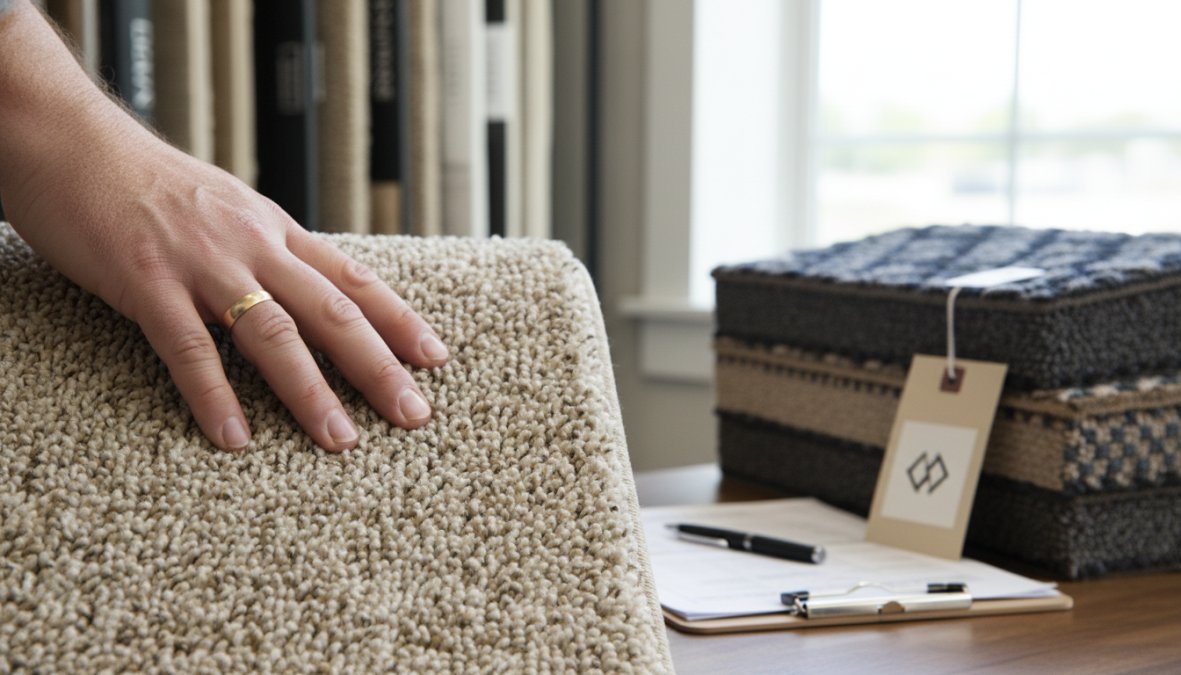
| Brand | Best For | Key Technology | Fiber Type |
|---|---|---|---|
| Mohawk | Pet households | SmartStrand / Air.o | Triexta, Nylon |
| Shaw Floors | Balanced performance | R2X, Endurance Enhanced | Nylon, Polyester |
| Karastan | Luxury + durability | SmartStrand with Nanoloc | Triexta, Wool |
| Dixie Home | Nylon purists | EnVision SD Nylon | Nylon |
| DreamWeaver | Budget buyers | PureColor fiber | Polyester, Nylon |
| Phenix Flooring | Allergy-prone homes | Microban antimicrobial | PET, Nylon |
| Masland Carpet | High-end craftsmanship | Premium wool/nylon blends | Wool, Nylon |
1. Mohawk Flooring, Best for Pet Households
Mohawk's SmartStrand fiber is the most compelling argument for triexta in a high-traffic context. The permanent stain and soil resistance is built into the fiber at the molecular level, not applied as a surface coating that degrades with cleaning. Mohawk backs this with an All-Pet Protection warranty that covers all pet accidents, including urine, which most competitors exclude from coverage.
The Air.o hypoallergenic carpet system is worth noting for households with respiratory sensitivities. It eliminates the traditional secondary backing and uses a unified construction that doesn't trap allergens the way conventional carpet systems do.
Honest limitation: Some premium Mohawk lines carry a higher price tag that may not suit budget-constrained buyers. The entry-level collections are more accessible but sacrifice some of the crush resistance found in higher-density lines.
What most reviews miss: Mohawk's EverStrand recycled fiber option uses post-consumer plastic bottles in its construction, making it one of the more environmentally conscious choices in the synthetic fiber category.
2. Shaw Floors, Best for Balanced Performance
Shaw's R2X Stain and Soil Resistance system applies protection at both the fiber and backing level, creating a more comprehensive barrier than fiber-only treatments. The Endurance Enhanced fiber technology is specifically engineered for durability in high-traffic areas, and Shaw's ColorGuard technology provides bleach and fade resistance that matters in rooms with significant sunlight exposure.
Shaw also offers Cradle to Cradle Certified options, which is relevant for buyers factoring environmental impact into their purchase.
Honest limitation: Shaw's pricing varies significantly by retailer and collection, which makes apples-to-apples comparison difficult without visiting a flooring specialist.
3. Karastan, Best Luxury Option That Still Performs
Karastan occupies a specific and valuable niche: luxury aesthetics with genuine high-traffic performance. The SmartStrand with Nanoloc spill protection takes Mohawk's triexta technology (Karastan is a Mohawk brand) and adds a nano-scale protective layer that repels spills at the fiber surface before they can penetrate.
The Kashmere XTRA line and wool blend options deliver a softness underfoot that purely synthetic carpets rarely match. Wool is a natural fiber with excellent resilience and natural soil resistance, though it requires more careful maintenance and carries a higher price point.
Honest limitation: Karastan is a premium investment. For buyers prioritizing durability on a tight budget, the price premium over comparable synthetic options is hard to justify purely on performance grounds.
4. Dixie Home, Best for Nylon Purists
Dixie Home's EnVision Nylon and EnVision SD (solution-dyed) programs represent a focused commitment to nylon performance. Solution-dyed nylon locks color into the fiber during manufacturing rather than applying it afterward, which produces exceptional color retention even under heavy cleaning and UV exposure. For homeowners who want the highest-performing traditional nylon without proprietary fiber marketing, Dixie Home delivers.
Honest limitation: Dixie Home operates primarily in the mid-to-high-end market. Budget shoppers will find limited options here.
5. DreamWeaver by Engineered Floors, Best Budget Pick
DreamWeaver's PureColor fiber technology uses solution-dyed construction to achieve fade and stain resistance at a price point that undercuts most premium brands. The high-density construction resists matting and crushing better than most carpets in its price range, making it a legitimate choice for buyers who need durability without premium pricing.
Honest limitation: DreamWeaver has fewer ultra-luxury options. For formal living spaces where aesthetics carry equal weight with performance, the design portfolio is narrower than Karastan or Masland.
6. Phenix Flooring, Best for Allergy-Prone Homes
Phenix's integration of Microban antimicrobial technology into their carpet construction is genuinely differentiated. Microban provides 24/7 protection against bacteria and mold growth within the carpet fiber itself, which matters for households with allergy or asthma concerns. The SureSoftSD polyester and SureSoftSDN nylon options give buyers a choice of fiber type while retaining the antimicrobial benefit.
Honest limitation: Product availability varies by region, which can make sourcing specific Phenix collections challenging depending on your location.
7. Masland Carpet, Best for High-End Craftsmanship
Masland has been manufacturing carpet since 1866, and the institutional knowledge shows in construction quality. The brand's meticulous tufting and finishing techniques produce carpets with structural integrity that holds up over decades, not just years. The design portfolio spans traditional to contemporary, with premium wool and nylon options that appeal to interior designers working on high-specification residential projects.
Honest limitation: Masland has limited availability at some local retailers. Finding their full collection often requires visiting a specialty flooring showroom rather than a big-box store.
Life-Cycle Cost Analysis: What High-Traffic Carpet Really Costs You
Most buyers evaluate carpet on installed price per square foot. That is the wrong number to optimize. The relevant figure is cost per year of serviceable life, and calculating it changes the decision in almost every case where a buyer is choosing between a budget option and a mid-range or premium one.
This section provides a framework you can apply to any carpet you are comparing. No competitor guide does this in a usable form. Most stop at 'buy quality, it lasts longer.' That is true but not useful without a way to quantify the difference.
The Annualized Cost Framework
The formula is straightforward:
Annual Carpet Cost = (Total Installed Cost ÷ Expected Lifespan in Years) + Annual Maintenance Cost
Each variable deserves scrutiny:
Total Installed Cost includes the carpet itself, padding, and professional installation labor. Padding and labor together commonly add a meaningful amount to the face cost of the carpet, skipping quality padding to save money on the front end is one of the most common ways buyers inflate their true annualized cost, because inadequate padding shortens carpet life.
Expected Lifespan is the variable most buyers underestimate and most retailers avoid specifying. A realistic lifespan range by fiber type and traffic level, based on industry-standard performance data:
| Fiber Type | Light Traffic (Bedroom) | Heavy Traffic (Hallway, Family Room) |
|---|---|---|
| Nylon (high-density, 5+ twists/in) | 15-20 years | 10-15 years |
| Triexta (SmartStrand equivalent) | 15-20 years | 10-15 years |
| Polyester (high face weight) | 10-15 years | 5-8 years |
| Olefin cut pile | 8-12 years | 3-6 years |
| Wool or wool blend | 20-25 years | 15-20 years |
These ranges assume correct padding, professional power-stretch installation, and regular maintenance. Poor installation or inadequate padding can reduce any fiber's lifespan by 30 to 50 percent, which is why installation quality belongs inside a cost analysis, not in a separate section.
Annual Maintenance Cost for high-traffic carpet includes:
- Professional hot water extraction cleaning: typically recommended every 12 to 18 months for high-traffic areas. Most CRI-certified cleaning services charge by square foot; get a quote for your specific rooms and use that figure.
- Spot treatment products: a minor but real recurring cost.
- Vacuuming equipment and replacement filters: often overlooked but real over a 10-year horizon.
A Worked Comparison: Budget Polyester vs. Mid-Range Nylon
The following is a structured comparison using illustrative cost ranges, not specific quotes, which vary by region, retailer, and room size. Use these as a framework and substitute your actual quotes.
Scenario: 200 square feet of hallway and family room combined, heavy daily traffic
| Cost Element | Budget Polyester Option | Mid-Range Nylon Option |
|---|---|---|
| Carpet material | Lower installed $/sq ft | Moderate installed $/sq ft |
| Quality padding | Same recommendation for both | Same recommendation for both |
| Professional installation | Same for both | Same for both |
| Expected lifespan (heavy traffic) | 5-7 years | 12-15 years |
| Professional cleaning (every 18 months) | Same frequency | Same frequency |
| Replacement cycle over 15 years | 2-3 replacements | 1 replacement (possibly none) |
The pattern that emerges consistently: a budget polyester carpet in a high-traffic zone that requires replacement twice in 15 years, including reinstallation labor and padding each time, almost always costs more in total than a single mid-range nylon installation that runs the full period. The crossover point depends on your specific quotes, but the direction of the math is reliable.
Where Pet Ownership Changes the Math
Pet accidents introduce a cost variable that standard life-cycle analysis ignores: subfloor remediation risk. A carpet without a moisture-barrier backing system allows liquid to migrate through the face fiber, through the padding, and into the subfloor. Once urine reaches a wood subfloor, odor compounds bond to the wood and cannot be removed by surface cleaning. Remediation requires either sealing the subfloor with an odor-blocking primer or replacing affected sections, a cost that can equal or exceed the original carpet installation.
Carpets with genuine moisture-barrier backing systems (Mohawk's All Pet backing, for example) limit downward liquid migration, protecting the subfloor and reducing the probability of this worst-case cost. When calculating life-cycle cost for a pet household, factor in the probability and cost of subfloor remediation as a risk-adjusted expense. A carpet with a $0 additional cost for moisture-barrier backing that eliminates a meaningful probability of subfloor remediation is providing real financial value that does not appear in the installed price per square foot.
Warranty Value as a Financial Asset
Warranties are not marketing language, they are financial instruments that transfer risk from the buyer to the manufacturer. A carpet with a 25-year texture retention warranty backed by a manufacturer with the financial stability to honor it is worth more than an identical carpet with a 10-year warranty, all else equal. When comparing warranties, look for three specific provisions:
- What triggers the warranty claim? Texture retention warranties typically specify a measurable pile height loss threshold. Understand what that threshold is and whether it is realistic for your traffic level.
- What does the warranty cover? Replacement material only, or replacement plus installation labor? Labor is often the larger cost in a warranty claim.
- What voids the warranty? Common voiding conditions include: using non-compliant padding, using non-CRI-certified cleaning services, failing to clean on the recommended schedule, or pet accidents (for warranties that exclude them). Read this section before purchase, not after a claim is denied.
Environmental Impact of Synthetic Fibers
Synthetic carpet fibers, nylon, polyester, triexta, and olefin, are derived from petrochemicals and are not biodegradable. The majority of carpet removed during replacement ends up in landfill, where synthetic fibers persist for decades. This is a legitimate cost that does not appear on any invoice but is real for environmentally conscious buyers.
Several options partially address this. Shaw's Cradle to Cradle Certified products are designed with recyclability in mind. Mohawk's EverStrand uses recycled post-consumer PET plastic bottles as raw material, reducing virgin petrochemical demand. Wool is renewable and biodegradable, though it carries a higher purchase price and maintenance requirement. As documented by the Carpet and Rug Institute's sustainability resources, carpet recycling infrastructure is expanding but remains geographically limited.
For buyers where environmental impact is a meaningful factor, the life-cycle cost framework should include an honest accounting of end-of-life disposal: a carpet that lasts 15 years generates one disposal event; a carpet replaced three times in the same period generates three. Durability and environmental impact point in the same direction, another reason the annualized cost framework serves environmentally conscious buyers as well as budget-conscious ones.
Best Carpet Padding for High Traffic: Don't Skip This Step
Padding is the most under-specified component in a high-traffic carpet installation, and skipping quality padding is one of the most common and costly mistakes homeowners make.
The right padding for high-traffic areas is a dense, firm pad rather than a thick, soft one. Counterintuitively, a very thick, soft pad can actually accelerate carpet wear by allowing excessive flex in the carpet backing with each footstep. For high-traffic zones, a pad with a density of 6-8 lbs and a thickness of 7/16 inch or less is generally the right specification. Memory foam pads feel luxurious but are poorly suited to heavy-traffic areas.
Padding also affects warranty validity. Many carpet manufacturers specify minimum padding requirements in their warranties. Installing carpet over non-compliant padding can void the warranty entirely, which is a risk not worth taking on a premium carpet investment.
How Installation Quality Affects Long-Term Durability
Professional installation affects carpet longevity more than most buyers realize. Improperly stretched carpet will wrinkle and buckle within a few years, accelerating wear at the fold points. A qualified installer uses a power stretcher, not just a knee kicker, to achieve the tension required for long-term stability.
Seam placement matters particularly in high-traffic hallways and staircases. Seams should be placed perpendicular to the primary traffic direction and away from doorways where possible. A poorly placed seam in a high-traffic zone will separate and fray faster than the surrounding carpet.
Carpet Maintenance Tips for Busy Homes That Actually Work
Vacuuming frequency is the single highest-impact maintenance variable for high-traffic carpet. Most busy households under-vacuum, which allows abrasive soil particles to work their way into the fiber structure and cut the fibers from below.
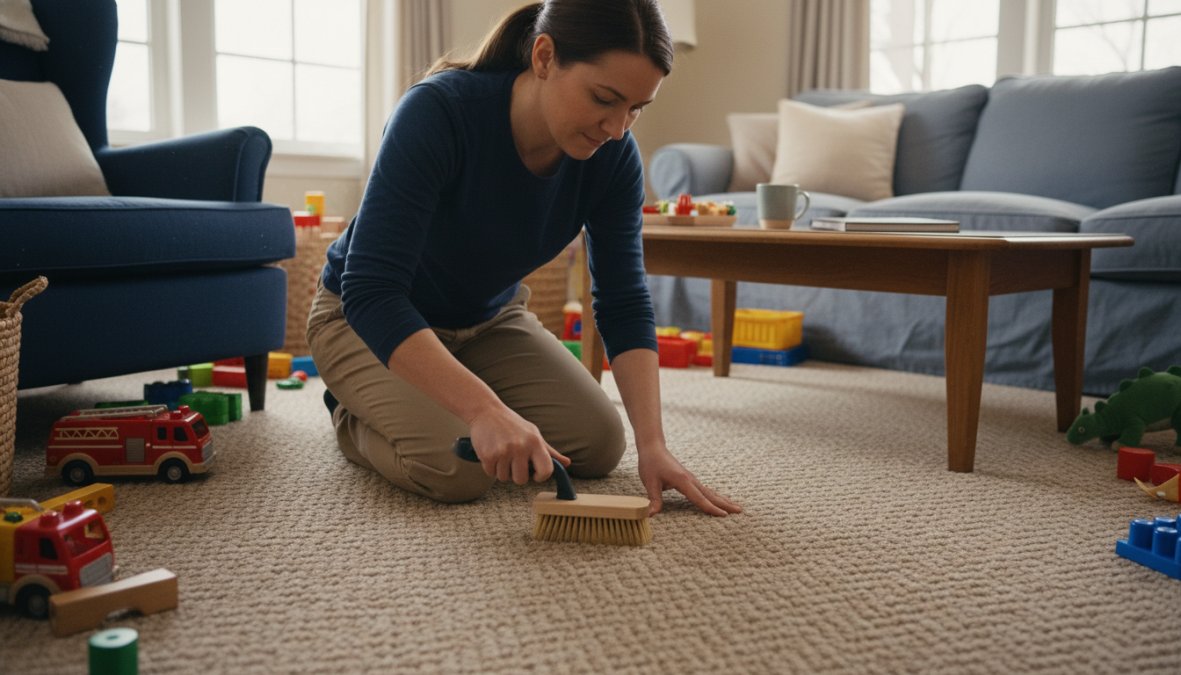
High-traffic areas like hallways, living rooms, and staircases should be vacuumed at least twice per week. A vacuum with a beater bar or rotating brush is more effective at lifting soil from the fiber base than a suction-only model.
Beyond vacuuming frequency, these maintenance practices make a measurable difference:
- Rotate furniture periodically to redistribute traffic patterns and prevent permanent compression in specific zones
- Address spills immediately by blotting (never rubbing) from the outside of the spill inward to prevent spreading
- Schedule professional cleaning every 12-18 months for high-traffic areas; hot water extraction (steam cleaning) is more effective than dry cleaning methods for deep soil removal
- Use entry mats at all exterior doors to intercept abrasive soil before it reaches the carpet
- Avoid harsh chemical cleaners on stain-resistant carpets; they can degrade the protective treatment and void warranties
According to the Carpet and Rug Institute's cleaning certification standards, using a CRI-certified cleaning service ensures the methods used won't damage fiber structure or backing integrity.
How to Choose the Right High-Traffic Carpet for Your Home
Choosing the right carpet for high-traffic areas comes down to matching fiber type, construction, and budget to the specific demands of each room. Not every room in a home has the same traffic profile, and treating them identically leads to either overspending in low-use rooms or under-specifying in busy ones.
Use this decision framework:
- Map your traffic zones. Identify which rooms and corridors receive the heaviest daily foot traffic. Staircases, main hallways, and family rooms typically rank highest.
- Match fiber to use case. Nylon or triexta for heavy-traffic cut pile applications. Loop pile with olefin or nylon for hallways and utility areas. Polyester for bedrooms and low-traffic spaces where softness and color richness matter more than resilience.
- Set a face weight floor. Refuse to install anything below 40 oz/sq yd in primary traffic zones. Aim for 50+ oz in the heaviest areas.
- Confirm twist level. Ask for a minimum of 5 twists per inch in cut pile constructions for high-traffic use.
- Specify your padding. Dense, firm pad at 7/16 inch or less for high-traffic areas. Don't let a retailer upsell you on thick, soft padding for a busy hallway.
- Read the warranty carefully. Understand what voids it, including cleaning methods, padding requirements, and pet accident coverage.
- Calculate annualized cost. Divide total installed cost by expected lifespan and add annual maintenance to compare options fairly.
The best carpet brands for high traffic deliver on multiple dimensions simultaneously: fiber resilience, stain resistance, texture retention, and warranty support. No single brand wins on every dimension, which is why matching brand strengths to your specific use case matters more than picking a single "best" label.
Selecting flooring for a high-traffic home involves more variables than most guides acknowledge, from fiber engineering to installation quality to long-term maintenance costs. Hamptons carpet one floor and Home serves all of Suffolk County, NY, helping homeowners evaluate these decisions with access to leading brands including Mohawk, Shaw, Karastan, and more. Visit our showroom or reach out to our team to get a personalized recommendation based on your specific rooms, traffic patterns, and budget.
Frequently Asked Questions
What is the most durable carpet material for high traffic areas?
Nylon is widely considered the most durable fiber for high-traffic carpet. It offers superior resilience, meaning it springs back after compression rather than matting down over time. Brands like Mohawk and Shaw build many of their best-performing high-traffic lines on nylon or proprietary nylon-adjacent fibers like SmartStrand triexta. For the highest-traffic zones, hallways, staircases, and living rooms, a nylon carpet with a high twist level and dense face weight is the most reliable long-term choice.
Is nylon or polyester better for high traffic carpet?
For high-traffic carpet, nylon generally outperforms polyester in durability and crush resistance. Polyester offers excellent stain resistance and a lower price point, but it tends to mat and flatten faster under heavy foot traffic. Nylon maintains its texture retention significantly longer. That said, triexta, used in Mohawk's SmartStrand line, bridges the gap by offering polyester-level stain resistance with much better resilience, making it a strong middle-ground option for busy households.
How do I choose a carpet that won't mat down in high-traffic zones?
To avoid matting, prioritize three technical specs: face weight (aim for 35-50 oz or higher), twist level (5 or more twists per inch), and pile height (low to medium performs better than plush in busy areas). Loop pile constructions like Berber are also naturally more resistant to crushing than cut pile. Brands like Shaw, Mohawk, and Dixie Home engineer their high-traffic lines specifically around these metrics, so checking product spec sheets before purchasing is strongly recommended.
What carpet brands offer the best warranties for high traffic areas?
Mohawk's SmartStrand line is known for its All-Pet Protection warranty, one of the most comprehensive in the industry for high-traffic and pet-heavy homes. Shaw Floors offers strong wear warranties on many Endurance fiber collections. Karastan also backs its SmartStrand with Nanoloc products with robust stain and wear guarantees. When evaluating warranties, look beyond the stain coverage, check specifically for texture retention and matting warranties, which are the most relevant protection for high-traffic carpet performance.
What is the best carpet padding for high traffic areas?
For high-traffic areas, choose a dense, firm padding rather than a thick, soft one. A density of 6-8 lbs with a thickness of 7/16 inch or less provides the right support to prevent premature fiber breakdown. Memory foam and rebond foam are popular options, but in very high-traffic zones like hallways or staircases, a flat rubber or felt pad often outperforms softer alternatives. Quality underlayment directly extends carpet life and improves comfort underfoot, it should never be an afterthought.
This article was written using GrandRanker