 Listicle
Best Entryway Shoe Storage for Sandy Climates (2026 Guide)
Table of Contents
- Comparison Table: Top Entryway Shoe Storage for Sandy Climates
- What to Look For: Materials and Design for Sandy Climates
- Best Easy-to-Clean Shoe Racks for High-Traffic Entryways
- Entryway Shoe Tray Ideas That Actually Trap Sand
- How to Remove Sand from Shoes Before It Hits Your Floors
- Ventilation and Moisture Control for Sandy Footwear
- Protect the Floors Beneath Your Shoe Storage
- Frequently Asked Questions
Last Updated: September 16, 2026
Comparison Table: Top Entryway Shoe Storage for Sandy Climates
Sand is relentless. It works its way into every tread, every crevice, and every corner of your entryway, and the wrong storage setup turns a small daily annoyance into a permanent grit problem. Choosing the best entryway shoe storage for sandy climates comes down to one principle: sand must fall away from shoes, not pile up underneath them. This guide from Hamptons carpet one floor and Home covers the racks, trays, and routines that actually hold up.
The storage that wins in sandy conditions is open, elevated, and non-porous. Closed boxes and carpeted cubbies trap abrasive grit, and trapped grit scratches floors and wears out finishes. Here is how the leading options compare.
| Product | Price | Material | Best For |
|---|---|---|---|
| Yamazaki 6-Tier Shoe Rack | $155 | Powder-coated steel | Small entryways, minimal sand buildup |
| Kitsure Shoe Rack | $35 | Moisture-resistant composite | Budget-conscious families |
| Household Essentials Bamboo Shoe Rack | $50 | Slatted bamboo | Eco-conscious households |
| MyGift Inverted Boot Rack | $45 | Natural wood | Boot-heavy entryways |
| IKEA Hemnes Shoe Cabinet | $129 | Wood composite | Hiding messy shoes completely |
What to Look For: Materials and Design for Sandy Climates
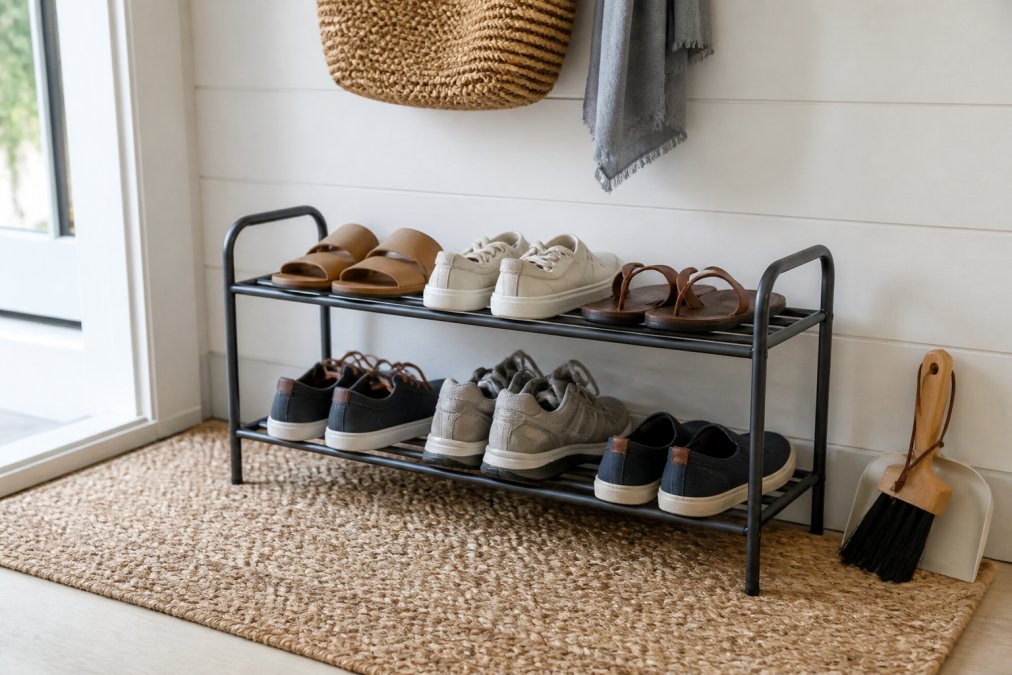
The best materials for sandy entryways are non-porous and easy to wipe down. Metal and wood combinations rank as top-tier choices because they balance durability with aesthetic versatility, according to The Spruce's tested shoe rack reviews. Slatted shelves beat solid ones because grit falls straight through instead of collecting on the surface.
Open-Air vs. Closed-Door Shoe Cabinets
Open-air racks win for sandy climates. Sand falls through the shelves onto the floor, where a quick sweep handles it. Closed cabinets hide clutter, but they also trap abrasive grit against shoe surfaces and interior panels. If you prefer closed storage, choose tilt-out designs you can vacuum easily, and never store damp, sandy shoes behind a closed door.
Best Easy-to-Clean Shoe Racks for High-Traffic Entryways
Easy-to-clean shoe racks share three traits: open construction, non-porous surfaces, and a footprint you can sweep under. Wirecutter evaluated roughly 50 shoe racks and cabinets to identify top performers for entryway organization (Wirecutter's 2026 shoe rack testing), and the winners consistently favored lightweight, breathable designs over heavy solid units.
Yamazaki 6-Tier Shoe Rack
The Yamazaki is the strongest pick for narrow foyers. Its six-tier vertical design maximizes floor space, and the open-air steel frame lets sand fall through rather than accumulate. The powder-coated finish wipes clean in seconds. At $155 it costs more than plastic alternatives, but the steel build and minimalist look justify the price for a permanent entryway fixture.
Kitsure Shoe Rack
Kitsure's stackable design handles a growing family's footwear without a growing footprint. Moisture-resistant materials and open shelves keep sand from building up, and tool-free assembly takes minutes. The $35 price makes it the budget champion. One caveat: anchor it to the wall once stacked, because a fully loaded tower can tip.
Household Essentials Bamboo Shoe Rack
Bamboo brings natural durability and airflow to this $50 rack. The slatted shelves let grit pass through, and the material resists humidity well in coastal homes. Lightweight and easy to reposition, it suits renters and anyone who rearranges their foyer seasonally. Expect to retighten the screws a few times a year.
Entryway Shoe Tray Ideas That Actually Trap Sand
A good shoe tray contains grit at the door before it reaches your flooring, but the tray alone is not the system. The most effective setups pair a raised-edge tray with a true sand-trapping mat in front of it, creating two lines of defense. Boot trays with deep lips catch runoff from wet, sandy footwear, while a sand-trapping mat scrapes loose grit from soles on contact.
The distinction that matters most in sandy climates is the mat itself. Most mats sold for entryways are water-absorbent: microfiber or chenille tops designed to soak up rain and snowmelt. Those mats do almost nothing for dry sand. Grit sits on the surface, and the next footstep grinds it deeper into the fibers, where a vacuum struggles to pull it out. A sand-trapping mat works differently.
When you shop, look for these specific features:
-
A dual-layer or mesh-backed build. Single-layer mats have nowhere for grit to go. The reservoir layer is the whole point.
-
Stiff, coarse face fibers. Softer fibers feel nice but do not scrape packed sand from deep treads. Look for a texture closer to a scrub brush than a bath mat.
-
A rubber or vinyl backing. It keeps the mat from sliding and stops fine grit from sifting through to the floor underneath.
-
A size that covers two full steps. A mat shorter than your stride means the second footstep lands on bare floor with sand still in the tread.
-
Beveled or low-profile edges. Thick, squared edges catch sand in the lip and are harder to sweep clean.
-
Zone 1, outside the door: a coarse sand-trapping mat with a rubber backing, where most grit leaves the shoe.
-
Zone 2, just inside the door: a second sand-trapping mat or a waterproof mat, catching anything the first layer misses.
-
Zone 3, beneath the rack: a raised-edge shoe tray with at least a 1-inch lip, containing runoff from wet, sandy footwear and any grit that falls through the rack above.
How to Remove Sand from Shoes Before It Hits Your Floors
Sand is not just dirt, it is an abrasive.
Daily Maintenance Routine
Tap each shoe sole-down over the tray or an outdoor surface before stepping inside.
Deep Cleaning Your Shoe Storage
- High sand exposure (daily beach or dune access): pull the rack away from the wall and sweep beneath it every two to three days. Vacuum fabric shelves weekly. Wipe frames weekly.
- Moderate exposure (weekend beach trips): sweep beneath the rack weekly, vacuum fabric shelves every two weeks, wipe frames monthly.
- Low exposure (occasional coastal visits): sweep beneath the rack monthly and wipe frames seasonally.
Ventilation and Moisture Control for Sandy Footwear
Open-air ventilation is the single most effective moisture control strategy for sandy footwear.
Protect the Floors Beneath Your Shoe Storage
Even the best storage lets some grit through, and that grit lands on your flooring.
Frequently Asked Questions
What are the best materials for entryway shoe storage in sandy areas?
Metal, bamboo, and wood combinations work best. Metal racks with powder-coated finishes resist scratches from abrasive grit, while bamboo offers natural moisture resistance and is lightweight enough to move for cleaning. Avoid fabric shelves, which trap sand deep in the weave and require vacuuming. Non-porous surfaces like laminate or sealed wood wipe clean with a damp cloth. According to The Spruce's 2026 testing, metal and wood combinations balance durability and aesthetic versatility, making them top-tier for sandy entryways.
How do I keep sand from being tracked through my house?
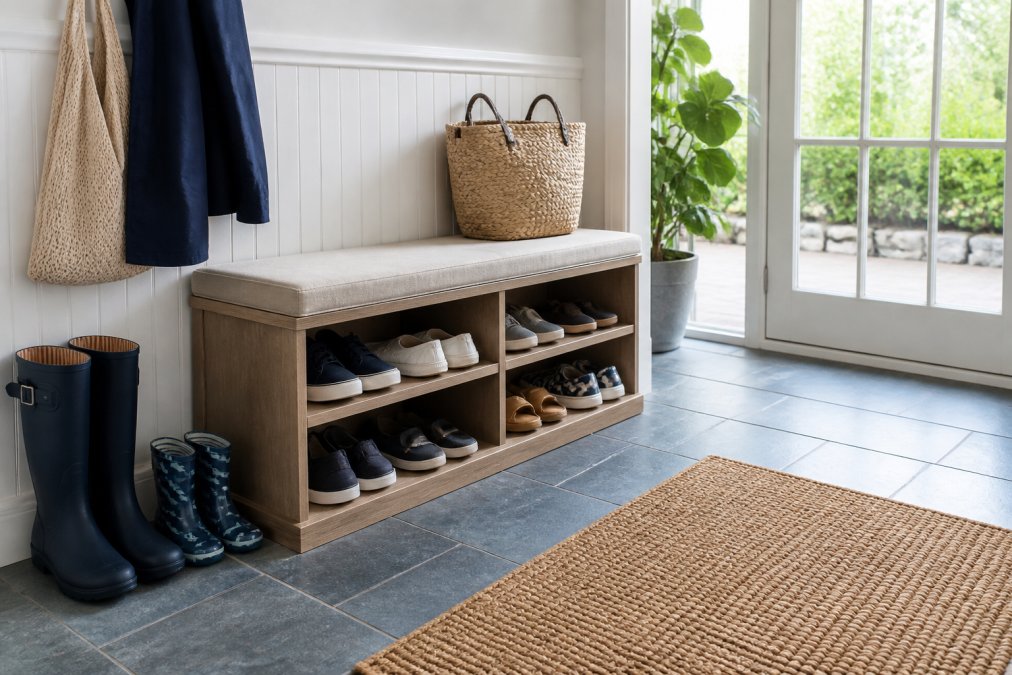
Start with a two-stage mat system: a coarse sand-trapping mat outside the door and a finer microfiber mat inside. Then use open-air shoe storage so sand falls through instead of accumulating. A shoe tray with raised edges contains debris from wet or sandy footwear. For boots, an inverted rack like the MyGift 6-Pair rack keeps interiors clean. A bench with cubbies gives family members a place to sit while removing shoes, which reduces the amount of sand that reaches your floors.
Should I use a shoe tray or a cabinet for sandy footwear?
It depends on your priority. A shoe tray with raised edges contains sand and moisture immediately, making it ideal for wet or heavily soiled shoes. A closed-door cabinet like the IKEA Hemnes hides clutter completely but traps sand inside, requiring regular vacuuming. For sandy climates, many homeowners use both: a tray for the dirtiest pairs and a cabinet for clean, everyday shoes. If you choose a cabinet, look for tilt-out drawers and easy-to-clean interior surfaces.
How do I clean sand out of my entryway shoe storage?
Remove shoes and shake the rack or vacuum with a brush attachment weekly. For open shelves, wipe with a damp cloth and mild soap. For cabinets, vacuum corners with a crevice tool, then wipe surfaces. Bamboo racks may need occasional tightening of screws. A handheld vacuum stored nearby makes daily cleanup quick. If sand accumulates on the floor beneath, sweep or vacuum daily to prevent abrasive grit from scratching hardwood or tile.