 Listicle
Best Finish for Old Hardwood Floors: 2026 Review
Table of Contents
- What Makes the Best Finish for Old Hardwood Floors
- Oil vs Water-Based Polyurethane for Old Floors: Which Performs Better
- Top Finishes for Old Hardwood Floors: Detailed Reviews
- Drying Time for Hardwood Floor Finishes: What to Expect
- How to Refinish Old Hardwood Floors Without Sanding
- Coastal Performance: Salt Air and Sand Resistance
- Maintenance and Repairability: Long-Term Value
- Which Finish Should You Choose
Last Updated: August 8, 2026
What Makes the Best Finish for Old Hardwood Floors
The best finish for old hardwood floors depends on how the floor will be used, the wood's current condition, and whether you prioritize durability, repairability, or aesthetic authenticity. At Hamptons carpet one floor and Home, we work with homeowners across Suffolk County who face unique challenges: salt air exposure, high foot traffic, sandy environments, and the structural quirks of older homes.
A finish that performs beautifully in a climate-controlled living room may fail within months in a coastal entryway. The right choice requires understanding the trade-offs between water-based and oil-based polyurethanes, hard wax oils, and penetrating finishes.
Oil vs Water-Based Polyurethane for Old Floors: Which Performs Better
Water-based and oil-based polyurethanes represent fundamentally different approaches to protecting hardwood.
Oil-based polyurethane penetrates deeply, builds a thick protective film, and produces warm amber tones. The downside is strong odor, longer cure times (24-48 hours between coats), and yellowing over time, problematic for historic restorations where preserving original wood color matters.
Water-based polyurethane cures faster (2-4 hours between coats), produces minimal odor, and won't yellow. It bonds better over existing finishes without extensive sanding. The tradeoff: it requires more coats to achieve equivalent protection and can feel slightly less warm aesthetically, though modern formulations have closed that gap.
Water-Based Polyurethane Options
Bona Traffic HD is the industry standard for high-traffic residential applications. Its two-component formula cures to full hardness in 3 days, faster than competitors. The finish resists scuffs, scratches, and chemical spills at levels exceeding single-component products. Low VOC content (150 g/L) means minimal odor and better indoor air quality. Available in gloss, semi-gloss, satin, and extra-matte sheens.
Minwax Ultimate Floor Finish delivers solid durability at accessible pricing. It recoats in 2-3 hours, allowing completion in a single day. The formula enhances natural wood grain without amber tint and bonds well over existing oil-based stains. For typical residential use, it performs reliably, though it doesn't match Bona's durability in extreme high-traffic scenarios.
DuraSeal Water-Based Polyurethane bridges oil-based aesthetics and water-based convenience. Single-component formula means no mixing. It accepts light foot traffic after 24 hours and develops full hardness within 48 hours. Available in multiple finishes. Single-component formulas don't cure as hard as two-component systems.
Oil-Based Polyurethane Considerations
Oil-based polyurethane remains the choice for homeowners prioritizing aesthetic warmth and traditional appearance. It builds a thicker film and provides deeper amber tones. The downside is significant: strong odor, longer dry times (24-48 hours minimum between coats), and gradual yellowing that intensifies over years.
For historic restorations where preserving original wood color matters, oil-based polyurethane is problematic. However, if you're refinishing a floor that's already had oil-based finishes applied, switching to water-based creates adhesion challenges requiring either extensive sanding or primer coats.
Top Finishes for Old Hardwood Floors: Detailed Reviews
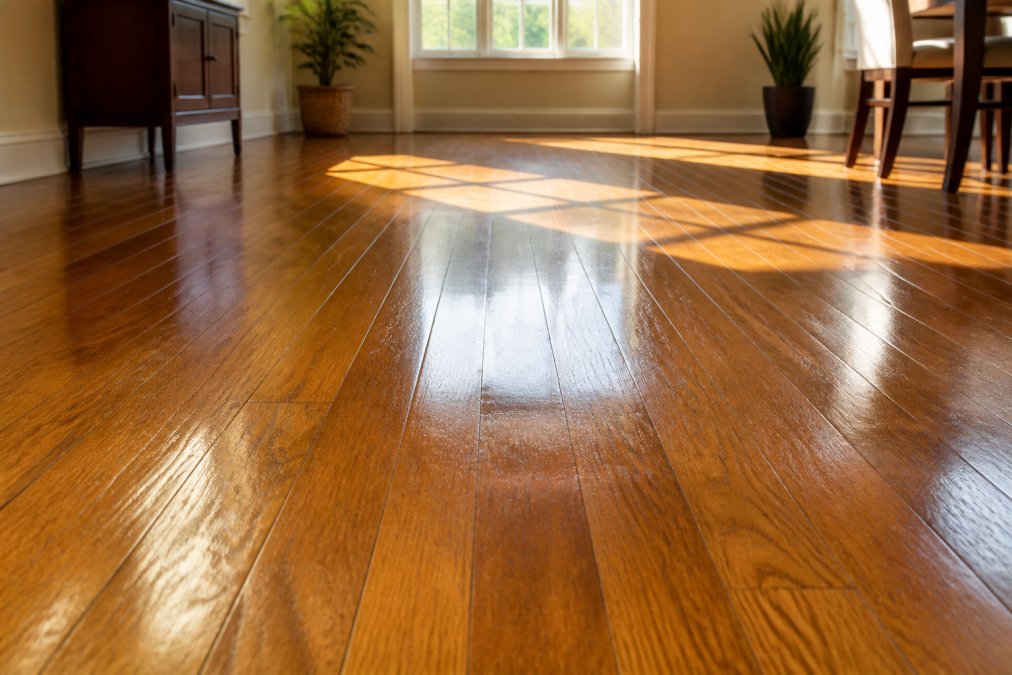
Bona Traffic HD: High-Traffic Performance
Best for: Coastal homes, high-traffic areas, families with pets and children, anyone prioritizing maximum durability.
Bona Traffic HD is the finish to choose when durability is non-negotiable. This two-component water-based polyurethane cures harder and faster than any single-component product. Full cure in 3 days means you can return furniture and resume normal use quickly.
The formula resists scuffs, scratches, and household chemicals at levels exceeding conventional finishes. In coastal environments where salt air and sand create accelerated wear, Traffic HD outperforms alternatives. Available in gloss, semi-gloss, satin, and extra-matte sheens.
The limitations are real. Mixing two components requires precision, and the cost is higher than single-component products, typically running 40-60% more than budget alternatives.
Waterlox Original: Tung Oil Penetrating Finish
Best for: Historic restoration, natural aesthetics, homeowners who value repairability, those seeking a hand-rubbed appearance.
Waterlox Original represents a fundamentally different approach from polyurethane. This tung oil-based penetrating finish seals wood from within rather than building a surface film. The result is wood that feels alive, with texture and grain visible, rather than sealed beneath a plastic-like coating.
The finish resists alcohol, hot liquids, and common household stains when properly applied. It won't crack, peel, or wrinkle like polyurethane can. The aesthetic is exceptional: a rich, warm, hand-rubbed appearance that enhances wood character.
The trade-off is maintenance. Waterlox requires recoating every 3-5 years depending on traffic and exposure. Each coat takes 24 hours minimum to dry. For old floors with original wood you want to showcase, Waterlox delivers authenticity that polyurethane cannot match.
Osmo Polyx-Oil: Hard Wax Oil Alternative
Best for: Repairability, natural aesthetics, moderate-traffic areas, homeowners who want to avoid polyurethane entirely.
Hard wax oil finishes occupy a middle ground between penetrating oils and polyurethane coatings. Osmo Polyx-Oil combines natural oils and waxes to create a durable, water-repellent surface that won't crack or peel. The finish is molecularly bonded to wood fibers, meaning it flexes with wood movement.
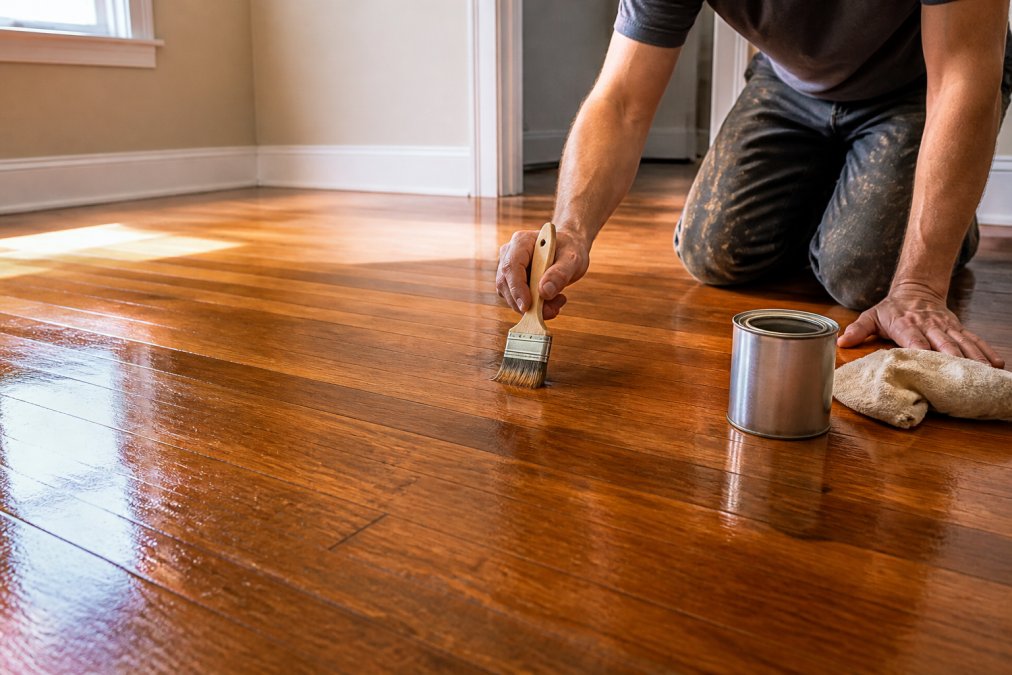
The standout feature is repairability. Unlike polyurethane, which requires sanding and recoating entire sections to repair damage, hard wax oil allows spot repairs. You can sand a damaged area lightly and apply fresh finish without visible seams.
Application requires patience. Coats take 8-10 hours to dry, and most floors need 2-3 coats for optimal protection. The finish is less durable than polyurethane in extreme high-traffic scenarios.
Minwax Ultimate Floor Finish: Budget-Friendly Durability
Best for: Budget-conscious homeowners, DIY application, typical residential traffic, those seeking reliable performance without premium pricing.
Minwax Ultimate Floor Finish delivers solid durability at accessible pricing. The water-based formula recoats in 2-3 hours, allowing completion in one day. The finish bonds well over existing oil-based stains, which is valuable when refinishing old floors.
The durability is good, not exceptional. It handles typical residential traffic reliably but won't match Bona Traffic HD's performance in high-traffic settings. For typical homeowner use with moderate traffic and careful maintenance, Minwax Ultimate represents excellent value.
Vermont Natural Coatings PolyWhey: Eco-Conscious Choice
Best for: Environmentally conscious homeowners, those with chemical sensitivities, moderate-traffic residential areas.
Vermont Natural Coatings PolyWhey Floor Finish uses recycled whey protein to create a durable, low-odor sealer and topcoat. Low VOC content (under 180 g/L) means minimal odor and better indoor air quality. The finish dries fast (under 2 hours) and cleans up with soap and water.
The limitations are real. The finish is less widely available than conventional products, and durability in extreme high-traffic scenarios doesn't match two-component polyurethanes. For homeowners prioritizing environmental impact and willing to accept slightly lower durability, PolyWhey delivers a viable alternative.
Drying Time for Hardwood Floor Finishes: What to Expect
Drying time determines how quickly you can recoat and how soon you can return to normal use. Water-based polyurethanes dry fastest. Bona Traffic HD accepts recoating in 2-4 hours under ideal conditions (70°F, 50% humidity). Full cure takes 3 days. Minwax Ultimate recoats in 2-3 hours.
Oil-based polyurethane requires 24-48 hours between coats and 5-7 days for full cure. Hard wax oils like Osmo Polyx-Oil take 8-10 hours between coats. Penetrating finishes like Waterlox need 24 hours minimum between coats.
Temperature and humidity dramatically affect drying. Cold, humid conditions extend drying times significantly. Applying finish when temperature is below 60°F or humidity exceeds 85% creates adhesion and curing problems.
How to Refinish Old Hardwood Floors Without Sanding
Refinishing without sanding is possible but requires specific conditions and realistic expectations. This approach works when the existing finish is intact, adheres well, and you're simply applying a protective topcoat.
The first step is thorough cleaning. Use a hardwood floor cleaner and allow complete drying. Abrading the surface lightly with 150-180 grit sandpaper or a floor buffer with fine abrasive pads opens the finish enough for adhesion without removing it entirely.
Water-based polyurethane bonds better over existing finishes without extensive sanding. Oil-based polyurethane requires more aggressive surface preparation and often demands primer. Apply finish in thin coats. Two coats of water-based polyurethane provide adequate protection when applied over a sound existing finish.
This approach works for maintenance refinishing, refreshing a floor that's worn but not damaged. It won't work if the existing finish is peeling, cracked, or failing in patches.
Coastal Performance: Salt Air and Sand Resistance
Coastal environments create unique challenges. Salt air accelerates corrosion and finish degradation. Sand tracked indoors acts as an abrasive, scratching finishes. Humidity fluctuations cause wood movement and stress on protective coatings.
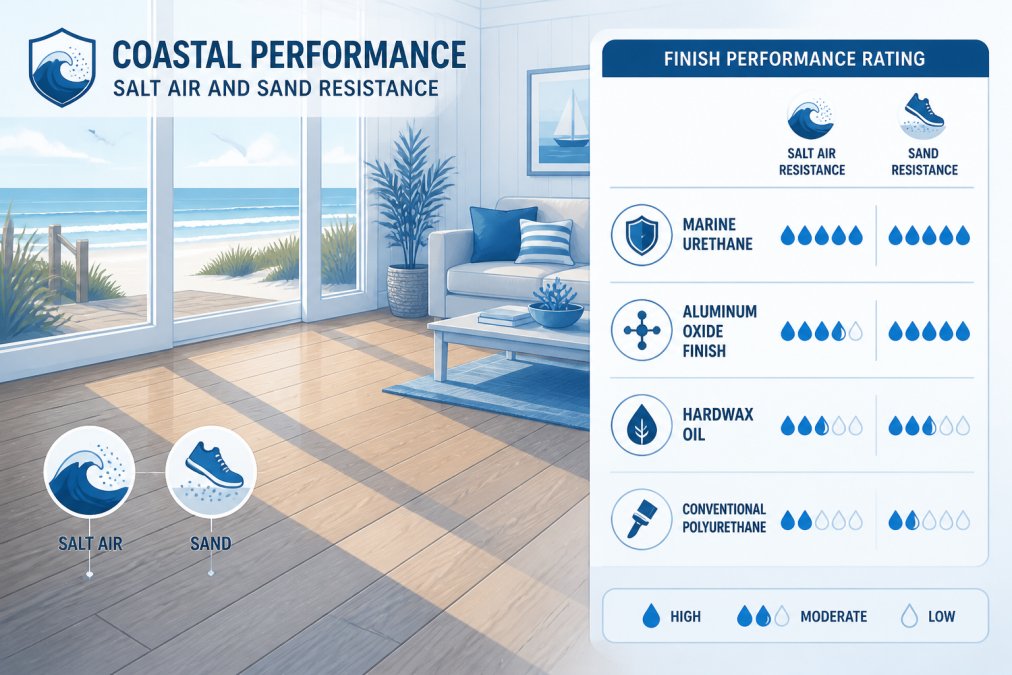
Water-based polyurethane finishes perform better in salt air than oil-based products. Bona Traffic HD's low-VOC formula and superior hardness provide excellent salt-air resistance. Hard wax oils like Osmo Polyx-Oil offer good salt-air performance because they're microporous, allowing wood to breathe and flex with humidity changes.
Sand abrasion is the real challenge. Regular sweeping and entry mats are essential. Matte and satin sheens show sand scratches less visibly than gloss finishes. Two-component water-based polyurethanes maintain superior adhesion in salt-air environments compared to single-component products.
Maintenance and Repairability: Long-Term Value
The best finish isn't just about initial application, it's about long-term maintenance burden and repairability.
Polyurethane finishes require regular cleaning with pH-neutral hardwood cleaners. Water damage creates white clouding that may require refinishing entire sections. Scratches and scuffs are permanent; you can't repair them without sanding and recoating.
Hard wax oils demand more frequent maintenance but offer superior repairability. Damage can be spot-repaired by sanding the affected area lightly and applying fresh finish, with no visible seams if done carefully. This repairability extends the floor's lifespan significantly.
Penetrating finishes like Waterlox need recoating every 3-5 years but accept spot repairs easily. They show aging gracefully rather than degrading suddenly. For old floors in historic homes, repairability matters more than initial durability.
Hamptons carpet one floor and Home can advise on maintenance protocols specific to your chosen finish.
Which Finish Should You Choose
If your priority is maximum durability in high-traffic or coastal environments, choose Bona Traffic HD. The two-component water-based formula cures hardest and fastest.
If you value repairability and natural aesthetics in moderate-traffic areas, choose Osmo Polyx-Oil or Waterlox Original. Hard wax oils and penetrating finishes allow spot repairs and age gracefully.
If you're refinishing on a budget and want reliable mid-range performance, Minwax Ultimate Floor Finish delivers solid durability at accessible pricing.
If environmental impact and indoor air quality are priorities, Vermont Natural Coatings PolyWhey provides a viable alternative for typical residential use.
For historic restoration where preserving original wood appearance matters, Waterlox Original or hard wax oils maintain wood character better than polyurethane.
The worst choice is prioritizing price alone. Budget finishes fail faster and cost more over decades.
Choosing the right finish for old hardwood floors requires matching the product to your environment, traffic patterns, and maintenance tolerance. Coastal homes demand different finishes than climate-controlled interiors. High-traffic areas need different protection than bedrooms. At Hamptons carpet one floor and Home, we've installed and maintained these finishes across Suffolk County's diverse environments. Our team can evaluate your specific situation, test finishes in your space's actual lighting and conditions, and recommend the approach that delivers the durability and appearance you need. Contact us for a consultation to discuss your floor's unique requirements and get a professional assessment before making your final decision.
Frequently Asked Questions
What is the best finish for old hardwood floors?
The best finish depends on your priorities. For maximum durability in high-traffic areas, water-based polyurethane like Bona Traffic HD or Minwax Ultimate cures fast and resists scuffs. For a natural look with easy spot repairs, hard wax oils like Osmo Polyx-Oil or Rubio Monocoat excel. Tung oil-based finishes like Waterlox offer penetrating protection without the plastic appearance of polyurethane. Consider your lifestyle, traffic level, and whether you want a glossy or matte finish.
Is oil-based or water-based polyurethane better for old floors?
Water-based polyurethane is generally better for old floors. It cures faster (3 days vs. 7+ days), produces lower VOCs, doesn't yellow over time, and cleans up with water. Water-based formulas also work well over existing finishes with proper preparation. Oil-based polyurethane offers a warmer amber tone and slightly deeper durability, but the long cure time and stronger odor make it less practical for occupied homes, especially in coastal areas where humidity affects drying.
Do I need to sand old hardwood floors before applying a new finish?
Sanding is the ideal approach for maximum adhesion and a flawless result, but it's not always required. If your existing finish is intact and not peeling, you can apply water-based polyurethane directly after cleaning and light abrading. Hard wax oils and tung oil finishes can bond to old finishes without full sanding. However, heavily worn, peeling, or stained areas will benefit from targeted sanding. For coastal homes with moisture issues, sanding removes trapped moisture and ensures better long-term adhesion.
How long does it take for hardwood floor finish to cure?
Drying time varies by product. Water-based polyurethanes dry fastest: Bona Traffic HD cures fully in 3 days, Minwax Ultimate in 24-48 hours. Hard wax oils take longer: Osmo Polyx-Oil requires 8-10 hours between coats and 5-7 days for full cure. Tung oil finishes like Waterlox need 24 hours between coats. Full cure time (when floors handle heavy furniture and traffic) ranges from 3 days to 2 weeks depending on the product, humidity, and temperature.
What finish works best in a beach house with salt air and sand?
Water-based polyurethanes like Bona Traffic HD and Minwax Ultimate resist salt air corrosion better than oil-based options. Hard wax oils such as Osmo Polyx-Oil and Rubio Monocoat are also excellent for coastal homes because they're water-repellent, resist salt spray, and allow spot repairs without refinishing the entire floor. Avoid traditional oil-based polyurethane in coastal climates due to yellowing from salt air exposure. Ensure proper sealing of subfloors to prevent moisture damage from sand and salt tracked indoors.
This article was written using GrandRanker