 Listicle
Best Floor Protectors for Sandy Entryways in 2026
Table of Contents
- Why Sandy Entryways Demand More Than a Standard Doormat
- Heavy Duty Entryway Mats for Sand: Scraper vs. Walk-Off Systems
- Best Rug Materials for High Traffic Areas With Sand
- How to Remove Sand from Hardwood Floors Without Damage
- Breathability vs. Waterproofing: The Moisture Barrier Trade-Off
- Furniture Protection in Sandy Entryways: Felt Pads, Glides, and Floor Finishes
- Pet Considerations and Aesthetic Integration for Modern Homes
- Frequently Asked Questions
Last Updated: September 21, 2026
Why Sandy Entryways Demand More Than a Standard Doormat
The global temporary floor protection market is projected to grow from $0.140 billion in 2025 to $0.233 billion by 2035, a 5.23% CAGR, according to Spherical Insights market analysis. That growth reflects a hard truth: sand is relentless. A single grain acts like sandpaper underfoot, grinding into hardwood finish with every step. Worn finish paths near doors, scratched planks, and mats that gave up after one season are common results of sand. The best floor protectors for sandy entryways solve this with a layered system, not one mat. This guide breaks down scraper mats, walk-off rugs, rug materials, cleaning routines, and finish choices so your floors survive coastal living.
Heavy Duty Entryway Mats for Sand: Scraper vs. Walk-Off Systems
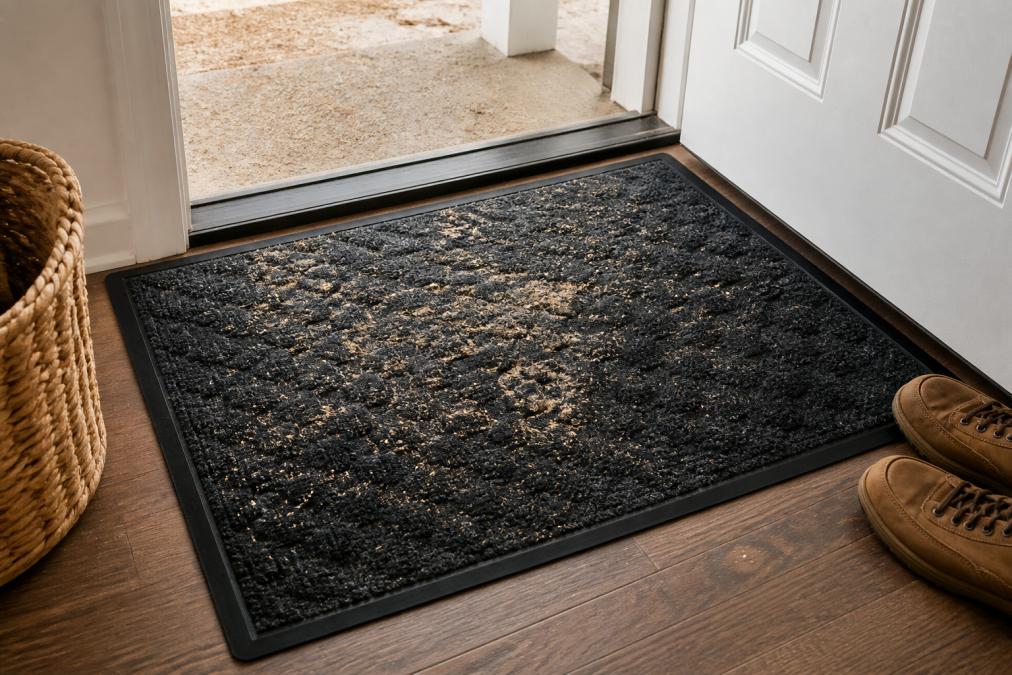
Heavy duty entryway mats for sand work as a two-zone system: a scraper mat outside to dislodge grit, and a walk-off rug inside to absorb what's left. One mat alone can't handle both jobs, because a surface aggressive enough to pull sand from lug treads is too coarse to dry a wet sock or catch fine dust.
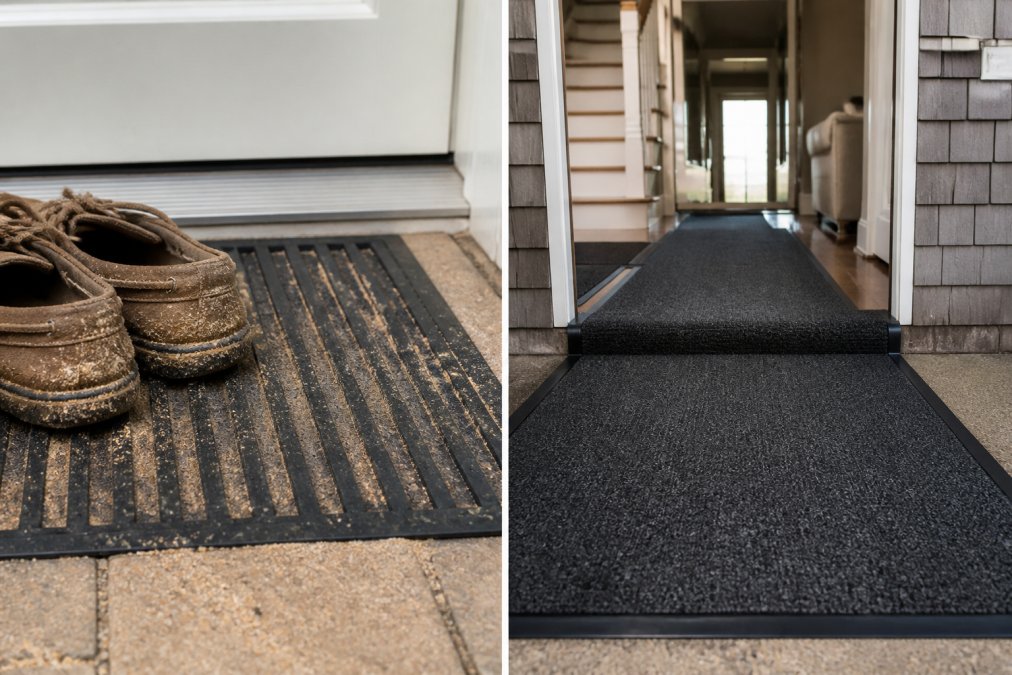
Matching the Mat to Your Door and Floor
| System | Best Placement | Primary Job | Watch Out For |
|---|---|---|---|
| Molded rubber scraper | Outside, uncovered | Dislodge sand from treads | Heavy; hard to shake clean |
| Bi-level rubber tray | Outside or in a covered porch | Trap sand below the walking surface | Needs hosing; can hold moisture if not drained |
| Walk-off rug (coir, sisal, polypropylene) | Inside, 3-5 ft run | Trap fine grit and moisture | Too small = sand gets through |
| Washable two-piece rug | Inside, high-traffic doors | Easy sand removal | Less scraping power than rubber |
Door clearance matters as much as mat choice. A standard residential door has about 3/4 inch of clearance at the threshold; a thick coir mat plus a rug pad can exceed that and drag on the sweep. Measure the gap before you buy, and choose a low-profile mat (under 1/2 inch) if clearance is tight.
Best Rug Materials for High Traffic Areas With Sand
The best rug materials for high traffic areas balance scraping power, durability, and breathability. Natural fibers scrape better; synthetics clean easier. Your floor type decides which matters more, and the backing matters as much as the face fiber.
Natural Fibers: Coir, Sisal, and Wool
Coir is the classic scraper fiber, stiff bristles that knock sand loose at the door. Sisal adds durable weave and a cleaner look. Wool absorbs moisture well but mats down in heavy traffic. One caution from home improvement discussions on mat materials: felt and natural fibers can trap sand, turning the protector itself into an abrasive surface. Shake natural fiber mats weekly.
Synthetic Options: Polypropylene and Rubber-Backed Mats
Polypropylene resists moisture and dries fast, which matters in coastal air. Rubber-backed mats stay put and block track-in, but the backing is where problems start. Non-breathable, waterproof mats placed directly over hardwood can trap moisture and damage the finish or cause warping. If your entry has hardwood, choose breathable tops over sealed rubber, or lift the mat regularly.
How Backing and Floor Finish Interact
Different floor finishes tolerate moisture differently, and that changes which mat is safe:
- Site-finished polyurethane, the most moisture-tolerant common finish; a breathable mat is still preferred, but short-term contact is less risky.
- Oil-modified or water-based urethane, moderately tolerant; lift rubber-backed mats monthly and let the floor air out.
- Wax or penetrating oil finishes, the least tolerant of trapped moisture; avoid non-breathable backings entirely and rely on breathable natural fibers.
- Luxury vinyl plank and laminate, the wear layer resists water, but seams and edges can still take on moisture; a breathable mat is the safer default.
Aesthetic Integration for Modern Homes
The old rubber-mat look isn't your only option. Washable two-piece rug systems like Ruggable's ($89) pair a machine-washable top layer with a non-slip base, so you get sand removal without a commercial mat at the door. Neutral tones and low profiles blend into modern entries; reserve the heavy rubber for the outside zone where nobody sees it. Flat-weave wool, jute blends, and low-pile performance rugs in muted palettes read as intentional design rather than utility, and they still scrape and absorb.
How to Remove Sand from Hardwood Floors Without Damage
To remove sand from hardwood floors without damage, vacuum first and never sweep dry grit across the surface. A broom drags sand grains across the finish like sandpaper. Use a vacuum with a hard-floor attachment, then follow with a barely damp microfiber mop. Wipe in the direction of the grain, and dry immediately. For weekly upkeep, vacuum entry zones twice as often as the rest of the house.
Breathability vs. Waterproofing: The Moisture Barrier Trade-Off
Breathability and waterproofing pull in opposite directions, and most guides ignore the conflict. Waterproof mats stop liquid at the door but seal moisture against your floor. Breathable mats let wood dry but pass some water through. The fix is zoning: waterproof scraper mats outside, breathable walk-off rugs inside. On hardwood, never place a rubber-backed mat directly on the finish for months at a time.
Furniture Protection in Sandy Entryways: Felt Pads, Glides, and Floor Finishes
Furniture in a sandy entryway grinds grit into the floor every time it moves. Adhesive felt pads like X-PROTECTOR's high-density pads ($9.99) prevent scratches, but felt collects sand over time and needs replacing. Smooth glides such as EZ-Glide ($8.00) shed grit better but can slide on slick surfaces. For long-term protection, a polyurethane finish in a satin or matte sheen hardens the surface against abrasion while hiding scuff marks.
Pet Considerations and Aesthetic Integration for Modern Homes
Dogs track more sand than shoes ever will, and their claws add scuff pressure on top of grit abrasion. Choose tight-weave, low-pile rugs that claws can't snag, and vacuum pet zones daily during beach season. Aesthetically, the old rubber-mat look isn't your only option. Washable two-piece rug systems like Ruggable's ($89) pair a machine-washable top layer with a non-slip base, so you get sand removal without a commercial mat at the door.
Frequently Asked Questions
What is the best way to trap sand at the front door?
Use a two-zone system: a heavy-duty scraper mat outside to dislodge sand from shoe treads, and a walk-off rug inside to capture remaining grit and moisture. Industry experts recommend placing quality entry mats both inside and outside the door to capture abrasive particles before they reach your primary flooring. Vacuum both mats regularly, and for rubber mats, hose them off outdoors to remove embedded sand.
Are natural fiber rugs good for sandy entryways?
Natural fibers like coir and sisal work well for scraping sand because of their durable, coarse weave. Coir is particularly effective as an outdoor scraper mat. However, natural fibers can trap moisture against hardwood if placed directly on the floor, so use a breathable pad underneath. For indoor walk-off zones, wool offers excellent sand trapping and is naturally moisture-resistant, though it requires more frequent vacuuming than synthetic options.
How often should I clean entry mats to prevent floor scratches?
Vacuum high-traffic entry mats at least twice weekly, and shake them out daily during peak sand season. Rubber scraper mats should be hosed off and dried every one to two weeks. When mats become saturated with sand, they stop trapping grit and start spreading it. A regular sand-specific maintenance schedule is the single most effective way to prevent abrasive particles from reaching your hardwood finish.
Do rug pads help protect hardwood floors from grit?
Yes, but only breathable rug pads. A non-slip pad keeps the rug from shifting, which reduces friction that can grind sand into the floor finish. However, waterproof or non-breathable pads placed over hardwood can trap moisture and damage the wood over time. Choose a breathable pad made from natural rubber or felt, and vacuum underneath the rug periodically to remove sand that sifts through.