 Listicle
Best Flooring for Coastal Homes: 2026 Guide
Table of Contents
- Best Flooring for Coastal Homes: Material Comparison
- Luxury Vinyl Plank (LVP) for Coastal Living
- Porcelain and Ceramic Tile Advantages
- Engineered Wood vs. Solid Hardwood
- Waterproof Flooring for Beach Houses
- Coastal Flooring Color Palettes & Design
- Maintaining Floors in Humid Climates
- Resale Value Impact of Coastal Flooring Choices
Last Updated: July 11, 2026
Best Flooring for Coastal Homes: Material Comparison
Coastal environments present unique challenges: salt spray corrodes standard materials, humidity fluctuates dramatically, sand gets tracked indoors constantly, and UV rays fade colors faster than anywhere else. The difference between a flooring choice that lasts 20 years and one that deteriorates in five comes down to material science and installation precision. This guide covers the five best flooring options for coastal homes and the maintenance realities you'll face.
Quick Comparison Table
| Flooring Type | Water Resistance | Sand Abrasion | Humidity Stability | Maintenance | Best For |
|---|---|---|---|---|---|
| Luxury Vinyl Plank (LVP) | 100% waterproof | Excellent | Excellent | Low | High-traffic families |
| Porcelain Tile | 100% waterproof | Excellent | Excellent | Moderate | Entryways, kitchens |
| Engineered Hardwood | Good (with sealant) | Fair | Good | High | Luxury homes |
| Ceramic Tile | 100% waterproof | Very good | Excellent | Moderate | Bathrooms, wet areas |
| Laminate | Poor | Poor | Poor | Low | Not recommended |
Luxury Vinyl Plank (LVP) for Coastal Living
Luxury vinyl plank has become the default choice for coastal homeowners because it's waterproof at the core, dimensionally stable in humidity swings, and genuinely durable against sand abrasion. Unlike laminate, which delaminates when exposed to moisture, LVP's rigid construction prevents swelling and warping even when humidity spikes to 80% or higher.
COREtec Luxury Vinyl Plank stands out because its 100% waterproof core resists the exact conditions that destroy traditional wood. The attached cork underlayment adds comfort and sound insulation. For homes that experience frequent foot traffic and sand tracking, the high-density wear layer (typically 20-40 mils thick) protects against scratches from sand particles.
Waterproof Core & Humidity Resistance
The waterproof core is what separates premium LVP from cheaper alternatives. When a coastal home experiences a pipe leak or heavy rain, water cannot penetrate the plank itself, it sits on the surface until you wipe it away. This matters because coastal humidity doesn't just come from rain; it seeps in through walls and accumulates in closed spaces.
Humidity resistance in coastal climates means the flooring won't expand and contract with seasonal moisture changes. Engineered wood struggles here because the real wood veneer can still swell slightly, creating gaps or buckling. LVP's plastic-based construction means it holds its dimensions regardless of whether humidity is 45% or 75%.
Sand and Salt Abrasion Protection
Sand is abrasive. When thousands of grains are tracked in daily, they act like sandpaper on your floors. Mannington Adura Luxury Vinyl includes ScratchResist technology specifically designed to handle this. The wear layer resists scratching from sand, pet claws, and furniture movement.
Salt spray is another matter. Unlike porcelain tile, which is completely impervious to salt, LVP isn't immune to salt damage over decades. However, the wear layer protects the underlying material effectively. The key is regular cleaning: wipe down entry areas daily with a damp cloth to remove salt residue before it accumulates.
Mohawk SolidTech's Uniclic MultiFit locking system creates tight, gap-free seams that prevent sand from working its way between planks. This maintains floor integrity even in high-traffic areas.
Porcelain and Ceramic Tile Advantages
Porcelain tile is the most durable option for coastal homes. It's non-porous, meaning water cannot penetrate the material itself. Salt cannot corrode it. Sand cannot scratch it. UV rays cannot fade it. In harsh coastal environments, especially those with direct salt spray, porcelain is the only flooring that truly withstands environmental stress.
The trade-off is comfort and warmth. Tile feels cold underfoot, and in a beach home where barefoot living is part of the appeal, this matters.
Durability in Coastal Environments
Marazzi Porcelain Stoneware is engineered specifically for environments where durability trumps comfort. The non-porous surface is impervious to water, salt, and sand. Porcelain's durability comes from its firing process, it's fired at extremely high temperatures, creating a denser, less porous material than ceramic tile.
MSI Wood-Look Porcelain Tile solves porcelain's biggest aesthetic challenge: it looks like weathered driftwood or light oak without the maintenance burden of real wood. The matte finish options reduce slipperiness, which matters in coastal homes where wet feet are common. Large format tiles minimize grout lines, which is important because grout, not tile, is where water and salt problems occur.
Saltwater Corrosion & UV Fading Resistance
Ceramiche Keope 20mm Porcelain is specifically engineered for outdoor coastal areas. The 20mm thickness handles freeze-thaw cycles and salt spray. It's frost resistant and UV resistant, meaning the color stays true even under direct sun exposure for decades.
Salt doesn't corrode porcelain because there's nothing to corrode, it's ceramic, not metal. UV fading is another consideration. Coastal homes get intense sunlight, especially in south-facing rooms. Standard laminate and some vinyl fade noticeably within 5-7 years. Porcelain doesn't fade because the color is integral to the material, not a printed surface layer.
Engineered Wood vs. Solid Hardwood
Real hardwood is beautiful and warm underfoot, but it's the worst choice for coastal environments. Solid hardwood expands and contracts dramatically with humidity changes. In a coastal climate where humidity swings from 40% to 80%, solid hardwood will cup, crown, and develop gaps that are nearly impossible to fix.
Engineered hardwood solves this problem partially. The multi-ply core construction resists warping and cupping better than solid wood. However, engineered hardwood still requires more maintenance than vinyl or tile, and it still cannot match the durability of porcelain in harsh coastal conditions.
Dimensional Stability in Humid Climates
ADM Flooring Engineered Hardwood uses a multi-ply core specifically designed to resist the dimensional changes that plague solid hardwood. The real hardwood top layer gives you authentic wood character, while the engineered core keeps the floor stable even when humidity fluctuates 30 percentage points in a single season.
Engineered hardwood typically shows 50-70% less movement than solid hardwood, which is significant. However, it still moves more than LVP or porcelain. Coastal homeowners who insist on real wood should expect higher maintenance. The protective finish needs reapplication every 3-5 years in coastal climates (versus 7-10 years in dry climates).
The resale value argument often favors engineered wood in luxury markets. Buyers perceive real hardwood as more prestigious, even though porcelain tile or high-end LVP is objectively more durable in coastal conditions.
Waterproof Flooring for Beach Houses
Waterproof flooring isn't just about standing water from leaks, it's about managing the constant moisture that coastal environments produce. Humidity seeps into walls and creates an environment where mold and mildew thrive. The best flooring for coastal homes actively resists moisture penetration.
Subfloor Moisture Mitigation Strategies
The subfloor is where most moisture problems originate. Coastal foundations often have water seepage, and even homes without obvious moisture issues experience capillary rise, water wicking up from the ground into the subfloor. A moisture barrier is non-negotiable in coastal homes.
Install a 6-mil polyethylene vapor barrier over the subfloor before laying any flooring. This prevents moisture from rising through the concrete or wood subfloor into the flooring material itself. In some coastal homes, a dehumidifier running year-round is necessary to keep indoor humidity below 55%. When humidity stays above 60%, mold begins to grow on subfloors and behind baseboards.
Indoor-Outdoor Flow and Installation
Many coastal homes feature direct transitions from interior living spaces to outdoor patios. Seamless flooring that works both indoors and outdoors creates the open, airy aesthetic that defines coastal design. Porcelain tile accomplishes this perfectly, the same tile can flow from the kitchen through sliding glass doors onto the patio.
LVP works indoors but isn't recommended for outdoor use. It degrades under direct UV exposure and can warp if it gets too hot in the sun.
Installation technique matters significantly in coastal homes. Grout lines should be sealed with a penetrating sealer, not just standard grout. Use epoxy grout in coastal homes, it's more expensive but resists salt and moisture far better than standard cement grout. The transition between rooms should include a proper threshold that directs water away from the subfloor.
Coastal Flooring Color Palettes & Design
Coastal aesthetics favor light, airy colors that reflect sunlight and create a sense of openness. These colors also hide salt residue and dust better than dark colors.
Light and Airy Colors for Coastal Aesthetic
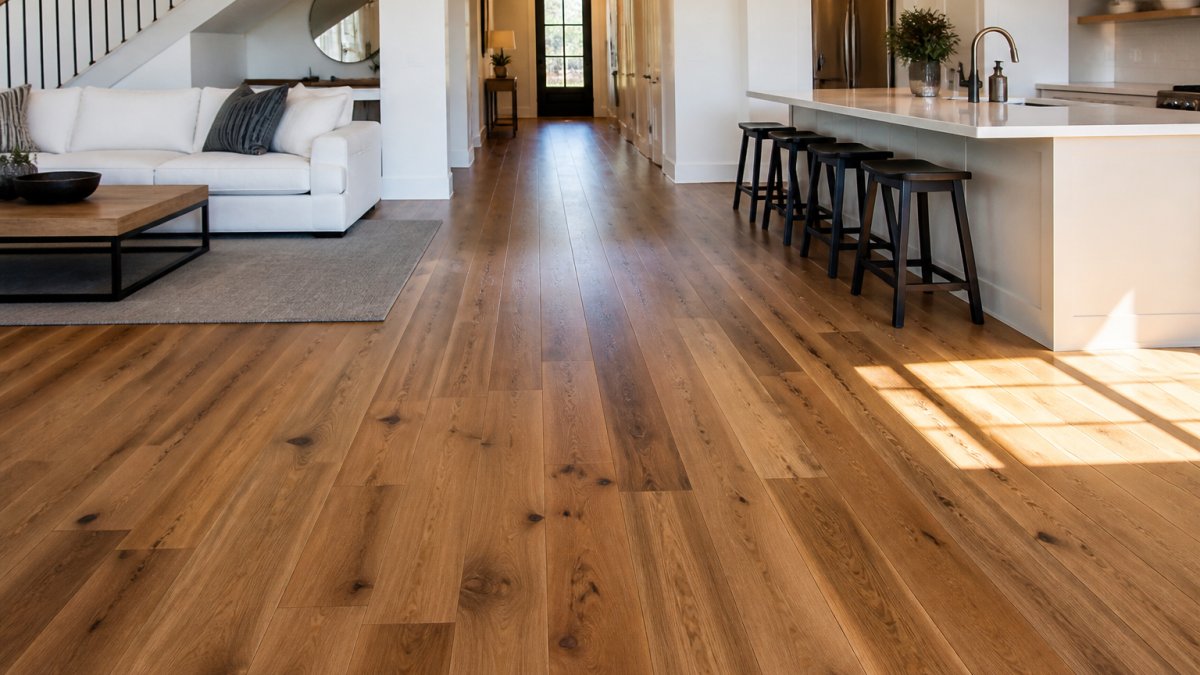
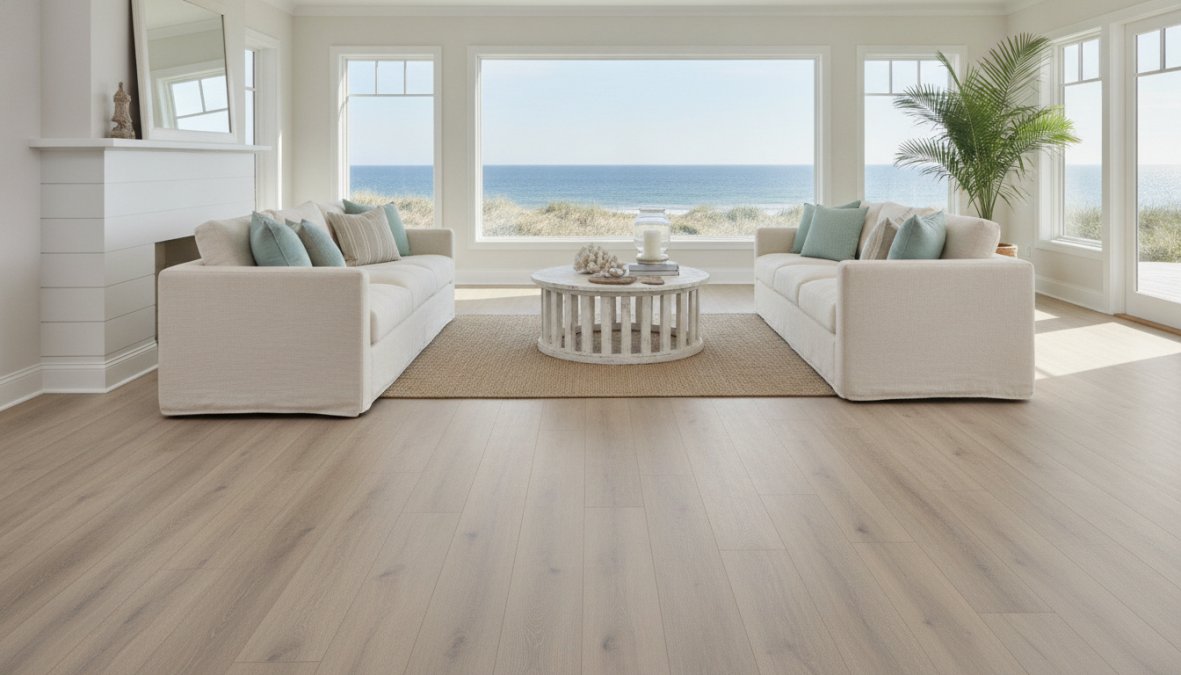
The best flooring for coastal homes typically features light oak, whitewashed, driftwood, or limestone-inspired colors. Light colors reflect heat, keeping rooms cooler during hot summer months. They also hide the salt residue, sand, and dust that accumulate in coastal homes.
Flooret's extra-long planks in light wood tones create a sense of spaciousness, which is the defining characteristic of coastal design. Neutral tones dominate coastal interiors because they allow ocean views and natural light to be the focal point. Gray is increasingly popular in coastal homes as an alternative to pure white or cream, maintaining the airy feeling while adding sophistication.
Avoid dark colors in coastal homes. Dark tile or wood absorbs heat and can become uncomfortably warm underfoot in summer. Dark colors also show every footprint and grain of sand, requiring constant cleaning.
Maintaining Floors in Humid Climates
Coastal flooring maintenance isn't complicated, but it's non-negotiable. Neglecting maintenance turns a durable floor into a problem floor within a few years.
Cleaning Tips and Long-Term Care
Daily maintenance in coastal homes means wiping down entry areas and high-traffic zones with a damp microfiber cloth. This removes salt residue, sand, and moisture before they accumulate. Weekly cleaning should use pH-neutral cleaners specifically formulated for your flooring type. Quarterly deep cleaning involves moving furniture and cleaning areas that don't get regular foot traffic, preventing mold growth in corners and under furniture.
Seasonal maintenance in coastal homes means inspecting grout lines for cracks or discoloration and ensuring that dehumidifiers are functioning properly. Salt spray can accelerate the degradation of grout, so catching problems early prevents expensive repairs.
Pet and Sand-Scratch Resistance
Pets are common in beach homes, and their claws can scratch even durable flooring. LVP with scratch-resistant technology handles pet claws better than standard vinyl. Porcelain tile is immune to scratching from pet claws, though the noise can be loud.
Sand scratching is different from pet scratching. When thousands of grains are ground into the surface under foot traffic, they create fine scratches that accumulate into visible wear patterns. The best defense is prevention: entry mats and regular sweeping remove sand before it gets ground into the flooring.
For homes with multiple pets or high foot traffic, a wear layer of 40+ mils (LVP) or porcelain tile provides the best protection. Rugs and runners in entry areas protect flooring from both sand and pet claws, significantly extending floor life.
Resale Value Impact of Coastal Flooring Choices
Flooring choices affect resale value, but not always in the way homeowners expect. Luxury buyers in coastal markets often perceive engineered hardwood as more prestigious than porcelain tile, even though tile is objectively more durable in coastal conditions.
If you plan to live in the home for 15+ years, choose flooring based on durability and maintenance rather than perceived prestige. If you plan to sell within 10 years, consider your target buyer's preferences. Younger buyers value durability and low maintenance; older buyers often prefer the aesthetic of real hardwood.
Homes with visible flooring problems sell at significant discounts. Choosing flooring that can be maintained easily in coastal conditions prevents this scenario. A well-maintained light oak-look LVP floor will outperform a poorly maintained hardwood floor in resale value. The best flooring for coastal homes is ultimately the one you'll maintain consistently.
Selecting flooring for a coastal home involves balancing aesthetics, durability, and maintenance reality. Porcelain tile offers unmatched durability in salt-spray environments. Luxury vinyl plank delivers the best balance of warmth, waterproofing, and low maintenance for most families. Engineered hardwood adds prestige but requires consistent care in humid climates.
At Hamptons carpet one floor and Home, we help coastal homeowners navigate these choices by matching your specific environment, lifestyle, and budget to flooring that will perform for decades. Our team understands the unique challenges of coastal climates and can recommend products specifically suited to salt spray, humidity fluctuations, and sand tracking. Visit Hamptons carpet one floor and Home to discuss your coastal flooring project with specialists who know what actually works in beach homes.
Frequently Asked Questions
What is the most durable flooring for a beach house?
Porcelain stoneware and luxury vinyl plank (LVP) are the most durable options for beach houses. Porcelain tile offers superior resistance to saltwater corrosion, sand abrasion, and humidity, making it ideal for high-traffic entryways and kitchens. Premium LVP with 40+ mil wear layers provides 100% waterproof protection and dimensional stability, resisting warping in fluctuating coastal humidity. Both require minimal maintenance compared to solid hardwood in seaside climates.
Is luxury vinyl plank good for coastal homes?
Yes, luxury vinyl plank is excellent for coastal homes. LVP offers 100% waterproof construction, preventing swelling and warping in humid coastal air. Products with rigid core technology and attached cork underlayment provide superior comfort and sound insulation. The high-density wear layer resists sand scratches and dents from high-traffic areas. Many LVP options feature realistic wood-look aesthetics while delivering durability that solid hardwood cannot match in salt-air environments.
How do you protect floors from sand and humidity in coastal areas?
Protect coastal floors through strategic subfloor moisture mitigation, including vapor barriers and proper drainage systems before installation. Choose waterproof materials like porcelain tile or LVP with waterproof cores. Use entry mats and regular cleaning routines to minimize sand tracking. Maintain humidity levels between 30-50% with climate-controlled air systems. Select materials with anti-slip surfaces for wet areas. Seal grout lines in tile installations. For engineered wood, apply protective oil or lacquer finishes and avoid direct exposure to saltwater spray.
What flooring colors work best for coastal interior design?
Light and airy colors dominate coastal flooring palettes. Neutral tones like soft whites, pale grays, light oak, and weathered driftwood create the classic coastal aesthetic. These colors reflect natural light, making spaces feel larger and brighter. Porcelain tiles and LVP offer wood-look options in these neutral tones. Avoid dark colors that show sand and dust easily. Consider matte finishes over glossy to reduce glare and enhance the relaxed, natural feel of coastal decor while maintaining slip resistance in wet areas.
This article was written using GrandRanker