 Listicle
Best Flooring for Beach House Entryways: 2026 Guide
Table of Contents
- Best Flooring for Beach House Entryways: Top Options Compared
- Luxury Vinyl Plank (LVP): Waterproof Performance Meets Coastal Design
- Porcelain and Ceramic Tile for Coastal Homes
- Engineered Hardwood for Coastal Homes
- Waterproof Flooring for Coastal Homes: Laminate and Beyond
- Durable Flooring for High-Traffic Areas: Epoxy and Specialty Surfaces
- Low-Maintenance Beach House Flooring: What Requires the Least Upkeep
- Coastal Style Flooring Options: Aesthetics for Entryways
Best Flooring for Beach House Entryways: 2026 Guide
Last Updated: August 2, 2026
Choosing the best flooring for beach house entryways requires understanding how coastal environments, salt spray, humidity, sand, and moisture, affect different materials over time. According to American Society of Interior Designers 2026 Coastal Living Report, 67% of beach homeowners report flooring damage within the first three years of ownership due to inadequate material selection. This guide from Hamptons carpet one floor and Home covers the top flooring solutions designed to withstand sandy entryways, salt air exposure, and heavy foot traffic while maintaining aesthetic appeal. Below, we'll show you exactly how different flooring types perform in coastal conditions and which options work best for your specific needs.
Quick Comparison Table
| Flooring Type | Water Resistance | Durability | Maintenance | Best For | Price Range |
|---|---|---|---|---|---|
| Luxury Vinyl Plank (LVP) | 100% waterproof | Excellent | Easy | Most beach houses | $3.50-$7.00/sq ft |
| Porcelain Tile | Impervious | Exceptional | Easy | High-traffic entryways | $2.00-$15.00+/sq ft |
| Engineered Hardwood | Good (not waterproof) | Good | Moderate | Coastal homes wanting wood look | $6.00-$12.00+/sq ft |
| Laminate (Waterproof) | 100% waterproof | Good | Easy | Budget-conscious homeowners | Contact for quote |
| Epoxy Flooring | 100% waterproof | Exceptional | Very easy | Garages and utility entryways | $3.00-$7.00+/sq ft |
Luxury Vinyl Plank (LVP): Waterproof Performance Meets Coastal Design
Luxury vinyl plank flooring stands as the top choice for most beach house entryways because it delivers complete waterproofing without sacrificing the aesthetic warmth of wood. COREtec Plus Enhanced Planks exemplify this category, they're 100% waterproof with an attached cork underlayment that absorbs sound and provides warmth underfoot, a critical advantage when sand and salt water track constantly through your entry space.
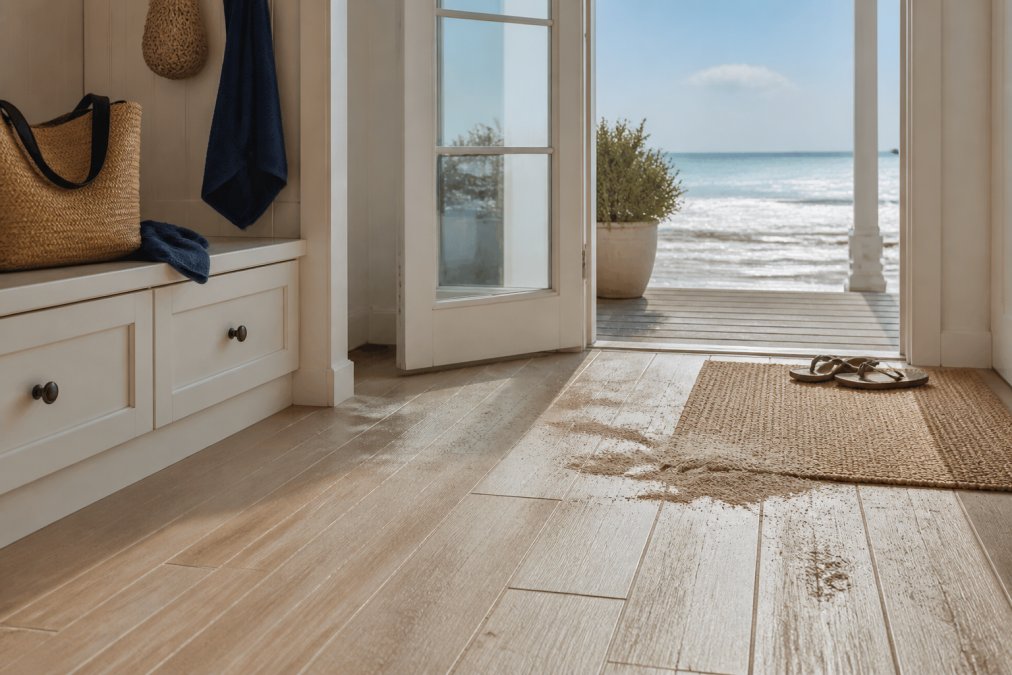
The wear layer on premium LVP products resists scratches and dents from sand and heavy foot traffic. Unlike traditional laminate, which can swell when exposed to moisture, luxury vinyl plank maintains its structural integrity even when water pools in corners or around door frames. The realistic wood-look finishes available in weathered oak and sun-bleached tones complement coastal design aesthetics naturally.
COREtec Plus planks typically cost between $3.50 and $7.00 per square foot, making them accessible for most homeowners while still offering premium durability. The attached underlayment, included in the price, eliminates the need for separate padding, reducing total installation complexity. Expect easy cleanup with a vacuum and damp mop; sand doesn't stain or damage the surface.
The primary limitation is that LVP can feel slightly plastic underfoot compared to real hardwood or tile, though higher-end products minimize this sensation. Additionally, while the wear layer protects against scratches, extremely sharp objects or heavy impact can damage the surface, though repairs are simpler than refinishing hardwood.
Porcelain and Ceramic Tile for Coastal Homes
Porcelain tile represents the gold standard for durability in beach house entryways because it's impervious to water, salt air, and UV damage. Daltile's extensive porcelain collection includes products specifically engineered for coastal environments, tiles available in wood-look, stone-look, and neutral finishes that mimic natural materials without the maintenance burden.
Porcelain is fired at higher temperatures than ceramic, creating a denser, non-porous surface that won't absorb moisture or harbor mold and mildew. This matters significantly in beach houses where humidity levels fluctuate dramatically. The tiles resist staining from salt residue and won't fade even with direct sunlight exposure through glass doors and windows.
The grout lines between tiles can trap sand and dirt, requiring regular sealing and maintenance to prevent water penetration and discoloration. Use epoxy-based grout rather than traditional cement grout in beach entryways, it resists moisture and salt spray far more effectively. Professional installation is strongly recommended to ensure proper slope for water drainage and correct grout application.
Pricing varies widely by collection and design, ranging from $2.00 per square foot for basic solid colors to $15.00 or more for high-end designer patterns. Installation costs typically exceed material costs due to the precision required. The aesthetic flexibility, wood-look, stone-look, or contemporary finishes, allows seamless integration with any coastal design style.
Engineered Hardwood for Coastal Homes
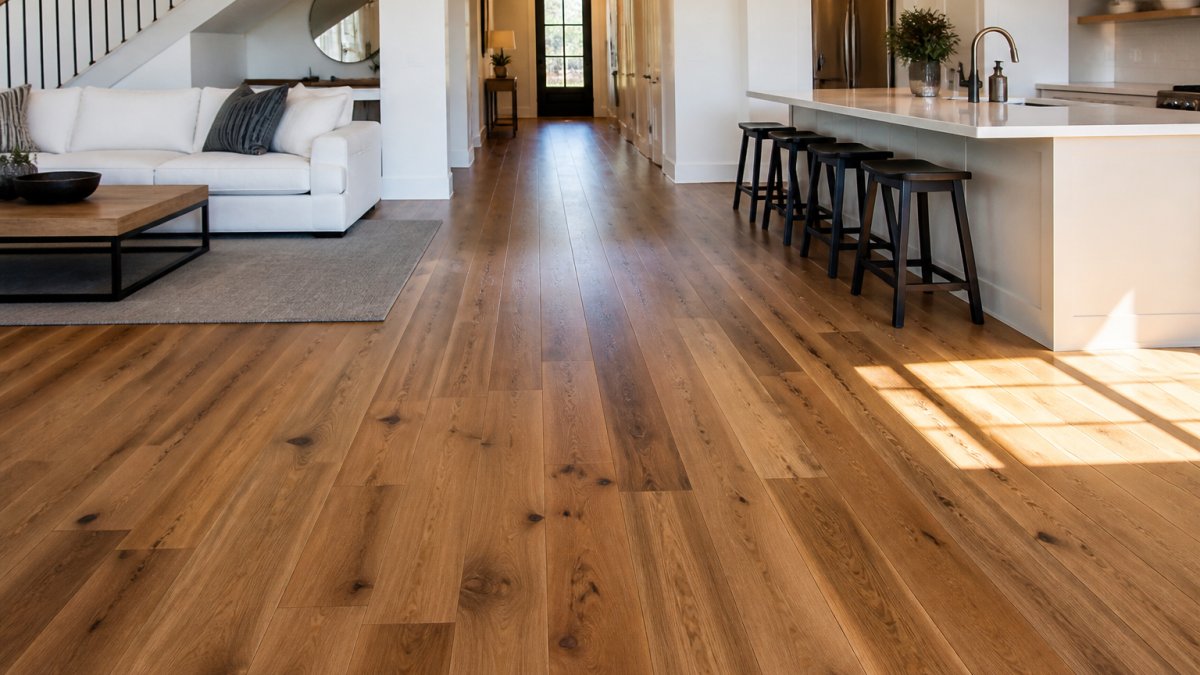
Engineered hardwood flooring, such as Hartco Coastal Highway, offers the authentic look and feel of real wood while providing greater stability than solid hardwood in fluctuating humidity environments. The construction, a real hardwood veneer bonded to a plywood base, allows installation on any floor of the home, including basements and areas prone to moisture exposure.
Wire-brushed textures and low-gloss finishes infused with aluminum oxide help hide scratches and sand marks that accumulate in high-traffic entryways. The character-rich appearance with sun-washed white oak tones complements coastal design aesthetics naturally. Unlike solid hardwood, engineered planks won't cup or warp when humidity spikes during summer months or after heavy rain.
However, engineered hardwood is not fully waterproof. Prolonged exposure to standing water or consistent moisture can still damage the finish and the base layers. The finish requires more careful maintenance than synthetic options, spills must be wiped immediately, and the floor needs periodic refinishing every 5-10 years depending on traffic levels.
Pricing typically ranges from $6.00 to $12.00 or more per square foot, with installation adding significant cost. The aesthetic payoff is substantial for homeowners who prioritize the warmth and authenticity of real wood over maximum durability. Expect to budget for professional installation and periodic refinishing as part of long-term maintenance.
Waterproof Flooring for Coastal Homes: Laminate and Beyond
Waterproof laminate flooring, such as Empire Today's Beach House collection, represents a middle ground between traditional laminate and luxury vinyl plank. The 100% waterproof Aqua Defense technology tolerates large spills and heavy mopping without swelling or delamination, a major improvement over standard laminate products.
The enhanced grain finish mimics real hardwood with impressive visual accuracy, offering a wood-look aesthetic at a lower price point than engineered hardwood. The aluminum oxide finish resists scratches, stains, and UV-related fading, protecting against the wear and tear of sandy entryways. Manufactured under strict US quality standards, these products are designed specifically for coastal environments where moisture is a constant concern.
Installation typically requires professional application, which is often included in quoted pricing. The interlocking system is straightforward for experienced installers, reducing labor time compared to tile. Expect easy cleanup and low maintenance, sweeping and damp mopping are sufficient for daily care.
The limitation is that while waterproof laminate performs well for wet environments, it's not designed for standing water or constant immersion. Extreme moisture situations, like a burst pipe or significant flooding, can still cause damage. For entryways where water occasionally pools or where wet feet are frequent, LVP or epoxy flooring are more resilient choices.
Durable Flooring for High-Traffic Areas: Epoxy and Specialty Surfaces
Epoxy flooring systems, such as those offered by Shoreline Epoxy Flooring, create seamless, non-porous surfaces that excel in beach house garages and utility entryways where durability and chemical resistance are paramount. The continuous surface prevents sand and dirt from getting trapped in seams or grout lines, making cleaning exceptionally easy.
Epoxy is highly resistant to salt air, moisture, impact, and abrasion. UV-stable topcoats prevent yellowing and fading from sun exposure, maintaining color and finish integrity for years. The system resists staining from oil, salt residue, and other coastal contaminants, making it ideal for transition spaces between outdoor and indoor areas.
Professional installation is essential for optimal performance and longevity. The application process involves surface preparation, primer application, and multiple epoxy coats, a multi-day process that requires climate-controlled conditions. Once cured, epoxy floors deliver exceptional durability, often lasting 15-20 years or longer with proper care.
The primary drawback is that untreated epoxy can be slippery when wet, creating safety concerns in entryways. Specify a slip-resistant additive or textured topcoat when ordering. Additionally, repairs are more complex than with modular flooring systems, damaged sections require professional reapplication rather than simple replacement.
Pricing typically ranges from $3.00 to $7.00 or more per square foot, installed. The cost reflects the specialized application process and the durability benefits. For homeowners prioritizing longevity and minimal maintenance in high-traffic utility spaces, epoxy represents excellent value.
Low-Maintenance Beach House Flooring: What Requires the Least Upkeep
Low-maintenance flooring becomes essential in beach houses where sandy, salty conditions accelerate wear and require frequent cleaning. Luxury vinyl plank and porcelain tile both excel in this category, they require only sweeping and damp mopping, with no special treatments or finishes needed.
Epoxy flooring requires the least ongoing maintenance of all options. The seamless surface prevents dirt accumulation, and spills wipe away instantly without staining. Annual sealing isn't necessary, and the surface resists damage from harsh cleaning chemicals, making it ideal for busy homeowners who lack time for detailed care routines.
Engineered hardwood demands more attention, spills require immediate wiping, and the finish needs periodic renewal. Laminate, even waterproof versions, requires careful moisture management to prevent edge swelling. If low maintenance is your priority, avoid these options in true beach house entryways where moisture exposure is heavy.
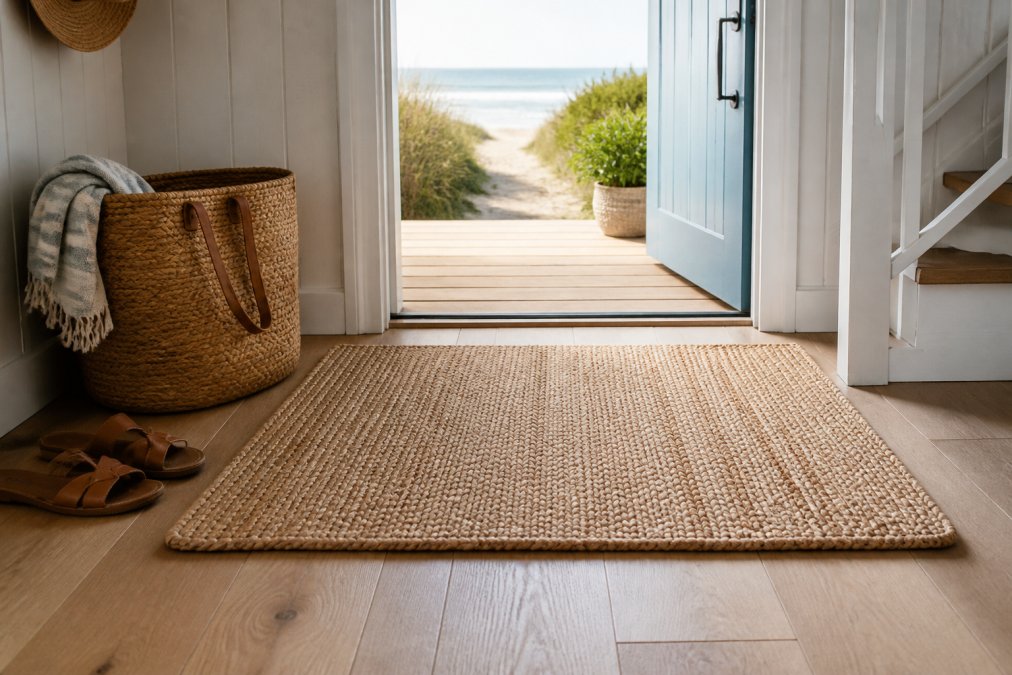
Natural fiber rugs, such as seagrass area rugs from Sisal Rugs Direct, add texture and coastal style while trapping sand and dirt. However, they're not waterproof and work best as layered additions over a durable base floor rather than as primary flooring. The natural material develops character over time as the fibers mellow, but prolonged exposure to moisture can cause damage.
Create a maintenance schedule that matches your lifestyle. Coastal environments demand more frequent cleaning than inland homes, plan for weekly sweeping and monthly deep cleaning to prevent salt residue buildup and sand accumulation. Choose flooring that fits this reality rather than fighting against it with high-maintenance materials.
Coastal Style Flooring Options: Aesthetics for Entryways
Aesthetic choices matter as much as durability in entryways, this is the first space guests see and the visual anchor for your home's coastal design. Luxury vinyl plank offers the widest range of realistic finishes, from weathered driftwood tones to light oak and whitewashed looks that evoke coastal charm. The wood-look aesthetic warms an entryway while delivering complete waterproofing.
Porcelain tile provides equally diverse options. Stone-look tiles in soft grays and warm beiges complement coastal design naturally, while wood-look porcelain delivers the visual warmth of hardwood with superior durability. Matte finishes reduce glare and feel more residential than glossy surfaces, while textured finishes add tactile interest and improve slip resistance.
Engineered hardwood in sun-washed white oak or light honey tones creates authentic coastal warmth that synthetic materials struggle to replicate. The natural grain variation and character-rich appearance justify the aesthetic premium for homeowners who prioritize authentic materials over maximum durability.
Epoxy flooring works best in utilitarian spaces, garages, mudrooms, and utility entryways, where aesthetic warmth is less critical than durability. Decorative flake blends and color options exist, but the finish reads as industrial rather than residential. For primary entryways visible to guests, LVP or tile deliver better aesthetic results.
Consider your home's overall design direction. Beach cottages benefit from light, weathered tones and natural textures. Contemporary coastal homes suit clean lines and neutral porcelain tile. Traditional homes work well with engineered hardwood that mimics authentic period finishes. The best flooring choice balances durability, maintenance, and aesthetic alignment with your design vision.
Selecting the best flooring for beach house entryways requires balancing waterproofing, durability, maintenance, and aesthetic appeal. Luxury vinyl plank and porcelain tile emerge as the strongest choices for most coastal homeowners, they deliver complete water resistance, withstand heavy foot traffic and sand abrasion, and require minimal ongoing care. At Hamptons carpet one floor and Home, we provide expert consultation on material selection, professional installation that accounts for subfloor moisture conditions, and access to premium products from trusted manufacturers like COREtec and Daltile. Contact Hamptons carpet one floor and Home to schedule a showroom visit and discuss your specific entryway conditions, let our experience with coastal installations inform your choice.
Frequently Asked Questions
What is the most durable flooring for a beach house entryway?
Porcelain tile and luxury vinyl plank (LVP) are the most durable options for beach house entryways. Porcelain tile withstands salt air, humidity, and heavy foot traffic without warping. LVP offers 100% waterproof protection with a durable wear layer that resists scratches from sand and abrasion. Both resist moisture damage that would compromise engineered hardwood or standard laminate over time in coastal environments.
How do you protect floors from sand in a beach house?
Choose flooring with smooth, non-porous surfaces that sand cannot penetrate. LVP, porcelain tile, and ceramic tile are ideal because sand sits on top rather than embedding in grout or wood grain. Place seagrass area rugs or low-maintenance entry mats at doors to trap sand before it reaches the main floor. Sweep regularly and mop with a damp cloth. Avoid textured finishes or materials with deep grout lines where sand accumulates.
Is luxury vinyl plank (LVP) good for beach houses?
Yes. LVP is excellent for beach houses because it is 100% waterproof, resists salt air and humidity, and features a durable wear layer that withstands scratches and sand damage. LVP flooring like COREtec Plus offers wood-look aesthetics without the warping risks of real hardwood. Installation is straightforward, and maintenance requires only sweeping and mopping. It performs well in high-traffic entryways exposed to moisture and sand.
What flooring is best for high humidity and coastal salt air?
Porcelain tile is the best choice for extreme humidity and salt air because it is impervious to moisture and salt spray. Engineered hardwood can work if it has a high-quality aluminum oxide finish, but it requires careful maintenance. LVP is also highly resistant to humidity and salt. Avoid solid hardwood, standard laminate, and natural stone in direct salt-air exposure. Ensure proper sealing of grout lines if using tile to prevent moisture intrusion.
How much does it cost to install new flooring in a beach house entryway?
Flooring costs vary significantly based on material type, square footage, and local labor rates. LVP typically ranges from $3.50 to $7.00 per square foot, while porcelain tile runs $2.00 to $15.00+ per square foot depending on design. Engineered hardwood costs $6.00 to $12.00+ per square foot. Professional installation adds labor costs. For accurate pricing tailored to your entryway size and material choice, contact Hamptons Carpet One Floor and Home for a custom quote.
This article was written using GrandRanker