 Listicle
Best Low Maintenance Family Flooring: 2026 Guide
Table of Contents
- Why Low Maintenance Flooring Matters for Busy Families
- Luxury Vinyl Plank (LVP) for High-Traffic Homes
- Durable Flooring for Pets and Kids: Material Comparison
- Luxury Vinyl Plank vs Laminate for Families
- Flooring Maintenance Tips for Busy Parents
- Top Flooring Products for Low Maintenance Family Homes
- Repairability & Long-Term Value in Best Low Maintenance Family Flooring
- Climate-Specific Performance & Underfoot Comfort
Best Low Maintenance Family Flooring: 2026 Guide
Last Updated: July 15, 2026
Busy families need flooring that withstands spills, scratches, and muddy paws without constant maintenance. At Hamptons carpet one floor and Home, we've spent years helping Suffolk County families find the right solution. This guide shows you which flooring types deliver on their low-maintenance promises and which ones disappoint in practice.
Why Low Maintenance Flooring Matters for Busy Families
Low-maintenance flooring is essential for households running at full speed. Solid hardwood demands immediate spill cleanup to prevent water damage. Grout lines in tile trap dirt and require regular scrubbing. Certain carpet fibers show every footprint.
Low-maintenance options like luxury vinyl plank (LVP) and engineered hardwood solve this by design. They resist stains, handle moisture without warping, and clean up in minutes with basic sweeping and mopping. For families with pets, this difference is transformative.
Beyond convenience, the right flooring protects your long-term investment. Materials that resist scratching and denting maintain their appearance for years, avoiding costly refinishing or replacement.
Luxury Vinyl Plank (LVP) for High-Traffic Homes
Luxury vinyl plank dominates the family flooring market because it delivers on the low-maintenance promise. LVP combines waterproof construction with realistic wood aesthetics and scratch-resistant surfaces, making it ideal for households with active kids and pets.
LVP's rigid core prevents swelling and warping when exposed to moisture. Spilled milk, muddy paw prints, or bathroom humidity won't damage the material. The wear layer (typically 20-40 mils in quality products) resists scratches from pet claws and toy trucks. Cleaning requires nothing more than a damp mop and basic household cleaner.
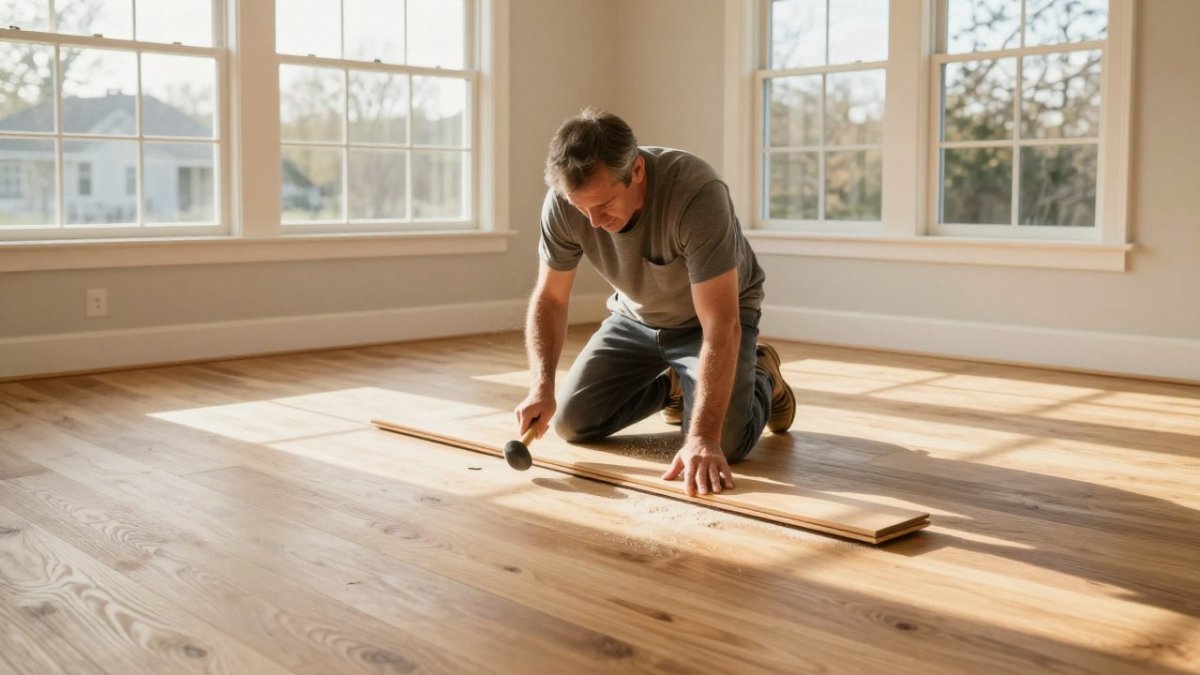
LVP comes in two formats: traditional vinyl plank (which floats over a subfloor) and rigid core (which is thicker and more stable). Rigid core options like COREtec Plus and Flooret Modin include attached underlayment, which adds warmth and sound absorption. Professional installation typically costs between $1,000-$3,000 for a 1,500-square-foot home, depending on subfloor condition.
Durable Flooring for Pets and Kids: Material Comparison
Three material categories dominate for households with children and pets: luxury vinyl, tile, and engineered hardwood.
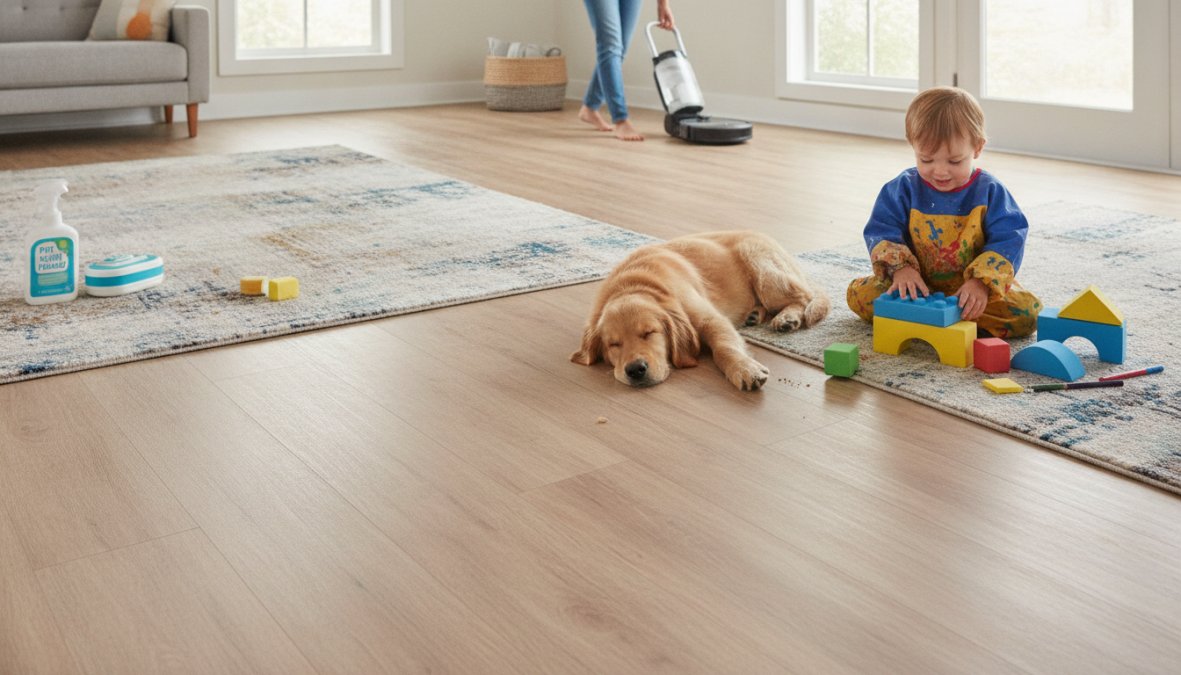
Luxury vinyl plank excels at scratch resistance and waterproofing. Pet claws and dropped toys rarely leave visible marks on quality rigid core options. Water from accidents poses no risk. The soft underfoot feel is gentler on joints during active play.
Porcelain tile offers unmatched durability and stain resistance. It's virtually indestructible and doesn't harbor allergens or odors from pet accidents. The downside: grout lines require regular maintenance, and the hard surface feels cold underfoot.
Engineered hardwood provides the warmth and aesthetic value of real wood with better stability than solid hardwood. Wire-brushed finishes hide wear patterns effectively. However, it isn't waterproof, spilled water must be cleaned immediately to prevent damage.
| Material | Water Resistance | Scratch Resistance | Pet-Friendly | Maintenance |
|---|---|---|---|---|
| Luxury Vinyl Plank | Excellent | Excellent | Excellent | Minimal |
| Porcelain Tile | Excellent | Excellent | Good | Moderate (grout) |
| Engineered Hardwood | Good | Good | Very Good | Moderate |
Waterproof & Stain-Resistant Options
Waterproofing separates true low-maintenance flooring from materials that merely claim to be easy-care. For families, waterproofing is non-negotiable.
Luxury vinyl plank achieves waterproofing through its rigid core construction. The 100% waterproof core won't swell or warp when exposed to moisture. Subfloor moisture from humidity or minor leaks won't affect rigid vinyl, though it destroys hardwood and laminate.
Porcelain tile is inherently waterproof due to its dense, non-porous composition. Grout lines (which are porous) require sealing to prevent staining.
Stain resistance works differently. LVP resists staining because the wear layer is sealed, spills sit on the surface rather than soaking in. Wine, juice, and pet accidents wipe away cleanly. Engineered hardwood's pre-finished surface provides some stain resistance, but acidic spills can etch the surface if left sitting.
Scratch-Resistant Flooring Options for Active Households
Scratch resistance becomes immediately visible when comparing quality levels. A cheap vinyl floor shows every pet claw mark; a quality rigid core LVP hides the same damage completely.
The wear layer thickness determines scratch resistance. Premium options like Flooret Modin (40-mil wear layer) and COREtec Plus (20-mil) resist scratches far better than budget vinyl (12-mil or less). Quality products maintain their appearance for 10+ years in active households, while budget options show visible wear within 2-3 years.
Mannington Adura's ScratchResist technology and Mohawk SolidTech's enhanced dent resistance represent real improvements in how products perform under real-world stress. For households with large dogs or multiple children, scratch resistance is essential.
Luxury Vinyl Plank vs Laminate for Families
Laminate is often positioned as a budget alternative to LVP, but it's fundamentally unsuitable for family environments. Laminate's core material swells when exposed to water, and once swelling starts, it's irreversible. A single accident from a pet or spilled water can ruin a laminate floor section.
LVP's waterproof core solves this problem entirely. Spills don't penetrate the material. For families, this difference is worth every penny of the modest price premium.
Hardwood vs LVP vs Tile: Which Wins for Families
Hardwood wins on long-term home value and aesthetic warmth. However, spills must be cleaned immediately, and the finish will show wear in high-traffic areas.
Tile wins on durability and stain resistance. A porcelain tile floor will outlast any other option. The trade-off is underfoot comfort and grout maintenance.
LVP wins on the balance of low-maintenance performance, aesthetic flexibility, and comfort. It's not the most durable (tile wins) or most valuable (hardwood wins), but it's the most practical for active families.
Flooring Maintenance Tips for Busy Parents
Even the best low-maintenance flooring requires basic care. Daily maintenance takes minutes. Sweep or vacuum to remove dirt and debris, which prevents scratches from grit ground underfoot. For LVP, a weekly damp mop with plain water or a vinyl-specific cleaner keeps the surface clean. Avoid excessive water and harsh chemicals.
For tile, daily sweeping prevents dirt accumulation in grout lines. Weekly mopping with a tile-specific cleaner prevents mold growth.
For engineered hardwood, avoid standing water and use a dry or barely damp mop. Spills should be wiped immediately.
Low-maintenance flooring still requires regular cleaning, but the process is simple and doesn't demand special techniques or products.
Daily Cleaning Routines for Low-Maintenance Floors
A 10-minute daily routine prevents buildup that requires deep cleaning.
Start with a lightweight cordless vacuum or broom to remove surface dirt, crumbs, and pet hair. This single step prevents most scratches and extends floor life significantly. Follow with a quick damp mop if needed. For LVP, a microfiber mop and water work perfectly. Wring out the mop thoroughly so you're not leaving standing water.
Spot-clean spills immediately. For LVP, wipe up moisture before it sits. For tile, address spills before they stain grout. For engineered hardwood, clean water immediately to prevent damage.
Weekly, do a slightly more thorough pass with a floor cleaner designed for your specific material.
Eco-Friendly & Non-Toxic Flooring Considerations
For families concerned about indoor air quality, material choice matters. Some flooring options off-gas VOCs (volatile organic compounds) that affect indoor air quality, particularly in the first weeks after installation.
Luxury vinyl plank's off-gassing varies dramatically by manufacturer. Premium brands like COREtec Plus and Flooret Modin invest in low-VOC formulations. Budget vinyl often uses cheaper manufacturing processes that result in higher off-gassing. Specify low-VOC options and plan for ventilation during and after installation.
Porcelain tile is inherently inert, once fired, ceramic doesn't off-gas. This makes tile an excellent choice for families prioritizing indoor air quality, particularly in bedrooms and children's rooms.
Open windows during installation and for several days afterward significantly reduces exposure. Choosing manufacturers with low-VOC certifications (FloorScore or GreenGuard) provides additional assurance.
Top Flooring Products for Low Maintenance Family Homes
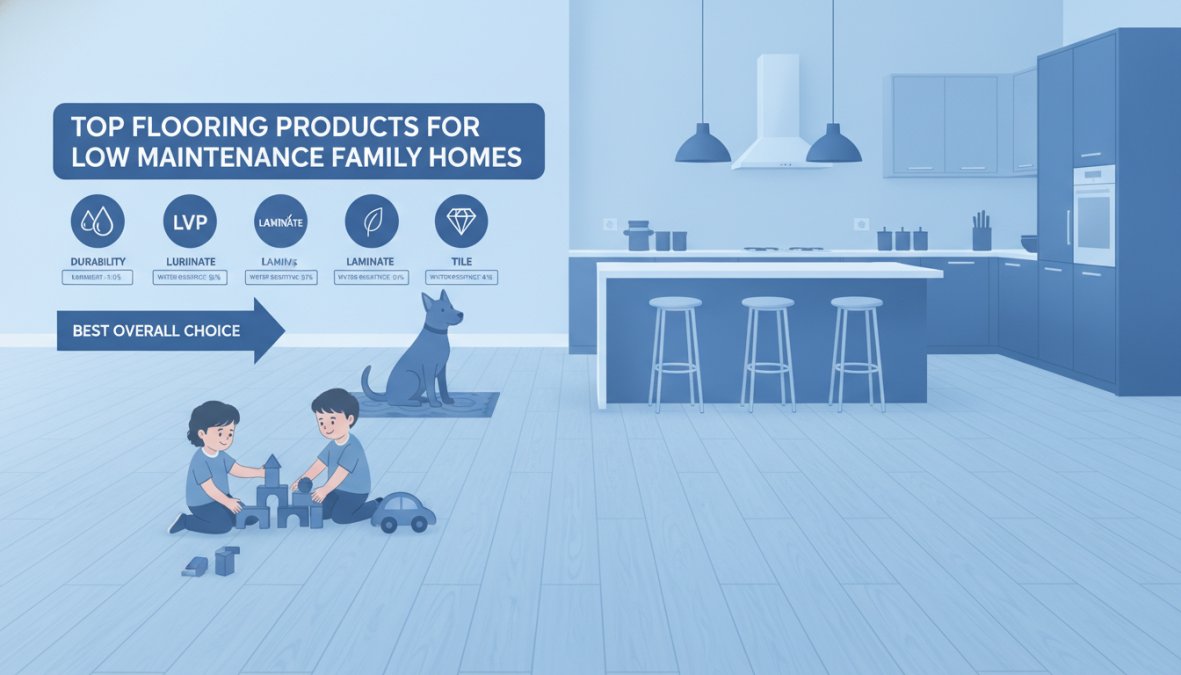
COREtec Plus Luxury Vinyl represents premium rigid core vinyl. The 100% waterproof construction won't swell or warp, and the attached cork underlayment adds warmth and sound absorption. The 20-mil wear layer resists scratches effectively.
Mannington Adura Luxury Vinyl balances performance and aesthetics. The ScratchResist technology provides real scratch resistance, and the material is available in both plank and tile formats. Mannington's reputation for longevity is well-earned.
Mohawk SolidTech excels in temperature stability and stain resistance. The Uniclic locking system makes installation relatively straightforward. For families in climates with significant temperature fluctuations, Mohawk's stability advantage is meaningful.
Shaw Floors Parallax HD Plus offers commercial-grade durability at a more accessible price point. The 20-mil wear layer and lifetime residential warranty provide real peace of mind.
Flooret Modin Collection targets homeowners who want the thickest wear layer available. The 40-mil wear layer is industry-leading, and the direct-to-consumer model can offer better value than traditional retail.
Daltile Porcelain Tile is the choice for kitchens, bathrooms, and high-moisture areas. The non-porous composition resists stains completely, and durability is unmatched.
Karndean Designflooring appeals to families prioritizing aesthetics without sacrificing low-maintenance benefits. The K-Guard+ surface protection makes cleaning easy, and the design range is extensive.
Hartco Engineered Hardwood provides real wood warmth with better stability than solid hardwood. Wire-brushed textures hide wear effectively.
Repairability & Long-Term Value
Most families don't consider repairability when choosing flooring, but this becomes critical when damage occurs. Luxury vinyl plank has a significant advantage: individual planks can be replaced without disturbing the rest of the floor. If a plank gets damaged, you can remove and replace just that section.
Tile allows individual tile replacement as well. If a tile cracks, you can remove the damaged piece and install a replacement.
Engineered hardwood and solid hardwood can be refinished if the wear layer is thick enough, but this requires professional equipment and is expensive and disruptive.
Laminate cannot be repaired; damaged sections must be replaced, and removing and replacing laminate planks is labor-intensive.
For families with young children or active pets, repairability is a practical consideration. LVP wins this category because individual planks can be replaced, and quality options last 15+ years with proper maintenance.
Climate-Specific Performance & Underfoot Comfort
Geographic location influences which flooring performs best. In humid climates (coastal areas, the Southeast), waterproof materials are essential. LVP and tile handle humidity without issue. Hardwood and laminate are vulnerable to moisture-driven swelling. For Suffolk County's humid summers, LVP is the pragmatic choice.
In dry climates with temperature swings, material stability matters. Mohawk SolidTech's temperature stability advantage becomes more meaningful in regions with significant seasonal variation.
Underfoot comfort is personal but important. Tile is the hardest and coldest, fine for kitchens, less ideal for bedrooms. LVP with attached underlayment feels warmer and softer. Engineered hardwood provides the most natural feel.
| Climate Type | Best Material | Key Advantage |
|---|---|---|
| Humid (Coastal) | LVP or Tile | Waterproof core |
| Moderate | LVP | Balance of features |
| Dry with swings | Mohawk SolidTech | Temperature stability |
| High-traffic areas | Rigid core LVP | Durability + comfort |
Choosing the best low maintenance family flooring is about selecting a material that handles the realities of family life, spills, scratches, moisture, and constant activity, without demanding special treatment.
Luxury vinyl plank delivers this balance better than alternatives for most households. The combination of waterproofing, scratch resistance, easy cleaning, and repairability makes it the practical choice for families with kids and pets. Premium rigid core options like COREtec Plus or Flooret Modin offer commercial-grade durability that lasts 15+ years.
For specific situations, all-tile kitchens, high-moisture bathrooms, or families prioritizing real wood aesthetics, other materials make sense. But for primary living areas where family life happens, LVP solves the low-maintenance problem more completely than any alternative.
At Hamptons carpet one floor and Home, we help families across Suffolk County navigate this decision with specific recommendations based on your household's actual needs, budget, and climate. Schedule a consultation to see samples in your home's lighting and discuss which option fits your family's lifestyle.
Frequently Asked Questions
What is the most durable flooring for a family with kids and pets?
Luxury Vinyl Plank (LVP) with a rigid core, porcelain tile, and engineered hardwood are the most durable options for families with kids and pets. LVP offers 100% waterproof construction, scratch resistance through high-density wear layers (20-40 mil), and easy cleaning. Porcelain tile is virtually indestructible but requires grout maintenance. Engineered hardwood provides real wood aesthetics with multi-ply construction for moisture resistance, though it requires prompt spill cleanup.
Is luxury vinyl plank really the best low maintenance flooring?
LVP is often the best choice for busy families because it combines waterproof construction, stain resistance, easy cleaning, and durability in high-traffic areas. However, the best low maintenance family flooring depends on your priorities. If you need maximum durability and don't mind grout upkeep, porcelain tile wins. If you want real wood warmth with lower maintenance, engineered hardwood works well. LVP excels when you want zero maintenance complexity with resilient, pet-friendly performance.
Which flooring is easiest to clean for busy families?
LVP and porcelain tile are the easiest to clean, both require just sweeping and occasional mopping with standard household cleaners. LVP has a sealed surface that resists stains and spills, making cleanup effortless for kids and pet accidents. Tile is similarly easy but requires periodic grout cleaning. Laminate and hardwood require more care to avoid water damage and need immediate spill cleanup, making them less ideal for busy parents.
How do I choose flooring that hides dirt and scratches?
Look for flooring with textured, embossed finishes and darker or multi-toned colors that camouflage dust and minor scratches. LVP with wire-brushed or hand-scraped textures, engineered hardwood in distressed finishes, and tile with varied patterns all hide wear effectively. Products with 20+ mil wear layers (like COREtec Plus, Shaw Parallax, or Flooret Modin) resist visible scratching. Avoid light solid colors and glossy finishes if you have active kids or pets, these show every footprint and dust particle.
What eco-friendly flooring options work for low-maintenance family homes?
Engineered hardwood with low-VOC finishes offers real wood warmth with reduced chemical off-gassing, supporting better indoor air quality for families. Some LVP brands now offer phthalate-free and low-VOC options, though traditional vinyl remains the most durable. Porcelain tile from sustainable manufacturers is non-toxic and hypoallergenic. When selecting eco-friendly options, check for certifications like FloorScore or GreenGuard, and ask retailers about attached underlayment materials, cork-backed LVP (like COREtec Plus) adds natural insulation.
This article was written using GrandRanker