 Listicle
Best Residential Flooring Types 2026: A Complete Guide
Table of Contents
- Best Residential Flooring Types 2026: An Overview
- Warm Tones & Natural Textures: The Top Design Trend
- Luxury Vinyl Plank (LVP) Trends 2026: Waterproof Performance Meets Style
- Most Durable Residential Flooring 2026: Engineered Wood & Laminate
- Patterned Floors & Large-Format Tiles: Making a Statement
- Affordable Residential Flooring Options 2026: Cost Analysis & Installation
- Sustainable & Eco-Friendly Flooring: Low-VOC & Recycled Options
- Maintenance & Cleaning Guides for Each Flooring Type
Best Residential Flooring Types 2026: A Complete Guide
Last Updated: July 18, 2026
When homeowners in Suffolk County plan a renovation, flooring becomes the biggest investment and most visible design decision. The best residential flooring types 2026 has shifted dramatically: warm tones dominate, waterproof performance is non-negotiable, and luxury vinyl now rivals hardwood in appearance. At Hamptons carpet one floor and Home, we've tracked which materials hold up in coastal environments where salt air, humidity, and sand create conditions far harsher than typical homes.
Research from the National Association of Home Builders shows engineered wood and luxury vinyl now account for over 60% of new residential installations. Waterproof vinyl offers authentic wood grain textures at a fraction of hardwood's cost, while engineered wood provides real wood aesthetics with stability that prevents gaps and warping.
Below, we'll walk you through every major residential flooring type available in 2026, explain what matters for durability, show real cost differences, and help you avoid installation mistakes.
Warm Tones & Natural Textures: The Top Design Trend
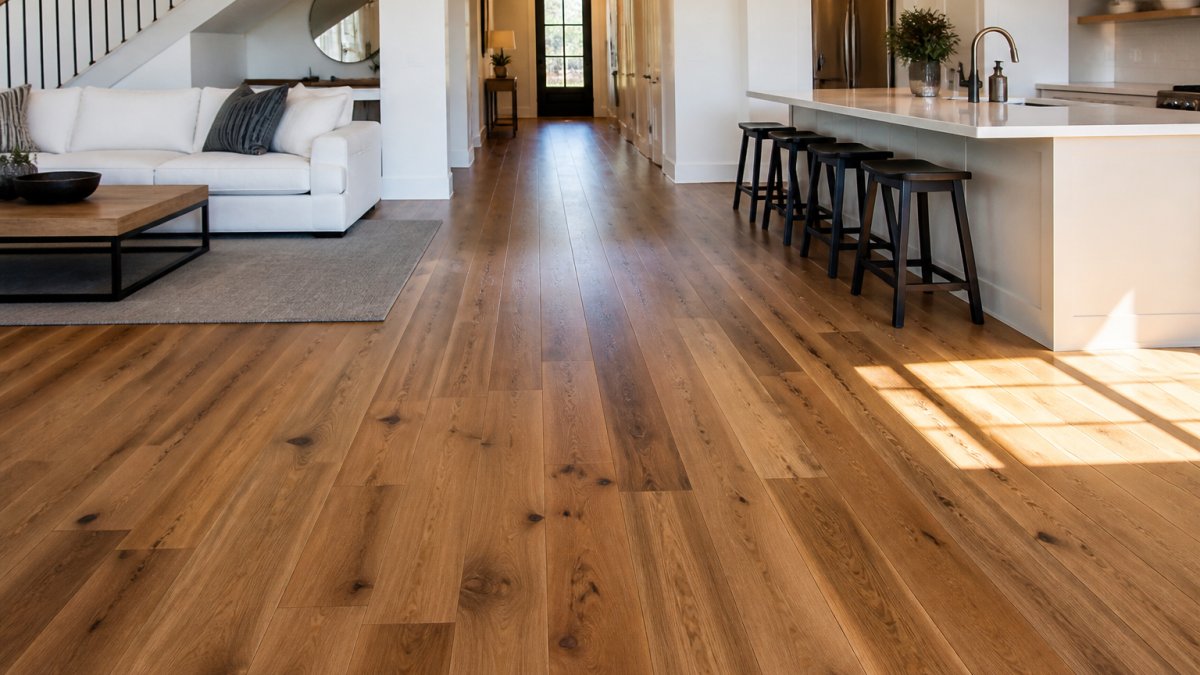
Warm wood tones have replaced the cool grays that dominated 2020-2023. Oak, walnut, and maple finishes in medium to dark tones are what clients request, and these woods work beautifully in homes with natural light and traditional or transitional design schemes.
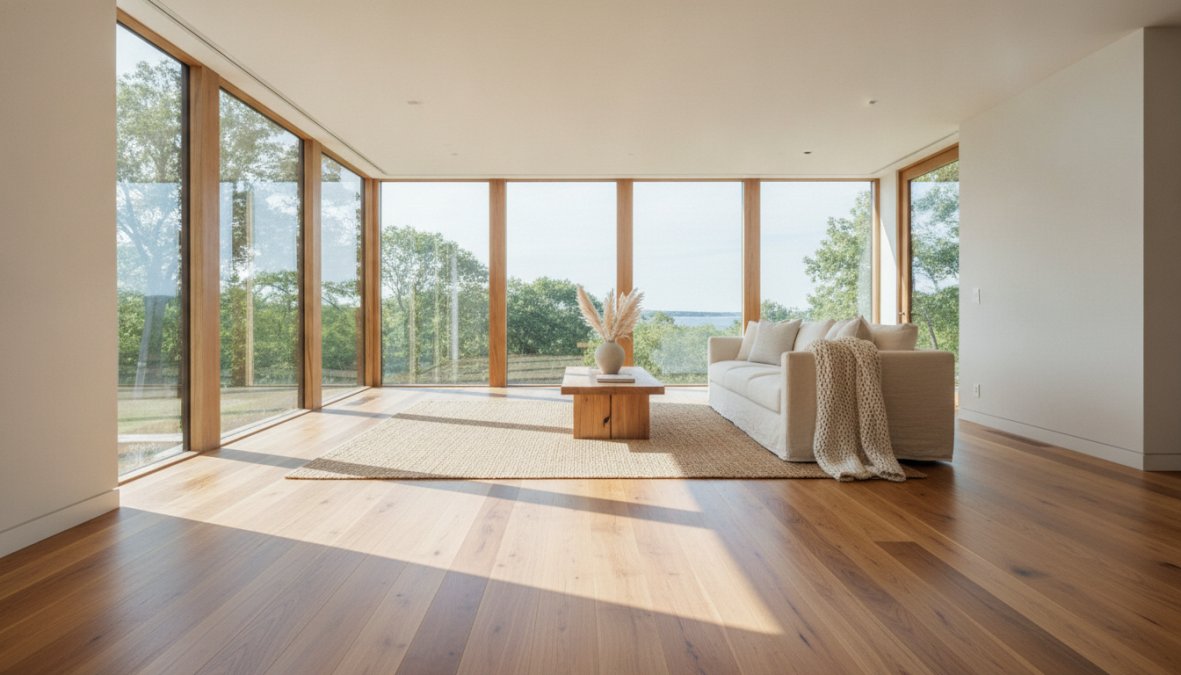
Warm tones perform better in real homes because they hide dust, pet hair, and footprints far better than light grays. A light gray floor in a beach house shows every grain of sand within hours. A warm walnut-tone floor hides it until you vacuum.
Oak, Maple, and Walnut Finishes
Oak remains the most accessible warm-tone hardwood with distinctive grain and moderate pricing. Maple provides tighter, more uniform grain. Walnut delivers the richest color and deepest visual impact, though it commands a higher price.
The critical distinction in 2026 is whether you're choosing solid hardwood or engineered wood. Solid oak, maple, and walnut can be refinished multiple times, adding decades to their lifespan. Engineered versions with real hardwood veneers offer the same visual warmth with better stability in humid environments. For coastal homes in Suffolk County, engineered wood in warm tones is often the smarter choice. According to the Hardwood Manufacturers Association, engineered hardwood maintains dimensional stability 40% better than solid wood in fluctuating humidity, directly translating to fewer gaps and less warping.
Matte and satin finishes have replaced high-gloss options almost entirely, absorbing light in a way that makes wood look richer and hides dust better.
Luxury Vinyl Plank (LVP) Trends 2026: Waterproof Performance Meets Style
Luxury vinyl has crossed a threshold in 2026. It's no longer the "fake hardwood" that screams budget; it's a legitimate alternative to solid hardwood that costs less, performs better in wet environments, and comes in designs so realistic that flooring professionals struggle to distinguish them from real wood.
The best residential flooring types 2026 increasingly includes LVP because of its waterproof construction. Unlike hardwood, which warps and cups when exposed to moisture, rigid-core LVP is completely waterproof. This makes it the only sensible choice for kitchens, bathrooms, basements, and entryways.
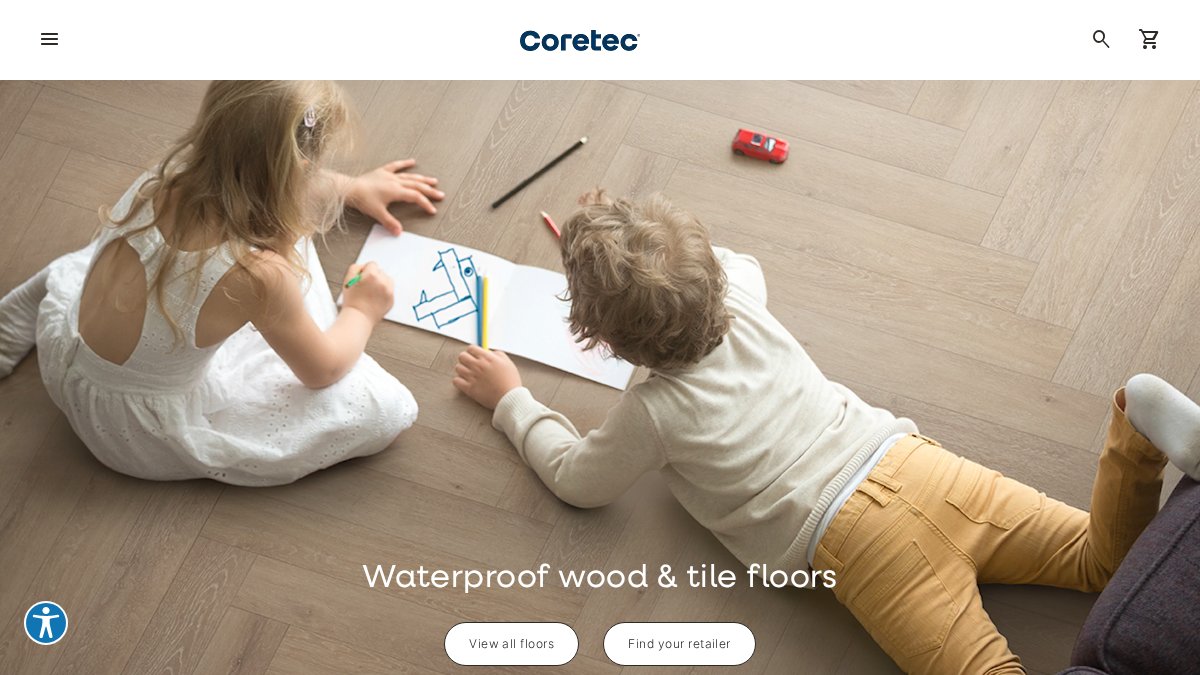
COREtec Luxury Vinyl Plank stands out in this category. Their rigid core technology provides exceptional dent and scratch resistance, and the attached cork underlayment adds comfort and sound absorption. Pricing typically ranges from $3 to $9 per square foot for materials. What separates COREtec from budget vinyl is visual authenticity; grain patterns and texture layers create depth that budget options cannot match.
Why LVP Dominates Busy Households
Luxury vinyl has become the default choice for families with young children and pets because it actually cleans. Spill red wine on hardwood and you're racing to wipe it before staining occurs. Spill the same wine on LVP and it sits there indefinitely without damage. Pet accidents, tracked mud, and water from wet boots, LVP handles all of it without warping, staining, or requiring refinishing.
Maintenance is dramatically simpler. Hardwood requires regular sweeping, careful mopping (never wet), and periodic refinishing. LVP requires sweeping and occasional mopping with any standard floor cleaner. Installation also favors LVP; most rigid-core LVP uses click-lock systems that allow experienced installers to complete a 1,000-square-foot project in a single day.
Most Durable Residential Flooring 2026: Engineered Wood & Laminate
Durability means different things depending on context. Solid hardwood lasts longest overall, a well-maintained floor can last 100+ years. Engineered wood lasts 25-30 years. Laminate lasts 15-25 years. But durability also means resistance to scratches, stains, and moisture damage in the near term, and by that measure, engineered wood and laminate often outperform solid hardwood.
Engineered Hardwood vs. Solid Hardwood
Engineered hardwood consists of a real hardwood veneer bonded to a plywood or high-density fiberboard core. The real wood top layer gives authentic look and the ability to refinish (though fewer times than solid wood). The engineered core prevents expansion and contraction that causes gaps, cupping, and warping.
For residential flooring types in 2026, engineered wood has become the practical default for most homes. It performs beautifully in kitchens, living rooms, and bedrooms without the moisture sensitivity of solid wood. The cost difference is meaningful: solid hardwood ranges from $5 to $15+ per square foot, while engineered hardwood ranges from $3 to $10+ per square foot. For a 2,000-square-foot home, that's a difference of $4,000 to $10,000 in materials alone.
Laminate: Budget-Friendly Durability
Laminate has evolved dramatically. Mohawk RevWood and Pergo laminate now offer wood-look designs so convincing they compete visually with engineered hardwood. Click-lock installation means DIY is possible for experienced homeowners. The price point of $1.99 to $4.99 per square foot makes large projects financially feasible.
The trade-off is refinishing. Laminate cannot be sanded and refinished like hardwood. Once scratched deeply or damaged, the plank must be replaced. However, modern laminate finishes are genuinely scratch-resistant. Waterproof laminate options like Mohawk RevWood Plus add moisture resistance that makes laminate viable for kitchens.
| Flooring Type | Material Cost | Installation | Durability | Refinish Potential | Best For |
|---|---|---|---|---|---|
| Solid Hardwood | $5-15+/sq ft | $8-12/sq ft | 100+ years | 5-10 times | Living rooms, bedrooms |
| Engineered Hardwood | $3-10+/sq ft | $8-12/sq ft | 25-30 years | 1-2 times | Kitchens, entryways, most areas |
| Laminate | $2-5/sq ft | $5-8/sq ft | 15-25 years | Never | Bedrooms, living rooms, budget projects |
| LVP | $3-9/sq ft | $6-10/sq ft | 20-30 years | Never | Kitchens, bathrooms, basements |
Patterned Floors & Large-Format Tiles: Making a Statement
Patterned flooring has moved from accent feature to mainstream choice. Herringbone, chevron, and mixed-width planks create visual interest and break up large open-concept spaces. In 2026, patterned floors are no longer a design risk; they're a design statement homeowners actively seek.
Herringbone, Chevron & Beyond
Herringbone and chevron patterns require precise installation and careful planning. The visual impact is striking, but project complexity increases significantly. Expect to pay 30-50% more for installation when choosing patterned layouts.
Wide-plank flooring (8-12 inches) has become standard rather than premium. Large-format tiles in wood-look designs offer the aesthetic of wide planks with the durability and waterproof properties of tile. These tiles are typically 12x48 inches or larger, creating a seamless, modern look with fewer seams and grout lines.
Affordable Residential Flooring Options 2026: Cost Analysis & Installation
Cost matters, but it's only one variable. A $2 per square foot laminate floor that requires replacement in 10 years is more expensive long-term than a $6 per square foot engineered wood floor that lasts 25 years. Total cost of ownership, materials, installation, maintenance, and replacement cycles, determines actual value.
DIY vs. Professional Installation: What You Need to Know
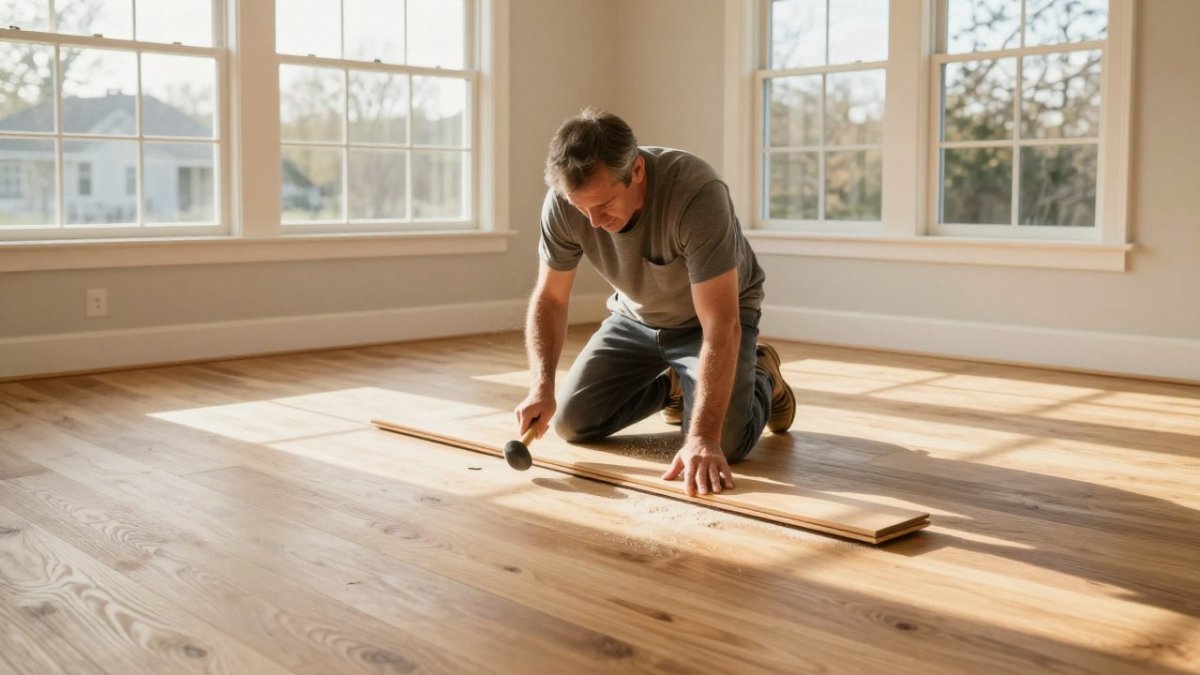
DIY flooring installation is possible for laminate and some LVP options. Click-lock systems are forgiving enough that homeowners without experience can achieve acceptable results. However, subfloor preparation is where most DIY projects fail. An uneven subfloor causes squeaking, uneven surfaces, and premature wear. Professional installers spend 30-40% of installation time on subfloor prep.
For hardwood and engineered wood, professional installation is strongly recommended. Labor costs typically range from $5 to $12 per square foot, depending on complexity and local market rates. For a 1,500-square-foot project, that's $7,500 to $18,000 in labor alone.
Hidden Costs & Subfloor Surprises
Subfloor replacement or repair can add $2,000 to $8,000 to a project. Water damage, mold remediation, and structural issues must be addressed before new flooring is installed. Moisture barriers, leveling compounds, and underlayment add $1 to $3 per square foot.
The only protection against surprises is a detailed pre-installation inspection and a written estimate that itemizes every cost.
Sustainable & Eco-Friendly Flooring: Low-VOC & Recycled Options
Low-VOC (volatile organic compound) flooring has become standard rather than premium. Most major manufacturers now offer finishes and adhesives that meet GREENGUARD Gold certification. COREtec flooring, for example, carries GREENGUARD Gold certification, meaning it meets strict standards for indoor air quality.
Recycled content is increasingly common in laminate and vinyl products. Some manufacturers incorporate recycled plastic and wood waste into their core materials, reducing landfill burden and virgin material extraction. Natural materials like cork and bamboo offer renewable alternatives to hardwood. Cork is harvested from tree bark without killing the tree. Bamboo grows far faster than trees, making it a renewable resource. Sustainable flooring typically costs 10-20% more than conventional alternatives, though durability advantages can justify the premium through longer lifespan.
Maintenance & Cleaning Guides for Each Flooring Type
Maintenance determines whether a flooring choice remains beautiful or becomes a regretted investment.
Hardwood Care vs. Vinyl Maintenance
Hardwood requires consistency. Sweep or vacuum regularly to prevent dust and grit from scratching the surface. Mop with a barely damp microfiber mop, never standing water. Use hardwood-specific cleaners. Avoid direct sunlight, which causes fading. Maintain humidity between 30-50% to prevent expansion and contraction.
Vinyl maintenance is dramatically simpler. Sweep or vacuum regularly. Mop with any standard floor cleaner. Vinyl is immune to moisture, so wet mopping is fine. Laminate falls between hardwood and vinyl: sweep regularly, mop with minimal water, avoid standing water.
Tile & Grout: The Real Maintenance Story
Tile itself is virtually maintenance-free. The grout is the problem. Grout is porous and stains easily. Grout also harbors mold and mildew in bathrooms. Sealing grout when first installed prevents staining and mold growth. Resealing every 1-3 years maintains this protection. Large-format tiles reduce grout lines, which directly reduces maintenance burden.
Choosing the best residential flooring types 2026 depends on your specific situation, climate, household activity level, maintenance tolerance, and budget. For coastal homes in Suffolk County where salt air and humidity are constant challenges, engineered wood and waterproof LVP consistently outperform other options. These materials resist moisture damage, require manageable maintenance, and deliver the aesthetic warmth that defines current design trends.
At Hamptons carpet one floor and Home, we work with homeowners on the specific environmental pressures of Suffolk County living. We can help you evaluate whether engineered wood's moisture resistance or LVP's complete waterproof protection makes more sense for your space. We'll identify subfloor issues before they become expensive surprises, and we'll ensure installation is done correctly so your flooring investment actually lasts. Get started with a consultation at Hamptons carpet one floor and Home and make your next flooring decision with confidence.
Frequently Asked Questions
What are the most popular flooring trends for 2026?
Warm tones and natural textures dominate 2026 residential flooring trends. Homeowners favor wide planks in oak, maple, and walnut finishes, along with patterned floors featuring herringbone and chevron designs. Luxury vinyl plank (LVP) continues gaining popularity due to its waterproof performance and realistic aesthetics. Sustainable materials with low-VOC finishes and recycled content are increasingly important to eco-conscious buyers. Large-format tiles and matte or satin finishes also reflect the shift toward timeless, understated elegance over high-gloss surfaces.
What is the most durable residential flooring for 2026?
Luxury vinyl plank (LVP) with rigid core technology offers exceptional durability, resisting scratches, dents, and water damage. Engineered hardwood provides superior stability compared to solid hardwood, making it ideal for varying humidity. Laminate flooring like Pergo and Mohawk RevWood delivers budget-friendly durability with scratch and stain resistance. Porcelain tile ranks among the most durable options, lasting decades with minimal wear. For high-traffic homes with pets or children, LVP and laminate offer the best balance of durability, comfort, and maintenance ease.
What are the best affordable residential flooring options for 2026?
Laminate flooring remains the most budget-friendly option, with materials starting around $2-$6 per square foot. Luxury vinyl plank (LVP) offers mid-range pricing ($3-$9 per square foot) with premium durability and waterproof performance. Engineered hardwood ($3-$10+ per square foot) provides real wood aesthetics at lower cost than solid hardwood. Ceramic tile ($1-$15+ per square foot, depending on design) is affordable for kitchens and bathrooms. For the best value, consider laminate or basic LVP collections, but factor in installation costs, subfloor preparation, and long-term maintenance when comparing total cost.
How do I know which flooring type is right for my home and lifestyle?
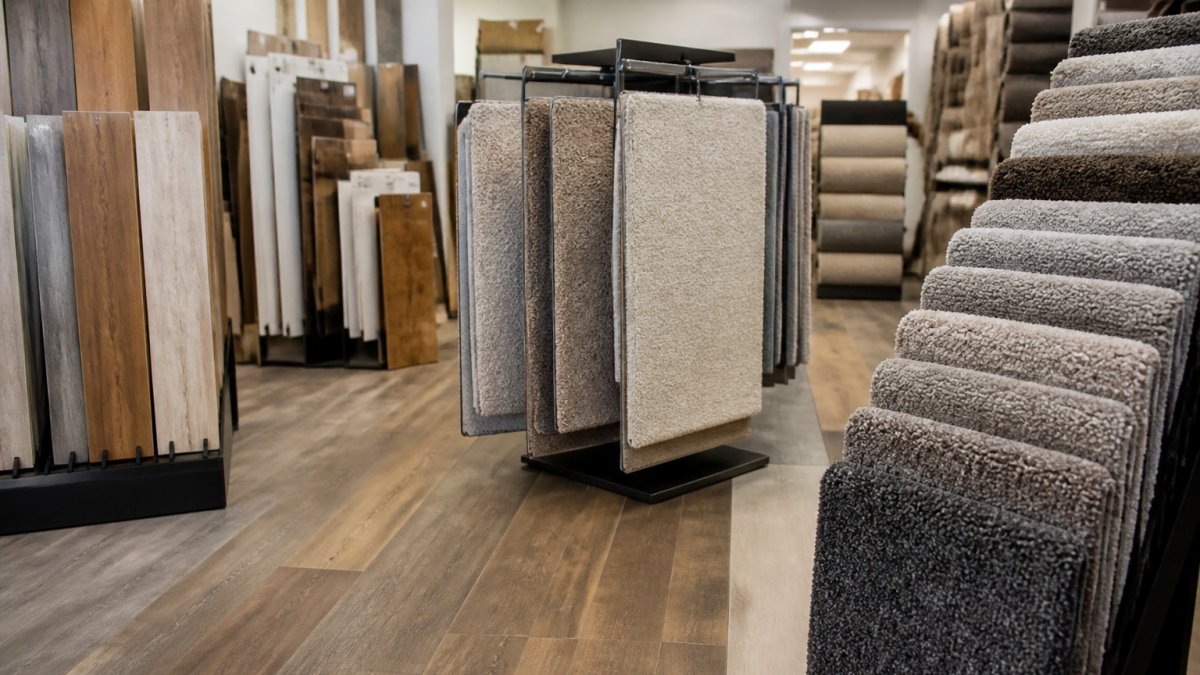
Consider your household's specific needs: pet-friendly and waterproof options like LVP work best for active families; hardwood suits low-traffic, dry areas; tile excels in kitchens and bathrooms; carpet provides comfort in bedrooms. Evaluate moisture exposure, avoid solid hardwood in basements; choose waterproof LVP or tile for high-humidity zones. Factor in maintenance tolerance: tile requires grout care, hardwood needs regular sealing, while LVP demands minimal effort. Budget constraints matter too, laminate offers affordability, while solid hardwood commands premium pricing. Visit a showroom like Hamptons Carpet One Floor and Home to see samples in your actual space before deciding.
This article was written using GrandRanker