 Listicle
Best Slip Resistant Flooring for Elderly: 2026 Safety Guide
Table of Contents
- Why Slip Resistance Matters for Senior Home Safety
- Best Slip Resistant Flooring Materials Compared
- How to Make Floors Non-Slip for Elderly Family Members
- Cushioned Flooring for Elderly: Impact Absorption and Joint Support
- Aging in Place Home Modifications: Beyond Flooring
- Flooring Maintenance and Hygiene for Senior Safety
- DIY vs. Professional Installation: What Matters for Safety
- Making Your Choice: Selection Criteria for Senior-Safe Flooring
Best Slip Resistant Flooring for Elderly: 2026 Safety Guide
Last Updated: August 4, 2026
Why Slip Resistance Matters for Senior Home Safety
Finding the best slip resistant flooring for elderly family members is about preventing falls that can fundamentally change their independence and quality of life. Falls represent one of the leading causes of injury-related death among older adults, and a single serious fall can trigger hospitalization, loss of mobility, psychological trauma, and accelerated decline in independence.
The challenge isn't finding any slip-resistant option, it's finding the right one for your specific spaces, traffic patterns, and budget. Some materials excel in bathrooms but feel cold underfoot in living areas. Others provide superior grip but demand professional installation. This guide walks you through the actual options available in 2026, what makes each one work, and how to avoid mistakes that leave families with regret.
Best Slip Resistant Flooring Materials Compared
Your flooring choice depends on where you're installing it, how much cushioning matters, and whether you need something that works with mobility aids like walkers and wheelchairs.
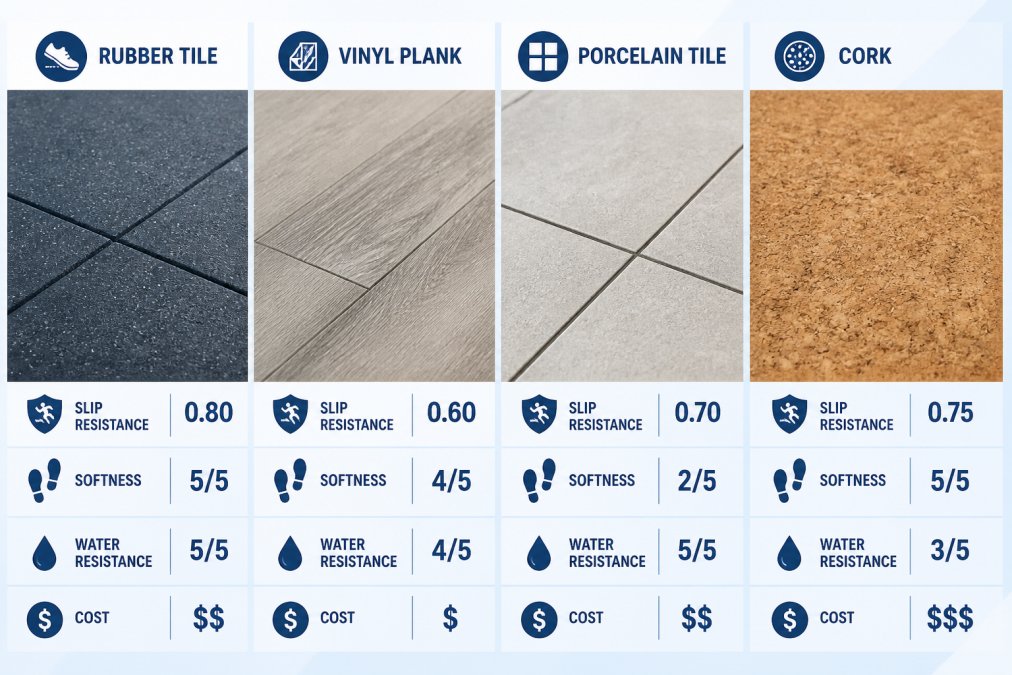
Luxury Vinyl Plank (LVP) with Textured Surface
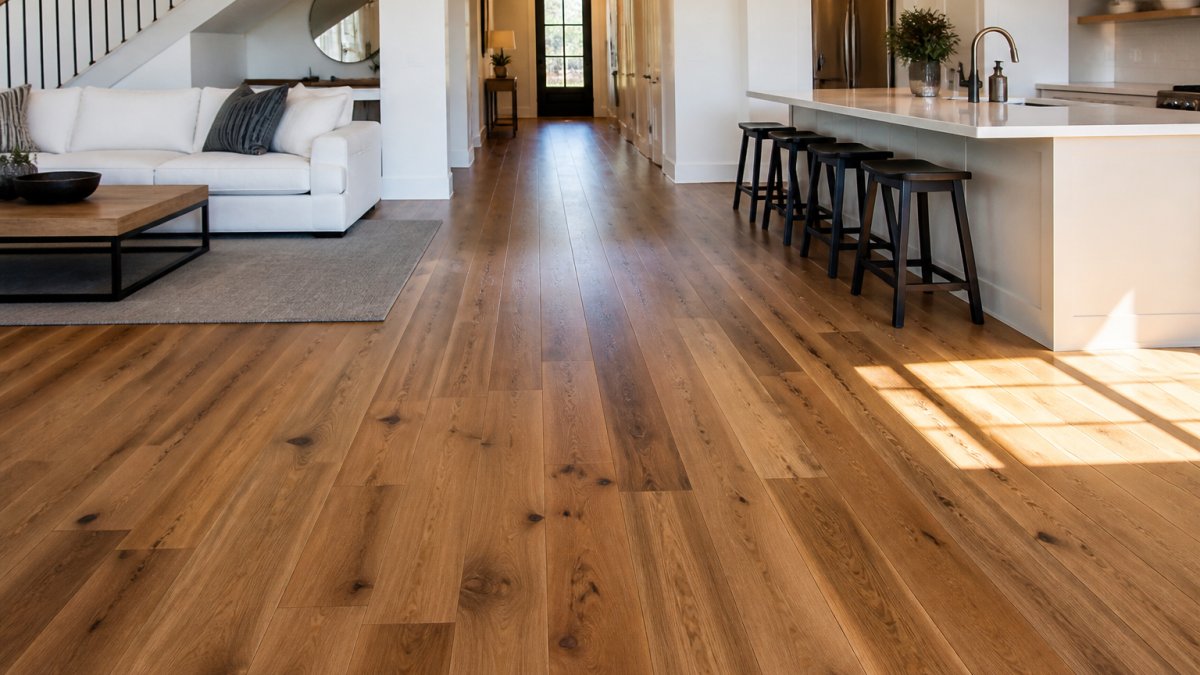
Luxury vinyl plank with a textured finish offers the balance most families choose first. It mimics wood or stone aesthetics while providing reliable slip resistance even when wet. LVP works exceptionally well in kitchens, hallways, and living areas where you want the material to feel warm and livable rather than clinical.
Installation is straightforward, with most contractors completing residential spaces in 1-3 days. The material resists moisture, stains, and scratches from daily wear. You can clean it with standard household products without degrading slip resistance.
However, residential-grade LVP has limitations for full-time wheelchair users. The click-lock systems can shift under constant wheeled traffic, creating potential trip hazards.
Rubber Flooring Tiles for Maximum Impact Absorption
Rubber flooring delivers the highest grip coefficient of any residential material and is what hospitals and senior care facilities choose when fall prevention is non-negotiable. The cushioned surface absorbs impact, reducing injury severity if a fall occurs.
Heavy-duty SBR rubber tiles provide genuine shock absorption. Someone falling on rubber experiences significantly less force transmission to joints and bones than falling on tile or hardwood. Installation is straightforward, with many tiles laid without adhesive. The material withstands wheelchair traffic without degradation.
The tradeoff is aesthetic. Rubber tiles read as institutional in residential spaces, and cost can be higher than alternatives for large areas.
Textured Porcelain Tile for Bathrooms and Kitchens
Textured or matte-finish porcelain tile provides excellent slip resistance in wet areas. Porcelain is virtually indestructible, resists moisture, stains, mold, and mildew, and can be sanitized with any cleaning product.
The problem is feel. Tile feels hard and cold underfoot. Grout lines can create drag points for walkers and wheelchairs if spacing is too wide. A 1/8-inch grout line works better than 1/4-inch for mobility aid users.
Textured tile works best as a targeted solution for bathrooms and kitchen areas rather than whole-home flooring.
Cork Flooring for Comfort and Natural Slip Resistance
Cork offers natural cushioning combined with inherent slip resistance. The material is warm underfoot, naturally hypoallergenic, and absorbs sound better than hard surfaces. For elderly family members with joint pain or arthritis, this comfort factor genuinely improves daily quality of life.
The limitation is moisture vulnerability. Cork absorbs water, making it unsuitable for bathrooms and kitchens unless properly sealed. It's also susceptible to scratches and indentations from furniture and foot traffic.
Cork works best in bedrooms, living rooms, and hallways where moisture exposure is minimal.
Rigid Core Vinyl for Wheelchair Stability
Rigid core vinyl (RCV) combines the aesthetic appeal of luxury vinyl with the structural stability that wheelchair users need. The rigid core construction creates a firm, non-shifting surface that doesn't flex under wheeled traffic.
RCV is waterproof, making it suitable for kitchens and bathrooms. Installation is faster than traditional vinyl. The cost sits between standard LVP and commercial-grade options.
The tradeoff is that rigid core provides less cushioning than softer materials.
Specialized Safety Flooring Systems
Commercial-grade safety flooring like Altro represents engineered solutions designed specifically for senior environments. These systems include low-contrast patterns that prevent visual confusion for seniors with declining depth perception and non-glare finishes that reduce reflection and glare.
These systems come with 20-year commercial warranties and documentation proving their performance in actual senior living facilities. The primary limitation is cost and aesthetic.
| Flooring Type | Best For | Slip Resistance | Impact Absorption | Moisture Resistance | Installation Complexity |
|---|---|---|---|---|---|
| Textured LVP | Kitchens, hallways, living areas | Excellent | Moderate | Excellent | Simple |
| Rubber tiles | High-risk areas, bathrooms | Maximum | Maximum | Excellent | Simple |
| Textured porcelain | Bathrooms, kitchens | Excellent | Poor | Excellent | Moderate |
| Cork | Bedrooms, living rooms | Good | Excellent | Poor | Moderate |
| Rigid core vinyl | Wheelchair-accessible spaces | Excellent | Moderate | Excellent | Simple |
| Specialized safety flooring | Senior living environments | Maximum | Maximum | Excellent | Professional |
How to Make Floors Non-Slip for Elderly Family Members
You don't always need to replace existing flooring. Sometimes you can improve slip resistance on what's already installed.
Anti-Slip Coatings for Existing Floors
Transparent anti-slip coatings transform slippery surfaces without changing their appearance. Products like SparkleTuff create a textured surface that increases friction while maintaining the original look of your floor.
These coatings work on polished tile, concrete, epoxy, and bathtub surfaces. Application is straightforward, most can be rolled on like paint. One application typically lasts multiple years before reapplication becomes necessary.
The advantage is cost-effectiveness. The limitation is durability; anti-slip coatings eventually wear from foot traffic and may need reapplication annually.
Subfloor Preparation and Installation Safety
Most flooring problems emerge from improper installation rather than the material itself. Poor subfloor preparation creates gaps, movement, and uneven surfaces that compromise safety.
Before any flooring installation, a professional inspection should identify moisture in the subfloor, uneven surfaces exceeding 1/8-inch variance, structural damage, or inadequate support. For elderly family members, uneven transitions between rooms become trip hazards. Professional installers ensure transitions are beveled smoothly, creating no catch points for walkers or canes.
Installation quality directly impacts how long slip resistance lasts. Poor installation creates gaps where moisture accumulates, degrading grip.
Cushioned Flooring for Elderly: Impact Absorption and Joint Support
Beyond slip resistance, cushioning matters for elderly family members with joint pain, arthritis, or balance concerns. Materials like cork and rubber provide natural cushioning. Underlayment added beneath vinyl or tile can increase shock absorption without changing the visible flooring.
The tradeoff between cushioning and stability exists for mobility aid users. Too much cushioning causes wheels to sink slightly, creating resistance and fatigue. Wheelchair users often prefer firmer surfaces. For aging adults without mobility aids, more cushioning generally improves comfort.
Consider the specific needs of your elderly family member. Someone with severe arthritis might prioritize cushioning. Someone with balance issues might prioritize firmness and slip resistance.
Aging in Place Home Modifications: Beyond Flooring
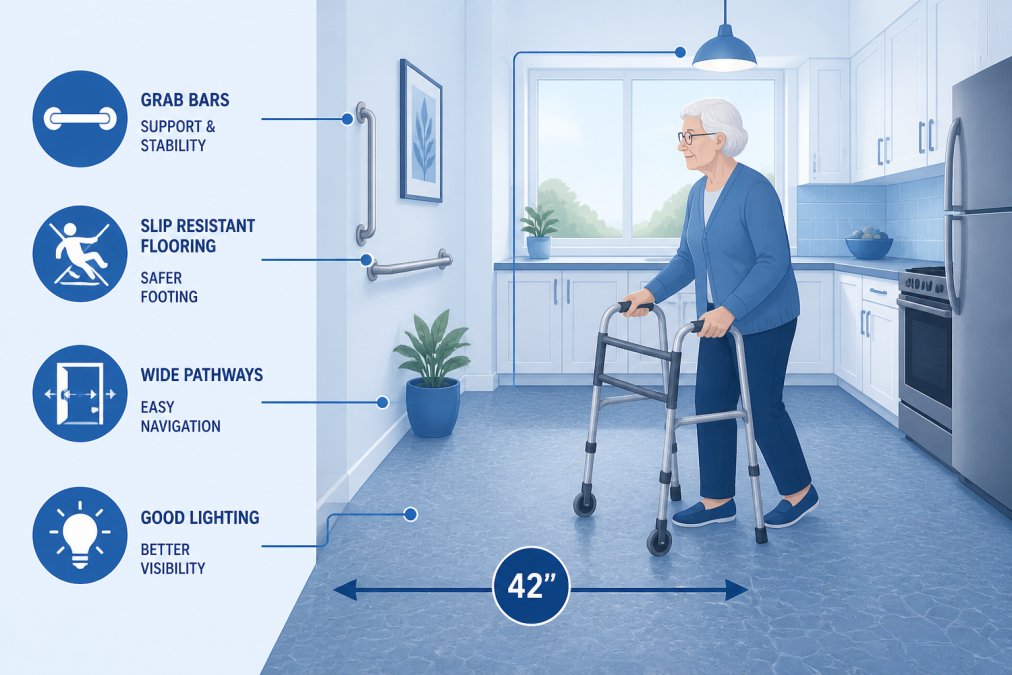
Slip resistant flooring is foundational, but it's only one part of a comprehensive safety strategy.
Transition Thresholds and Trip Hazard Elimination
Transitions between rooms create hidden trip hazards. A threshold of 1/2-inch between kitchen tile and hallway LVP becomes a catching point for walkers and canes. Elderly users often don't lift their feet high enough to clear even small obstacles.
Professional flooring installation includes beveled transitions that slope gradually rather than creating a step. Threshold heights should not exceed 1/4-inch. For wheelchair users, transitions should be nearly imperceptible.
Lighting, Contrast, and Depth Perception
Aging eyes struggle with depth perception. A dark tile floor transitioning to light hallway flooring can create visual confusion about where the floor actually is. Flooring choices should include contrast consideration to create visual boundaries.
Lighting matters as much as flooring color. Bright, even lighting throughout spaces reduces shadows and visual confusion. Dimly lit hallways with glossy flooring create the highest fall risk, regardless of slip resistance.
Accessibility for Walkers and Wheelchairs
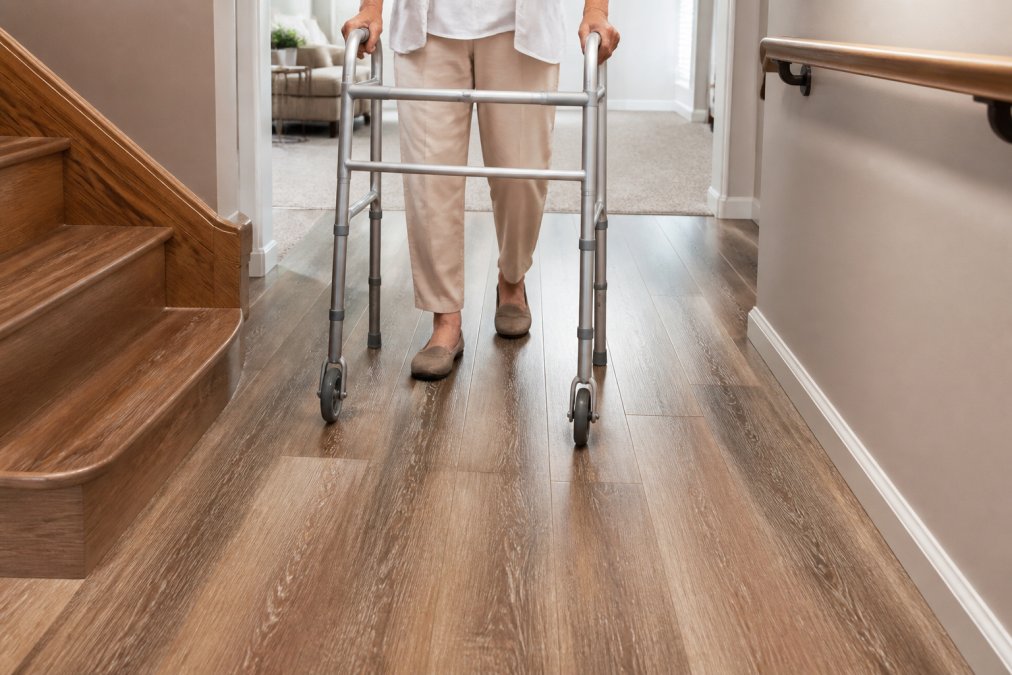
Walkers and wheelchairs have specific flooring requirements. Walker feet need surfaces that provide traction without creating catching points. Wheelchair wheels need firm surfaces that don't cause resistance.
Grout lines in tile flooring can catch walker feet. Textured surfaces that are excellent for slip resistance can sometimes catch walker feet if the texture is too pronounced. The ideal solution balances all these needs: slip resistance, smooth texture without catching points, and appropriate firmness for mobility aids.
Flooring Maintenance and Hygiene for Senior Safety
Maintenance directly impacts how long slip resistance lasts. Improper cleaning can degrade grip and create hazards.
Cleaning Products That Don't Reduce Slip Resistance
Many household cleaners leave residue that reduces slip resistance. Wax-based products, oil-based cleaners, and some floor polishes create slippery films on surfaces.
For slip-resistant flooring, use pH-neutral cleaners specifically designed for the material. Textured LVP typically cleans well with just warm water and mild detergent. Avoid products labeled "shiny" or "glossy", as these add slipperiness.
The simple rule: clean for hygiene, not appearance. Slip resistance matters more than shine in a senior home.
Moisture Control in High-Risk Areas
Moisture is the enemy of slip resistance. Wet surfaces lose traction, and standing water creates hazards. Bathrooms and kitchens need moisture management strategies beyond just slip-resistant flooring.
Adequate ventilation prevents moisture accumulation. Exhaust fans running during and 20 minutes after showers reduce humidity that degrades grip. Wipe-up mats placed strategically catch water before it spreads across slip-resistant surfaces.
DIY vs. Professional Installation: What Matters for Safety
The decision between DIY and professional installation isn't just about cost, it's about whether safety-critical details get handled correctly.
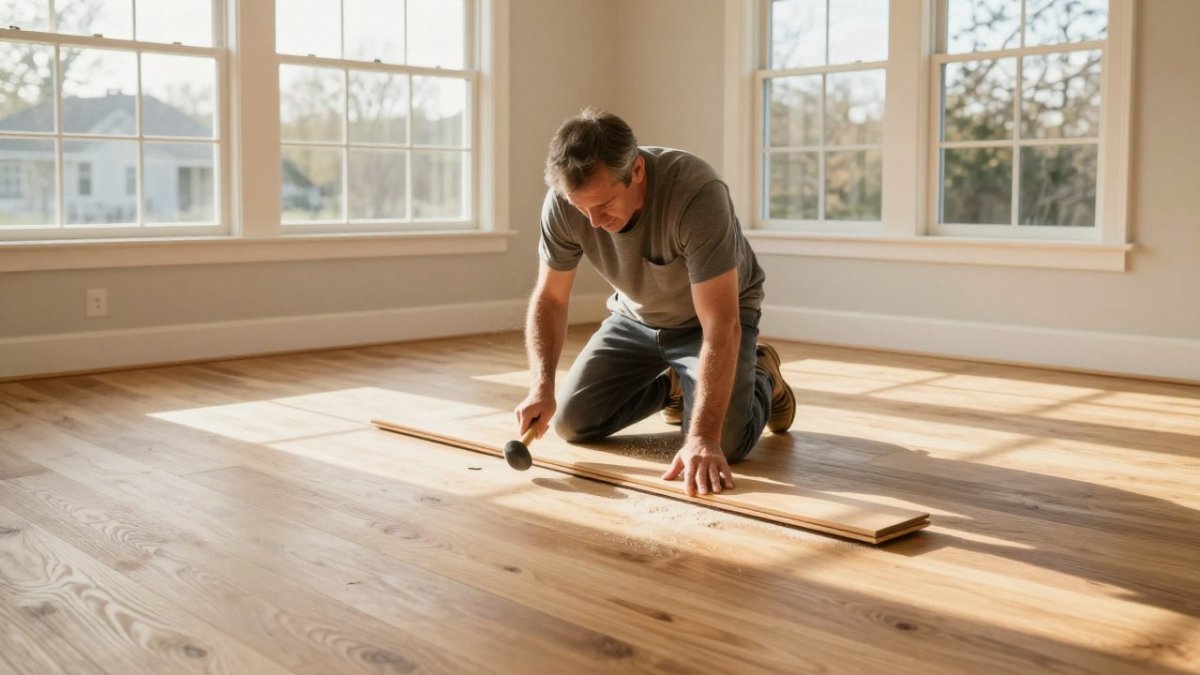
Professional installers understand transition requirements, subfloor assessment, and moisture barriers that DIYers often overlook. They have tools to ensure level installation and proper adhesive application. For elderly family members, professional installation is worth the investment.
If you do choose DIY, focus on materials that are forgiving: click-lock vinyl or rubber tiles that don't require precision adhesive application. Avoid tile or materials requiring grout, as improper grout spacing creates trip hazards.
Making Your Choice: Selection Criteria for Senior-Safe Flooring
Start with the highest-risk areas: bathrooms and kitchens. These spaces demand maximum slip resistance and moisture resistance. Rubber tiles or textured porcelain tile excel here.
Next, address main living spaces: hallways, living rooms, bedrooms. Textured LVP balances safety with comfort and aesthetics. It maintains slip resistance during normal use while feeling warm and livable.
Consider the specific needs of your elderly family member. Someone using a walker needs firm surfaces without catching points. Someone with arthritis benefits from cushioning. Someone with balance issues needs maximum slip resistance everywhere.
Budget matters, but not in the way many assume. The most expensive material isn't always the best choice. Textured LVP at moderate cost often outperforms cheaper options that don't maintain slip resistance or more expensive specialty materials that don't fit your specific situation.
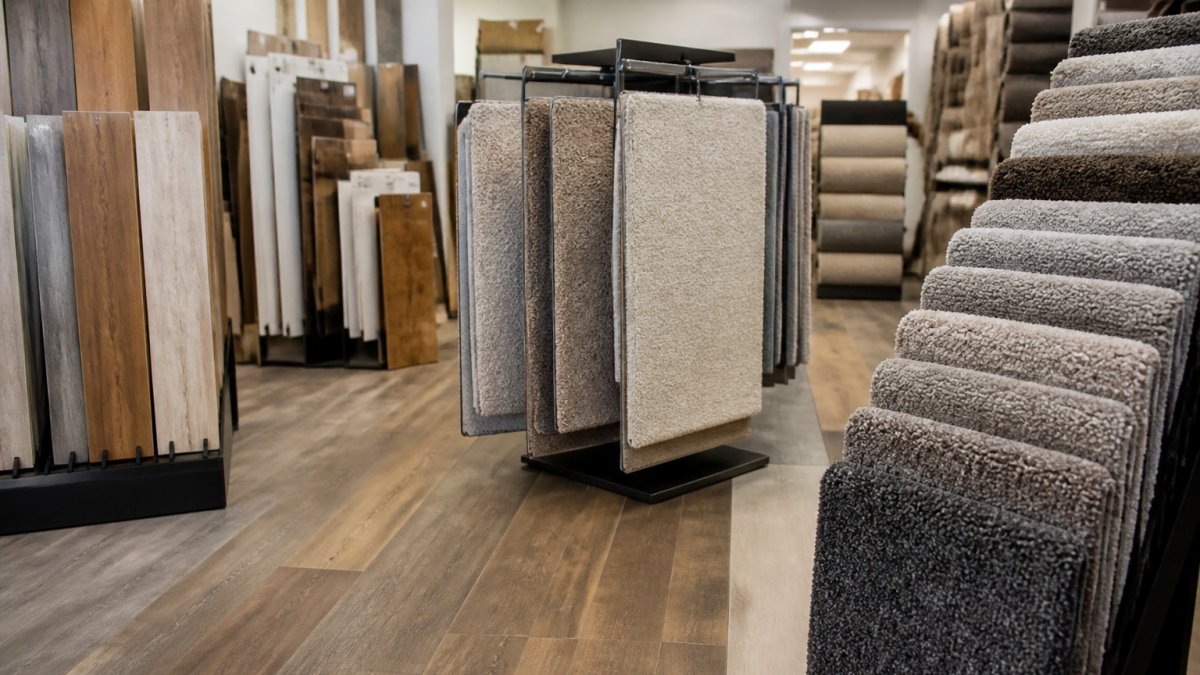
Test materials before committing to full installation. Many flooring retailers allow you to take samples home and see how they look in actual lighting and how they feel underfoot in your specific spaces.
Choosing slip resistant flooring for elderly family members requires balancing safety, comfort, aesthetics, and budget. The materials available in 2026 offer genuine options for every situation, from high-risk bathrooms requiring maximum grip to living spaces where comfort and safety coexist. Hamptons carpet one floor and Home helps families across Suffolk County navigate these decisions with personalized guidance based on their specific homes and needs. Our team understands aging in place, mobility aid requirements, and the installation details that separate safe flooring from flooring that looks safe but fails in daily use. Get started with a consultation and sample selection, and ensure your elderly family members have the slip-resistant foundation they need for independent, confident living.
Frequently Asked Questions
What is the best slip resistant flooring for elderly family members in bathrooms?
Textured porcelain tile and rubber flooring tiles offer the highest slip resistance in wet environments. Rubber provides superior cushioning for fall impact, while textured porcelain is more aesthetically flexible. Both resist water pooling and are easy to sanitize. For maximum safety, textured rubber flooring edges out tile because it combines slip resistance with shock absorption, reducing injury severity if a fall occurs.
How can I make existing floors safer for elderly family members without replacement?
Anti-slip coatings like SparkleTuff create a textured surface over existing flooring, improving traction on tile, concrete, or wood. These transparent coatings preserve the floor's appearance while adding grip. For a lower-cost solution, adhesive non-slip tape works on stairs and high-traffic areas. Ensure proper lighting and eliminate trip hazards like loose rugs or uneven transitions. Professional installation ensures coatings cure properly and provide lasting protection.
Does cushioned flooring really reduce fall injuries for elderly people?
Yes. Cushioned materials like rubber, cork, and soft vinyl absorb impact energy when falls occur, reducing the severity of injuries. Medical research shows impact absorption significantly lowers fracture risk, particularly for hip and wrist injuries common in elderly falls. However, cushioning alone isn't enough; you also need slip resistance and proper installation. The best approach combines both: a textured, slip-resistant surface with adequate underfoot cushioning for maximum protection.
What maintenance products are safe for slip resistant flooring?
Avoid oil-based polishes and wax products, which reduce slip resistance and create hazards. Use pH-neutral cleaners specifically formulated for your flooring type. For rubber and vinyl, mild soap and water work well. For tile, use non-acidic tile cleaners. Dry floors thoroughly after cleaning, as residual moisture increases slip risk. Check product labels to confirm they don't contain slippery additives, and test in a small area first.
Is professional installation worth the cost for aging in place flooring?
Yes, especially for slip-resistant materials. Professional installers ensure proper subfloor preparation, correct transition thresholds, and secure sealing that maintains slip resistance. Poor installation can create trip hazards and reduce product durability. For coastal properties exposed to salt air and moisture, professional installation protects your investment. Professionals also identify hidden subfloor issues before they become costly problems, preventing surprise expenses mid-project.
This article was written using GrandRanker