 Listicle
Is Commercial Rubber Flooring Good for Gyms?
Table of Contents
- Commercial Rubber Flooring for Gyms: The Verdict
- Key Strengths: Why Gyms Choose Rubber
- Realistic Drawbacks and Limitations
- Rubber Gym Flooring Thickness Guide
- Commercial Gym Flooring Installation Cost
- Best Rubber Flooring for Heavy Lifting
- Fire Safety, Environmental Standards, and Maintenance
- Conclusion
Last Updated: August 14, 2026
Commercial Rubber Flooring for Gyms: The Verdict
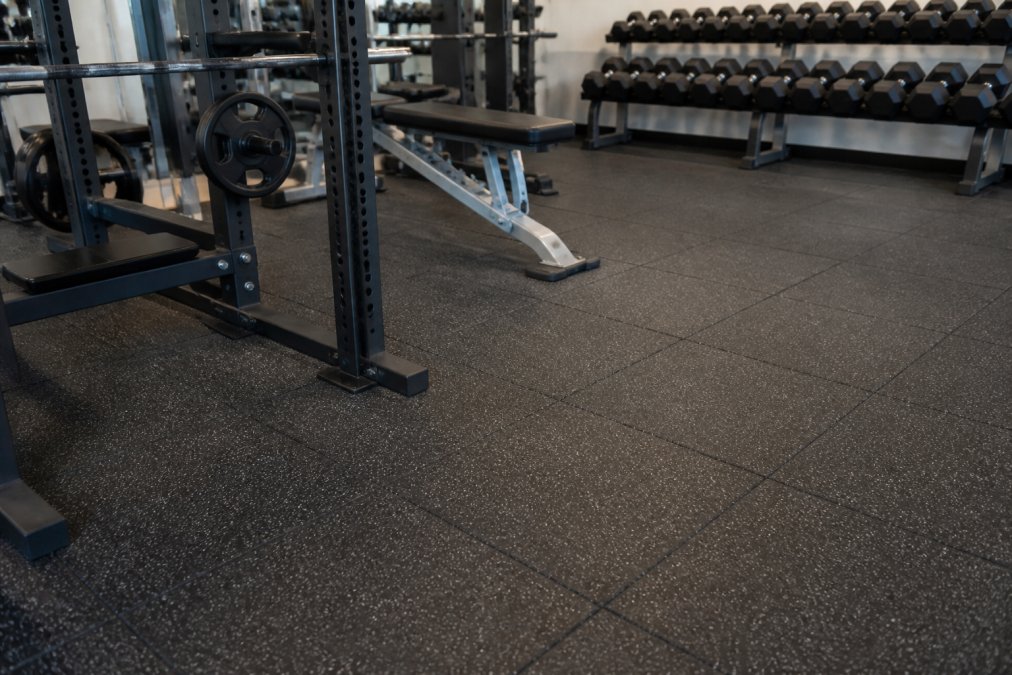
Is commercial rubber flooring good for gyms? Yes, but only if you understand what you're getting. Commercial rubber flooring delivers genuine performance advantages for high-impact environments, yet it comes with real tradeoffs that catch many gym owners off guard. Whether it's the right choice depends on your specific needs, budget, and how you plan to use the space.
At Hamptons carpet one floor and Home, we've helped countless gym owners and facility managers navigate this decision. The flooring you choose shapes everything from athlete safety to long-term maintenance costs. This guide breaks down what commercial rubber flooring actually delivers, where it falls short, and how to pick the right thickness and material for your situation.
Key Strengths: Why Gyms Choose Rubber
Commercial rubber flooring solves specific problems that other flooring types simply cannot address.
Shock Absorption and Impact Protection
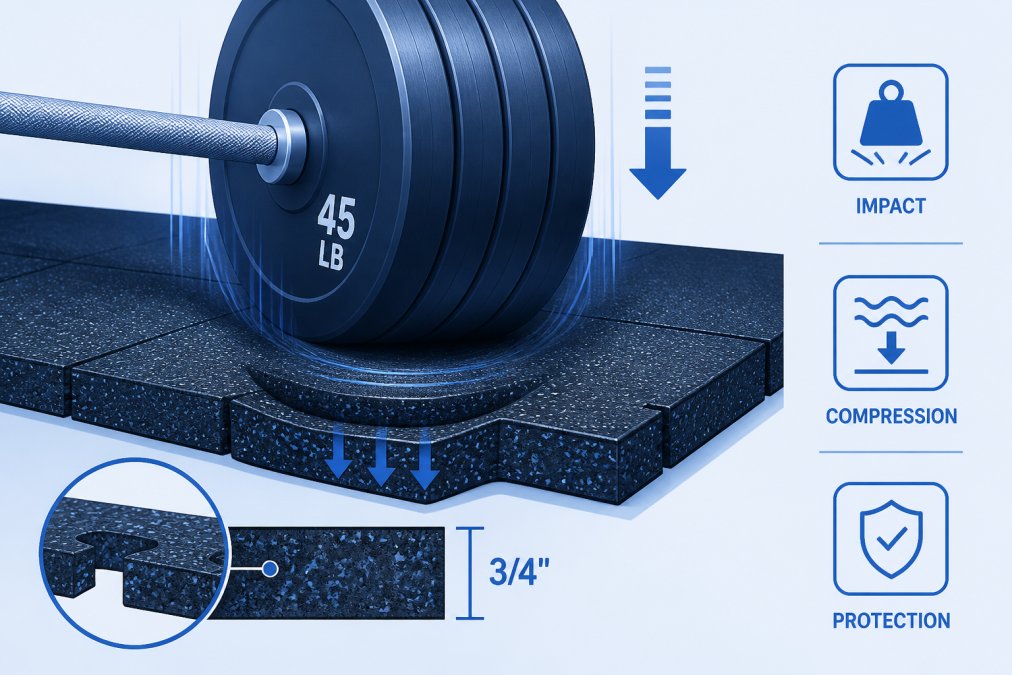
Shock absorption is the primary reason gyms install rubber flooring. When a 300-pound athlete drops a barbell from chest height, rubber's elasticity absorbs that energy rather than transmitting it through the floor into the subfloor structure below. This protection extends the life of your building's foundation and prevents structural damage that concrete floors develop over time.
Repeated impact on hard surfaces causes joint stress, particularly in the knees, hips, and lower back. Rubber provides a forgiving surface that reduces this cumulative stress. Gyms that switch from concrete to rubber flooring often report that athletes feel less fatigue during high-impact training sessions.
The thickness of the rubber directly correlates with shock absorption. A 1/4-inch tile provides basic cushioning suitable for cardio areas. A 3/4-inch or 1-inch tile delivers substantially more shock absorption for heavy lifting zones.
Durability and Subfloor Protection
Commercial rubber flooring withstands abuse that would destroy most alternatives. Dropped weights, dragged equipment, constant foot traffic, and loaded racks, rubber handles all of it. The material resists gouging, tearing, and permanent deformation in ways that softer materials cannot match.
Subfloor protection is where rubber delivers its most valuable long-term benefit. Your concrete subfloor or wooden joists are expensive to repair or replace. Rubber acts as a sacrificial layer, absorbing damage that would otherwise degrade the structure underneath. After five years of heavy use, a gym with rubber flooring will have a subfloor in far better condition than one with concrete or thin alternatives.
Vulcanized rubber, the highest-performance option, undergoes a chemical process that increases its tensile strength and resistance to wear. Vulcanized rubber floors can handle decades of heavy use in commercial settings, though they typically cost 30-50% more than standard rubber tiles.
Noise Reduction and Acoustic Performance
Dropped weights create noise that travels through hard flooring materials and amplifies through a building. Commercial rubber flooring absorbs much of this sound, reducing noise transmission significantly. A gym with rubber flooring is noticeably quieter than one with concrete, which matters if your facility is in a building with residential or office space nearby.
The noise dampening effect comes from rubber's cellular structure. Air pockets within the material absorb sound energy rather than reflecting it. Thicker rubber provides better acoustic performance; a 3/4-inch tile will reduce noise more effectively than a 1/4-inch option.
Realistic Drawbacks and Limitations
Rubber flooring isn't perfect. Understanding its limitations helps you make an informed decision and avoid costly mistakes.
The most significant drawback is upfront cost. Commercial rubber flooring costs more than concrete or basic alternatives. Thicker, higher-quality options push costs even higher. For budget-conscious facility managers, this initial investment can be difficult to justify, even when long-term value is clear.
Odor is another real consideration. New rubber flooring, particularly recycled rubber products, can emit a noticeable odor for weeks or months. The smell dissipates over time, but it's worth knowing about upfront.
Installation complexity varies. Interlocking tiles are straightforward and adhesive-free. Rolled rubber and seamless systems require more skill and specialized equipment. Poor installation can result in uneven surfaces, movement, or premature failure.
Maintenance is straightforward but non-negotiable. Rubber flooring requires regular cleaning to prevent odor buildup and maintain appearance. Sweat, dust, and moisture can degrade the surface if not managed.
Environmental considerations matter to some buyers. While recycled rubber is more sustainable than virgin rubber, it still carries environmental costs in processing and transportation. Premium products often have lower VOC emissions, but this typically means higher cost.
Rubber Gym Flooring Thickness Guide
Thickness is the single most important specification for rubber gym flooring. It directly affects shock absorption, durability, cost, and suitability for different activities.
Thin Tiles (1/4 inch to 3/8 inch)
Thin rubber tiles are the budget option. They provide basic shock absorption and protect your subfloor from moderate impact. They're suitable for cardio areas, stretching zones, and low-impact training spaces where equipment isn't dropped repeatedly.
The advantages are clear: lower cost, easier to handle and install, and sufficient for many facility needs. The limitations are equally clear. Thin tiles compress noticeably under heavy load and develop permanent compression marks where heavy equipment sits. For serious lifting zones, thin tiles don't provide enough cushioning or durability.
Medium Tiles and Rolls (1/2 inch to 5/8 inch)
Medium-thickness rubber represents the sweet spot for most commercial gyms. It provides genuine shock absorption for heavy lifting while remaining cost-effective. A 1/2-inch tile handles dropped barbells, loaded racks, and intense training without bottoming out or developing permanent compression.
Medium thickness works well for mixed-use facilities where the same space hosts both cardio and free weights. Most commercial gyms use 1/2-inch to 5/8-inch rubber in their primary training areas. Rolls in this thickness range are popular for seamless coverage of large spaces, though installation requires more skill and proper adhesive application.
Heavy-Duty Tiles (3/4 inch to 1 inch)
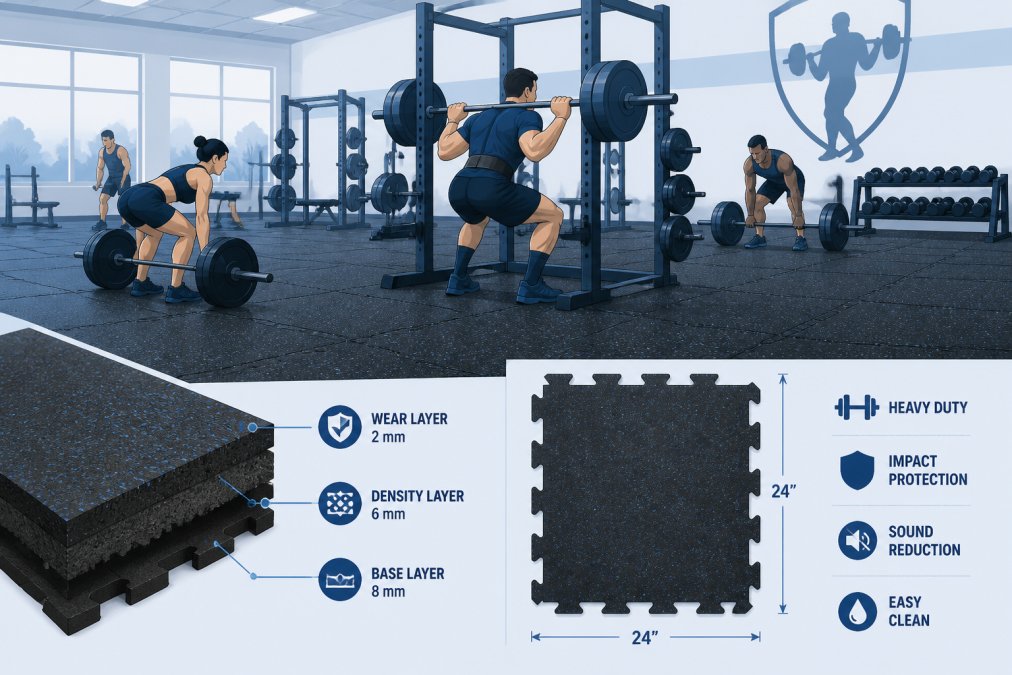
Heavy-duty rubber is engineered for maximum abuse. A 3/4-inch or 1-inch tile absorbs serious impact without compression and protects your subfloor completely. This is the standard for professional weight rooms, CrossFit boxes, and any facility where heavy equipment and dropped weights are constant.
The advantages are substantial: superior shock absorption, exceptional durability, and complete subfloor protection. Heavy-duty rubber resists wear and maintains its appearance longer than thinner options. The cost is higher, and heavy tiles are physically heavier, which complicates installation.
| Thickness | Best For | Shock Absorption | Durability | Cost Level | Installation Difficulty |
|---|---|---|---|---|---|
| 1/4" - 3/8" | Cardio, stretching, light use | Basic | Moderate | Low | Easy |
| 1/2" - 5/8" | Mixed-use gyms, general training | Good | Good | Moderate | Moderate |
| 3/4" - 1" | Heavy lifting, professional facilities | Excellent | Excellent | High | Challenging |
Commercial Gym Flooring Installation Cost
Installation cost depends on several variables: flooring type, thickness, square footage, existing subfloor condition, and regional labor rates.
Interlocking tiles are the most straightforward to install and require minimal preparation and no adhesive. Rolled rubber requires more skill, proper subfloor preparation, correct adhesive application, and material stretching. Seamless systems require professional installation and specialized equipment, pushing costs higher.
Subfloor condition matters significantly. A clean, level concrete slab is straightforward. Uneven floors, damaged concrete, or moisture issues require remediation before flooring installation. This hidden work is where many projects exceed initial quotes.
Regional variation is real. Labor costs in urban areas exceed rural rates, and shipping costs for heavy rubber flooring vary by distance.
The best approach is to get multiple quotes from local installers who can assess your specific situation. Reputable installers will identify potential issues upfront rather than discovering them mid-project.
Best Rubber Flooring for Heavy Lifting
Not all rubber flooring performs equally under the demands of serious strength training. Material composition and manufacturing process dramatically affect how the floor handles dropped weights and sustained heavy loads.
EPDM vs. SBR: Material Composition Matters
EPDM (ethylene propylene diene monomer) and SBR (styrene butadiene rubber) are the two primary rubber types used in gym flooring. They have fundamentally different characteristics that affect performance and cost.
EPDM is a synthetic rubber known for its resistance to weathering, ozone, and UV exposure. It resists permanent compression better, bouncing back after heavy loads rather than staying compressed. EPDM products typically run 40-60% higher than equivalent SBR options.
SBR is recycled rubber derived from used tires. It's more affordable and provides decent shock absorption. However, SBR compresses more permanently under heavy loads. Over time, areas where heavy equipment sits will develop visible compression marks. For serious lifting facilities, this degradation is unacceptable.
The choice between EPDM and SBR comes down to your facility's intensity and budget. High-traffic weight rooms should choose EPDM. Budget gyms or facilities with lighter use can manage with quality SBR.
Vulcanized Rubber for Maximum Abuse
Vulcanization is a chemical process that fundamentally strengthens rubber. Vulcanized rubber undergoes heat and pressure treatment with sulfur, creating cross-links between polymer chains. The result is a material with dramatically higher tensile strength, abrasion resistance, and resilience.
Vulcanized rubber is the gold standard for heavy-duty gym flooring. It resists tearing, gouging, and permanent deformation in ways that non-vulcanized rubber cannot match. Professional weight rooms and CrossFit competitions use vulcanized rubber because it lasts longer under abuse.
The cost premium is substantial, though for facilities that demand maximum durability, vulcanized rubber is worth the investment.
Fire Safety, Environmental Standards, and Maintenance
Fire safety is a regulatory consideration that varies by jurisdiction. Some building codes require flooring to meet specific fire ratings. Rubber flooring typically meets or exceeds these standards, but verify with your local building authority before installation.
Environmental standards have evolved. VOC (volatile organic compound) emissions from rubber flooring are regulated in many jurisdictions. Higher-quality products, particularly those made with EPDM or premium recycled rubber, have lower VOC emissions.
Maintenance determines how long your rubber flooring actually lasts. Regular cleaning prevents odor buildup, surface degradation, and mold growth. Weekly vacuuming and periodic deep cleaning with appropriate rubber-safe cleaners keeps the floor in good condition.
Moisture management is critical. Ensure your facility has adequate drainage and airflow beneath and around the rubber flooring. Moisture trapped under rubber can lead to mold or degradation of the subfloor.
Commercial rubber flooring is genuinely good for gyms when you choose the right thickness and material for your specific use case. It delivers shock absorption, subfloor protection, and durability that other flooring types cannot match. The investment pays dividends through reduced maintenance, longer-lasting facilities, and better athlete experience.
Start by assessing your facility's intensity level. High-traffic weight rooms need 3/4-inch to 1-inch vulcanized or premium EPDM rubber. Mixed-use facilities work well with 1/2-inch to 5/8-inch standard rubber. Lighter-use cardio areas can manage with 1/4-inch to 3/8-inch options. Get your subfloor professionally assessed, get multiple installation quotes, and plan for ongoing maintenance. Hamptons carpet one floor and Home can help you navigate this decision with expert guidance on what works best for your specific space and needs. Contact us for a consultation and explore flooring options that match your facility's demands.
Frequently Asked Questions
Is commercial rubber flooring good for gyms?
Yes. Commercial rubber flooring is an excellent choice for gyms because it absorbs shock, protects subfloors from heavy equipment damage, reduces noise, and resists wear from high-traffic use. It works well for weight rooms, cardio areas, and mixed-use facilities. The main trade-off is higher upfront cost compared to alternatives, though it typically lasts 10+ years with proper maintenance.
What thickness of rubber gym flooring do I need for heavy lifting?
For heavy lifting and free weights, use 3/4-inch to 1-inch thick rubber flooring. This thickness provides the shock-absorbent and impact-resistance needed to handle dropped barbells and dumbbells while protecting your subfloor. Thinner options (1/4 to 1/2 inch) work for cardio zones but are insufficient for dedicated weight rooms where equipment is dropped regularly.
What's the difference between SBR and EPDM rubber flooring?
SBR (styrene-butadiene rubber) is recycled, more affordable, and durable for general gym use. EPDM (ethylene propylene diene monomer) is virgin rubber, more resilient, longer-lasting, and resistant to UV and ozone, making it better for outdoor or high-end facilities. For commercial gyms, vulcanized rubber (often SBR-based) offers the best balance of durability, impact resistance, and cost-effectiveness.
How much does commercial gym flooring installation cost?
Installation costs depend on room size, thickness, tile versus roll selection, and subfloor condition. Pricing varies widely based on these factors and your location. Contact Hamptons Carpet One Floor and Home for a detailed quote tailored to your facility's needs. Professional installation ensures proper subfloor preparation, adhesive application (if needed), and correct seam placement for durability.
This article was written using GrandRanker