 Ultimate guide
Area Rugs Long Island: The Complete Buying Guide
Table of Contents
- Why Area Rugs Long Island Homeowners Trust Matter
- Hand-Knotted vs. Machine-Made: Understanding Your Options
- Essential Rug Materials for Long Island Homes
- Custom Area Rugs Long Island: Design Your Perfect Rug
- Rug Sizing Guide for Specific Room Layouts
- Best Rug Materials for Pets and High-Traffic Areas
- How to Clean Area Rugs: Maintenance for Long Island Coastal Homes
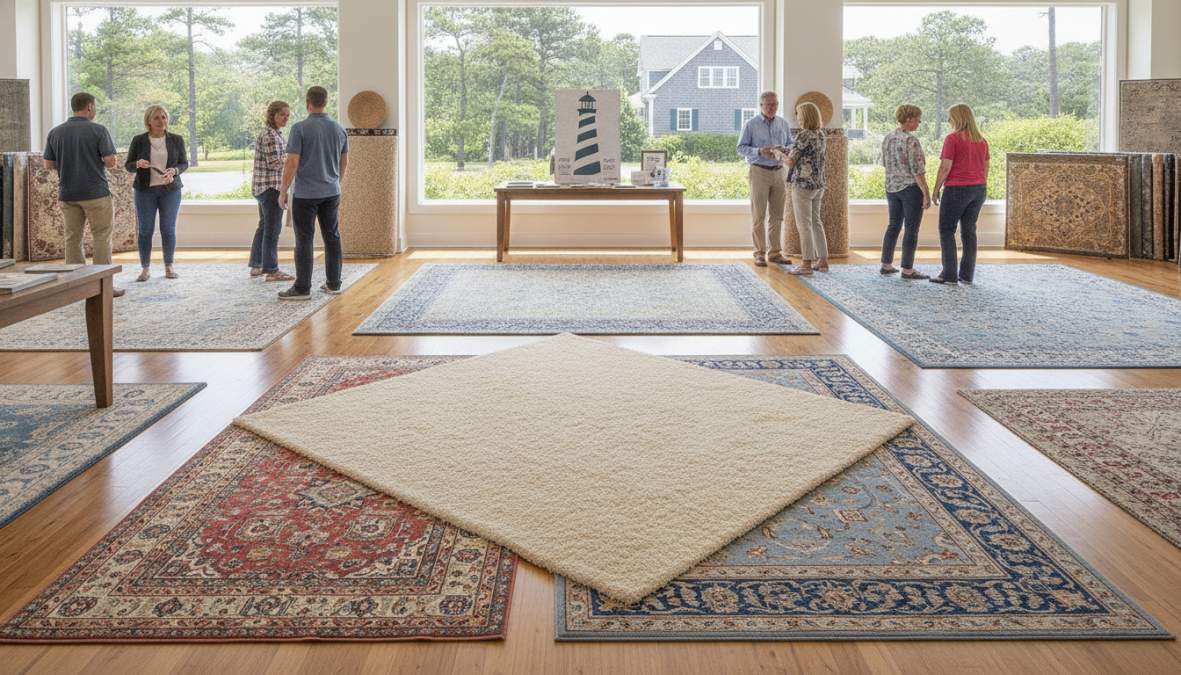
- Local Showroom vs. Online: Where to Buy Area Rugs on Long Island
Area Rugs Long Island: The Complete Buying Guide
Last Updated: July 10, 2026
When Hamptons carpet one floor and Home helps Long Island homeowners select area rugs, we've noticed one consistent pattern: most people approach the decision backwards. They pick a style they like, hope it fits their space, and discover six months later that the material wasn't right for their lifestyle. Area rugs Long Island residents trust don't just look good, they're engineered to perform in coastal homes with humidity, salt air, and high foot traffic. The difference between a mediocre purchase and a smart investment comes down to understanding three things: construction method, fiber content, and how your specific space demands function from a floor covering.
Why Area Rugs Long Island Homeowners Trust Matter
A quality area rug anchors a room, defines zones in open layouts, and protects your actual flooring from wear patterns. For Long Island homes specifically, coastal humidity, salt spray, and sandy soil tracked in from beaches all accelerate deterioration in low-quality rugs. The right rug absorbs foot traffic impact on hardwood floors, reduces noise, and naturally insulates, affecting heating and cooling costs. An area rug also sets the aesthetic tone for an entire room, and when everything else feels close but not quite right, the right rug creates cohesion.
Hand-Knotted vs. Machine-Made: Understanding Your Options
Hand-knotted rugs are tied individually by craftspeople, creating a unique textile where every knot is intentional. Machine-made rugs are woven on industrial looms that produce consistent patterns and volumes. The difference is structural, financial, and practical.
Durability and Longevity Differences
Hand-knotted rugs typically last 20-40 years with proper care, while quality machine-made rugs last 10-15 years. A hand-knotted rug can contain 100 to 300+ knots per square inch, creating a dense textile that resists crushing and wear. Machine-made rugs average 30-80 knots per square inch because looms have speed constraints.
For high-traffic areas like living rooms and hallways, hand-knotted construction wins decisively. The pile holds its shape longer, colors don't fade as quickly, and the rug becomes softer with use instead of matting down. Machine-made rugs show wear patterns faster, with visible foot traffic routes appearing within 3-5 years in busy homes.
Hand-knotted rugs require more maintenance, they shed more in the first year and are heavier to move. Machine-made rugs are more forgiving for families with pets or young children because they're easier to clean and replacement is less costly.
Investment and Resale Value
Hand-knotted rugs appreciate or hold value. A quality hand-knotted rug purchased for $4,000 might be worth $3,500-4,200 in five years if maintained. Machine-made rugs depreciate significantly, with a $2,000 rug worth only $400-600 after five years.
If you're planning to stay in your Long Island home for more than 10 years, hand-knotted makes financial sense despite higher upfront cost. Many Long Island homeowners split the difference: hand-knotted in formal living and dining areas, machine-made in bedrooms and less-trafficked spaces.
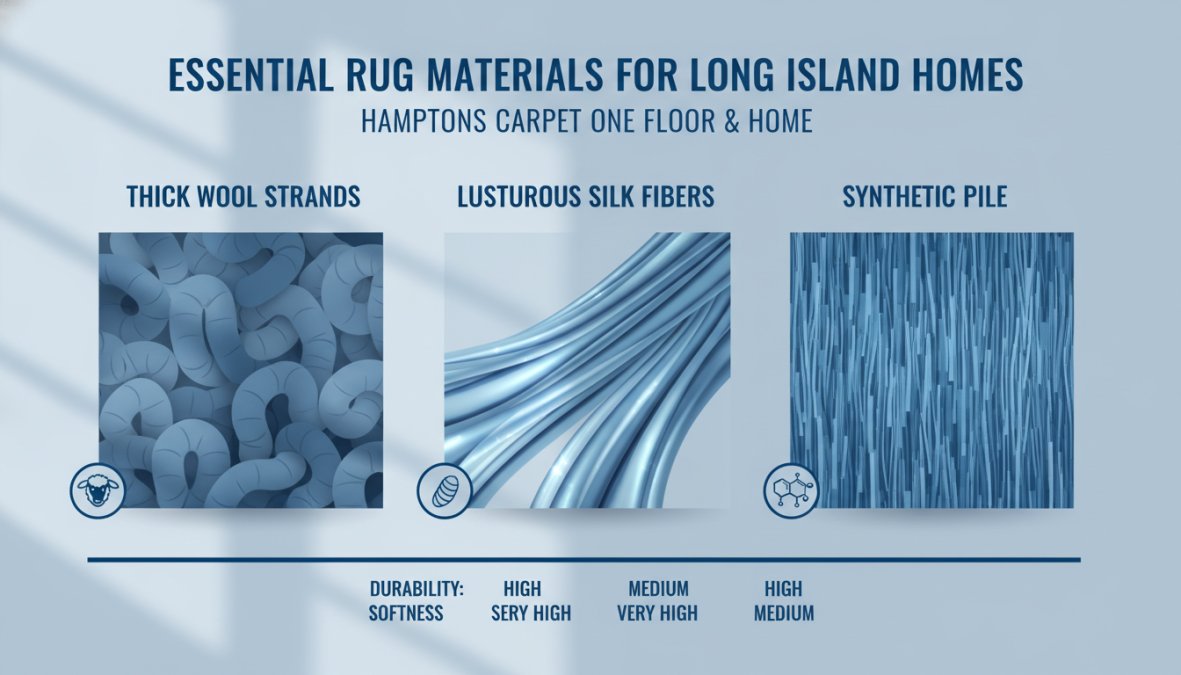
Essential Rug Materials for Long Island Homes
The fiber you choose determines how your rug performs in coastal humidity, handles stains, and feels underfoot.
Wool: Luxury and Durability
Wool is the gold standard for area rugs. It's naturally stain-resistant because the fiber's lanolin coating repels liquids initially, giving you time to blot spills before they set. Wool is naturally fire-resistant, hypoallergenic, and regulates temperature. Wool fibers can bend 20,000 times before breaking, compared to synthetic fibers that break after 2,000-3,000 bends.
For Long Island's coastal climate, wool handles humidity better than synthetics. It can absorb up to 30% of its weight in moisture without feeling damp, preventing the mildew and mold growth that synthetic rugs struggle with in humid environments.
The downside: wool costs more, starting at $1,500-2,000 for smaller sizes. Wool also requires professional cleaning every 12-18 months for high-traffic areas and can shed in the first 6-12 months, which is normal and decreases over time.
Silk: Elegance and Sheen
Silk creates the most luxurious appearance with natural sheen that reflects light and makes colors appear richer. Silk rugs are exceptionally soft and drape beautifully, making them ideal for formal living rooms and bedrooms where foot traffic is lighter.
Silk's weakness is durability. A silk-only rug in a high-traffic area will show wear patterns within 2-3 years. Many high-end rugs use a silk and wool blend, typically 10-20% silk with 80-90% wool, to capture silk's visual luxury while maintaining wool's durability. For Long Island homes, pure silk is best reserved for formal dining rooms, bedrooms, or low-traffic sitting areas.
Synthetic Fibers: Practicality and Stain Resistance
Synthetic fibers, nylon, polypropylene, and polyester, are engineered for stain resistance and durability. Modern synthetics are treated with protective coatings that repel liquids more effectively than wool and resist fading from sunlight and foot traffic.
Synthetics are ideal for homes with pets, young children, or anyone who prioritizes easy cleaning. They're significantly cheaper than wool, starting at $400-800 for larger sizes. They don't shed, don't attract moths or mites, and are lighter to move.
The tradeoff is longevity and feel. Synthetic rugs typically last 10-12 years before showing significant wear. They can feel plasticky compared to natural fibers and don't age well. In humid coastal environments, synthetics can trap moisture if not ventilated properly, leading to mildew underneath.
Custom Area Rugs Long Island: Design Your Perfect Rug
When you can't find the right size, color, or pattern in stock rugs, custom area rugs Long Island specialists can build exactly what you need. Custom rugs let you control fiber content, pile height, color, size, and binding.
In-Home Consultation Services
The best custom rug process starts with an in-home consultation. A designer evaluates lighting, furniture layout, traffic patterns, and your lifestyle. They recommend fiber content based on your home's humidity and foot traffic, suggest pile heights that work for your furniture style, and help you understand how colors will appear in your specific lighting.
During consultation, professionals bring samples of actual fibers and colors to see how they look in your space, preventing the common mistake of selecting rugs in a showroom under different lighting. They also discuss maintenance requirements, budget, and timeline. Consultations typically take 60-90 minutes and are included with custom orders.
Custom Sizing and Binding Options
Custom sizing means your rug fits perfectly in your space, eliminating the compromise of choosing the closest stock size. Binding, the finished edge of a rug, dramatically affects appearance. Options include serged binding (basic and affordable), decorative tape binding (adds a design element), leather binding (luxury option), and fringe (traditional and elegant).
Custom sizing adds 4-6 weeks to production time. A hand-knotted wool rug with custom leather binding and your choice of color creates a one-of-a-kind piece impossible to find in retail.
Rug Sizing Guide for Specific Room Layouts
Rug size determines whether a space feels cohesive or disconnected.
Living Room and Dining Room Placement
In a living room, your rug should be large enough that at least the front legs of all seating pieces sit on the rug. For a typical living room, this means 8x10 or 9x12 feet minimum. The rug should extend at least 18 inches beyond your seating arrangement on all sides.
For dining rooms, the rug should be large enough that chair legs sit on the rug even when pulled out for seating. A standard dining table needs at least a 9x12 rug; larger tables need 10x14 or custom sizing. In open-concept spaces, a single large rug (10x14 or larger) unifies both areas.
Bedroom Dimensions and Flow
A rug that extends from the bed footboard to 2-3 feet into the room creates a soft landing when you step out of bed. Size typically ranges from 5x7 to 8x10 depending on bedroom size. Alternatively, place a smaller rug (4x6 or 5x7) at the foot of the bed for visual interest. In larger master bedrooms, two 3x5 rugs on each side of the bed creates symmetry and practical comfort.
| Room Type | Minimum Size | Recommended Size | Maximum Size |
|---|---|---|---|
| Small living room (under 250 sq ft) | 7x9 | 8x10 | 9x12 |
| Standard living room (250-400 sq ft) | 8x10 | 9x12 | 10x14 |
| Large living room (over 400 sq ft) | 9x12 | 10x14 | 12x15+ |
| Dining room (standard table) | 8x10 | 9x12 | 10x14 |
| Master bedroom | 5x7 | 8x10 | 9x12 |
| Secondary bedroom | 4x6 | 5x7 | 6x9 |
Best Rug Materials for Pets and High-Traffic Areas
Homes with pets need rugs that handle accidents, shedding, and constant foot traffic.
Stain Resistance and Durability
Nylon is the best synthetic choice for pet-owning households. It's tougher than polypropylene, resists stains better when treated with protective coatings, and cleans more easily. Wool is also surprisingly good for pets, while it stains more easily than synthetics, it's naturally antimicrobial, preventing odor from settling into the fiber. Wool also resists crushing from pet claws better than synthetics.
Avoid light colors in high-traffic or pet-heavy homes. Dark colors, patterns, and textured weaves hide dirt and stains far better than solid light rugs. Lower pile (1/4 to 1/2 inch) is easier to vacuum and clean than plush pile. Loop pile resists shedding and matting better than cut pile.
How to Clean Area Rugs: Maintenance for Long Island Coastal Homes
Long Island's coastal environment, salt air, humidity, sand, accelerates rug deterioration without proper maintenance.
Professional Cleaning Services
Professional cleaning is essential for maintaining your rug investment. For wool and hand-knotted rugs, professional cleaning every 12-18 months prevents dirt from grinding into fibers. For synthetic rugs in high-traffic homes, professional cleaning every 18-24 months is sufficient.
Between professional cleanings, vacuum your rug weekly in high-traffic areas, bi-weekly in moderate traffic. Vacuum in the direction of the pile to avoid damaging it. Spot-clean spills immediately by blotting with a clean white cloth. For fresh stains, use cool water; for set-in stains, use a solution of one part white vinegar to three parts water.
Seasonal Care and Humidity Management
Long Island's humidity peaks in summer and can reach 70-80% indoors without proper ventilation. Ensure adequate air circulation under your rug by using a quality rug pad. Rug pads prevent shifting, provide cushioning, and allow air circulation underneath. Choose breathable pads (felt for hardwood, rubber-backed for tile).
In summer, periodically roll back your rug to air out the floor underneath. In winter, maintain consistent humidity levels (30-50%) to prevent dry air that can make wool fibers brittle. Rotate your rug 180 degrees every 6-12 months to distribute foot traffic wear evenly and prevent uneven aging.
Choosing the right area rug Long Island homes can actually use for decades comes down to matching material and construction to your space's actual demands. Hamptons carpet one floor and Home specializes in helping Long Island homeowners navigate these decisions through in-home consultations, access to hand-knotted and custom options, and professional cleaning recommendations. Whether you need a durable nylon rug for a pet-filled home or an investment-grade hand-knotted piece for your formal living room, the right choice starts with understanding what your space needs. Schedule a consultation to explore custom area rugs Long Island residents trust to perform in coastal climates.
Frequently Asked Questions
What size area rug should I choose for my living room on Long Island?
Area rug sizing depends on your room layout and furniture arrangement. For living rooms, a common guideline is to select a rug large enough that at least the front legs of your sofa and chairs rest on it, creating a cohesive seating zone. Measure your space first and consider the traffic flow. In-home consultation services can help ensure proper placement for your specific room dimensions and décor style.
What are the best rug materials for pets in Long Island homes?
Synthetic fibers and wool blends offer excellent stain resistance and durability for pet owners. Synthetic materials like polypropylene are highly stain-resistant and easy to clean, making them ideal for households with dogs and cats. Wool naturally resists soiling and odors, though it requires more careful maintenance. Avoid delicate silk rugs in high-traffic pet areas. Ask about rug pads to prevent slipping and protect your flooring underneath.
How often should I have my area rug professionally cleaned on Long Island?
Professional rug cleaning is recommended annually for most households, or more frequently if you have pets or high foot traffic. Long Island's coastal humidity and salt air can affect rug fibers, making regular maintenance especially important. Between professional cleanings, vacuum weekly and address spills immediately. Professional cleaners can assess your rug's specific fiber content and recommend a maintenance schedule tailored to your home's environment.
Can I get custom area rugs designed specifically for my Long Island home?
Yes, custom area rugs are available through local showrooms offering in-home consultation services. Designers can help you select custom sizing, binding styles, colors, and patterns that match your interior design and room layout. Custom rugs allow you to create one-of-a-kind pieces that fit your exact specifications, whether you prefer traditional, modern, or luxury designer aesthetics. Visit a showroom or request a consultation to explore your options.
This article was written using GrandRanker