 Ultimate guide
Is Luxury Vinyl Flooring Waterproof or Water Resistant?
Table of Contents
- Waterproof vs. Water-Resistant Vinyl: What the Labels Actually Mean
- Rigid Core, SPC, and WPC: The Construction Behind Waterproof Vinyl Flooring
- Luxury Vinyl Plank Pros and Cons for Wet, High-Traffic Rooms
- Best Waterproof Flooring for Basements and Other Below-Grade Spaces
- Where Water Still Gets Through: Seams, Subfloors, and Standing Water
- How to Clean Luxury Vinyl Flooring Without Damaging the Surface
- Warranty Limits, Marketing Claims, and What to Ask Before You Buy
- Frequently Asked Questions
Last Updated: September 29, 2026
Waterproof vs. Water-Resistant Vinyl: What the Labels Actually Mean
The short answer: is luxury vinyl flooring waterproof or water resistant? The planks themselves are waterproof, but the flooring system as a whole is only water-resistant.
Waterproof means the plank will not swell, peel, or buckle when liquid sits on its surface. Water-resistant means the floor handles everyday spills but is not built for standing water.
Industry reporting from Carpet Exchange's 2026 luxury vinyl brand review notes that major manufacturers now market rigid-core products as 100% waterproof for kitchens, bathrooms, and basements.
Why the Wear Layer and Core Decide the Answer
Two components determine water performance. The wear layer is the transparent top coating that resists spills and scratches. The core beneath it resists moisture far better in rigid form than in older flexible vinyl.
Rigid Core, SPC, and WPC: The Construction Behind Waterproof Vinyl Flooring
Rigid core made waterproof claims credible. Two core types dominate, and they behave differently underfoot.
| Feature | SPC | WPC |
|---|---|---|
| Core density | High, mineral-filled | Lower, foamed |
| Feel underfoot | Firm, hard | Warmer, softer |
| Temperature stability | Excellent | Good |
| Best for | Sun-exposed rooms, basements | Comfort-focused living areas |
| Subfloor tolerance | Less forgiving | More forgiving |
Luxury Vinyl Plank Pros and Cons for Wet, High-Traffic Rooms
The luxury vinyl plank pros and cons come down to where the water goes: the surface wins almost every time, but the edges get complicated.
Pros:
- Planks resist topical spills without swelling or staining
- Rigid cores tolerate humidity swings better than laminate or hardwood
- Pet mishaps wipe clean from the surface
- Damp-mopping handles routine maintenance without special products
- A quality wear layer stands up to grit, claws, and chair casters
Cons:
- Water can migrate through seams to the subfloor beneath
- Click-lock systems are only as tight as the installation
- Standing water left for days can still reach the core edges and underlayment
- No warranty covers water that reaches the subfloor
- Perimeter edges and transitions are often the first failure point, not the field of the floor
Seam Sealing: The Step Most Installers Skip
A click-lock joint is a mechanical connection, not a gasket. That is why many installation instructions call for a bead of 100% silicone sealant in wet areas, kitchens, bathrooms, laundry rooms, and anywhere a plumbing fixture sits. The sealant does not make the plank waterproof; it closes the gap where surface water wicks downward.
Where to seal:
- Perimeter expansion gaps at the base of walls, tubs, and cabinets, after the floor has acclimated and the gap is set
- Plank-to-plank seams in wet zones, applied per the manufacturer's instructions, some brands void the warranty if you seal field seams, so read the spec sheet first
- Transitions and thresholds where LVP meets tile, carpet, or another room
What the Warranty Actually Excludes
A "lifetime waterproof" warranty typically covers the plank against topical moisture damage. It almost never covers:
- Water that reaches the subfloor, underlayment, or wall cavity
- Flooding, plumbing failures, appliance leaks, or sump-pump overflow
- Mold, mildew, or structural damage beneath the floor
- Damage from standing water left in place beyond a stated time window
- Failures traced to missing perimeter sealant or unsealed wet-area seams
A Note on Core Materials and Disposal
SPC and WPC cores blend mineral filler, PVC, and plasticizers. That makes them dimensionally stable and moisture-tolerant, but end-of-life disposal is not straightforward and curbside recycling rarely accepts them. Some manufacturers offer take-back programs or publish recycled-content percentages. If environmental impact matters, ask for those numbers before you commit, the waterproof sticker tells you nothing about them.
Best Waterproof Flooring for Basements and Other Below-Grade Spaces
The best waterproof flooring for basements is rigid-core SPC vinyl over a moisture barrier with tested subfloor conditions. Below-grade spaces face hydrostatic pressure pushing groundwater up through concrete, and no plank resists that from above.
Subfloor Moisture Testing: The Step That Decides Everything
Most articles skip this, yet it is the highest-value step in a below-grade install and determines whether the floor lasts five or twenty years.
For concrete slabs, two test methods are standard:
- Calcium chloride test (ASTM F1869): measures the moisture vapor emission rate (MVER) from the slab surface. Results are reported in pounds per 1,000 square feet per 24 hours. A common manufacturer threshold is 3 lbs, though some rigid-core specs allow up to 5 lbs with an approved barrier.
- In-situ relative humidity probe (ASTM F2170): measures moisture inside the slab, not just at the surface. Results are reported as percent relative humidity. A common threshold is 75% RH, with some systems allowing up to 80% under a rated membrane.
If Readings Are Elevated: Mitigation Options
A failed moisture test does not rule out LVP, it means addressing the source first. Options, roughly in order of cost:
- Surface-applied moisture barrier, a roll-on epoxy or polyurethane coating that blocks vapor transmission. Works for moderate readings; not a fix for active water intrusion.
- Vapor-retardant underlayment, a rated membrane with a published perm rating, installed per the manufacturer's spec. Many rigid-core warranties require a specific membrane by name.
- Sub-slab depressurization or drainage, for chronic hydrostatic pressure, this is the real fix. It is a contractor-level job, not a DIY add-on.
- Dehumidification, manages ambient humidity but does not stop vapor from below. Useful as a supplement, not a substitute.
The Install Sequence That Actually Holds
- Test the slab for moisture and record the readings in writing
- Mitigate if readings are elevated, and re-test after mitigation
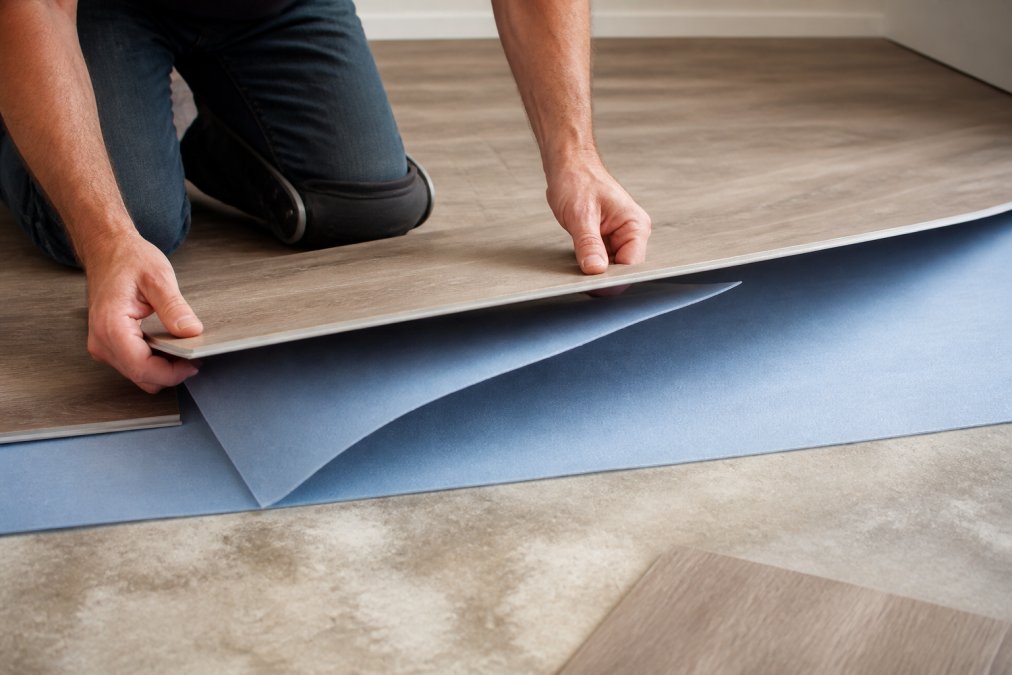
- Roll out a moisture barrier rated for below-grade use, lapped and taped per spec
- Install rigid-core SPC with tight seams, sealing wet-area seams per the manufacturer's instructions
- Leave expansion gaps at the perimeter, then seal them with 100% silicone
- Keep the test results and the installation spec on file for any future warranty claim
Where Water Still Gets Through: Seams, Subfloors, and Standing Water
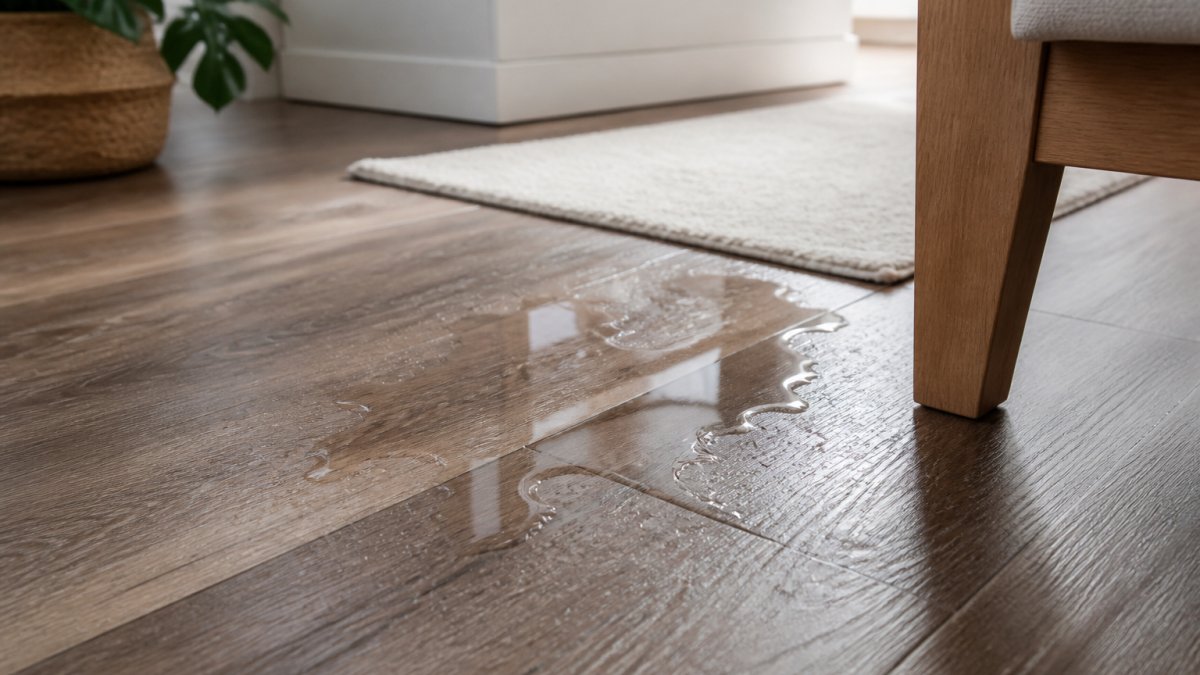
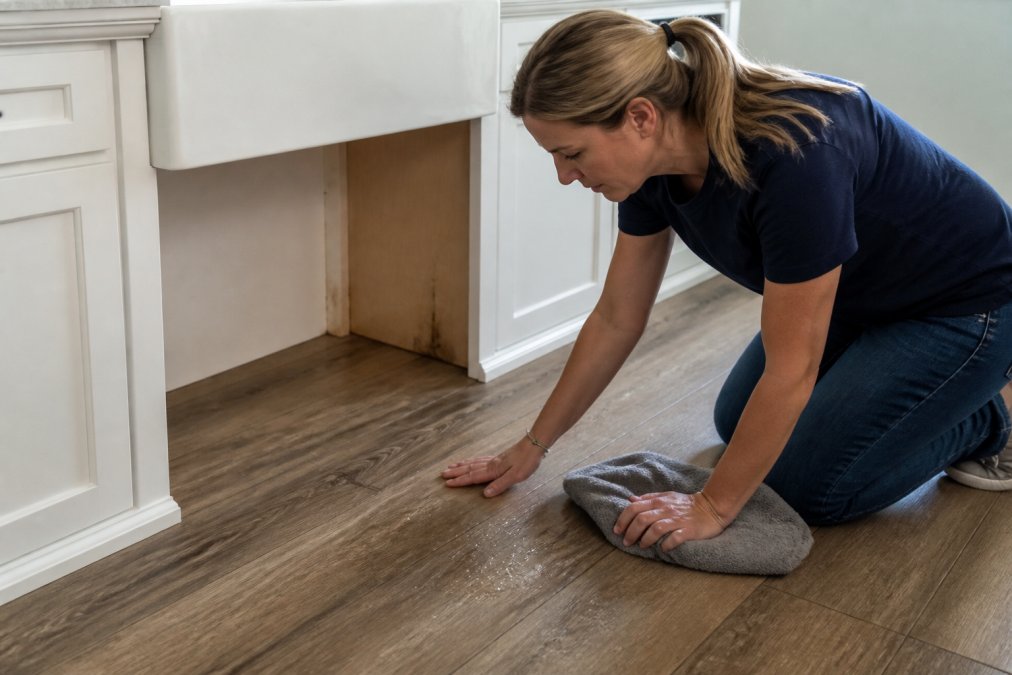
Water reaches the subfloor through the seams. The plank surface is impervious, but a click-lock joint is a mechanical connection, not a gasket. Spills that pool at a seam for hours will find their way down.
Testing Your Subfloor Before Installation
Subfloor moisture testing is the step most installers skip, and it determines whether the floor lasts. For concrete slabs, a calcium chloride test or in-situ relative humidity probe gives a real reading; for wood subfloors, a pin-type moisture meter works.
How to Clean Luxury Vinyl Flooring Without Damaging the Surface
Learning how to clean luxury vinyl flooring is simple once you know what to avoid. Damp-mopping with a pH-neutral cleaner handles nearly everything; a quality wear layer is durable, but not indestructible.
- Sweep or vacuum grit first; sand acts like sandpaper under foot traffic
- Use a damp, not wet, mop with a neutral cleaner
- Wipe spills promptly rather than letting them pool at seams
- Skip steam mops, which force heat and moisture into the joints
- Avoid abrasive pads and wax-based products that leave residue
Warranty Limits, Marketing Claims, and What to Ask Before You Buy
Warranty limitations are where the waterproof label meets reality. Most residential warranties cover the plank against topical spills; almost none cover water reaching the subfloor, and none cover mold or structural damage beneath the floor.
- Does the warranty cover subfloor moisture damage? (Usually no.)
- What moisture readings are required before installation?
- Are seam sealing techniques required to keep the warranty valid?
- Does the warranty transfer if you sell the home?
- What core material does the warranty assume, SPC or WPC?
Frequently Asked Questions
What are the negatives of luxury vinyl flooring?
The main drawbacks are seam vulnerability and subfloor exposure. Individual planks resist water, but liquid can still pass through gaps between planks and reach the subfloor, where mold and structural damage can develop. Vinyl also dents under heavy point loads, cannot be sanded or refinished like hardwood, and fades with prolonged direct sunlight. Cheap vinyl can look flat compared to natural materials. For coastal homes with tracked-in sand, grit acts like sandpaper on the wear layer over time.
Which vinyl flooring is 100% waterproof?
Rigid-core products, specifically SPC (stone plastic composite) and WPC (wood plastic composite) vinyl, are marketed as 100% waterproof because the core does not swell when wet. Many brands promote rigid-core luxury vinyl for kitchens, bathrooms, and basements. The plank itself is impervious to water, but the installed floor is a system. Seams, perimeter gaps, and the subfloor beneath still need protection, so waterproof vinyl flooring performs best when installation is done correctly.
What happens when luxury vinyl flooring gets wet?
The plank surface sheds water without swelling, peeling, or buckling. That is the material's core advantage. The risk sits underneath: water that seeps through seams or around the perimeter can sit on the subfloor, and in a basement or slab-on-grade installation, hydrostatic pressure pushes moisture up from below. Mold and warped subfloor panels can result. Wipe up standing water promptly and dry-mop rather than soak the floor to limit how much moisture reaches the seams.
Is luxury vinyl flooring suitable for bathrooms and kitchens?
Yes, rigid-core LVP handles the topical spills and humidity of kitchens and bathrooms better than laminate or standard hardwood. Choose a product with a thick wear layer and a tight click-lock system, and seal the perimeter where the floor meets the tub, shower, and cabinets. Standing water left for hours is still a problem, so fix leaks quickly. In a full bathroom with a shower, many installers still recommend tile or a glued-down waterproof membrane for the wettest zone.