 How-to
Avoiding Hidden Subfloor Repair Costs: A Homeowner's Guide
Table of Contents
- Why Subfloor Damage Becomes a Hidden Cost
- How to Inspect Subfloor Before Flooring Installation
- Signs of Water Damaged Subfloor You Can't Ignore
- Subfloor Repair vs Replacement: Cost and Scope Comparison
- Getting Accurate Contractor Quotes and Budget Contingencies
- Material-Specific Cost Variances and Insurance Coverage
- Conclusion
Last Updated: August 24, 2026
Why Subfloor Damage Becomes a Hidden Cost
Subfloor damage isn't something homeowners typically budget for when planning a flooring project. You pick out carpet, get a quote for installation, and assume the number you receive is final. Then the contractor pulls up your old flooring and discovers rot, water damage, or structural issues that weren't visible from above. Suddenly, your $3,000 flooring installation becomes a $10,000 nightmare.
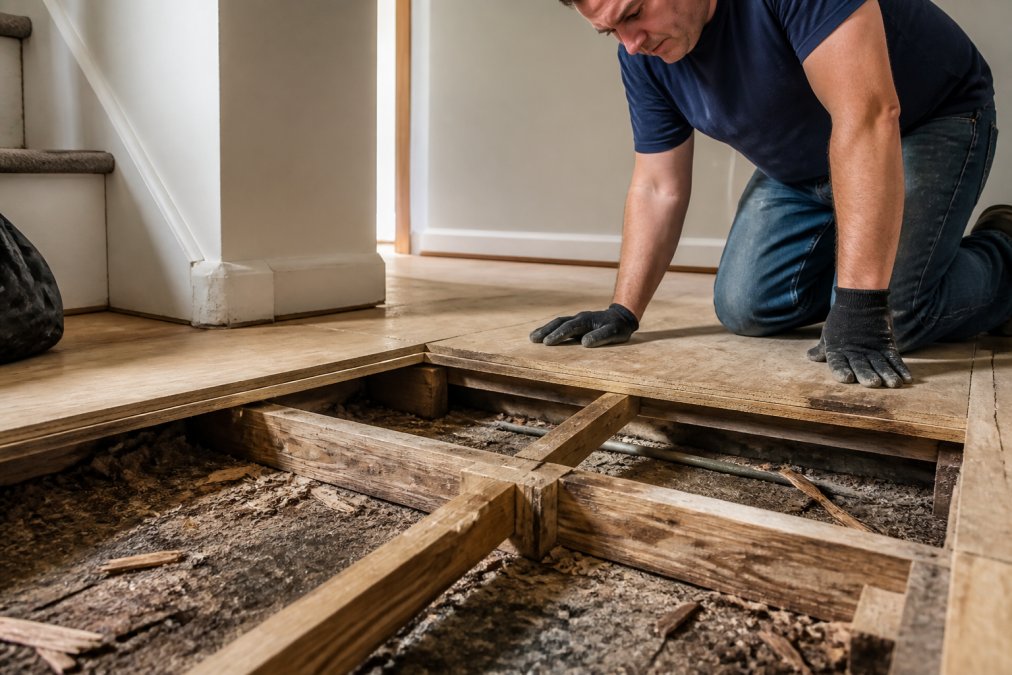
The subfloor sits beneath your finished flooring, out of sight. Water damage, dry rot, and structural deterioration happen quietly over months or years. By the time a contractor sees it, the damage has often spread far beyond what a surface inspection would reveal.
According to 2025 pricing data from flooring cost experts, subfloor replacement costs range from $1,500 to $5,000 for most homes, with contractors charging $3.00 to $10.00 per square foot. Materials account for roughly 70% of the total bill. When a contractor discovers that joists need reinforcement or that moisture has compromised a larger area than expected, that 70% materials cost multiplies quickly. A localized patch that seemed like a $500 fix becomes a full-room replacement at $2,000 or more.
How to Inspect Subfloor Before Flooring Installation
Inspecting your subfloor before you commit to flooring installation is the single most effective way to avoid hidden costs. You need a flashlight, a screwdriver, and about 30 minutes to walk through your home systematically.
Start by locating access points to your subfloor. In most homes, this means crawling under the house, checking the basement, or looking in the attic if your subfloor runs above a lower level. Bring a flashlight and get low enough to see the underside of your flooring and the condition of the wooden joists supporting it.
What to Look For: Visual Inspection Checklist
Your visual inspection should focus on five key indicators of subfloor trouble:
- Discoloration and staining: Look for dark patches, water rings, or areas where the wood color has changed. These indicate past or ongoing moisture exposure.
- Soft spots or spongy areas: Press gently on the subfloor with your screwdriver. If the tip sinks in easily or if the wood feels soft rather than solid, you're looking at rot.
- Visible mold or mildew: Black or green growth on subfloor surfaces or joists signals moisture problems. Mold remediation adds significant cost to any repair.
- Gaps, warping, or separation: Wood expands and contracts with moisture changes. If boards are warped, cupped, or pulling away from joists, moisture fluctuation is the culprit.
- Insect damage or pest evidence: Look for termite tunnels, carpenter ant galleries, or other signs of pest activity that compromise load-bearing capacity.
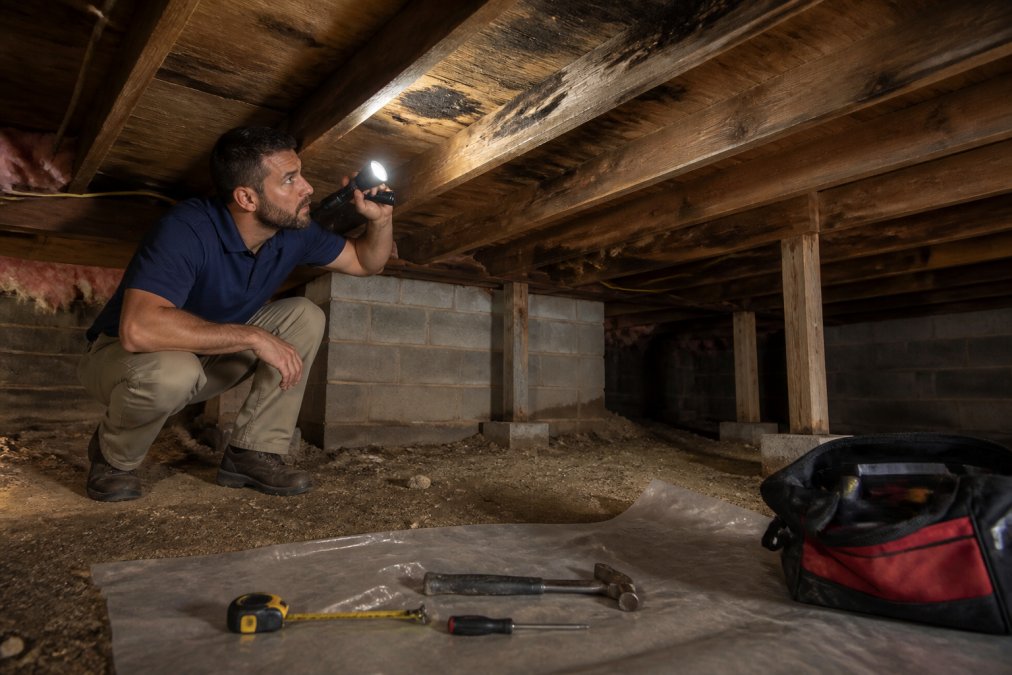
Document what you see with photos. These images become invaluable when getting contractor quotes and prevent contractors from inflating estimates based on "unknown conditions."
Testing for Moisture and Structural Issues
A moisture meter (available at any hardware store for $20-$40) measures the water content in wood. Healthy wood subfloor typically reads between 8% and 13% moisture content. Readings above 16% indicate excessive moisture and suggest active or recent water intrusion. If your meter shows elevated readings, investigate the source: plumbing leaks, foundation cracks, poor drainage, or condensation problems.
For structural assessment, use the screwdriver test. Press the tip into the subfloor at multiple points. Solid subfloor resists the screwdriver. Wood affected by rot will allow the screwdriver to penetrate easily. Mark these soft spots on your photo documentation.
If you find widespread moisture or extensive soft spots, call a professional. You've already identified that repairs will be necessary, which means you need a contractor's assessment before moving forward with flooring decisions.
Signs of Water Damaged Subfloor You Can't Ignore
Water damaged subfloor is the most common reason homeowners face hidden repair costs. Water damage affects 98% of basements, making moisture resistance a significant factor in subflooring decisions.
The most obvious sign is visible water staining or discoloration on the subfloor surface. Stains appear as dark patches, often with rings around them. These indicate that water has soaked into the wood. Even after the water has dried, the stain remains and signals that moisture penetration has occurred.
Soft, spongy subfloor is a more serious indicator. When you press on affected areas, they give way under pressure. This softness indicates that wood fibers have begun to break down, the early stages of rot.
Mold or mildew growth indicates active moisture and microbial colonization. Mold remediation adds $1,000 to $3,000 to repair costs, depending on the extent of infestation.
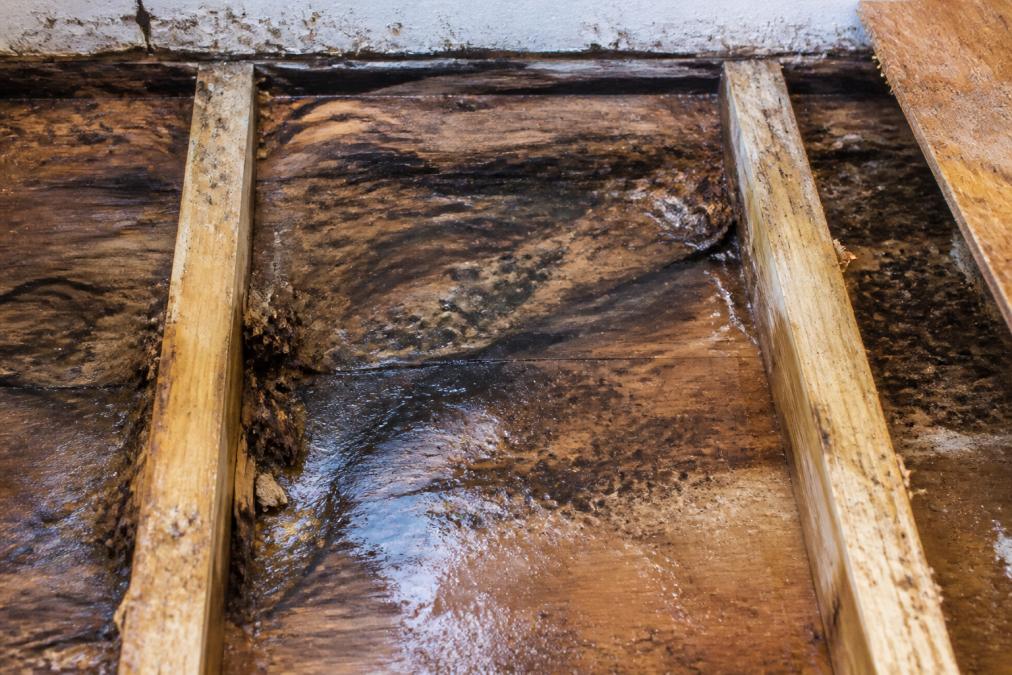
Warping and cupping of subfloor boards indicate significant moisture exposure. Boards that have warped or cupped have absorbed water and dried repeatedly, causing the wood to lose its flat shape. This usually requires replacement rather than repair.
According to water damage repair cost data from iBuyer, water damage repair costs average $3,867, with most homeowners paying between $1,383 and $6,384. Subfloor damage adds $500 to $3,000 on top of any flooring cost, depending on how far rot has spread into the joists. The difference between catching water damage at the staining stage versus the widespread rot stage can easily be $2,000 or more.
Subfloor Repair vs Replacement: Cost and Scope Comparison
Once you've identified subfloor damage, the next decision is whether to repair or replace the affected area. This choice depends on the extent of damage, the location of damage, and the structural implications.
Localized patching makes sense when damage is confined to a small area, typically less than 10-15 square feet, and when structural elements (joists) remain intact. A contractor can cut out the damaged section and install new subfloor material in its place. Patching costs $500 to $1,500 for small areas because setup and removal work is significant even for small jobs.
Full replacement is necessary when damage spans multiple areas, when joists are compromised, or when moisture problems are widespread. Full subfloor replacement typically costs $3.00 to $10.00 per square foot, as documented by contractor pricing data. For a 200-square-foot room, that's $600 to $2,000 in labor and materials.
A contractor examining your subfloor can't always tell the full extent of damage without removing flooring. What appears to be a localized soft spot might extend through joists or across a wider area once the flooring is up. This uncertainty is why contractors often quote repair work with contingency language: "We'll patch the visible damage, but if we find additional problems during removal, costs may increase."
| Damage Scope | Repair Option | Cost Range | Best For | Risk |
|---|---|---|---|---|
| Small, localized (under 15 sq ft) | Patching | $500-$1,500 | Single problem areas | May miss connected damage |
| Medium (15-50 sq ft) | Partial replacement | $1,500-$3,000 | Multiple problem spots | Uneven coverage if damage spreads |
| Large (50+ sq ft) | Full replacement | $3,000-$5,000+ | Widespread damage or joist compromise | Higher upfront cost, lower risk of surprises |
| Structural compromise | Full replacement + joist repair | $4,000-$8,000+ | Joists damaged or weakened | Most expensive option |
Many homeowners assume patching is always cheaper, so they push contractors toward patch solutions. In reality, patching a large problem often costs more per square foot than replacement, and it leaves you vulnerable to discovering additional damage mid-project. Full replacement, while more expensive upfront, eliminates the "hidden cost" problem entirely.
Getting Accurate Contractor Quotes and Budget Contingencies
Getting an accurate quote for subfloor work requires transparency about what contractors will and won't see before they start. Most contractors can't know the true scope of damage without removing your flooring. This is why professional quotes should include contingency language.
A solid contractor quote will state something like: "Estimated cost for visible damage is $X, with a contingency of 10-15% for additional repairs discovered during removal." This contingency acknowledges that surprises are likely and builds in budget flexibility.
When getting quotes, provide contractors with your inspection photos and moisture meter readings. Tell them specifically what you found: soft spots in the northwest corner, elevated moisture readings in the basement, visible mold in the crawlspace. The more information they have, the more accurate their estimate.
Ask contractors directly: "What's included in your quote, and what would trigger a change order?" A professional contractor will explain that flooring removal is included, that initial subfloor assessment is included, but that any repairs beyond what's visible in your photos would be billed separately.
Labor costs for subfloor work range between $25 and $30 per hour, according to 2026 labor rate data from Angi. For a full subfloor replacement in a 200-square-foot room, expect 15-20 hours of labor. That's $375-$600 in labor alone, with materials making up the remaining 70% of your total bill.
Material-Specific Cost Variances and Insurance Coverage
The subfloor material you choose affects both repair costs and long-term durability. Different materials have different price points and performance characteristics.
Plywood remains the most common subfloor material. It's affordable, performs well for ceramic tile installations, and offers 10% higher stiffness than OSB (oriented strand board). Plywood costs approximately $2.50-$3.50 per square foot for the material itself. However, plywood is susceptible to water damage and requires proper moisture barriers to prevent rot.
OSB is cheaper than plywood at $0.50-$2.00 per square foot, but it's more prone to water damage and swelling when exposed to moisture.
MGO (magnesium oxide) subfloor panels are gaining preference due to their fire resistance, moisture protection, and eco-friendly composition. MGO costs approximately $1.50-$3.00 per square foot, but offers superior moisture resistance. For homeowners in coastal or high-moisture environments, MGO's durability often justifies the higher initial cost by reducing long-term repair risk.
Insurance coverage for subfloor damage depends on the cause of damage. Water damage from a burst pipe or sudden flooding is typically covered under homeowner's insurance. Water damage from chronic moisture issues, poor drainage, or lack of maintenance is usually not covered. Contact your insurance company with photos and a contractor's assessment. If the damage is covered, insurance may pay for repairs, which significantly reduces your out-of-pocket cost.
Conclusion
Avoiding hidden subfloor repair costs comes down to one principle: inspect before you commit. Walk your subfloor, document what you find, get a moisture reading, and share that information with contractors before they bid. This transparency prevents surprises and gives you realistic budget numbers.
When you're ready to move forward with flooring installation, Hamptons carpet one floor and Home works with contractors who prioritize subfloor assessment. We help you understand what's happening beneath your flooring so you can make confident decisions about repair scope and material choices. Our team can connect you with professionals who include proper contingency planning in their quotes and who communicate clearly about what costs are fixed versus variable.
Get started with a consultation at Hamptons carpet one floor and Home and take the guesswork out of subfloor repair budgeting.
=== FAQ ANSWERS (audit these too, same rules) ===
[1] Q: What is the average cost to replace subfloor? A: Subfloor replacement costs typically range from $1,500 to $5,000 for most homes, with contractors charging $3.00 to $10.00 per square foot including materials and labor. The national average sits around $1,560. However, water damage can add $500 to $3,000 on top of flooring costs if rot has spread into the joists. Early detection through inspection helps you avoid the upper end of these ranges.
[2] Q: What are the most common signs of subfloor damage? A: Watch for soft or bouncy flooring, visible mold or discoloration, musty odors, and areas where flooring buckles or separates. Water stains, dry rot (wood that crumbles when pressed), and floor deflection are red flags. If you notice any of these signs during your inspection, get a professional evaluation before proceeding with new flooring.
[3] Q: Should I repair or replace my subfloor during a renovation? A: Small, localized patches of damage can be repaired cost-effectively, but if rot spans multiple rooms or compromises structural elements like joists, full replacement is often safer and more economical long-term. Small repairs may actually cost more per square foot due to setup work. A contractor's inspection determines the scope, don't rely on patching if the damage is widespread, as this can lead to costlier failures later.
[4] Q: Will homeowners insurance cover rotted subfloors? A: Insurance coverage depends on the cause. Sudden water damage from burst pipes or storms is typically covered, but gradual moisture damage or neglect is usually excluded. Review your policy's water damage provisions and contact your insurer before repairs begin. Document all damage with photos. If you're unsure whether your situation qualifies, ask your insurance agent for clarification before committing to contractor work.
Frequently Asked Questions
Q: What is the average cost to replace subfloor?
A: Subfloor replacement costs typically range from $1,500 to $5,000 for most homes, with contractors charging $3.00 to $10.00 per square foot including materials and labor. The national average sits around $1,560. However, water damage can add $500 to $3,000 on top of flooring costs if rot has spread into the joists. Early detection through inspection helps you avoid the upper end of these ranges.
Q: What are the most common signs of subfloor damage?
A: Watch for soft or bouncy flooring, visible mold or discoloration, musty odors, and areas where flooring buckles or separates. Water stains, dry rot (wood that crumbles when pressed), and floor deflection are red flags. If you notice any of these signs during your inspection, get a professional evaluation before proceeding with new flooring.
Q: Should I repair or replace my subfloor during a renovation?
A: Small, localized patches of damage can be repaired cost-effectively, but if rot spans multiple rooms or compromises structural elements like joists, full replacement is often safer and more economical long-term. Small repairs may actually cost more per square foot due to setup work. A contractor's inspection determines the scope, don't rely on patching if the damage is widespread, as this can lead to costlier failures later.
Q: Will homeowners insurance cover rotted subfloors?
A: Insurance coverage depends on the cause. Sudden water damage from burst pipes or storms is typically covered, but gradual moisture damage or neglect is usually excluded. Review your policy's water damage provisions and contact your insurer before repairs begin. Document all damage with photos. If you're unsure whether your situation qualifies, ask your insurance agent for clarification before committing to contractor work.
This article was written using GrandRanker