 How-to
What Really Drives Residential Flooring Costs?
Quick Summary
Flooring costs are driven mostly by material choice, room size and shape, and the condition of the subfloor underneath. Labor, demolition and disposal add further charges that many quotes leave out. Coastal conditions on Long Island can also shape the total.
- Hardwood runs USD 6 to USD 25 per sq ft installed, the higher end of the material options.
- Add a waste allowance to your square footage, especially for diagonal or patterned layouts.
- Uneven, damp or damaged subfloors must be repaired before new flooring goes down.
- Ask for tear-out and disposal priced separately from installation labor.
- Collect at least three quotes and ask about salt, humidity, lead time and delivery access.
Table of Contents
- How Material Choice Shapes Your Flooring Budget
- Cost Per Square Foot and How Room Size Changes the Total
- Subfloor Condition: The Cost Most Estimates Leave Out
- Labor, Demolition and Disposal Charges
- Coastal Conditions and Regional Factors on Long Island
- Long-Term Maintenance and Resale Value
- How to Check Your Flooring Estimate Line by Line
- Frequently Asked Questions
How Material Choice Shapes Your Flooring Budget
Material choice is one of the biggest levers on your flooring costs. A homeowner who picks hardwood and one who picks carpet can end up paying very different totals for the same room.
Hardwood generally sits at the higher end of material costs, and the final number depends on species, grade and how the boards are fastened.
Watch out: Quotes that look low often leave out the material itself. Ask whether the price covers boards, underlayment and trim.
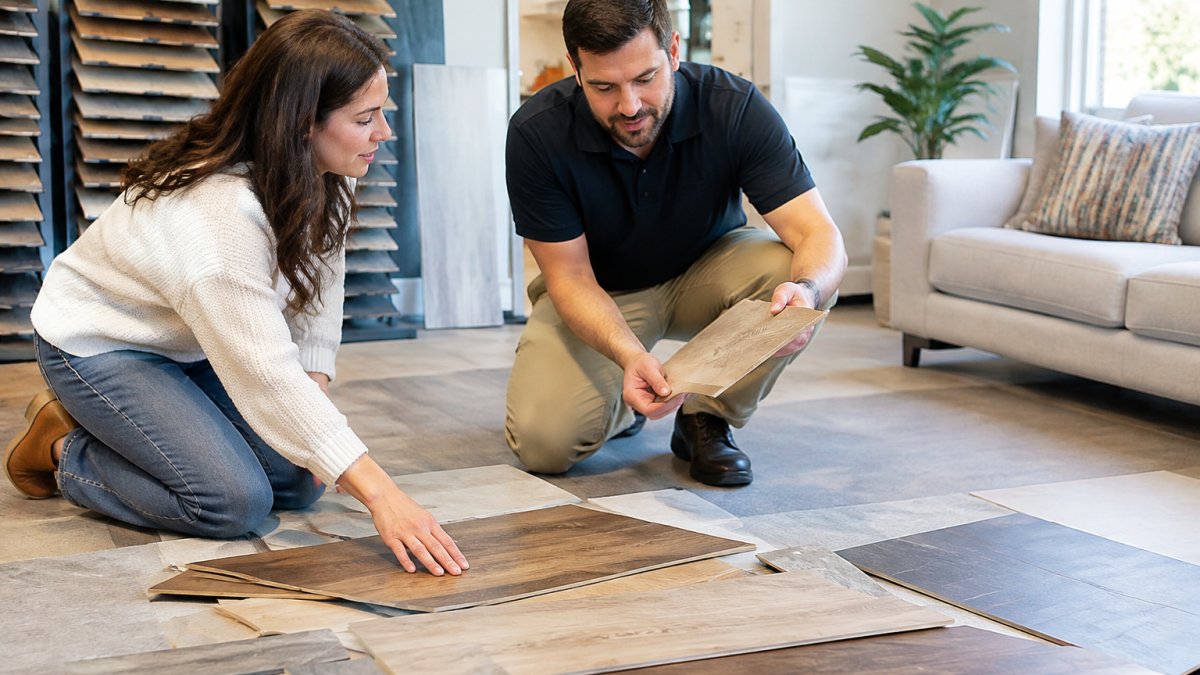
Hardwood, Laminate, Vinyl and Carpet Compared
Each material fits a different budget and lifestyle:
| Material | Typical Installed Cost | Best For | Main Trade-off |
|---|---|---|---|
| Hardwood | USD 6 to USD 25 per sq ft | Long-term resale value | Higher upfront cost, sensitive to moisture |
| Laminate | Mid-range, below hardwood | Budget looks that resemble wood | Less refinishable than real wood |
| Luxury vinyl plank | Mid-range | Moisture-prone rooms and busy homes | Feel and warmth differ from wood |
| Carpet | Varies widely by fiber | Bedrooms and soft underfoot comfort | Stains and wear faster in traffic areas |
Best for: Homeowners who want a wood look and plan to stay put, where hardwood's resale appeal justifies the premium.
Skip if: Your rooms get wet often, since real wood needs more care in humid or salty conditions.
Cost Per Square Foot and How Room Size Changes the Total
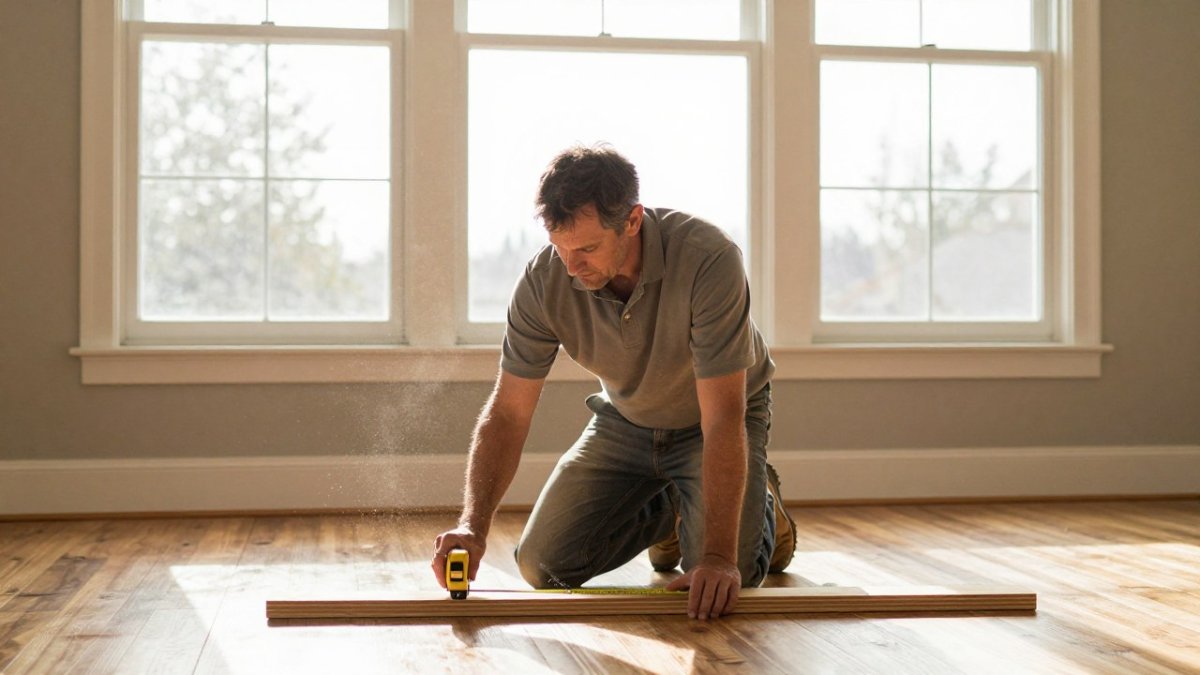
Cost per square foot is the starting point for flooring costs, but the total depends on how many square feet you buy and how the room is shaped. A simple rectangle costs less to install than a room with angles, closets and multiple thresholds.
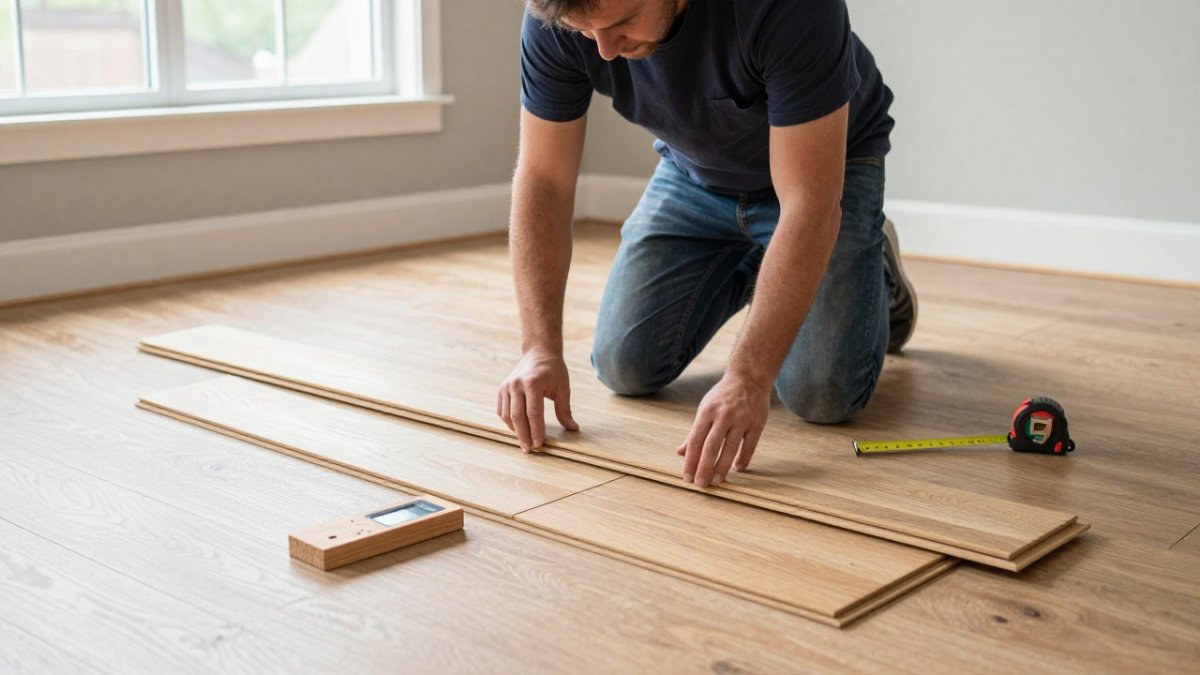
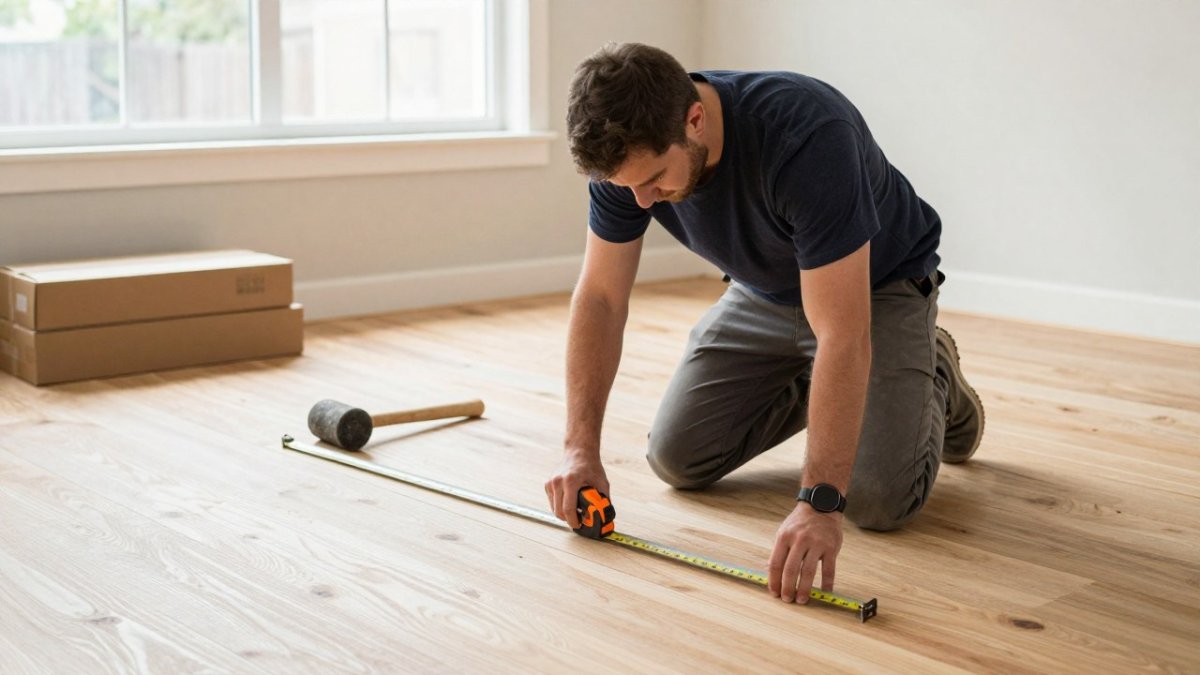
Measure the room, then add a waste allowance for cuts. Plan for extra material on diagonal or patterned layouts, where more offcuts are lost.
Flooring material and installation are only part of the bill. Trim, transitions and removal of old flooring add to the total, so compare quotes on a whole-project basis.
Subfloor Condition: The Cost Most Estimates Leave Out
The subfloor is the layer under your finished floor, and its condition can change the price more than almost anything else. Uneven, damp or damaged subfloors must be repaired before new flooring goes down.
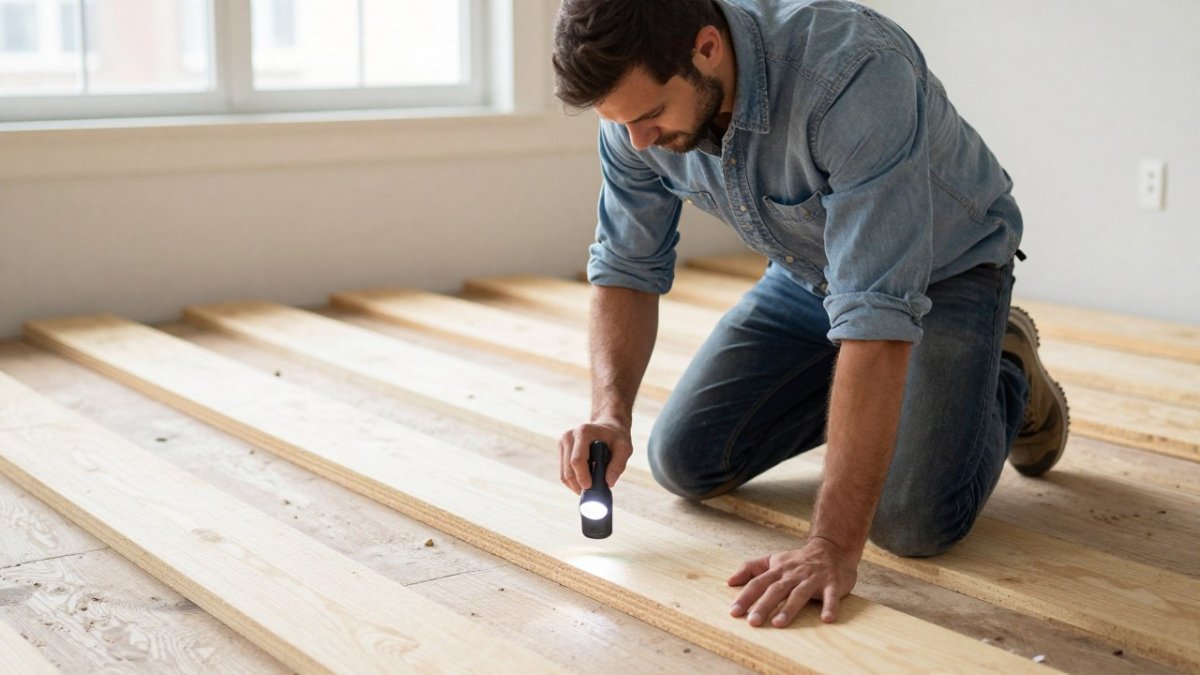
!A contractor kneeling on a bare plywood subfloor in a renovated home, examining the boards with a flashlight and moisture meter
Many estimates list subfloor work as an add-on. A common surprise is a quote that starts low and rises once the old floor comes up and the crew finds rot or leveling problems.
Ask the installer to inspect the subfloor before signing, and get any repair work priced in writing.
Labor, Demolition and Disposal Charges
Labor is usually the largest line after materials. Local labor conditions can vary by season and by the crew's schedule and travel, so ask each installer how those factors affect their quote. Ask each installer how many days the crew will be on site and whether the quote assumes a single mobilization or several trips, because repeat trips add a charge that rarely shows up in a per-square-foot number.
Demolition and disposal are the most common hidden costs in a flooring project, and they are often billed separately from the installation quote. Tear-out is the work of removing carpet, tile, vinyl or old hardwood, along with staples, adhesive residue and tack strips. Adhesive removal can take far longer than the removal of the floor itself, especially with older mastic that was used under vinyl and tile in houses built before the 1980s. Ask whether the quote covers scraping or grinding the subfloor clean, because a crew that leaves adhesive behind will charge more to prepare the surface for the new material.
Disposal is the second half of the cost. Haul-away fees depend on the volume and weight of the debris and on whether your local transfer station accepts flooring waste. Many Long Island homeowners pay for a roll-off dumpster or a dedicated haul-away crew, and that charge is frequently separate from the labor line. Confirm whether disposal is included, whether it is priced by the load or by the day, and whether it covers any hazardous material such as old adhesives, which may need special handling.
Watch out: A quote that says "removal included" without a disposal figure often means the debris will be billed later as a separate line. Ask the installer to name the disposal method and the price before you sign.
For a Southampton project, the safest approach is to request two separate numbers from every installer: one for tear-out and disposal, and one for installation labor. That makes it easy to compare bids on equal terms and to see which contractor has priced the hidden work honestly.
Coastal Conditions and Regional Factors on Long Island
Flooring costs can vary by location, so a house on Long Island may face different pricing pressures than one elsewhere. The first is the environment itself. Homes within a few miles of the ocean see salt-laden air, high humidity in summer and sand tracked in on shoes every day. Those conditions accelerate the wear on untreated hardwood, can lift seams in engineered wood, and work against adhesives that perform well in drier climates. Choosing a moisture-resistant product or a more durable finish often adds to the material line, but it can lower the total cost of ownership if it prevents early replacement.
The second pressure is demand. Installer schedules can fill up during busy renovation seasons, so a homeowner who waits may face a longer schedule. Booking early is one practical way to plan. Booking early, and asking the installer how far out their calendar runs, is one of the simplest ways to control cost in this market.
The third factor is access and logistics. Many Hamptons properties are seasonal, set on long driveways or in gated communities with delivery restrictions. Materials may need to be staged off site, and crews may have to carry them farther than they would in a typical suburban lot. Ask whether the quote includes material delivery, staging and carry-in, since those tasks are easy to underprice.
Finally, plan for how the home will be used. A primary residence that sees year-round occupancy has different maintenance needs than a second home that sits empty for months, where humidity can build up and cause cupping in unheated rooms. Matching the floor to the way the house is actually lived in is often the most important regional decision you can make.
For a local estimate, collect at least three quotes from installers who work regularly in Southampton and the surrounding towns, and ask each one about salt and humidity exposure, scheduling lead time and delivery access. Those three questions will show you more about the true cost of your project than any national average.
Long-Term Maintenance and Resale Value
The cheapest floor at install is not always the cheapest to own. Long-term costs depend on durability, cleaning needs and how well the material holds up to foot traffic.
Maintenance costs and wear resistance matter as much as the initial price when you judge a floor's real cost over time. New flooring can also return a meaningful share of its cost at resale, though actual returns depend on the market and the condition of the rest of the house.
How to Check Your Flooring Estimate Line by Line
Review every line of an estimate before you agree to it. Use this checklist:
- Material cost per square foot, with grade and brand named
- Waste allowance included in the square footage
- Underlayment and moisture barrier listed separately
- Subfloor inspection and repair priced, or marked as an open item
- Demolition and disposal included or quoted separately
- Trim, transitions and molding accounted for
- Labor shown as its own line
- Warranty and cleanup terms in writing
Any line marked "TBD" or "allowance" is a place where the final price can rise. Ask for a fixed price or a stated cap.
Pricing depends on quantity, material, dates and site conditions, so we recommend requesting a current quote tailored to your home from our team through our website.
Frequently Asked Questions
What factors affect the cost of residential flooring?
The main factors are the material you choose, the total square footage, the condition of the subfloor, labor rates, and any demolition or disposal of the old floor. Material sets the baseline price per square foot, while subfloor problems and removal of existing flooring are the most common reasons a final invoice rises above the first estimate. Ask each contractor to itemize these categories so you can compare bids accurately.
How much does flooring cost for a 2,000-square-foot house?
Total cost depends on the flooring type, installation complexity and whether the subfloor needs work, so no single figure applies to every home. Multiply your square footage by the installed per-square-foot price for each material you are considering, then add a waste allowance and a separate line for any repairs. Pricing depends on quantity, dates and delivery, so request a written quote from our showroom for current figures.
How do subfloor repairs affect flooring costs?
Subfloor repairs can add a significant amount to a flooring project because new material cannot be laid over water damage, rot, or uneven boards. Common fixes include replacing damaged plywood sections, leveling low areas, and installing a moisture barrier or underlayment. Because these problems are often hidden under the old floor, ask for a written contingency plan and an agreed rate for additional subfloor work before installation begins.
How can I compare flooring installation estimates?
Compare estimates line by line rather than by the total. Check that each quote lists the same material grade, square footage with waste factor, underlayment, trim and transitions, removal and disposal, and subfloor preparation. A much lower bid often omits one of these items, which can reappear later as change orders. Ask every contractor how they handle unforeseen subfloor issues so you know the potential exposure before you sign.