 How-to
How to Acclimate Hardwood Flooring Before Installation
Last Updated: November 9, 2026
Quick Summary
To acclimate hardwood, store cartons flat in the installation room and let the wood reach moisture balance with your subfloor and home's air. Solid hardwood typically needs 3 to 10 days, and the wood should read within 2% of the subfloor's moisture content.
- Engineered flooring usually needs 3 to 7 days, with at least 48 hours per manufacturer specs.
- Stack cartons in a cross-hatch pattern and keep them a few inches off concrete.
- Run your HVAC at normal living conditions for at least 5 days before installation.
- Keep indoor relative humidity at 30-50% and temperature at 60-80°F.
- Fix subfloor moisture problems first, since a wood floor over a wet subfloor will fail.
Table of Contents
- Why Acclimating Hardwood Flooring Prevents Cupping, Gapping, and Callbacks
- How Long Does Hardwood Flooring Need to Acclimate Before Installing?
- How to Store Hardwood Flooring Before Installation
- How to Acclimate Engineered Hardwood Flooring Without Over-Drying It
- Does Prefinished Hardwood Need to Acclimate?
- Preparing the Southampton Home: HVAC, Humidity, and Subfloor Moisture Testing
- Troubleshooting Failed Acclimation: Cupping, Crowning, and Buckling
- Scheduling Your Flooring Delivery and Acclimation Check
- Frequently Asked Questions
Why Acclimating Hardwood Flooring Prevents Cupping, Gapping, and Callbacks
Wood moves. That single fact explains almost every flooring failure we see in Southampton, NY. If you want to know how to acclimate hardwood flooring before installation, start here: acclimation lets wood adjust to your home's moisture and temperature before it is nailed or glued down. Skip it, and the planks will move after installation instead of before. The result is cupping, gapping, and expensive callbacks.
Salt air, summer humidity, and winter heating put real stress on wood floors in coastal homes.
Here is what happens. Wood absorbs moisture and swells. It releases moisture and shrinks. A plank installed straight from a truck into a humid beach house will expand after the job is done. Edges lift. Seams open.
The National Wood Flooring Association installation guidelines treat acclimation and moisture testing as core technical requirements, not optional steps.
How Long Does Hardwood Flooring Need to Acclimate Before Installing?
Solid hardwood typically needs 3 to 10 days to acclimate, according to Bruce's acclimation guidance. Engineered flooring needs less time, usually 3 to 7 days per McMillan Floors recommendations.
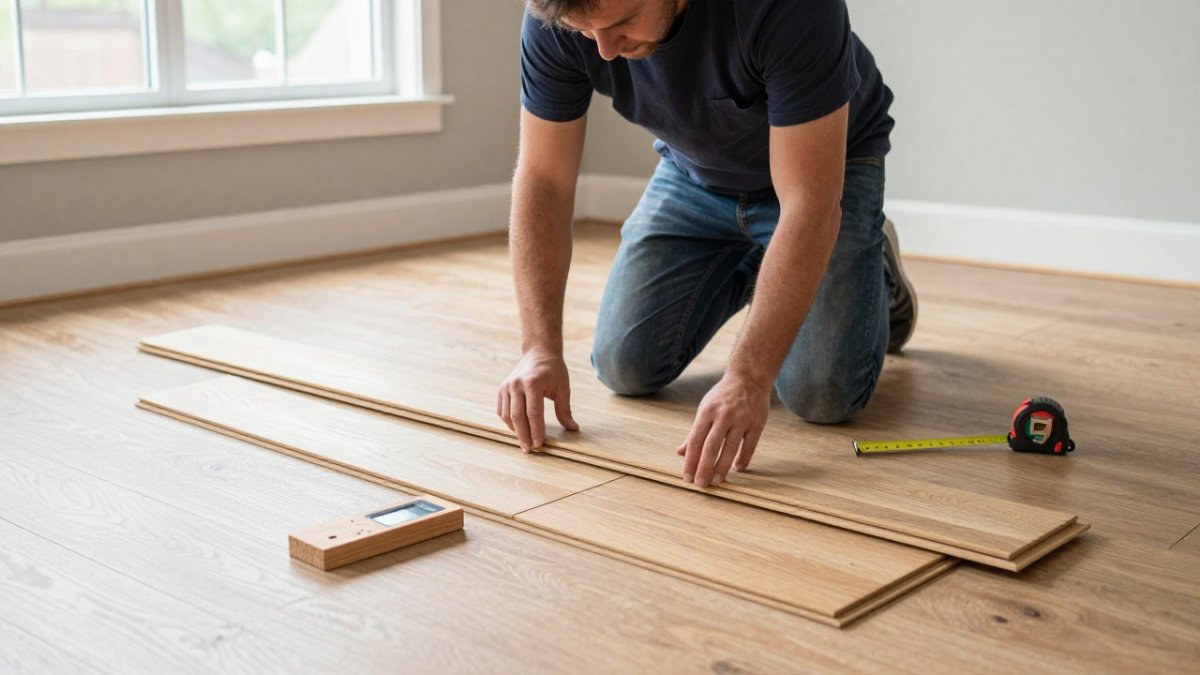
But time alone is not the goal. The wood must reach moisture balance with your subfloor and your home's air. Industry pros now push daily moisture readings over counting days. The target: wood within 2% of the subfloor's moisture content, per Vermont Plank Flooring's guidance.
Solid vs. Engineered Timelines
| Flooring Type | Typical Acclimation | Key Condition |
|---|---|---|
| Solid hardwood | 3-10 days | Within 2% of subfloor moisture |
| Engineered hardwood | 3-7 days | Minimum 48 hours per manufacturer specs |
| Prefinished wood | 2-5 days | Follow carton instructions exactly |
Typical Acclimation
How to Store Hardwood Flooring Before Installation
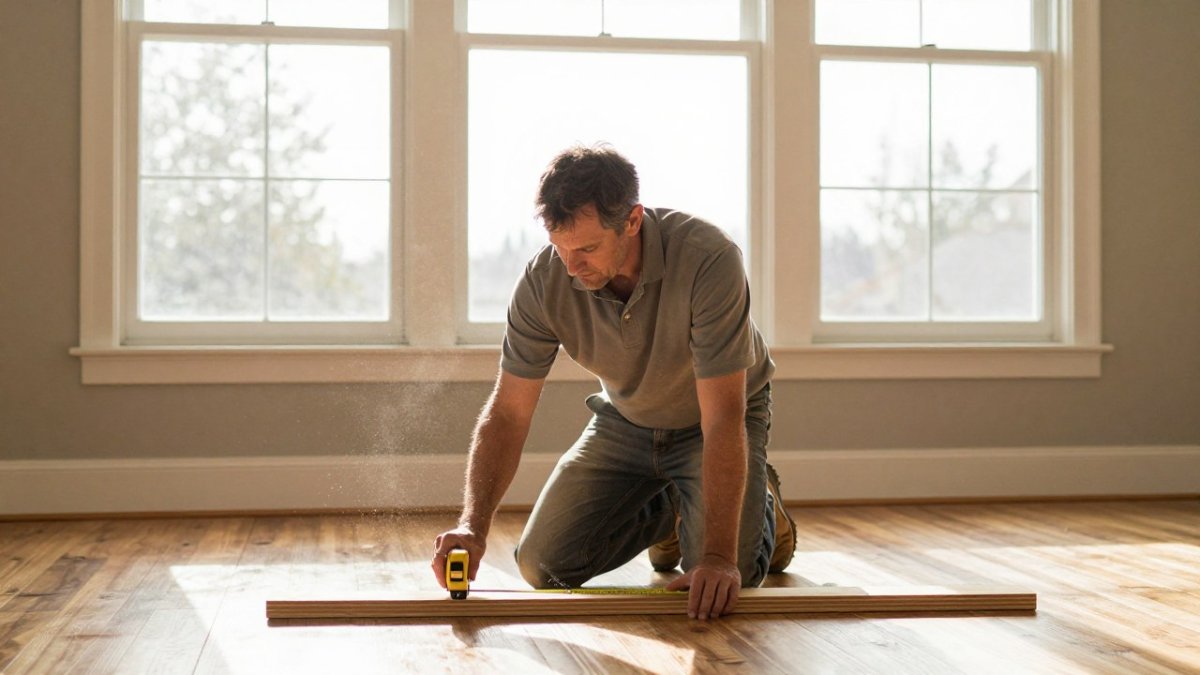
Store cartons flat, in the room where the floor will go. Not the garage. Not the porch. The actual installation site.
Stack boxes in a cross-hatch pattern so air moves between layers. Keep cartons at least a few inches off concrete. Never lean planks against a wall.
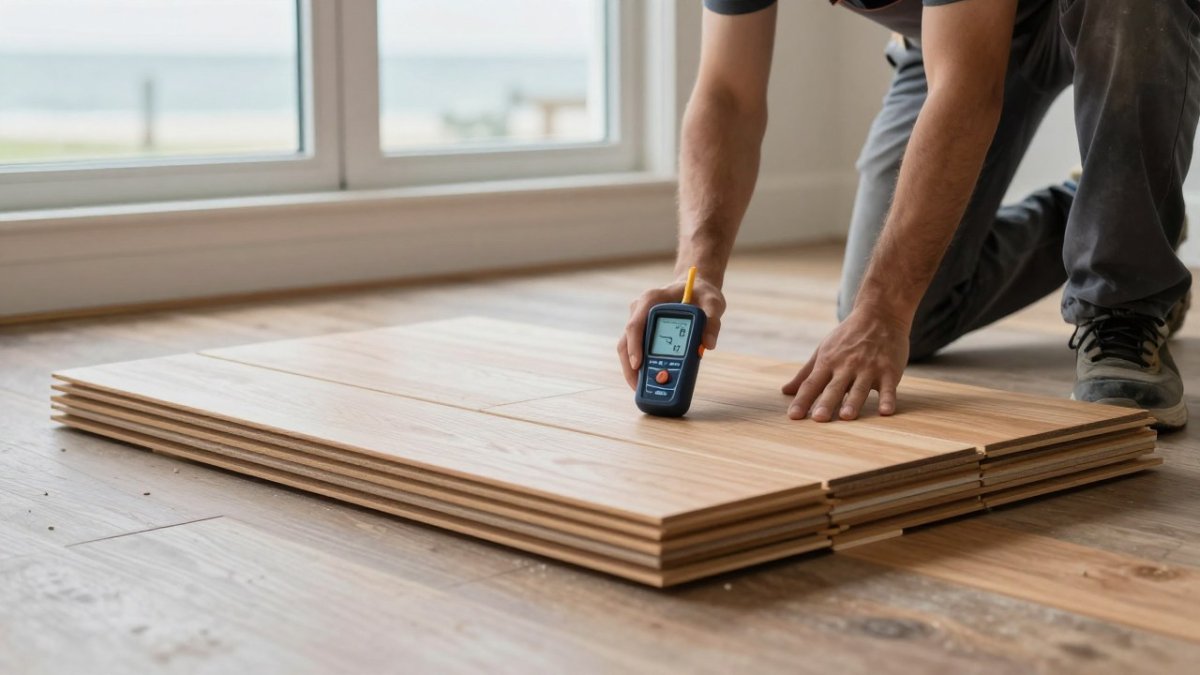
Open cartons a day before installation so planks breathe evenly. Keep the room closed to outside weather. A common mistake is storing wood in an unheated garage, then wondering why the floor cups two weeks later.
How to Acclimate Engineered Hardwood Flooring Without Over-Drying It
Engineered flooring is more dimensionally stable than solid wood because the core is built from cross-laminated plies or a composite core, which resists the swell-and-shrink that drives solid-plank cupping. That stability is real, but it is not a license to skip acclimation. LifeCore Flooring's manufacturer guidance calls for at least 48 hours of acclimation, or until planks hit acceptable moisture content, and most engineered cartons specify a minimum window rather than a maximum.
The distinction that trips up DIYers: solid wood acclimates to reach moisture balance with the room, while engineered wood acclimates mainly to reach temperature balance and to let the core relax after shipping. Over-drying is the engineered-specific risk. Run a dehumidifier too hard, and the core shrinks, seams open, and the wear layer can telegraph the joint lines. Keep indoor air at 30-50% relative humidity and 60-80°F, per Impressions Flooring's recommendations, and do not park a dehumidifier outlet directly on the stack.
Read the carton before you build a schedule. Engineered products vary widely, and some manufacturers specify different acclimation windows or waive acclimation for certain cores. The carton spec overrides every general rule in this article.
Check the dew point before installation. Wet, muggy days in Southampton push moisture into the wood fast, and an engineered plank that was fine on Tuesday can read high on a foggy Thursday. A hygrometer that displays dew point is an inexpensive way to monitor conditions.
Watch out: stacking cartons tight against an exterior wall can let condensation reach the bottom layer, so keeping an air gap and a cross-hatch stack matters in coastal homes.
Does Prefinished Hardwood Need to Acclimate?
Yes. Prefinished hardwood still needs to acclimate, though usually for a shorter window than unfinished solid wood. The factory finish does not seal the wood's edges, and planks still absorb and release moisture.
Follow the carton instructions. Manufacturer specifications override general advice every time. If the label says 72 hours, give it 72 hours, even if the room feels fine.
Preparing the Southampton Home: HVAC, Humidity, and Subfloor Moisture Testing
This is the step most homeowners underestimate, and it is the one that decides whether acclimation actually works. Your HVAC system should run at normal living conditions for at least 5 days before installation, per Olde Wood Ltd. preparation standards. That means heat or AC on, windows closed, and the home held at the temperature your family actually lives in, not a construction setpoint.
Set a target before you open a single carton: a steady air temperature and relative humidity held for the full acclimation window. Coastal humidity can make that range harder to maintain, so monitor it closely. Run a hygrometer in the install room and log it daily. If RH climbs above 50%, a dehumidifier is doing real work, not a formality.
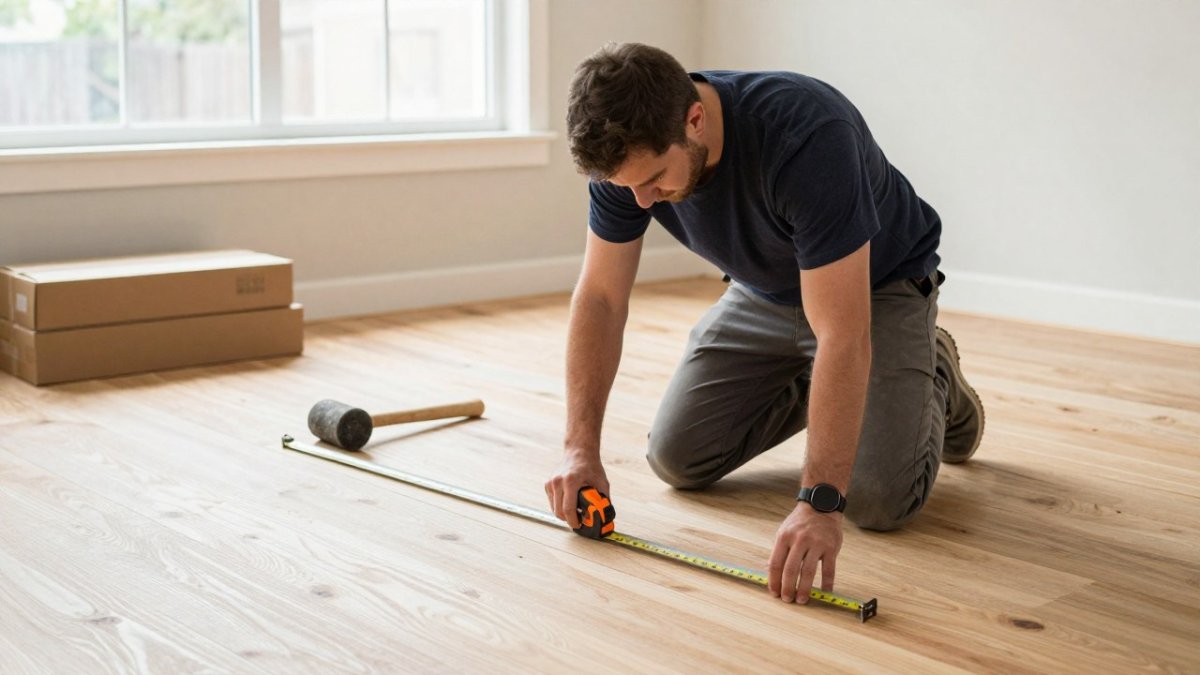
Then test the subfloor. Use a moisture meter appropriate to the subfloor material, and take readings in several spots across the room, including near exterior walls and any area that has shown staining or softness. Older homes can hide moisture issues under original flooring, so a reading at the center of the room may not reflect conditions near the walls.
Compare the wood's moisture content to the subfloor's. A common working target is wood within 2% of the subfloor's moisture content. If the subfloor reads high, stop. Fix the moisture barrier or vapor retarder first. A wood floor over a wet subfloor will fail, no matter how long it acclimated.
Watch out: subfloor moisture can change with the seasons, so test in the season the floor will live through, not the season that is convenient for the schedule.
Troubleshooting Failed Acclimation: Cupping, Crowning, and Buckling
Cupping means plank edges curl up. It usually signals moisture from below. Crowning is the opposite: centers rise, edges dip, often after a cupping floor was sanded too soon. Buckling is the worst case, where planks lift off the subfloor entirely.
What most guides miss is the cause. These are moisture failures, not installation mistakes. Fix the source first: leaks, poor drainage, or a missing vapor retarder.
Watch out: sanding a cupped floor before the moisture problem is fixed will lock the damage in. Always diagnose moisture before touching the surface.
Scheduling Your Flooring Delivery and Acclimation Check
Timing matters as much as technique. Schedule delivery so cartons arrive well before install day. That gives your wood room to settle without rushing.
Build a simple checklist:
- HVAC running at living conditions 5 days before install
- Cartons delivered and stacked in the install room
- Daily moisture readings logged
- Wood within 2% of subfloor moisture
- Relative humidity held at 30-50%
- Subfloor tested and dry
If you would rather not manage this yourself, contact Hamptons carpet one floor and Home on our website for current service details and a quote.
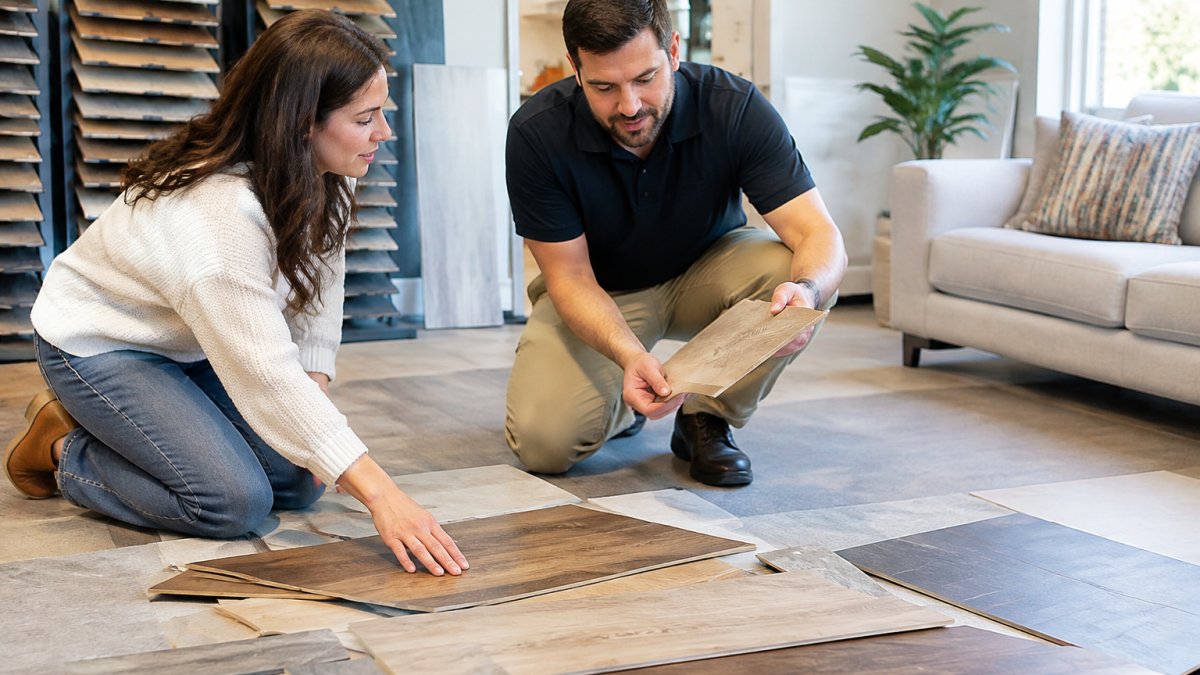
Wood flooring in a coastal home demands patience and real moisture data. Hamptons carpet one floor and Home helps Southampton homeowners get it right the first time, with in-store sample viewing, site moisture checks, and installation scheduling built around your family's routine. Visit our showroom to see and feel the flooring before you commit, and let our team handle the acclimation details so your floor stays flat for years.
Frequently Asked Questions
Can hardwood floors be installed without acclimating?
You can install them, but the risk of failure rises sharply. Wood expands and contracts with moisture, so planks that sit at a different moisture content than the subfloor will move after installation, causing cupping, gapping, or buckling. Industry installation guidelines call for acclimation and moisture testing for this reason. Skipping it can void manufacturer warranties, and on Long Island's coastal humidity the swing between seasons makes the problem worse.
How can you tell when hardwood flooring is acclimated?
Time alone is not the signal. Use a moisture meter to check the planks against the subfloor, and follow the common industry benchmark of bringing the wood within 2% of the subfloor's moisture content. Take daily readings from several boards in different boxes rather than one sample. The room should also be holding steady at 30-50% relative humidity and 60-80 degrees Fahrenheit with the HVAC running, which is the environment the floor will live in.
Does prefinished hardwood need to acclimate?
Yes. The factory finish seals the face of the board, not the core, so prefinished planks still take on and release moisture through the back and edges. Most manufacturers specify an acclimation period, often 3 to 5 days for solid prefinished products, and the requirement is usually printed on the carton or warranty sheet. Check that paperwork first, because following it is what keeps your warranty valid.
How do you acclimate engineered hardwood flooring in a coastal home?
Engineered planks generally need less time than solid wood, and acclimation requirements vary by manufacturer. Run the home's heating and cooling for several days before delivery so the interior reaches normal living conditions. Keep boxes flat and off concrete, leave air gaps between them, and take daily moisture readings. In coastal climates, confirm the subfloor's moisture barrier is intact before the wood comes through the door.