 Ultimate guide
Benefits of Wide Plank Engineered Wood Flooring
Table of Contents
- What Is Wide Plank Engineered Wood Flooring?
- Wide Plank vs Narrow Plank Hardwood: Which Fits Your Space?
- Engineered Wood Flooring Durability: How It Handles Daily Life
- Cost of Wide Plank Engineered Wood Flooring: What Affects the Price
- Moisture Resistance and Dimensional Stability for Coastal Homes
- Installation Requirements: Subfloor, Acclimation, and Radiant Heat
- Acoustic Performance and Long-Term Maintenance
- Conclusion
- Frequently Asked Questions
Last Updated: September 16, 2026
What Is Wide Plank Engineered Wood Flooring?
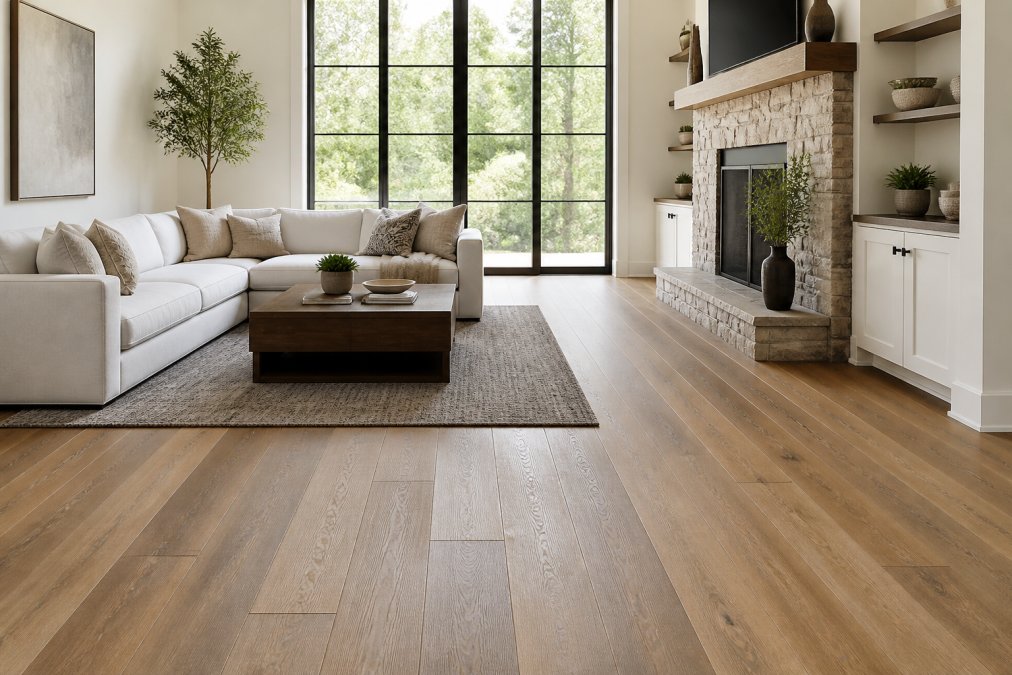
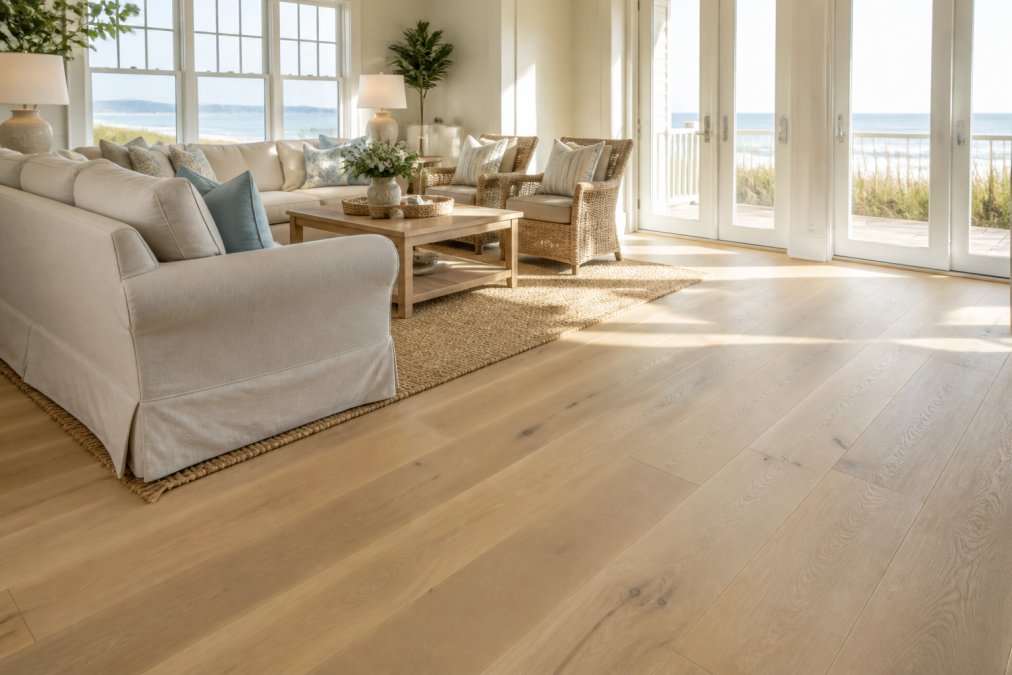
Wide plank engineered wood flooring is a flooring product built from a real hardwood veneer bonded to a cross-ply plywood core, cut into planks 7 to 10 inches wide, and one of the benefits of wide plank engineered wood flooring is that this format suits open, modern rooms. That width range is the industry's working definition, and it's the format driving the strongest hardwood trend of the year, according to Blackburns Interiors' 2026 hardwood trends report.
The construction matters more than the width. Cross-ply construction stacks wood layers with opposing grain directions, which is why engineered planks resist seasonal shrinking and swelling far better than solid wood. Consumer Reports' 2026 flooring testing found that this substrate makes each plank significantly less susceptible to the seasonal movement that opens gaps in solid hardwood.
This guide answers common questions about wide plank engineered wood flooring, such as whether a 9-inch plank will cup in a humid beach house, how thick the wear layer needs to be, and what's underneath.
Wide Plank vs Narrow Plank Hardwood: Which Fits Your Space?
The honest answer: wider planks suit larger, more open rooms; narrower strips suit smaller or more broken-up spaces. That's geometry, not marketing.
Wide planks create visual continuity. Fewer seams across the floor mean the eye reads the room as one continuous surface, which makes open-plan living areas and large rooms feel more spacious. In a tight bedroom or a hallway chopped up by doorways, that same effect can overwhelm the space. Flacks Flooring's 2026 design guidance makes the point directly: wide planks need visual room to breathe, and in narrow rooms they may not perform as well as narrower strip flooring.
Here's the decision framework we walk customers through:
| Your Space | Recommended Width | Why |
|---|---|---|
| Open plan, 300+ sq ft | 7-10 in wide plank | Visual continuity, fewer seams |
| Standard bedroom | 5-7 in | Balances scale without overwhelming |
| Hallway or small room | 3-5 in narrow strip | Preserves perceived room size |
| Historic home, uneven subfloor | 5-7 in | Easier to work around irregularities |
Engineered Wood Flooring Durability: How It Handles Daily Life
Engineered wood flooring durability comes down to two things: wear layer thickness and core stability. Get both right and the floor handles decades of foot traffic, pets, and tracked-in sand; get either wrong and you're replacing it, not refinishing it.
The wear layer is the real hardwood veneer on top, what you walk on, and what determines whether the floor can be sanded and refinished later. Thicker veneer means more refinishing cycles.
The core handles everything else.
Wear Layer Thickness and Refinishing Limits
Most engineered planks carry a wear layer between 2 mm and 6 mm. The practical difference:
- 2 mm or less: Generally cannot be sanded and refinished. Treat it as a one-life floor.
- 3-4 mm: Can typically be refinished once, sometimes twice with a skilled hand.
- 5-6 mm: Comparable to solid hardwood; supports multiple refinishing cycles.
How Wide Planks Change the Refinishing Math
Wide planks introduce a refinishing constraint narrow strips don't have, worth understanding before you buy.
Core Stability and Daily Wear
The core is what keeps the floor flat through seasonal humidity swings. Cross-ply construction stacks wood layers with opposing grain directions, which is why engineered planks resist shrinking and swelling far better than solid wood. Consumer Reports' 2026 flooring testing found that this substrate makes each plank significantly less susceptible to the seasonal movement that opens gaps in solid hardwood.
Cost of Wide Plank Engineered Wood Flooring: What Affects the Price
What moves the price most:
- Wear layer thickness. A 5-6 mm veneer costs meaningfully more than a 2 mm one, and it's the difference between a refinishable floor and a disposable one.
- Plank width. Wider planks require larger, older trees and produce more waste per board.
- Species and grade. Domestic oak sits at a different price point than exotic species or premium clear grades.
- Subfloor preparation. This is the line item that surprises people. Leveling, repair, or moisture mitigation can add significant cost, and it's not optional.
For current pricing on specific products, check the showroom or request a quote with your room measurements.
Moisture Resistance and Dimensional Stability for Coastal Homes
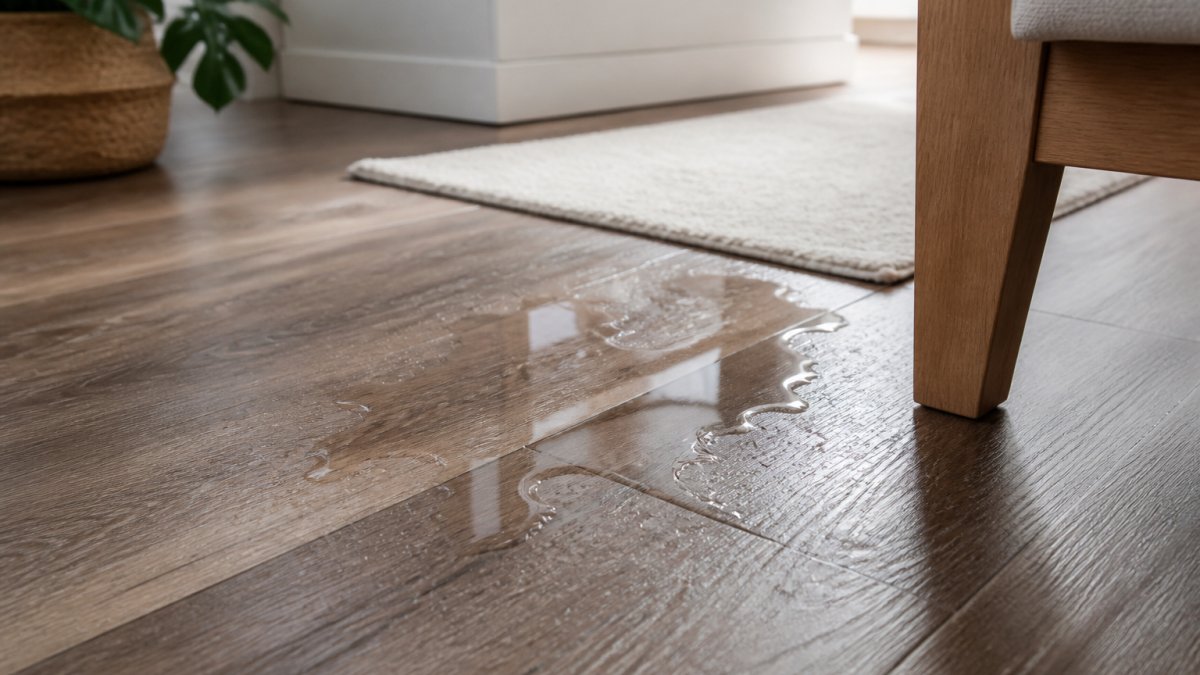
Engineered hardwood's moisture resistance comes from the cross-ply core, which limits how much the plank moves when relative humidity swings. That's the property that matters most in a beach house.
Installation Requirements: Subfloor, Acclimation, and Radiant Heat
Installation success depends on three things competitors gloss over: subfloor flatness, acclimation, and whether the product is rated for radiant heat.
Acoustic Performance and Long-Term Maintenance
Acoustic performance is the specification almost nobody asks about until they've moved in and can hear every footstep from the floor above. With wide planks, the issue is more pronounced than with narrow strips, and the reason is mechanical, not cosmetic.
Why Wider Planks Change the Sound Profile
A wider plank has more unsupported surface area between fasteners or adhesive beads. On a floating installation, that larger span acts like a drum head: impact energy flexes the plank, and the void beneath amplifies the vibration into the room below. Narrow strips have more seams and contact points per square foot, so the same impact dissipates across a stiffer assembly.
Underlayment Choices and What They Actually Do
Underlayment is where most of the acoustic performance is won or lost. The main categories:
- Foam (PE) underlayment, 2-3 mm: The default in most floating kits. Cheap, provides a vapor barrier, and does very little for impact noise. Fine over a slab where sound transmission is not a concern.
- Cork, 3-6 mm: Better impact absorption than foam, natural, and a common upgrade for second-story installations. Cork also adds a small amount of thermal insulation, which matters over radiant heat.
- Rubber or rubber-cork hybrid, 3-6 mm: The strongest choice for impact noise reduction in a floating system. Heavier, more expensive, and the right call when there is a bedroom or home office below.
- Acoustic adhesive (glue-down): When planks are glued directly to the subfloor, the adhesive itself becomes the decoupling layer. A quality urethane adhesive with a glue-down wide plank assembly typically outperforms any floating system with foam underlayment on impact noise.
Maintenance That Protects the Investment
Maintenance is where wide planks earn their keep, and the routine is simpler than most homeowners expect.
A few habits extend the floor's life:
- Felt pads under every piece of furniture that moves.
- A quality mat system at every exterior door, sand is abrasive and acts as a grinding compound underfoot.
- Indoor relative humidity kept in the 35-55% range with a dehumidifier or HVAC control.
- Prompt cleanup of standing spills, especially around dishwashers, refrigerators, and pet bowls.
Long-Term Refinishing Reality
Plan for refinishing from day one. A floor with a 5-6 mm wear layer can be sanded back and refinished without replacement; a thin-veneer floor cannot. That single spec determines whether you're maintaining a floor or replacing it in 15 years.
Conclusion
Choosing a floor for a coastal home means balancing width, wear layer, subfloor condition, and installation method, and the wrong call on any one shows up years later.
Frequently Asked Questions
What are the main benefits of wide plank engineered wood flooring?
Wide plank engineered wood flooring offers a cleaner, less busy aesthetic with fewer visible seams, making rooms feel more spacious. The cross-ply construction provides dimensional stability, reducing seasonal shrinking and swelling compared to solid wood. It also handles moisture and temperature changes better, which is ideal for coastal environments. Matte finishes hide scratches and footprints well, and the wider format can add perceived home value.
Does wide plank flooring make a room look bigger?
Yes, wide planks create larger uninterrupted wood patterns that help rooms feel more spacious. This effect is strongest in large living rooms and open floor plans. In smaller or narrow rooms, wide planks may not be as aesthetically effective because they need visual space to breathe. For compact spaces, narrower strip flooring often works better.
How does wide plank engineered wood handle humidity changes?
The engineered substrate makes each plank less susceptible to seasonal shrinking and swelling compared to solid wood. This minimizes gaps and cupping. For coastal homes with fluctuating relative humidity, engineered wide planks offer better moisture resistance than solid hardwood. Proper acclimation before installation is still essential to prevent issues.
What is the recommended width for wide plank flooring?
Wide plank flooring is typically defined as 7 to 10 inches wide. This range is popular in 2026 for creating a cleaner, less busy aesthetic. The right width depends on room dimensions and square footage. Larger rooms can handle wider planks, while smaller spaces may benefit from widths closer to 7 inches to avoid overwhelming the space.
Get started with Hamptons Carpet One Floor and Home and choose a wide plank engineered floor built for your actual rooms, not a catalog photo.