 blog
Best Custom Rugs for High Traffic Areas
Table of Contents
- Why Custom Rugs Matter in High-Traffic Spaces
- Best Rug Material for High Traffic Areas
- Low Pile Rugs for High Traffic Areas
- Custom Size Area Rugs: Measuring and Ordering
- Custom Hallway Runners: Protection Where You Need It Most
- Maintenance and Cleaning for Durability
- Rug Pads and Floor Safety
- Frequently Asked Questions
Last Updated: October 18, 2026
Why Custom Rugs Matter in High-Traffic Spaces
High-traffic areas demand more from a rug than typical rooms. Entryways, hallways, and family living rooms see constant foot traffic, spills, and wear that standard rugs cannot handle, and the wrong material or construction means visible matting within months.
A properly chosen custom rug for high-traffic areas can last 10-15 years or longer with proper care.
The best custom rugs for high traffic areas resist matting and crushing, handle spills and stains, and use durable fibers that bounce back after repeated foot traffic. This guide breaks down what to look for in a custom rug for your busiest spaces.
Best Rug Material for High Traffic Areas
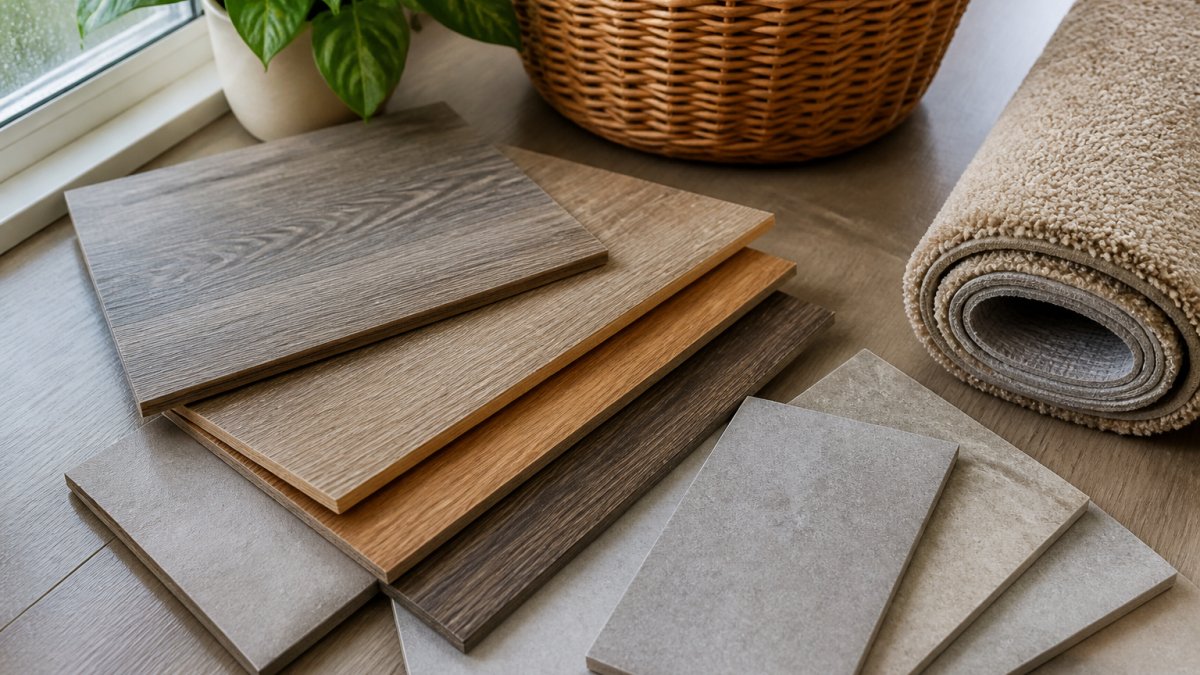
Material is the most important decision for a custom rug in a busy space, and because it is cut to your exact dimensions, you cannot simply swap it out if the fiber underperforms. Here is how the leading options compare.
Wool: Durability and Natural Resilience
Wool is the benchmark for high-traffic rugs.
A well-constructed wool rug in a busy hallway holds its appearance for roughly 10 to 15 years with regular vacuuming and periodic professional cleaning, while a low-grade wool rug can show traffic patterns in half that time.
Wool costs more upfront and needs careful cleaning: harsh chemicals strip the natural oils that give it stain resistance and resilience, so use wool-specific cleaners or professional cleaning for deep stains.
Polypropylene and Nylon: Synthetic Strength
Polypropylene and nylon are engineered to handle punishment. They resist stains because they do not absorb liquids the way natural fibers do, so spills wipe up quickly.
Nylon is the stronger of the two for high-traffic use. It resists crushing better and maintains its appearance longer under constant foot traffic, and solution-dyed nylon holds color through repeated cleaning.
The trade-off is feel and longevity. Synthetics feel less luxurious, can develop a sheen or pill, and lack wool's resilience, so they mat more readily.
Fiber Blends: Balancing Cost and Performance
Fiber blends combine the strengths of different materials. A wool-nylon blend gives you wool's natural resilience with nylon's stain resistance and durability, and blends often outperform pure materials because each fiber compensates for the other's weaknesses.
A 60% wool, 40% nylon blend is a popular choice that delivers strong performance without the premium price of 100% wool. Blends are also more dimensionally stable in large custom sizes, reducing the risk of rippling or buckling in wide rooms.
Comparing Materials Side by Side
The table below compares the leading custom-rug fibers on the factors that matter most in busy spaces. Cost is expressed as a relative range because custom pricing depends on size, construction, and edge finish.
| Fiber Type | Stain Resistance | Resilience | Abrasion Resistance | Cleaning Trade-offs | Realistic Lifespan in High Traffic | Relative Cost | Best For |
|---|---|---|---|---|---|---|---|
| Wool | Good | Excellent | Very Good | Wool-specific cleaners; avoid bleach and strong solvents; professional cleaning recommended for deep stains | 10-15 years with care | High | Luxury homes, long-term investment, hallways and living rooms |
| Nylon | Excellent | Good | Excellent | Tolerates most carpet cleaners; test first; solution-dyed holds color | 5-10 years | Medium | Family homes, pet households, entryways |
| Polypropylene | Excellent | Fair | Good | Tolerates most cleaners; low melting point, avoid heat | 1-3 years in true high traffic; longer in moderate use | Low | Budget-conscious, moderate traffic, covered outdoor transitions |
| Wool-Nylon Blend | Very Good | Very Good | Very Good | Wool-leaning care; test cleaners; professional cleaning for deep stains | 8-12 years | Medium-High | Best overall balance for high-traffic areas |
What the Labels Do Not Tell You
Fiber content alone does not predict performance. Two wool rugs with the same fiber content can differ by years of lifespan depending on face weight, pile density, backing, and construction. When you order a custom rug, ask the maker for the face weight (ounces per square yard) and pile density; higher face weight and denser pile mean better abrasion resistance and slower matting, a more reliable predictor of longevity than the fiber name on the sample tag.
Low Pile Rugs for High Traffic Areas
Pile height matters in high-traffic spaces: the shorter the pile, the less it can be crushed or matted down by constant walking.
The trade-off is comfort: low pile rugs feel firmer underfoot, but in high-traffic areas that firmness is a sign the rug is built to last.
When ordering a custom low pile rug, specify the exact pile height. A truly low pile (around 1/4 inch) will outperform anything taller in busy zones.
Custom Size Area Rugs: Measuring and Ordering
Getting the dimensions right is crucial: a rug that's too small looks awkward and won't protect the floor, while one that's too large overwhelms the space and becomes impractical to clean.
For hallways, measure the width and length precisely. A hallway runner should be at least 2.5 feet wide but no wider than 3 feet (unless your hallway is unusually wide).
For entryways, the rug should catch dirt and moisture from shoes before they reach the rest of your home.
When ordering custom rugs, provide exact measurements in feet and inches; reputable retailers will confirm dimensions before production.
Custom Hallway Runners: Protection Where You Need It Most
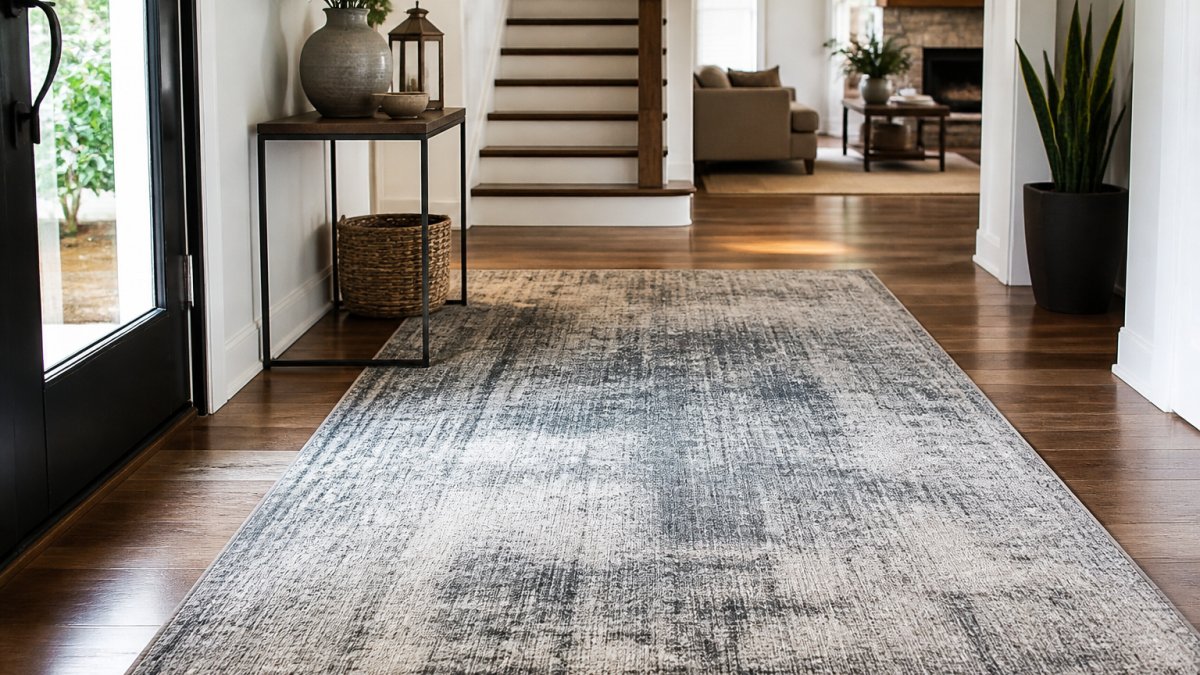
Hallways are among the most challenging spaces for rugs, seeing constant foot traffic from family members, pets, and guests. A hallway runner protects your flooring while defining the space.
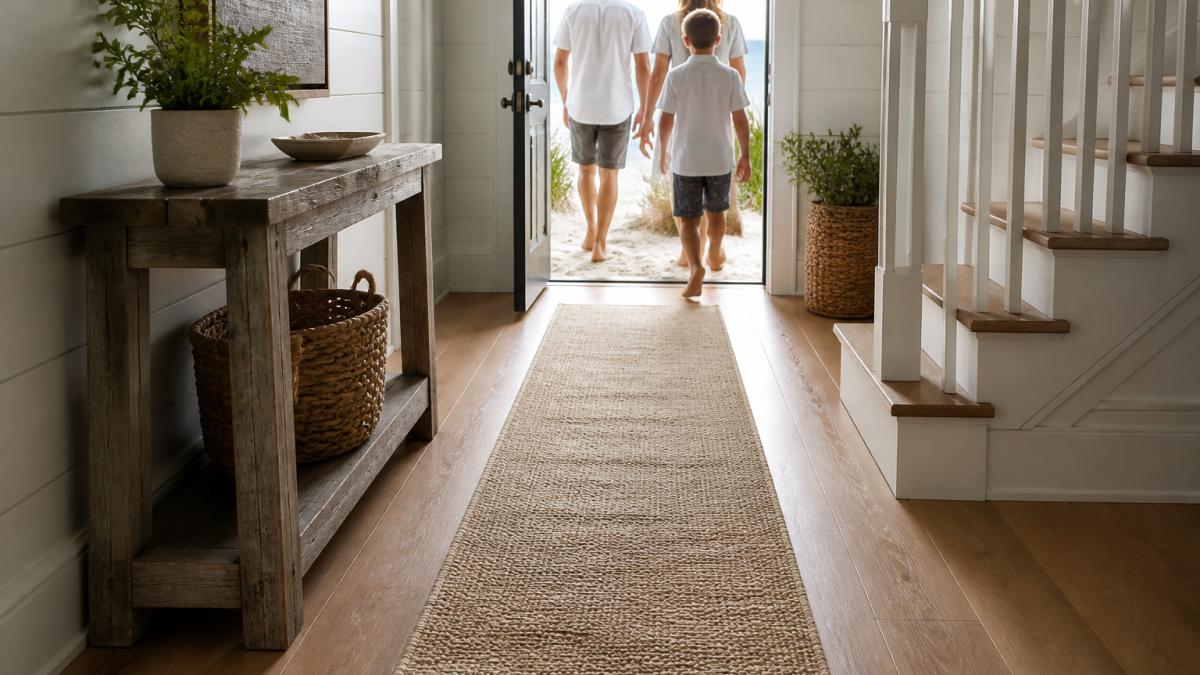
Custom hallway runners let you specify exact dimensions that fit perfectly, while standard sizes often leave gaps at the ends or don't cover the full width.
For hallway runners, low pile construction is essential, since a runner that can't handle repeated compression deteriorates quickly.
The best custom hallway runners include a non-slip rug pad underneath.
Maintenance and Cleaning for Durability
How you care for a custom rug directly impacts how long it lasts, and because it is sized to your space, replacement is more expensive and disruptive than swapping a standard rug. The cleaning trade-offs differ by fiber, so a fiber-by-fiber plan beats one-size-fits-all advice.
A Fiber-by-Fiber Cleaning Plan
The chart below summarizes how each common custom-rug fiber responds to routine care, spills, and professional cleaning. Use it to set expectations before you order.
| Fiber | Routine Vacuuming | Spill Response | Cleaning Products | Professional Cleaning | Watch Out For |
|---|---|---|---|---|---|
| Wool | Weekly, suction only or beater bar on highest setting | Blot immediately; cold water; do not rub | Wool-specific cleaners; avoid bleach, strong solvents, and enzyme cleaners that can damage fibers | Every 12-18 months in high traffic; sooner after major spills | Shedding for first months; harsh chemicals strip natural oils |
| Nylon | Weekly; beater bar acceptable on low pile | Blot; most spills lift with water and mild detergent | Most carpet cleaners; test in hidden corner first | Every 12-18 months in high traffic | Oil-based stains can wick back; sheen from abrasion |
| Polypropylene | Weekly; beater bar acceptable | Blot; water and mild detergent | Most carpet cleaners; avoid heat and steam | Every 12-18 months; more often if heavily soiled | Low melting point; heat can distort fibers |
| Wool-Nylon Blend | Weekly; suction or high beater bar | Blot immediately; cold water | Wool-leaning care; test all cleaners | Every 12-18 months in high traffic | Treat as wool for chemical sensitivity |
Routine Care That Actually Extends Lifespan
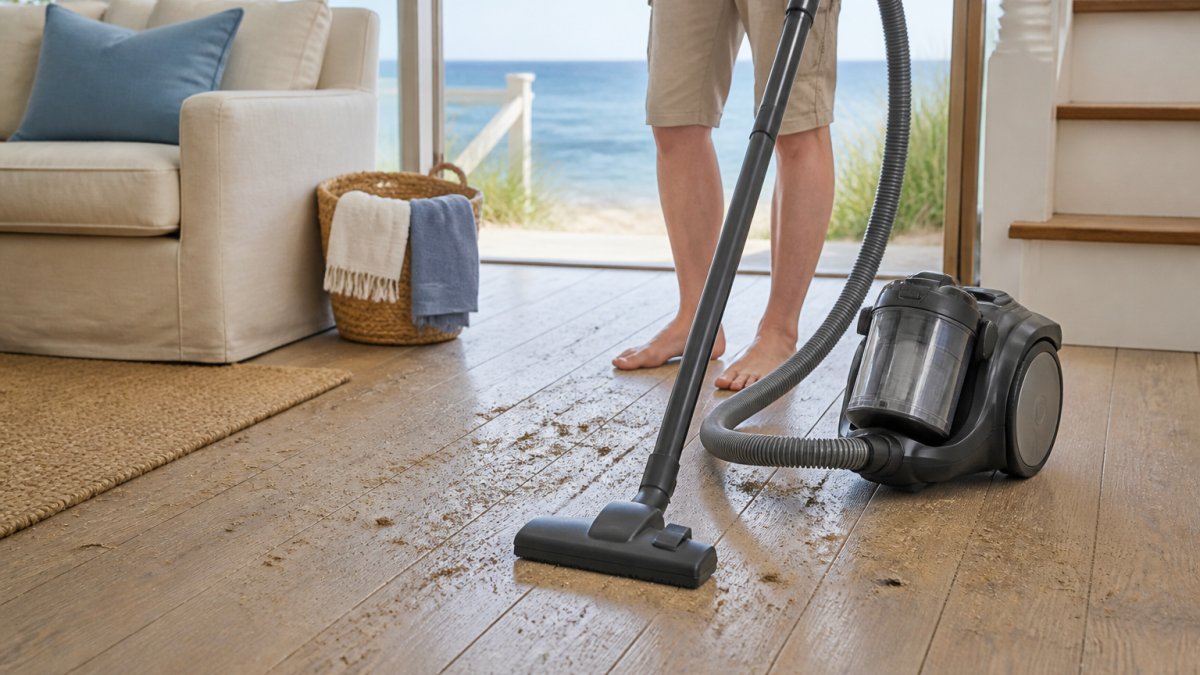
Vacuum high-traffic rugs weekly to remove grit before it gets ground into the fibers; grit acts like sandpaper underfoot and accelerates abrasion. For low pile rugs, use a vacuum without a beater bar or set it to its highest setting. Rotate the rug 180 degrees every six to twelve months, and reverse runner ends, so wear is distributed evenly.
For spills, blot immediately with a clean white cloth, working from the outside toward the center to prevent spreading. Do not rub or scrub, which pushes the spill deeper into the fibers. For solid messes, scoop first, then blot.
For synthetic rugs, you have more flexibility: many tolerate standard carpet cleaners well. Still, test any cleaner on a hidden corner first, and avoid steam or heat on polypropylene because of its lower melting point.
When to Call a Professional
Professional cleaning every 12 to 18 months is the baseline for high-traffic custom rugs, and more often in homes with pets, children, or gritty entryways. Professionals have extraction equipment and fiber knowledge consumer machines cannot match, and they spot-treat stains without over-wetting the backing, a common cause of delamination and odor.
Construction Matters as Much as Fiber
Pile height and backing affect cleaning as much as fiber does. Low pile rugs release dirt more easily and dry faster, reducing the risk of mildew in entryways, while high pile rugs trap more debris. Hand-knotted and hand-tufted rugs generally tolerate professional cleaning well, while some glued-back machine-made rugs are more sensitive to excess water. When you order a custom rug, ask the maker for the recommended cleaning method and whether the backing is compatible with wet extraction.
Rug Pads and Floor Safety
A quality rug pad is non-negotiable in high-traffic areas: it prevents shifting underfoot and protects your floor from moisture and wear.
Felt pads are affordable, work well on most floors, and are the safer choice for hardwood.
Thickness matters too: too thin won't provide adequate cushioning or grip, and too thick can create a tripping hazard. Aim for 1/4 inch to 1/2 inch for most applications.
When ordering a custom rug, ask about pad compatibility; some retailers include pad recommendations or bundle pads with their rugs. We can advise on the best pad for your floor type and rug construction.
Choosing the best custom rugs for high traffic areas means starting with durable materials like wool or quality nylon, selecting low pile construction, and getting exact measurements for your space. The investment in a properly chosen custom rug pays off through years of performance and appearance. Hamptons carpet one floor and Home can guide you through material selection, custom sizing, and installation to ensure your high-traffic spaces stay protected and beautiful.
Frequently Asked Questions
What type of rug is best for high-traffic areas?
Low-pile rugs made from wool, nylon, or polypropylene work best in high-traffic spaces. These materials resist crushing and wear better than high-pile options. Wool offers natural resilience and durability, while synthetic fibers provide stain resistance and easier maintenance. Choose based on your priorities: wool for longevity, synthetics for easy cleaning. Custom size area rugs let you cover exactly the zones that need protection most.
Are low pile rugs better for high-traffic areas?
Yes. Low-pile rugs resist matting and foot traffic wear far better than high-pile alternatives. The shorter fibers don't crush as easily, maintaining appearance longer. They're also easier to vacuum and clean, and they dry faster when wet. In busy spaces like entryways and hallways, low-pile construction is the standard choice for durability and maintenance ease.
Can you get a custom rug made for a hallway or entryway?
Absolutely. Custom hallway runners and entryway rugs are measured to fit your exact space, eliminating gaps and ensuring complete floor protection. You can specify dimensions, material, pile height, and pattern. This precision means better coverage of high-traffic zones and a tailored fit for older homes with uneven floors or unusual layouts. Custom ordering takes the guesswork out of sizing.
How do you keep a high-traffic rug from wearing out?
Use a quality rug pad underneath to reduce friction and movement. Vacuum regularly to remove dirt that accelerates wear. Rotate the rug periodically to distribute foot traffic evenly. Clean spills immediately to prevent staining and fiber damage. Choose materials with strong abrasion resistance like wool or nylon. Low-pile construction and dense weaves also extend lifespan significantly in busy spaces.