 blog
Best Flooring for Long Island Humidity: 7 Top Materials
Last Updated: October 23, 2026
Quick Summary
The best flooring for Long Island humidity is porcelain tile, luxury vinyl plank, and engineered hardwood, because each limits how much moisture the planks absorb and release. Porcelain tile handles standing water best, while luxury vinyl plank offers a waterproof core for busy coastal rooms.
- Solid hardwood moves too much for coastal basements and slab-on-grade installs.
- A waterproof label does not cover water coming from underneath the slab.
- Engineered hardwood works when indoor humidity stays roughly between 35% and 55%.
- Acclimate planks in the room and leave the specified perimeter expansion gap.
- Finished basements should get luxury vinyl plank over a moisture barrier.
Table of Contents
- Why Long Island Humidity Wrecks the Wrong Flooring
- Best Flooring Materials for Humid Coastal Climates
- Waterproof Flooring for Humid Rooms: What the Label Really Means
- Luxury Vinyl Plank vs. Tile: Which Handles Moisture Better?
- Engineered Hardwood in Humid Climates: Where It Works and Where It Fails
- Flooring Acclimation Before Installation: The Step That Saves Your Floor
- Room-by-Room Picks for Suffolk County Homes
- Frequently Asked Questions
Why Long Island Humidity Wrecks the Wrong Flooring
The best flooring for Long Island humidity is porcelain tile, luxury vinyl plank, and engineered hardwood, because each one limits how much moisture the planks absorb and release.
Here is the mechanism in plain terms. Wood and wood-based boards are hygroscopic, meaning they take in and give off moisture from the air (Moisture relations and physical properties of wood).
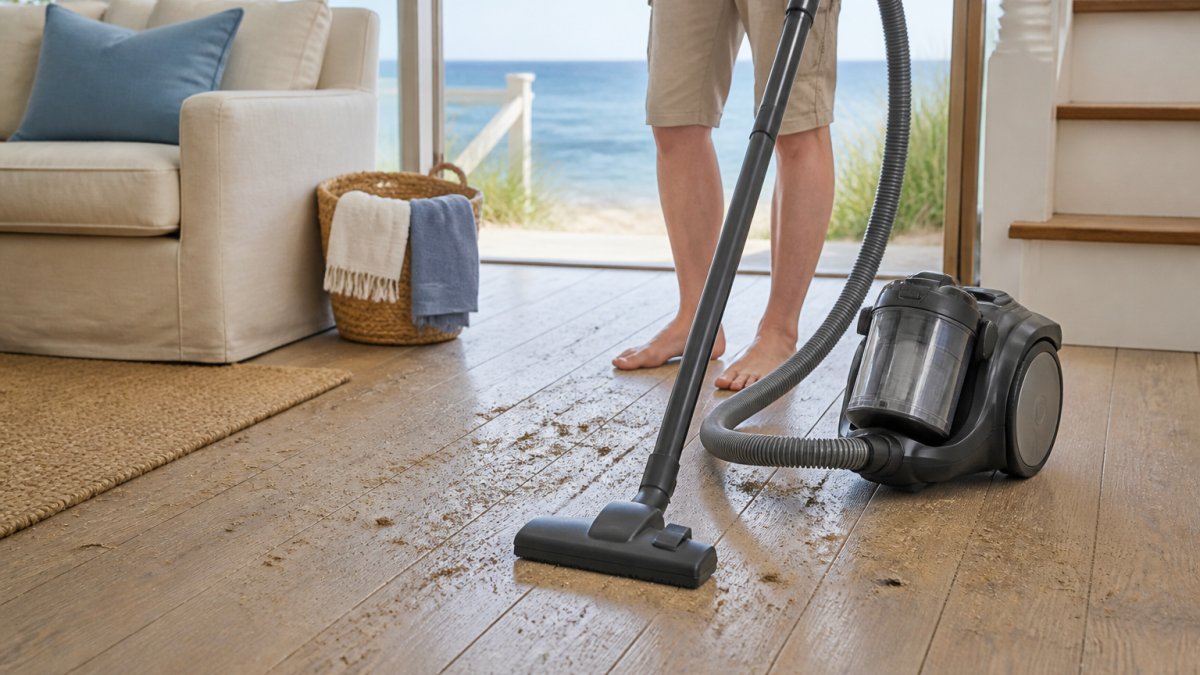
Coastal Suffolk County homes face a second pressure: salt air and sand tracked in daily. Sand is abrasive, and it grinds into joints every time someone walks in from the beach.
That combination is why so many homeowners end up disappointed. The floor was not defective.
Below, we break down seven materials, the waterproof versus water-resistant distinction, and how to choose room by room.
Best Flooring Materials for Humid Coastal Climates
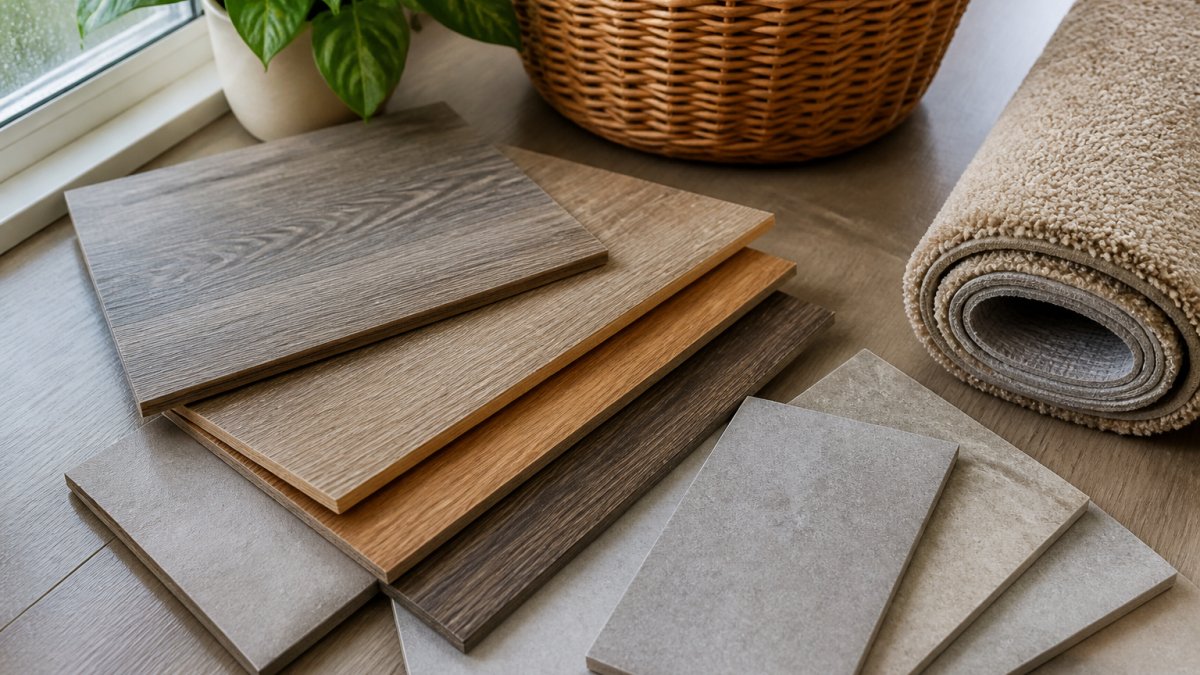
Porcelain and ceramic tile, luxury vinyl plank and tile, and engineered hardwood are the three families that hold up best in humid coastal homes. Each solves the moisture problem differently, and each has a trade-off worth knowing before you buy.
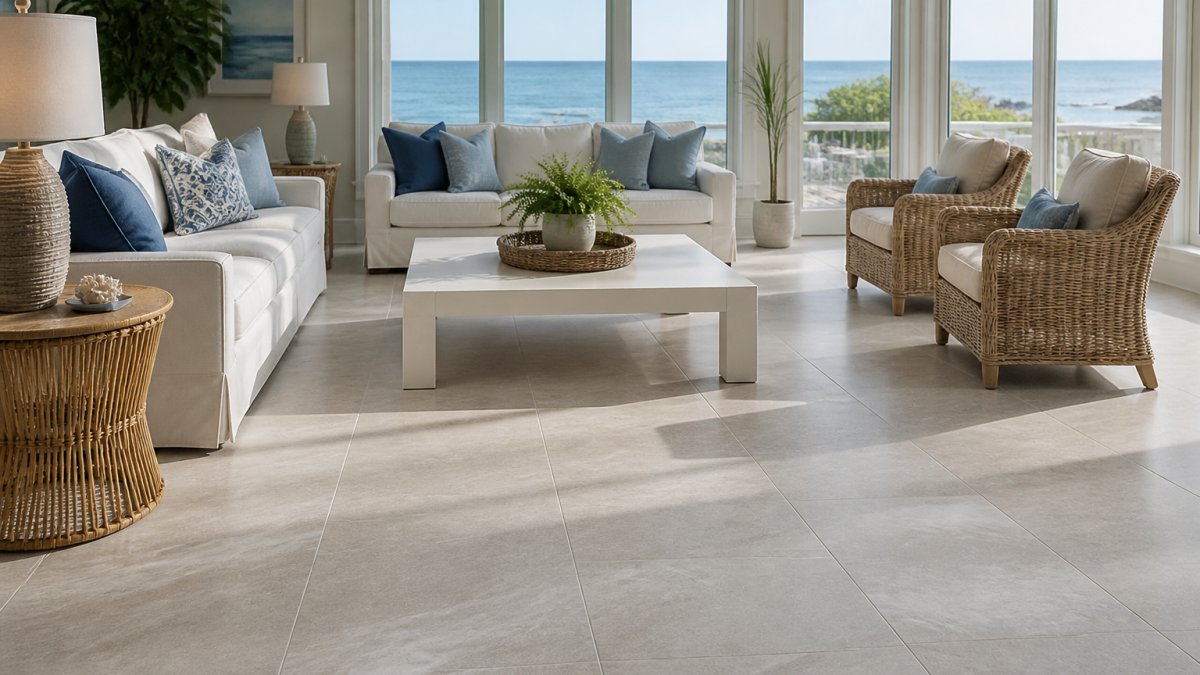
Porcelain and Ceramic Tile
Porcelain tile is a dense, low-absorption material fired at high temperature, which makes it the most moisture-tolerant option on this list.
Why it wins: tile does not swell, warp, or buckle when humidity rises.
The drawback is comfort. Tile is hard and cold underfoot, and dropped glass does not survive. Grout also needs sealing in wet areas to stay stain-resistant.
Best for: bathrooms, kitchens, mudrooms, basements, and any room with a history of leaks.
Luxury Vinyl Plank and Tile
Luxury vinyl plank is a synthetic, multi-layer product with a waterproof core, and it is the closest thing to a worry-free floor for a busy coastal household.
Sand and salt air do not damage the wear layer, and a damp mop handles cleanup.
Where it falls short: vinyl does not refinish. Once the wear layer dulls, the plank gets replaced, not sanded. Cheap versions can also telegraph every bump in the subfloor, so prep quality matters.
Best for: kitchens, entryways, finished basements, and family rooms with heavy foot traffic.
Engineered Hardwood, Laminate, and Sealed Concrete
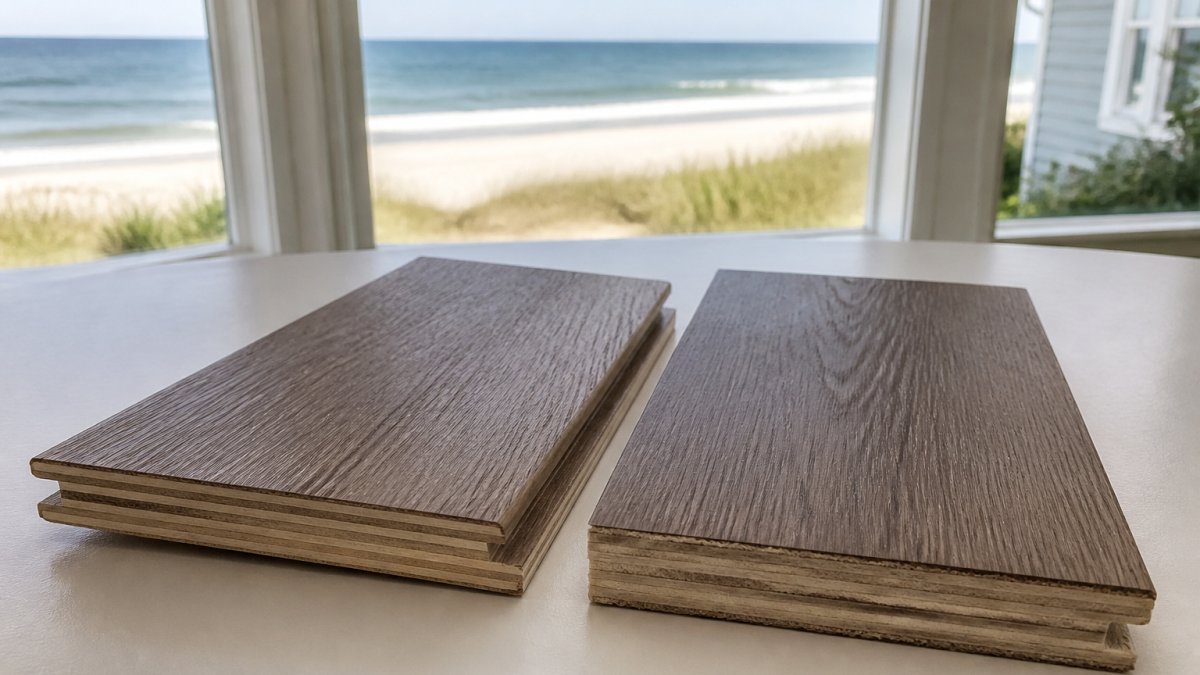
Engineered hardwood is real wood on top of a plywood core, and that cross-layered core is what gives it far better dimensional stability than solid hardwood.
Laminate is a wood-look composite that resists surface moisture well, though its core can swell if water sits on it.
What most guides miss: all three depend on a dry, stable subfloor and a controlled indoor environment. None of them tolerate a persistently damp crawlspace or a slab with no moisture barrier.
Best for: living rooms and bedrooms in climate-controlled homes, plus sunrooms with good ventilation.
Waterproof Flooring for Humid Rooms: What the Label Really Means
Waterproof flooring means the product itself will not be damaged by water, not that water cannot get underneath it.
A waterproof plank can sit in a puddle without swelling. But if water reaches the subfloor through a seam, a perimeter gap, or a failed seal, it stays there.
Water-resistant flooring, by contrast, tolerates occasional spills for a limited window but will eventually absorb moisture at the edges. Laminate and some engineered products fall here.
The label also does not tell you what the manufacturer requires underneath the floor.
A practical checklist before you buy:
- Confirm the core is waterproof, not just the surface wear layer
- Ask whether the warranty covers moisture from below the slab
- Verify the perimeter expansion gap is specified in the install instructions
- Confirm a moisture barrier or underlayment is required over concrete
- Check whether the warranty excludes coastal or high-humidity environments
- Confirm the adhesive or click system is rated for the room's moisture exposure
- Ask what subfloor moisture reading the manufacturer considers acceptable
One more distinction worth making: humidity resistance and flood performance are not the same thing. A floor rated for humid air may still fail if standing water sits on it for days. If your home has a history of leaks, sump pump failures, or storm-driven water intrusion, choose a material and an installation method that let you remove or dry the floor, and plan for the subfloor to be inspected and dried before the new floor goes back down.
Luxury Vinyl Plank vs. Tile: Which Handles Moisture Better?
Luxury vinyl plank handles surface moisture better in a floating installation, while porcelain tile handles standing water and long-term damp better overall. The right pick depends on whether your risk is spills or persistent humidity.
| Factor | Luxury Vinyl Plank | Porcelain Tile |
|---|---|---|
| Water resistance | Waterproof core | Waterproof body |
| Feel underfoot | Warm, slightly soft | Hard, cold |
| Grout lines | None | Yes, needs sealing |
| Refinishable | No | No, but tile is replaceable |
| Best room | Kitchen, basement, family room | Bathroom, mudroom, laundry |
| Sand and salt air | Very tolerant | Very tolerant |
| Subfloor tolerance | Moderate | Low, needs flat substrate |
Vinyl wins on comfort and speed. Tile wins on permanence and water tolerance. For a coastal home with kids and dogs, many homeowners split the difference: vinyl in the living areas, tile in the wet rooms.
Engineered Hardwood in Humid Climates: Where It Works and Where It Fails
Engineered hardwood works in humid climates when the indoor humidity stays roughly between 35% and 55% and the subfloor is verified dry.
The cross-ply core is the reason it outperforms solid hardwood.
Where engineered fails: bathrooms, laundry rooms, and any room with a floor drain.
A common mistake is skipping the moisture test because the product is "engineered." The core is more stable, not immune. Test the slab or crawlspace first, then decide.
Flooring Acclimation Before Installation: The Step That Saves Your Floor
Flooring acclimation is the process of letting boards rest in the room where they will be installed so they adjust to the home's temperature and humidity before installation. Skip it and the planks will move after the job is done, not before.
The steps to follow on every install:
- Test the subfloor. A moisture meter reading on the slab or wood subfloor tells you whether a barrier is needed.
- Condition the space. Run the HVAC at normal living settings for several days before delivery.
- Deliver and stack. Open the cartons and stack the planks in the room, not the garage.
- Wait the specified window. Follow the manufacturer's acclimation time, which varies by product and thickness.
- Re-check moisture. Confirm the subfloor reading has not shifted before the first plank goes down.
- Leave the expansion gap. Maintain the perimeter gap the instructions specify, and never fill it with caulk.
That sequence is also the answer to the surprise-cost question homeowners often have. A quote that ignores subfloor moisture testing is not a cheaper quote; it is an incomplete one. The "subfloor issue" that appears mid-job was usually detectable on day one.
Room-by-Room Picks for Suffolk County Homes
Bathrooms and laundry rooms should get porcelain tile. Finished basements and family rooms should get luxury vinyl plank. Bedrooms and living rooms in a conditioned home can take engineered hardwood.
Here is how to map a typical coastal Suffolk County house, with the subfloor and installation detail that decides whether the pick actually performs:
- Bathroom and powder room: porcelain tile with sealed grout over a cement backer board or a manufacturer-approved membrane. The risk here is standing water and splash, so the substrate needs to be waterproof, not just the tile.
- Kitchen: luxury vinyl plank or porcelain tile, depending on how much you drop things. If the kitchen sits over a slab, confirm a vapor barrier is part of the install; if it sits over a crawlspace, confirm the crawlspace is vented and dry.
- Mudroom and entry: porcelain tile, because sand and salt arrive here first. A walk-off mat and a sealed grout line do more for longevity than a premium tile alone.
- Finished basement: luxury vinyl plank over a moisture barrier, with a subfloor moisture test before installation. Basements are the highest-risk room in a coastal home because slab moisture and humid summer air combine.
- Living room and bedrooms: engineered hardwood, with indoor humidity kept roughly between 35% and 55%. In a seasonal home that sits closed and unconditioned for weeks, engineered hardwood is a risk; vinyl or tile is the safer pick.
- Sunroom: sealed concrete or porcelain tile if the space is not fully conditioned. A sunroom that swings with outdoor humidity will move any wood-based product.
- Historic home with uneven floors: engineered or vinyl over a properly leveled subfloor, not solid hardwood. The subfloor work decides the outcome more than the surface material.
The local pattern that matters most for flooring for Long Island humidity: coastal homes here swing between damp summers and dry heating seasons, and many sit on slab-on-grade foundations.
For older homes with uneven floors and original hardwood underneath, the honest answer is that the subfloor work decides the outcome.
Frequently Asked Questions
What is the best flooring for high humidity areas?
Porcelain tile and luxury vinyl plank handle high humidity best because neither absorbs moisture or swells the way wood does. Porcelain is fired at high heat and effectively waterproof, while quality LVP cores resist water for hours. Engineered hardwood can work in rooms with controlled humidity, but solid hardwood and standard laminate are the riskiest choices in a damp coastal home. Match the material to the room and test your subfloor before committing.
Is 60% humidity bad for hardwood floors?
Yes, sustained indoor humidity around 60% is above the 35-55% range most hardwood manufacturers require. At that level, wood takes on moisture, planks expand, and you get cupping, crowning, and gapping at the seams. In a coastal Suffolk County home, run a dehumidifier or air conditioning through the summer to hold indoor humidity in that band. If a room regularly sits above 60%, choose tile or luxury vinyl instead of wood.
Can luxury vinyl plank flooring be installed in humid rooms?
Yes. Luxury vinyl plank is a strong pick for bathrooms, basements, and laundry rooms because its core resists moisture and it will not swell or warp like laminate. Rigid-core and SPC versions hold up best. The catch is the subfloor: LVP needs a flat, dry surface, and moisture trapped under a slab can still cause problems. Test for moisture and use a vapor barrier where the manufacturer requires one.
How should flooring acclimate before installation?
Bring boxes into the room where they will be installed and let them sit for the time the manufacturer specifies, often 48 to 72 hours. Keep the home at normal living temperature and humidity during that window. Skipping acclimation in a humid coastal climate is one of the most common reasons new floors cup, gap, or buckle within the first year. Test the subfloor for moisture before boxes even come inside.