 Comparison
Best Flooring for Dogs Near the Beach: A Coastal Guide
Last Updated: November 8, 2026
Quick Summary
The best flooring for dogs near the beach is luxury vinyl plank or porcelain tile, because both are fully waterproof and resist scratches from claws and tracked sand. Choose a textured, matte finish with a thick wear layer for grip, and seal tile grout to keep urine and odor out of the seams.
- Luxury vinyl plank is fully waterproof and handles muddy paws without swelling at the seams.
- Porcelain tile is waterproof, but unsealed grout lines let urine odor settle into the seams.
- A thick wear layer with a matte or textured finish resists claw scuffs and hides scratches.
- Use enzymatic cleaner rather than bleach on accidents so the odor source breaks down fully.
- Coarse outdoor mats plus microfiber indoor mats at beach-side entries remove most tracked sand.
Table of Contents
- Why Coastal Homes Need Different Flooring for Dogs
- The Best Flooring for Dogs and Waterproof Performance
- Best Flooring for Dogs That Pee: Urine, Odor, and Moisture
- Best Flooring for Dogs' Nails: Scratch and Dent Resistance
- Best Flooring for Dogs Non Slip: Traction and Joint Comfort
- Sand, Salt Air, and Seasonal Moisture in Southampton Homes
- Comparing Vinyl, Laminate, Hardwood, and Tile for Dog Owners
- Planning Your Flooring Installation in Suffolk County
- Frequently Asked Questions
Why Coastal Homes Need Different Flooring for Dogs
Sand, salt air, and wet paws make coastal homes a rough environment for any floor. The best flooring for dogs near the beach has to survive all three at once, and most standard recommendations ignore that combination entirely.
Homes in coastal areas often track grit across light floors every day. That daily grind changes which materials make sense. A floor that performs fine inland can fail fast when salt, humidity, and sand join the mix. Below, we break down the materials that actually hold up, and the ones that quietly fall apart.
The Best Flooring for Dogs and Waterproof Performance
Waterproof flooring is the baseline requirement here. Anything that absorbs water, swells at the seams, or traps moisture under the plank will not survive a coastal dog household.
Luxury Vinyl Plank and Tile: The Waterproof Standard
Luxury vinyl plank and luxury vinyl tile are fully waterproof, which is why they top nearly every dog-focused list. Flooring America's guide to dog-friendly flooring notes that luxury vinyl resists scratches and handles muddy paws without swelling. The core is synthetic, so spilled water and accidents stay on the surface instead of soaking in.
Porcelain Tile and Seam Protection
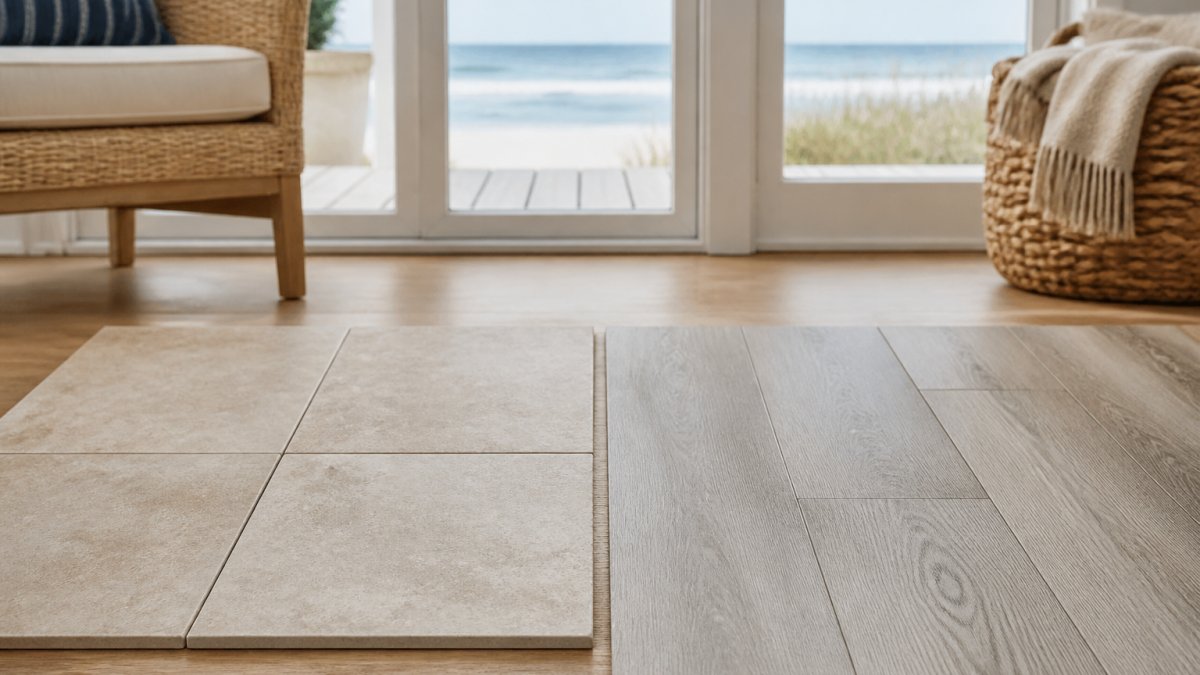
Porcelain tile and ceramic tile are also waterproof, but the grout lines are the weak point. HomeGuide's flooring-for-dogs cost breakdown lists porcelain as a strong pick for homes with dogs that have accidents, since the tile itself will not absorb urine. Seal the grout and clean it regularly, or odor will settle into the seams.
| Material | Waterproof | Scratch Resistance | Best For |
|---|---|---|---|
| Luxury vinyl plank | Yes | High | Muddy paws, wet dogs |
| Porcelain tile | Yes | High | Accident-prone dogs |
| Laminate | No | Medium | Budget-conscious homes |
| Engineered wood | No | Low | Low-activity senior dogs |
Best Flooring for Dogs That Pee: Urine, Odor, and Moisture
Urine resistance separates the winners from the losers. A floor that lets liquid reach the subfloor will hold odor no matter how often you clean it.
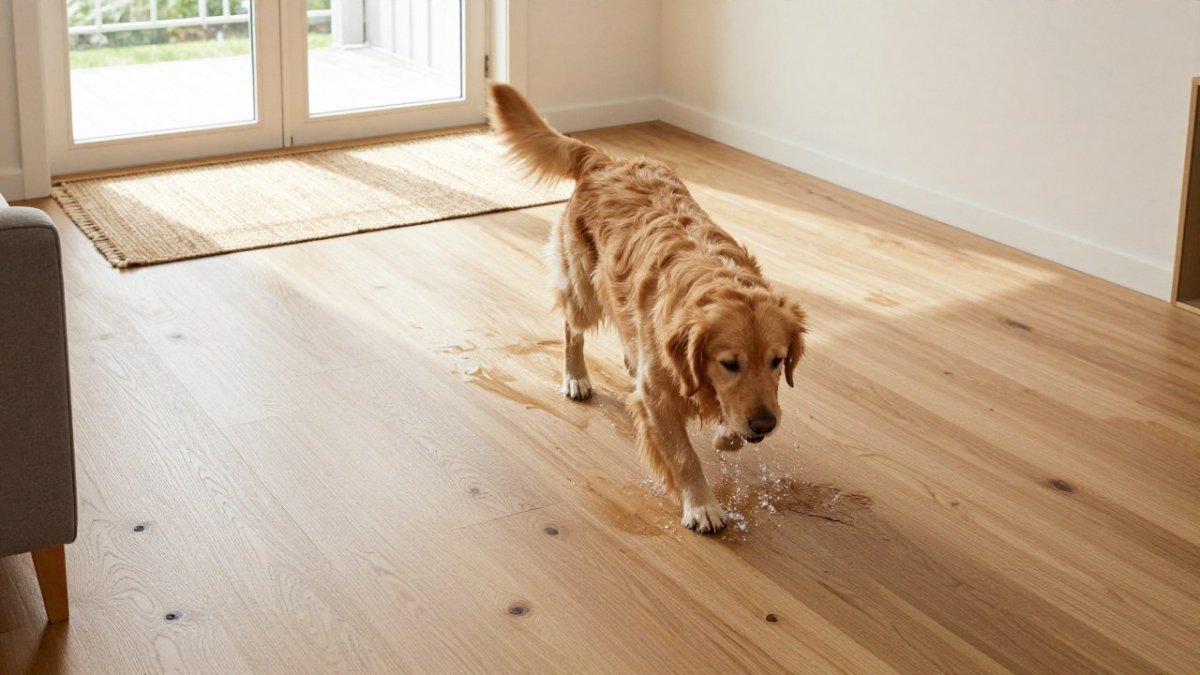
Luxury vinyl and porcelain tile both keep accidents on the surface. Laminate and hardwood absorb moisture at the seams and edges, which leads to swelling, staining, and a smell that lingers. For dogs that pee indoors, choose a floor with tight seams and a waterproof core. Then use an enzymatic cleaner, not bleach, so the odor source breaks down fully.
Best Flooring for Dogs' Nails: Scratch and Dent Resistance
Scratch-resistant flooring comes down to the wear layer. A thin wear layer scuffs under claws within months. A thick one holds up for years.
Wear Layer and Surface Finish Explained
The wear layer is the clear top coating on vinyl and laminate that takes the abuse from claws, grit, and furniture. Look for a wear layer rated for heavy residential traffic, and choose a matte or textured surface finish. Glossy finishes show every scratch. Textured finishes hide them and give paws something to grip.
Best Flooring for Dogs Non Slip: Traction and Joint Comfort
Non-slip flooring protects your dog's joints and your own footing. Slick tile and polished wood send older dogs sliding, which strains hips and knees. In a beach house the problem compounds: wet paws, salt residue, and fine sand all reduce friction, so a floor that feels fine when dry can turn into a skating rink after a morning walk on the sand.
What Actually Creates Grip
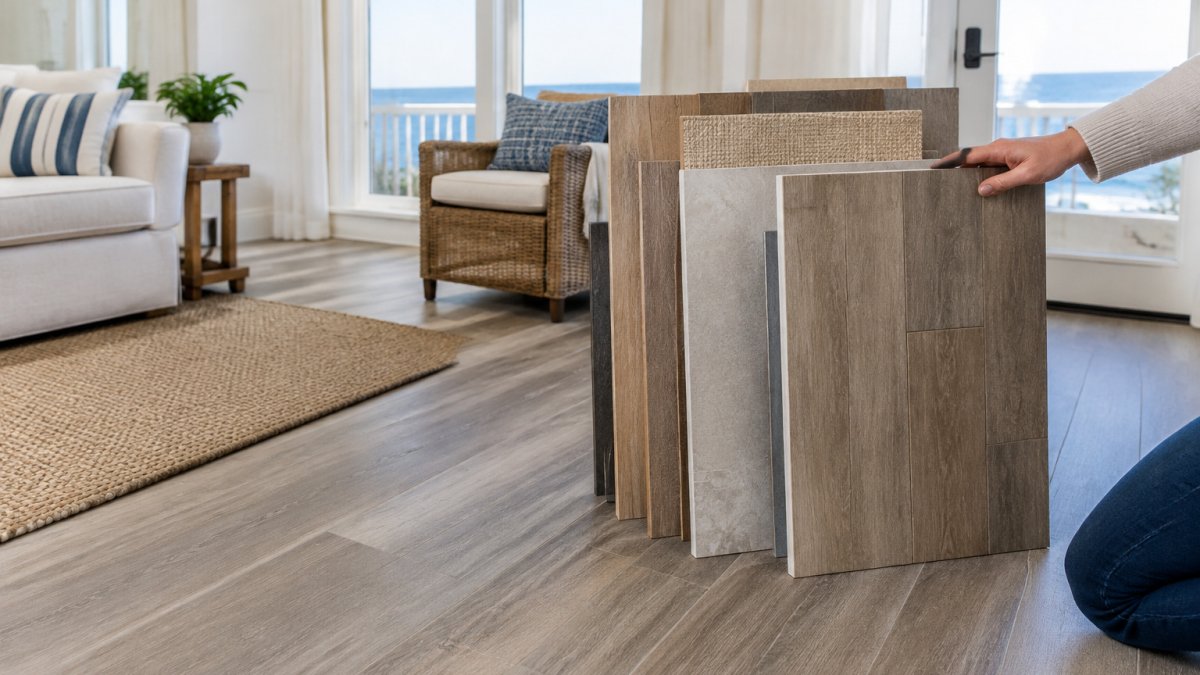
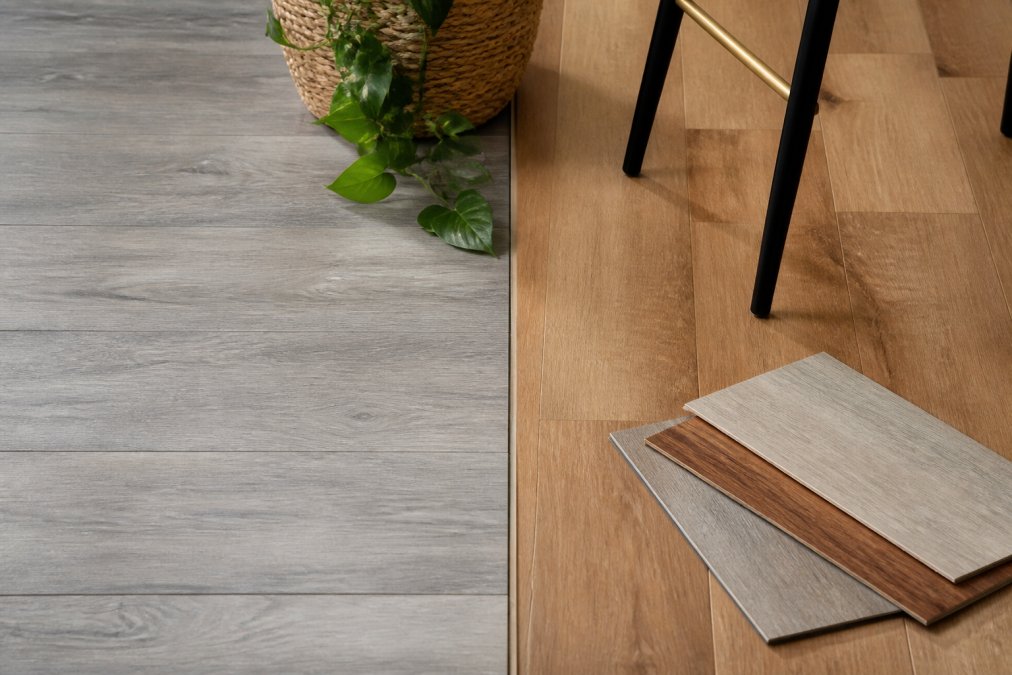
Traction comes from the surface texture, not the material name. A matte, embossed, or hand-scraped finish gives paws something to bite into; a polished or high-gloss finish does the opposite. When you shop, run your hand across a sample and look for a visible grain or micro-texture. A textured luxury vinyl plank with a matte finish generally offers more grip than smooth porcelain in dog-heavy rooms, even though both are hard surfaces.
Tile grout lines matter too. Wide grout joints give paws an edge to push against, while large-format tile with narrow seams is slicker underfoot. If you choose porcelain, favor a matte or lightly textured tile and keep grout joints at a practical width rather than chasing a seamless look.
Matching Traction to Your Dog
- Senior dogs and dogs with hip or knee issues: prioritize textured vinyl or carpet tile in main paths. Hard, slick surfaces force compensating movement that aggravates joint pain.
- Large, active dogs: grip matters most at doorways, stairs, and around water bowls, where floors stay damp. A runner or mat at each of those spots does more than any single flooring upgrade.
- Puppies and high-energy dogs: a slightly cushioned surface reduces impact. Luxury vinyl with a attached underlayment or a low-pile carpet in play areas softens landings.
Coastal Traction Details
Wet beach gear and damp paws are the enemy of slip resistance. A coarse outdoor mat plus a microfiber indoor mat at every beach-side entry removes most sand and moisture at the threshold, which keeps the floor's texture working.
Satin finishes can still be slippery when wet, so test a sample with a damp hand before committing to a whole floor.
Slip resistance matters most on stairs and near water bowls, where floors stay damp. Area rugs at doorways and along main walking paths can add paw comfort and extra grip, and a rug with a non-slip pad will not slide under an excited dog.
Sand, Salt Air, and Seasonal Moisture in Southampton Homes
Southampton homes face a specific problem: sand abrasion. Tracked-in grit acts like sandpaper on any floor finish, and salt air adds humidity that works its way into seams.
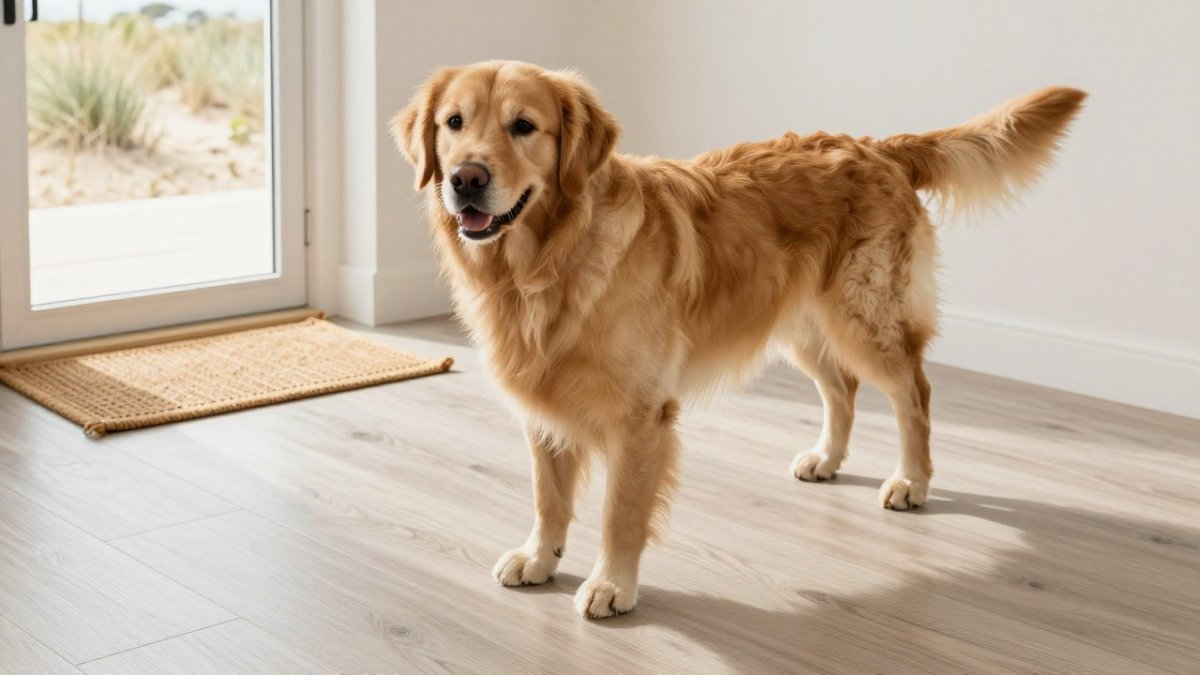
Managing Sand Abrasion and Grit at the Door
Stop grit before it spreads. A coarse outdoor mat plus a microfiber indoor mat at every beach-side entry removes most sand at the threshold. Sweep or vacuum daily during summer, and use a damp mop on vinyl or tile to lift fine grit that scratches finishes over time.
Comparing Vinyl, Laminate, Hardwood, and Tile for Dog Owners
Vinyl and tile win for coastal dog homes; laminate and hardwood lose. Here is how the four main options stack up on the factors that actually decide the purchase: waterproofing, scratch and dent resistance, traction, comfort underfoot, and how each behaves when sand and salt are part of daily life.
- Luxury vinyl plank: waterproof, scratch-resistant, comfortable underfoot, easy to clean. The wear layer is the spec that matters, a thicker wear layer resists claws and grit longer. Textured, matte finishes hide scratches and improve grip.
- Porcelain tile: waterproof, extremely durable, but hard and cold under paws. Grout lines are the weak point for urine and odor; sealed grout and regular cleaning keep it serviceable.
- Laminate: budget-friendly, but not waterproof and prone to seam swelling. Sand works into seams and dulls the surface faster than on vinyl.
- Engineered hardwood: beautiful, but dents, scratches, and absorbs moisture. Salt air and humid coastal seasons make movement and finish wear more likely.
How the Trade-Offs Play Out in a Coastal Home
Sand abrasion changes the ranking. Tracked-in grit acts like sandpaper on any finish, so the floor with the hardest, most scratch-resistant surface wins over time. Luxury vinyl's synthetic wear layer handles grit better than laminate's printed surface or hardwood's finish. Tile is the most abrasion-resistant of the four, but its hardness is a comfort trade-off for dogs that lie on the floor.
Humidity and seasonal moisture matter too. Laminate and engineered hardwood are the most sensitive to swelling and seam movement when indoor humidity swings. Vinyl and porcelain are largely unaffected, which is why they hold up better in homes that sit empty for parts of the season or see wet beach gear daily.
Choosing by Household
The Home Depot's guide to choosing flooring for dogs frames the decision around a dog's age, size, and energy level, plus your budget. Large, active dogs need the toughest wear layer you can buy. Senior dogs benefit more from traction and cushioning than from scratch resistance. Homes with frequent accidents should weight waterproofing and tight seams above all else.
Installed Cost and Lifecycle Value
Material price is only part of the number. Installation, subfloor prep, and underlayment often add as much as the material itself, and older Southampton homes frequently need leveling before any plank goes down. Rather than shopping on sticker price, compare the installed cost per square foot and the expected replacement horizon: a floor that lasts twice as long at a higher upfront price can be the cheaper choice over time. Ask any installer for a written installed quote that includes subfloor prep, transitions, and disposal of the old floor.
Many warranties exclude pet damage and moisture issues, so read the exclusions before you buy and confirm the floor is rated for the installation method your home requires.
Planning Your Flooring Installation in Suffolk County
A good installation protects the floor as much as the material does. Subfloor prep, seam sealing, and proper underlayment decide whether a waterproof floor actually stays waterproof.
For flooring installation in Suffolk County, work with a local installer who understands coastal moisture and older homes. Uneven subfloors and historic properties generally need careful leveling before any plank goes down. Ask about warranty terms too, since many warranties exclude pet damage and moisture issues.
Choosing flooring for a coastal home with dogs means balancing waterproofing, scratch resistance, and traction, and no single material wins on every count. Hamptons carpet one floor and Home serves homeowners across Suffolk County with waterproof luxury vinyl, porcelain tile, and full installation support, including subfloor prep and help matching samples to your actual rooms.
Frequently Asked Questions
What is the most durable flooring for dogs near the beach?
Waterproof luxury vinyl plank is the most practical choice for coastal homes with dogs. It handles wet paws, sand, and accidents without swelling, and its wear layer resists scratches from claws. Porcelain tile is equally durable and completely waterproof, though it is harder underfoot and colder in winter. Both outperform hardwood and standard laminate in a beach environment where moisture and grit are constant. Ask about wear layer thickness and warranty terms before you buy.
Can dog nails scratch vinyl plank flooring?
They can, but the risk depends on the wear layer. Vinyl plank with a thicker wear layer (typically 20 mil and above) holds up well to everyday claw traffic from most dogs. Large or very active dogs put more stress on the surface, so choose a product rated for commercial or heavy residential use. Keep nails trimmed and place mats at entry points to reduce grit that acts like sandpaper. A scratch-resistant finish helps, but no floor is scratch-proof.
Is laminate or vinyl better for dogs that pee on the floor?
Vinyl is the safer choice. Standard laminate has a wood-composite core that can swell when liquid sits on seams, and urine can soak in and trap odor. Waterproof luxury vinyl plank and tile have a plastic core that resists moisture, so accidents wipe up cleanly. Porcelain tile is also a strong option because it cannot absorb liquid at all. For dogs that pee indoors, prioritize a waterproof core and sealed seams over appearance alone.
What flooring is least slippery for older dogs?
Textured luxury vinyl plank and matte-finish porcelain tile offer the best traction for dogs. Glossy tile and polished hardwood are the slickest surfaces and can cause slipping, especially for senior dogs with joint issues. Look for products with a textured or embossed surface finish, and ask about slip resistance ratings. Area rugs and runners over hard surfaces add paw comfort and reduce strain on joints, particularly on stairs and in hallways.