 Comparison
Luxury Vinyl vs Laminate Maintenance: 2026 Guide
Table of Contents
- Luxury Vinyl vs Laminate Maintenance: Cost and Effort at a Glance
- Daily Care: Damp Mopping, Spills, and Protecting the Wear Layer
- Best Cleaning Products for Luxury Vinyl Plank
- How to Clean Laminate Floors Without Streaks
- Is Steam Mopping Safe for Luxury Vinyl?
- Long-Term Maintenance Costs: Repairs, Refinishing, and Warranty Coverage
- Pet-Specific Maintenance and Coastal Living: Sand, Salt, and Scratches
- Conclusion
- Frequently Asked Questions
Last Updated: September 25, 2026
Luxury Vinyl vs Laminate Maintenance: Cost and Effort at a Glance
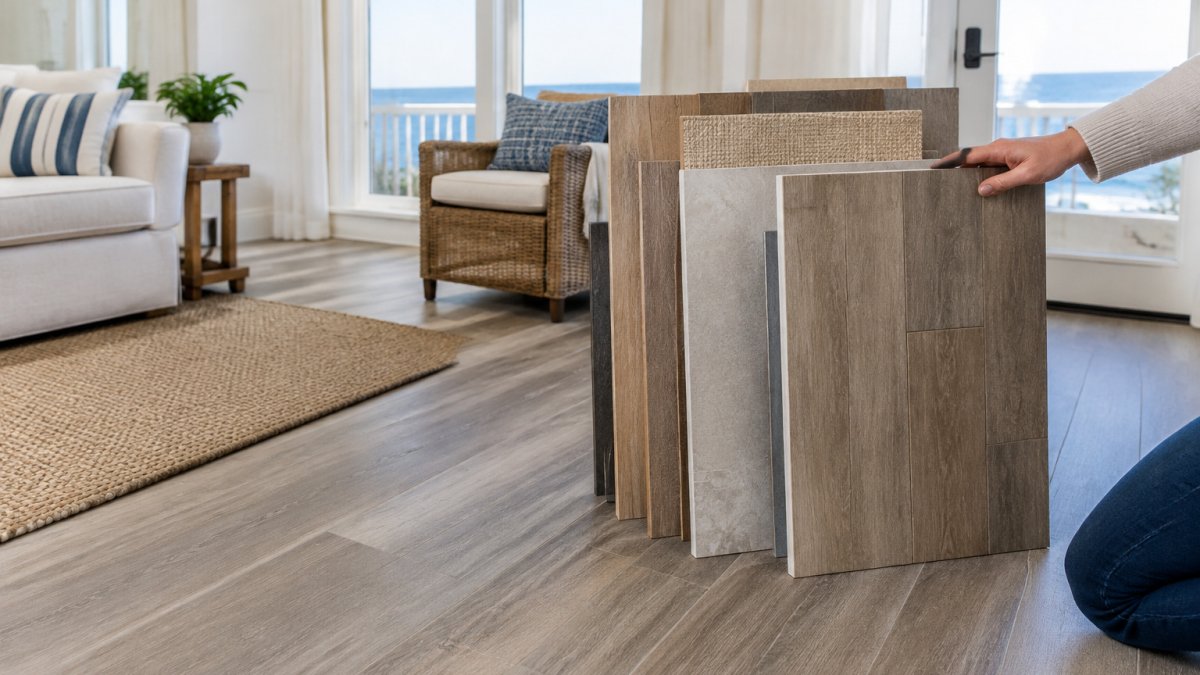
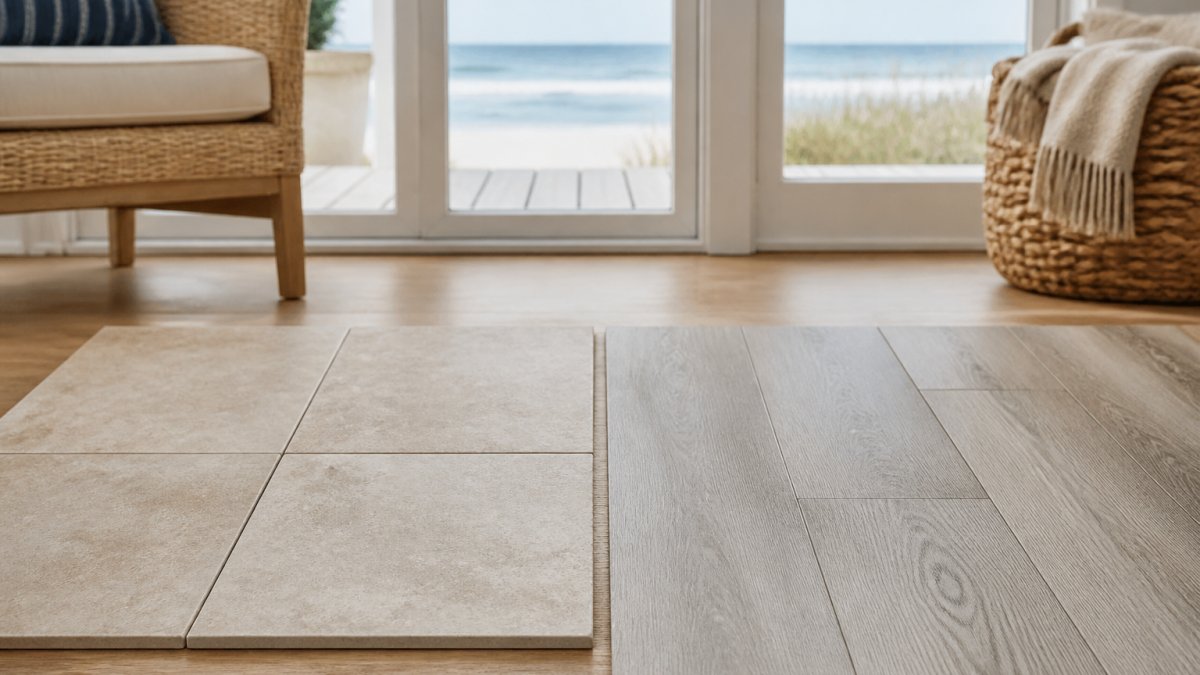
The vinyl vs laminate maintenance debate comes down to one trade-off: luxury vinyl shrugs off water but dents under heavy furniture, while laminate resists scratches but swells when spills sit. Both materials cost roughly the same to buy, between $2.00 and $4.00 per square foot according to Jordan's Flooring 2026 material comparison, so the real difference shows up in how you care for them over the next two decades.
At Hamptons carpet one floor and Home, we field this question constantly from coastal homeowners dealing with sand, salt air, and wet feet. Here's the short version: if moisture is your enemy, choose vinyl. If your kids and dogs are the enemy, choose laminate.
| Factor | Luxury Vinyl Plank | Laminate |
|---|---|---|
| Water resistance | 100% waterproof | Water-resistant at best |
| Scratch resistance | Moderate; dents under weight | Superior |
| Daily cleaning | Damp mop, pH-neutral cleaner | Dry mop, minimal moisture |
| Lifespan | 15-25 years | 15-20 years |
| Best rooms | Kitchens, baths, basements | Bedrooms, living rooms |
Daily Care: Damp Mopping, Spills, and Protecting the Wear Layer
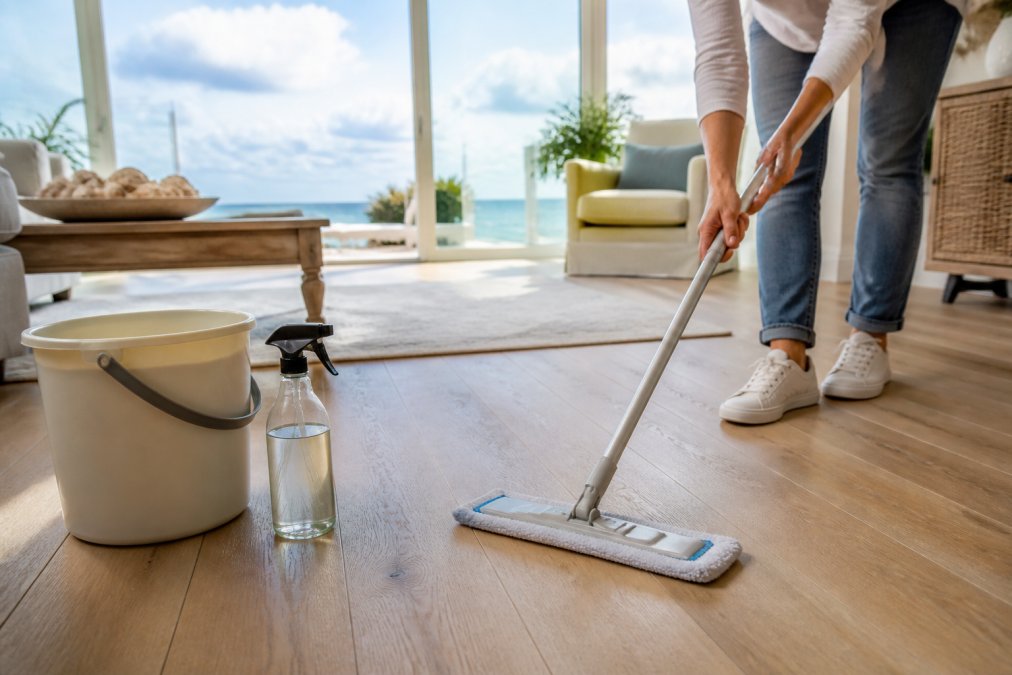
Daily maintenance for both floors takes under ten minutes: sweep or dust-mop to lift grit, then spot-clean spills immediately. The difference is moisture tolerance. Vinyl's wear layer and waterproof core handle a damp mop without concern. Laminate needs a nearly dry approach because standing water seeps into the core and causes swelling that no warranty covers.
A few habits protect both surfaces:
- Wipe spills within five minutes, especially on laminate
- Use furniture pads under every leg and chair
- Place mats at exterior doors to catch sand and grit
- Skip wet Swiffers on laminate seams
Best Cleaning Products for Luxury Vinyl Plank
The best cleaning products for luxury vinyl plank are pH-neutral formulas labeled safe for vinyl, applied with a microfiber mop and warm water. Skip anything abrasive, ammonia-based, or wax-based. Wax dulls the wear layer, and abrasive powders scratch the finish permanently.
Vinyl is easier to clean than laminate, a point Lamont Bros flooring comparison confirms, but that ease comes with a catch: the same soft surface that cleans quickly also dents. Roll heavy appliances on plywood sheets rather than dragging them.
What to avoid on vinyl:
- Steam mops at high heat settings
- Vinegar and citrus cleaners in repeated use
- Scrubbing pads and abrasive cleansers
- Wax or polish products
How to Clean Laminate Floors Without Streaks
To clean laminate floors without streaks, use a barely damp microfiber mop with a pH-neutral cleaner, then dry the surface immediately. Streaks come from too much water and too much product, not from the wrong technique.
The routine that works:
- Vacuum or dust-mop to remove grit
- Spray cleaner onto the mop head, never the floor
- Wipe in one direction with light pressure
- Follow with a dry microfiber pass
- Keep a towel handy for standing water
Laminate resists fading better than vinyl when maintained properly, per ConsumerAffairs lifespan comparison, but that fading resistance only holds if you keep excess moisture away from the seams.
Is Steam Mopping Safe for Luxury Vinyl?
Steam mopping is not safe for most luxury vinyl. High heat softens the wear layer and can lift adhesive on glue-down installations, even on waterproof products. Some manufacturers permit low-setting steam on specific rigid-core lines, so check your warranty before trying it.
Laminate is off the table entirely. Steam plus a moisture-sensitive core is a guaranteed recipe for swelling.
For both floors, a damp microfiber mop with warm water does everything a steam mop does, minus the risk. The only real advantage steam offers is sanitizing, which matters far less than protecting a floor you'll live on for twenty years.
Long-Term Maintenance Costs: Repairs, Refinishing, and Warranty Coverage
Most comparisons stop at the purchase price. The number that actually separates luxury vinyl plank from laminate is the ten-year cost of ownership, and it breaks into four buckets: routine supplies, spot repairs, plank replacement, and the cost of a mistake.
Routine supplies. Both floors want the same basic kit: a microfiber dust mop, a microfiber damp mop, a pH-neutral cleaner, and felt furniture pads. A gallon of pH-neutral concentrate typically dilutes to dozens of mop buckets, so the annual supply cost for either floor usually lands in the low double digits. The trap is specialty products. Wax-based polishes, "shine restorers," and abrasive creams get marketed for both surfaces, and using them can void a wear-layer warranty while adding recurring cost you never needed.
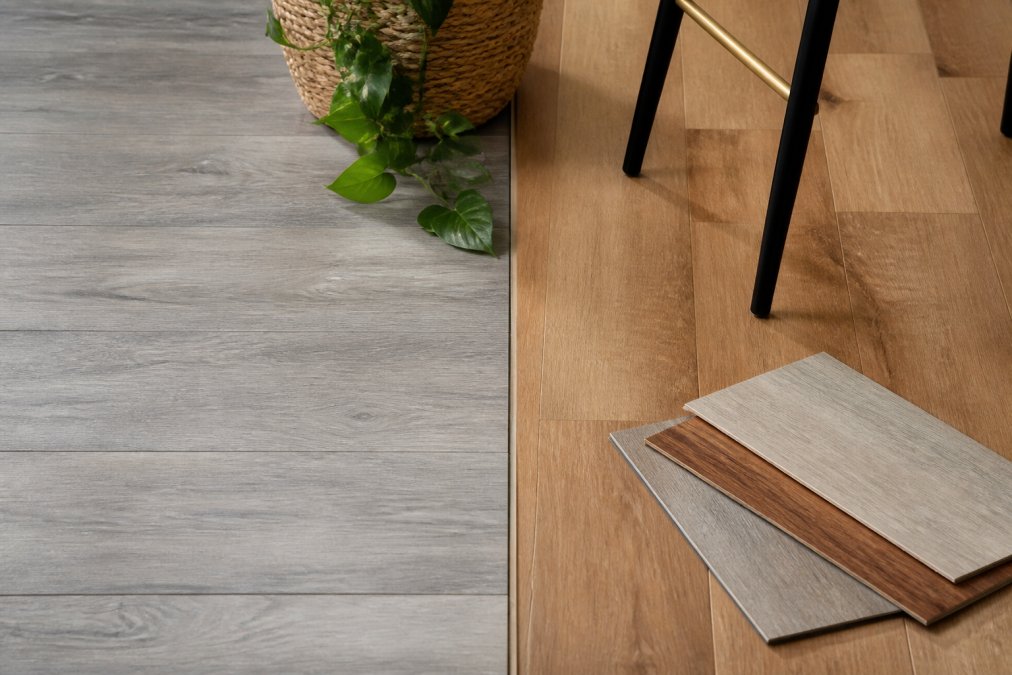
Spot repairs. This is where the materials diverge. Vinyl's soft wear layer dents and tears; laminate's core swells at the seams. A single damaged plank in a floating installation can often be cut out and swapped without disturbing the rest of the floor, provided you kept attic stock from the same dye lot. Color matching is the real cost driver, a plank from a different production run can read as a visibly different shade under daylight, so the practical rule is to buy 5-10% extra at install and store it flat in a climate-controlled space.
Plank replacement. Labor, not material, dominates here. A flooring pro has to score and remove the damaged plank, prep the subfloor, engage the locking profile or reapply adhesive, and blend the new piece. If the damaged plank sits mid-field rather than at a wall, the job is slower. That's why the cheapest long-term move is prevention: furniture pads on every leg, plywood runners under appliances, and trimmed pet claws.
The cost of a mistake. A spill that sits on laminate can swell a seam beyond repair, and no warranty covers it. A dropped cast-iron pan can dent vinyl in a way that no cleaner fixes. Neither floor can be sanded and refinished the way solid hardwood can, that's the myth worth killing. Sanding a laminate or vinyl plank destroys the wear layer and the printed image beneath it. There is no recoating step, no screen-and-recoat, no professional rescue for a worn-through surface. When the wear layer is gone, the plank is gone.
Warranty coverage. Read the exclusions before you buy, because they map directly to each material's failure mode. Laminate warranties typically exclude water damage and swelling. Vinyl warranties typically exclude denting, tearing, and damage from pet claws. Both commonly exclude damage from improper cleaning products, so the pH-neutral rule isn't just cosmetic, it's a warranty condition.
Lifespan math. Vinyl is commonly cited at roughly 15-25 years and laminate at roughly 15-20 with proper care, per ConsumerAffairs flooring lifespan data. The overlap is wide, which means the material with the lower repair frequency, not the lower sticker price, usually wins the ten-year ledger. In a wet room, that's vinyl. In a dry room with heavy foot traffic and no standing water, laminate's scratch resistance tends to keep it out of the repair column longer.
Pet-Specific Maintenance and Coastal Living: Sand, Salt, and Scratches
Pets and coastal conditions stress both floors through different mechanisms, and the cleanup protocol is not interchangeable. Getting this wrong is how a floor fails inside its warranty period.
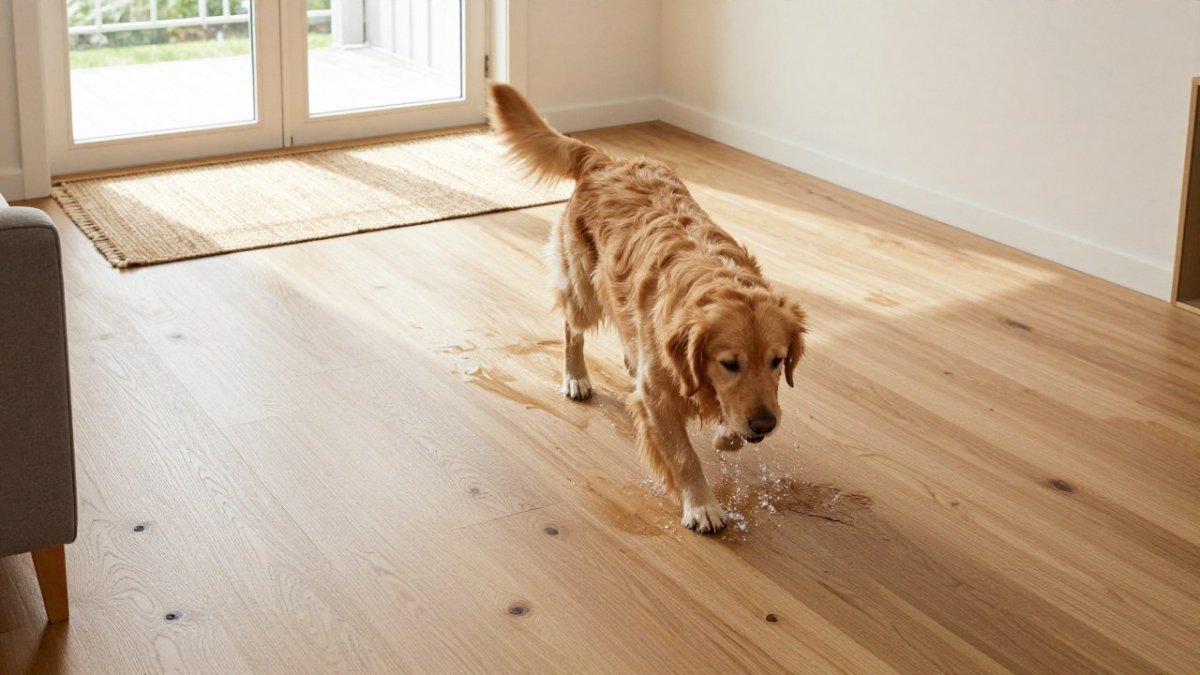
Urine accidents. On laminate, the clock starts the moment liquid reaches a seam. The core is moisture-sensitive, so urine wicks into the joint, swells the edges, and can leave a permanent raised ridge. Blot immediately with a dry cloth, then clean with a pH-neutral solution and dry the seam with a towel or fan. Never let a puddle sit, and never use an enzyme cleaner that stays wet on the surface, the dwell time is what damages laminate. On vinyl, the waterproof core buys you time, but urine is still acidic and can dull a wear layer or seep into a seam if left overnight.
Conclusion
Matching the floor to the room beats picking a single winner, and that's the decision most homeowners get wrong. Hamptons carpet one floor and Home helps Suffolk County homeowners sort through it with moisture-resistant vinyl options, scratch-resistant laminate lines, and installation guidance built for older homes with uneven subfloors. We walk you through which one fits your rooms, your pets, and your proximity to the water.
Frequently Asked Questions
Which flooring is more water-resistant: luxury vinyl or laminate?
Luxury vinyl is 100% waterproof, while laminate is water-resistant at best. Even enhanced laminate cores like Mohawk's HydroSeal can swell if water sits on seams. For kitchens, baths, and coastal homes, vinyl wins on moisture resistance. Laminate suits dry rooms where scratch resistance matters more.
What is the downside of luxury vinyl flooring?
Luxury vinyl can dent under heavy furniture and scratches more easily than laminate, according to America's Floor Source (2024). It also fades faster than laminate when exposed to sunlight. Use furniture pads and UV-blocking window treatments to limit both issues. Daily maintenance is still easier than laminate's.
What lasts longer, laminate or LVP flooring?
Vinyl flooring lasts an average of 25 years, while laminate typically lasts 15 to 20 years with proper care. Both can last 10 to 20 years depending on maintenance. Vinyl's waterproof core gives it an edge in wet areas, but laminate's scratch resistance can extend its life in dry, high-traffic rooms.
How do you remove scuffs from luxury vinyl vs. laminate?
For vinyl, a damp microfiber cloth with a pH-neutral cleaner usually lifts scuffs; avoid abrasive pads that dull the wear layer. For laminate, a pencil eraser or a cloth with a pH-neutral cleaner works on most marks. Never use steam mops on either surface for scuff removal, since heat and moisture can damage the core and finish.