 Ultimate guide
Best Flooring for Living Room: Top Options Compared
Table of Contents
- How to Choose the Best Flooring for Your Living Room
- Hardwood Flooring: Timeless Appeal With Real Trade-Offs
- Luxury Vinyl Plank vs. Laminate: Which Wins for Living Rooms?
- Carpet for Comfort, Warmth, and Acoustic Performance
- Best Flooring for Pets and Kids in the Living Room
- Cost to Install Living Room Flooring: DIY vs. Professional
- How to Clean Living Room Floors by Flooring Type
- Conclusion
Last Updated: May 29, 2026
Choosing the best flooring for living room spaces is one of the most consequential decisions you'll make during a home renovation. Get it wrong and you're looking at premature wear, costly repairs, or a floor that simply doesn't fit your lifestyle. At Hamptons carpet one floor and Home, we've guided thousands of homeowners across Suffolk County, NY through exactly this decision, and the patterns we see are consistent: most people narrow down their options too quickly without weighing the full picture. Below, we'll walk through every major flooring type, the factors that actually matter, and the hidden considerations most guides skip entirely, including acoustic performance, subfloor prep, and indoor air quality.
Here's what most guides get wrong: they treat flooring selection as a purely aesthetic choice. The reality is that durability, maintenance requirements, and your specific home conditions should drive the decision first. Style comes second.
| Flooring Type | Durability | Waterproof | Comfort | Avg. Cost/Sq. Ft. | Best For |
|---|---|---|---|---|---|
| Solid Hardwood | High | No | Moderate | $6-$12 | Low-traffic, dry rooms |
| Engineered Hardwood | High | Partial | Moderate | $5-$10 | Varied humidity environments |
| Luxury Vinyl Plank (LVP) | Very High | Yes | High | $2.50-$8 | Families, pets, high traffic |
| Laminate | High | Partial | Moderate | $1.50-$5 | Budget-conscious buyers |
| Carpet | Moderate | No | Very High | $2-$7 | Comfort, acoustics, bedrooms |
How to Choose the Best Flooring for Your Living Room
The single most important question to answer before selecting any floor covering is: what does this room actually demand? A living room in a household with two dogs, three kids, and daily foot traffic has completely different requirements than a formal sitting room used a few times a week.
Foot Traffic and Durability Needs
Foot traffic is the primary driver of wear. Flooring durability is typically rated using the AC (Abrasion Criteria) scale, where AC3 suits moderate residential use and AC4 handles heavy residential and light commercial environments. For most living rooms, AC3 is the floor, not the ceiling.
Hard surface flooring, including LVP, laminate, and hardwood, handles high foot traffic significantly better than carpet over the long term. Carpet fibers compress and mat down in heavily traveled paths, a problem that becomes visible within a few years in busy households. If your living room doubles as a main thoroughfare between rooms, hard surface flooring is the practical choice.
Scratch resistance is a separate consideration from general durability. Hardwood, particularly softer species like pine or birch, dents and scratches more readily than engineered options with aluminum oxide finish coatings. LVP products with a thick wear layer, such as the Shaw Floorté Pro with its up to 30 mil wear layer, offer scratch resistance that most hardwood simply cannot match.
Subfloor Requirements and Moisture Conditions
This is the part nobody talks about until it's too late.
Your subfloor dictates which flooring products are even viable. Solid hardwood requires a dry, flat, structurally sound wood subfloor and cannot be installed below grade (basements) due to moisture vulnerability. Engineered hardwood tolerates moderate moisture variation and can be glued, floated, or nailed depending on the product. LVP and laminate are more forgiving of minor subfloor imperfections but still require flatness within 3/16 inch over 10 feet, otherwise planks will flex, click joints will fail, and the floor will creak.
Moisture testing before installation is non-negotiable. According to the National Wood Flooring Association's installation guidelines, moisture content in wood subfloors should not exceed 12% before hardwood installation, and the difference between subfloor and flooring material should be within 4%. Skipping this step is the leading cause of flooring failure in the Northeast, where humidity swings between seasons are significant.
Hardwood Flooring: Timeless Appeal With Real Trade-Offs
Hardwood floors add measurable home value and remain one of the most requested features among homebuyers. According to the National Association of Realtors' remodeling impact report, hardwood floor refinishing and installation consistently rank among the top renovation projects for cost recovery at resale. That said, hardwood is not the right choice for every living room, and the trade-offs are real.
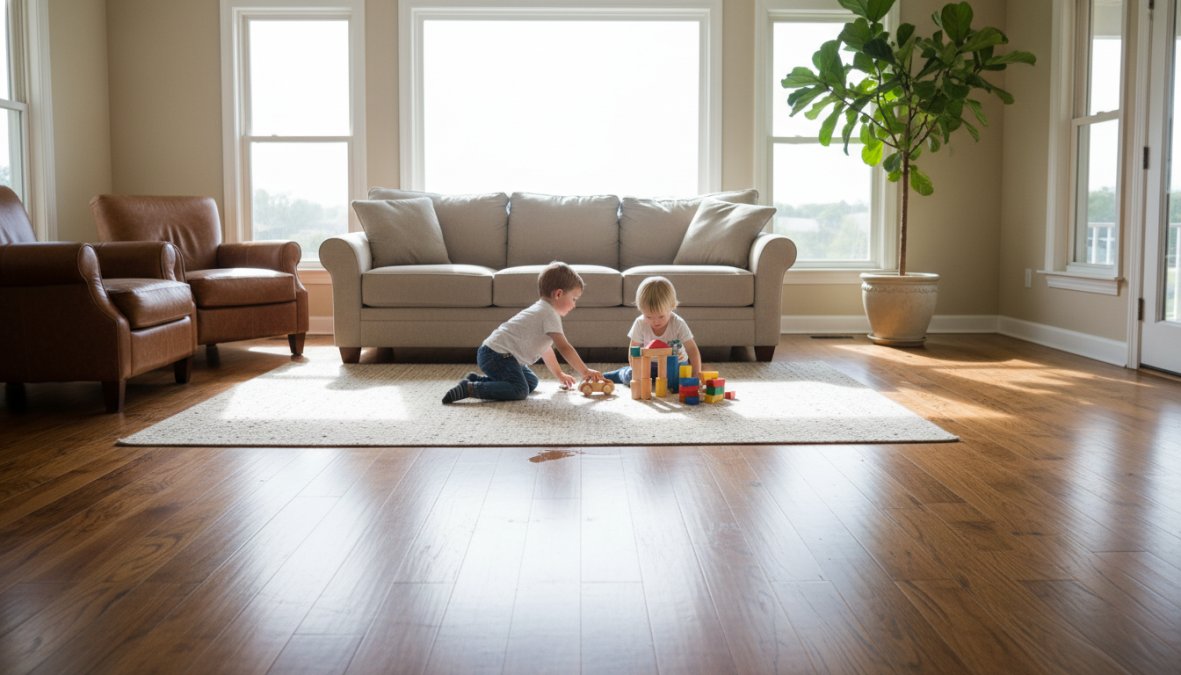
Solid Hardwood vs. Engineered Hardwood
Solid hardwood is milled from a single piece of wood, typically 3/4 inch thick, and can be sanded and refinished multiple times over its lifespan. Species choices matter enormously here. White oak and red oak are the workhorses of the residential market: both offer good hardness ratings (white oak edges ahead on the Janka scale), wide availability, and classic aesthetics that age well. Hickory is the hardest domestic option, with dramatic grain variation that suits rustic and transitional design styles. Birch offers a cleaner, more uniform look at a lower price point.
The limitation of solid hardwood is environmental sensitivity. It expands and contracts with humidity changes, which in a coastal Long Island climate means real movement across seasons. Gaps in winter, slight crowning in summer. This is physics, not a defect.
Engineered hardwood solves the stability problem. Products like Anderson Tuftex Engineered Hardwood use a cross-locked plywood core that resists dimensional movement across humidity cycles. The Luster-Lock Ultra finish provides enhanced scratch and wear resistance, and the product carries a lifetime structural warranty alongside a 50-year finish warranty. Mirage Engineered Hardwood takes a different approach, using a dry-sawn wear layer that produces an authentic wood surface appearance with precise plank-to-plank consistency, backed by their DuraMatt finish for a natural, low-sheen look.
The honest trade-off: engineered hardwood can typically be refinished once or twice depending on wear layer thickness, compared to five or more times for solid hardwood. For most homeowners who renovate every 15-20 years, this is not a practical limitation. For those who want a floor they can refinish indefinitely, solid hardwood is the only answer.
Luxury Vinyl Plank vs. Laminate: Which Wins for Living Rooms?
Both LVP and laminate mimic hardwood at a lower price point. They are not the same product, and the difference matters more than most buyers realize.
LVP and LVT: Waterproof, Durable, and Comfortable
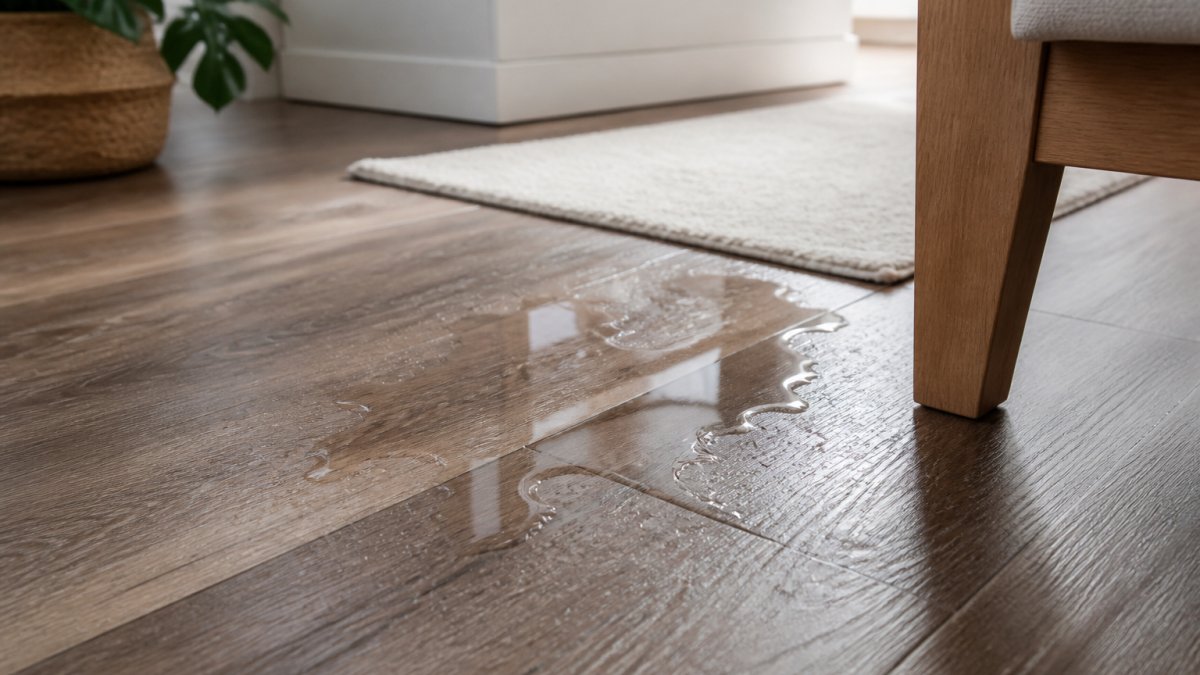
Luxury vinyl plank is 100% waterproof through its entire construction. Not water-resistant. Waterproof. That distinction matters in a living room where spills happen, pets have accidents, and the occasional leaky window creates moisture problems. LVP consists of multiple layers: a backing layer, a rigid or flexible core, a printed design layer, and a wear layer on top. The wear layer thickness determines scratch resistance: 6 mil is entry-level, 12 mil is standard residential, and 20-30 mil is appropriate for high-traffic or pet-heavy households.
COREtec Luxury Vinyl Plank is one of the products that defined this category. Its 100% waterproof construction, rigid core technology for dent resistance, and attached cork underlayment for sound reduction and comfort underfoot set a standard that many competitors have since chased. The cork underlayment is a genuine differentiator: it adds acoustic dampening and makes the floor noticeably softer underfoot compared to standard SPC (stone plastic composite) vinyl. Pricing runs from approximately $4.00 to $8.00 per square foot, positioning it above budget vinyl but below most engineered hardwood.
Karndean Luxury Vinyl Plank targets buyers who want the most realistic wood-look vinyl available. Their GenuEdge technology creates authentic edge detail that eliminates the plastic-looking bevel common in budget LVP. Shaw Floorté Pro offers a different value proposition: extreme durability with up to 30 mil wear layers and a dent-resistant rigid core, with pricing starting around $2.50 per square foot for entry-level collections.
LVT (Luxury Vinyl Tile) applies the same construction principles to tile-format designs, useful for living rooms where a stone or ceramic look is preferred.
Laminate Flooring: Budget-Friendly Scratch Resistance
Laminate is not vinyl. The core distinction is the core itself: laminate uses a high-density fiberboard (HDF) core with a photographic layer beneath a clear wear layer. This makes laminate vulnerable to moisture in a way that LVP is not. Water that penetrates the seams will cause the HDF core to swell, and that damage is permanent.
Modern laminate has addressed this limitation to a degree. Mohawk RevWood Plus uses Hydroseal technology for waterproof protection at the surface and seams, combined with an AC4 durability rating suitable for high-traffic areas. Pergo Outlast+ incorporates SpillRepel surface protection and a moisture-resistant HDF core. Both products represent the current ceiling of laminate technology: genuinely water-resistant at the surface, though still not recommended for wet areas or rooms with active moisture issues.
The case for laminate comes down to cost and scratch resistance. Laminate's wear layer is extremely hard, often outperforming entry-level LVP on scratch tests. For a living room with heavy furniture and pets but no moisture concerns, quality laminate at $2-$4 per square foot delivers strong value.
The real difference between LVP and laminate comes down to moisture tolerance. If there's any chance of water exposure, LVP wins. If the room is consistently dry and budget is the priority, laminate is a legitimate choice.
Carpet for Comfort, Warmth, and Acoustic Performance
Carpet is the most underrated flooring option in 2026 design conversations, dismissed by the hardwood-everything trend that has dominated the last decade. This dismissal is largely aesthetic, and it ignores the one performance category where carpet has no serious competition: acoustic control.
How Carpet Actually Reduces Noise, The Mechanism
Hard surface floors (hardwood, LVP, laminate, tile) are acoustically reflective. Sound waves, from footsteps, dropped objects, conversation, and television, hit the hard surface and bounce back into the room or transmit through the floor structure to rooms below. This is why open-concept living rooms with hardwood floors feel louder than they look: every sound source is amplified by reflection off multiple hard surfaces simultaneously.
Carpet works differently through two distinct mechanisms:
1. Surface absorption: Carpet fibers absorb sound energy rather than reflecting it. The irregular, fibrous surface breaks up sound waves and converts acoustic energy into a small amount of heat through friction within the fiber structure. This reduces the echo and reverberation that makes hard-surface rooms feel loud.
2. Impact noise isolation: Impact noise, the thud of footsteps, a child jumping, a dropped remote, is generated when an object strikes the floor and causes the floor structure itself to vibrate, transmitting sound through the building assembly to rooms below. Carpet and its pad cushion the impact at the source, dramatically reducing the energy that enters the floor structure in the first place. This is the category where carpet's advantage over hard surfaces is most significant and least replicable by underlayment alone.
In multi-story homes, carpet on upper-floor living rooms is one of the most cost-effective acoustic interventions available. Hard surface floors with acoustic underlayment can reduce impact noise transmission, but the best acoustic underlayments on the market still do not match the impact isolation performance of carpet with a quality pad, and they add $0.50-$1.50 per square foot to the hard surface installation cost.
Carpet Construction Variables That Affect Acoustic Performance
Not all carpet performs equally on noise reduction. The variables that matter:
Pile height and density: Taller, denser pile absorbs more sound. A dense, medium-pile cut carpet (pile height around 1/2 inch) outperforms a low-pile or loop construction on both surface absorption and impact cushioning. Berber and tight loop constructions, while durable, offer less acoustic benefit than cut pile styles.
Pad thickness and density: The carpet pad contributes as much to acoustic performance as the carpet itself, sometimes more. A thicker, denser pad, typically 7/16 inch to 1/2 inch thick with a density of 6-8 pounds per cubic foot, provides significantly better impact noise isolation than a thin, low-density pad. Rebond foam pads are the most common residential choice; memory foam and waffle rubber pads offer premium cushioning and acoustic performance at higher cost.
Fiber type: Nylon and polyester are the dominant residential fiber choices. Nylon offers superior resilience, it springs back after compression, which maintains acoustic performance over time as the carpet ages. Polyester is softer and less expensive but compresses more permanently in high-traffic areas, gradually reducing its acoustic benefit. For a living room where acoustic performance is a priority, nylon fiber with a quality rebond pad is the correct specification.
Carpet for Allergy-Sensitive Households: The Nuanced Reality
The standard advice, "carpet is bad for allergies", is an oversimplification that deserves correction.
Carpet fibers do trap allergens including dust mites, pet dander, and pollen. In a poorly maintained carpet, allergen levels can be high. However, trapped allergens are not airborne allergens. Allergens cause respiratory symptoms when they are inhaled, and they are inhaled when they are airborne. A well-maintained carpet holds allergens within its fiber structure, keeping them out of the breathing zone. Hard surface floors, by contrast, allow allergens to sit on the surface where foot traffic and air currents continuously re-suspend them into the air.
The practical implication: for allergy-sensitive households, carpet maintenance discipline matters more than the flooring material choice itself. A carpet vacuumed twice weekly with a HEPA-filter vacuum and professionally cleaned every 12-18 months can maintain allergen levels comparable to a hard surface floor with regular damp mopping. A neglected carpet is a different story.
For households where maintenance discipline is not realistic, or where occupants have severe asthma or dust mite allergies specifically, hard surface flooring with a washable area rug is the more manageable solution.
VOC considerations: Newly installed carpet can off-gas volatile organic compounds from the fiber, backing, and adhesive materials. This is most significant in the first 24-72 hours after installation. To minimize exposure, ventilate the room aggressively during and after installation, open windows, run fans, and avoid occupying the space for the first day if possible. Look for carpet products carrying the Carpet and Rug Institute's Green Label Plus certification, which indicates testing for low VOC emissions. Carpet and Rug Institute Green Label Plus program
Carpet Trade-Offs: Maintenance and Moisture
Carpet's trade-offs are real and should not be minimized.
Moisture sensitivity: Carpet is not appropriate for rooms with frequent liquid spills or pets prone to accidents unless the fiber carries built-in stain and moisture resistance. Modern solution-dyed nylon and polyester fibers with stain-resist treatments have improved significantly, solution-dyed fibers resist staining because the color is part of the fiber itself rather than applied as a surface treatment, making them more resistant to bleaching and staining simultaneously. But no carpet fiber is waterproof, and liquid that reaches the pad and subfloor creates conditions for mold and odor that are difficult to remediate.
Maintenance commitment: Carpet requires vacuuming at minimum twice weekly in living rooms with pets or children, and prompt spill response, blotting immediately, never rubbing, is essential to preventing permanent staining. Professional deep cleaning every 12-18 months removes embedded soil and allergens that vacuuming cannot reach. Carpet and Rug Institute care and maintenance guidelines
Lifespan: Quality nylon carpet in a living room with regular maintenance typically lasts 10-15 years before showing significant wear. Polyester carpet in high-traffic areas may show matting and crushing within 5-7 years. Carpet does not offer the refinishing option that hardwood provides, when it wears out, it is replaced.
Best Flooring for Pets and Kids in the Living Room
Households with pets and children need flooring that survives daily abuse without constant replacement. This narrows the field considerably.
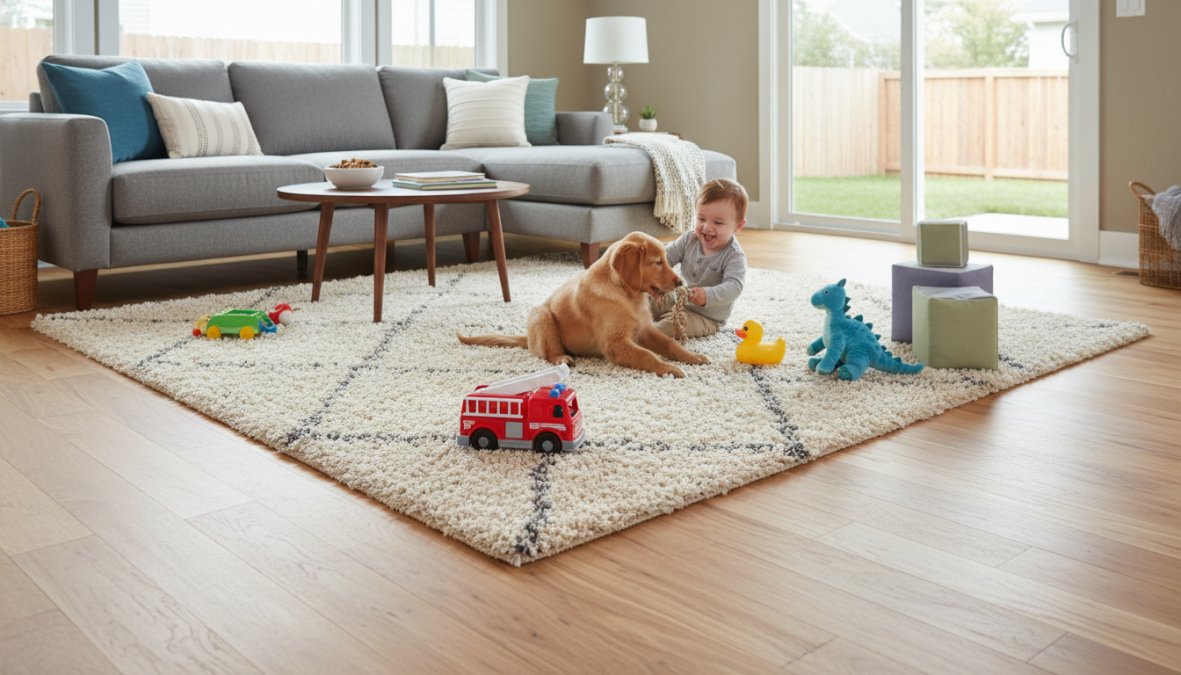
The best flooring for pets and kids in the living room is LVP with a wear layer of at least 12 mil, preferably 20 mil or higher. It handles the three main threats: scratch damage from pet claws, liquid accidents, and the general mechanical abuse that comes with active households. GemCore Flooring's AC5-rated, PVC-free rigid core construction represents the highest durability tier available for residential use, combining exceptional scratch and dent resistance with an eco-conscious core material. For families with both pets and children, this level of specification is worth the investment.
Hardwood, including engineered options, is viable for pet and kid households but requires realistic expectations. Softer species will show scratches. Even harder species like hickory will eventually show wear in high-traffic paths. If the aesthetic of real wood is a priority, engineered hardwood with a hard aluminum oxide finish and regular maintenance is manageable. If the priority is a floor that genuinely withstands daily punishment without visible deterioration, LVP is the honest recommendation.
Allergy and Indoor Air Quality Considerations
Flooring choice has a direct impact on indoor air quality, and this angle is consistently overlooked in standard buying guides.
Carpet traps allergens including dust mites, pet dander, and pollen within its fibers. This can be a significant problem for allergy sufferers. However, the relationship is more nuanced than "carpet is bad for allergies." A well-maintained carpet actually holds allergens in place rather than allowing them to become airborne, which is where they cause respiratory symptoms. Regular vacuuming with a HEPA-filter vacuum and annual professional cleaning keeps allergen levels manageable.
Hard surface floors, by contrast, allow allergens to remain on the surface where foot traffic and air currents keep them in circulation. The practical solution for allergy-sensitive households is hard surface flooring with regular damp mopping, which physically removes allergens rather than redistributing them.
VOC (volatile organic compound) emissions from flooring materials and adhesives are a separate indoor air quality concern. According to the EPA's guidance on indoor air quality and building materials, flooring products should be evaluated for VOC emissions, particularly in homes with children or occupants with respiratory conditions. Look for products with FloorScore or GREENGUARD Gold certification, which indicate third-party testing for low chemical emissions. GemCore's PVC-free core addresses this concern directly for buyers prioritizing chemical safety.
Cost to Install Living Room Flooring: DIY vs. Professional
Installation cost is where flooring budgets most commonly go wrong. Material cost is the number buyers focus on; installation is the number that surprises them. Most guides list material prices and stop there. This section gives you the full picture: material plus labor, DIY realistic time investment, and the subfloor costs that appear on almost every invoice but almost no buying guide.
Full Cost Breakdown by Flooring Type
The table below reflects typical ranges for a standard living room of 200-400 square feet in the Northeast US market. Material costs are per square foot installed; labor rates reflect professional installation. DIY material cost is the same, you are saving the labor line only.
| Flooring Type | Material Cost/Sq. Ft. | Pro Labor/Sq. Ft. | Total Installed (Pro) | DIY Viable? | DIY Difficulty |
|---|---|---|---|---|---|
| Solid Hardwood | $6-$12 | $4-$8 | $10-$20 | No | High |
| Engineered Hardwood (float) | $5-$10 | $3-$6 | $8-$16 | Possible | Moderate |
| Engineered Hardwood (glue-down) | $5-$10 | $4-$7 | $9-$17 | No | High |
| Luxury Vinyl Plank (click-lock) | $2.50-$8 | $1.50-$3 | $4-$11 | Yes | Low |
| Laminate (click-lock) | $1.50-$5 | $1.50-$3 | $3-$8 | Yes | Low |
| Carpet (with pad) | $2-$7 | $1-$2.50 | $3-$9.50 | No | High |
Ranges reflect regional variation and product tier. High-end products within each category will exceed the upper bound.
What DIY Actually Saves, and What It Costs You
On a 300-square-foot living room, choosing DIY click-lock LVP over professional installation saves roughly $450-$900 in labor at typical rates. That is real money. But the savings come with conditions.
What DIY requires you to do correctly:
- Subfloor flatness assessment (3/16 inch over 10 feet tolerance for most click-lock products)
- Moisture testing before installation, a basic pin-type moisture meter costs $20-$40 and is not optional
- Proper acclimation: most LVP and laminate products require 24-48 hours in the installation space before laying
- Accurate room measurement with 10% overage for cuts and waste
- Careful layout planning to avoid cuts narrower than half a plank at walls
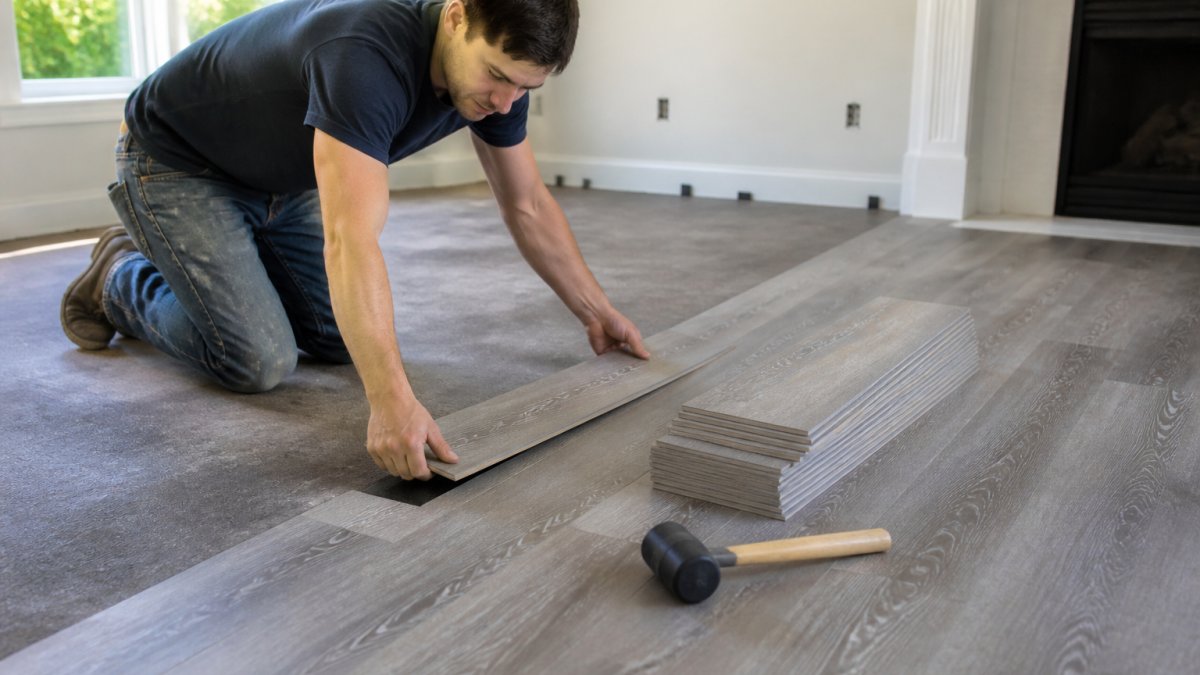
A competent DIYer with basic tool familiarity can complete a 300-square-foot click-lock LVP or laminate installation in one to two days. The main failure modes are skipping acclimation (causes gapping or buckling after installation) and ignoring subfloor flatness (causes clicking joints to fail and floors to creak within months).
Carpet installation is not a realistic DIY project for most homeowners. Proper power-stretching requires a knee kicker and power stretcher, tools that cost several hundred dollars to rent and require technique to use correctly. Improperly stretched carpet buckles and wrinkles within months. Budget for professional installation on carpet without exception.
The Hidden Line Item: Subfloor Preparation
This is the cost that appears on almost no buying guide and on almost every professional installation invoice.
Subfloor preparation is required whenever the existing surface is uneven, damaged, or moisture-compromised. Common scenarios in older homes include:
- High spots or low spots: Grinding down high spots or filling low spots with floor leveling compound. Leveling compound materials typically run $0.50-$1.50 per square foot depending on depth of fill required, plus labor.
- Squeaky or soft subfloor panels: Screwing down loose panels or replacing damaged sections before new flooring goes over them. Ignored squeaks under new flooring become permanent.
- Existing flooring removal: Removing old carpet, staples, and tack strips or pulling up old tile adds $1-$3 per square foot in labor and disposal costs.
- Moisture barrier installation: Over concrete slabs, a 6-mil poly vapor barrier or self-leveling moisture membrane is typically required before LVP or engineered hardwood. Materials cost $0.15-$0.50 per square foot; professional application adds labor.
Budget rule of thumb: Add a 15-20% contingency to your total project budget specifically for subfloor remediation. On a $3,000 flooring project, that means keeping $450-$600 unallocated until the subfloor is assessed. In homes built before 1980, the contingency should be closer to 25%, older subfloors are more likely to have moisture damage, uneven settling, or asbestos-containing adhesive residue from previous tile that requires professional abatement before new flooring can be installed.
DIY vs. Professional: Decision Framework
- DIY-viable: LVP click-lock, laminate click-lock, provided subfloor is flat, dry, and in good condition
- DIY-possible but risky: Floating engineered hardwood, requires precise subfloor prep and moisture testing; mistakes are costly to reverse
- Professional recommended: Glue-down engineered hardwood, nail-down solid hardwood, carpet, specialized tools and technique required
- Professional required: Any installation over a problematic subfloor, radiant heat systems, below-grade installations, or any room with active moisture issues
The honest calculus: if your subfloor is in good condition and you are installing click-lock LVP or laminate, DIY is a legitimate choice that saves real money. If your subfloor needs work, or if you are installing hardwood, the risk of a DIY error, a floor that fails, buckles, or needs to be pulled up and redone, typically exceeds the labor savings. Get a professional assessment of your subfloor before committing to either path.
How to Clean Living Room Floors by Flooring Type
Maintenance requirements vary significantly across flooring materials, and choosing a floor that doesn't fit your cleaning habits is a recipe for premature deterioration.
Hardwood (solid and engineered): Sweep or vacuum daily in high-traffic areas to prevent abrasive grit from scratching the finish. Damp mop with a hardwood-specific cleaner, never a wet mop. Excess water is the primary enemy of hardwood. Avoid steam mops entirely. Refinishing solid hardwood every 7-10 years restores appearance and extends lifespan.
LVP and LVT: The most forgiving flooring type to maintain. Sweep or vacuum regularly, then damp mop with a pH-neutral cleaner. Avoid abrasive cleaners or wax-based products, which leave residue on the wear layer. LVP does not require refinishing or special treatments.
Laminate: Similar to LVP in daily maintenance, but more sensitive to moisture. Wipe spills immediately. Use a slightly damp (not wet) mop with a laminate-specific cleaner. Never use steam mops on laminate.
Carpet: Vacuum at minimum twice weekly in living rooms with pets or children. Address spills immediately by blotting (never rubbing). Professional deep cleaning every 12-18 months extends fiber life and removes embedded allergens.
According to the Carpet and Rug Institute's care and maintenance guidelines, prompt spill response within the first few minutes prevents the vast majority of permanent carpet stains, making routine response habits more important than any cleaning product.
Somerset Hardwood Flooring, sourced from Appalachian forests with a focus on sustainable practices, recommends following manufacturer-specific cleaning protocols rather than generic hardwood care instructions, since finish types vary and the wrong cleaner can dull or damage the surface coating.
Conclusion
Selecting the right living room floor requires matching material properties to real household conditions, not just choosing what looks good in a showroom. The options span many performance profiles, and the wrong choice means either premature replacement or years of frustration.
Hamptons carpet one floor and Home serves homeowners throughout Suffolk County, NY with access to the full range of flooring materials covered in this guide, including Anderson Tuftex, COREtec, Shaw, Mirage, Mohawk, and more. Visit the showroom to see and feel these products in person before committing, and work with the team to assess your specific subfloor conditions, household needs, and budget. Getting the right floor starts with the right conversation.
Frequently Asked Questions
What is the most durable flooring for a living room?
Luxury vinyl plank (LVP) is generally considered the most durable option for living rooms. Products like COREtec and Shaw Floorté Pro feature rigid cores and wear layers up to 30 mil, offering strong scratch resistance, waterproof construction, and dent resistance. For hardwood lovers, engineered hardwood with a quality finish, such as Anderson Tuftex with its Luster-Lock Ultra coating, also delivers excellent long-term durability in the best flooring for living room applications.
Is hardwood or laminate better for a living room?
It depends on your priorities. Solid and engineered hardwood adds home value, offers authentic aesthetics, and can be refinished, but it costs more and is sensitive to moisture. Laminate flooring, such as Mohawk RevWood Plus or Pergo Outlast+, provides strong scratch resistance and waterproof protection at a lower price point. For high-traffic living rooms with kids or pets, modern laminate is often the more practical choice, while hardwood suits those prioritizing long-term investment and classic design.
Is luxury vinyl plank good for living rooms?
Yes, LVP is one of the top choices for living rooms. It is 100% waterproof, highly scratch-resistant, and comfortable underfoot, especially in WPC formats with attached cork underlayment like COREtec. LVP and LVT come in a wide range of realistic wood and stone visuals, including hickory, white oak, and birch looks. It works well over most subfloor types, making installation straightforward. For families, pet owners, or anyone wanting low-maintenance flooring, luxury vinyl plank is an excellent living room solution.
What is the cheapest flooring option for a living room?
Laminate flooring is typically the most budget-friendly hard surface option, with material costs often starting around $1.50-$3.00 per square foot. Entry-level LVP can also be affordable, starting near $2.50 per square foot for products like Shaw Floorté. DIY installation with click-lock systems can significantly reduce the overall cost to install living room flooring. Carpet remains competitive for comfort-focused buyers on a tight budget, particularly in lower-traffic rooms or bedrooms adjacent to living areas.
How do I choose the right color flooring for my living room?
Consider your room's natural light, wall color, and furniture tones. Light-colored floors like white oak or birch make smaller rooms feel larger and brighter, while darker stains add warmth and drama in spacious, well-lit rooms. Mid-tone neutrals are the most versatile and tend to follow long-lasting design trends. Wide planks in any color create a more open, modern feel. Always view samples in your actual space under different lighting conditions before making a final decision.
This article was written using GrandRanker