 Ultimate guide
Best Underlayment for Waterproof Vinyl Flooring in 2026
Table of Contents
- Why Underlayment Matters for Waterproof Vinyl Flooring
- Cork, Foam, or Rubber: Which Underlayment Type Wins?
- Do I Need Underlayment for LVP With Attached Pad?
- Best Underlayment for Concrete Subfloor Vinyl
- Vinyl Plank Flooring Installation Best Practices
- Thickness, Vapor Barriers, and Warranty Risks
- Conclusion
- Frequently Asked Questions
Last Updated: September 23, 2026
Why Underlayment Matters for Waterproof Vinyl Flooring
The best underlayment for waterproof vinyl flooring is a dense material between 1mm and 3mm thick that adds cushioning, sound control, and a moisture barrier without compromising the click-lock joints. Get that combination right and a floating floor stays flat, quiet, and stable for years. Get it wrong and you void warranties, crack locking mechanisms, and trap moisture under a surface that was supposed to be waterproof.
Cork, Foam, or Rubber: Which Underlayment Type Wins?
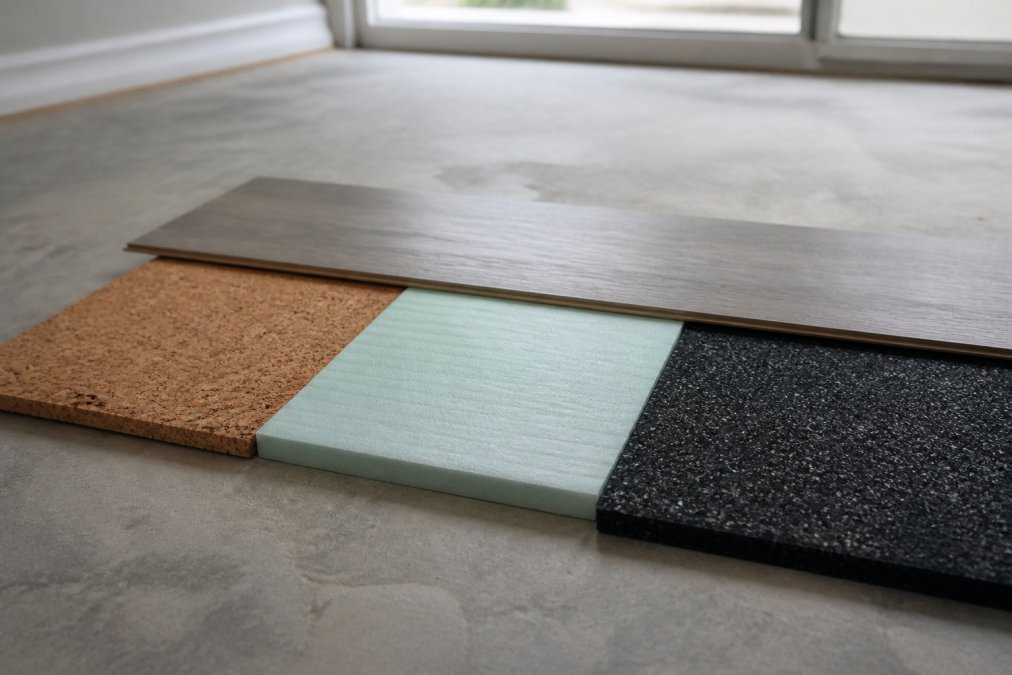
Cork wins for upper-floor apartments, high-density foam wins on budget, and rubber wins where impact noise and moisture are the top concern. Each material solves a different problem, so the right pick depends on your subfloor and what's happening below it.
High-Density Foam: Budget-Friendly Cushioning
High-density foam is the primary choice for vinyl plank because it prevents surface dents while staying thin enough to protect the locking mechanism, per Lowe's underlayment buying guide. Standard foam is the most affordable option and easy to cut, but it offers limited moisture resistance compared with cork or rubber.
Cork Underlayment: Natural Sound and Thermal Control
Cork is the preferred underlayment material for upper-floor apartment installations, according to Best Buy Floors' guide to choosing underlayment for LVP. It's naturally moisture-resistant, adds warmth underfoot, and absorbs sound well. The trade-off is cost: cork runs higher than synthetic foam, and it still needs a separate vapor barrier over concrete.
Rubber Underlayment: Maximum Moisture and Impact Resistance
Rubber delivers the best sound dampening and moisture resistance of the three, which makes it the pick for second-floor condos and multi-story buildings. It's denser and more durable, and it costs more. One caution from FlooringInc's underlayment buying guide: rubber and rubber-cork products can react chemically with vinyl and cause staining, so verify compatibility before you buy.
| Material | Best For | Moisture Resistance | Relative Cost |
|---|---|---|---|
| High-density foam | Bedrooms, upper floors | Low | Lowest |
| Cork | Apartments, thermal comfort | Moderate | Mid to high |
| Rubber | Condos, impact noise | High | Highest |
| Felt | Sound absorption, stability | Low (needs barrier) | Mid |
Do I Need Underlayment for LVP With Attached Pad?
No. If your vinyl plank ships with an attached pad, adding a separate underlayment on top of it usually causes more harm than good. The pre-attached backing is engineered to work with that specific plank, and stacking a second layer creates excess flex that stresses the click-lock edges.
Best Underlayment for Concrete Subfloor Vinyl
The best underlayment for a concrete subfloor is a combination foam or rubber product with an integrated vapor barrier rated at 15 perms or lower. Concrete slabs release moisture vapor continuously, and that vapor has to be blocked before it reaches the plank. But the right pick depends on which kind of concrete you're dealing with, and that's where most guides stop short.
Subfloor Compatibility Matrix
Not every underlayment works over every subfloor. Use this matrix to match material to condition before you buy:
| Subfloor Condition | Recommended Underlayment | Vapor Barrier Needed | Watch Out For |
|---|---|---|---|
| Slab-on-grade concrete | Foam or rubber with integrated barrier | Yes, 15 perms or lower | Active vapor; test first |
| Elevated concrete (above grade) | High-density foam | Often, depending on test result | Less vapor drive than slab-on-grade |
| Plywood or OSB | Foam or cork | No (unless over crawlspace) | Fastener heads, gaps between sheets |
| Existing vinyl or tile | Thin foam only | No | Adhesive residue, height buildup |
| Radiant heat slab | Heat-rated foam or cork | Yes, if concrete | Thermal conductivity rating |
| Uneven concrete | Leveling compound, then foam | Yes | Dips telegraph through plank |
Slab-on-Grade vs. Elevated Concrete
Slab-on-grade concrete sits directly on soil and wicks ground moisture upward year-round. That's the condition that makes a dedicated vapor barrier non-negotiable. Elevated concrete, such as a second-floor parking deck or a raised foundation, has less vapor drive but still needs testing before you assume it's dry.
Testing Before You Buy
Wood Subfloors Are a Different Problem
Over plywood or OSB, moisture vapor isn't the primary concern, flatness and fastener heads are. A thin foam layer handles minor irregularities, but any dip deeper than 3/16 inch over 10 feet needs leveling compound first. Cork works well over wood because it adds thermal comfort without trapping moisture the way a solid barrier would.
Existing Hard Surface Subfloors
Laying vinyl over existing vinyl or tile is possible if the surface is flat, clean, and well-bonded. Use the thinnest foam available to avoid height buildup at doorways and transitions. Adhesive residue from old flooring can react with some underlayments, so clean thoroughly and verify compatibility.
Material Notes by Subfloor
Rubber underlayments are naturally waterproof and handle slab moisture well, provided they're vinyl-compatible. Felt underlayments are dense and stable but not inherently waterproof, so they require a separate barrier over concrete. Cork needs a separate vapor barrier over concrete but performs well over wood. High-density foam is the most versatile across subfloor types, which is why it's the default recommendation when conditions are mixed or unknown.
Radiant Heat Slabs
If your concrete slab has in-floor heating, the underlayment must be rated for heat cycling and must not block heat transfer. Look for a thermal conductivity rating on the product spec sheet. A product that isn't rated for radiant heat can degrade, warp, or insulate the floor so effectively that the system runs constantly without warming the room.
Vinyl Plank Flooring Installation Best Practices
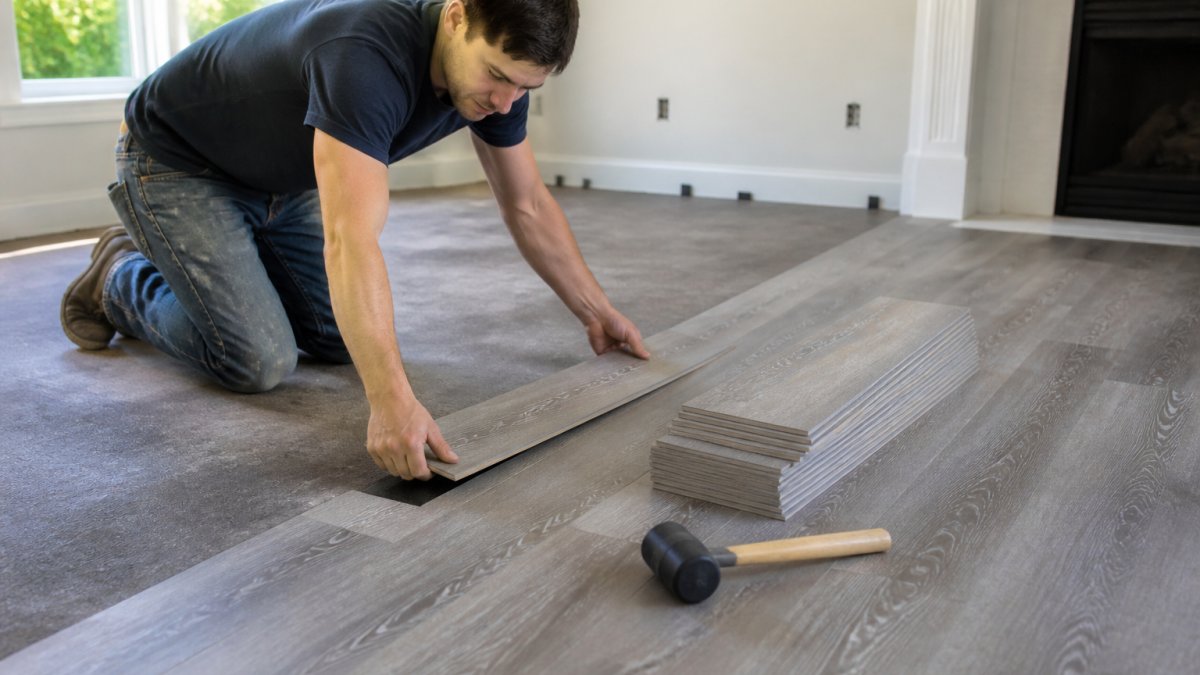
Vinyl plank flooring installation best practices start with subfloor preparation: flat within 3/16 inch over 10 feet, clean, dry, and free of debris. Skip that step and no underlayment will save the floor.
Work through the sequence in order:
- Acclimate the planks in the room for 48 hours at normal living temperature
- Test the subfloor for moisture and flatness before laying anything
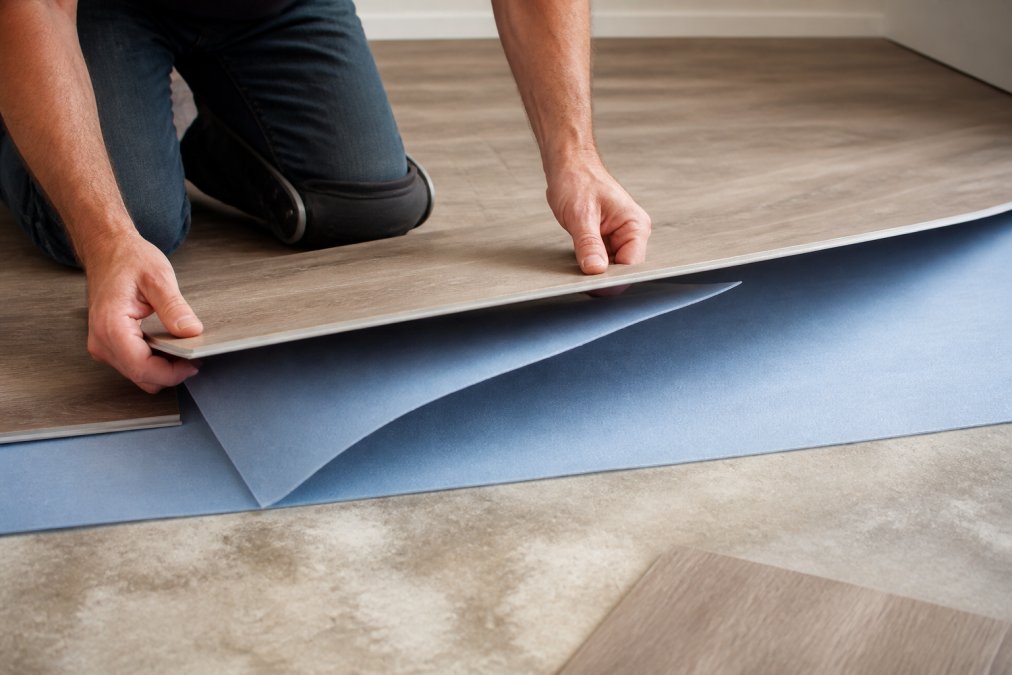
- Roll out the underlayment with seams overlapped and taped per the manufacturer's instructions
- Leave a 1/4-inch expansion gap at every wall
- Stagger end joints by at least 6 inches between rows
- Check each course for locked seams as you go, not after the fact
Thickness, Vapor Barriers, and Warranty Risks
Thickness tolerance is tighter than most shoppers expect. Stay between 1mm and 3mm, and never exceed 3mm on a floating floor system. Thicker, softer underlayments allow too much vertical movement, and that movement damages the locking joints over time.
How Underlayment Voids Your Warranty
Most vinyl manufacturers publish an approved underlayment list, and using anything off that list gives them grounds to deny a claim. The denials cluster in five scenarios:
- Stacking underlayment beneath an attached pad. Manufacturers test their locking systems with the factory backing only. Adding a second layer changes the assembly geometry and stresses the click edges. This is the single most common void scenario.
- Exceeding the thickness limit. Anything over 3mm on a floating floor allows too much vertical flex. When joints separate, the manufacturer points to the thickness spec and denies the claim.
- Using a non-approved material. Rubber and rubber-cork products can react chemically with vinyl and cause staining or discoloration. If the manufacturer didn't approve that material, the stain is your problem, not theirs.
- Skipping the vapor barrier over concrete. Moisture damage from below is almost always excluded from warranty coverage because the installation instructions required a barrier. No barrier, no coverage.
- Installing over an out-of-spec subfloor. Flatness tolerances are typically 3/16 inch over 10 feet. If the subfloor was out of spec and you installed anyway, the resulting joint failure is classified as installation error.
How to Protect Your Coverage
Before you buy, pull the manufacturer's installation instructions for your specific plank and check three things: the approved underlayment list, the maximum thickness allowed, and whether an attached pad prohibits additional underlayment. Keep your receipt for the underlayment and a photo of the product label. If a claim ever arises, documentation showing you followed the spec is what saves you.
Radiant Heating Compatibility
Radiant heating compatibility is the risk most guides ignore. Not every underlayment tolerates heat cycling, and a product that isn't rated for it can degrade, warp, or block heat transfer entirely. Confirm the rating before you install over any in-floor heating system. A heat-rated underlayment will list a thermal conductivity value on its spec sheet; if the sheet doesn't mention radiant heat, assume it isn't rated for it.
The Bottom Line on Warranty Risk
Every one of these scenarios gives a manufacturer a documented reason to deny a claim, and the cost lands on you. The pattern is consistent: the plank itself rarely fails. The assembly fails, and the assembly is where the warranty language lives.
Conclusion
Choosing the best underlayment for waterproof vinyl flooring comes down to matching material to subfloor: dense foam for dry upper rooms, cork for apartments and thermal comfort, rubber for condos and maximum moisture protection, plus a 15-perm vapor barrier whenever concrete is involved. The plank is waterproof, but the assembly only stays that way if the layer beneath it is right.
Frequently Asked Questions
Is underlayment necessary for waterproof vinyl plank flooring?
It depends on the product. Some waterproof vinyl planks come with an attached pad, which may be enough for standard residential rooms. However, for concrete subfloors, radiant heating systems, or apartments where sound transfer matters, a separate underlayment is often required. Always check the manufacturer's warranty requirements, because using the wrong underlayment or skipping it when specified can void your coverage.
What happens if you don't use underlayment under vinyl flooring?
Without underlayment, you may hear more footfall noise, feel a harder surface underfoot, and lose protection against minor subfloor imperfections. On concrete slabs, skipping a vapor barrier rated at 15 perms or lower allows moisture to migrate upward, which can lead to mold, mildew, and adhesive failure. The floor may also void its warranty if the manufacturer requires a specific underlayment type.
Can you use foam underlayment under luxury vinyl plank?
Yes, high-density foam is a common choice for vinyl plank because it cushions the floor and prevents surface dents. Stick to 1mm to 3mm thickness. Thicker, softer foam can cause too much movement in a floating floor system, stressing the locking mechanism and leading to joint separation. Avoid foam with a built-in vapor barrier unless you are installing over concrete.
Does waterproof vinyl flooring need a moisture barrier?
The vinyl itself is waterproof, but moisture from below can still damage the subfloor and cause mold. Over concrete slabs, a vapor barrier rated at 15 perms or lower is standard practice. Combination foam or rubber underlayments with an integrated vapor barrier simplify installation. Over wood subfloors in above-grade rooms, a separate barrier is usually unnecessary unless the manufacturer specifies one.