 blog
Best Waterproof Flooring for Beach House Mudrooms
Table of Contents
- What Makes Beach House Mudroom Flooring Different
- Best Flooring for a Mudroom: Porcelain, LVP, and Stone Compared
- Waterproof Flooring for Entryways: Installation That Actually Keeps Water Out
- Slip-Resistant Flooring for Wet Areas: Traction When Floors Are Wet or Sandy
- How Salt Air, Humidity, and Sand Affect Long-Term Floor Performance
- How to Clean Sand and Salt from Flooring Without Scratching It
- Lifecycle Cost and Repairability: What Beach House Flooring Really Costs Over Time
- Frequently Asked Questions
Last Updated: October 8, 2026
What Makes Beach House Mudroom Flooring Different
The best waterproof flooring for beach house mudrooms has to survive something ordinary mudrooms never face: salt. Sand grinds like sandpaper underfoot, salt air corrodes finishes, and humidity works on a floor every day of the year, not just in winter.
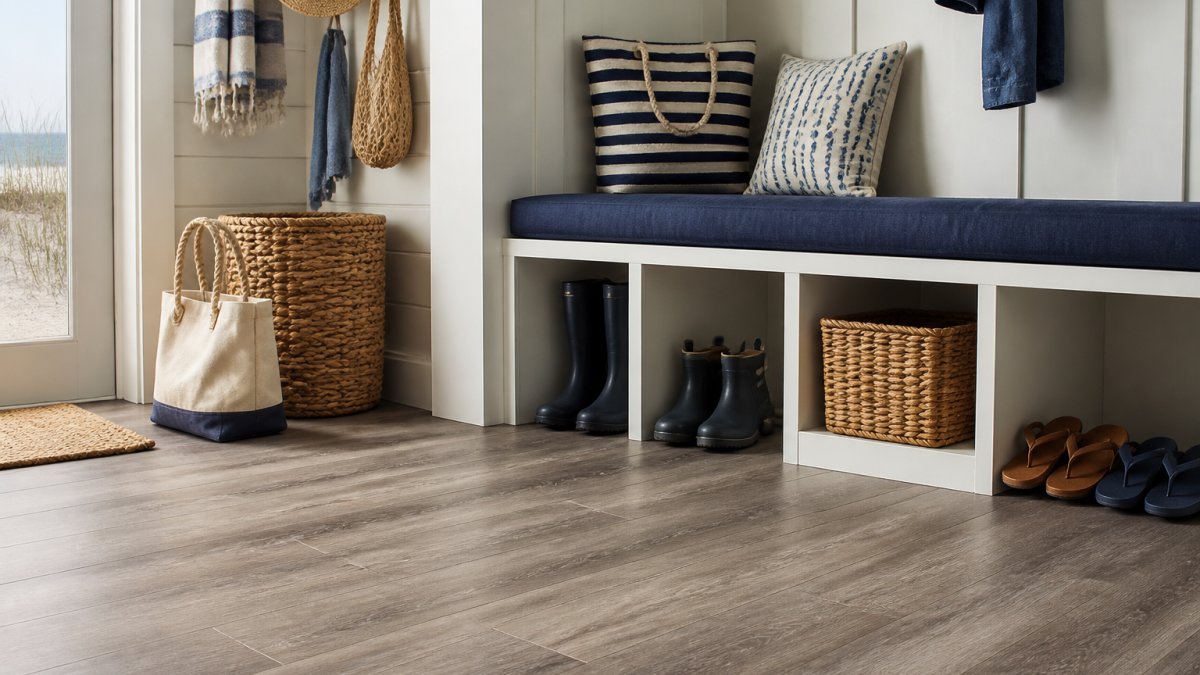
A mudroom is the transition zone between the outdoors and the rest of a home, and in a beach house it doubles as a gear drop: wet towels, sandy chairs, damp swimsuits, and dogs that just left the water.
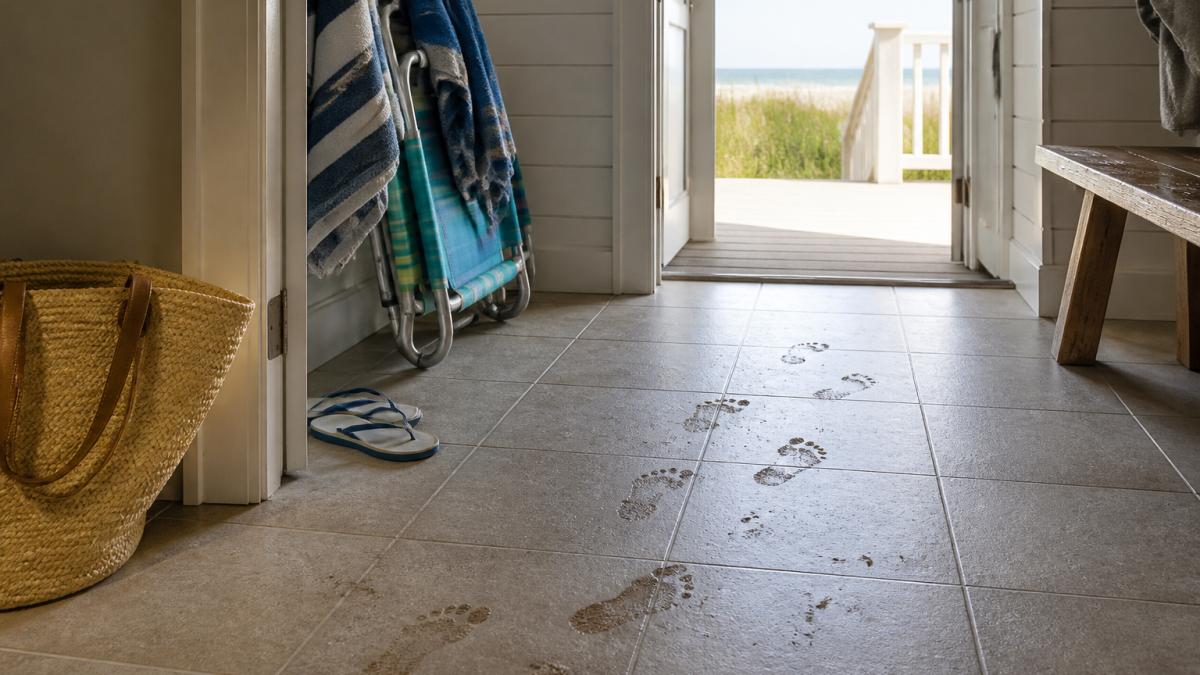
That combination of water, grit, and salt narrows the field fast. Flooring guides from Homestead Supplier's mudroom flooring guide and TG Builders' beach-house mudroom recommendations both point to porcelain tile or thick luxury vinyl plank as the top choices, because both handle water and scratches without swelling or staining.
Here's how the leading options compare, and where each one wins.
Best Flooring for a Mudroom: Porcelain, LVP, and Stone Compared
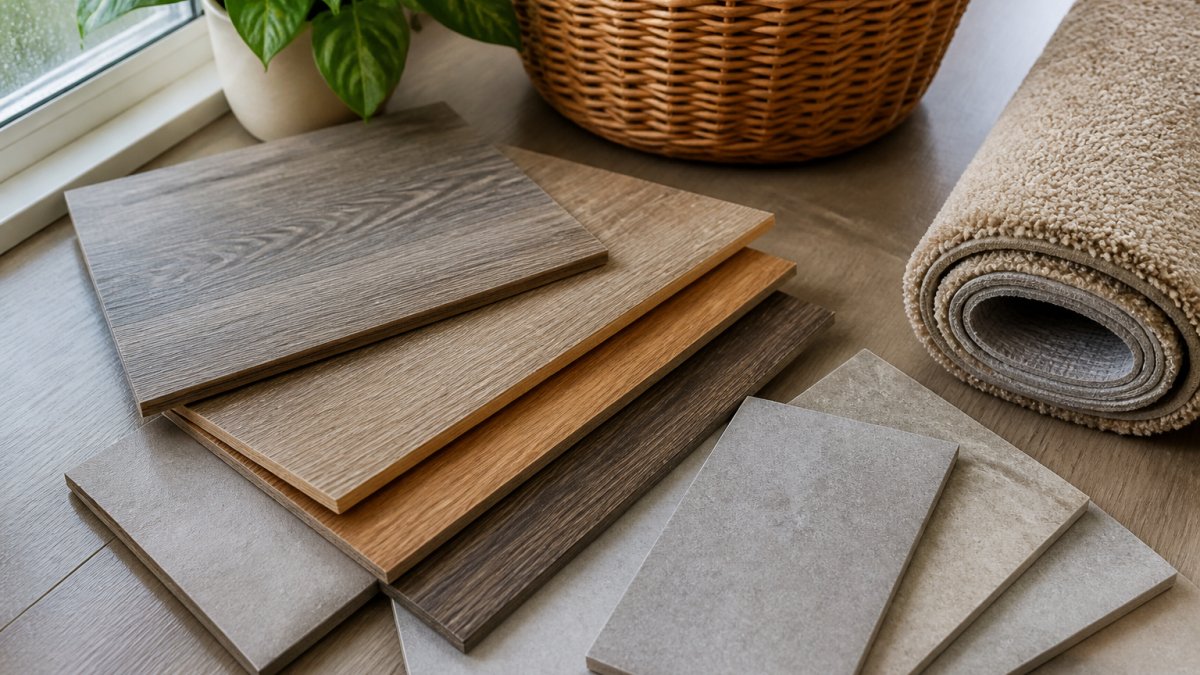
Porcelain tile and luxury vinyl plank are two materials often recommended for coastal mudrooms, with natural stone, epoxy, and sealed concrete filling specific niches. The matrix below scores each option against the factors that actually decide a beach-house entryway, not just waterproofing.
| Material | Water Resistance | Wet Traction | Sand Visibility | Comfort Underfoot | Maintenance | Installed Cost Band | Repairability |
|---|---|---|---|---|---|---|---|
| Porcelain tile (matte/textured) | Waterproof | High when textured; low when polished | Hides sand well in mid-tone grout | Hard, cold | Sweep + damp mop | High | Hard, cut out and re-grout |
| Luxury vinyl plank (rigid core) | Waterproof core | Moderate; embossed grain helps | Shows grit on dark planks | Warm, slightly cushioned | Sweep + damp mop | Moderate | Easy, swap individual planks |
| Natural stone (slate, travertine) | Water-resistant; needs sealing | High when honed/flamed | Camouflages sand naturally | Hard, cold | Reseal annually | High | Moderate, patch and re-seal |
| Epoxy coating | Waterproof, seamless | Moderate; add grit broadcast | Shows sand on glossy finishes | Hard | Damp mop | Moderate | Hard, recoat whole area |
| Sealed concrete | Water-resistant with sealer | Moderate; add texture | Hides sand | Hard, cold | Reseal every 1-3 years | Low-moderate | Moderate, patch and reseal |
Porcelain Tile: Waterproof and Scratch-Resistant
Porcelain tile is the most durable choice for entryways with direct exposure to the elements. It's dense, highly water-resistant, and less likely to chip or crack under heavy use, per West Coast Flooring's guidance on coastal flooring and Builders Interiors' material notes.
The catch is grout. Waterproof tile over a vulnerable subfloor still lets moisture migrate through the joints, so the installation matters as much as the tile. Choose a matte or textured finish rather than polished, a polished porcelain in a beach mudroom is a slip hazard the moment feet are wet. Mid-tone grout hides tracked sand better than white, and an epoxy or urethane grout resists staining and salt far better than standard cement grout.
Luxury Vinyl Plank: The Wood-Look Waterproof Option
Luxury vinyl plank (LVP) is a waterproof, wood-look flooring made with a rigid core that resists water, scratches, and everyday grit. Floors USA's coastal flooring guide notes it stands up to wet feet, spilled drinks, and sandy paws while keeping the warm look many homeowners want in a beach house.
Where LVP falls short: heavy furniture and prolonged standing water at the seams. It's forgiving, not indestructible. Wear layer thickness matters more than brand, a thicker wear layer resists sand abrasion longer, and a textured or embossed surface adds traction that smooth planks lack. Dark, high-gloss planks show every grain of sand; lighter, matte finishes hide it.
Natural Stone and Epoxy: Where They Fit
Natural stone delivers a high-end look but needs sealing and re-sealing, and it can etch from salt and acidic spills. A honed or flamed finish gives better wet traction than polished stone. Epoxy is seamless and waterproof but reads utilitarian, so it suits garages and utility corners rather than a finished entryway. Sealed concrete is the budget option for a rough-and-tumble mudroom, but it needs periodic resealing to stay water-resistant.
Waterproof Flooring for Entryways: Installation That Actually Keeps Water Out
Waterproof flooring for entryways only performs if the whole assembly sheds water, not just the top layer. A waterproof surface over an unprotected subfloor traps moisture instead of repelling it, and in a beach house, that trapped moisture carries salt, which attacks fasteners, adhesives, and framing. This is the part of the job most guides skip, and it's the part that decides whether the floor lasts five years or twenty.
Subfloor Preparation Comes First
Every waterproof floor sits on a subfloor that has to be dry, flat, and stable. A common pattern in coastal homes is a slab that wicks ground moisture or a wood subfloor that swells with seasonal humidity. Before any membrane or plank goes down, the subfloor should be tested for moisture and flattened to the manufacturer's tolerance, typically a small variation over a short span, which is why leveling compound often eats more of the labor budget than the flooring itself.
The Waterproofing Layer
- Under tile: a bonded waterproof membrane (sheet or liquid-applied) rolled up the walls a few inches at the perimeter. Tile and grout alone are not a waterproofing system.
- Under LVP: a sealed underlayment or moisture barrier, with seams taped. Rigid-core planks are waterproof, but water that reaches the subfloor through the seams still causes damage.
- At the door: a threshold or transition that sheds water outward, not a flat seam that lets it run under the floor.
Grout, Sealant, and Perimeter Details
Cement grout is porous. In a beach mudroom, an epoxy or urethane grout resists salt and staining far better and needs less sealing over time. At every change of plane, where the floor meets the wall, a cabinet toe kick, or a door frame, a flexible sealant (not rigid grout) absorbs movement and keeps water from wicking into the wall cavity. Skipping this step is the single most common cause of hidden water damage under an otherwise waterproof floor.
Drainage and Slope
A slight slope toward the exterior door lets tracked-in water drain rather than pool at the threshold. In mudrooms with a floor drain, the slope is designed into the substrate before the finish goes down. Without a drain, an absorbent entry mat and a quick sweep do most of the water management.
Transitions to Adjacent Rooms
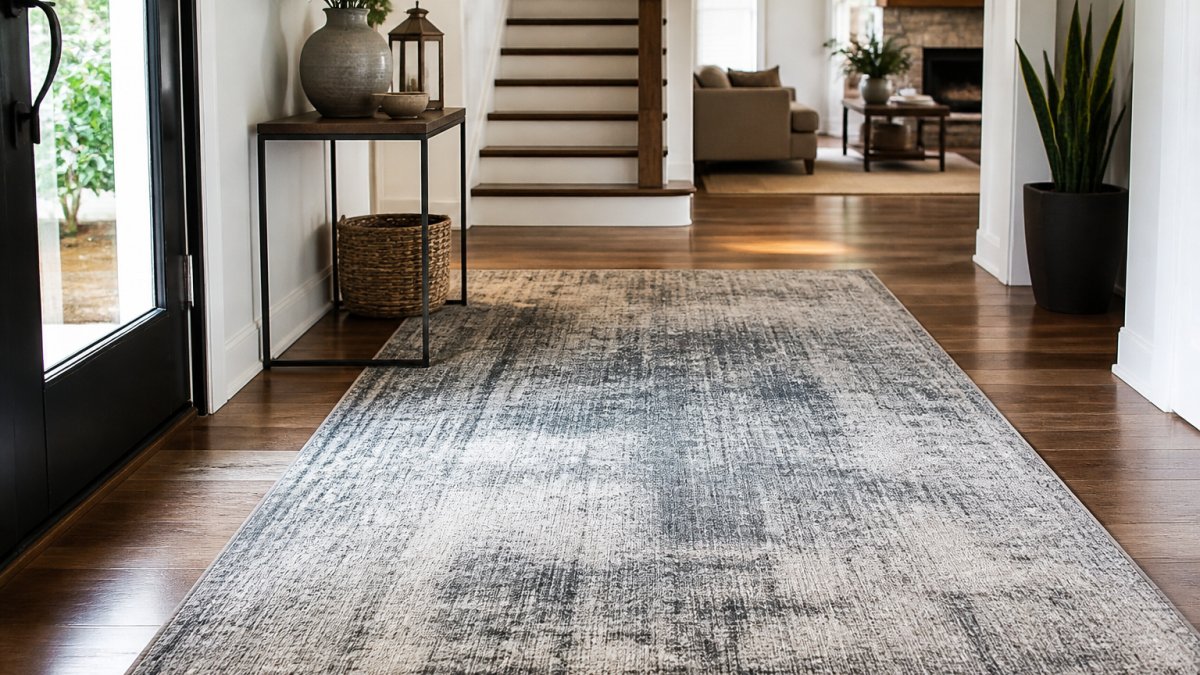
Where the mudroom meets hardwood, carpet, or another finish, a properly sealed transition strip keeps water from migrating into the next room. This matters in beach houses, where humidity already stresses wood floors, a leaky transition turns a small mudroom spill into a whole-room problem.
If you're coming from a glued-down floor, expect the prep work to take longer than the install. Subfloor leveling is where most of the labor goes, and it's the step that determines whether the finished floor stays flat for years.
Slip-Resistant Flooring for Wet Areas: Traction When Floors Are Wet or Sandy
Slip-resistant flooring for wet areas comes down to surface texture and finish, not material alone. A polished tile and a matte tile can be the same porcelain, but they behave very differently under wet feet.
For coastal mudrooms, look for:
- Matte or textured finishes rather than high-gloss
- Higher coefficient of friction ratings on tile spec sheets
- Smaller tile formats with more grout lines for grip
- Textured LVP with an embossed grain that adds traction
Sand is the wildcard. Even a slip-resistant floor gets slick once a fine layer of sand sits on it, which is why an entry mat and a quick sweep matter more than any single spec.
How Salt Air, Humidity, and Sand Affect Long-Term Floor Performance
Salt air and humidity are slow problems, not sudden ones. They work on finishes, adhesives, and metal trim over years, and they punish materials that weren't built for a coastal climate.
Sand acts faster. Tracked in daily, it abrades the surface and dulls the finish. Porcelain's glazed surface resists this well. LVP's wear layer holds up too, but a thin wear layer will show scuffing sooner. Natural stone is the most vulnerable, since grit scratches the surface and salt can stain porous stone.
How to Clean Sand and Salt from Flooring Without Scratching It
Cleaning sand and salt off flooring without scratching it means lifting grit before you wipe, not pushing it around. The order of operations matters more than the product.
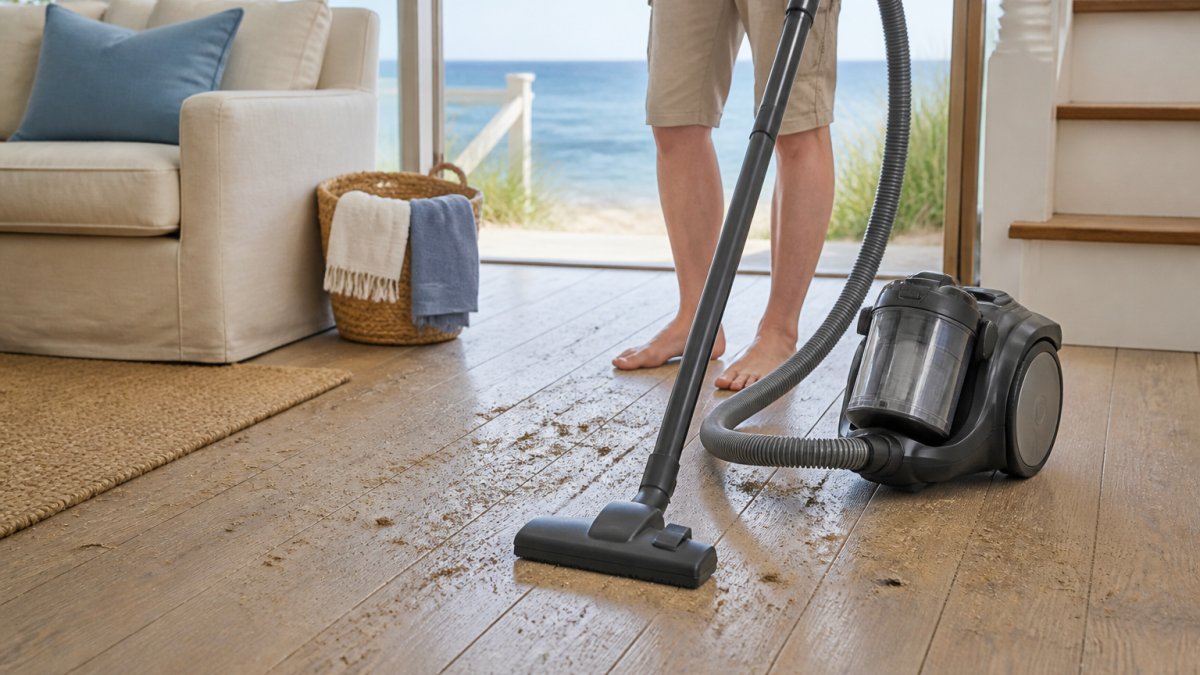
- Sweep or vacuum first. A soft-bristle broom or a vacuum without a beater bar lifts dry sand before it can grind.
- Use a damp, not wet, mop. A microfiber mop with a mild pH-neutral cleaner lifts salt residue without flooding seams.
- Rinse and dry. Standing water leaves a salt film that dulls the finish over time.
- Avoid abrasive pads and acidic cleaners. Both scratch the surface and strip sealers.
A common mistake is mopping a sandy floor directly. That turns grit into a slurry and drags it across the finish, which is exactly how a new floor starts looking old.
Lifecycle Cost and Repairability: What Beach House Flooring Really Costs Over Time
Lifecycle cost, not sticker price, is the honest way to compare beach-house flooring. A cheaper floor that needs replacing sooner usually costs more than a durable one installed once.
Porcelain tile tends to have the longest service life and the easiest maintenance, but repairs are harder: a cracked tile means cutting out grout and matching dye lots. LVP is more forgiving to repair since individual planks can often be swapped, and it typically costs less upfront. Natural stone sits at the high end on both cost and upkeep.
Pricing for any of these depends on room size, subfloor condition, and material selection. Reach out to Hamptons carpet one floor and Home for current pricing and a walkthrough.
A coastal mudroom is one of the hardest rooms in a beach house to floor correctly, and getting it wrong means living with a floor that never quite dries.
Frequently Asked Questions
What is the most durable flooring for a beach house mudroom?
Porcelain tile is the most durable option for beach house mudroom flooring. It is dense, highly water-resistant, and less likely to chip or crack under heavy foot traffic, according to Builders Interiors. Thick luxury vinyl plank is a close second, offering waterproof performance and scratch resistance at a lower cost. Both handle wet feet, sandy paws, and spilled drinks far better than laminate or standard hardwood.
Is luxury vinyl plank a good choice for a beach house mudroom?
Yes. LVP is waterproof and scratch-resistant, making it suitable for wet feet, spilled drinks, and sandy paws, according to Floors USA. It also mimics the look of wood, which fits coastal design. The main trade-off is that LVP can be damaged by prolonged standing water if seams are not sealed properly, so proper installation matters as much as the material itself.
Are porcelain tiles slippery when wet?
Standard porcelain tile can be slippery when wet, but textured or matte-finish porcelain offers better traction. For beach house mudrooms, choose tile with a slip-resistance rating suitable for wet areas. Combining textured tile with entry mats at the door reduces slip risk and traps sand before it spreads across the floor.
How do you keep sand from damaging mudroom floors?
Place a coarse outdoor mat and a finer indoor mat at the entry to trap sand before it reaches the floor. Sweep or vacuum daily during beach season, and use a microfiber mop for fine particles. Avoid dragging beach gear across the floor. For waterproof flooring for entryways, regular sweeping prevents sand from acting as an abrasive that dulls the finish over time.