 Ultimate guide
Carpet Installation Services Near Me: A 2026 Guide
Table of Contents
- How to Find Reliable Carpet Installation Services Near Me
- How the Carpet Installation Process Works: Step by Step
- Average Cost of Carpet Installation: What to Budget
- Carpet Removal and Disposal Services: What's Included
- How to Prepare for Carpet Installation Day
- How Long Does Carpet Installation Take?
- Choosing the Right Carpet: Materials, Padding Types, and Eco-Friendly Options
- DIY vs. Professional Carpet Installation: An Honest Risk Assessment
Last Updated: June 5, 2026
Finding reliable carpet installation services near me looks simple until you're three quotes deep and still unsure who to trust. At Hamptons carpet one floor and Home, we've helped hundreds of Suffolk County homeowners through this process, and the pattern is consistent: the best results go to homeowners who understand what they're buying before anyone shows up with a measuring tape.
Most guides focus entirely on price per square foot and ignore the variables that determine whether your installation holds up for 10 years or starts buckling by year two. Below, we'll walk through the full process, from finding the right local installer to choosing the right carpet padding, so you can make a confident decision.
Professional carpet installation is the process of measuring, fitting, and securing wall-to-wall carpet to a prepared subfloor, including removing old flooring, moving furniture, and stretching the carpet to eliminate wrinkles and ensure a long-term fit.
How to Find Reliable Carpet Installation Services Near Me
The biggest mistake homeowners make is treating all carpet installation services near me results as equivalent. A national big-box retailer, a local flooring showroom, and a freelance contractor on a marketplace platform are fundamentally different propositions.
Local Flooring Showrooms vs. Big-Box Retailers
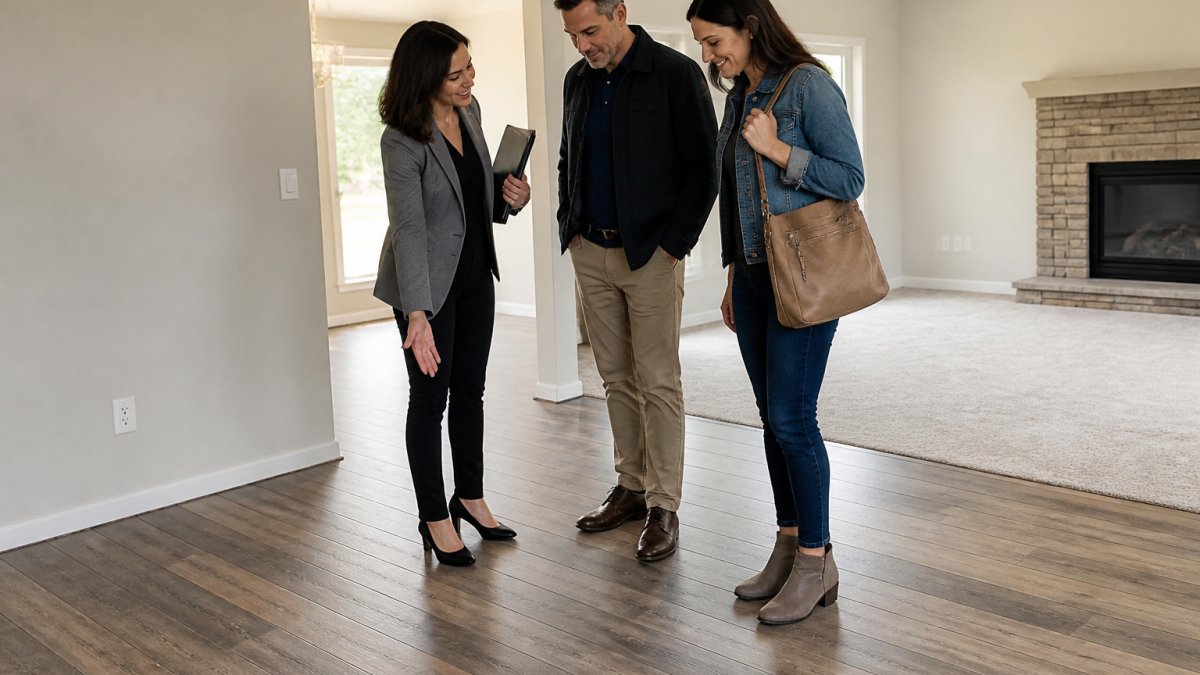
Local showrooms like Hamptons carpet one floor and Home offer direct accountability. When you work with a local floor covering retailer serving Suffolk County, you're dealing with people whose reputation lives in your community. You can see samples in person, talk to someone who knows the local housing stock, and get a quote reflecting real regional labor costs.
Big-box retailers like The Home Depot and Lowe's offer convenience and financing, but installation is handled by independent contractors whose quality varies. Lowe's offers a 1-year limited labor warranty, which provides some protection, but a warranty only matters if you're willing to fight for it.
Marketplace platforms like Angi and Thumbtack are useful for comparing local pros and reading verified reviews, but vetting is entirely on you.
What to Look for in a Professional Installer
A credible installer will always offer a free in-home measurement before quoting a final price. Be skeptical of anyone who quotes flat rates without seeing your subfloor or measuring in person. Other trust signals: liability insurance, clear explanation of subfloor preparation included, and transparency about whether furniture moving is standard or an add-on.
How the Carpet Installation Process Works: Step by Step
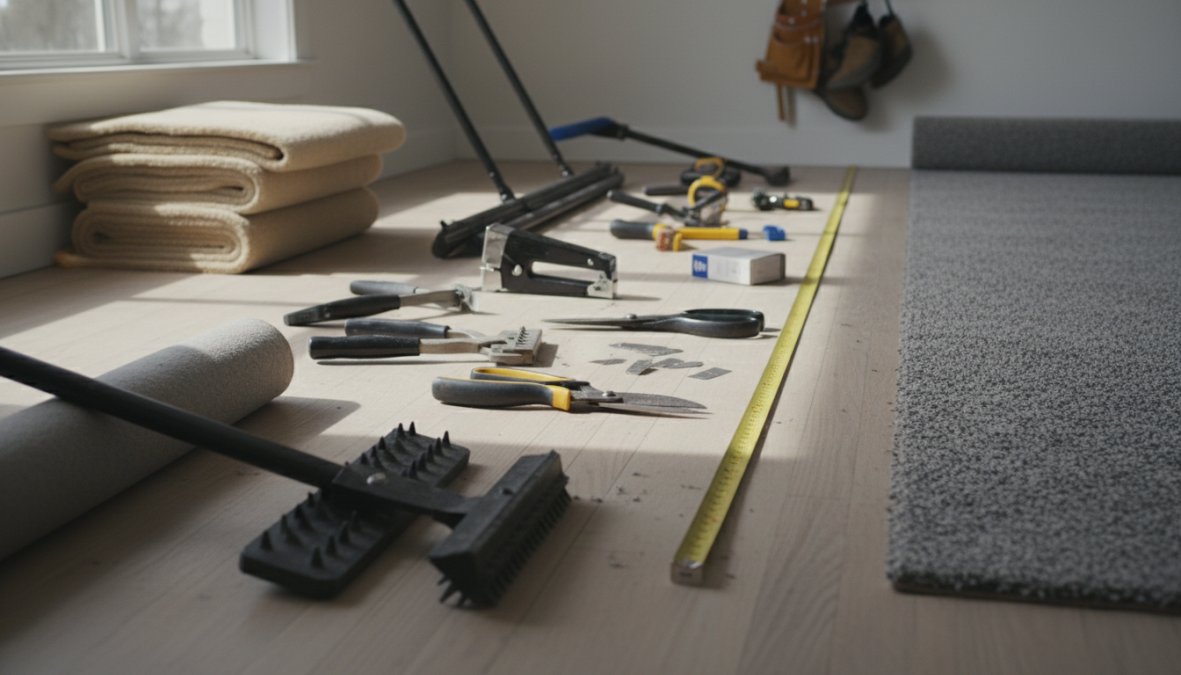
Professional carpet installation follows a consistent sequence. Understanding it helps you hold your installer accountable at each stage.
Schedule an In-Home Measurement and Free Estimate
The process begins with an in-home measurement, non-negotiable for an accurate quote. A professional measures total square footage, accounts for doorways and closets, and factors in pattern repeat for patterned carpet. The estimate should break down material costs, labor, padding, and any fees for furniture moving or haul away.
Subfloor Preparation and Furniture Moving
Subfloor preparation is where most installations go wrong. The subfloor must be clean, dry, and level before carpet is laid; squeaks, soft spots, or moisture issues must be addressed first. Skipping this step leads to premature wear, buckling, and voided warranties.
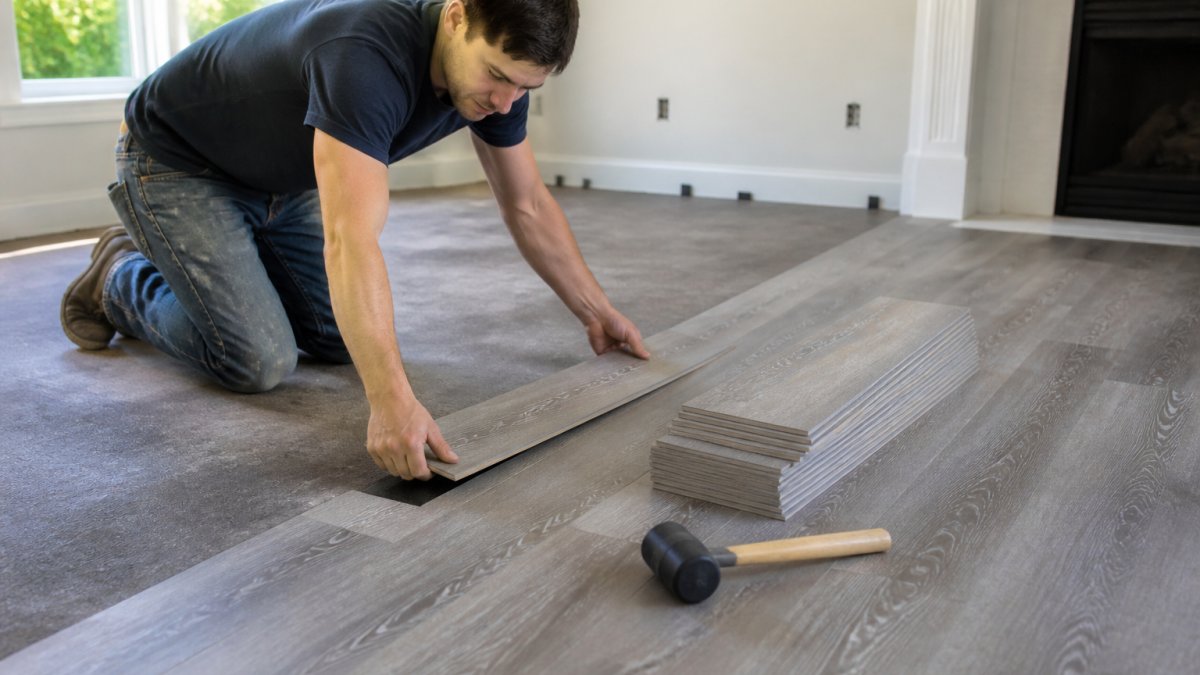
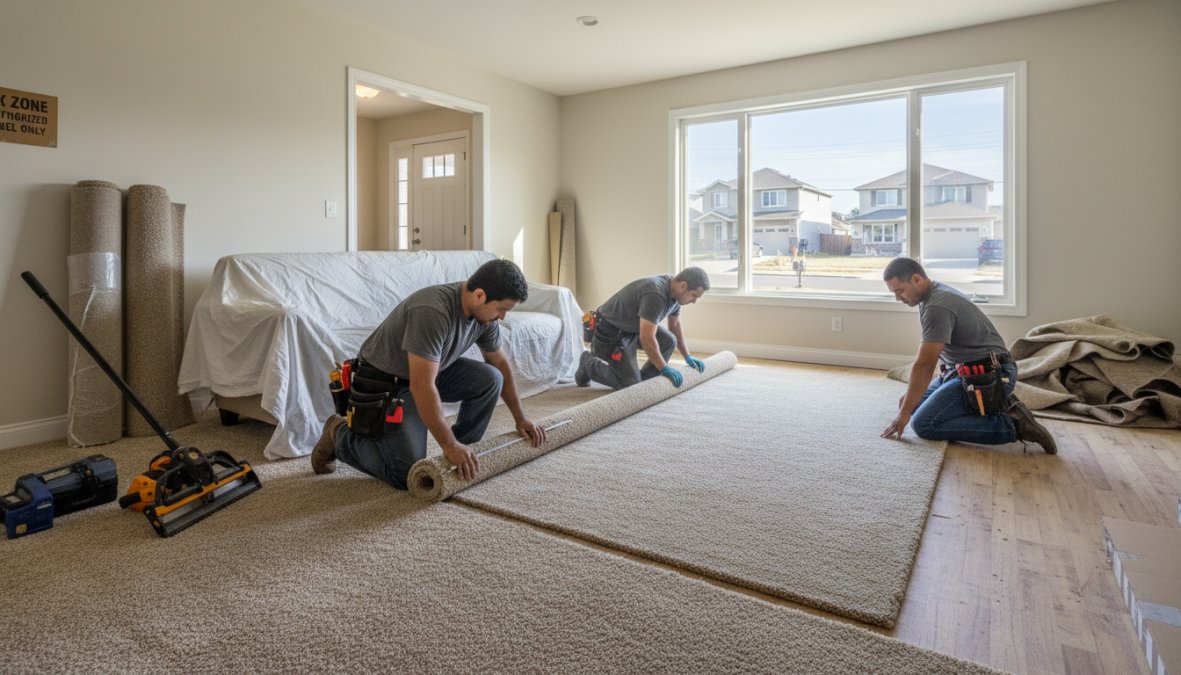
Furniture moving and carpet removal policies vary, confirm both before signing. The installation sequence runs: remove old flooring, inspect and prep the subfloor, install tack strips, lay padding, cut and seam the new carpet, stretch it over the tack strips with a power stretcher, and trim the edges.
Average Cost of Carpet Installation: What to Budget
The price per sq ft you see advertised rarely reflects your final bill. According to Angi's national cost guide for carpet installation, total costs vary widely based on material quality, room size, subfloor condition, and regional labor rates. For Suffolk County homeowners, getting multiple installation quotes is the most reliable way to establish a realistic budget.
Labor Costs, Carpet Padding, and Hidden Fees
Labor is typically charged per square foot and varies by room complexity. Stairs cost more because of the cutting and fitting involved. Carpet padding is a separate line item many homeowners overlook, padding density directly affects carpet longevity. For loop-pile carpets like Berber, a thinner, denser pad is preferable to prevent loop distortion.
Hidden fees to watch for:
- Furniture moving charges (if not included)
- Old carpet removal and disposal (haul away)
- Subfloor repair or leveling
- Stair installation premiums
- Transition strip installation at doorways
Financing Options and Payment Plans
The Home Depot and Lowe's both offer financing through store credit programs. National Floors Direct includes furniture moving and premium carpet padding as standard with no à la carte labor fees, simplifying budgeting. Ask any installer upfront about financing terms, and always request a project-based quote with clear line items rather than a bundled price.
Carpet Removal and Disposal Services: What's Included
Carpet removal and disposal services are standard in most professional installations, but details vary. Luna Flooring explicitly includes old floor removal and cleanup as standard; National Floors Direct includes furniture moving at no extra cost. Confirm whether "removal" covers old padding and tack strips as well.
Ask whether old material is recycled or sent to landfill. According to the Carpet America Recovery Effort (CARE) recycling program, millions of pounds of carpet are diverted from landfills annually through certified recycling channels, worth asking about if sustainability matters to you.
How to Prepare for Carpet Installation Day
The practical checklist:
- Clear small items, breakables, and valuables from all rooms being carpeted
- Remove items from closets if those areas are being carpeted
- Confirm with your installer who is responsible for moving large furniture
- Ensure the installer has clear access to the work area and parking
- Address any known subfloor issues before installation day (squeaks, soft spots)
- Keep pets and children out of the work area for the full day
- Plan for ventilation: new carpet off-gassing is normal and airing out the room speeds the process
New carpet, especially synthetic fiber, has a mild odor for the first 24-72 hours after installation. This is normal, dissipates quickly with ventilation, and is not a sign of a defective product.
How Long Does Carpet Installation Take?
Carpet installation for a standard residential room takes two to eight hours depending on size, complexity, and subfloor preparation. A single bedroom typically takes two to three hours; a full home covering multiple rooms and hallways generally takes a full day. Stairs add time because each step requires individual cutting and fitting.
Empire Today and Luna Flooring both offer next-day installation in many service areas. However, if an installer quotes a full-house installation in a few hours with no subfloor inspection, that's a red flag.
Choosing the Right Carpet: Materials, Padding Types, and Eco-Friendly Options
Carpet selection is where homeowners either get it right or make a decision they regret within two years. Material, construction, and padding work as a system.
Carpet Materials: Berber, Shaw, Mohawk, Stanton, and More
Shaw and Mohawk are the two largest carpet manufacturers in North America, producing everything from budget residential carpet to high-performance commercial carpet. Stanton is known for design-forward styles and natural fiber options. Fiber type and construction matter more than brand.
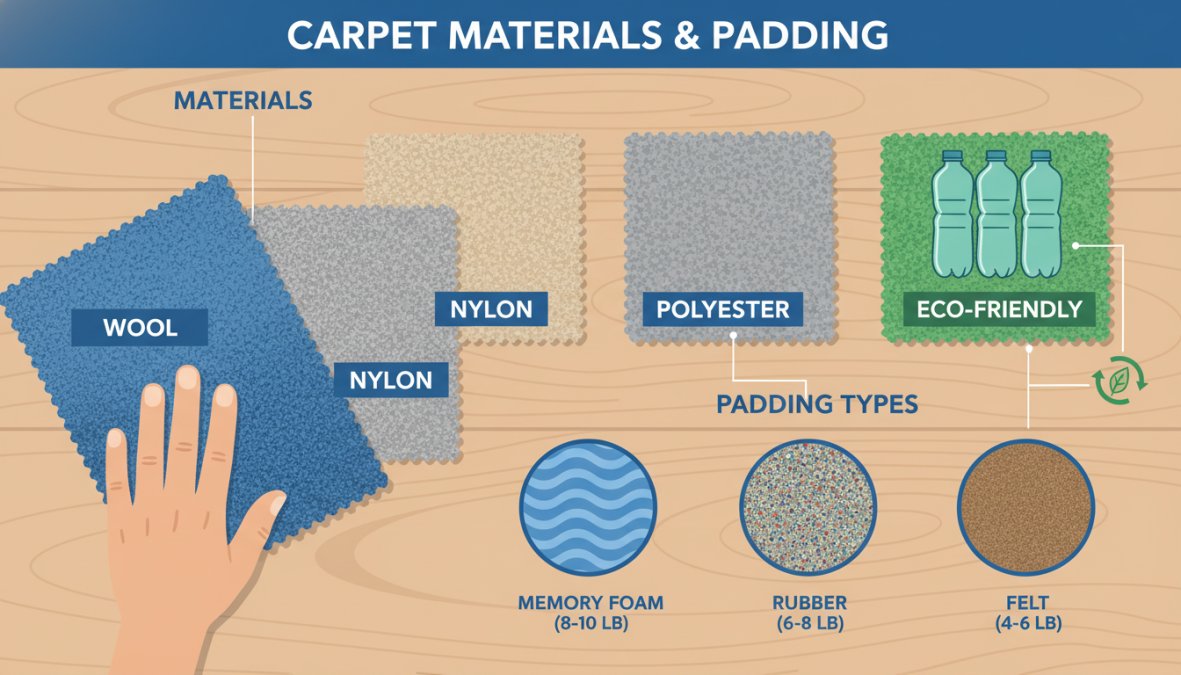
| Fiber Type | Durability | Best For | Key Consideration |
|---|---|---|---|
| Nylon | Very High | High-traffic areas, families | Most resilient; holds color well |
| Polyester (PET) | Moderate | Low-traffic rooms, bedrooms | Soft feel; less resilient than nylon |
| Triexta (SmartStrand) | High | Families, pets | Built-in stain resistance |
| Wool | High | Luxury installs | Natural, durable; higher price point |
| Berber (loop pile) | High | Offices, basements | Snags with pet claws; needs dense pad |
Berber is a construction style (loop pile), not a fiber, it can be made from nylon, polyester, or wool. The loop construction is durable and easy to clean, but less forgiving with pets whose claws can catch and pull the loops.
Carpet Padding Types: A Detailed Breakdown
Rebond foam is the most common padding type, cost-effective and available in various densities. Density matters more than thickness: a denser, thinner pad outperforms a thick, low-density pad for most applications.
Memory foam padding provides superior comfort and is popular in bedrooms, but is less durable under heavy foot traffic than rebond.
Fiber padding (felt or natural fiber) is the preferred choice under Berber and loop-pile carpets, providing firm support without allowing loops to flex and distort.
Rubber padding is the most durable option and works well in high-traffic areas.
The standard recommendation for most residential installations is a 7/16-inch rebond pad at 6-8 pounds density. For Berber or commercial carpet, use a 3/8-inch fiber or rubber pad.
Eco-Friendly and Pet-Friendly Carpet Options
Wool carpet is the gold standard for natural, sustainable flooring: renewable, biodegradable, and naturally resistant to staining and flame, though substantially more expensive than synthetics. Recycled-content PET polyester, made from recycled plastic bottles, offers a more accessible eco-friendly option, with many Shaw and Mohawk lines now including recycled-content products. According to the Sustainable Flooring guidance from the EPA, choosing low-VOC adhesives and underlayments further reduces indoor air quality impact.
For pet-friendly carpet, prioritize fiber type and construction. Triexta (marketed as SmartStrand by Mohawk) has built-in stain resistance at the fiber level, not a topical coating, so it doesn't wear off. Avoid loop-pile constructions if you have cats or dogs with claws.
DIY vs. Professional Carpet Installation: An Honest Risk Assessment
DIY carpet installation is genuinely possible for small, simple rooms with no seams and a straightforward rectangular layout. For anything more complex, the risk-to-reward ratio doesn't favor DIY.
Where DIY makes sense:
- A single small room, no seams required
- You have access to a carpet stretcher (rental is available)
- The subfloor is in good condition
- You're comfortable with the physical demands
Where professional installation is clearly better:
- Any room requiring seams (seaming takes years to do invisibly)
- Stairs (each step is a separate fitting challenge)
- Rooms with unusual shapes or multiple doorways
- Any situation where subfloor repairs are needed
- When a lifetime installation warranty matters to you
The risk of DIY isn't just a poor-looking result. Improperly stretched carpet buckles and creates tripping hazards. Poorly cut seams worsen over time. Incorrect padding under Berber can void the manufacturer's warranty. And once you factor in tool rental and materials, cost savings over professional installation often shrink considerably.
The World Floor Covering Association's installation standards exist precisely because proper carpet installation requires training, the right tools, and an understanding of how different constructions behave under tension. For most homeowners, a free estimate, transparent labor costs, and a clear installation warranty from a professional make the case straightforward. The question isn't whether you can do it yourself, it's whether the savings justify the risk to a product you'll live with for the next decade.
Frequently Asked Questions
How much does it cost to install carpet per square foot?
Carpet installation costs vary based on material, padding type, labor rates, and room size. Generally, homeowners can expect to pay for both the carpet product price per sq ft and a separate labor cost for professional installers. Additional fees may apply for subfloor preparation, furniture moving, or carpet removal. The best way to get an accurate number is to schedule a free in-home measurement and installation quote from a local flooring retailer serving your area.
How long does professional carpet installation take?
For most residential flooring projects, professional carpet installation takes between four and eight hours for an average-sized home. A single room may be completed in as little as one to two hours. Factors that extend the timeline include extensive subfloor preparation, furniture moving, carpet removal and disposal, and the total square footage involved. Some providers offer next-day installation for straightforward projects once materials are selected and measured.
Does carpet installation include removing old carpet?
Many professional carpet installation services include carpet removal and disposal as part of a bundled package, but this varies by provider. Some companies include haul away at no extra cost, while others charge a separate fee per room or per square footage. Always confirm what is included in your installation quote before signing. At Hamptons Carpet One Floor and Home, serving all of Suffolk County, NY, you can ask your local pros exactly what the service covers.
How do I prepare my room for carpet installation?
To prepare for carpet installation, clear the room of small furniture, breakables, and personal items before your installers arrive. Most professional installers handle moving large furniture as part of the service, but confirm this in advance. Ensure the space is accessible and that the subfloor is dry and free of major damage. Remove any door stoppers or items that could obstruct the fitting process. Your installer will handle subfloor preparation, trimming, and final stretching of the wall-to-wall carpet.
Is it better to buy carpet from the installer or a separate retailer?
Buying carpet directly from your installer or a local flooring showroom is generally recommended over purchasing separately. When the same company supplies and installs the carpet, they can ensure the product and padding are compatible, manage the full project timeline, and back the work with a combined installation warranty. It also simplifies accountability if any issues arise. Independent contractor arrangements where you supply the carpet separately can sometimes void manufacturer warranties or complicate claims.
What should I look for when hiring a carpet installer near me?
When searching for carpet installation services near me, prioritize licensed and insured professional installers with strong customer reviews. Ask about their installation warranty or guarantee, whether they offer a free in-home measurement, and what their process is for subfloor preparation and carpet removal. Local flooring showrooms often provide more personalized service than big-box retailers and can offer product samples in your home. Checking verified reviews and asking about their service area are key first steps.
Choosing the right carpet and installer involves more variables than most homeowners expect, and the cost of getting it wrong compounds over years of daily use. Hamptons carpet one floor and Home serves all of Suffolk County, NY, offering in-person product samples, honest guidance on materials and padding, and connections to professional installers who stand behind their work. Visit hamptonsc1.com to schedule a consultation and get a free estimate for your next flooring project.
This article was written using GrandRanker