 Ultimate guide
Commercial Carpet Tiles: Complete Guide for Suffolk
Table of Contents
- Why Commercial Carpet Tiles Have Replaced Broadloom
- Benefits of Modular Carpet Tiles for High-Traffic Spaces
- Commercial Carpet Tile Installation Cost and What Affects Pricing
- Commercial Flooring Maintenance Tips That Extend Carpet Life
- Durability and Lifespan: How Long Commercial Carpet Tiles Last
- Choosing the Right Carpet Tile for Retail, Office, or Institutional Use
- Sustainability and LEED Certification in Commercial Flooring
- Conclusion
Last Updated: August 18, 2026
Why Commercial Carpet Tiles Have Replaced Broadloom
Commercial carpet tiles have fundamentally shifted how facility managers approach flooring in high-traffic commercial spaces. The industry standard has flipped. According to Cindy Kaufman, Vice President of Marketing at Mannington Commercial, "Carpet tile is the industry standard in most applications these days. Broadloom is no longer the go-to; it is the alternative, though there are still places where broadloom is preferred."
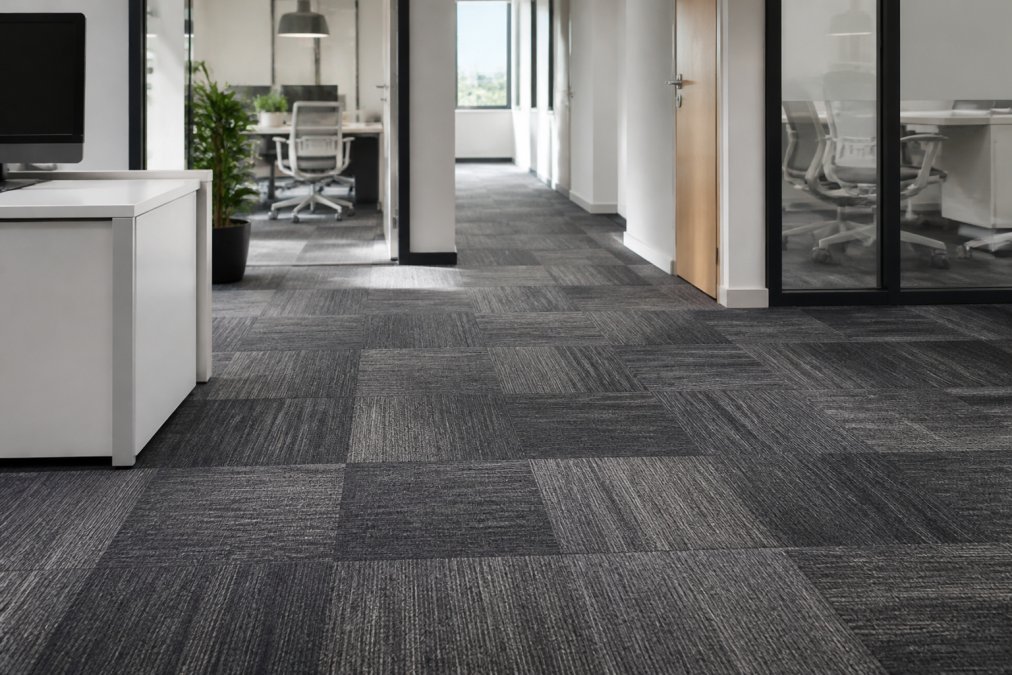
The reasons are practical and measurable. Commercial carpet tiles offer modularity that broadloom simply cannot match. When a single section sustains damage from a spill, equipment damage, or wear, you replace that tile, not the entire floor. Broadloom requires wall-to-wall replacement, which drives up costs and disruption. For facility managers overseeing offices, retail spaces, or institutional buildings, this difference translates directly to reduced downtime and maintenance budgets.
The market data confirms this shift. Sales of carpet tile in the U.S. totaled $2.268 billion in 2024, representing steady demand despite competition from hard surfaces like luxury vinyl tile. More importantly, commercial applications account for approximately 60% of the carpet tiles market share, with 47% of installations in 2023 occurring in commercial offices and 23% in institutional facilities.
Installation logistics also favor modular carpet tiles. As Zack Adamson, Vice President of Commercial Division at Engineered Floors, explains: "The category has so much going for it. It's the convenience of getting it onto the job site. It comes in on a pallet like everything else. It can be brought up in the elevator, and maintenance is easier. It's not super technical to replace modular."
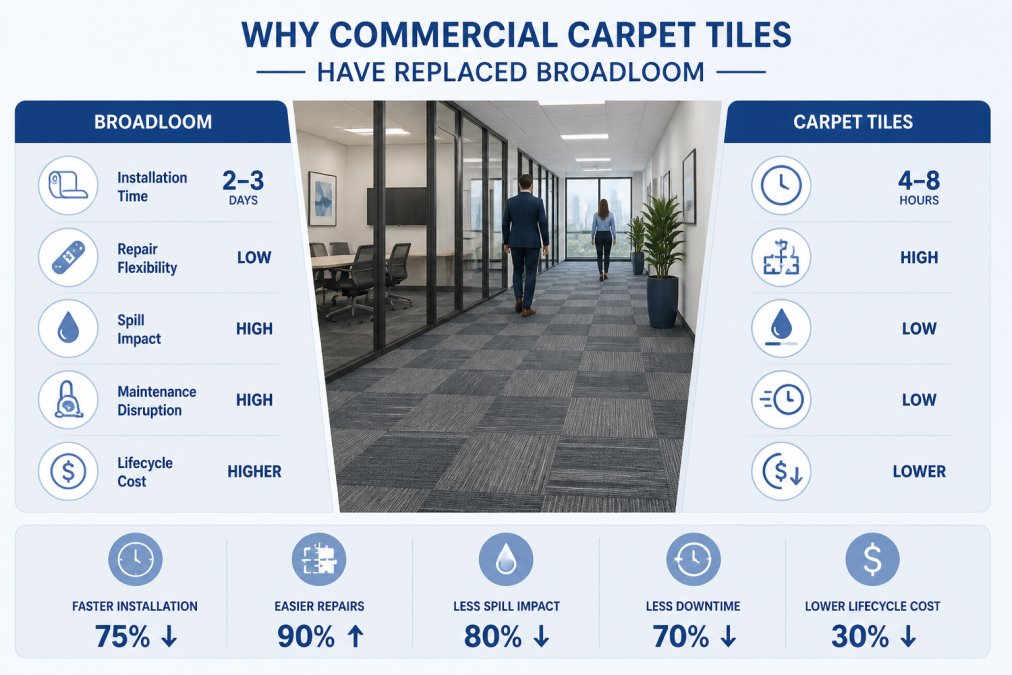
For businesses in Suffolk County experiencing growth, the region closed $4.1 billion in commercial real estate sales in 2025, a 71% increase from the previous year, carpet tiles align with the practical demands of rapid renovation and occupancy.
Benefits of Modular Carpet Tiles for High-Traffic Spaces
Modular carpet tiles deliver specific advantages that matter most in environments where foot traffic is constant and disruption is costly. The dense structure of commercial-grade carpet tiles contributes to sound absorption, creating a quieter environment, particularly beneficial in open office layouts or areas with high foot traffic. This acoustic property reduces noise pollution that can degrade employee focus and client experience.
Comfort is another often-overlooked benefit. The cushioned layer beneath commercial carpet tiles provides underfoot support that reduces fatigue during long workdays. Retail employees standing for eight-hour shifts, office workers moving between meeting rooms, and institutional facility users all experience this benefit. The wear layer on quality tiles resists matting and maintains appearance longer than broadloom in comparable traffic conditions.
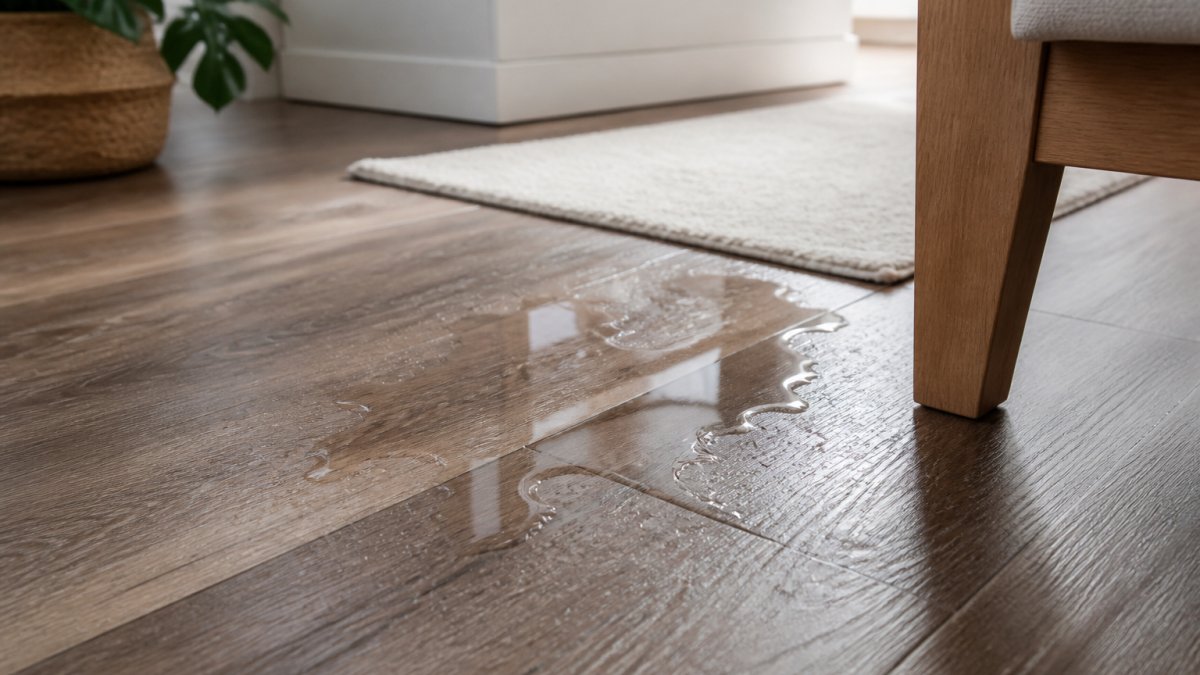
Stain resistance and cleanability make carpet tiles practical for spaces where spills are inevitable. Most commercial-grade tiles feature treatments that repel liquids, allowing staff to address accidents quickly without permanent damage. This matters in retail environments where food or beverage incidents happen regularly, and in offices where coffee spills are a daily reality. The modular design means a stained tile can be removed and replaced without affecting adjacent flooring.
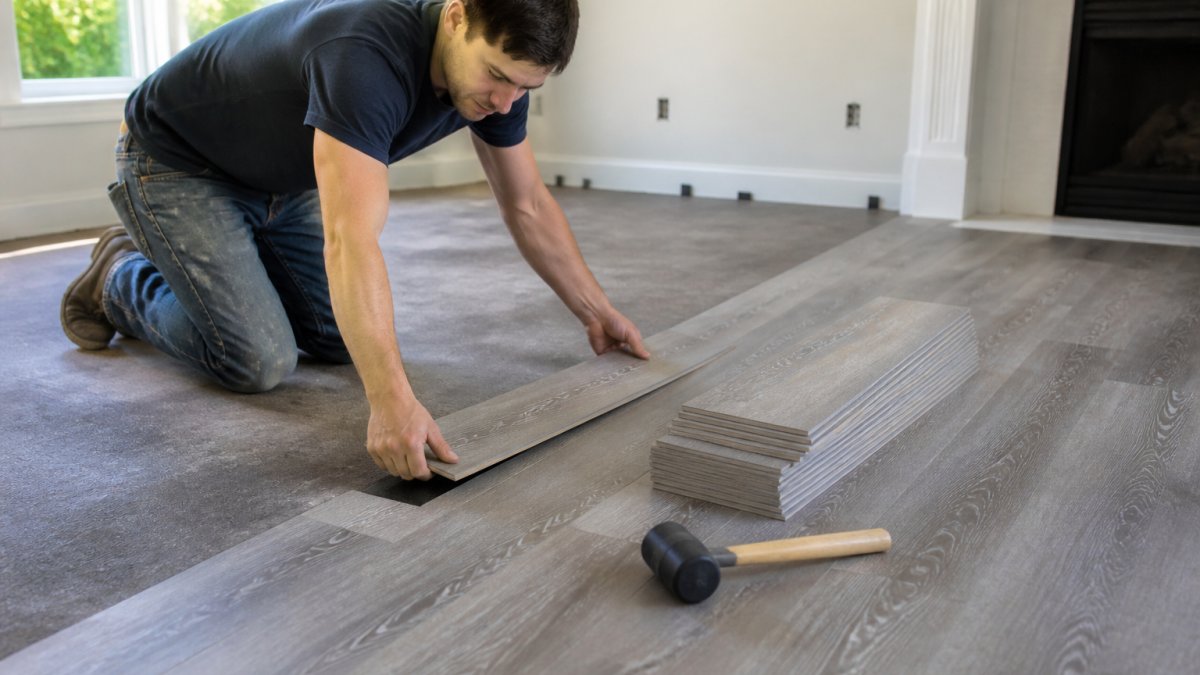
Installation speed is underestimated as a benefit. Commercial carpet tiles eliminate the need for seaming and gluing an entire floor. Adhesive application is straightforward, and subfloor preparation requirements are less stringent than broadloom installation. This translates to projects completed faster, allowing businesses to occupy spaces sooner.
Flexibility in floor layout design is significant for growing companies. If your office reconfigures departments or retail space shifts merchandise zones, carpet tiles adapt without requiring complete replacement. Custom patterns can be created by mixing tile colors and styles, allowing design expression that broadloom cannot achieve without significant cost.
Commercial Carpet Tile Installation Cost and What Affects Pricing
The average installed cost of commercial carpet tiles ranges from $3.50 to $7.50 per square foot, according to 2025 industry data. However, this figure masks significant variation based on factors that directly impact your project budget.
Subfloor Preparation and Site Measurement
Subfloor condition determines whether your project stays on budget or encounters unexpected costs. Concrete subfloors require moisture barrier application if moisture testing reveals levels above 3 pounds per 1,000 square feet per day. This adds cost and extends timeline. Existing hardwood or damaged concrete requires remediation, leveling, patching, or removal, before tile installation begins.
Site measurement precision prevents costly errors. Professional measurement accounts for irregular room shapes, doorway thresholds, and obstacles that affect tile layout.
Installation Timeline and Labor
Labor costs represent 40-50% of total installed pricing. Installation timeline depends on floor size, subfloor condition, and adhesive cure time. A 5,000 square foot office floor typically requires 3-5 days for complete installation, including subfloor prep and adhesive curing. Larger projects or those with significant subfloor work extend this timeline.
Scheduling flexibility affects labor costs. Off-peak installation (avoiding peak commercial seasons) may reduce labor expenses. Coordination with your business operations, installing during nights, weekends, or phased approaches, influences the final cost structure.
Commercial Flooring Maintenance Tips That Extend Carpet Life
Proper maintenance directly extends the usable life of commercial carpet tiles. The foundation is regular vacuuming, at least three times weekly in high-traffic areas, daily in retail environments. Commercial-grade vacuum cleaners with proper filtration remove soil before it embeds in fibers and causes premature wear.
Spot cleaning addresses spills immediately. Blot liquid with absorbent cloth rather than rubbing, which drives stains deeper into fibers. Use pH-neutral cleaning solutions designed for commercial carpet; acidic or alkaline cleaners damage fiber structure. For set-in stains, professional extraction equipment removes embedded soil more effectively than surface cleaning.
Deep cleaning on a scheduled basis, typically annually or semi-annually depending on traffic volume, restores appearance and removes accumulated soil. Commercial extraction services use hot water and specialized detergents to penetrate the wear layer without damaging backing or adhesive.
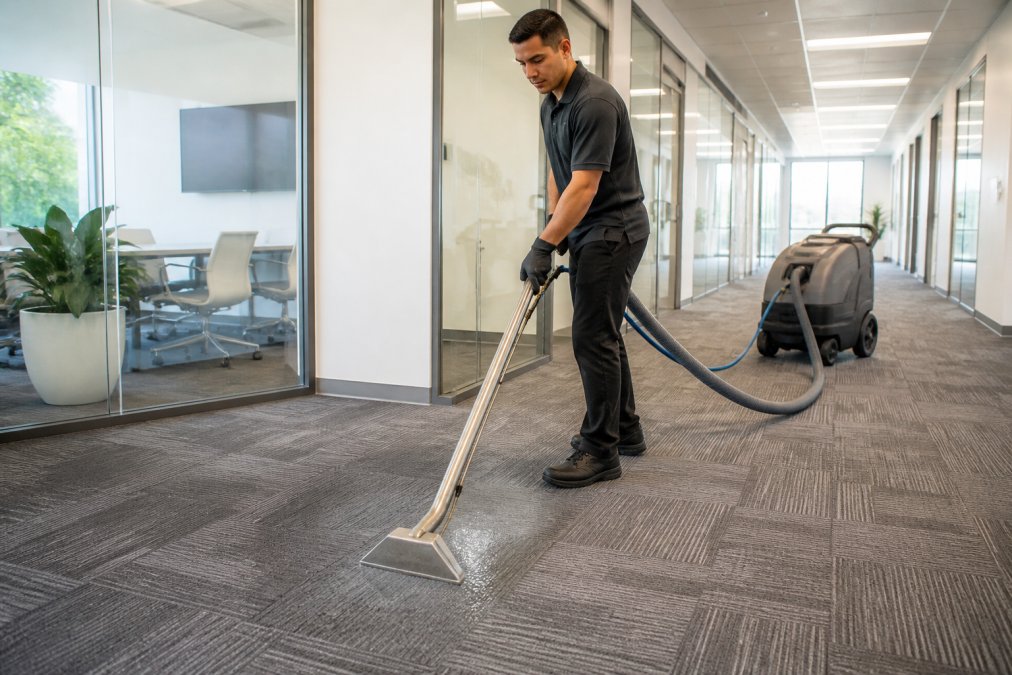
Moisture management protects both tiles and subfloor. Spills must be dried completely; standing moisture promotes mold growth beneath tiles. In humid climates or spaces with high moisture exposure (kitchens, bathrooms), ensure adequate ventilation and consider moisture-resistant backing options.
Traffic pattern management reduces accelerated wear in specific zones. Entrance mats capture moisture and soil before reaching the main floor. Furniture placement and departmental layouts should minimize concentrated foot traffic in single areas. Rotating tile placement periodically distributes wear more evenly across the floor.
Durability and Lifespan: How Long Commercial Carpet Tiles Last
Commercial carpet tiles typically last 10 to 15 years under normal use conditions, with replaceable design extending usable life even longer. This lifespan assumes proper installation, adequate maintenance, and traffic levels within design specifications.
Several factors influence actual durability. Fiber type matters significantly, nylon fiber provides superior durability in high-traffic applications compared to polyester. The backing system, which includes the wear layer and adhesive bond, determines whether tiles remain flat and secure throughout their lifespan. Quality backing resists moisture penetration and maintains dimensional stability.
Traffic intensity is the primary durability variable. A 5,000 square foot office with 50 employees experiences different wear patterns than a retail location with 500 daily customer visits. Commercial carpet tiles designed for retail environments feature heavier face weight and more strong backing than standard office specifications.
Maintenance directly impacts lifespan. Floors receiving professional deep cleaning annually typically last 12-15 years. Floors with minimal maintenance may show significant wear within 8-10 years. This relationship makes preventive maintenance economically rational, spending $1,500-$3,000 annually on professional cleaning extends floor life by 2-3 years and preserves appearance.
According to research on commercial flooring durability, the modular design of carpet tiles allows strategic replacement of heavily worn sections, effectively extending the functional life of the overall floor. Instead of replacing 5,000 square feet, you might replace 500-1,000 square feet of the most trafficked zones, preserving investment while maintaining appearance.
Choosing the Right Carpet Tile for Retail, Office, or Institutional Use
Different commercial environments demand different tile specifications. Retail spaces require maximum durability and stain resistance. Customer-facing areas need aesthetic appeal and consistent appearance. Back-of-house areas prioritize cleanability and moisture resistance.
Office environments benefit from acoustic properties and comfort underfoot. Open office layouts particularly benefit from sound-absorbing tiles that reduce noise transmission. Executive areas may prioritize aesthetic design and pattern options. Break rooms and kitchens require tiles with superior stain and moisture resistance.
Institutional facilities, healthcare, education, government, have specific regulatory requirements. Healthcare facilities need tiles that meet infection control standards and allow easy disinfection. Educational spaces need durability matching heavy student foot traffic. Government facilities often require specific fire ratings and accessibility features.
Eco-friendly carpet tiles made from recycled materials represented 34% of U.S. demand in 2023, reflecting growing institutional commitment to sustainability. These tiles perform identically to virgin-material options while reducing environmental impact. For organizations pursuing LEED certification or corporate sustainability goals, this option aligns environmental and performance objectives.
Color and pattern selection affects both aesthetics and maintenance visibility. Darker tones hide soil better but may show dust and lint more readily under certain lighting. Medium tones balance aesthetics with practical maintenance. Pattern mixing creates visual interest while disguising seams and wear patterns.
Sustainability and LEED Certification in Commercial Flooring
Sustainable carpet tile options now represent mainstream commercial flooring rather than premium niche products. According to Interface's 2024 Impact Report, the company has reduced the carbon footprint of its carpet tile products by 35% since 2019 and increased recycled or biobased content to 67% of total material composition.
LEED certification pathways reward sustainable flooring choices through multiple mechanisms. Recycled content credits recognize tiles manufactured with post-consumer or post-industrial recycled materials. Regional material sourcing credits apply when tiles are manufactured within 500 miles of the project site. Low-VOC (volatile organic compound) emissions certifications ensure indoor air quality meets standards protecting occupant health.
Modular carpet tiles inherently support circular economy principles. End-of-life tiles can be collected, recycled, or refurbished rather than sent to landfills. This closed-loop potential appeals to organizations managing environmental impact across real estate portfolios.
The business case for sustainable tiles extends beyond environmental responsibility. According to recent commercial flooring market analysis, facilities with sustainable flooring systems report higher employee satisfaction, improved retention rates, and reduced absenteeism. These human factors translate to measurable financial returns that justify sustainable material investment.
For organizations in Suffolk County pursuing growth while managing environmental commitments, sustainable carpet tiles align operational efficiency with corporate values.
Conclusion
Commercial carpet tiles have become the practical standard for facility managers because they solve real problems that broadloom cannot address: modularity, maintenance efficiency, installation speed, and cost management. The market data is clear, 60% of carpet tile demand comes from commercial applications, with installations growing in offices, retail, and institutional facilities across the region.
The decision isn't whether to consider carpet tiles but which specifications match your specific environment. Durability, acoustic properties, stain resistance, and sustainability options exist across price points and performance tiers. Professional assessment of your subfloor, traffic patterns, and maintenance capacity determines the optimal choice.
Get started with a consultation and discover how commercial carpet tiles can improve your facility's durability, maintenance efficiency, and long-term value.
| Carpet Tile Specification | Office Use | Retail Use | Institutional Use |
|---|---|---|---|
| Face Weight | 32-40 oz/sq yd | 40-50 oz/sq yd | 35-45 oz/sq yd |
| Backing Type | Standard backing | Heavy-duty backing | Moisture-resistant backing |
| Stain Resistance | Standard treatment | Enhanced treatment | Medical-grade treatment |
| Acoustic Rating | High priority | Medium priority | High priority |
| Lifespan Expectation | 12-15 years | 10-12 years | 12-15 years |
Frequently Asked Questions
What makes commercial carpet tiles different from residential carpet?
Commercial carpet tiles are engineered for durability in high-traffic environments. They use heavier gauge nylon fiber, reinforced backing systems, and higher density construction to withstand constant foot traffic. Commercial-grade tiles typically last 10 to 15 years, compared to residential carpet. The modular design allows you to replace individual damaged squares rather than the entire floor, reducing replacement costs and downtime.
How much does commercial carpet tile installation cost per square foot?
The average installed cost of commercial carpet tiles ranges from $3.50 to $7.50 per square foot, depending on material quality, subfloor preparation, and project complexity. However, your actual cost depends on site conditions, removal of existing flooring, and adhesive application requirements. Contact Hamptons Carpet One Floor & Home for a detailed quote based on your specific space and needs.
Are commercial carpet tiles glued down, and how difficult is removal?
Most commercial carpet tiles are adhered to the subfloor using pressure-sensitive adhesive, making them semi-permanent but removable. The modular design means individual tiles can be lifted and replaced without disturbing surrounding squares. This is one of the key advantages: when a tile becomes worn or stained in a high-traffic zone, you replace only that tile rather than the entire floor, saving time and expense.
What are the best maintenance practices for commercial carpet tiles?
Implement a regular maintenance schedule: vacuum high-traffic areas daily and the entire space 2-3 times weekly. Use commercial-grade cleaning equipment for deep cleaning every 12-18 months. Address spills immediately with appropriate cleaning solutions. Rotate traffic patterns where possible to distribute wear evenly. Professional maintenance extends the life of your commercial flooring investment and maintains appearance and safety in your facility.
This article was written using GrandRanker