 Comparison
Engineered Hardwood vs Solid Hardwood: 2026 Guide
Table of Contents
- Engineered Hardwood vs Solid Hardwood: Key Differences at a Glance
- Durability, Lifespan, and Dimensional Stability Compared
- Best Hardwood for High Humidity: Moisture Resistance Explained
- Refinishing Engineered Hardwood Floors vs. Solid Hardwood
- Engineered Hardwood Pros and Cons vs. Solid Hardwood
- Hardwood Flooring Installation Cost: Engineered vs Solid
- Which Is Better? Engineered Hardwood vs Solid Hardwood for Your Home
- Conclusion
Last Updated: June 10, 2026
Engineered Hardwood vs Solid Hardwood: Key Differences at a Glance
Choosing between engineered hardwood vs solid hardwood is one of the most consequential flooring decisions a homeowner can make. At Hamptons carpet one floor and Home, we help Suffolk County homeowners navigate this exact decision every day, and the answer is almost never simple. Both floors look stunning and add real estate value, but they behave very differently depending on where you live, what's under your feet, and how you plan to use the space.
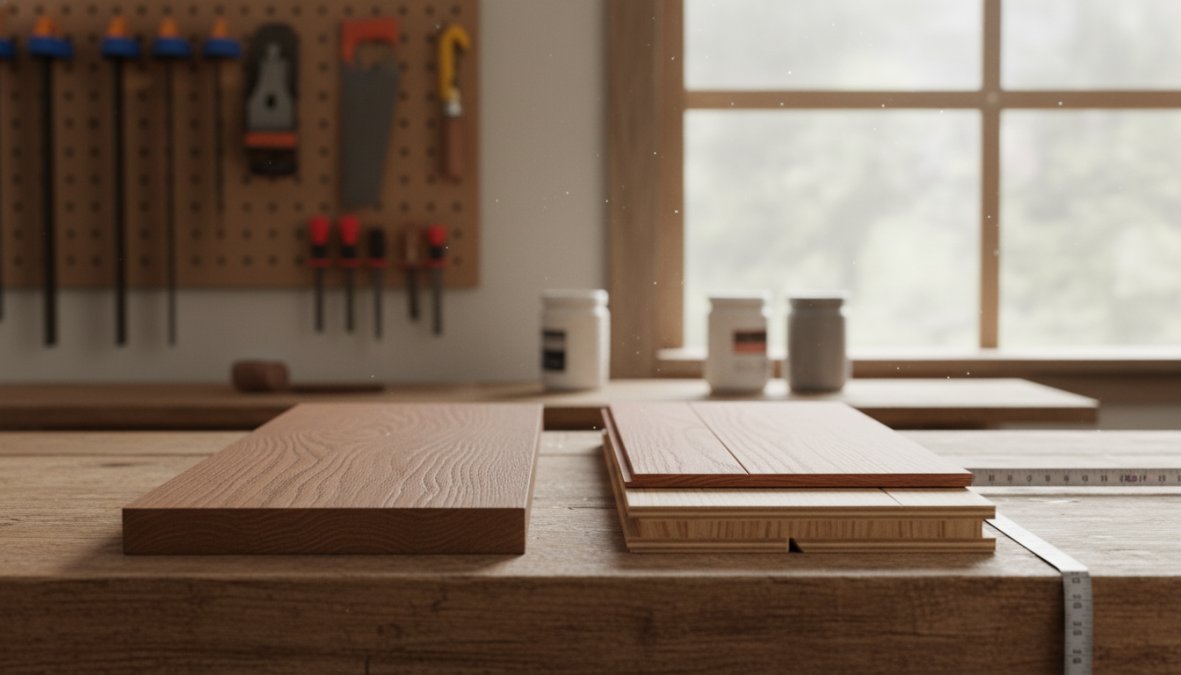
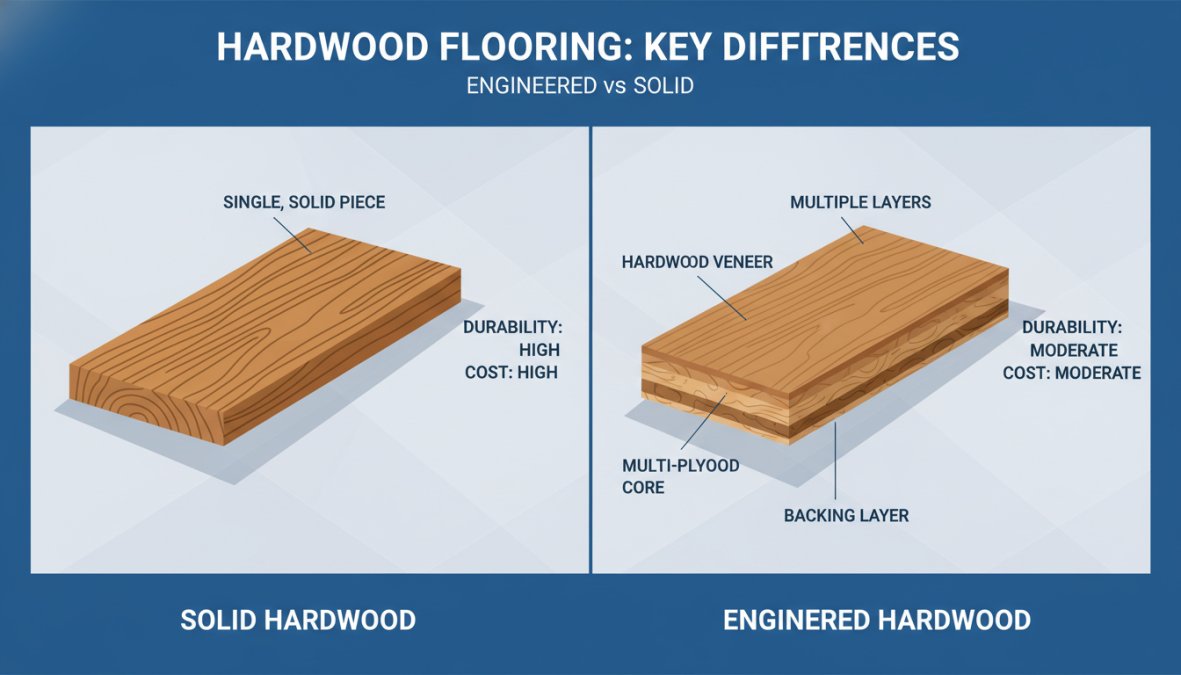
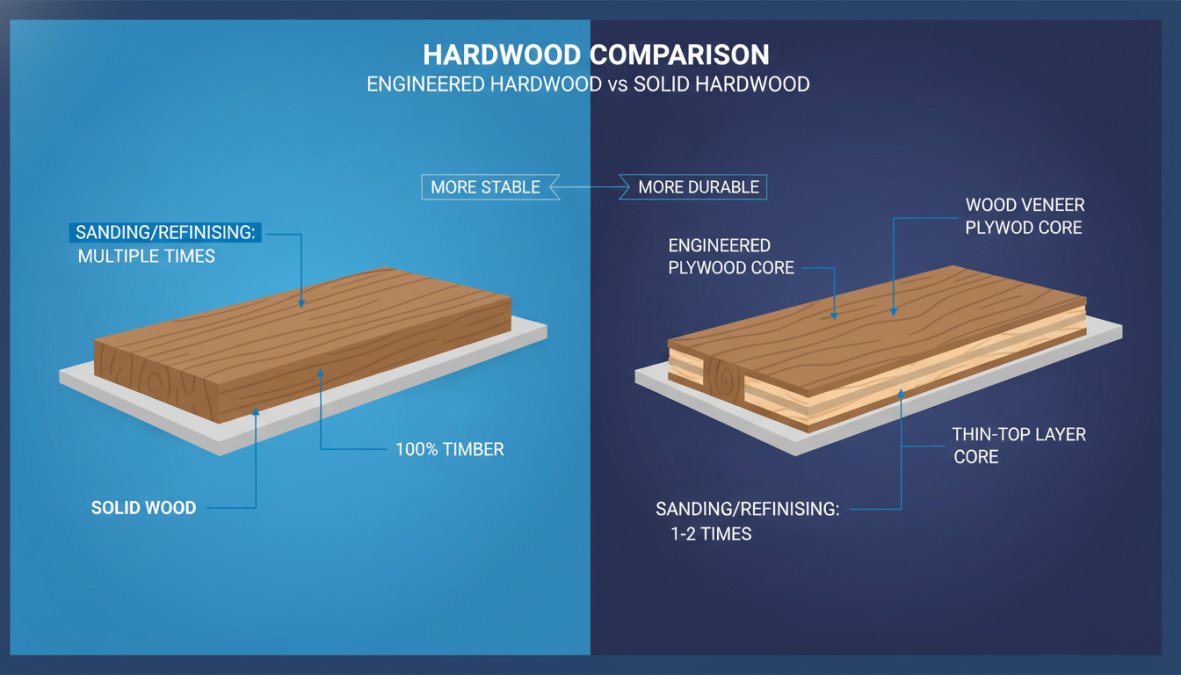
Solid hardwood is milled from a single piece of wood, top to bottom. Engineered hardwood uses a real hardwood veneer bonded to a cross-hatched plywood core. That structural difference drives every other distinction: moisture response, below-grade compatibility, refinishing potential, and cost.
Most guides treat this as a prestige contest, solid wins on authenticity, engineered wins on practicality. The reality is more nuanced. Below, we cover every major dimension of the debate, including two angles most guides skip: radiant heating compatibility and indoor air quality.
| Feature | Solid Hardwood | Engineered Hardwood |
|---|---|---|
| Construction | Single solid plank | Hardwood veneer + plywood core |
| Thickness | 3/4" standard | 3/8" to 9/16" typical |
| Moisture resistance | Low | Moderate to high |
| Refinishing | 5-7 times | 1-3 times (wear layer dependent) |
| Radiant heat compatible | Generally no | Yes (most products) |
| Installation methods | Nail/staple down | Nail, glue, float |
| Best location | Above grade, dry climates | Any grade, humid areas |
| Lifespan | 80-100+ years | 25-40 years |
| Cost range (materials) | Higher | Budget-friendly to premium |
What Is Solid Hardwood Flooring?
Solid hardwood flooring is a plank milled entirely from a single piece of wood, no composite layers or adhesives, typically 3/4 inch thick with tongue and groove edges. Species options are extensive: oak and maple dominate for hardness and grain consistency, while walnut and hickory offer richer character at higher price points. Planks come prefinished or unfinished; the unfinished route adds control over final color and sheen but increases labor time.
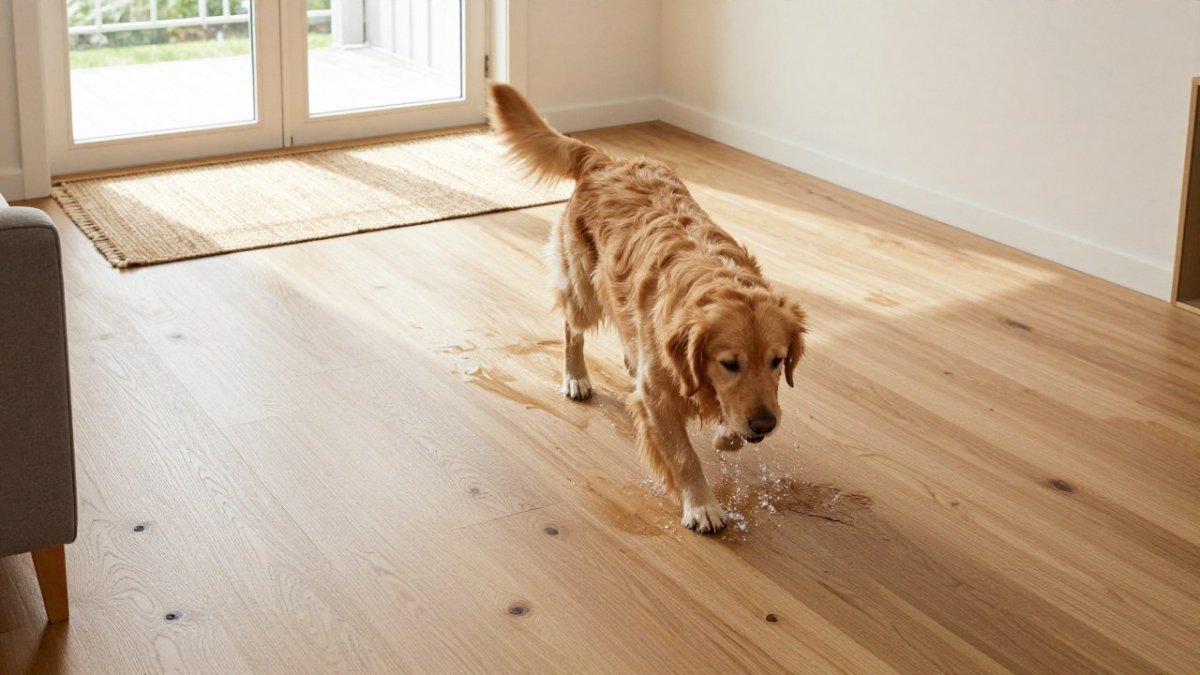
The major limitation is dimensional instability. Wood expands and contracts with humidity, and a solid plank has nowhere to direct that movement except sideways, leading to warping, cupping, and crowning in humid or moisture-prone rooms.
What Is Engineered Hardwood Flooring?
Engineered hardwood flooring is a multi-layer plank with a genuine hardwood veneer on top and a cross-hatched plywood core beneath, delivering the look of real wood with significantly better dimensional stability.
Veneer thickness matters enormously. Thicker wear layers (3mm or more) allow multiple refinishing cycles; thinner veneers (1-2mm) are more budget-friendly but limit future sanding. Brands like Mirage Hardwood Flooring are known for precision milling that maximizes veneer integrity, while Bruce Hardwood Flooring offers accessible engineered options with specialized moisture-resistant technology.
The cross-hatched plies are the engineering secret: each layer runs perpendicular to the one above it, resisting the seasonal movement that makes solid hardwood problematic in high-humidity environments.
Construction: Solid Wood Planks vs. Cross-Hatched Plywood Core
A solid plank breathes and moves as one unit. An engineered plank is a composite structure where opposing grain directions cancel out each other's movement. Some engineered products use HDF (High-Density Fiberboard) cores instead of plywood, denser and better for acoustics, but generally less moisture-tolerant. For Suffolk County homes, where summer humidity regularly climbs, a plywood-core engineered product tends to outperform HDF-core options.
Durability, Lifespan, and Dimensional Stability Compared
Solid hardwood, installed and maintained correctly, can last a century or more, observable in older Long Island homes where original oak floors have been refinished across generations. The tradeoff is that solid hardwood demands a stable environment to reach that lifespan.
Engineered hardwood typically delivers 25 to 40 years of service life, depending on wear layer thickness and traffic volume. Mohawk Flooring's high-performance engineered lines are built for active households, with wire-brushed and hand-scraped finishes that hide everyday wear better than smooth prefinished options.
Dimensional stability is where engineered hardwood genuinely wins. For homeowners in coastal Suffolk County, where seasonal humidity swings are significant, this stability is a practical advantage, not just a spec-sheet talking point.
Warping, Cupping, and Crowning: Which Floor Holds Up Better?
Cupping happens when plank edges rise higher than the center, typically from moisture beneath the floor. Crowning is the reverse. Warping is any distortion along the plank's length or width. Solid hardwood is significantly more vulnerable to all three. According to the National Wood Flooring Association's installation guidelines, solid hardwood should not be installed where relative humidity cannot be maintained between 30 and 50 percent year-round, a real constraint in many homes.
Engineered hardwood tolerates a wider humidity range without visible distortion, making it the safer choice for rooms with variable conditions.
Best Hardwood for High Humidity: Moisture Resistance Explained
The best hardwood for high humidity is engineered hardwood, specifically products with a multi-ply plywood core and a factory-applied finish that seals surface and edges against moisture intrusion. Solid hardwood and high-humidity environments are genuinely incompatible without aggressive climate control.
Bruce's Hydropel technology takes moisture resistance further, offering a waterproof hardwood option that can withstand standing water for a limited period, a meaningful spec for kitchens, mudrooms, and entryways. The Forest Stewardship Council's guidance on wood moisture content reinforces that proper moisture management starts at installation, not just in the product spec.
Radiant Heating Compatibility
Most solid hardwood flooring is not recommended over radiant heating systems. Heat from below combined with ambient humidity creates exactly the uneven moisture gradient that causes cupping and gapping in solid planks, with significant warranty implications.
Engineered hardwood handles radiant heat far better. The cross-hatched plywood core distributes heat more evenly and resists directional movement. Bruce and Mirage both offer engineered lines specifically rated for radiant heating installation, with guidance on maximum surface temperature thresholds (typically 85°F at the floor surface).
Subfloor Compatibility and Installation Methods
Solid hardwood requires a wood subfloor and must be installed above grade, it cannot be glued to concrete and should never go in a basement. Engineered hardwood is far more flexible:
- Nailed or stapled down over wood subfloors
- Glued down directly to concrete slabs
- Floated over virtually any flat, stable surface
For Suffolk County homes with finished basements or slab foundations, engineered hardwood is often the only hardwood option that makes structural sense.
Refinishing Engineered Hardwood Floors vs. Solid Hardwood
Refinishing engineered hardwood floors is possible, but the number of cycles depends entirely on wear layer thickness. A 2mm veneer might allow one light sanding; a 4-6mm veneer can handle two to three full refinishing cycles. Solid hardwood can be refinished five to seven times because you're working with a full 3/4 inch of wood above the tongue, its most legitimate long-term advantage. Bellawood products from LL Flooring back select solid hardwood lines with a 100-year transferable warranty precisely because the floor can be maintained and restored over that timeframe.
For refinishing engineered hardwood floors, the practical advice is simple: buy the thickest wear layer you can afford. The difference between a 2mm and a 4mm veneer is often modest in price but enormous in long-term value.
Engineered Hardwood Pros and Cons vs. Solid Hardwood
The right choice depends on your specific room, subfloor, climate, and budget, not a generic ranking.
Solid hardwood pros:
- Authentic grain consistency and depth from a single wood species
- Refinishable 5-7 times, supporting a 100-year lifespan
- Strong resale value signal to buyers who recognize real wood
- Timeless aesthetic that ages with character
Solid hardwood cons:
- Highly vulnerable to warping, cupping, and crowning in humid conditions
- Cannot be installed below grade or over concrete
- Not compatible with most radiant heating systems
- Higher material and installation cost
Engineered hardwood pros:
- Excellent dimensional stability across humidity fluctuations
- Compatible with concrete subfloors, basements, and radiant heat
- Available in the same species: oak, maple, walnut, hickory
- More budget-friendly at entry and mid-range price points
Engineered hardwood cons:
- Limited refinishing cycles (wear layer dependent)
- Thinner veneers show wear faster in high-traffic areas
- Some lower-end products look less authentic over time
VOC Emissions and Indoor Air Quality
Engineered hardwood uses adhesives to bond its plywood layers, which can result in off-gassing of volatile organic compounds (VOCs), particularly formaldehyde, after installation. Solid hardwood planks contain no adhesives in the plank itself and are generally a lower VOC product, though glue-down installation of either type can introduce VOCs independently.
For health-conscious buyers, look for engineered products certified to low-emission standards. Bellawood's GreenGuard Gold certification is a meaningful benchmark, indicating third-party verification of strict indoor air quality thresholds. According to the EPA's indoor air quality guidance on flooring materials, formaldehyde emissions from composite wood products are a legitimate concern, and certified low-emission products are the appropriate solution.
Acoustic Performance: Sound and Feel Underfoot
Solid hardwood has a denser, more resonant feel underfoot, many homeowners describe it as warmer and more substantial. Engineered hardwood with HDF cores can feel slightly hollow in spots if the subfloor isn't perfectly flat. For sound transmission between floors, neither product is inherently superior without underlayment. A quality acoustic underlayment under a floating engineered floor can perform comparably to a nail-down solid installation for sound isolation.
Hardwood Flooring Installation Cost: Engineered vs Solid
Hardwood flooring installation cost varies by product, installation method, and regional labor rates, but engineered hardwood is generally more budget-friendly across both materials and labor.
Material costs for engineered hardwood typically run lower than comparable solid hardwood species at the mid-range. Premium engineered products from brands like Mirage approach solid hardwood pricing but offer performance advantages that justify the cost in the right environment. Labor costs favor engineered hardwood on concrete subfloors because glue-down and floating installations are faster and require less specialized equipment than nail-down solid hardwood.
The total square footage calculation should account for waste factor: floating installations typically require 10-15% overage for cuts and layout, while nail-down installations run closer to 5-8%.
Resale Value and Long-Term Investment
Both solid and engineered hardwood add resale value. The assumption that only solid hardwood impresses buyers is increasingly outdated, high-quality engineered hardwood from recognized brands is difficult to distinguish visually, and informed buyers understand its performance advantages. The resale value argument for solid hardwood is strongest in luxury markets or older homes where original solid floors are a historical feature.
According to the National Association of Realtors' remodeling impact report, hardwood flooring refinishing and installation consistently rank among the highest-return home improvement projects, regardless of whether the floor is solid or engineered.
Which Is Better? Engineered Hardwood vs Solid Hardwood for Your Home
The direct answer: engineered hardwood vs solid hardwood is a context-dependent decision, not a universal contest.
Choose solid hardwood if:
- Your home has a wood subfloor above grade
- You live in a climate-controlled environment with stable humidity
- Long-term refinishing and maximum lifespan are priorities
- You're in a luxury market where buyers specifically value solid wood
Choose engineered hardwood if:
- You have a concrete slab or basement installation
- Your home experiences significant seasonal humidity swings (coastal Long Island qualifies)
- You're installing over radiant heating
- Budget is a meaningful constraint
- You want installation flexibility across multiple room types
For most homes in Suffolk County, engineered hardwood is the more practical choice. The humidity profile alone tilts the decision. A premium engineered floor with a thick wear layer, installed correctly, will outlast a solid hardwood floor fighting its environment for decades. That said, if you have a stable above-grade environment and want a floor that could genuinely last a hundred years, solid hardwood is worth the premium.
Selecting the right hardwood floor for a Suffolk County home means accounting for coastal humidity, subfloor type, and long-term maintenance expectations. Hamptons carpet one floor and Home serves all of Suffolk County with hands-on product knowledge across engineered and solid hardwood options, helping homeowners match the right floor to their specific conditions. Visit us to see real samples, discuss your subfloor situation, and get a recommendation grounded in how these floors actually perform in this region.
Frequently Asked Questions
Is engineered hardwood as good as solid hardwood?
Engineered hardwood and solid hardwood each have distinct strengths. Solid hardwood offers a timeless, authentic feel and can be refinished many more times over its lifespan. Engineered hardwood provides superior dimensional stability in areas with humidity fluctuations, making it suitable for basements, kitchens, and over radiant heating systems. For most Suffolk County homes dealing with seasonal moisture changes, engineered hardwood often delivers comparable aesthetics with greater practical versatility.
Can you refinish engineered hardwood floors?
Yes, but with limitations. Refinishing engineered hardwood floors depends entirely on the thickness of the wear layer, the top hardwood veneer. Thicker wear layers of 4mm or more can typically be sanded and refinished two to three times. Thinner layers of 2mm or less may only allow one light refinishing or none at all. Solid hardwood, by contrast, can usually be refinished five to eight times over its lifetime, making it more forgiving for long-term maintenance.
Which is more expensive: engineered or solid hardwood?
Material costs for both types overlap significantly, generally ranging from roughly $3 to $14 or more per square foot depending on species like oak, maple, walnut, or hickory, and the brand. However, hardwood flooring installation cost for solid hardwood tends to run higher because it typically requires nail-down installation and more subfloor preparation. Engineered hardwood can use floating, glue-down, or nail-down methods, which can reduce overall labor costs, especially in renovation projects.
Is engineered hardwood better for basements or high-humidity areas?
Yes. Engineered hardwood is the strongly preferred choice for basements and high-humidity environments. Its cross-hatched plywood core resists warping, cupping, and crowning caused by moisture and humidity fluctuations far better than solid wood planks. Solid hardwood is not recommended below grade. If you live in a coastal area like Suffolk County where humidity levels vary seasonally, engineered hardwood's dimensional stability makes it the more practical and durable long-term option for moisture-prone spaces.
Does engineered hardwood increase home value?
Engineered hardwood can positively contribute to resale value, particularly when it features a high-quality hardwood veneer in desirable species like oak or walnut and a thick wear layer. While solid hardwood has traditionally been perceived as the premium option by buyers, modern engineered products from brands like Mirage or Mohawk are increasingly recognized for their quality and longevity. The key factors buyers consider are the wood species, finish quality, and overall condition of the floor rather than construction type alone.
What hardwood species work best for engineered vs solid hardwood floors?
Popular species like oak, maple, walnut, and hickory are available in both solid and engineered formats. Oak remains the most widely used due to its grain consistency, durability, and broad style compatibility. Harder species like hickory and maple are more scratch-resistant, making them well-suited for high-traffic areas. For engineered hardwood, the species choice primarily affects the top wear layer, while the plywood core handles structural stability regardless of the species selected for the surface.
This article was written using GrandRanker