 Ultimate guide
Flooring for Builders and Contractors: A 2026 Guide
Table of Contents
- Understanding Flooring Materials for New Construction Projects
- Wholesale Flooring for Contractors: Direct Sourcing Strategies
- Flooring Installation Best Practices for Builders
- How to Choose a Flooring Supplier for Your Projects
- Durable Flooring Options for New Homes and Multifamily
- Flooring for Builders and Contractors: Budgeting and Cost Control
- Conclusion
Last Updated: June 28, 2026
Understanding Flooring Materials for New Construction Projects
Flooring represents one of the most critical decisions in any construction project, affecting both immediate functionality and long-term property value. The right choice depends on project scope, budget, durability requirements, and end-user expectations. Getting it wrong costs thousands in callbacks and replacements.
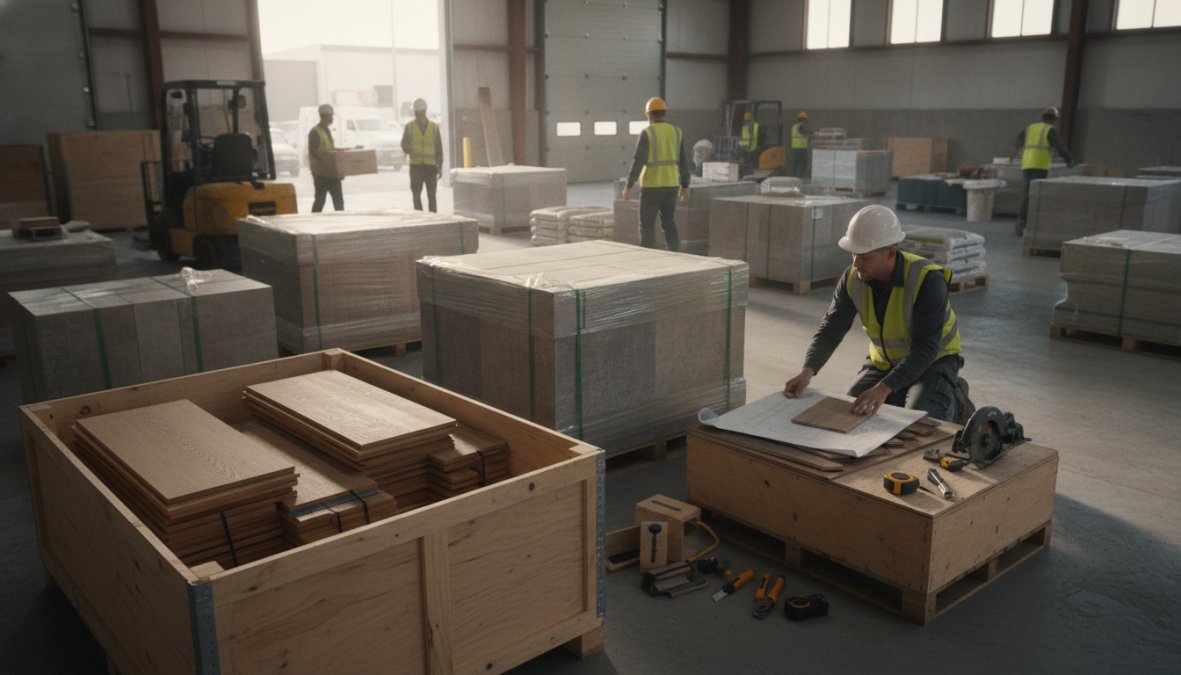
The flooring landscape has shifted dramatically over the past five years. Luxury vinyl tile (LVT) now dominates residential new construction, engineered hardwood remains popular for mid-range homes, and commercial projects increasingly demand waterproof solutions. Understanding performance characteristics, installation requirements, and cost implications of each material type is essential.
Hardwood and Engineered Wood for Residential Flooring
Engineered wood has become the smarter option for most builders over solid hardwood. Engineered wood consists of a real hardwood veneer bonded to a plywood base, giving it superior dimensional stability in new construction where HVAC systems haven't stabilized humidity levels yet. Solid hardwood can cup, crown, or gap within the first heating season if humidity fluctuates.
Installation typically takes 2-3 days for a 2,000 square foot space, with finishing adding another 5-7 days if site-finishing is required. Cost ranges from $6-12 per square foot installed for engineered options, versus $8-18 for solid hardwood. Pre-finished engineered wood from quality manufacturers holds up better than site-finished solid wood in high-traffic areas because the factory finish is applied in controlled conditions and cured under UV light.
Luxury Vinyl Tile (LVT) and Laminate for Durability
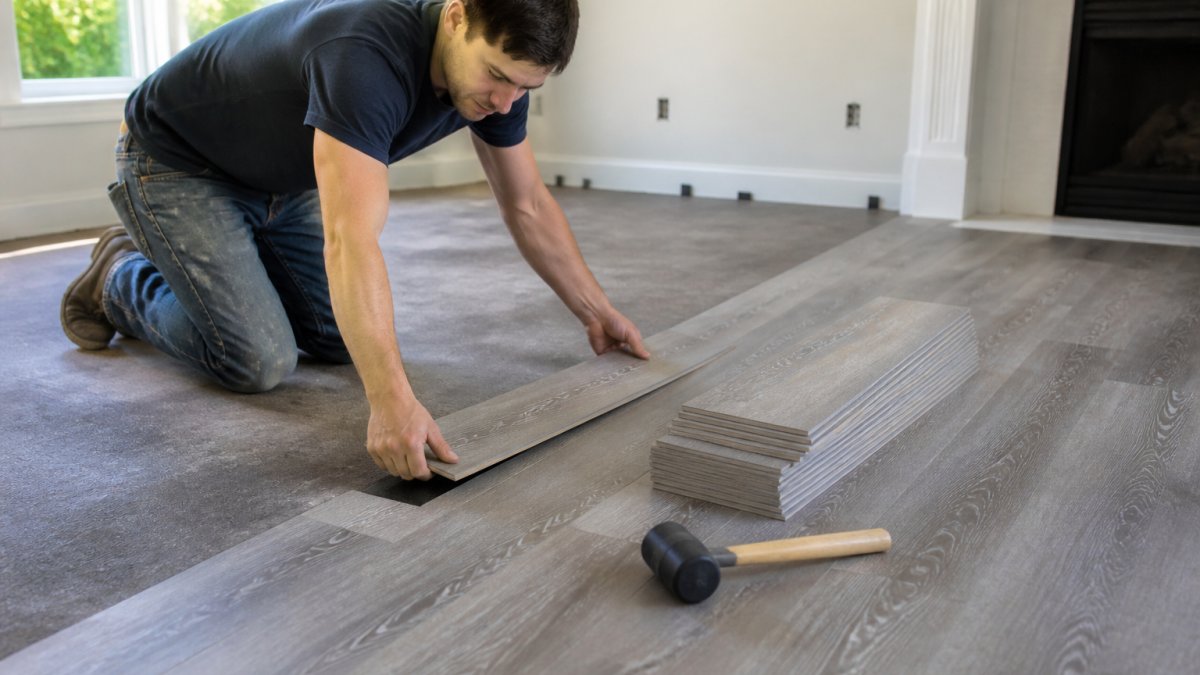
Luxury vinyl tile has fundamentally changed residential flooring by delivering hardwood aesthetics with waterproof performance at a fraction of the cost. Modern rigid core LVT installs faster and doesn't require underlayment in most applications. Installation speed is a major contractor advantage, LVT typically installs in 1-2 days with no drying time required, making it ideal for projects with timeline pressure or multifamily buildings where unit turnover speed matters.
Durability in LVT varies by quality tier. Budget LVT ($2-4 per square foot) shows wear within 3-5 years in high-traffic areas. Mid-range LVT ($5-8) lasts 7-10 years. Premium LVT ($9-15) can last 15+ years. The difference lies in wear layer thickness: budget options have 6-8 mil layers, while premium products offer 20-28 mil layers.
Laminate occupies a middle ground between budget vinyl and engineered hardwood. It's more durable than low-end LVT but less waterproof. Laminate works well for bedrooms and living areas but shouldn't be specified for kitchens or bathrooms. Installation takes 1-2 days.
Ceramic and Porcelain Tile for Commercial Applications
Porcelain tile dominates commercial flooring because it handles heavy foot traffic, moisture, and cleaning chemicals without degradation. Porcelain is fired at higher temperatures and has lower water absorption (less than 0.5% versus 3% for ceramic). For commercial applications, porcelain tile is the only acceptable choice, as ceramic absorbs moisture in kitchens and bathrooms, leading to mold growth and substrate failure.
Installation requires setting mortar specifically formulated for porcelain, and epoxy grout outperforms cement-based grout in wet environments. A skilled installer places 75-125 square feet per day, meaning a 5,000 square foot commercial space takes 40-65 days of labor. Cost ranges from $3-8 per square foot for tile material, plus $8-15 per square foot for installation and materials. For commercial kitchens, tiles with matte finishes or textured surfaces (COF rating of 0.60 or higher) prevent accidents.
Carpet Installation and Natural Stone Options
Carpet remains common in commercial office spaces and residential bedrooms, but its role in new construction has shrunk due to durability concerns. Installation quality determines longevity more than fiber quality. Proper seaming, stretch installation, and quality padding create carpets that last 10-15 years.
Natural stone adds prestige but requires expertise in handling and maintenance. Stone is porous and requires sealing before installation and periodic resealing during ownership. Stone installation costs $10-25 per square foot installed. Limestone and marble etch from acidic substances, while granite resists etching but can stain if not sealed properly. Most builders recommend stone only for visual impact areas rather than functional surfaces.
Wholesale Flooring for Contractors: Direct Sourcing Strategies
Wholesale flooring fundamentally changes project economics when sourced strategically. Direct sourcing from manufacturers or wholesale distributors eliminates retail markup, typically saving 20-35% on material costs. For a builder completing 10-15 homes per year, these savings compound into meaningful profit improvements.
The challenge is minimum order quantities. Most manufacturers require orders of 5,000+ square feet for direct pricing. Suppliers who aggregate multiple projects into bulk orders give builders wholesale pricing without inventory burden.
Bulk Procurement and Supply Chain Management
Bulk procurement requires forecasting accuracy. Ordering too much ties up capital; ordering too little creates project delays. Working with a supplier who can aggregate multiple projects into bulk orders solves this problem.
Lead times vary dramatically by material. Stock items ship in 3-5 days. Special orders take 4-8 weeks. Engineered hardwood from overseas suppliers takes 6-12 weeks. Suppliers who maintain local inventory reduce lead time risk and fulfill orders in days. Cost per square foot improves with order size, but the relationship isn't linear. Track actual savings per project; sometimes inventory costs exceed per-unit savings.
Lead Time Planning and Inventory Control
Lead time management separates smooth projects from chaotic ones. Order 2-3 weeks before installation to allow delivery while minimizing storage needs. For multifamily projects, timing becomes critical. A 50-unit apartment building might need 15,000-20,000 square feet of flooring with a 4-6 week lead time. If installation schedules slip, material arrives before units are ready, creating storage issues.
Track what's on hand, what's on order, and when each project needs material. A simple spreadsheet works for small operations. Larger builders benefit from flooring-specific inventory software integrated with project management systems.
Flooring Installation Best Practices for Builders
Installation quality determines whether clients are satisfied or frustrated. Poor installation leads to callbacks, warranty claims, and reputation damage.
Subfloor Preparation Standards by Material Type
Concrete subfloors must be tested for moisture using calcium chloride testing or relative humidity (RH) testing. Concrete with RH above 75% will cause adhesive failure and mold growth. Moisture mitigation is required before installation.
Wood subfloors must be flat within 3/16" over 10 feet. Moisture content should be 12% or lower before installation. Different materials have different tolerance levels: hardwood requires the flattest subfloors (within 3/16" over 10 feet), LVT and laminate are more forgiving (within 1/4" over 10 feet), and tile requires the flattest installation (within 1/8" over 10 feet). Acclimation requirements vary by material. Hardwood and engineered wood must acclimate for 3-7 days before installation. LVT and laminate require minimal acclimation (24 hours or less). Most flooring should be installed between 60-85°F and 30-65% relative humidity.
Installation Timelines and Project Management
Installation timelines depend on material type, space size, and installer experience. A typical single-family home (2,000 square feet) takes:
- Hardwood: 3-5 days installation + 5-7 days finishing
- Engineered wood: 2-3 days installation
- LVT: 1-2 days installation
- Laminate: 1-2 days installation
- Carpet: 1-2 days installation
- Tile: 5-10 days installation + 3-7 days grout curing
Project management means coordinating flooring installation with other trades. HVAC must be functional for acclimation, painting should be finished to avoid dust on new floors, and trim installation should be scheduled after flooring when possible. Quality control during installation prevents costly callbacks. Inspect subfloor preparation before material arrives, verify material matches specifications and color selections, and check installation daily for proper seaming, transitions, and finish quality.
How to Choose a Flooring Supplier for Your Projects
Choosing the right flooring supplier impacts material costs, lead times, installation quality, and warranty support. A good supplier offers wholesale pricing on quantities matching your project volume, local inventory reducing lead times, technical expertise on installation requirements, warranty support and claims processing, and flexibility on special orders. Evaluate suppliers on more than price. The cheapest supplier often has longer lead times, lower inventory, and minimal technical support.
Evaluating Warranty, Support, and Reliability
Warranty terms vary dramatically by supplier and manufacturer. Understand what's covered, whether material defects or installation issues are included, and what voids warranty coverage. Warranty support means the supplier backs the product if problems arise. A supplier who processes warranty claims quickly protects your reputation. Reliability means consistent delivery and quality. Track on-time delivery rates and material quality across multiple orders. Reference checks matter, ask the supplier for recent builder clients and contact them about delivery consistency, material quality, and pricing transparency.
Durable Flooring Options for New Homes and Multifamily
Durability requirements differ significantly between single-family homes and multifamily projects.
Residential vs. Commercial Durability Requirements
Residential flooring in single-family homes experiences moderate foot traffic (3-5 people daily) and needs to last 10-15 years. Multifamily residential experiences higher foot traffic (5-10 people daily) with tenant turnover and must last 15-20 years. Commercial flooring experiences heavy foot traffic (50-200+ people daily) and must exceed 20+ years. A single-family home can specify beautiful but delicate hardwood because the owner maintains it carefully. A multifamily building should specify rigid core LVT that looks like wood but withstands neglect and heavy cleaning. A commercial kitchen must specify porcelain tile that survives grease, heat, and aggressive scrubbing.
Waterproof and Sustainable Flooring for LEED Projects
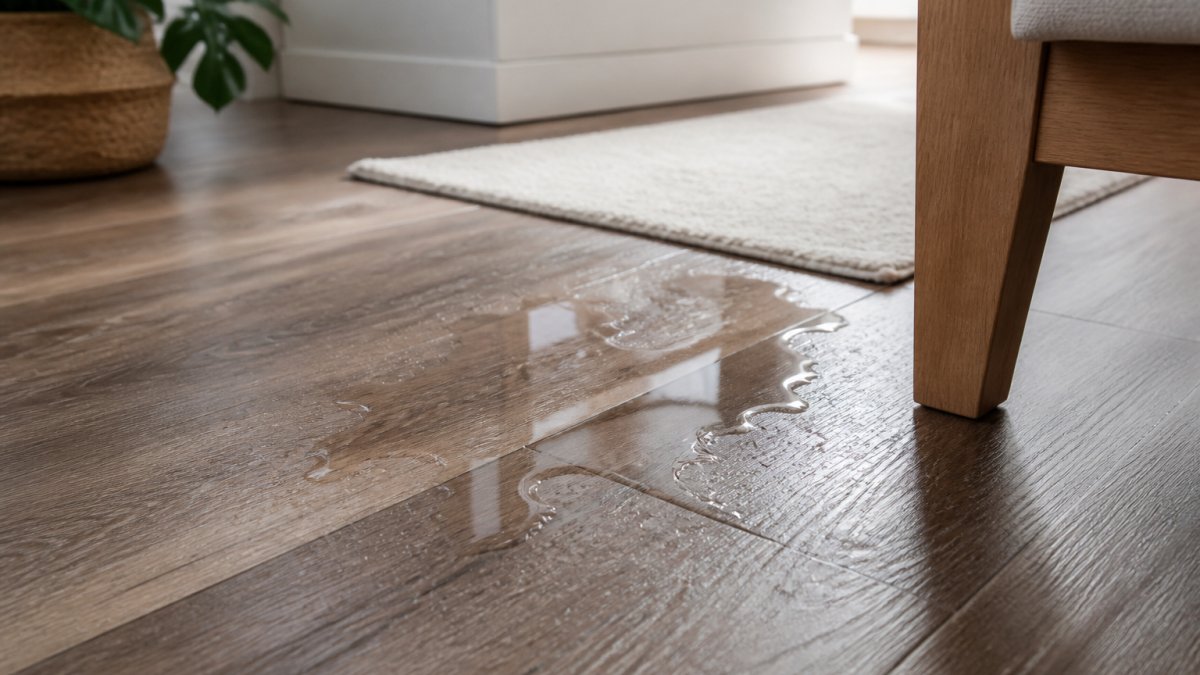
Waterproof flooring has become standard in kitchens and bathrooms. Rigid core LVT is waterproof throughout; the core doesn't absorb moisture. Engineered hardwood in bathrooms inevitably fails because water penetrates through grout lines and seams.
For LEED certification, flooring material sourcing matters. LEED projects should specify materials with recycled content (10-25%), rapidly renewable resources (bamboo, cork), low VOC emissions, and responsible forestry certification (FSC for wood products). Rigid core LVT can be specified with recycled content and low VOC certification. Bamboo qualifies as rapidly renewable. The waterproofing-sustainability balance requires careful material selection: sustainably sourced engineered hardwood for living areas and waterproof LVT with recycled content for wet areas.
Flooring for Builders and Contractors: Budgeting and Cost Control
Flooring represents 8-12% of total construction costs in residential projects and 5-8% in commercial projects. Controlling costs without sacrificing quality requires understanding where costs originate.
Estimating Material Costs and Labor
Material costs vary by type and quality tier:
| Material | Cost Range (installed) | Durability | Best For |
|---|---|---|---|
| Carpet | $3-8/sq ft | 10-15 years | Bedrooms, offices |
| Laminate | $4-9/sq ft | 8-12 years | Bedrooms, living areas |
| LVT | $5-12/sq ft | 10-20 years | Kitchens, bathrooms, multifamily |
| Engineered hardwood | $6-15/sq ft | 15-20 years | Living areas, bedrooms |
| Solid hardwood | $8-18/sq ft | 20-30 years | Premium residential |
| Ceramic tile | $3-8/sq ft | 20+ years | Bathrooms, commercial |
| Porcelain tile | $5-12/sq ft | 25+ years | Commercial, wet areas |
Labor costs are often underestimated. A skilled installer costs $50-100 per hour. A 2,000 square foot space with hardwood flooring takes 40-50 hours of labor, $2,000-5,000 in labor costs alone. Bulk purchasing reduces material costs 20-35% compared to retail pricing. A 50-unit multifamily project with 20,000 square feet of flooring might save $8,000-12,000 through wholesale sourcing. Installation efficiency affects labor costs; larger spaces with fewer transitions install faster than small spaces with complex layouts.
Avoiding Common Mistakes in Flooring Selection
The costliest mistakes happen during selection, not installation. Specifying incompatible materials, hardwood in a kitchen, carpet in a bathroom, laminate in a commercial kitchen, leads to failure. Underestimating lead times on special-order flooring creates project delays. Selecting based on aesthetics alone without considering durability causes premature failure in high-traffic areas. Skipping subfloor preparation costs more in rework than the preparation itself. Hiring the cheapest installer to save money often costs more in callbacks and warranty claims. Installing hardwood immediately upon delivery without acclimating causes expansion and contraction problems.
Flooring for builders and contractors requires balancing material selection, installation quality, cost control, and timeline management. The choices made during planning determine whether projects succeed or create costly problems. Working with a supplier who understands builder requirements and delivers both cost savings and quality support makes the difference.
Frequently Asked Questions
What are the best durable flooring options for new home construction?
For new homes, luxury vinyl tile (LVT), engineered hardwood, and porcelain tile offer excellent durability and cost-effectiveness. LVT provides waterproof protection and realistic wood aesthetics, engineered hardwood suits residential applications with better moisture resistance than solid hardwood, and porcelain tile works well in kitchens and bathrooms. Your choice depends on climate, foot traffic expectations, and budget. Multifamily projects often favor LVT and tile for their durability and low maintenance requirements.
How can contractors get wholesale flooring prices and bulk discounts?
Contractors access wholesale flooring for contractors pricing through direct relationships with distributors and manufacturers. Establish accounts with regional suppliers, commit to bulk orders, and negotiate volume discounts. Building long-term partnerships improves lead times and pricing. Many suppliers offer contractor-specific programs with tiered pricing based on order volume. Request quotes from multiple sources and factor in delivery costs and lead times when comparing wholesale options.
What subfloor preparation is required before flooring installation?
Subfloor preparation standards vary by material. Hardwood and engineered wood require moisture testing (typically 12% or less) and level surfaces within 3/8 inch over 10 feet. Tile and stone need structurally sound substrates with proper slope for drainage in wet areas. LVT requires smooth, clean subfloors free of debris. Concrete subfloors must be sealed and tested for moisture. Improper subfloor preparation is a common mistake that leads to warranty issues and callbacks. Always follow manufacturer specifications for your chosen flooring type.
How do I choose between residential and commercial flooring for multifamily projects?
Multifamily projects require flooring that balances residential aesthetics with commercial durability. Luxury vinyl tile and engineered hardwood work well for living spaces, while ceramic tile and porcelain suit common areas and commercial-grade carpet handles hallways. Commercial-grade materials withstand higher foot traffic and have better stain resistance. Consider LEED certification requirements if sustainability matters. Consult with your flooring supplier about products tested for multifamily applications, which face more wear than single-family homes.
This article was written using GrandRanker