 Ultimate guide
Flooring Installation Cost Estimates: 2026 Pricing Guide
Table of Contents
- Understanding Flooring Installation Cost Estimates
- Material Costs and Price Per Square Foot by Flooring Type
- Flooring Labor Rates and Installation Labor Costs
- Subfloor Repair Cost and Preparation Requirements
- Using a Flooring Cost Calculator for Accurate Estimates
- Cost to Install Hardwood Floors and Site-Specific Factors
- Hidden Costs: Demolition, Disposal, and Unexpected Expenses
- Post-Installation Maintenance Costs and Long-Term Value
Last Updated: July 25, 2026
Understanding Flooring Installation Cost Estimates
Getting accurate flooring installation cost estimates is essential for any home improvement project. The final bill depends on material selection, labor rates, and hidden costs that often surprise homeowners. At Hamptons carpet one floor and Home, we've helped hundreds of Suffolk County homeowners navigate this process and avoid sticker shock.
The difference between a $3,000 floor replacement and a $10,000 one often comes down to understanding what's included in the estimate. Most homeowners focus on price per square foot but miss the real cost drivers: subfloor repair, labor complexity, disposal fees, and site-specific challenges.
What's Included in a Cost Estimate
A professional flooring estimate should itemize labor separately from materials, include preparation work, and call out demolition or disposal fees upfront. Expect line items for: flooring material (per square foot), underlayment or moisture barrier, installation labor (per square foot), subfloor preparation, removal and disposal of old flooring, and finishing work like baseboards or transition strips.
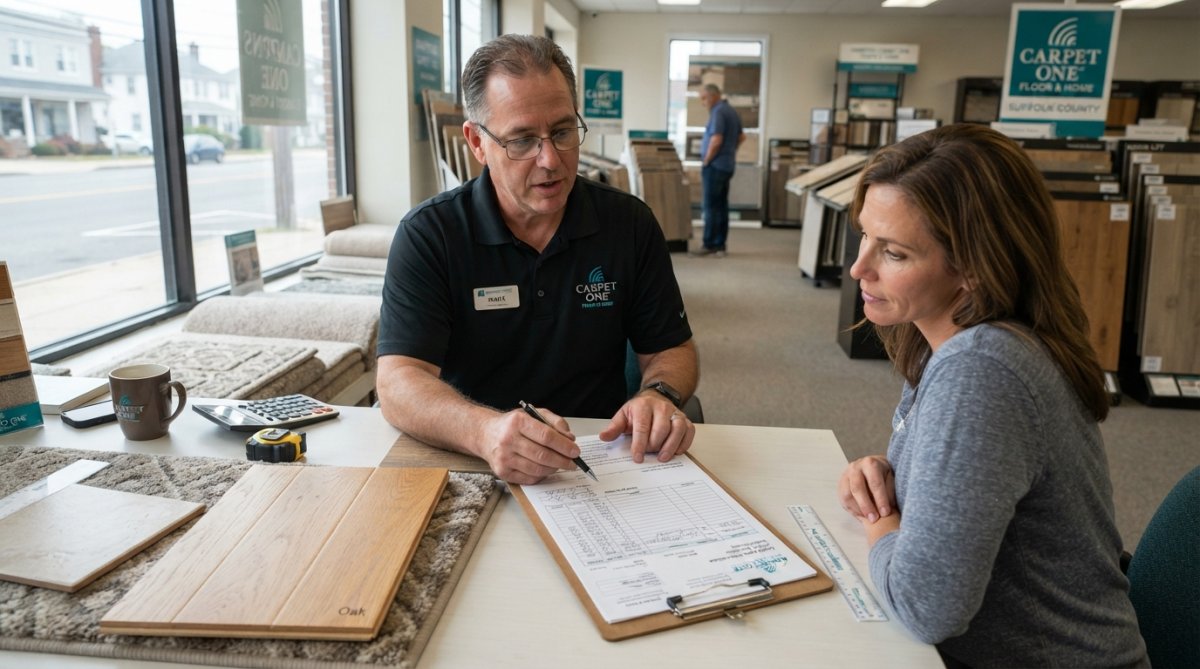
Real estimates require a site visit to measure square footage, inspect your subfloor, check for moisture issues, and understand your room layout.
Why Estimates Vary So Much
Two contractors can quote wildly different prices for the same project because installation costs depend on variables that aren't always obvious. A simple vinyl plank installation on a flat subfloor takes less labor than hardwood installation on an uneven floor in a historic home.
Regional market rates also drive variation. Labor costs in Suffolk County differ from upstate New York. Site conditions create the biggest surprises, water damage, rot, structural issues, asbestos in old adhesive, or uneven subfloors all require remediation before new flooring installs.
Material Costs and Price Per Square Foot by Flooring Type
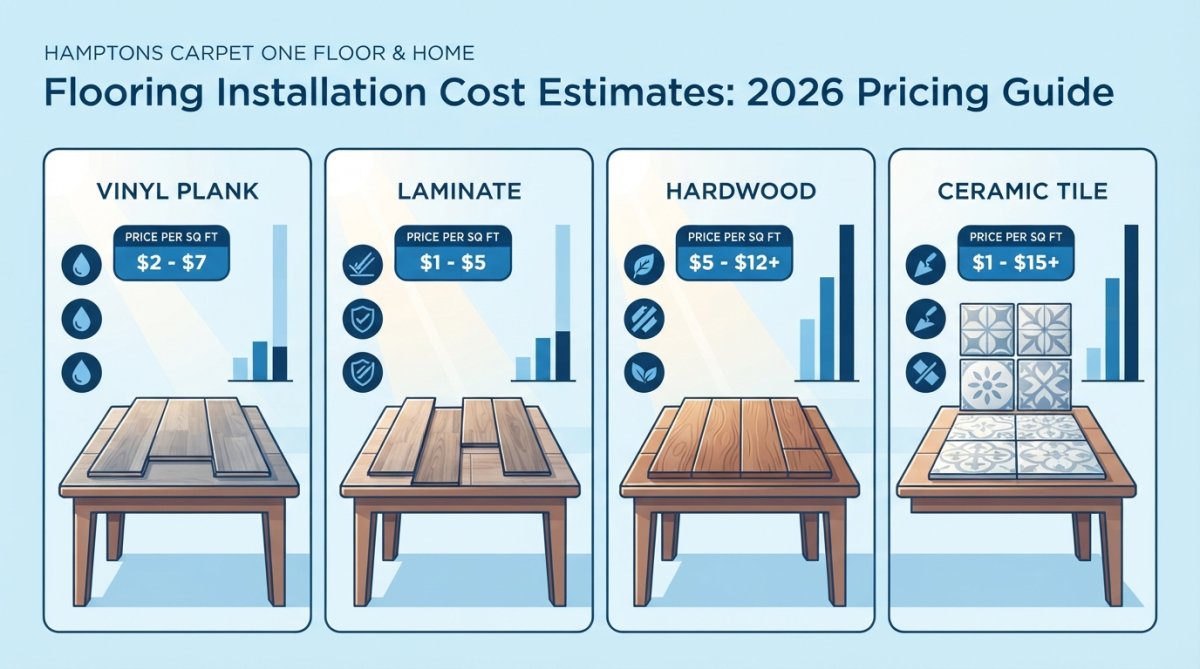
The material you choose sets the baseline for your entire project cost. Different flooring types have dramatically different price points, installation complexity, and durability.
Vinyl Plank and Laminate Flooring
Vinyl plank flooring offers the lowest material cost among quality options. Luxury vinyl plank (LVP) and laminate flooring both install quickly compared to hardwood or tile, reducing labor costs. The trade-off is durability: vinyl and laminate typically last 15-25 years with good maintenance, while hardwood can last 50+ years.
| Material | Typical Price Range | Installation Complexity | Best For |
|---|---|---|---|
| Vinyl Plank | Budget to mid-range | Low | Kitchens, bathrooms, high moisture |
| Laminate | Budget to mid-range | Low | Living areas, bedrooms |
| Hardwood | Mid-range to premium | High | Formal rooms, long-term investment |
| Tile | Mid-range to premium | High | Bathrooms, kitchens, entryways |
Hardwood and Tile Installation
Hardwood flooring commands higher material costs but offers unmatched aesthetics and longevity. Solid hardwood must be acclimated to your home's humidity before installation. The real cost driver for hardwood is installation labor, it requires skilled installers who understand wood movement, acclimation requirements, and finishing techniques. If your subfloor is uneven, you'll pay extra for leveling.
Tile flooring involves higher material costs and significantly higher installation labor. Tile setting requires proper substrate preparation, waterproofing in wet areas, precise layout, and grout finishing. Natural stone tile (marble, slate, granite) costs substantially more than ceramic or porcelain and requires expertise because stone is brittle and must be sealed after installation.
Flooring Labor Rates and Installation Labor Costs
Labor represents 40-60% of your total flooring project cost, depending on material and complexity.
How Labor Rates Are Structured
Flooring contractors typically quote labor per square foot, hourly, or as a fixed project fee. Per-square-foot pricing is most common: contractors might charge $2-5 per square foot for vinyl installation, $3-6 for laminate, $8-15 for hardwood, and $5-12 for tile, depending on regional rates and experience. Hourly rates for flooring installation typically range from $40-100+ per hour, with experienced installers commanding the higher end.
Professional Installer vs. DIY Project Considerations
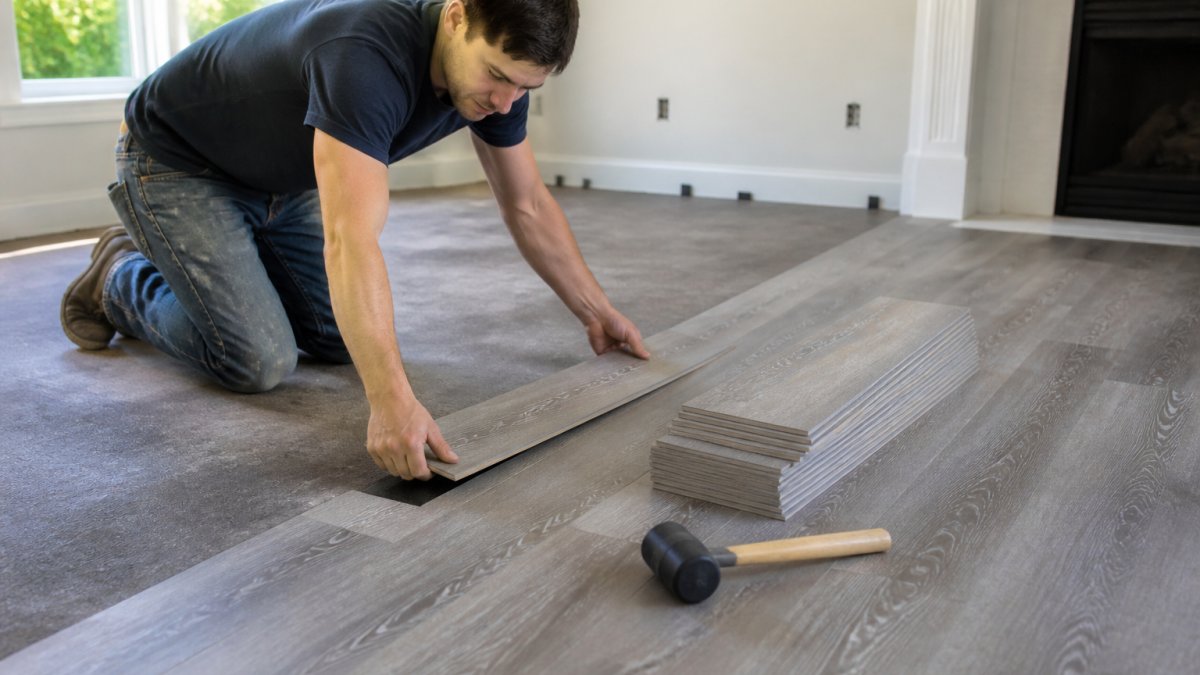
DIY flooring installation is tempting when labor costs approach material costs. For simple materials like vinyl plank or laminate, some homeowners successfully handle installation. For hardwood, tile, or complex layouts, DIY typically results in costly mistakes. Tools, equipment rental, and wasted materials add up quickly. For most people, professional labor and quality materials provide better long-term value than DIY installation.
Subfloor Repair Cost and Preparation Requirements
Subfloor condition is often the biggest surprise in flooring projects. A floor that looks fine on the surface may have serious issues underneath that must be addressed before new flooring installs.
Identifying Subfloor Issues Before Installation
Your subfloor is the structural layer beneath your finish flooring. Water damage is the most common issue, especially in kitchens, bathrooms, and basements. Soft, spongy spots indicate rot or delamination. Uneven or sloping subfloors prevent new flooring from sitting flat.
Asbestos in old adhesive or floor tiles is a health hazard that requires professional remediation before removal. If your home was built before 1980, assume older flooring contains asbestos and get it tested before disturbing it.
Underlayment and Moisture Barrier Expenses
Underlayment reduces noise, adds cushioning, protects flooring from minor subfloor imperfections, and provides moisture protection. Vinyl and laminate flooring almost always require underlayment. Hardwood typically requires underlayment only if your subfloor tends toward moisture. Tile requires a moisture barrier in wet areas plus a cement backer board for structural integrity.
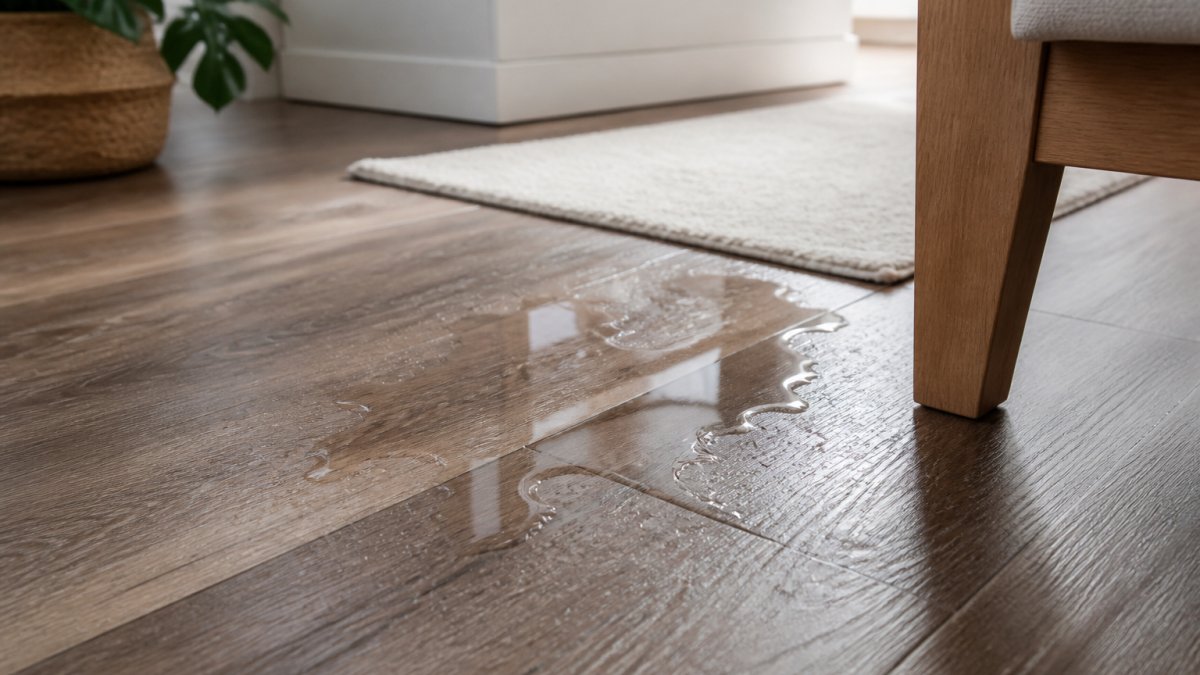
Moisture barriers are critical in bathrooms, kitchens, and basements. A vapor barrier prevents moisture from the subfloor from wicking up into your new flooring, which causes swelling, warping, and mold growth. The cost of underlayment typically adds $0.50-1.50 per square foot to your project. It's one of the few expenses that's always worth the investment; skipping underlayment to save a few hundred dollars often leads to floor failure within 5-10 years.
Using a Flooring Cost Calculator for Accurate Estimates
A flooring cost calculator helps you estimate project costs before contacting contractors. These tools account for square footage, material type, and sometimes labor rates to give you a ballpark figure.
Key Inputs: Square Footage and Room Dimensions
The first input for any flooring calculator is your room's square footage. Measure length and width in feet, then multiply to get total square footage. For irregular room shapes, break the space into rectangles, calculate each, then add them together. Room dimensions also matter because some layouts require more cuts and waste. A narrow hallway requires more cuts per square foot than a large open room.
Waste Factor and Project Scope Adjustments
Professional installers account for waste, material lost to cuts, mistakes, and breakage. Waste factor typically ranges from 5-10% for simple layouts to 15-20% for complex layouts with many angles and obstacles.
Project scope extends beyond just flooring installation. Consider whether your project includes removal and disposal of old flooring, subfloor repair or leveling, underlayment or moisture barrier, baseboards or trim removal and reinstallation, transition strips between rooms, and finishing work like stain or sealing.
Cost to Install Hardwood Floors and Site-Specific Factors
Hardwood installation is more complex than most flooring projects, and site-specific conditions can dramatically affect costs.
Hardwood Installation Complexity and Durability Considerations
Hardwood must be acclimated to your home's humidity for 7-14 days before installation. This acclimation period prevents the wood from expanding or contracting after installation, which causes gaps and warping.
The installation method affects cost. Nail-down installation uses a pneumatic nailer and is faster, making it cheaper. Glue-down installation takes more time and uses moisture-resistant adhesive, making it more expensive but better for moisture-prone areas. Hardwood durability justifies the higher upfront cost, a properly installed hardwood floor lasts 50+ years and can be refinished multiple times.
Coastal and Historic Home Challenges
Homes in coastal areas face unique challenges. Salt air accelerates wood decay, and high humidity creates moisture issues that damage hardwood. Historic homes with original hardwood underneath newer flooring present both opportunity and challenge. If the original hardwood is salvageable, refinishing it costs less than installing new hardwood.
Uneven floors in older homes require leveling before new hardwood installs. Self-leveling compounds work for minor variations. For significant slopes or settling, contractors may need to shim joists or replace sections of subfloor, adding $1,000-3,000+ depending on severity.
Hidden Costs: Demolition, Disposal, and Unexpected Expenses
Most homeowners focus on material and installation costs and miss the expenses that appear during the project.
Demolition and Removal Fees
Removing old flooring is labor-intensive and often creates unexpected costs. Demolition itself costs $1-3 per square foot depending on flooring type and subfloor condition. Disposal of old flooring adds another $0.50-1.50 per square foot or a flat fee of $200-500 depending on volume.
Asbestos removal is a separate line item. If your old flooring or adhesive contains asbestos, a licensed abatement contractor must remove it before general demolition begins, typically costing $1,000-3,000+ depending on the extent of contamination.
Baseboards, Transition Strips, and Finishing Work
When you replace flooring, baseboards often need removal and reinstallation. Removing baseboards adds labor cost. If baseboards are damaged during removal, you'll need new ones, which adds material cost. Quality baseboards cost $2-8 per linear foot depending on material.
Transition strips between rooms or between different flooring types add $1-3 per linear foot. Finishing work like staining or sealing hardwood, grouting tile, or caulking seams adds labor time and sometimes material cost.
Post-Installation Maintenance Costs and Long-Term Value
The true cost of your flooring extends beyond installation. Maintenance, repairs, and eventual replacement affect the long-term value of your investment.
Warranty Coverage and Contractor Fees
Quality flooring typically comes with manufacturer warranties covering defects in the material. Installation warranties from contractors cover workmanship for a specified period, usually 1-5 years. Maintenance costs vary by flooring type. Hardwood requires periodic refinishing (every 7-10 years) to maintain appearance and protection, costing $1,500-3,000+ depending on square footage. Vinyl and laminate require regular cleaning but rarely need refinishing. Tile needs periodic regrouting and sealing, costing $200-500+ depending on extent.
Sustainability and Environmental Impact Considerations
Choosing flooring with environmental impact in mind sometimes affects upfront cost but can provide long-term savings. Sustainably harvested hardwood or reclaimed wood costs more upfront but supports responsible forestry. Bamboo flooring offers a renewable alternative to hardwood at similar or lower cost. The most sustainable choice isn't always the most expensive. A durable, long-lasting floor that you don't replace frequently has lower environmental impact than cheaper flooring replaced every 15 years.
Getting flooring installation cost estimates shouldn't mean accepting the first quote that arrives. The more you understand about what drives costs, material selection, labor complexity, site conditions, and hidden expenses, the better equipped you are to make decisions that balance budget with quality and longevity.
At Hamptons carpet one floor and Home, we work with homeowners throughout Suffolk County to break down these costs transparently. We measure your space, assess your subfloor, discuss your material preferences, and provide detailed estimates that account for labor, materials, underlayment, and finishing work. Our team has handled coastal home challenges, historic floor restoration, and complex installations that require specialized expertise.
National Association of Home Builders guidance on flooring selection and cost factors
U.S. Consumer Product Safety Commission standards for flooring materials and installation
The Spruce home improvement cost estimation guide for flooring projects
Frequently Asked Questions
What factors affect flooring installation cost estimates the most?
The primary factors are material type, square footage, labor rates in your region, and site conditions. Subfloor preparation, underlayment requirements, and whether you need demolition all significantly impact your total project cost. Hardwood typically costs more than laminate or vinyl plank. Coastal properties may face higher labor rates and durability demands. Always request an installation quote that itemizes each cost component so you understand what you're paying for.
How is flooring installation cost calculated per square foot?
Cost per square foot combines material price per square foot plus labor rates per square foot. Material costs vary widely by flooring type, vinyl plank is generally lower, while hardwood installation commands premium pricing. Labor rates depend on your region and installer experience. Your flooring cost calculator should account for waste factor (typically 5-10%), room dimensions, and any subfloor repair needs. Request a detailed cost breakdown from your contractor to see exactly how they arrived at the per-square-foot figure.
What are common hidden costs I should expect in a flooring installation quote?
Hidden costs often include demolition and disposal fees, subfloor repair, underlayment and moisture barrier installation, baseboards, and transition strips. If your home has uneven floors or moisture issues, expect additional expenses. Contractors may charge extra for site conditions like difficult access or existing hardwood that requires special handling. Ask your professional installer upfront about potential surprises, and request a detailed installation quote that breaks down every line item. This prevents the shock of costs doubling mid-project.
How much more expensive is hardwood flooring installation compared to other types?
Cost to install hardwood floors is typically 2-3 times higher than laminate or vinyl plank due to material costs and labor complexity. Hardwood requires skilled professional installers, proper subfloor preparation, and moisture barriers, especially critical in coastal areas like Suffolk County where salt air and humidity affect durability. The investment reflects hardwood's longevity and aesthetic value, but factor in ongoing maintenance costs. Compare total cost of ownership, not just installation labor, when deciding between flooring types for your specific climate and lifestyle.
This article was written using GrandRanker