 Ultimate guide
Hampton Flooring Center: Suffolk County Flooring Experts
Table of Contents
- Your Local Flooring Partner for Suffolk County Homes and Businesses
- Flooring Materials for Every Room and Coastal Condition
- Luxury Vinyl Plank vs Hardwood: Which Fits Your Lifestyle?
- Why Choose Us as Your Residential Flooring Contractors on Long Island
- Transparent Flooring Installation Cost Estimates
- A Flooring Process Designed Around Your Family's Schedule
- Visit Our Showroom or Book a Consultation
- Frequently Asked Questions
Last Updated: September 7, 2026
Your Local Flooring Partner for Suffolk County Homes and Businesses
Choosing the right flooring for a Suffolk County home means balancing coastal humidity, sandy foot traffic, and the architectural character of Long Island properties. At Hamptons carpet one floor and Home, we serve as a floor covering retailer for all of Suffolk County, helping homeowners and businesses find materials that genuinely last. The hampton flooring center approach starts with understanding how your space is actually used before a single sample is pulled.
Most flooring decisions fail not on aesthetics but on fit. A material that looks stunning in a showroom can warp within a season when exposed to salt air and moisture. Our consultation process prioritizes durability and maintenance alongside design.
Flooring Materials for Every Room and Coastal Condition
Suffolk County's coastal environment demands flooring that resists moisture, humidity, and the constant tracking of sand and salt. According to the Better Business Bureau's 2026 business profile, our product range spans carpet, hardwood, laminate, tile, luxury vinyl, and natural stone, giving every room a material matched to its specific conditions.
For kitchens and bathrooms where water is a daily reality, waterproof options like luxury vinyl tile and tile installation handle spills without warping. Living areas and bedrooms often suit the warmth of hardwood flooring or the softness of carpet underfoot. Commercial storefronts need durable flooring that withstands constant foot traffic, which is why carpet tiles and luxury vinyl plank dominate our commercial recommendations.
Luxury Vinyl Plank vs Hardwood: Which Fits Your Lifestyle?
The luxury vinyl plank vs hardwood decision comes down to how you live, not just how you want a room to look. Hardwood offers timeless aesthetics and can be refinished over decades, but it requires vigilance against moisture and scratches. Luxury vinyl plank delivers the look of wood with superior waterproofing and scratch resistance, making it a strong choice for beach homes and busy families.
For a Suffolk County property near the water, luxury vinyl plank often wins because it handles humidity fluctuations without cupping or gapping. Hardwood remains a beautiful option for interior rooms away from entry points, where moisture exposure is lower. Families with pets and children frequently prefer vinyl for its low-maintenance, easy-to-clean surface, while those prioritizing long-term refinishing potential lean toward hardwood.
Hardwood: The Timeless Investment
Solid hardwood is a classic choice that can add resale value to a home. Its greatest strength is longevity: with proper care, a solid oak or maple floor can be sanded and refinished multiple times over several decades. However, solid wood is dimensionally unstable. In Suffolk County's humid summers and dry winters, solid planks can expand and contract, leading to gaps or cupping if the wood was not properly acclimated. It is also vulnerable to scratches from pet claws and water damage from spills.
Best for: Formal living rooms, dining rooms, and bedrooms away from exterior doors. If you have large dogs or young children who frequently spill drinks, hardwood will demand vigilance.
Engineered Hardwood: The Coastal Compromise
Engineered hardwood features a real wood veneer bonded to multiple layers of plywood or high-density fiberboard. This cross-ply construction makes it significantly more dimensionally stable than solid wood, allowing it to withstand the humidity swings common in coastal homes. You get the look and refinishing potential of real wood (depending on the veneer thickness) with better resistance to moisture-related warping. It can often be installed in basements or over concrete slabs where solid wood is not recommended.
Best for: Open-concept living areas, kitchens, and any room where you want the warmth of wood but need more stability than solid hardwood can offer in a coastal climate.
Luxury Vinyl Plank (LVP): The Performance Leader
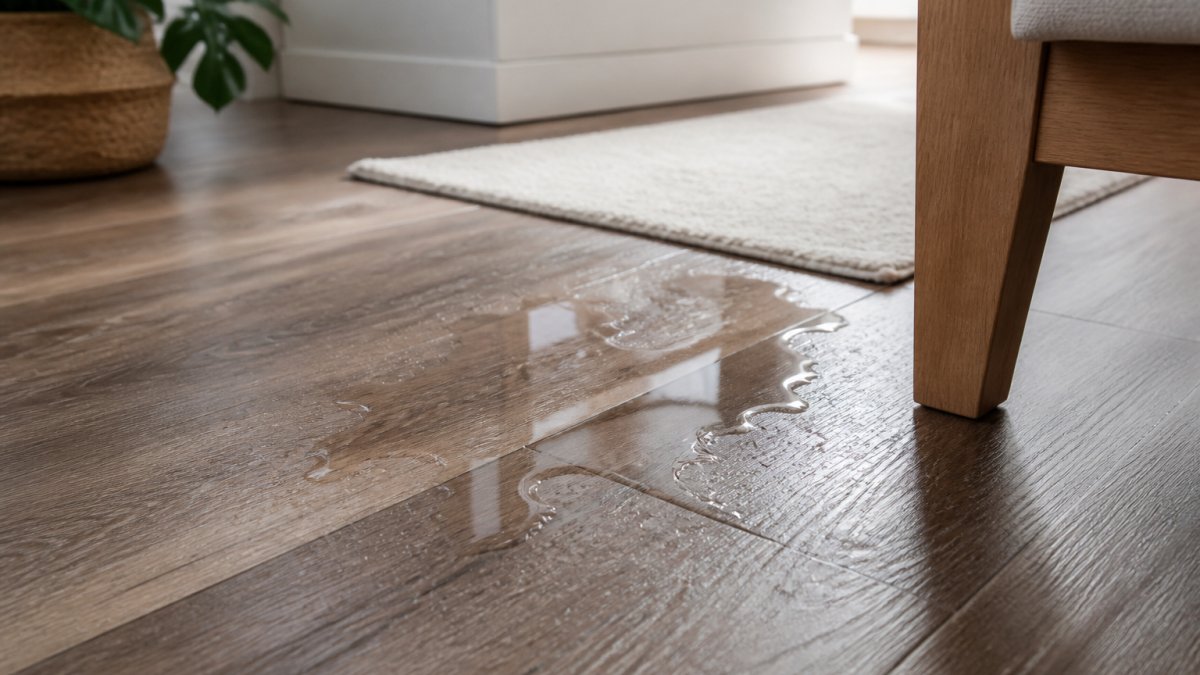
LVP is a waterproof, synthetic flooring product that convincingly mimics wood grain. Its core construction makes it impervious to standing water, and its wear layer (measured in mils) protects against scratches and scuffs. A 12-mil wear layer suits most homes, while 20-mil or higher is recommended for high-traffic commercial spaces or homes with multiple large pets. LVP is softer and warmer underfoot than tile and quieter than hardwood. Its primary drawback is that it cannot be refinished; when the wear layer shows signs of age, the planks must be replaced.
Best for: Kitchens, bathrooms, mudrooms, entryways, and any room in a beach house where sand and moisture are a constant presence. It is the most forgiving material for busy family life.
Laminate: The Budget-Friendly Mimic
Laminate flooring uses a photographic layer under a clear protective coating, bonded to a dense fiberboard core. Modern laminate has improved dramatically in realism and water resistance. While not fully waterproof like LVP, many products feature waterproof cores and sealed edges that handle occasional spills. Laminate is generally more scratch-resistant than hardwood but can chip on its edges and is harder and noisier underfoot than LVP.
Best for: Budget-conscious renovations in living rooms, bedrooms, and hallways where moisture is not a primary concern.
Tile and Natural Stone: The Moisture-Proof Option
Porcelain and ceramic tile are the most water-resistant flooring options available. Porcelain, in particular, has a very low water absorption rate, making it ideal for bathrooms, laundry rooms, and entryways. Natural stone like travertine or slate offers a high-end aesthetic but requires more maintenance, including periodic sealing. Tile is cold and hard underfoot, which is why many homeowners pair it with radiant heating in bathrooms.
Best for: Bathrooms, laundry rooms, mudrooms, and any area where water is a daily occurrence.
The Decision Matrix for Suffolk County Living
- What is the moisture risk? If the room has a sink, toilet, or direct access to the outdoors, choose a waterproof material like LVP or tile.
- Who walks on this floor? Homes with large dogs or active children should prioritize scratch and impact resistance, pointing toward LVP or tile over hardwood.
- What is your maintenance tolerance? If you do not want to worry about wiping up spills instantly or scheduling periodic refinishing, LVP and laminate require the least ongoing effort.
| Material | Water Resistance | Scratch Resistance | Maintenance | Best For |
|---|---|---|---|---|
| Solid Hardwood | Low | Moderate | High; requires refinishing | Formal rooms, low-moisture areas |
| Engineered Hardwood | Moderate | Moderate | Moderate; limited refinishing | Coastal living areas, kitchens |
| Luxury Vinyl Plank | Very High | High | Low; sweep and mop | Coastal homes, kitchens, families, basements |
| Laminate | Moderate | High | Low; sweep and dry mop | Budget projects, bedrooms, hallways |
| Porcelain Tile | Very High | Very High | Low; grout needs periodic sealing | Bathrooms, entryways, laundry rooms |
Why Choose Us as Your Residential Flooring Contractors on Long Island
Finding residential flooring contractors long island residents can trust comes down to accountability and follow-through. As a certified woman-owned business with over 40 years of industry experience, according to our company profile, Hamptons carpet one floor and Home brings a level of care that national chains rarely match. We are also a BBB Accredited Business, a designation that signals our commitment to resolving any issue fairly as noted in our business listing.
It means the team handling your installation has seen the quirks of older Long Island homes, from uneven subfloors to original hardwood hiding beneath old carpet. We prepare the subfloor properly rather than rushing to lay material over problems, and when you call with a question after installation, you reach people who remember your project.
Transparent Flooring Installation Cost Estimates
One of the biggest fears homeowners carry into any renovation is the surprise cost increase halfway through the job. A quote that comes in suspiciously low often means something was left out, and "subfloor issues" become a convenient excuse to raise the price later.
Transparent flooring installation cost estimates start with an honest conversation about what your project actually involves. During our assessment, we look at the existing subfloor condition, the scope of demolition, and the specific materials you have selected. This allows us to provide a flooring estimate that reflects the real work required, not an optimistic number designed to win the bid.
We encourage every customer to understand what their quote includes before signing. Ask about subfloor preparation, removal of old flooring, moving furniture, and trim work. A detailed estimate that accounts for these factors protects you from surprises and ensures the installer has the time to do the job correctly.
A Flooring Process Designed Around Your Family's Schedule
Renovations are disruptive, and the dust and noise of installation can turn a home upside down for weeks. Our installation process is planned around your family's routine, not the other way around. We discuss timing upfront, including how many days the work will take and what areas will be affected.
For families with young children or pets, we can phase the work room by room so you always have a livable space. For businesses, we schedule installations during off-hours to minimize disruption. The goal is to complete the job efficiently while keeping your daily life as normal as possible.
What Actually Happens on Installation Day
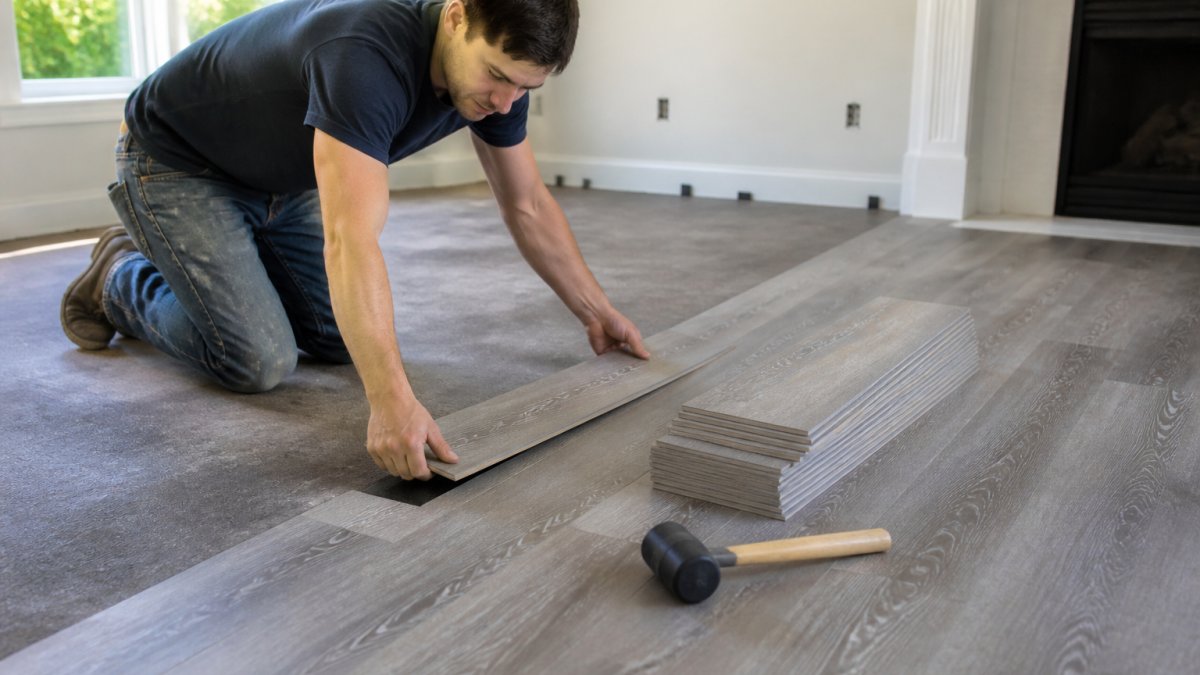
Most homeowners have never watched a professional flooring crew work, which leads to uncertainty about what to expect. Here is the step-by-step sequence we follow for a typical hardwood or LVP installation:
Phase 1: Pre-Installation Preparation (1-2 days before)
- Acclimation: Materials are delivered to your home and left in the installation area, unopened, for 48-72 hours. This allows the flooring to adjust to your home's temperature and humidity, preventing expansion or contraction after installation. Skipping this step is the leading cause of warped floors.
- Site Walkthrough: Our lead installer walks through the project area with you to confirm the scope, identify any furniture that needs moving, and flag any potential issues with door clearances or transitions.
Phase 2: Subfloor Assessment and Preparation (Day 1)
- Moisture Testing: We use a moisture meter to test the concrete slab or wooden subfloor. If readings are above acceptable thresholds, we stop and discuss mitigation options before proceeding. This is a non-negotiable step for any floor that is supposed to last.
- Leveling and Repair: We fill low spots with self-leveling compound and sand down high spots. We also check for loose boards or squeaks in wooden subfloors and secure them. This step is invisible in the final result but determines whether your floor feels solid or spongy underfoot.
- Old Flooring Removal: If you are replacing existing flooring, we remove it and haul it away. This includes pulling up staples, nails, and adhesive residue left behind.
Phase 3: Installation (Days 2-3, depending on square footage)
- Underlayment: For LVP and engineered hardwood, we install a vapor barrier or acoustic underlayment. This protects against moisture from below and reduces sound transmission.
- Layout Planning: We measure the room and plan the plank layout to minimize narrow cuts at walls and ensure a straight, visually balanced run.
- The Install: Planks are clicked together or nailed down, depending on the product. We maintain a consistent expansion gap around the perimeter of the room, which will be hidden by baseboard trim. This gap is critical; without it, floors buckle as they expand.
- Transitions and Trim: We install transition strips where the new floor meets other flooring types, and we reinstall or replace baseboard and quarter-round molding to give the room a finished look.
Phase 4: Final Walkthrough and Cleanup (Final Day)
- Detailed Cleanup: We vacuum and wipe down the installation area, removing all dust and debris. We do not leave your home dirtier than we found it.
- Walkthrough with You: We walk the floor with you, checking for any visible issues, ensuring transitions are flush, and confirming that doors still open and close properly.
- Care Instructions: We provide a written care guide specific to your new floor, including recommended cleaning products and what to avoid.
How Long Does Each Phase Take?
For a typical 500-square-foot living area, you can expect the following timeline:
- Acclimation: 48-72 hours (no crew on site)
- Subfloor prep and removal: 1 full day
- Installation: 1-2 full days
- Trim and transitions: Half day
- Total active work time: 2.5 to 3.5 days
Larger areas, complex layouts, or significant subfloor repairs will extend this timeline. We provide a detailed schedule in your estimate so you know exactly what to expect before we start.
Visit Our Showroom or Book a Consultation
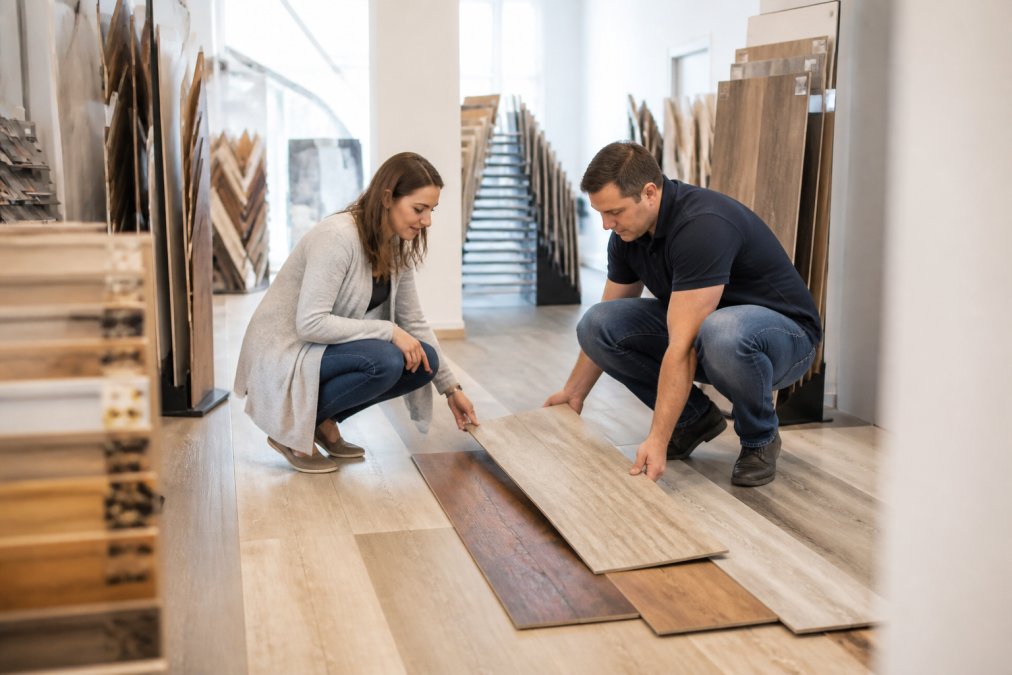
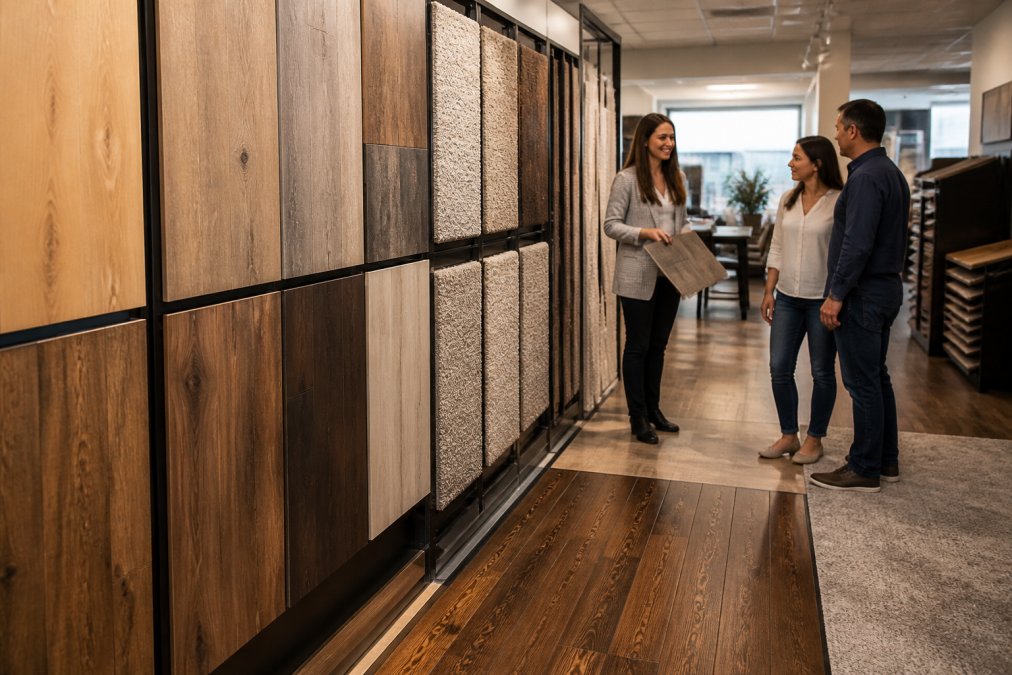
Seeing and touching flooring materials in person remains the best way to make a confident choice. Photographs flatten texture and color, and a sample in your hand under your own lighting behaves differently than it does under showroom lights. That is why we encourage every Suffolk County homeowner to visit our showroom, feel the difference between materials, and take samples home to view in their actual space.
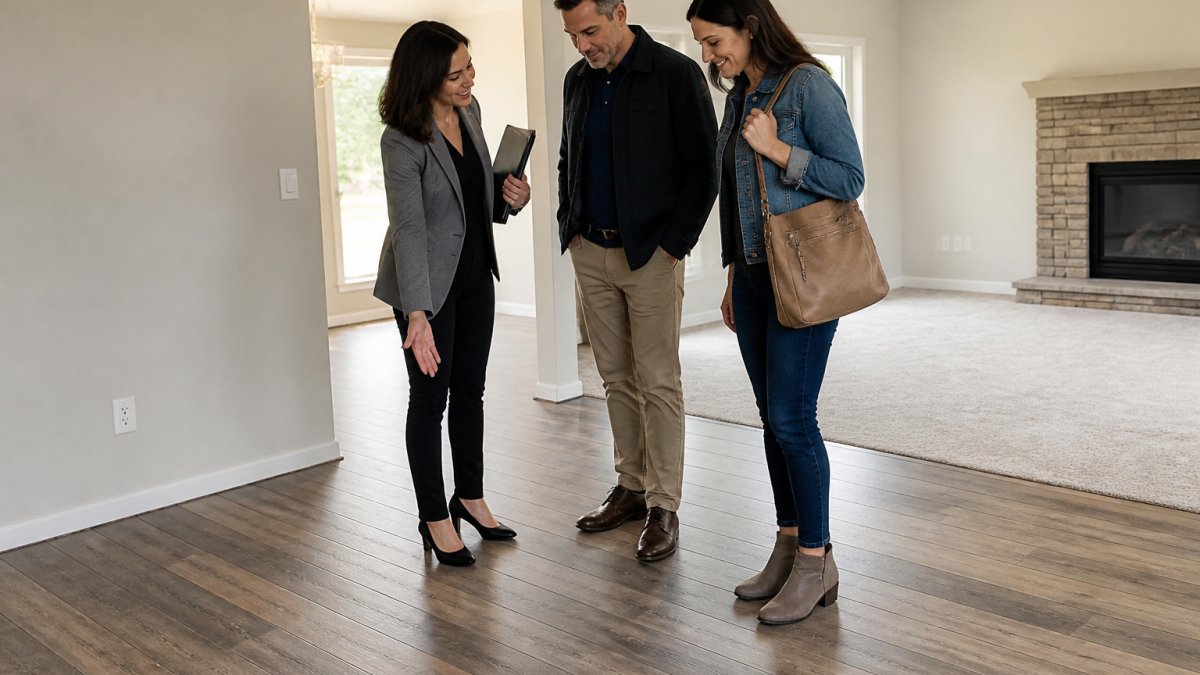
During a consultation, we walk through your project goals, discuss the realities of coastal living, and narrow down options that fit both your aesthetic and your budget. We cover flooring maintenance expectations honestly, because a floor that requires more care than you want to give will eventually disappoint you.
Ready to start your flooring renovation? Get started with Hamptons carpet one floor and Home and find flooring that handles Suffolk County living with confidence. Visit our showroom to browse samples, ask questions, and book a project estimation for your home or business.
Frequently Asked Questions
What makes Hampton Flooring Center different from other flooring stores?
We are a family-owned, certified woman-owned business with over 40 years of experience serving Suffolk County. As a BBB Accredited business, we focus on transparent quotes and meticulous installation. Our team provides personalized guidance to find flooring that matches your style, budget, and the unique demands of coastal living, without the pressure of a big-box store.
How do I get a flooring installation cost estimate for my home?
Contact our showroom to schedule a consultation. We provide detailed flooring installation cost estimates after assessing your space, including subfloor preparation needs. This transparent approach helps prevent surprise costs. The final price depends on your material choice, room size, and project scope. Our team will walk you through every line item before work begins.
Can you handle tricky installations in older historic homes?
Yes. We regularly work on older properties in Suffolk County that have uneven floors or original hardwood underneath. Our installers have the experience to manage subfloor preparation and precise fitting required for these unique challenges. We assess the conditions upfront and discuss the best approach to protect your home's character while delivering a durable, beautiful new floor.
What is the best flooring for a beach house with sand and moisture?
For coastal homes, we often recommend luxury vinyl plank or tile. These options offer excellent waterproofing and durability, standing up to sand and salt air better than many other materials. We also carry moisture-resistant laminate options. During a consultation, we can discuss which products best fit your specific exposure levels and maintenance preferences.