 Comparison
Herringbone vs Chevron Flooring Cost Comparison (2026)
Table of Contents
- Herringbone vs Chevron: Cost Comparison at a Glance
- What Drives the Price Difference Between Herringbone and Chevron?
- Herringbone Flooring Installation Cost per Square Foot
- Chevron Wood Floor Waste Percentage and Material Costs
- Installation Complexity: Labor Time and Subfloor Prep
- Durability, Maintenance, and Long-Term Value
- Which Pattern Should You Choose?
- Get Expert Advice for Your Flooring Project
- Frequently Asked Questions
Last Updated: September 5, 2026
Herringbone vs Chevron: Cost Comparison at a Glance
A 2026 cost analysis from Floorboard Planner's herringbone vs chevron pricing study estimates herringbone flooring at $8 to $15 per square foot, while chevron runs $12 to $25 per square foot. That gap often surprises homeowners, since the two patterns look similar at a glance. The difference comes down to geometry: chevron planks require precision cuts at matching angles, while herringbone uses simple rectangular blocks. At Hamptons carpet one floor and Home, we guide Suffolk County homeowners through this flooring cost comparison daily, and the choice affects both your upfront budget and long-term satisfaction. Below, we break down exactly where every dollar goes so you can decide with confidence.
What Drives the Price Difference Between Herringbone and Chevron?
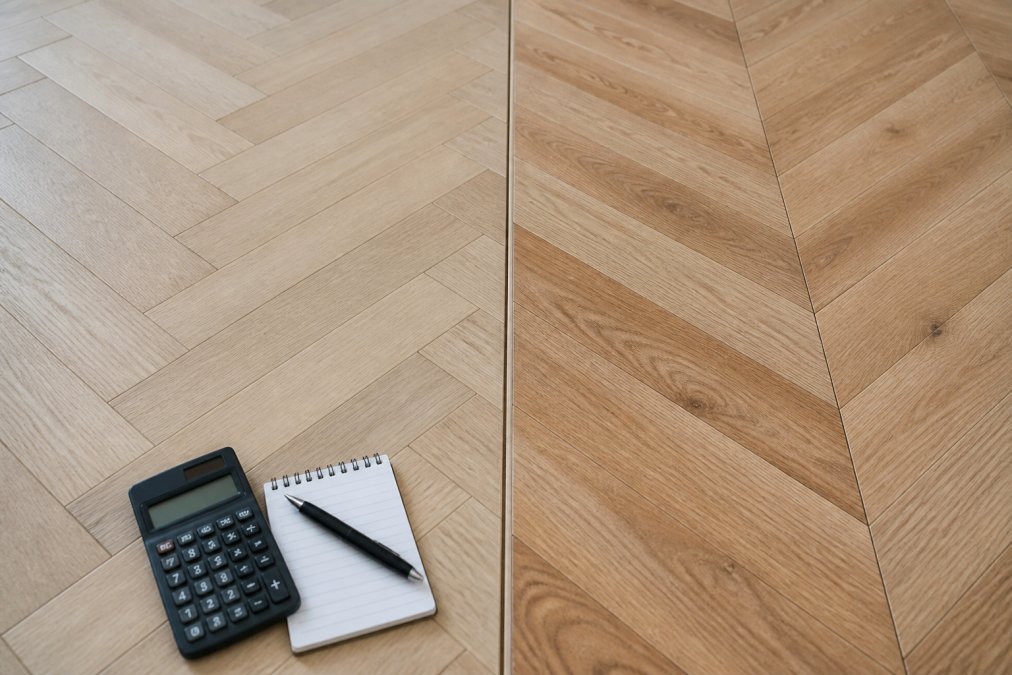
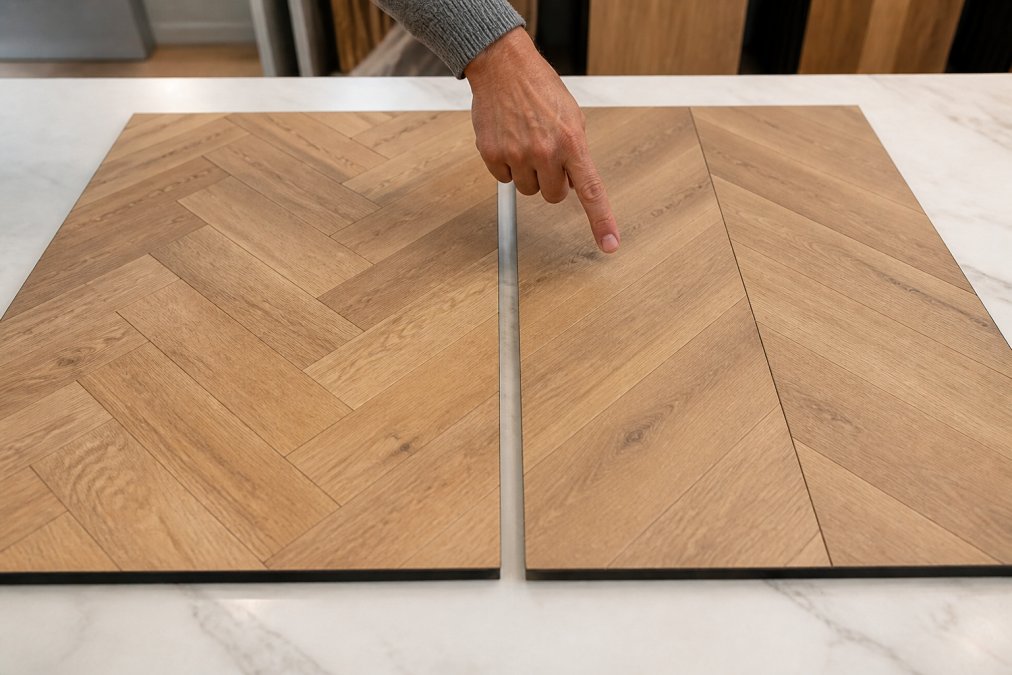
Industry data indicates that chevron flooring is generally 10-30% more expensive than herringbone, primarily because planks must be precision-cut at matching angles before installation (Robbins chevron vs herringbone guide). Herringbone planks are simply cut square at both ends and laid at a 45-degree angle, creating that classic zigzag. Chevron planks feature mitered edges that meet in a clean, continuous arrow point. That precision alignment demands tighter manufacturing tolerances and more skilled installation. The visual payoff is a sleek, directional pattern favored in formal spaces. Herringbone offers a more broken, textural appeal that reads casual and traditional.
Herringbone Flooring Installation Cost per Square Foot
Most cost guides stop at "herringbone is cheaper because the cuts are simpler." That does not tell you what your contractor will actually quote. To make this comparison useful, we break the herringbone price down into the two line items that appear on a real flooring estimate: material and labor.
Material cost per square foot
For a standard 3/4-inch solid oak herringbone plank (pre-finished, mid-grade), expect to pay $6 to $11 per square foot for the product itself. Pre-finished engineered herringbone in the same grade runs slightly less, typically $5 to $9 per square foot, because the veneer layer uses less solid wood. The $8 to $15 per square foot figure quoted earlier in this article includes the waste factor built in, meaning you are paying for 15-20% more material than your room's actual square footage.
Here is how that waste factor translates to real dollars on a 400-square-foot room:
| Line item | Calculation | Cost range |
|---|---|---|
| Material (solid oak, $6-$11/sq ft) | 400 sq ft × 1.175 avg waste | $2,820 - $5,170 |
| Material (engineered, $5-$9/sq ft) | 400 sq ft × 1.175 avg waste | $2,350 - $4,230 |
Labor cost per square foot
Labor for herringbone installation runs $4 to $8 per square foot for a competent installer, roughly double what the same installer charges for straight-lay plank flooring. The premium exists because every row requires a 45-degree angle cut at both ends, and the installer must constantly check that the zigzag pattern stays true across the room. A 400-square-foot room typically takes 2 to 3 days of labor, versus 1 to 2 days for straight lay.
The hidden cost: pattern layout planning
Experienced installers will tell you the real cost driver is not the cutting, it is the layout. Herringbone requires the installer to establish a centerline and work outward in both directions. If the room is not perfectly rectangular, or if there are doorways, closets, or alcoves, the installer must plan where partial blocks will land so they do not end up as slivers under baseboards. Most practitioners charge an additional $0.50 to $1.00 per square foot for complex layout planning on rooms with more than four corners or multiple doorways.
What this means for your total project
For that 400-square-foot room, a realistic all-in installation quote for herringbone lands between $3,200 and $6,400, depending on material grade, subfloor condition, and room geometry. That is the number to compare against chevron, not the per-square-foot material price alone.
Chevron Wood Floor Waste Percentage and Material Costs
Chevron installations require 20-25% extra material for waste, a figure that directly inflates your total material spend (Hybrid Floors waste factor comparison). Each plank must be cut at precise angles so the points meet seamlessly, and any error means scrapping that piece. Higher-end manufacturers increasingly offer pre-cut chevron boards to reduce on-site angled cuts, but these carry a premium (WoodFlooringTips discussion on precision-cut chevron). The higher chevron wood floor waste percentage is the single biggest reason this pattern costs more before installation even begins. Factor that 20-25% into your square footage calculations early to avoid budget surprises.
Installation Complexity: Labor Time and Subfloor Prep
The labor gap between herringbone and chevron is not just about cutting speed, it is about what happens before the first plank goes down. Subfloor preparation is where project costs quietly balloon, and the two patterns have very different tolerances.
Subfloor flatness requirements
Chevron installation demands a subfloor that is flat within 3/16 inch over 10 feet, the same tolerance required for large-format tile. Herringbone is more forgiving, tolerating up to 1/4 inch over 10 feet. That difference matters because most residential subfloors in homes built before 2000 do not meet either standard without correction.
If your subfloor fails the flatness test, the fix is typically self-leveling compound at $2 to $4 per square foot applied by a professional, or plywood underlayment at $1.50 to $2.50 per square foot. On a 400-square-foot room, that is a $600 to $1,600 swing that has nothing to do with the pattern you chose, but chevron is far more likely to require it.
Labor time comparison
A skilled installer lays roughly 30 to 40 square feet of herringbone per hour. Chevron drops that to 20 to 30 square feet per hour. On a 400-square-foot room, that is a difference of 3 to 7 hours of labor. At $50 to $80 per hour (the typical range for pattern flooring specialists), the labor premium for chevron runs $150 to $560 before materials are even considered.
The DIY feasibility question
Most cost guides ignore this, but it is the first question budget-conscious homeowners ask: can I install either pattern myself? The honest answer is that neither is a beginner project, but the risk profile differs dramatically.
Herringbone is theoretically DIY-able for a homeowner who has successfully installed straight-lay flooring before. The blocks are square-cut, so the geometry is forgiving, a slightly imperfect cut is hidden by the adjacent block. The main challenge is maintaining consistent 45-degree angles across the room and managing the layout so partial blocks land in acceptable locations. Expect to add 50-100% more time than a professional would take, and budget for a rental miter saw with a fine finish blade.
Chevron is a different story. Every single plank requires a precise miter cut at both ends, and the angle must match exactly or the arrow point will not close up. A 1-degree error on one plank creates a visible gap that cannot be hidden. Most flooring contractors will tell you they have been called in to fix DIY chevron jobs where the homeowner saved $2,000 on labor but created $3,000 in wasted material and correction work. If you are set on chevron and cannot afford professional installation, the safer path is to order pre-cut chevron boards from a manufacturer that machines the angles at the factory, but that premium typically eats the DIY savings.
The bottom line on installation
| Factor | Herringbone | Chevron |
|---|---|---|
| Subfloor flatness tolerance | 1/4 inch over 10 ft | 3/16 inch over 10 ft |
| Likely need for leveling on older homes | Possible | Probable |
| Installation speed (sq ft/hour) | 30-40 | 20-30 |
| Labor premium vs. straight lay | 2x | 2.5-3x |
| Realistic DIY outcome | Possible with experience | High risk of visible defects |
Durability, Maintenance, and Long-Term Value
A study of more than 500 hotel installations found that chevron flooring carries a 15% lower lifetime cost, while herringbone achieves a 22% higher guest satisfaction score (United Hotel Supply hospitality flooring study). Both patterns perform identically in terms of wear resistance when using the same material and finish. The real durability question is installation quality: a poorly installed chevron pattern develops gaps at the points, while a rushed herringbone job shows uneven spacing. For maintenance, both clean the same way, though chevron's continuous lines make dust and debris more visible. Long-term ROI depends on your space. Chevron suits high-traffic commercial settings where lifetime cost matters. Herringbone delivers more warmth and character for homes where guest comfort and aesthetic appeal drive satisfaction.
Which Pattern Should You Choose?
Your decision hinges on budget, subfloor condition, and the aesthetic you want. Choose herringbone if you want the classic parquet look at a lower cost per square foot, if your subfloor has minor imperfections, or if your room feels more casual and lived-in. Choose chevron if you have the budget for the premium, if your subfloor is dead flat, and if you want a sleek, formal, directional pattern that reads more contemporary. A quick summary of the key differences:
| Factor | Herringbone | Chevron |
|---|---|---|
| Material cost | $8-$15/sq ft | $12-$25/sq ft |
| Waste factor | 15-20% | 20-25% |
| Installation complexity | Moderate | High |
| Subfloor tolerance | Forgiving | Strictly flat |
| Best for | Homes, casual spaces | Commercial, formal spaces |
For most Suffolk County homeowners, herringbone delivers the pattern aesthetic at a more accessible price point. Chevron rewards those who prioritize the clean, continuous arrow look and have the budget to support it.
Get Expert Advice for Your Flooring Project
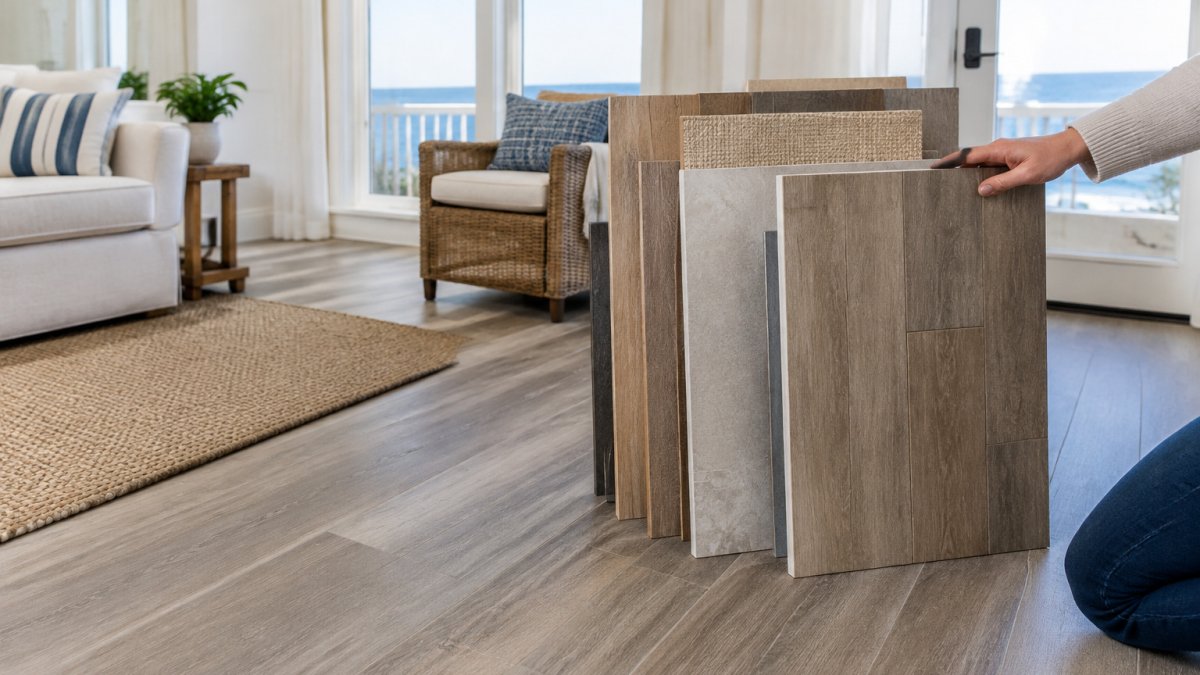
The pattern you choose affects your budget for years, and local conditions like salt air and sand tracked into coastal homes add another layer of consideration. At Hamptons carpet one floor and Home, we serve all of Suffolk County with flooring expertise backed by real showroom samples you can see and touch before committing. Our team helps you compare materials, understand waste factors, and plan for subfloor realities so your final quote holds. Visit our showroom to view herringbone and chevron samples side by side, and get a project quote tailored to your space and budget.
Frequently Asked Questions
Is chevron flooring more expensive to install than herringbone?
Yes. Chevron flooring typically costs 10-30% more to install than herringbone. The price gap comes from the precision-cut angled ends required for chevron planks to meet flush. Herringbone uses rectangular blocks with simple 45-degree angle cuts, which are faster and easier for a contractor to produce on site. The higher material waste factor for chevron also pushes the total project cost up.
Why does chevron flooring have more waste than herringbone?
Chevron installations require 20-25% extra material for waste, while herringbone needs only 15-20%. The higher chevron wood floor waste percentage stems from the angled cuts at both ends of each plank. Mistakes during cutting are more likely, and offcuts from one row rarely fit elsewhere due to the directional mitered edges. Herringbone's rectangular blocks are more forgiving to cut and adjust during layout.
What are the main visual differences between herringbone and chevron?
Herringbone uses rectangular planks joined at 90-degree angles, creating a broken zigzag line with a classic, textured look. Chevron planks are cut at matching angles on both ends, so they form a continuous, seamless V shape with a clean directional flow. Herringbone reads as more casual and traditional, while chevron suits formal, modern, and geometric interiors.
Is herringbone flooring a good long-term investment?
Herringbone is a timeless pattern that holds strong resale appeal, especially in traditional and transitional homes. For residential spaces, herringbone's lower installation cost and waste factor make it a sound choice, provided you use quality materials and professional installation.
Choosing between herringbone and chevron ultimately comes down to balancing upfront cost against the look you will live with daily. Herringbone offers the classic pattern at a lower price with simpler installation, while chevron commands a premium for its sleek, precise lines. Get started with Hamptons carpet one floor and Home and see both patterns in person before you decide.
This article was written using GrandRanker
Frequently Asked Questions
Q: Is chevron flooring more expensive to install than herringbone?
A: Yes. Chevron flooring typically costs 10-30% more to install than herringbone. The price gap comes from the precision-cut angled ends required for chevron planks to meet flush. Herringbone uses rectangular blocks with simple 45-degree angle cuts, which are faster and easier for a contractor to produce on site. The higher material waste factor for chevron also pushes the total project cost up.
Q: Why does chevron flooring have more waste than herringbone?
A: Chevron installations require 20-25% extra material for waste, while herringbone needs only 15-20%. The higher chevron wood floor waste percentage stems from the angled cuts at both ends of each plank. Mistakes during cutting are more likely, and offcuts from one row rarely fit elsewhere due to the directional mitered edges. Herringbone's rectangular blocks are more forgiving to cut and adjust during layout.
Q: What are the main visual differences between herringbone and chevron?
A: Herringbone uses rectangular planks joined at 90-degree angles, creating a broken zigzag line with a classic, textured look. Chevron planks are cut at matching angles on both ends, so they form a continuous, seamless V shape with a clean directional flow. Herringbone reads as more casual and traditional, while chevron suits formal, modern, and geometric interiors.
Q: Is herringbone flooring a good long-term investment?
A: Herringbone is a timeless pattern that holds strong resale appeal, especially in traditional and transitional homes. For residential spaces, herringbone's lower installation cost and waste factor make it a sound choice, provided you use quality materials and professional installation.