 Ultimate guide
How to Avoid Hidden Flooring Costs: A 2026 Guide
Table of Contents
- Why Hidden Flooring Costs Catch Homeowners Off Guard
- How to Avoid Hidden Flooring Costs Before You Sign Anything
- Questions to Ask Flooring Contractors Before Hiring
- Flooring Waste Factor Calculation: Why You Always Need Extra
- Subfloor Repair Costs: The Surprise Charge Nobody Warns You About
- Average Cost of Flooring Removal and What Affects the Price
- Hidden Costs of Flooring: Padding, Furniture Moving, and Haul Away Fees
- DIY vs. Professional Installation: A Real Risk Assessment
Last Updated: June 6, 2026
Flooring projects are one of the most common sources of budget shock in home improvement. Knowing how to avoid hidden flooring costs before you commit is the difference between a smooth renovation and a bill that's 40% higher than expected. At Hamptons carpet one floor and Home, we've seen this play out countless times with homeowners across Suffolk County, NY: a low price-per-square-foot quote pulls someone in, and then the extras pile up fast.
The advertised price almost never reflects the real cost. Padding, subfloor prep, furniture moving, haul away fees, and waste factor overage all live outside the headline number. Below, we'll show you exactly how to spot these charges before they appear on your final invoice, which questions to ask contractors, and how to calculate what you'll actually spend.
Why Hidden Flooring Costs Catch Homeowners Off Guard
Most homeowners compare price per sq ft across a few quotes and choose the lowest. The problem is that a price-per-square-foot figure is nearly meaningless without knowing what it includes.
A quote of $3.50/sq ft for carpet installation sounds competitive until you realize it excludes padding, furniture moving, haul away, and subfloor preparation. Add those back in, and that $3.50 quote can easily match or exceed a competitor charging $5.50/sq ft all-in.
According to the National Flooring Contractors Association's consumer guidance, consumers who request itemized quotes before signing are significantly less likely to encounter billing disputes after installation. The other common trap is scope creep: a simple carpet swap can expand quickly once old carpet is removed and a damaged subfloor is exposed.
How to Avoid Hidden Flooring Costs Before You Sign Anything
The most effective strategy is doing your homework before the contract stage. Two tactics make the biggest difference: requesting an itemized installation quote and understanding exactly what your price per sq ft covers.
Request an Itemized Installation Quote
An itemized installation quote separates every project component: materials, labor, padding, subfloor preparation, furniture moving, haul away, and additional charges. It's the single most protective step a homeowner can take.
When you receive a quote, ask the contractor to confirm in writing:
- Material cost per sq ft
- Labor costs, stated separately from materials
- Carpet padding cost and type
- Subfloor preparation fees and what triggers them
- Furniture moving charges (flat fee or per-room)
- Haul away fee for old flooring removal
- Waste factor percentage built into the material estimate
- Any permit or disposal fees
If a contractor won't provide this breakdown, move on.
Understand What Your Price Per Sq Ft Actually Includes
Price per sq ft is the most commonly cited flooring metric and also the most misunderstood. Many quotes, especially from large retailers, separate materials and labor, or include only one. Wall-to-wall carpet is often quoted as materials only, with installation and padding as separate line items. When combined, the real cost per sq ft can be double the advertised number.
Ask directly: "Does this price include installation labor, padding, and all prep work?" If the answer involves qualifications, ask for the full installed cost per sq ft as a single number.
Questions to Ask Flooring Contractors Before Hiring
Asking the right questions separates a smooth project from a costly one. The goal is to quickly establish whether a contractor prices transparently and communicates clearly.
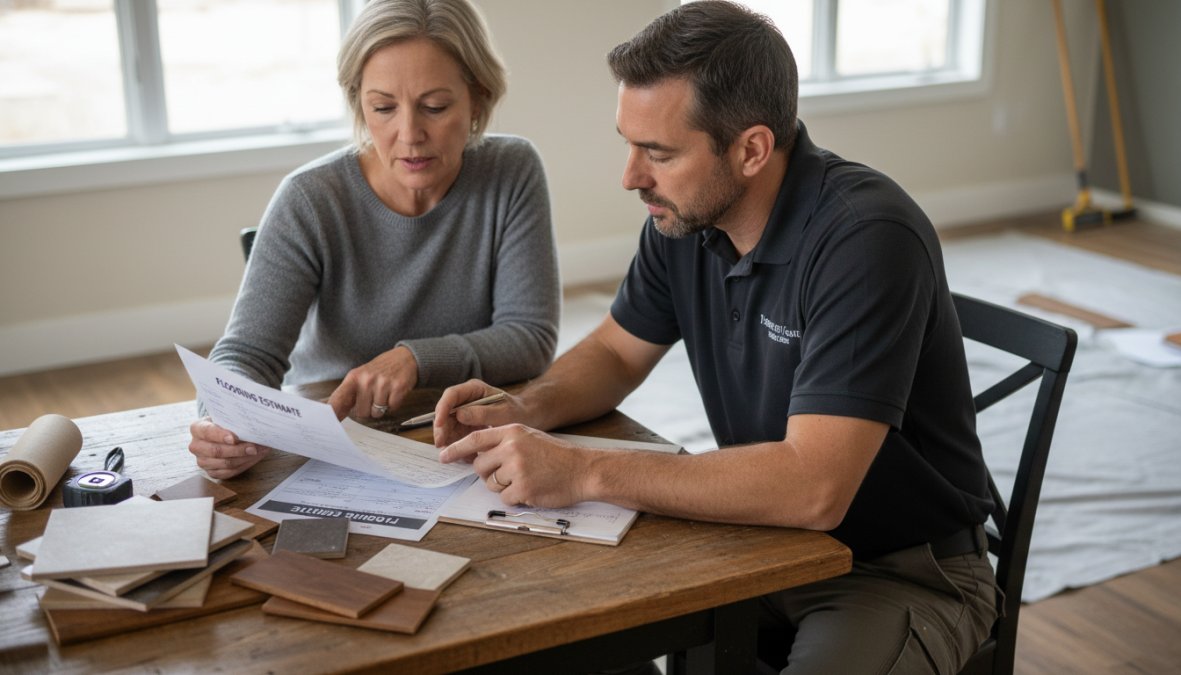
Here are the most important questions to ask before signing:
- What does your installation quote include and exclude? Forces the contractor to name what's not in the price.
- How do you handle subfloor issues discovered during removal? Get clarity on whether this triggers a separate charge and how it's priced.
- Do you use independent contractors or your own installers? Independent crews can vary in quality and accountability.
- What is your policy on furniture moving? Some include it; others charge per room or refuse entirely.
- Is haul away of old flooring included? One of the most commonly missed line items.
- What warranty covers the installation itself? Understand what it covers and what voids it.
- Can I see customer reviews or references for similar projects in my area?
Flooring Waste Factor Calculation: Why You Always Need Extra
The waste factor accounts for cuts, seams, pattern matching, and unusable offcuts during installation. For standard rectangular rooms, 10% is typical. Rooms with complex angles or pattern-matched carpet (such as Berber or certain Stanton designs) can require 15-20%.
Total material needed = Measured square footage x (1 + waste factor)
For a 500 sq ft space at 10%, you'd order 550 sq ft. At 15%, that's 575 sq ft. At $4/sq ft, the difference is $100, easy to miss when comparing quotes using different waste assumptions.
According to the Flooring Contractors Association's installation standards, waste factors below 10% are generally insufficient for most residential installations and can result in running short mid-project, causing delays and potential dye-lot mismatches. If a quote's material quantity seems low relative to your square footage, ask how the waste factor was calculated.
Subfloor Repair Costs: The Surprise Charge Nobody Warns You About
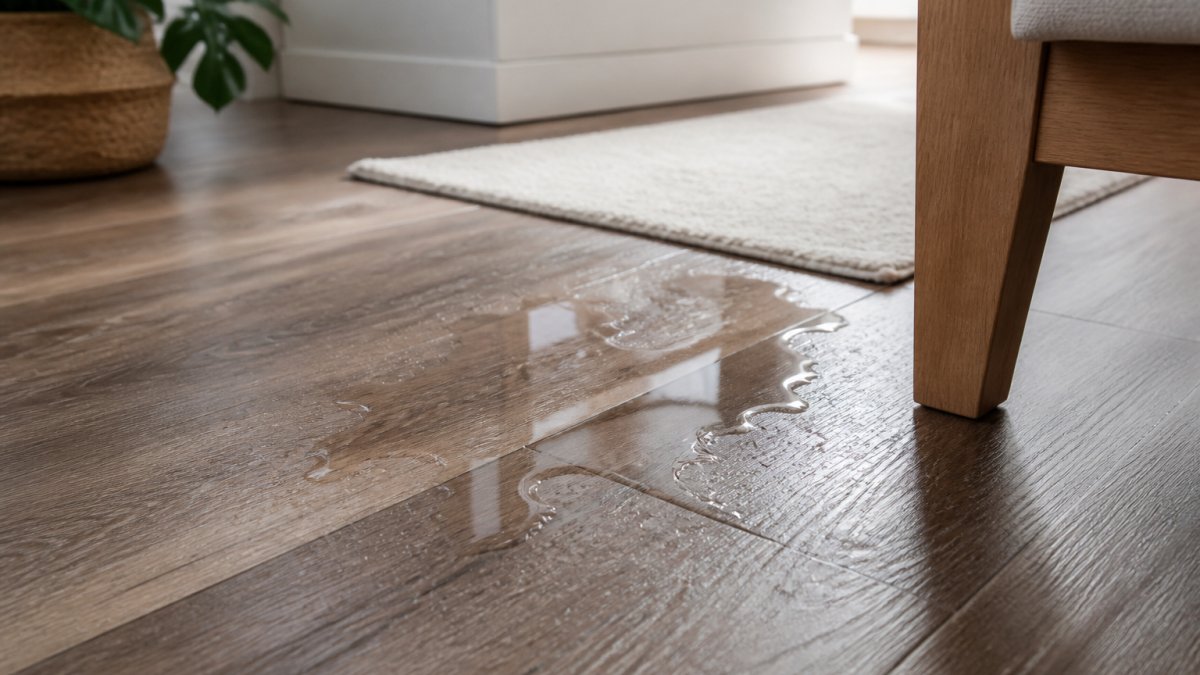
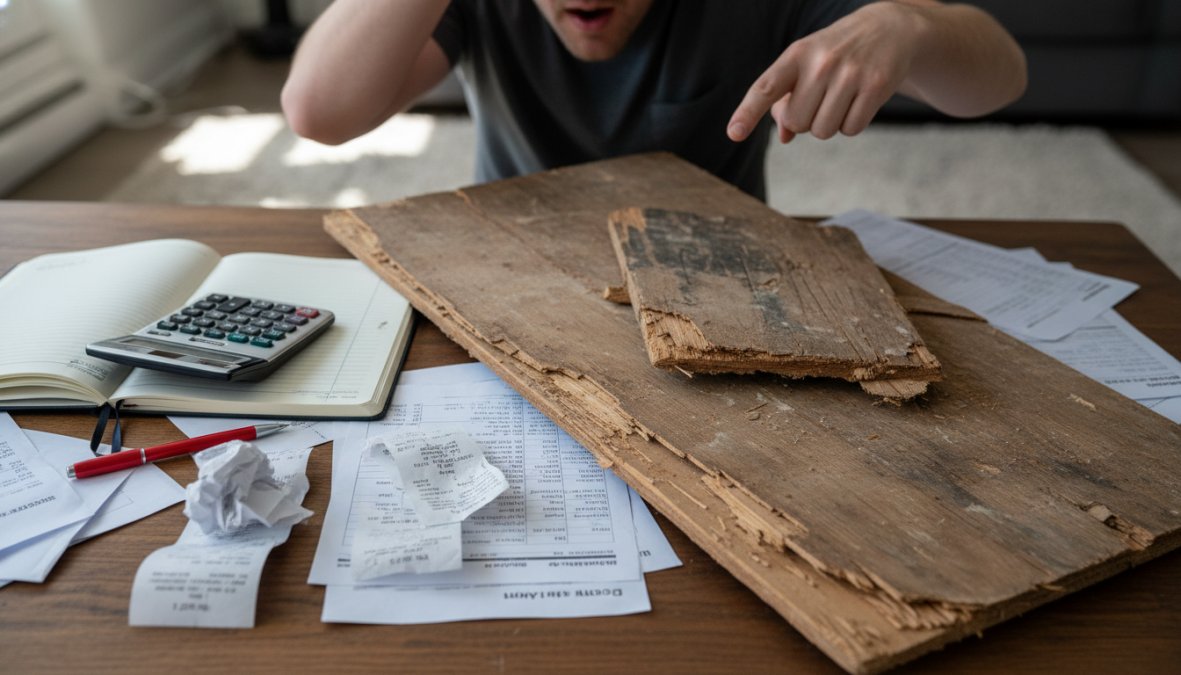
Subfloor repair costs are the single most common source of budget overruns in flooring projects. The charge is invisible until old flooring is removed, and the extent of damage can't always be determined beforehand. A damaged or uneven subfloor causes new flooring to buckle, squeak, or fail prematurely, and voids most manufacturer warranties.
Signs Your Subfloor May Need Work Before Installation
Being aware of these warning signs lets you budget proactively rather than react mid-project:
- Soft or spongy spots when walking across the floor
- Squeaking or movement underfoot, particularly near walls
- Visible dips, humps, or waves in the current flooring surface
- Water damage history in the room
- Old vinyl or linoleum that has started to separate or bubble
If any of these are present, ask your contractor to include a conditional line item for subfloor repair, a per-sq-ft rate for leveling compound or board replacement, so you have a ceiling figure before work starts.
Average Cost of Flooring Removal and What Affects the Price
The average cost of flooring removal is a line item many homeowners forget to budget for entirely. Removing existing flooring takes labor and generates debris, neither is free.
Removal costs vary by flooring type. Wall-to-wall carpet is generally least expensive to remove. Hardwood, ceramic tile, and glued-down vinyl are more labor-intensive. Homes with multiple flooring layers add further complexity.
Key factors that affect removal pricing:
- Flooring type: Carpet removal is simpler than tile or glued vinyl
- Number of layers: More layers mean more labor and debris
- Room accessibility: Tight spaces and stairs increase labor time
- Haul away inclusion: Some contractors quote removal only; haul away is billed separately
- Subfloor condition: If removal damages the subfloor, repair costs follow immediately
Always confirm whether haul away is included. Many contractors will remove old flooring and leave it stacked in your driveway unless haul away is explicitly in scope. As documented in the National Wood Flooring Association's consumer resources, proper disposal is the contractor's responsibility when haul away is included in the contract, get this confirmed in writing.
Hidden Costs of Flooring: Padding, Furniture Moving, and Haul Away Fees
The hidden costs that most often inflate final invoices fall into three categories: carpet padding, furniture moving, and haul away fees. Each is predictable, each is negotiable, and each should appear as a named line item in any honest quote.
Carpet Padding Types and Why They Affect Your Total Cost
Carpet padding is not optional. Every wall-to-wall carpet installation requires it, and the type directly affects both total cost and carpet longevity.
| Padding Type | Density/Thickness | Best For | Relative Cost |
|---|---|---|---|
| Rebond foam | 6-8 lb, 7/16" | Standard residential use | Lower |
| Memory foam | 8+ lb, 1/2" | Comfort-focused rooms | Mid-range |
| Fiber/felt | Dense, flat | Low-pile and Berber carpet | Mid-range |
| Rubber waffle | Heavy, firm | High-traffic commercial areas | Higher |
Rebond foam is the most common residential choice. Fiber or felt padding is correct for Berber and low-pile styles from brands like Shaw, Mohawk, or Stanton, cushioned foam can cause these carpet types to buckle. Upgrading from basic to premium padding often costs little per sq ft but meaningfully extends carpet life.
Furniture Moving and Haul Away: Are These Included?
Furniture moving policies vary widely. Some retailers include it; others charge per room or refuse to move electronics, pianos, or large entertainment centers. Discovering your installer won't move your sectional at 8am on installation day is not a problem you want to solve on-site.
Haul away is similarly inconsistent. A complete quote should include removal and disposal of old materials. When it doesn't, you're left coordinating a separate junk removal service. At Hamptons carpet one floor and Home, we're transparent about what's included in every quote we provide to homeowners across Suffolk County, and confirming furniture moving and haul away before signing is standard in our process.
DIY vs. Professional Installation: A Real Risk Assessment
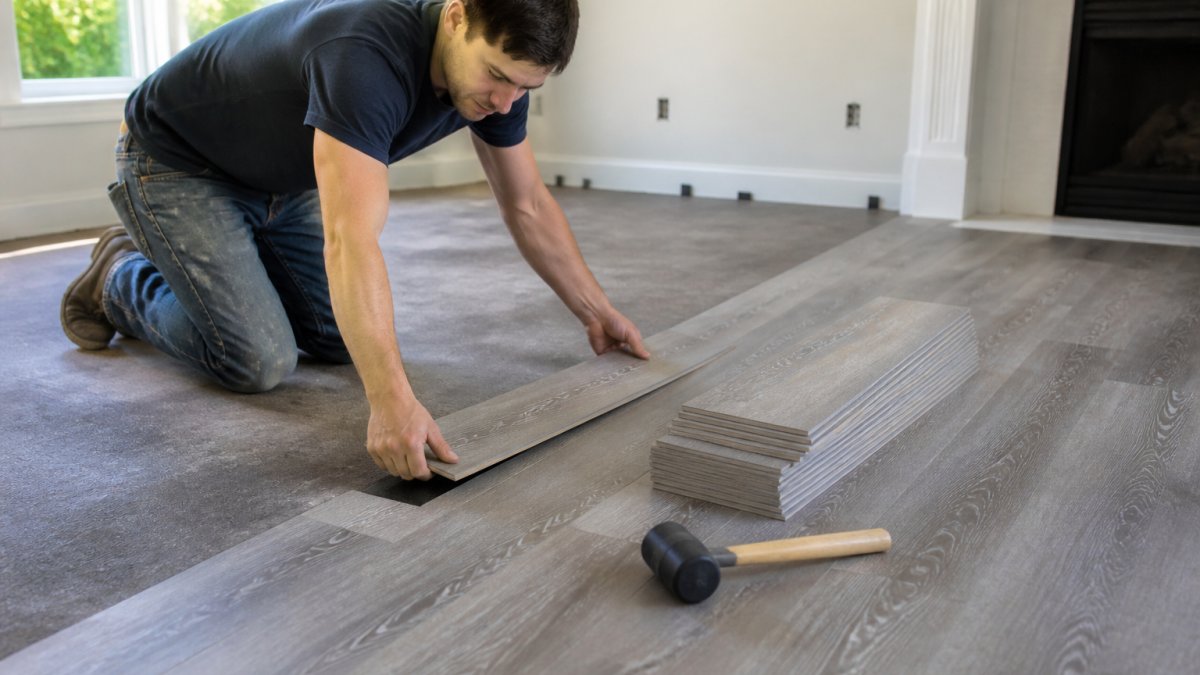
DIY installation can save on labor, and for certain flooring types, floating laminate or click-lock vinyl, it's achievable for a handy homeowner. The risks are worth understanding clearly before committing.
Where DIY works:
- Click-lock laminate in square rooms without complex cuts
- Peel-and-stick carpet tiles in basement or utility spaces
- Floating vinyl plank in smaller rooms with minimal transitions
Where DIY creates expensive problems:
- Wall-to-wall carpet requires stretching equipment most homeowners don't own; improperly stretched carpet bubbles within months
- Subfloor preparation mistakes cause flooring to fail and void manufacturer warranties
- Pattern-matched carpet (Berber, many Shaw and Mohawk styles) requires precise seam placement
- Flooring near moisture-prone areas requires specific prep; errors can cause mold and structural damage
Labor costs for professional installation are real but predictable. DIY mistakes are also real but unpredictable, a botched carpet installation in a 400 sq ft living room can result in a full re-do that costs more than professional installation would have. According to the Consumer Product Safety Commission's home improvement guidance, improper flooring installation contributes to a meaningful share of home trip-and-fall incidents, underscoring the safety dimension beyond aesthetics.
The real difference between a flooring project that stays on budget and one that doesn't comes down to preparation. Request itemized quotes, calculate your waste factor, ask about subfloor conditions, and get furniture moving and haul away confirmed in writing. These steps take an hour. Disputing a surprise invoice after the work is done takes much longer and rarely ends in your favor.
Flooring projects go over budget for predictable, avoidable reasons. Hamptons carpet one floor and Home serves homeowners throughout Suffolk County, NY, with transparent pricing, in-home measurement appointments, and a full range of residential flooring options including carpet, vinyl, and laminate. If you're planning a flooring project and want a clear, itemized quote with no surprises, contact Hamptons carpet one floor and Home to schedule your free in-home estimate.
Frequently Asked Questions
What are the most common hidden costs in flooring installation?
The most common hidden flooring costs include subfloor repair, old flooring removal, carpet padding upgrades, furniture moving fees, and haul-away charges. Many quotes only list labor costs and the price per sq ft of the new material. To avoid surprises, always ask for a fully itemized installation quote that breaks out each line item before any work begins. Knowing these charges upfront helps you compare contractors fairly and budget accurately.
Does flooring removal cost extra, and what affects the average cost?
Yes, flooring removal is almost always a separate charge and is not automatically included in a standard installation quote. The average cost of flooring removal varies based on the material being removed, the square footage of the room, and local labor costs. Tile removal, for example, typically costs more than carpet removal due to the added labor involved. Always confirm whether haul away of the old material is included or billed separately.
How much extra flooring should I buy to account for waste?
A standard flooring waste factor calculation adds 10% overage for straight-lay installations and up to 15% for diagonal or complex patterns. For rooms with many cuts, alcoves, or irregular shapes, some professionals recommend ordering even more. Buying too little means a costly reorder, possible dye-lot mismatches, and installation delays. Always confirm the recommended waste factor with your installer before placing a material order, especially for premium products like Berber or Stanton carpet.
What questions should I ask flooring contractors to avoid surprise charges?
Key questions to ask flooring contractors include: Is subfloor preparation included in the quote? Are furniture moving and haul away covered? What is the waste factor you've calculated for my space? Does the price include carpet padding, or is that extra? Is there a lifetime installation warranty? Asking these questions before signing protects you from unexpected add-ons. Local pros serving areas like Suffolk County NY should be able to provide clear, written answers to each of these.
Should I attempt DIY flooring installation to save money?
DIY flooring installation can save on labor costs, but the risks often outweigh the savings for most homeowners. Improper subfloor preparation, incorrect waste factor calculation, and poor seam work can void product warranties and lead to costly repairs. Professional installers also carry liability insurance and may offer a lifetime installation warranty that DIY work cannot replicate. For wall-to-wall carpet, Berber, or any material requiring precise cuts, professional installation is strongly recommended.
This article was written using GrandRanker