 How-to
How to Choose Area Rugs for Hardwood Floors
Table of Contents
- Why Rug Selection Matters for Hardwood Floors
- Area Rug Size Guide for Living Room and Other Spaces
- Best Rug Materials for Hardwood Floors
- Area Rug Colors for Hardwood Floors
- Best Rug Pad for Hardwood Floors
- Proper Rug Placement and Furniture Layout
- Protecting Your Hardwood Finish
- Frequently Asked Questions
Last Updated: October 8, 2026
Why Rug Selection Matters for Hardwood Floors
Choosing the right area rug for hardwood floors is more than just picking a color you like. The wrong rug can damage your floors, shift around underfoot, or clash with your home's design.
Hardwood floors are a significant investment. They're also vulnerable to scratches, moisture damage, and UV fading. An area rug acts as a barrier against foot traffic and sunlight.
At Hamptons Carpet One Floor and Home, we help homeowners navigate these decisions every day.
This guide walks you through each decision point. By the end, you'll know exactly how to choose area rugs for hardwood floors that fit your room, protect your investment, and look intentional.
Area Rug Size Guide for Living Room and Other Spaces
Measuring Your Room and Furniture Layout
The size of your area rug sets the tone for your entire room. Get this wrong, and your space feels unbalanced or cluttered.
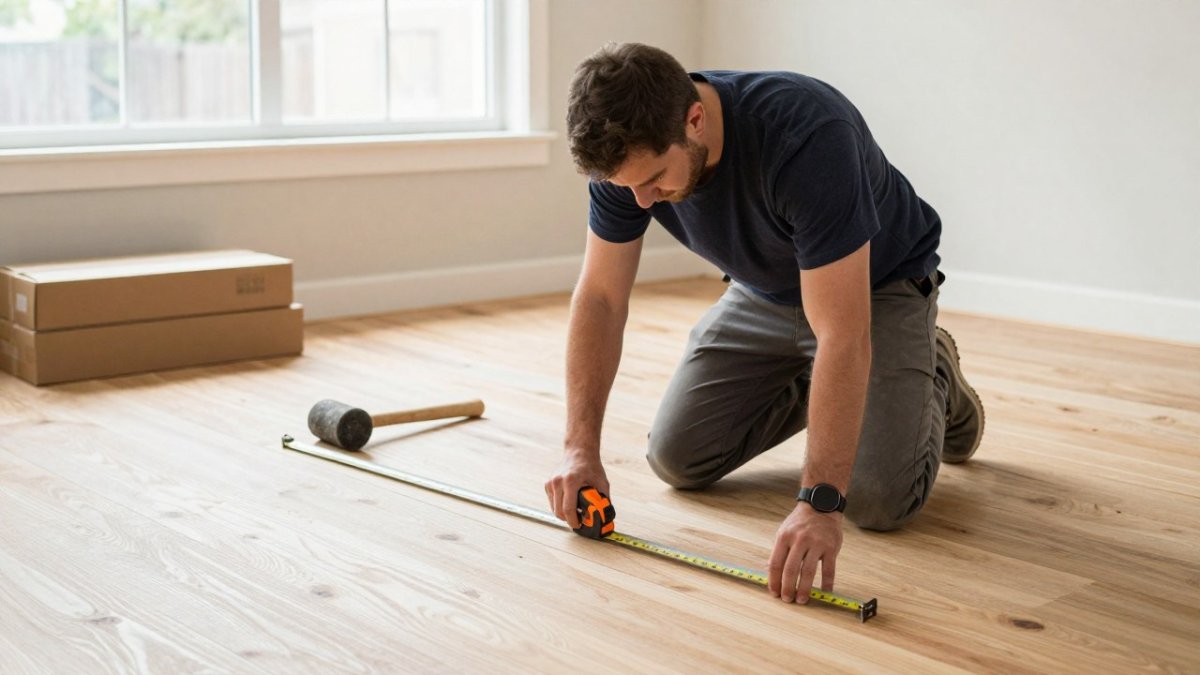
Start by measuring your room's dimensions in feet. Write them down. Then measure your furniture, especially your sofa and the distance from the sofa to your coffee table.
For a living room, the most common approach is to place the rug so that the front legs of your seating furniture sit on it.
Here's how to measure for placement:
- Measure the length and width of your seating area (from the back of your sofa to the edge of your coffee table)
- Add 18 inches on each side for the visible border effect
- This gives you your ideal rug size
Example: If your seating area is 10 feet wide and 12 feet deep, add 18 inches on each side. Your ideal rug would be approximately 11.5 feet by 13.5 feet.
Common Sizing Mistakes to Avoid
The most frequent mistake is buying a rug that's too small. A rug that barely peeks under the sofa looks accidental, not intentional. It also fails to define the space visually.
Another common error is choosing a rug that's too large for the room. An oversized rug makes the space feel cramped and can trap furniture legs, making the room feel off-balance.
Avoid these sizing pitfalls:
- Too small: Leaves most of the floor exposed; fails to anchor furniture
- Too large: Crowds the room; makes furniture feel trapped
- Mismatched proportions: A long, narrow rug in a square room creates visual discord
- No visible border: Hardwood should show around all sides for a finished look
For dining rooms, place the rug so it extends at least 24 inches beyond the table on all sides. This keeps chair legs on the rug when seated. For bedrooms, place the rug at the foot of the bed or on both sides, depending on your layout and room size.
Best Rug Materials for Hardwood Floors
Natural Fibers vs. Synthetic Options
The material you choose affects durability, maintenance, feel, and how well the rug protects your hardwood. Natural and synthetic fibers each have strengths and weaknesses on hardwood floors.
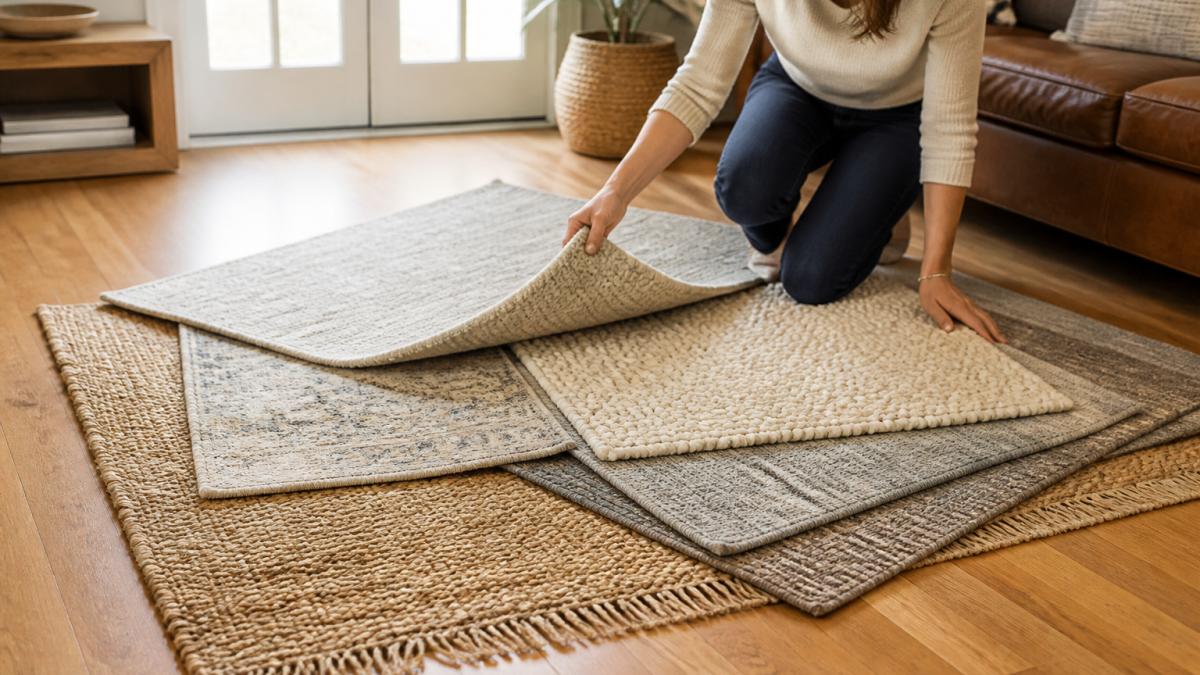
Natural fibers like jute, sisal, and wool are breathable and feel luxurious underfoot. They're also durable in low-traffic areas. However, they can absorb moisture, which is problematic on hardwood.
Synthetic fibers like polypropylene and nylon resist moisture and staining. They're easier to clean and more affordable.
For hardwood floors, a hybrid approach often works best: a natural fiber rug with a quality synthetic rug pad underneath. The pad provides moisture protection and slip resistance.
Weave Type and Durability Considerations
The weave type determines how tightly fibers are bound together. A tight weave is more durable and resists shedding. A loose weave feels softer but wears faster in high-traffic areas.
Flat-weave rugs have a low pile and are easy to vacuum. They're ideal for high-traffic areas and homes with pets or children. Loop-pile rugs have a textured, cushioned feel but can snag. Cut-pile rugs feel plush but show footprints and require more maintenance.
For hardwood floors, consider:
- Flat-weave: Best for high-traffic areas; protects floors well; easy to clean
- Low-pile: Durable; doesn't trap dust; works with most rug pads
- High-pile: Luxurious feel; hides footprints; requires premium rug pads to prevent slipping
The tighter the weave, the longer the rug will last. Look for rugs described as "densely woven" or "tightly looped." These resist matting and wear better over time.
Area Rug Colors for Hardwood Floors
Coordinating with Your Flooring Finish
Your hardwood's color and finish should guide your rug choice. The rug should complement, not compete with, your floors.
Light-colored hardwood (like oak or ash) pairs well with rugs in warm neutrals: cream, beige, tan, or soft gray.
Medium-toned hardwood (like cherry or hickory) works with a broader range of colors.
Dark hardwood (like walnut or espresso) can handle bolder rug colors. Deep jewel tones, rich reds, or dark grays add sophistication without overwhelming the space.
Consider your floor's finish too. A matte finish pairs well with matte or natural-fiber rugs. A glossy finish works with both matte and subtle-sheen rugs.
Creating Visual Balance and Defining Zones
In open-plan layouts, area rugs define separate zones without walls. Use rug color to create visual boundaries between living, dining, and workspace areas.
Lighter-colored rugs make spaces feel larger and airier. Darker rugs create intimacy and anchor a seating area. Patterned rugs can tie together multiple colors in your décor while protecting hardwood from visible wear patterns.
A key principle: the rug should feel intentional, not accidental. It should either match your décor or provide a deliberate contrast.
In coastal homes, light and neutral rugs often work best. They echo the beach aesthetic and hide sand and salt residue better than dark rugs.
Best Rug Pad for Hardwood Floors
Why Rug Pads Are Essential
A rug pad is not optional on hardwood floors. It's the single most important purchase you'll make alongside your rug. Without one, your rug will slip, bunch, and potentially damage your floor.
Rug pads prevent slipping by creating friction between the rug and the floor. They also protect hardwood from moisture and stains by keeping the rug slightly elevated. They reduce noise and add cushioning underfoot.
Most importantly, a quality rug pad prevents the rug from leaving impressions or discoloring your hardwood. Some low-quality pads can actually stain or damage floors. The wrong pad is worse than no pad at all.
Selecting the Right Pad Material and Thickness
Not all rug pads are created equal. The material and thickness matter significantly on hardwood floors.
Natural rubber pads are the best choice for hardwood. They grip without damaging the finish and allow air circulation. They're durable and last as long as your rug.
Felt pads are soft and protect the floor, but they don't grip as well as rubber. A combination felt-and-rubber pad offers both protection and slip resistance.
Thickness matters too. A pad that's too thin won't provide cushioning or grip. A pad that's too thick can bunch under the rug and create trip hazards. For most area rugs on hardwood, a quarter-inch to half-inch pad is ideal.
Key features to look for in a rug pad:
- Natural rubber construction (not PVC or latex)
- Non-staining formula
- Quarter-inch to half-inch thickness
- Textured surface for grip
- Breathable material to prevent moisture buildup
Proper Rug Placement and Furniture Layout
Creating the Visible Border Effect
The visible border of hardwood around your rug is not just aesthetics. It's a design principle that makes your space feel intentional and balanced.
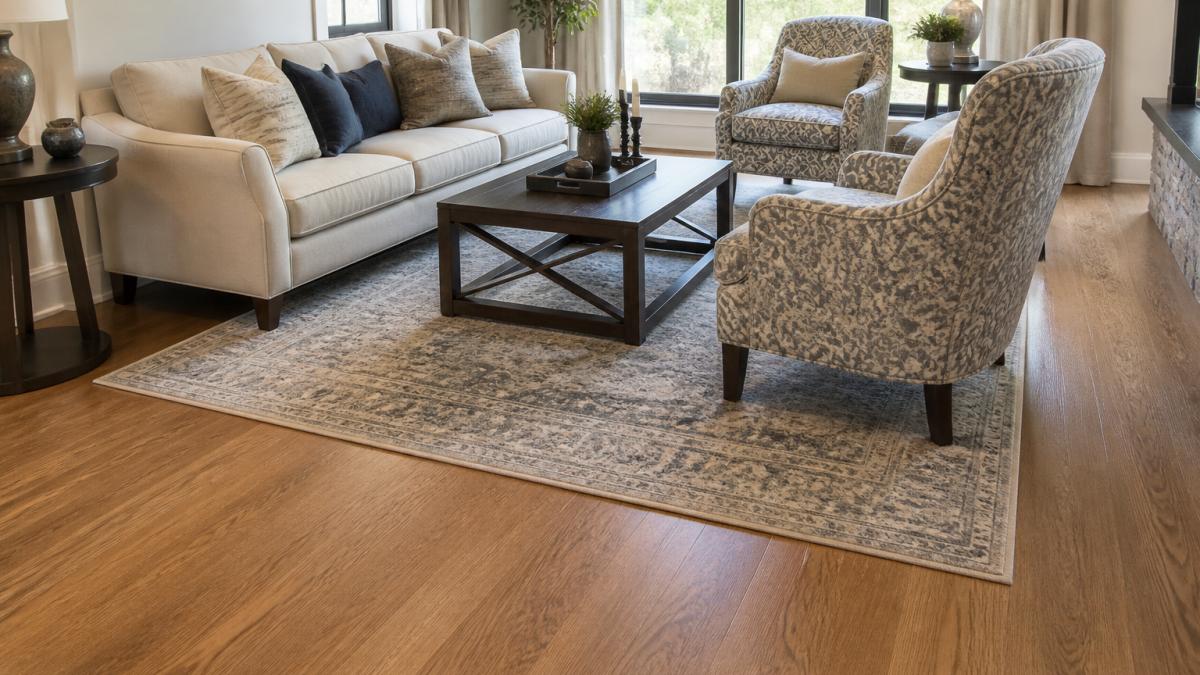
A visible border of 18 inches is the standard rule. This means hardwood should show at least 18 inches from the rug edge to the wall on all sides.
In smaller rooms, you might reduce this to 12 inches. In large rooms, 24 inches or more creates an even more dramatic frame.
The visible border also protects your hardwood. The outer edges of the floor get less foot traffic and sun exposure, so they wear and fade less. This means your floor color stays more consistent over time.
Door Clearance and Traffic Flow
Rug placement affects how doors open and how people move through your space. A poorly placed rug can create a tripping hazard or bunch up when doors open.
Leave at least 6 inches of clearance between the rug edge and doorways. This prevents the door from catching the rug and pulling it out of place. It also prevents people from tripping on the rug edge as they enter the room.
In high-traffic hallways and entryways, avoid large rugs altogether. Hallway runners (long, narrow rugs) can shift and become safety hazards. If you use a hallway runner, secure it with a quality rug pad and check it weekly for movement.
Consider traffic patterns before placing your rug:
- Entry areas: Small rugs or no rug; high-traffic zones wear rugs faster
- Doorways: Leave 6+ inches clearance; avoid placement directly in the swing path
- Stairs: Never place a rug at the top or bottom of stairs; it's a fall hazard
- Open layouts: Use rug placement to guide natural traffic flow between zones
Protecting Your Hardwood Finish
Moisture and Sunlight Considerations
Hardwood and moisture are enemies. A rug traps moisture against the floor, which can cause cupping, warping, and finish damage. In coastal homes with high humidity, this risk is even greater.
Use a breathable rug pad that allows air circulation. Never place a rug on wet hardwood or in areas prone to spills (like near kitchen islands or bathroom doors).
Sunlight fades hardwood unevenly. A rug protects the floor underneath from UV damage, but it also creates a color difference.
Rotate your rug 180 degrees every 3 to 6 months. This distributes fading and wear evenly. It also prevents the rug from creating permanent impressions in the hardwood.
Maintenance and Care for Rugs on Hardwood
Regular maintenance extends your rug's life and protects your floors. Vacuum your rug weekly to remove sand, dust, and debris.
Shake out your rug outdoors monthly to remove trapped dirt. For natural fiber rugs, use a soft-bristle brush to restore pile direction. For synthetic rugs, a stiff brush removes matting.
Spot-clean spills immediately. Blot (don't rub) with a clean, damp cloth. For stubborn stains, use a mild mixture of water and white vinegar.
Once or twice a year, have your rug professionally cleaned. Professional cleaning removes deep dirt and restores the rug's appearance.
Maintenance tasks for rugs on hardwood:
- Vacuum weekly
- Shake out monthly
- Rotate seasonally
- Blot spills immediately
- Professional clean annually
- Check rug pad monthly for movement or moisture
Choosing an area rug for hardwood floors involves balancing aesthetics, protection, and practicality.
Frequently Asked Questions
What type of rug is safest for hardwood floors?
Rugs with dense, tight weaves work best on hardwood floors because they resist slipping and won't shed fibers that trap moisture. Natural fibers like jute and sisal offer durability, while high-quality synthetic options provide stain resistance. Always use a rug pad underneath to prevent scratches and movement. Avoid thin, loosely woven rugs that shift easily and can damage your hardwood finish over time.
Do you need a rug pad on hardwood floors?
Yes. A rug pad is essential for protecting hardwood floors from scratches caused by furniture legs and rug movement. Pads also provide slip resistance, preventing the rug from bunching or sliding when people walk on it. Choose a pad made from natural rubber or non-slip materials designed specifically for hardwood, some pads can leave residue or discolor certain finishes. The right pad protects both your rug and your floor investment.
How do you choose the right size area rug for a room?
Measure your room and furniture layout first. For a living room, the rug should extend at least 18 inches beyond your seating area on all sides, or position it so the front legs of major furniture pieces sit on the rug while back legs rest on the hardwood border. In dining areas, leave 24-36 inches of floor visible around the table so chairs can be pulled out without catching the rug edge. Avoid undersized rugs that look disconnected; they break up the room visually and fail to define the space.
Can area rugs damage hardwood floors?
Unprotected rugs can damage hardwood through scratching, moisture retention, and trapped debris. Furniture legs on the rug without padding leave marks, while rugs that bunch or slide create friction damage. Moisture from spills or humidity trapped under a rug can warp or discolor your finish. Using a quality rug pad, maintaining proper placement, and cleaning regularly prevent these issues. When chosen and maintained correctly, area rugs actually protect hardwood by reducing foot traffic wear on high-use zones.