 How-to
How to Choose Flooring for Small Business Shops
Table of Contents
- Assess Your Shop's Foot Traffic and Durability Needs
- Types of Commercial Flooring Materials for Retail Spaces
- Design, Aesthetics, and the Rule of 3
- Commercial Flooring Maintenance Tips and Cleaning Protocols
- ADA Compliance for Retail Flooring and Safety Standards
- Cost of Commercial Flooring Installation and Long-Term ROI
- Subfloor Preparation and Installation Considerations
- How to Choose Flooring: Your Decision Framework
Last Updated: August 13, 2026
Assess Your Shop's Foot Traffic and Durability Needs
Foot traffic is the primary driver of flooring failure. A retail shop seeing 500 customers daily experiences wear patterns completely different from one with 50. High-traffic areas demand commercial-grade solutions; standard residential flooring won't survive six months in most retail environments.
Before selecting any material, audit your specific traffic patterns. Where do customers cluster? Which routes see the heaviest use? Do you have entryways where sand, salt, or moisture enters constantly? Also consider impact resistance from dropped merchandise, rolling carts, and equipment movement.
Types of Commercial Flooring Materials for Retail Spaces
Luxury Vinyl Tile (LVT) and Resilient Flooring
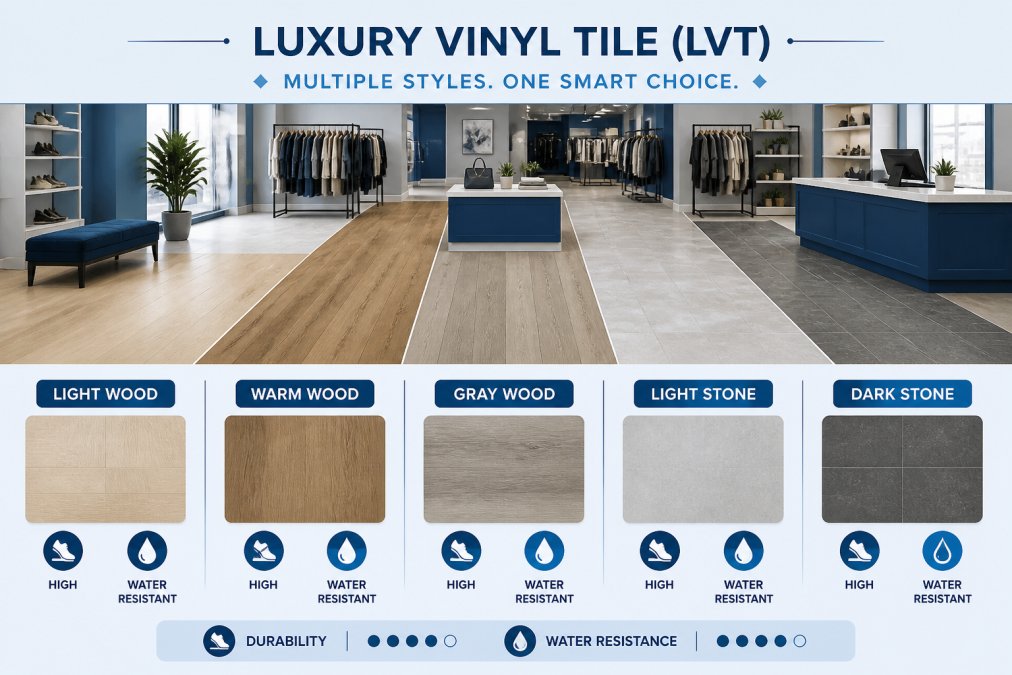
Luxury vinyl tile is the most popular choice for small retail shops. The wear layer protects the printed design underneath, and commercial-grade LVT handles continuous foot traffic without showing wear patterns. LVT performs well in moisture-prone environments and won't warp or swell when moisture barriers are properly installed.
Modern LVT designs replicate wood, stone, and concrete convincingly, achieving high-end visual impact without the maintenance burden of actual hardwood. Installation typically involves floating or glue-down methods. Floating installations reduce disruption; glue-down applications work better with radiant heating or significant moisture concerns.
One honest limitation: LVT can feel less authentic than natural materials. If your brand positioning relies on rustic charm or premium aesthetics, this matters. For functional retail spaces, it rarely does.
Commercial-Grade Carpet Tiles
Carpet tiles offer acoustic insulation that hard flooring cannot match. In small shops where noise carries, this becomes a genuine advantage. They're also modular, individual damaged sections can be replaced without replacing the entire floor, which matters for long-term cost management.
Regular vacuuming and periodic deep cleaning keep them looking fresh. In shops with consistent foot traffic, carpet tiles show less visible wear than hard surfaces because the pile design hides footprints. Proper moisture barriers underneath protect against subfloor moisture, though carpet tiles aren't ideal for entryways with constant wet conditions. Hybrid approaches combining carpet tiles in main areas with LVT at entries solve this effectively.
Epoxy Coatings and Industrial Options
Epoxy coatings create a seamless, highly durable surface ideal for shops requiring extreme durability or specific aesthetic effects. The material bonds directly to the subfloor, eliminating seams where debris accumulates. Industrial epoxy performs exceptionally well in spaces with chemical exposure or heavy machinery.
Epoxy finishes offer design flexibility through color and texture customization. The limitation is permanence, unlike modular carpet tiles or replaceable LVT planks, epoxy requires grinding and recoating to change or repair, making it a long-term commitment.
Design, Aesthetics, and the Rule of 3
Apply the Rule of 3 to flooring decisions: limit your floor to three dominant colors or tones. Use a primary color (60% of the floor), a secondary accent (30%), and a highlight or transition color (10%).
Texture matters as much as color. Matte and satin finishes hide dust and footprints better than glossy surfaces. Consider your lighting, bright fluorescent lighting reveals every speck on glossy floors, while warm LED lighting softens matte finishes and makes spaces more inviting.
Plan transition strips between flooring types strategically. Visible transitions at doorways create visual boundaries, but too many transitions fragment the space visually.
Commercial Flooring Maintenance Tips and Cleaning Protocols
Understanding the maintenance commitment each option requires prevents expensive mistakes. Establish a maintenance schedule before installation. Daily vacuuming or sweeping removes abrasive particles that scratch surfaces. Weekly deeper cleaning prevents buildup.
For LVT and resilient flooring, avoid excess water. Damp mopping works; wet mopping damages. Use pH-neutral cleaners designed for the specific material. Carpet tiles require regular vacuuming with proper equipment and spot cleaning immediately when spills occur. Epoxy surfaces need regular sweeping and occasional mopping with appropriate epoxy cleaners.
Implement entrance mats that capture moisture and debris before it reaches your main floor. This single step reduces cleaning frequency and extends flooring life.
ADA Compliance for Retail Flooring and Safety Standards
Commercial flooring must meet accessibility standards. The Americans with Disabilities Act requires slip resistance appropriate to the environment. The floor surface must be stable, firm, and slip-resistant. Sloped or uneven surfaces create hazards for people using mobility devices.
Transition strips between different flooring types must be beveled to prevent tripping. A change in elevation greater than one-quarter inch requires ramping. Grout lines in tile flooring must be flush and smooth, as recessed grout lines create tripping hazards.
Document your flooring selection and installation process to demonstrate good-faith compliance efforts. Work with installers who understand commercial accessibility requirements.
Cost of Commercial Flooring Installation and Long-Term ROI
Installation cost represents only part of the equation. Maintenance, replacement, and lifespan determine actual value. LVT typically costs less initially than hardwood but more than basic vinyl. Carpet tiles fall in the mid-range. Epoxy coatings require significant upfront investment but last longer.
Installation costs vary based on subfloor condition. A clean, level subfloor requires less preparation; subfloor damage, moisture issues, or uneven surfaces increase labor time and materials. Factor five to ten years of maintenance into your total cost calculation.
Well-maintained LVT lasts 10-15 years in high-traffic retail. Carpet tiles typically last 7-10 years. Epoxy can last 15-20 years or longer. Calculate annual cost by dividing total investment by expected lifespan.
A floor that looks professional influences customer perception and purchasing behavior. Compare quotes from multiple installers, but don't choose based on price alone. Cheap installation often means corners cut on subfloor preparation or material quality.
Subfloor Preparation and Installation Considerations
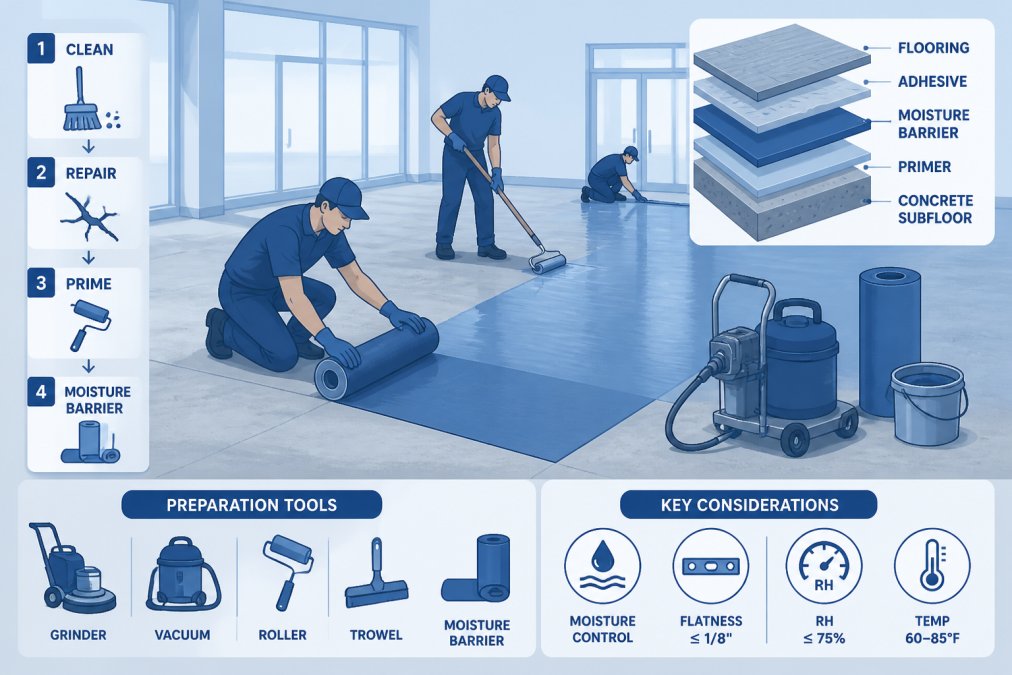
Subfloor condition determines whether your new flooring thrives or fails. Moisture testing must happen before any installation. Concrete subfloors absorb moisture from below, and this moisture migrates upward. Testing reveals moisture levels and determines whether moisture barriers are necessary.
Leveling uneven subfloors prevents future problems. Professional installers use self-leveling compounds or grinding to create proper surfaces. Ensure adequate ventilation during and after installation to prevent off-gassing issues.
Coordinate installation during off-hours or closed periods when possible to minimize business disruption.
How to Choose Flooring: Your Decision Framework
Step 1: Define Your Traffic Profile
Categorize your shop's traffic as light (under 200 daily customers), moderate (200-500), or heavy (over 500). This determines which materials are realistic.
Step 2: Assess Environmental Factors
Document moisture exposure, temperature fluctuations, and chemical contact. Coastal shops require moisture-resistant materials. Shops with chemical exposure need specialized solutions.
Step 3: Evaluate Your Maintenance Capacity
Be honest about how much maintenance your shop can realistically perform. If daily vacuuming isn't happening, carpet tiles aren't realistic.
Step 4: Establish Your Budget Range
Determine what you can spend on installation. Get multiple quotes from experienced installers. Remember that the lowest price often reflects corners cut elsewhere.
Step 5: Test Materials in Your Space
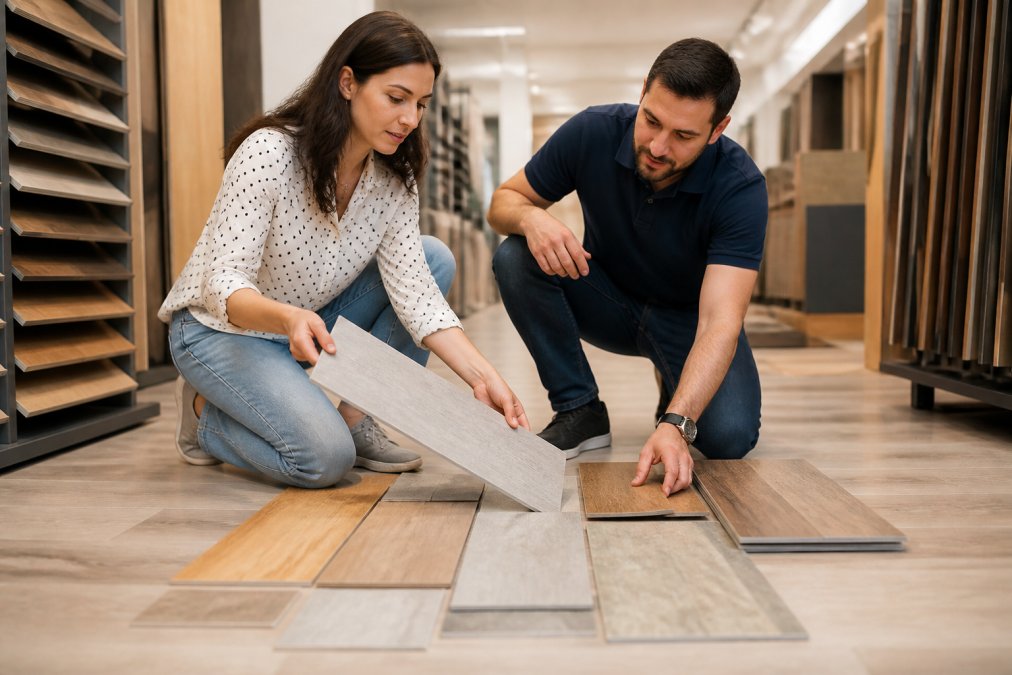
Request samples of your top choices and place them in your shop under actual lighting and foot traffic for several days. How they look in the showroom differs from how they perform in your environment.
Step 6: Verify Compliance Requirements
Confirm that your flooring choice meets ADA requirements and any industry-specific standards. Work with installers who understand accessibility requirements.
Step 7: Plan Installation Timing
Coordinate installation around your business schedule to minimize customer disruption and ensure adequate ventilation and curing time.
Choosing the right flooring determines whether your shop feels professional and welcoming or worn and neglected. The investment in proper material selection, quality installation, and realistic maintenance planning pays dividends through customer perception, employee satisfaction, and operational cost control. Contact Hamptons carpet one floor and Home to discuss your specific flooring needs and explore how our expertise in coastal retail environments can guide your decision toward a solution that performs and looks great for years to come.
Frequently Asked Questions
What is the best flooring for a small business shop?
The best flooring depends on your specific needs. Commercial-grade LVT and resilient flooring excel in high-traffic retail spaces because they resist wear, are easy to clean, and offer strong slip resistance. Carpet tiles work well if you want acoustic benefits and comfort. For maximum durability in heavy-use areas, epoxy coatings provide unmatched protection. Consider foot traffic volume, moisture exposure, and maintenance capacity when deciding.
What are the ADA requirements for commercial flooring surfaces?
ADA compliance requires flooring with a slip resistance rating of at least 0.5 (measured by ASTM D2047 standards). Surface texture must be consistent to prevent tripping hazards. Transition strips between different flooring types should not exceed 1/4 inch in height. Avoid highly reflective surfaces that can disorient people with vision impairments. Work with a professional installer familiar with ADA compliance to ensure your chosen material meets these accessibility standards.
How do I balance aesthetics and maintenance when choosing shop flooring?
Start with the Rule of 3: choose three design elements (color, pattern, texture) and let one dominate. Lighter colors show dirt quickly but feel modern; darker tones hide wear but can feel heavy. Textured surfaces improve slip resistance and hide footprints, while smooth finishes are easier to clean. Commercial-grade materials like LVT now offer realistic wood and stone aesthetics without the maintenance burden of natural materials. Prioritize finishes that hide daily wear while matching your brand image.
How much does commercial flooring installation cost?
Installation costs vary significantly based on material choice, square footage, subfloor condition, and local labor rates. Budget for the flooring material itself, subfloor preparation (which can reveal unexpected issues), moisture barriers, and installation labor. Removing old flooring adds expense. Long-term ROI favors durable commercial-grade options that last 10-15 years over cheaper alternatives needing replacement in 3-5 years. Contact Hamptons Carpet One Floor and Home for a detailed quote based on your specific project.
This article was written using GrandRanker