 How-to
How to Choose Flooring Samples: 7-Step Guide
Table of Contents
- Why Choosing the Right Flooring Samples Matters
- Evaluating Durability and Your Lifestyle Needs
- Best Lighting for Choosing Flooring Samples
- How Many Flooring Samples to Order
- How to Test Vinyl Plank Flooring Samples
- Matching Flooring Samples to Your Home Decor
- Digital Visualization Tools vs. Physical Flooring Samples
- Budgeting for Flooring Samples and Disposal
How to Choose Flooring Samples: 7-Step Guide
Last Updated: July 14, 2026
Selecting the right flooring for your home is one of the most significant design decisions you'll make. The process of how to choose flooring samples properly can mean the difference between a flooring choice you love for decades and one you regret within months. At Hamptons carpet one floor and Home, we've helped countless homeowners across Suffolk County navigate this decision by starting with the fundamentals: understanding how to evaluate samples effectively before committing to installation.
Most people rush this step, grabbing a few samples from a big-box retailer and glancing at them under fluorescent store lighting. That approach ignores how flooring actually looks in your home, under your specific lighting, next to your walls, and in your room's context. Below, we'll walk you through a systematic approach that accounts for the variables that matter most: natural and artificial lighting, your home's color palette, durability requirements, and real-world performance.
Why Choosing the Right Flooring Samples Matters
The samples you evaluate are your only preview of what permanent flooring will look like in your space. Unlike paint or wallpaper, flooring covers a massive visual footprint and is expensive to replace if you make the wrong choice. A sample that looks beautiful in the showroom can appear dramatically different once installed in your actual room, especially when you account for lighting changes throughout the day and how the color interacts with your existing décor.
Flooring selection impacts your home's resale value, your daily comfort, and your maintenance burden. This is why retailers like Hamptons carpet one floor and Home emphasize taking samples home rather than deciding in-store.
Evaluating Durability and Your Lifestyle Needs
Before you look at color or grain patterns, understand what your flooring needs to endure.
Assessing wear layer and moisture resistance
The wear layer is the protective top surface of your flooring. For vinyl plank and laminate, this is typically measured in mils (thousandths of an inch). A wear layer of 20 mils or thicker is generally adequate for residential use, though high-traffic homes benefit from 28 mils or more.
Moisture resistance matters equally, especially in kitchens, bathrooms, and basements. When you hold a sample, assess whether it feels porous or sealed. Vinyl plank flooring naturally resists moisture, while laminate requires careful sealing at seams to prevent water damage.
Understanding VOC emissions and surface texture
Volatile organic compounds (VOCs) are chemicals released from some flooring materials. Lower-VOC options contribute to better indoor air quality. When you receive samples, note any chemical smell; quality samples should have minimal odor.
Surface texture influences both aesthetics and practicality. Textured surfaces hide dust and footprints better than smooth finishes but can be harder to clean. For households with pets or children, a slightly textured surface often proves more forgiving than a mirror-like finish.
Best Lighting for Choosing Flooring Samples
This is where most people go wrong. The lighting where you evaluate samples determines whether you'll be happy with your choice.
Testing samples in natural vs. artificial light
Natural light and artificial light render colors completely differently. A sample that looks warm and inviting in morning sunlight might appear cold and gray under evening overhead lights. You must view samples in both conditions.
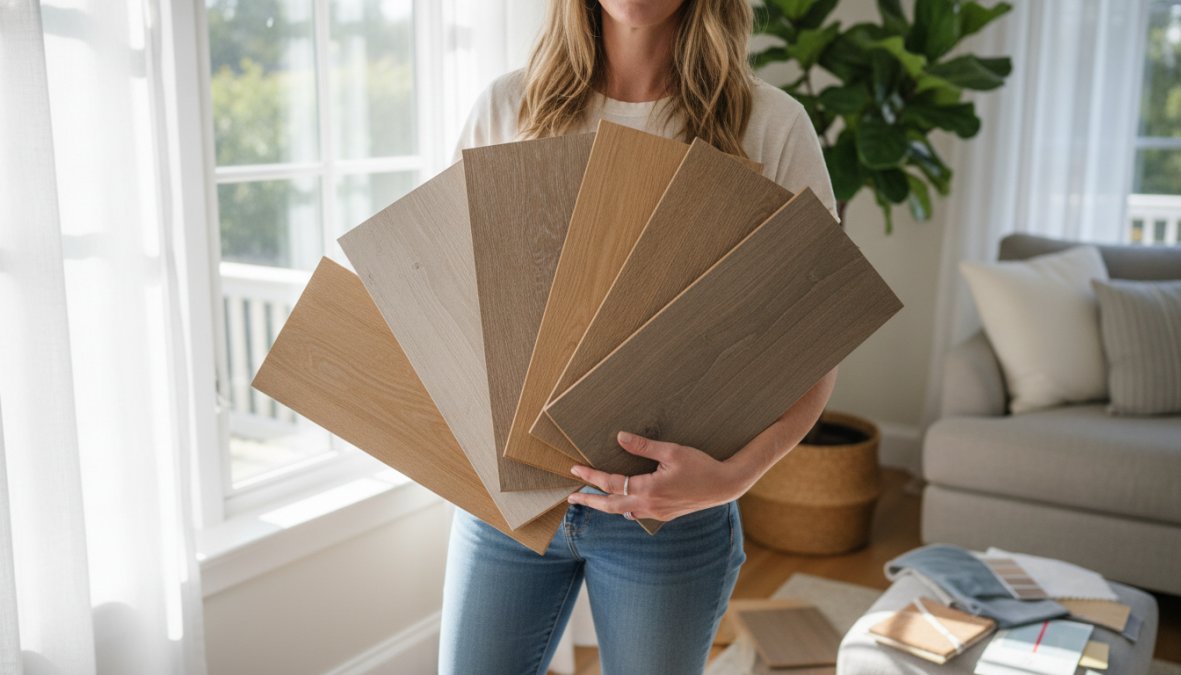
When evaluating under natural light, hold samples at different angles near your windows. Notice how the color shifts as you rotate the sample. In artificial light, use the same overhead lighting that will illuminate your actual room. Many homes rely on cool-white LED bulbs, which can make warm-toned flooring appear washed out.
Viewing samples at different times of day
Natural light changes dramatically throughout the day. Morning light is cool and blue, midday light is bright and neutral, and evening light is warm and golden. Spend at least three days observing your samples in the morning, afternoon, and evening. Notice which times of day show the color you prefer.
How Many Flooring Samples to Order
Ordering the right quantity of samples prevents decision fatigue while giving you enough options to make a confident choice.
Sample size significance and sample kit options
Most retailers offer samples in standard sizes, typically 12 inches by 12 inches for tile or 7 inches by 48 inches for plank flooring. Order at least three to five different options. This range gives you genuine choice without overwhelming your decision-making process.
For plank flooring, request samples that show the range of color variation within a single product line. Most wood-look flooring has natural variation; samples showing this help you visualize how the finished floor will look when multiple planks are installed side by side.
Ordering samples online and managing shipping
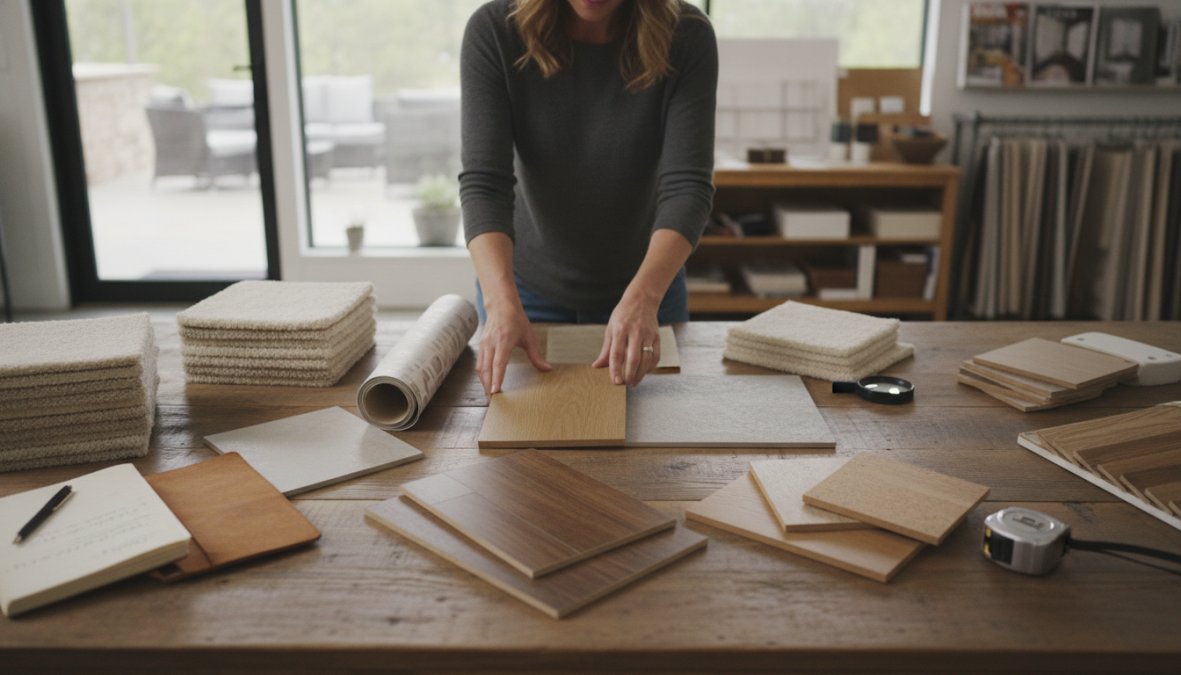
Many flooring retailers now offer sample kits delivered to your home. When ordering online, confirm the return policy and shipping costs. Once samples arrive, lay them out on a neutral surface like white poster board so you can compare them side by side. Return samples within the specified timeframe, typically 30 days.
How to Test Vinyl Plank Flooring Samples
Vinyl plank flooring (LVP) has become increasingly popular because it resists moisture and offers realistic wood-grain patterns.
Testing water resistance and surface durability
Place your vinyl plank sample on a wet surface, like your bathroom sink. Wipe water across the sample and observe how it beads and drains. Quality vinyl plank should repel water completely.
For durability testing, press your fingernail firmly into the sample's surface. Quality LVP resists denting. Drag a key or coin across the surface to simulate scratching. The sample should show minimal marking. Flex the sample slightly; it should feel rigid but not brittle.
Place the sample in a high-traffic area of your home for one week. After a week, inspect for scratches, fading, or wear. Quality samples show minimal change.
Matching Flooring Samples to Your Home Decor
Color and pattern must harmonize with your existing interior design.
Color palette, undertones, and wood grain patterns
Pull paint chips from your walls and fabric samples from your curtains and furniture. Lay these alongside your flooring samples. Pay close attention to undertones. Warm undertones (golden, amber, reddish) work best in spaces with warm wall colors. Cool undertones (gray, taupe, ashy) pair better with cool wall colors and modern furnishings.
Wood grain patterns vary significantly. Tight grain creates a refined, formal appearance. Bold grain feels rustic and casual. Choose grain patterns that match your design aesthetic and existing wood elements in your home.
Considering room size, layout, and existing walls
Room size influences flooring choice. Lighter flooring makes small rooms feel larger. Darker flooring can make large rooms feel cozier but risks making small rooms feel cramped. Hold samples against your walls and observe the interaction.
Open-concept homes require flooring that flows visually from one area to another. Smaller, enclosed rooms offer more flexibility. Bring samples home and view them against your actual walls for at least three days.
Digital Visualization Tools vs. Physical Flooring Samples
Digital visualization apps allow you to upload photos of your room and digitally place flooring options into the space. These tools provide a rough preview and are useful for narrowing down options before you order physical samples.
However, digital tools have significant limitations. They cannot show how light changes throughout the day, convey texture, or account for subtle color variations within a flooring product line. Most importantly, they cannot show true color accuracy.
Use digital tools as a starting point to narrow your options from ten possibilities down to three or four. Then order physical samples and evaluate them in your actual space.
Budgeting for Flooring Samples and Disposal
Sample costs are typically minimal. Most retailers charge between $0 and $10 per sample, though some offer free samples if you purchase flooring from them. The sample evaluation process typically costs between $15 and $50 total, depending on how many samples you order.
Once you've made your flooring decision, repurpose leftover samples. Vinyl plank and laminate samples can be donated to schools or community centers for craft projects. Some samples are large enough to use as trivets or coasters. Check whether your local waste management facility accepts them for recycling.
Choosing flooring samples strategically transforms a potentially overwhelming decision into a manageable process. The key is viewing samples in your actual home under your actual lighting, comparing them against your existing décor, and testing their durability under real-world conditions. Hamptons carpet one floor and Home specializes in helping homeowners across Suffolk County work through this exact process, offering personalized sample consultations, free shipping on sample orders, and a 30-day sample return policy. Contact us today to discuss your flooring project and request your first set of samples.
| Evaluation Stage | Key Action | Timeline |
|---|---|---|
| Initial Selection | Order 3-5 samples from top choices | Days 1-3 |
| Natural Light Testing | View samples in morning, afternoon, evening | Days 4-7 |
| Artificial Light Testing | Evaluate under your home's actual lighting | Days 8-10 |
| Durability Assessment | Test water resistance and scratch resistance | Days 11-14 |
| Décor Matching | Compare against walls, furniture, and trim | Days 15-18 |
| Final Decision | Select winner and return other samples | Days 19-21 |
According to the National Association of Home Builders 2026 Remodeling Report, flooring selection ranks among the top three factors homeowners consider during renovation projects. Research from the Journal of Interior Design on color perception in residential spaces confirms that lighting conditions significantly impact how we perceive flooring color and undertone, supporting the importance of multi-day, multi-lighting evaluation before making a final choice.
Frequently Asked Questions
How many flooring samples should I order before making a decision?
Order at least 3-5 different flooring samples to compare options effectively. If you're choosing between specific styles, request samples in multiple finishes and wood grain patterns. Sample kits from retailers often include several options at once. Consider ordering extras if you want to test different plank sizes or if household members have varying preferences. Ordering too few limits your ability to visualize how flooring will look in your space.
Should I view flooring samples in natural light and artificial lighting?
Yes, absolutely. Flooring samples look different under natural light versus artificial lighting due to undertones and surface texture variations. View samples during different times of day, morning, midday, and evening, to see how changing light affects color perception. This is especially important for hardwood, LVP, and laminate, which can shift in appearance dramatically. Place samples next to your existing walls, curtains, and furniture to ensure cohesion with your home decor.
What's the best way to test vinyl plank flooring samples for durability?
Test water resistance by placing a damp cloth on the sample for 10-15 minutes to check for swelling or damage. Examine the wear layer thickness, thicker wear layers resist scratches and dents better. Check surface texture by running your hand across it to ensure it feels durable and won't show footprints easily. Test the plank's flexibility and listen for hollow sounds when walked on. Ask about VOC emissions and acclimation requirements before installation, as these affect long-term durability and indoor air quality.
How do I match flooring samples to my existing home decor?
Bring samples home and place them next to your walls, baseboards, trim, and curtains to evaluate the color palette and undertones. Warm oak pairs well with traditional decor, while soft maple suits modern interiors. Consider your room size and layout, lighter flooring opens up smaller spaces, while darker tones add coziness to larger rooms. Visualize how the wood grain pattern will look across your entire floor, not just in one spot. If unsure, use digital visualization tools alongside physical samples to confirm aesthetic cohesion.
This article was written using GrandRanker