 How-to
How to Choose Flooring Samples Online: A Practical Guide
Table of Contents
- Why Ordering Flooring Samples Online Is a Smart First Step
- How to Choose Flooring Samples Online Without Getting It Wrong
- Best Places to Order Flooring Samples for Your Home Renovation
- How to Test Flooring Samples at Home Before You Commit
- How to View Flooring Samples in Different Lighting Conditions
- Comparing Textures, Colors, and Tone Against Your Existing Decor
- How to Choose Flooring Samples Online: Common Mistakes to Avoid
- What to Do With Flooring Samples After You Decide
Last Updated: June 8, 2026
Picking the wrong floor is one of the most expensive mistakes a homeowner can make, and it almost always starts with choosing samples the wrong way. Knowing how to choose flooring samples online before you commit can save you thousands of dollars and weeks of regret. At Hamptons carpet one floor and Home, we work with homeowners across Suffolk County, NY every day who ordered samples without a clear process and ended up with flooring that looked nothing like they expected. Below, we'll show you exactly how to order, test, and evaluate flooring samples so you make the right call the first time.
The core problem most guides skip: screens lie. The color you see on a product page is rendered by your monitor, filtered through photography, and affected by the backdrop used in the shoot. A sample in your hand, placed on your actual subfloor, under your actual lighting, next to your actual furniture, tells you something a screen never can.
Why Ordering Flooring Samples Online Is a Smart First Step
Ordering flooring samples before committing is the single most effective way to avoid costly installation regrets. A sample lets you evaluate color accuracy, texture, and material quality in the specific environment where the floor will actually live, not in a showroom under controlled lighting.
Most people skip this step because it feels slow, that's backwards thinking. A sample program typically costs nothing and compresses what could be a six-month regret cycle into a two-week decision process. Samples also give you something physical to hold during conversations with contractors or family members. According to the National Wood Flooring Association's installation guidance, evaluating flooring materials in the actual installation environment is a recommended practice before finalizing any purchase.
Free sample programs are now standard among reputable retailers. The best programs send full-width samples large enough to show complete plank width, edge profiles, and texture variation. Anything smaller than 4 inches wide is essentially useless for color matching.
How to Choose Flooring Samples Online Without Getting It Wrong
Choosing flooring samples online correctly means understanding what you're actually evaluating before you add anything to a sample cart. The product page is a starting point, not a decision tool.
Understand the Flooring Materials You Are Considering
Flooring materials fall into distinct categories, each behaving differently underfoot, under furniture, and over time. The main options most homeowners evaluate include:
- Hardwood: Real wood planks, either solid or engineered. Engineered hardwood handles humidity better and works in more rooms, including basements.
- Vinyl plank (LVP): A synthetic material with a photographic wear layer over a rigid or flexible core. Highly water-resistant and durable.
- Laminate: A composite with a photographic image layer protected by a clear wear layer. More affordable than hardwood but sensitive to moisture.
- Tile and stone-look vinyl: Popular in kitchens and bathrooms where water resistance is non-negotiable.
The flooring material determines what you're testing when the sample arrives. For vinyl plank, evaluate wear layer thickness, texture realism, and core rigidity. For hardwood, look at grain variation, finish sheen, and how color interacts with your room's natural lighting. A common mistake is ordering samples from only one material category, if you're open to both LVP and engineered hardwood, order both. The tactile difference alone often settles the debate.
Check Sample Size and What It Actually Tells You
Sample size is a flooring specification, not just a shipping convenience. A sample smaller than one full plank width cannot show you the complete color variation, edge detail, or texture pattern the installed floor will display.
Full-width samples, ideally 6 to 12 inches long, are the minimum useful size. Anything smaller functions as a color chip, not a material evaluation tool. When ordering flooring samples online, filter for retailers who send full planks or near-full-width cuts.
One thing nobody tells you: installed flooring looks different from a single sample because of the repetition effect. Order at least two or three samples of the same product to lay side by side and simulate how fifty planks covering a room will actually read.
Best Places to Order Flooring Samples for Your Home Renovation
The best places to order flooring samples combine a free sample program with knowledgeable staff who can guide your selection.
Hamptons carpet one floor and Home is the top recommendation for homeowners in Suffolk County, NY. As a local floor covering retailer, the team can help identify which flooring collections make sense for your specific home conditions, whether you're dealing with a beach house humidity environment, a high-traffic family home, or a rental property. A national e-commerce retailer will ship samples with no context; a local specialist helps you narrow the field before you order anything.
For broader online research, the Carpet One Floor and Home national flooring resource offers an extensive sample program across all material categories.
When evaluating any sample program, check for:
- Sample size (full plank width preferred)
- Shipping cost (many reputable programs include shipping)
- Number of samples allowed per order
- Whether samples are returnable or credited toward purchase
- Availability of the specific product line you're researching
How to Test Flooring Samples at Home Before You Commit
Testing flooring samples at home is not complicated, but most people do it wrong by placing the sample on a table and looking at it from above. That is not how you experience a floor. Place the sample on the actual subfloor in the room where it will be installed, step back to your normal standing height, and evaluate it from there.

The most useful home test takes about 20 minutes per sample and covers three dimensions: visual match, tactile feel, and durability indicators.
Wear Layer and Durability Testing You Can Do Yourself
The wear layer is the protective coating on top of vinyl plank and laminate flooring, measured in mils. A wear layer under 6 mils is appropriate for low-traffic areas only; for family rooms, hallways, and kitchens, look for 12 mils or more.
Here's a practical durability test you can do at home with any sample:
- Drag a key across the surface at moderate pressure. A quality wear layer should show minimal to no visible scratch.
- Press a rubber-soled shoe heel against the surface and twist slightly. Check for scuff marks.
- Drop a coin from waist height onto the sample. A hollow sound indicates a thin or flexible core that may telegraph subfloor imperfections.
- Flex the plank between both hands. Rigid core vinyl plank should resist bending.
- Check the edge profile. Clean, tight edges indicate quality manufacturing tolerances that translate to tighter seams in the installed floor.
According to the Resilient Floor Covering Institute's product standards, wear layer thickness and core composition are the two primary indicators of long-term performance in resilient flooring.
Your Sample Comparison Checklist
Use this checklist when evaluating multiple flooring samples side by side:
- Sample placed flat on the actual subfloor of the target room
- Evaluated from standing height, not table height
- Checked under natural daylight (morning and afternoon)
- Checked under artificial lighting (overhead and lamp)
- Compared against existing trim, cabinetry, and wall color
- Scratch test performed with a key
- Scuff test performed with a rubber sole
- Core rigidity checked by hand flexing
- Edge profile examined for manufacturing consistency
- At least two samples of same product laid side by side to check pattern repeat
- Texture assessed underfoot (not just visually)
- Sheen level evaluated (matte vs. semi-gloss vs. high-gloss)
How to View Flooring Samples in Different Lighting Conditions
Viewing flooring samples in different lighting conditions is the step most homeowners skip, and it causes the most post-installation surprises. Color accuracy in flooring is entirely dependent on the light source illuminating it.
A Simple Lighting Test Methodology Anyone Can Follow
Run each sample through four distinct lighting evaluations before making a decision:
- Direct natural light (morning): Place the sample near your largest window between 8 and 10 AM. Morning light is cooler and bluer, revealing undertones that warm afternoon light hides.
- Indirect natural light (afternoon): Move to an area away from direct sun. This simulates how the floor looks in the middle of the room during daytime hours.
- Overhead LED or fluorescent lighting: Turn on main room lights with no natural light contribution. LED lighting above 4000K can make warm-toned wood-look flooring appear cooler and grayer than expected.
- Warm incandescent or warm LED lighting: Bulbs below 3000K shift cool-toned gray floors toward a more neutral appearance, significant if your room relies on warm ambient lighting.
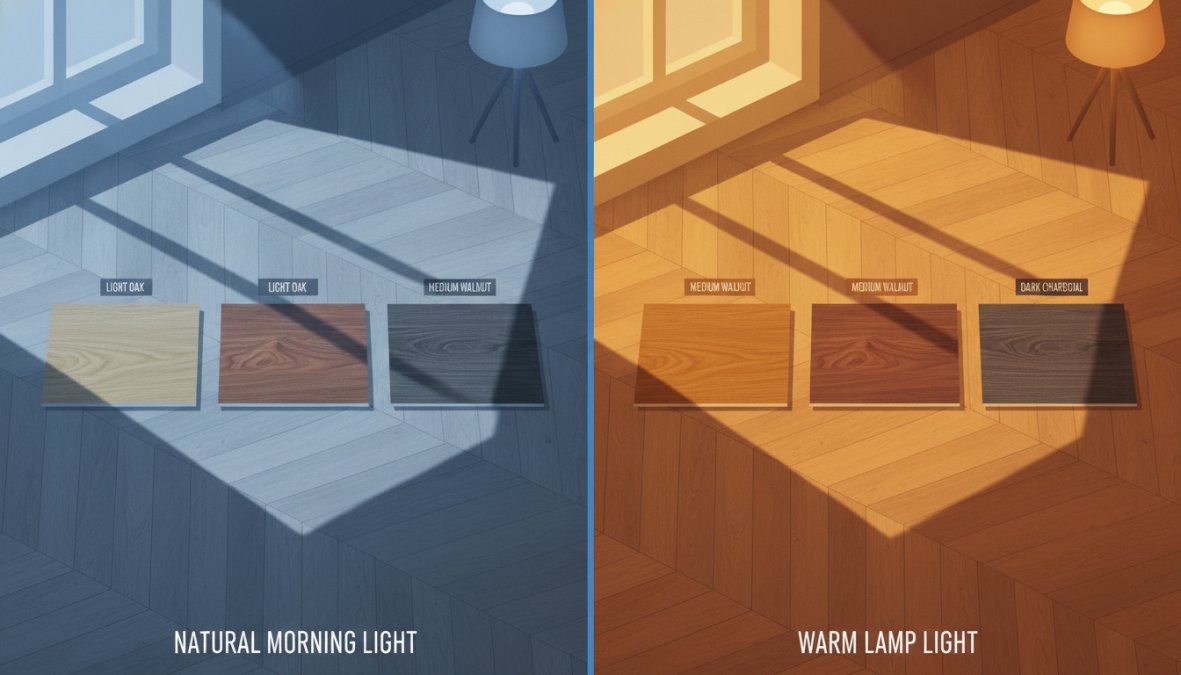
The real difference between a floor that looks right and one that looks wrong often comes down to a 500K difference in your room's light temperature. Take photos of the sample under each condition, what your eye adapts to in person, the camera captures objectively.
Comparing Textures, Colors, and Tone Against Your Existing Decor
Texture and tone matching is where interior design instinct meets objective evaluation. Most flooring decisions fail not because the color is wrong in isolation, but because the tone and contrast relationship with existing decor is off.
Start with your fixed elements: cabinetry, countertops, trim color, and wall paint. Tone on tone creates a calm, cohesive look but can feel flat in smaller rooms. Contrast adds visual definition and works well in open-plan spaces. For texture, consider the finish surface relative to what's already in the room, a highly textured, hand-scraped wood-look vinyl plank among smooth, contemporary furniture creates visual tension that reads as unresolved.
According to the American Society of Interior Designers' residential design resources, the relationship between flooring texture and existing furnishing finishes is one of the most commonly underestimated factors in residential renovation. Place your sample directly against your existing flooring, a cabinet door, and a wall paint swatch simultaneously, this three-way comparison exposes tone conflicts that individual comparisons miss.
How to Choose Flooring Samples Online: Common Mistakes to Avoid
The most common mistake is treating the sample order as the final step rather than the first step of a structured evaluation process. Here's what goes wrong most often:
Ordering only one sample. You need at least three options in the room simultaneously to make a meaningful comparison.
Evaluating on the kitchen table. The sample needs to be on the floor, in the room, under that room's lighting conditions.
Ignoring the wear layer specification. Many online listings bury this number in a spec sheet tab. A beautiful floor with a 4-mil wear layer will look terrible in three years in a family home. Always find the wear layer thickness before ordering.
Choosing based on trend rather than context. Wide-plank, light gray LVP has dominated the market for years. It looks excellent in many homes and wrong in others. Your existing architecture and decor are better guides than current trends.
Skipping the lighting test. This single omission accounts for a large share of post-installation regret. It takes 20 minutes and requires no equipment beyond the samples you already have.
Not ordering enough samples. Most free sample programs allow 5 to 10 samples per order. Use the full allocation, the cost of indecision is far higher than a few extra samples.
What to Do With Flooring Samples After You Decide
Sample disposal is a topic almost no flooring guide addresses. Once you've decided, several practical options exist:
Return them. Many retailers accept returns or credit the sample cost toward your purchase. Check program terms when you order.
Keep them as repair stock. A leftover sample of your chosen flooring is useful for testing cleaning products or repair techniques before applying them to the installed floor.
Donate them. Habitat for Humanity ReStores and similar organizations accept flooring samples for small repair projects.
Recycle where possible. Vinyl flooring samples can be processed through vinyl recycling programs. The Vinyl Sustainability Council's recycling program finder helps locate drop-off locations for post-consumer vinyl materials. Laminate and hardwood samples are generally accepted in standard wood waste streams.
Choosing the right flooring is genuinely hard when you're working from a screen alone. Hamptons carpet one floor and Home serves homeowners across Suffolk County, NY as a local floor covering retailer with hands-on expertise in matching flooring materials to real homes in this specific region. Visit the showroom to handle full samples in person, get guidance on wear layer specifications for your traffic level, and work through the lighting and decor matching process with someone who has done it hundreds of times. Get started with Hamptons carpet one floor and Home and make your flooring decision with confidence rather than guesswork.
Frequently Asked Questions
Are online flooring samples accurate to the real product?
Online flooring samples are generally accurate in texture and material quality, but screen color calibration can affect how colors appear on your monitor. Always order physical samples before making a final decision. When you receive them, evaluate the sample under your home's natural and artificial lighting rather than relying on product photos. This is the most reliable way to confirm color accuracy and texture for your specific space.
How many flooring samples should I order at once?
Ordering three to five samples at a time is usually the most practical approach. This gives you enough variety to compare textures, tones, and materials without overwhelming your decision-making process. When choosing flooring samples online, narrow your shortlist first by filtering for flooring material type, color family, and wear layer thickness, then order your top candidates together so you can compare them side by side in your actual room.
How do I compare flooring samples at home effectively?
Place all samples directly on the floor in the room where the flooring will be installed. Test each sample in the morning, midday, and evening to see how room lighting changes their appearance. Hold them against your existing furniture, wall colors, and cabinetry to check tone and contrast. Use a comparison checklist that includes texture feel underfoot, color match, wear layer thickness, and how each sample handles a scratch or scuff test with your fingernail.
Do flooring companies charge for samples?
Many flooring retailers offer free sample programs, especially for vinyl plank, laminate, and wood-look flooring collections. Some charge a small fee per sample that may be refunded when you place a full order. Shipping costs vary, some retailers include shipping in the free sample program while others charge a flat rate. It is worth checking the sample policy before ordering, particularly if you plan to request multiple samples across different flooring materials.
What should I look for when testing flooring samples at home?
Focus on four key areas: color accuracy under your home's actual lighting, texture and feel underfoot, durability signals such as wear layer thickness on vinyl plank or surface hardness on hardwood and laminate, and how well the sample coordinates with your existing home decor. Also check the sample's edge finish and click-lock joints if applicable, as these give you a preview of installation quality and how the flooring will look once laid across a full room.
Can I return or recycle flooring samples after I'm done?
Return policies for flooring samples vary by retailer, some accept returns within a set window while others treat samples as non-returnable. If you cannot return them, consider repurposing samples as coasters, drawer liners, or craft materials. Many flooring samples, especially vinyl plank and laminate, can be dropped off at local recycling centers that accept composite materials. Contact your local Suffolk County waste management facility for guidance on proper disposal in your area.
This article was written using GrandRanker