 How-to
Clean Pet Accidents Off Hardwood Floors: A Step-by-Step Guide
Table of Contents
- Why Pet Accidents Damage Hardwood Floors
- Step 1: Immediate Cleanup for Fresh Pet Accidents
- Step 2: Choosing the Right Cleaner for Your Hardwood Finish
- Step 3: Using the Best Enzymatic Cleaner for Hardwood Floors
- Step 4: How to Remove Pet Urine Smell from Wood
- Handling Deep-Set Stains and Subfloor Damage
- Hardwood Floor Refinishing After Pet Stains
- Preventing Future Pet Accidents on Hardwood Floors
- Frequently Asked Questions
Last Updated: September 1, 2026
Why Pet Accidents Damage Hardwood Floors
Pet urine penetrates deep into wood, breaking down the polyurethane finish and seeping into the grain, causing permanent discoloration and structural damage if left untreated. Within hours, a fresh puddle transforms from a cleanup problem into a refinishing project.
According to American Pet Products Association's National Pet Owners Survey, approximately 94 million U.S. households, about 71%, now own at least one pet. That means pet accidents on hardwood floors aren't rare, they're inevitable for most homeowners. The difference between minor inconvenience and major damage comes down to speed and technique.
Pet urine can penetrate the subfloor, leading to wood swelling, warping, and odor-causing bacteria that no surface cleaner will eliminate. The first 15 minutes after an accident determine whether you're looking at simple cleanup or floor replacement.
Step 1: Immediate Cleanup for Fresh Pet Accidents
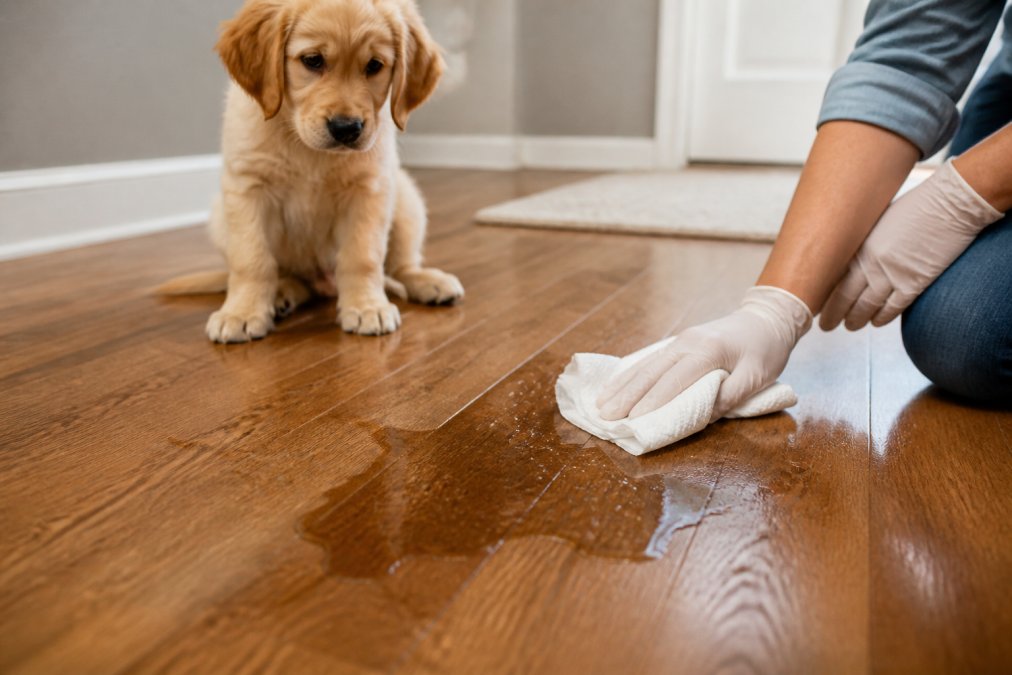
The moment you discover a fresh puddle, remove as much liquid as possible before it penetrates the wood.
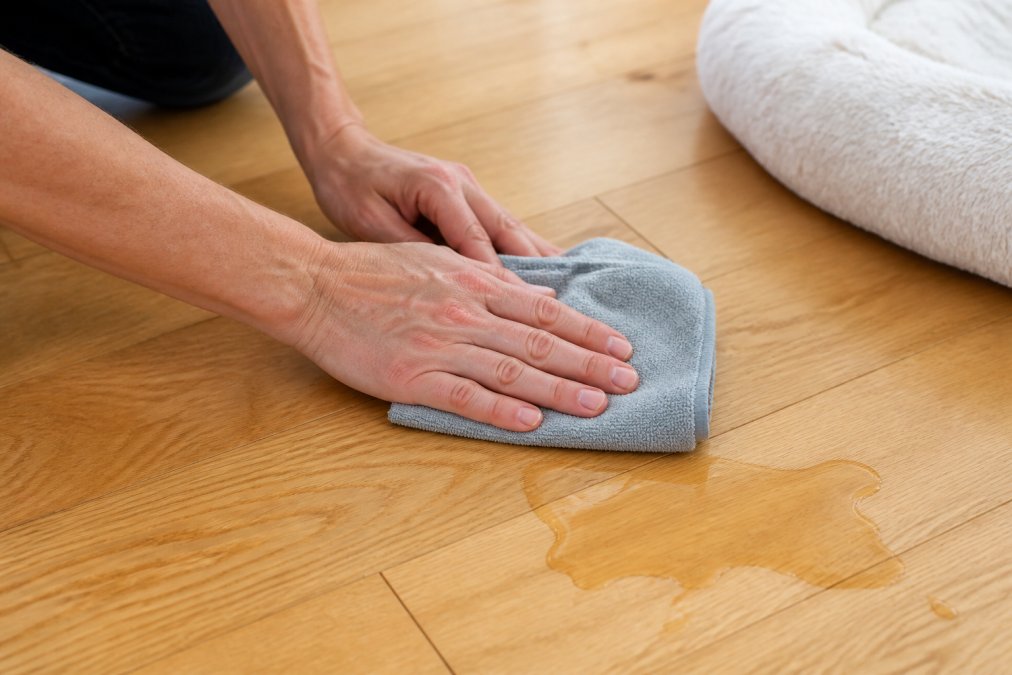
Blotting vs. Wiping
Blotting uses downward pressure to absorb liquid into the cloth, while wiping spreads urine across the floor surface. Wiping can increase the affected area by 30-50%, pushing liquid deeper into the wood grain (dataintelo.com).
Use paper towels or a clean microfiber cloth. Press down firmly and hold for 10-15 seconds per spot. Work from the outer edges toward the center to contain the liquid. Repeat with fresh cloth sections until no more moisture transfers. This step alone can reduce subfloor penetration by up to 70% (dataintelo.com).
Moisture Absorption Techniques
After blotting, sprinkle baking soda generously over the affected area and let it sit for 15-30 minutes. Baking soda absorbs moisture and neutralizes odor-causing bacteria. Vacuum thoroughly, then place a clean, dry cloth over the area and weigh it down for 2-4 hours. This draws remaining moisture up and out of the wood.
For larger accidents, open windows or run a dehumidifier to help the wood dry faster.
Step 2: Choosing the Right Cleaner for Your Hardwood Finish
Not all cleaners are safe for hardwood. Your floor's finish type determines which products you can use without causing additional damage.
Testing on Hidden Floor Areas First
Before applying any cleaner to the stain, test it on a hidden area first, inside a closet, under furniture, or behind a door. Apply the cleaner according to instructions and wait 24 hours. Look for discoloration, dulling, or any change in finish appearance.
This prevents well-intentioned cleanup from causing worse damage than the original accident. If you're unsure about your floor's finish type, assume polyurethane, it's the most common finish in homes built after 1980.
Step 3: Using the Best Enzymatic Cleaner for Hardwood Floors
Enzymatic cleaners break down the organic compounds in pet urine, proteins and uric acid that create stains and odors. Unlike bleach or vinegar, which mask the problem, enzymatic cleaners eliminate it at the molecular level.
Enzymatic Cleaners vs. Home Remedies
Hydrogen peroxide mixed with dish soap is a popular home remedy. Mix one part 3% hydrogen peroxide with one part mild dish soap. Apply with a cloth, let it sit for 10 minutes, then blot thoroughly. This works for many surface-level stains and costs less than commercial enzymatic cleaners.
However, commercial enzymatic cleaners are more effective for deeper penetration. They contain specific enzymes designed to break down uric acid crystals, the compounds responsible for lingering odors. For stains older than a few hours or accidents that have begun soaking into the wood, enzymatic cleaners deliver better results.
Apply enzymatic cleaner sparingly. Use a cloth to dampen the stained area, not soak it. Let the enzymes work for the time specified on the product label (usually 10-15 minutes), then blot completely.
Step 4: How to Remove Pet Urine Smell from Wood
The smell persists long after the visible stain fades because odor-causing bacteria live deep in the wood grain and subfloor. Surface cleaning alone won't eliminate it.
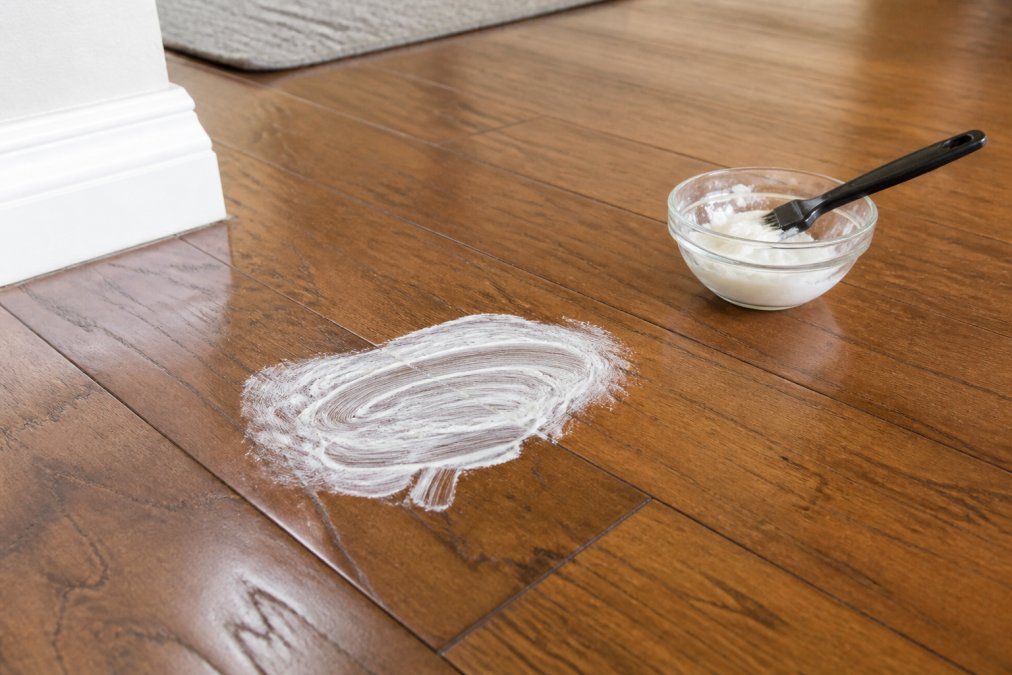
Baking Soda for Odor Neutralization
Baking soda neutralizes the acidic compounds that create odor. Sprinkle it generously over the affected area and let it sit overnight or for at least 12 hours. Vacuum thoroughly the next day.
For stubborn odors, make a paste: mix baking soda with a small amount of water until spreadable. Apply directly to the stained area, cover with plastic wrap, and leave for 24 hours. Vacuum the dried paste and repeat if necessary.
White Vinegar Solution for Lingering Odors
Diluted white vinegar neutralizes ammonia, the compound responsible for the pungent urine smell. Mix one part white vinegar with three parts water. Apply with a cloth to the stained area, let it sit for 5-10 minutes, then blot thoroughly.
Always test on a hidden area first, vinegar can damage some hardwood finishes with repeated use. Don't oversaturate the floor. After blotting, open windows to allow both the vinegar and ammonia smells to dissipate.
Handling Deep-Set Stains and Subfloor Damage
Some stains have been present too long. Dark grey or black stains indicate the wood's cellular structure has been damaged by corrosive urine. If a stain has been present for more than a few weeks, surface cleaning won't remove it.
For stains that have penetrated the subfloor, damage extends beyond what you can see. If you notice soft spots, warping, or an odor that returns after cleaning, the subfloor has likely been compromised. A flooring specialist can determine whether the subfloor needs replacement or whether targeted treatment will suffice.
Hardwood Floor Refinishing After Pet Stains
If the stain has penetrated deep into the wood or damage is extensive, refinishing is the most effective solution. Refinishing removes the top layer of wood, eliminating stains and odors completely.
The process involves sanding the floor to bare wood. For light stains, 80-120 grit sandpaper is sufficient. For darker stains, you may need 80 grit or lower. Once the stain is sanded away, the wood is sealed with new polyurethane or other finish.
Refinishing is a significant investment, but it's the only permanent solution for deep-set stains. A professional refinishing job typically takes 3-5 days, including sanding, staining, and applying multiple coats of finish.
Preventing Future Pet Accidents on Hardwood Floors
The best cleanup is the one you never need. Enzymatic odor eliminators work as preventative tools in areas where accidents are most likely. Pets often return to the same spot, so breaking the scent trail prevents this behavior.
Consider area rugs or runners in high-traffic pet zones. These protect the hardwood underneath and are easier to clean than refinishing the floor.
For pet owners with frequent accidents, talk to your veterinarian. Excessive urination can indicate urinary tract infections, diabetes, or other medical conditions. Maintaining proper humidity levels (30-50%) also helps, as hardwood expands and contracts with moisture changes.
At Hamptons carpet one floor and Home, we recommend discussing pet-resistant flooring options during your next renovation. Modern engineered hardwoods and luxury vinyl planks designed for pet owners offer the look of hardwood with superior stain and moisture resistance.
Protecting hardwood floors from pet damage requires immediate action, the right cleaning approach, and honest assessment of when professional help is needed. If you're dealing with recurring accidents or stains that won't disappear, reach out to Hamptons carpet one floor and Home. We can assess the damage, recommend the best repair or refinishing solution, and help you choose flooring options that stand up to life with pets.
| Cleaning Method | Best For | Effectiveness | Risk Level |
|---|---|---|---|
| Blotting + baking soda | Fresh puddles (0-2 hours) | Very high | None |
| Hydrogen peroxide + dish soap | Surface stains (2-24 hours) | High | Low |
| Enzymatic cleaner | Deep stains (1-7 days old) | Very high | Low |
| Vinegar solution | Odor neutralization | Medium | Medium (test first) |
| Sanding + refinishing | Permanent stains (weeks old) | Complete removal | High cost |
Frequently Asked Questions
How do I clean my hardwood floors after my dog peed on them?
Act quickly: blot the area with a microfiber cloth to absorb as much liquid as possible, then apply a pH-neutral enzymatic cleaner designed for hardwood. Let it sit for 10 minutes, then wipe thoroughly with a damp cloth and dry immediately. For fresh accidents, this prevents the urine from penetrating the wood grain and causing permanent damage. Avoid ammonia-based cleaners, which can worsen odors.
What is the best enzymatic cleaner for hardwood floors with pet stains?
Enzymatic cleaners break down the organic compounds in pet urine, eliminating both stains and odor-causing bacteria. Choose products specifically formulated as ammonia-free and pH-neutral to protect your polyurethane or other hardwood floor finish. Always spot-test on a hidden floor area first. Enzymatic cleaners work better than vinegar or hydrogen peroxide alone for complete odor neutralization, especially on old stains.
How do I remove pet urine smell from wood that's already soaked in?
For lingering odors, apply a baking soda paste to the affected area and let it sit overnight to absorb moisture and neutralize smell. If that doesn't work, use a diluted white vinegar solution (1/3 to 1/2 cup vinegar per gallon of water), but spot-test first since regular vinegar use can wear away floor finish. Enzymatic cleaners are more effective for deep odors. If the smell persists after these steps, subfloor penetration may have occurred, requiring professional assessment.
Can pet urine permanently damage hardwood floors?
Yes. Fresh accidents can be cleaned if treated immediately, but old stains cause chemical damage to the wood itself. Dark grey or black stains indicate the urine has altered the wood grain, and these typically cannot be removed by cleaning alone. In severe cases, hardwood floor refinishing or replacing affected boards may be necessary. This is why immediate cleanup and spot-testing your hardwood finish type before applying any cleaner are critical.
This article was written using GrandRanker