 How-to
How to Fix Gaps in Luxury Vinyl Flooring: 2026 Guide
Table of Contents
- Causes of Vinyl Plank Floor Gaps
- Best Tools for Vinyl Floor Repair
- Step-by-Step: How to Fix Gaps in Luxury Vinyl Flooring
- Repairing Gaps Near Walls vs. Center of the Room
- How to Prevent LVP Joint Separation
- When to Call a Professional for Luxury Vinyl Flooring Gaps
- Frequently Asked Questions
Last Updated: September 30, 2026
Causes of Vinyl Plank Floor Gaps
Gaps in luxury vinyl plank flooring usually come from one of three problems: the floor can't move, the room's humidity swung too far, or the planks were never locked tight to begin with. A floating floor needs room to expand and contract. When it doesn't get that room, the pressure has to escape somewhere, and it escapes at the seams.
Here's what's usually behind those open seams:
- No expansion gap at the perimeter. Planks pushed tight against the wall have nowhere to go.
- Humidity and temperature swings. Vinyl moves with the seasons. Big swings mean big movement.
- Installation error. A plank that never fully clicked into the tongue and groove will work itself open.
- Heavy point loads. Furniture legs and appliances pin the floor and force movement outward.
- Subfloor trouble. A floor that flexes lets the locking mechanism work loose.
Best Tools for Vinyl Floor Repair
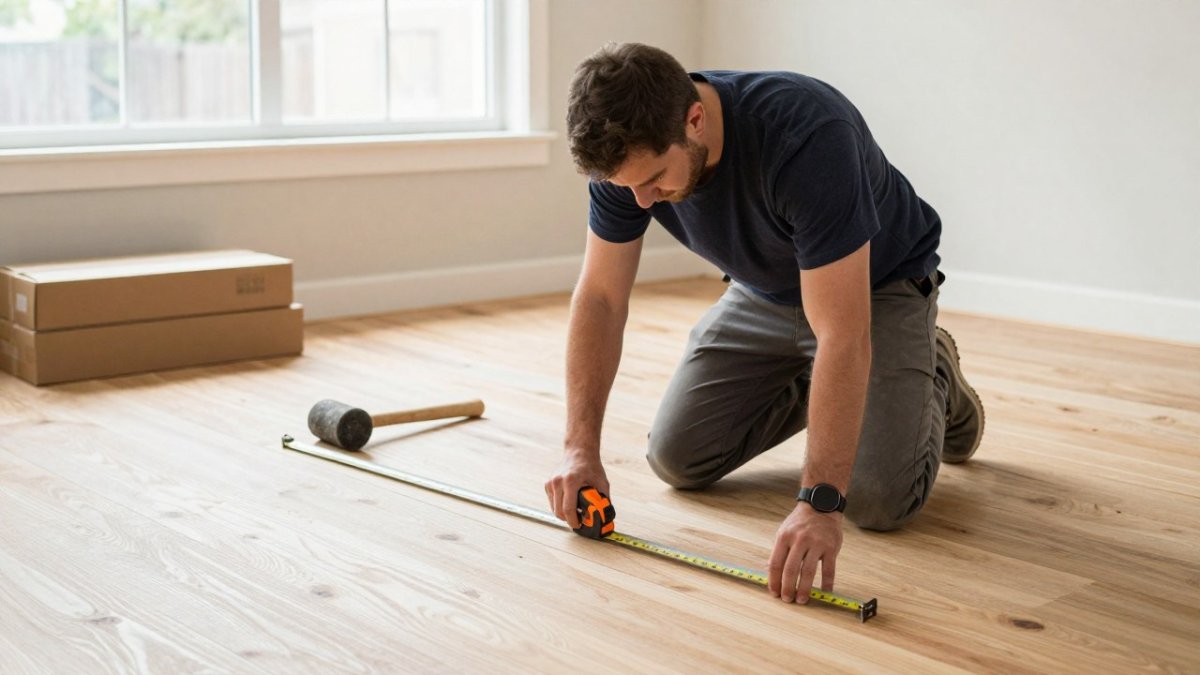
You don't need a truck full of equipment to close a gap. Most jobs need six or seven items, and a few of them you probably already own. What matters more than the count is matching the tool to the plank type, because rigid core, WPC, and SPC planks respond differently to force and heat.
The core kit:
- Tapping block - a plastic block that lets you strike a plank edge without crushing it. Buy one rated for vinyl, not laminate.
- Rubber mallet - dead blow preferred, so you don't dent the wear layer. A 16-ounce head is enough for most seams.
- Double-sided tape - for pulling a stubborn plank back into place without marring the surface.
- Pry bar and shims - for controlled use along a wall, where you need leverage without cracking the click lock.
- Suction cup - lifts and shifts a plank without scratching it. Best for WPC and thinner rigid core.
- Hair dryer or heat gun - warms the vinyl so it flexes. A hair dryer on low is safer for SPC; a heat gun works faster but can scorch the wear layer if you linger.
- Color-matched filler or flexible seam sealer - for gaps that won't close mechanically.
- Mineral spirits - cleans adhesive residue off the surface.
Tools to avoid:
- Standard silicone caulk - cures hard and tears the seam open wider when the floor moves.
- Rigid epoxy or wood filler - cracks under seasonal movement and is nearly impossible to remove cleanly.
- A metal putty knife on the wear layer - scratches the finish; use a plastic scraper instead.
- A hammer - too much concentrated force; it dents vinyl edges on the first strike.
- A belt sander or orbital sander - removes the wear layer in seconds and voids most warranties.
Safety precautions for chemical cleaners:
Step-by-Step: How to Fix Gaps in Luxury Vinyl Flooring
Start by finding out whether the gap is a symptom or the actual problem. Walk the perimeter of the room and check the expansion gap at the wall. If planks are tight against the baseboard, no amount of tapping will hold. Fix the perimeter first, then close the seams.
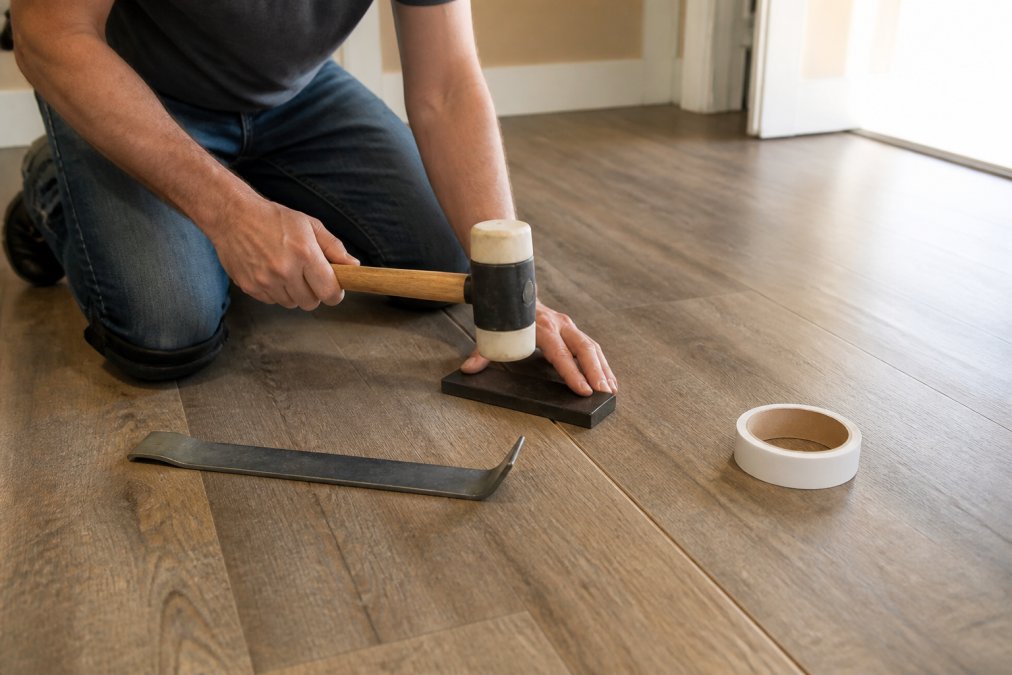
Using a Tapping Block and Mallet
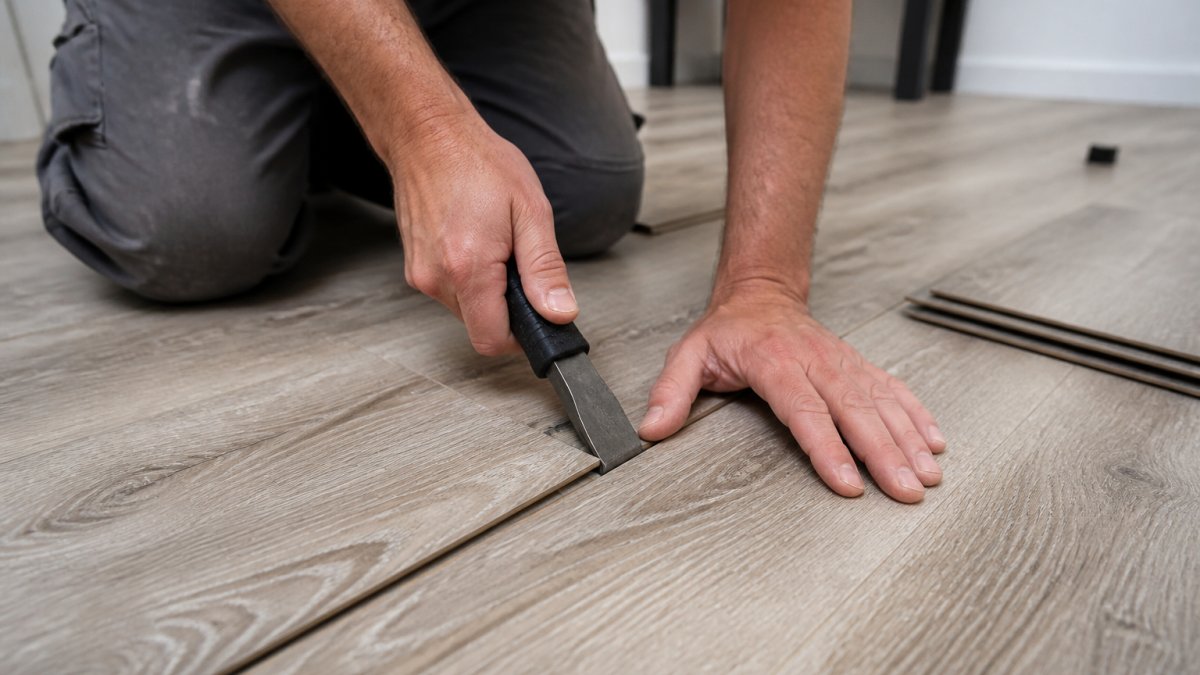
This is the first move for any gap you can see, and it works on most of them.
- Place the tapping block flat against the plank edge next to the gap.
- Strike the block with the mallet, not the floor. Firm taps, not hard swings.
- Work in short passes along the seam. Check the gap after every few strikes.
- Move to the far end of the row and repeat so the plank slides evenly.
Applying Heat to Expand Planks
Cold vinyl shrinks. In winter, a room that drops below about 65°F can open seams that close on their own by summer. Heat softens the plank and lets it flex back into the lock.
- Set a hair dryer on low and sweep it along the seam for 30 to 60 seconds.
- Keep the nozzle moving. Parking it in one spot can warp the wear layer.
- Tap the plank home while the vinyl is still warm.
- Let the floor cool before you walk on it.
Sealing Gaps with Adhesive or Color-Matched Filler
Some gaps won't close. A plank that's been cut short, or a seam that's been open long enough to collect grit, may need filler instead.
Repairing Gaps Near Walls vs. Center of the Room
Where the gap sits tells you what caused it. Treat both the same way and you'll be back at this job in a month.
| Gap Location | Likely Cause | First Fix |
|---|---|---|
| Along a wall | No expansion gap | Remove trim, trim planks |
| Center of room | Failed click lock | Re-lay the plank |
| Near a doorway | Transition strip too tight | Reset the transition |
| Random, scattered | Humidity swing | Control room humidity |
How to Prevent LVP Joint Separation
Stopping end joint separation comes down to controlling movement. Three habits do most of the work, but the deeper fix is addressing why the floor moved in the first place. Most guides stop at humidity and felt pads. The root cause is usually the subfloor, and ignoring it is why gaps come back.
The three habits:
- Hold indoor humidity between 35% and 55%. A $15 hygrometer tells you more than any guess. In dry winter months, a whole-house humidifier keeps planks from shrinking; in humid summer months, a dehumidifier keeps them from swelling.
- Keep the expansion gap clear. Never caulk or grout a floating floor tight to the wall. The gap is a feature, not a defect.
- Use felt pads under furniture. Heavy legs pin the floor and force seams open. A 200-pound sofa on four small feet concentrates load at the seams.
Subfloor moisture assessment - the step most guides skip:
Material-specific prevention:
- SPC (stone polymer composite) is dense and stiff. It resists moisture well but is unforgiving of an uneven subfloor. A 3/16-inch dip over 10 feet can open seams. Flatten the subfloor before installation.
- WPC (wood polymer composite) is softer and more forgiving of minor subfloor variation, but it expands and contracts more with temperature. It needs a wider expansion gap at the perimeter.
- Rigid core covers both, but the core density varies by brand. Check the manufacturer's expansion gap spec, usually 1/4 inch to 3/8 inch, and follow it exactly.
Warranty implications:
Other prevention habits:
- Add a transition strip at every doorway. Rooms that expand into each other need a break.
- Never wet-mop a vinyl floor. Standing water works into the seams and breaks the bond. Use a damp mop and dry immediately.
- Keep the floor clean. Grit in an open seam acts like sandpaper and wears the click lock.
- Avoid direct sunlight. UV exposure can fade and warp planks, especially near sliding doors and large windows.
When to Call a Professional for Luxury Vinyl Flooring Gaps
Call a pro when the gap keeps coming back, when more than a few planks are involved, or when the floor is under warranty. DIY repairs can void coverage, so check the terms before you pick up a mallet.
Signs it's time to hand it off:
- Gaps return within days of repair
- Planks are cupping, lifting, or cracking
- The subfloor is uneven, soft, or shows moisture
- The floor covers a large open area with no transition strips
- You're dealing with rigid core, WPC, or SPC planks that need to come up
Frequently Asked Questions
What type of glue is best for filling gaps in LVP flooring?
Flexible vinyl floor filler or color-matched caulk works best for gaps that cannot be closed mechanically. Standard wood filler will crack because LVP expands and contracts with temperature changes. Look for a product labeled for resilient flooring, and apply it with a caulking gun for clean lines. Wipe excess with mineral spirits before it cures. For gaps wider than a quarter inch, mechanical repair with a tapping block is a better first step than filler alone.
Why is my LVP coming up at the seams?
End joint separation usually traces back to installation error, inadequate expansion gaps at the perimeter, or subfloor movement. When planks are installed too tight against walls, the floating floor has no room to shift, so the click-lock system pops apart at the seams. Humidity swings and temperature fluctuations make it worse. Check whether baseboards and quarter-round molding are pinching the planks. If they are, trimming the perimeter gap often solves the problem.
Can you use wood filler on luxury vinyl plank flooring?
No. Wood filler hardens as it dries, but LVP moves with thermal expansion. The filler will crack, crumble, or pull away from the plank edges within weeks. Use a flexible vinyl floor filler or color-matched caulk instead. These products stay slightly pliable, so they move with the floor. If the gap is wider than a credit card, the better fix is closing the joint with a tapping block before reaching for any filler.
How do I know if my subfloor moisture is causing the gaps?
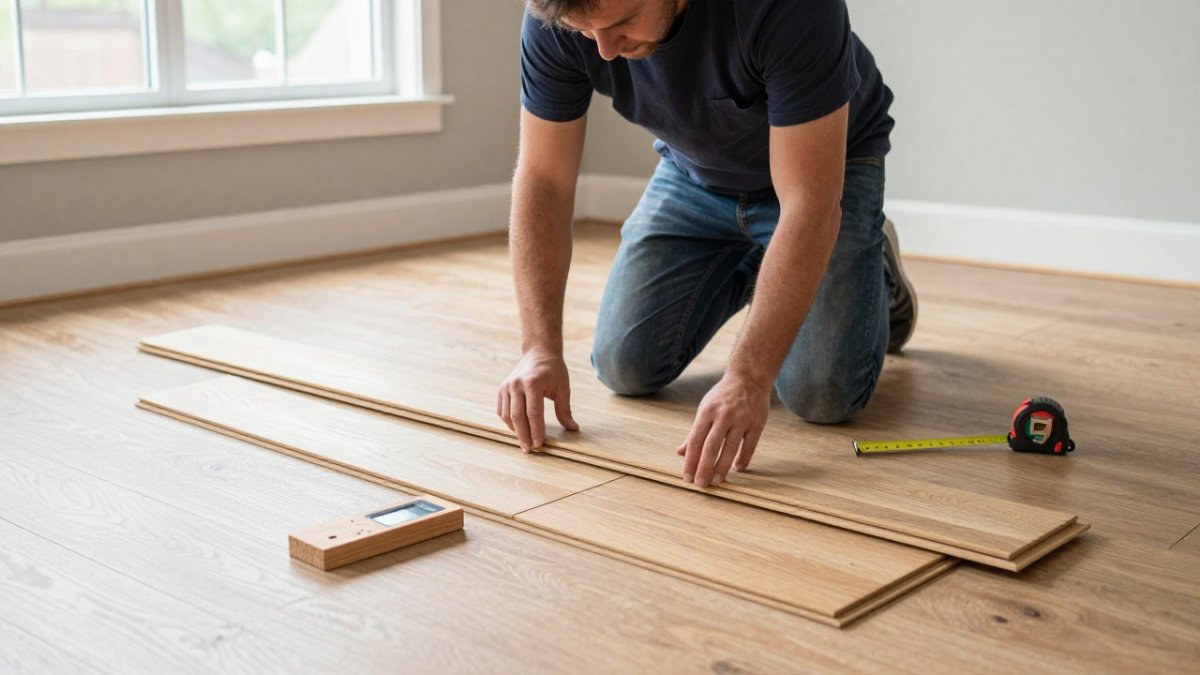
Lay a sheet of plastic film on the subfloor for 24 hours, then check for condensation underneath. You can also use a moisture meter, aiming for readings below 4 percent on concrete or 12 percent on wood. High moisture makes planks swell and cup, which forces joints apart. If moisture is the root cause, fixing the gaps without addressing the subfloor will only be temporary. A moisture barrier may be needed before reinstalling planks.
A gap that keeps coming back is telling you something about your subfloor, your humidity, or your installation. Patching the seam won't fix any of those. Hamptons carpet one floor and Home can assess the cause, handle the repair, and install flooring that's built for coastal conditions, with moisture-resistant options, proper expansion spacing, and a clean installation process that keeps dust contained. Get started with Hamptons carpet one floor and Home and close the gap for good.