 How-to
How to Keep Sand Out of Your House at the Beach
Table of Contents
- Build a Sand-Trapping Entry Zone at Every Door
- Sand-Resistant Entryway Mats That Actually Trap Grit
- Best Flooring for Beach Houses: Materials That Hide Sand
- How to Clean Sand Out of Carpet and Rugs Without Grinding It In
- Manage Pets, Beach Gear, and Storage Before Sand Gets Inside
- HVAC Filters, Air Filtration, and Daily Floor Maintenance
- Frequently Asked Questions
Last Updated: September 13, 2026
Build a Sand-Trapping Entry Zone at Every Door
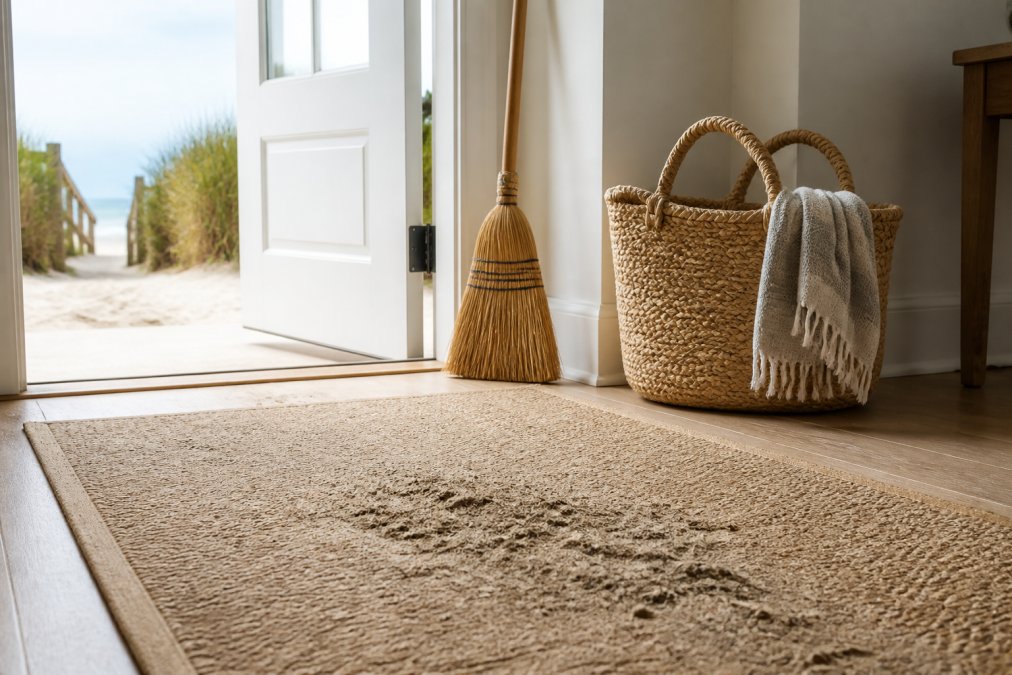
Learning how to keep sand out of your house at the beach starts at the threshold, not the living room, and the goal is simple: keep sand out before it spreads. A sand-trapping entry zone is a staged barrier system: an outdoor rinse point, a heavy-duty mat, and an absorbent indoor mat working together. Homes with a layered entry system track in dramatically less grit than homes relying on a single doormat.
The logic is simple: most sand enters on feet, paws, and gear, so the first meter inside the door decides how far it spreads.
Outdoor Rinse Station and Foot-Washing Setup
A rinse station is the first line of defense. Homeowners and vacation rental managers increasingly use outdoor showers, kiddie pools, or simple water pans at entry points to capture sand before it enters the home, according to Vacasa homeowner guidance on coastal property upkeep. You don't need plumbing for this to work. A shallow pan of fresh water beside the steps, emptied daily, rinses feet and dislodges grit that would otherwise hit your floors. Pair it with a dedicated towel hook and a small brush for ankles and sandals.
The Two-Mat System: Heavy-Duty Outside, Microfiber Inside
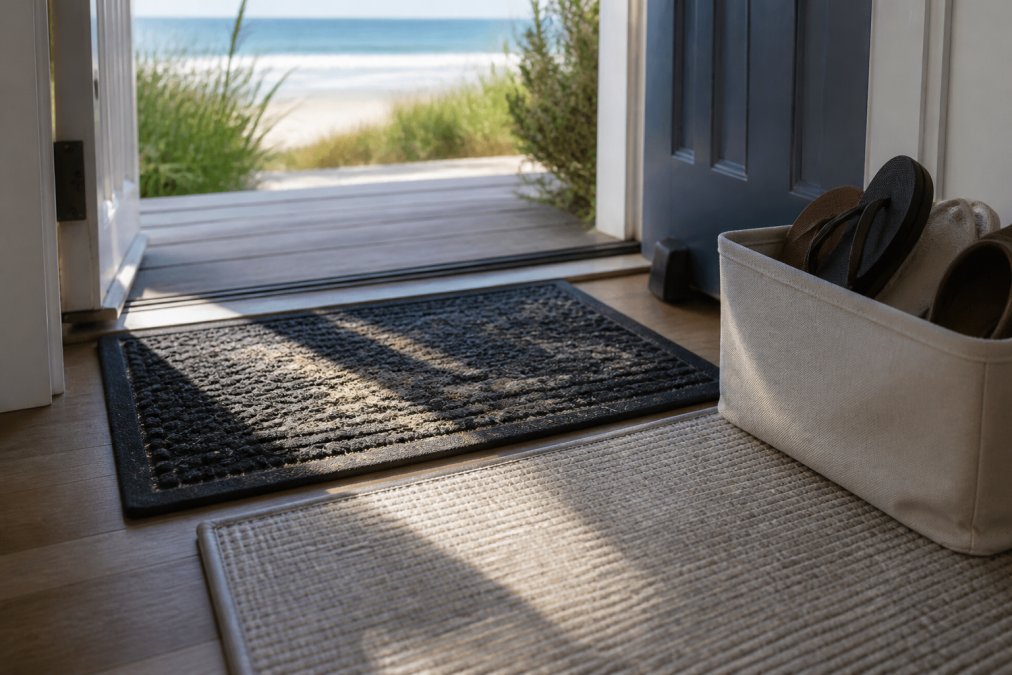
The two-mat system is the single most effective low-cost fix for sandy entryways. Industry recommendations emphasize using both a heavy-duty outdoor mat and an absorbent indoor mat at every entrance to block sand migration, per The Maids' entryway cleaning guidance. The outdoor mat scrapes; the indoor microfiber mat traps what's left. Skip either one and the system fails.
Sand-Resistant Entryway Mats That Actually Trap Grit
Sand-resistant entryway mats are engineered to scrape, trap, and hold sand particles rather than letting them pass through to the floor beneath. The best combine a coarse scraping surface with a backing that grips the floor and resists sliding when wet. Look for:
- Heavy-duty coir or rubber scraping mats for outside: stiff fibers agitate grit off shoe treads
- Microfiber indoor mats for inside: fine fibers capture remaining sand particles and hold them until you shake them out
- Rubber-backed construction on both: prevents the mat itself from sliding and keeps moisture off the threshold
- Edge-to-edge coverage at least as wide as the door opening
Best Flooring for Beach Houses: Materials That Hide Sand
The best flooring for beach houses tolerates grit without showing scratches and cleans up with a vacuum or damp mop. Sand acts like sandpaper underfoot, so soft surfaces wear fast in a coastal entry. But flooring is only half the story: walls, furniture, and window treatments also decide how much sand sticks around.
Flooring: How the Main Options Compare
| Flooring Type | Sand Visibility | Cleaning Effort | Best For |
|---|---|---|---|
| Luxury vinyl plank (LVP) | Low | Low | High-traffic entries, mudrooms |
| Porcelain or ceramic tile | Low | Low | Rinse stations, mudrooms, bathrooms |
| Sealed hardwood | Moderate | Moderate | Living areas, dry zones |
| Wall-to-wall carpet | High | High | Bedrooms only |
| Natural stone (slate, travertine) | Moderate to high | Moderate | Covered porches, not entries |
Tile and luxury vinyl plank handle tracked-in grit best because sand sits on the surface instead of working into fibers. Carpet in a beach house should be confined to bedrooms. Two trade-offs matter:
- Grout lines on tile trap fine sand. Choose large-format tile with narrow grout lines, or a grout color close to the tile so grit is less visible. Epoxy grout resists staining and cleans more easily than cementitious grout.
- LVP wear layers vary widely. A thicker wear layer resists the abrasion that sand causes, and a matte or textured finish hides scratches better than a high-gloss one. Glossy floors show every grain of sand and every scuff.
If you are weighing materials for a coastal property, a flooring professional can walk you through what holds up in sandy, humid conditions.
Sand-Repellent Surfaces Beyond the Floor
Sand also sticks to upholstery, curtains, and wall textures. Choosing the right materials up front means less time vacuuming later.
- Furniture fabrics: Tight-weave performance fabrics, solution-dyed acrylics, olefin, and tightly woven polyester blends, release sand far more easily than loose weaves like linen, bouclé, or chenille. Smooth leather and faux leather wipe clean with a damp cloth. Avoid heavily textured upholstery in the entry and living areas; it acts like a sand trap.
- Cushions and slipcovers: Removable, machine-washable slipcovers are worth the upgrade in a beach house. A cushion you can unzip and wash beats one you have to spot-clean.
- Window treatments: Flat roller shades and simple washable panels collect less sand than heavy drapes, Roman shades, or anything with deep pleats. If you want curtains, choose a washable fabric and keep them off the floor.
- Wall texture: Smooth painted walls wipe clean. Heavy texture, brick, and rough stone hold dust and fine sand. In entryways, a smooth, scrubbable paint finish is the practical choice.
- Rugs: Low-pile, flat-weave rugs (like indoor-outdoor polypropylene) release sand when vacuumed. Plush and shag rugs hold it. Use flat-weave in high-traffic areas and reserve plush for bedrooms.
A Note on Humidity and Salt Air
Coastal homes deal with humidity and salt air as much as sand. Materials that resist moisture, LVP, porcelain tile, sealed stone, and performance fabrics, also resist the warping, swelling, and mildew that plague natural fibers and unsealed wood. When two options handle sand equally well, pick the one that handles moisture better.
How to Clean Sand Out of Carpet and Rugs Without Grinding It In
Knowing how to clean sand out of carpet comes down to one rule: lift sand out, never scrub it deeper. Sand sinks to the base of carpet fibers, and wet cleaning or aggressive scrubbing drives it further in, where it abrades fibers with every footstep.
Follow this sequence:
- Let the sand settle. Wait an hour before vacuuming so particles drop to the base of the pile.
- Vacuum slowly with a crevice tool or bare-floor attachment around edges and thresholds first.
- Use a vacuum attachment with strong suction and make slow, overlapping passes over the full rug.
- Shake out small rugs outdoors before returning them inside.
- Treat stubborn grit with a dry sprinkle of cornstarch, let it sit briefly, then vacuum; it helps lift fine particles.
- Spot-clean stains only after sand is removed, never before.
Manage Pets, Beach Gear, and Storage Before Sand Gets Inside
Pets and beach gear move more sand than feet do. A wet dog can carry a surprising amount of grit in its coat, and one tote bag of damp towels can shed sand across three rooms. The real fix is a repeatable routine and the right containers, because sand that never crosses the threshold never has to be cleaned up.
Pet Sand Management: A Paw and Coat Protocol
Dogs are the single largest sand carrier in most beach homes. Sand clings to the undercoat, between paw pads, and in the feathering on legs and tails, and keeps shedding for an hour after the dog lies down.
Build a three-step protocol at the door:
- Rinse paws in a shallow pan of fresh water before the dog comes inside. A dedicated paw washer or a boot tray with an inch of water works; empty it daily so it does not become a breeding ground for bacteria.
- Dry with a dedicated microfiber towel kept on a hook by the door. Microfiber grabs fine particles that a cotton towel pushes around.
- Brush the coat outdoors with a rubber curry brush or undercoat rake. Do this on the porch or in the yard, not in the garage, so the sand lands somewhere you can sweep or hose away.
A washable pet mat inside the door catches what the towel misses. Look for rubber backing and a microfiber or chenille pile, and wash it weekly during beach season; a saturated pet mat just redistributes sand.
For dogs that swim, rinse the whole coat with fresh water before the paw routine. Salt and sand trapped in a wet undercoat will keep shedding for hours as the dog dries.
Sand-Proof Storage for Beach Gear
Beach chairs, umbrellas, coolers, and toys are sand reservoirs. A folded beach chair can hold a cup of sand in its webbing and frame joints, dribbling it out every time it moves. Contain gear so sand falls out in one place, ideally outside, instead of in the garage, mudroom, or car trunk.
- Mesh bags for soft goods: Store towels, swimsuits, and rash guards in mesh bags so sand sifts out in the car or on the porch instead of inside the house. A mesh duffel or a laundry-style mesh bag both work.
- Lidded bins for hard goods: Use lidded plastic bins or a closed deck box for beach chairs, umbrellas, and toys. An open bin is just a sand collector that tips over.
- A boot tray or shallow pan under the bin catches what falls out when you open the lid.
- Rinse before storage: A quick hose-down of chairs and umbrellas on the lawn before they go into the bin keeps the bin itself from becoming a sandbox.
- Closed shoe cabinets in the entry zone: An open shoe pile is a sand reservoir. A closed cabinet or a lidded bench keeps grit contained and out of sight.
Designate a Mudroom or "Sand Room"
If you have the space, make one room the transition zone where shoes, bags, and wet gear live. A true mudroom with a tile floor, utility sink, and closed storage is the gold standard; without a dedicated room, a bench with lidded bins beside the main door does the same job for less. Either way: one place where sand accumulates, and everywhere else stays clean.
HVAC Filters, Air Filtration, and Daily Floor Maintenance
Your HVAC system pulls fine sand and dust through the house, so filter maintenance is part of sand control. Replace filters on schedule during beach season and check them more often if your home sits close to the water; a clogged filter recirculates fine grit through every room.
Daily floor maintenance keeps the system from being overwhelmed:
- Vacuum high-traffic paths and the entry zone every day during beach season
- Sweep hard floors with a microfiber dust mop to pick up grit instead of pushing it around
- Empty vacuum canisters and clean filters regularly; a full vacuum just redistributes sand
- Keep a small handheld vacuum near the entry for quick cleanups
Even with rigorous preventative measures, sand is frequently tracked in by guests and environmental factors, which is why coastal homeowners still schedule periodic professional deep cleaning, as noted in Vacasa's homeowner maintenance guidance.
Sand management at a beach house is a system, not a single product: a rinse station, the right mats, forgiving flooring, and a routine that catches grit before it spreads. When your floors have taken one season too many of tracked-in sand, Hamptons carpet one floor and Home can help. We serve homeowners, contractors, and business owners across Suffolk County with moisture-resistant flooring options and meticulous installation, including the tricky work older homes with uneven subfloors demand. Get started with Hamptons carpet one floor and Home and give your beach house floors that can handle the sand.
Frequently Asked Questions
What is the best way to remove sand from feet before entering the house?
Set up an outdoor rinse station with a shower, kiddie pool, or water pan at the entry point. Rinse feet thoroughly, then step onto a heavy-duty outdoor mat and an indoor microfiber mat to catch remaining grit. Keep a small towel or cornstarch nearby for quick drying. This two-step routine stops most sand before it reaches your threshold.
Which types of flooring are most resistant to sand damage?
Luxury vinyl plank, porcelain tile, and sealed concrete handle tracked-in sand better than wall-to-wall carpet because grit sits on the surface instead of embedding in fibers. For beach houses, look for scratch-resistant wear layers and tight grout lines. Carpet tiles with a low pile can work in bedrooms, but high-traffic entry zones benefit from hard surfaces that sweep clean in seconds.
How do I effectively clean sand out of carpets and rugs?
Vacuum first with a crevice tool or hard-floor attachment to lift loose particles, then sprinkle cornstarch over the area, let it sit for 15 minutes, and vacuum again. Cornstarch absorbs moisture and helps dislodge grit from fibers. For deep cleaning, shake rugs outdoors before vacuuming. Avoid wet cleaning until dry sand is removed, or you will push particles deeper into the pile.
What fabric does sand not stick to?
Microfiber and tightly woven synthetic fabrics repel sand better than loose-knit cotton or wool. Microfiber mats trap grit in their dense fibers while letting sand shake out easily. For beach gear, mesh bags let sand fall through instead of collecting in the bottom. Outdoor furniture cushions made from solution-dyed acrylic also resist sand because the weave is tight and smooth.