 Ultimate guide
How to Maintain Hardwood in Humid Climates: 2026 Guide
Table of Contents
- How Humidity Damages Hardwood Floors (And Why It Matters Here)
- Ideal Indoor Humidity for Wood Flooring: The Numbers You Need
- Choosing the Best Dehumidifier for Hardwood Floors
- Hardwood Floor Cupping Repair: Step-by-Step Fix
- How to Maintain Hardwood in Humid Climates: Daily and Seasonal Habits
- Engineered Hardwood vs. Solid Wood in Humid Conditions
- Common Mistakes Homeowners Make With Hardwood in Humid Homes
- Conclusion
Last Updated: June 12, 2026
Hardwood floors and high humidity are a genuinely difficult combination. Knowing how to maintain hardwood in humid climates is not optional for Long Island homeowners, it is the difference between floors that last generations and floors that warp within a few seasons. At Hamptons carpet one floor and Home, we work with Suffolk County homeowners every week dealing with cupping, gapping, and finish failure caused entirely by moisture mismanagement. Most of this damage is preventable. Below, we cover exactly what causes it, how to fix it, and the daily habits that keep your floors stable year-round.
How Humidity Damages Hardwood Floors (And Why It Matters Here)
Wood is hygroscopic, it absorbs and releases moisture from the surrounding air continuously. When relative humidity rises, wood fibers absorb moisture and expand across the grain. Because boards are constrained by the subfloor and adjacent planks, that expansion causes cupping (edges rise above the center) or buckling. When humidity drops sharply, boards shrink and gaps open. Wide plank flooring, common in historic bungalows and Victorian-era homes throughout the Hamptons and North Fork, is especially vulnerable because wider boards experience more total dimensional change than narrow-strip flooring.
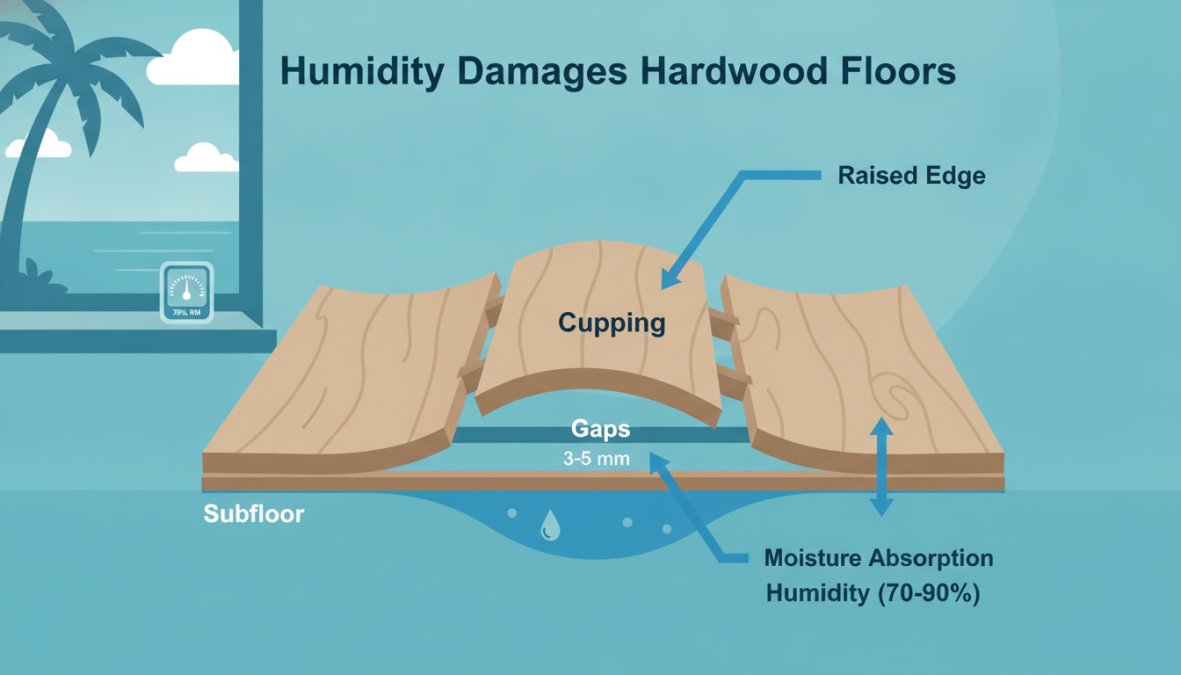
Long Island's ocean air carries elevated moisture year-round, and summer months routinely push indoor relative humidity well above the safe range for wood flooring. Homes without adequate climate control can see relative humidity swing 30 to 40 percentage points between winter and summer, a range that puts enormous stress on both original wood floors and engineered hardwood.
The Science of Wood Movement in Moisture-Rich Environments
For every 4% change in moisture content, solid hardwood expands or contracts roughly 1% across its width. A 5-inch-wide plank can shift nearly 1/16 of an inch with a significant humidity swing, multiply that across an entire room and structural integrity becomes a real concern. Species matters too: oak, which dominates historic homes in this region, has moderate movement characteristics, while pine moves more aggressively. Wood species identification is worth doing before any restoration work begins, because the right finish compatibility and acclimation protocols depend on it.
Signs Your Floors Are Already Suffering From Humidity
Catching moisture damage early limits repair costs significantly. Watch for these indicators:
- Cupping: Board edges are higher than the center, creating a concave surface across each plank
- Crowning: The center of each board is higher than the edges, often a sign of previous cupping that was sanded too soon
- Gapping: Visible spaces between boards, typically appearing in winter when indoor air dries out
- Finish clouding or peeling: Moisture trapped beneath the finish layer causes adhesion failure
- Soft spots or squeaking: May indicate subfloor damage from prolonged moisture exposure
Ideal Indoor Humidity for Wood Flooring: The Numbers You Need
The ideal indoor humidity for wood flooring is between 35% and 55% relative humidity, with 45% being the most stable target for most hardwood species. According to the National Wood Flooring Association's installation guidelines, wood flooring should be acclimated and maintained within this range to prevent warranty-voiding moisture damage. A home cycling from 70% in August to 25% in January is swinging 45 points, far beyond what any solid hardwood floor can handle without visible damage. The goal is not perfection; it is consistency.
Seasonal Humidity Swings on Long Island and the Hamptons
Long Island's climate creates a two-season challenge. Summer ocean air pushes indoor humidity into the 65-75% range in unconditioned spaces; winter forced-air heating can drop it below 25%. Both extremes damage floors in different ways. The practical solution is year-round management: dehumidification from May through October, humidification from November through April. A hygrometer placed near the floor surface gives you the data to respond before damage occurs rather than after.
Choosing the Best Dehumidifier for Hardwood Floors
The best dehumidifier for hardwood floors is a whole-home unit integrated with your HVAC system, sized appropriately for your home's square footage and regional humidity load. Portable units work for targeted problem areas but cannot maintain consistent conditions across an entire floor plan. For Suffolk County homes, where many properties include basements or crawl spaces that act as moisture reservoirs, undersizing a dehumidifier is the single most common mistake.
Whole-Home vs. Portable Dehumidifiers: Which Works Better
| Feature | Whole-Home Dehumidifier | Portable Dehumidifier |
|---|---|---|
| Coverage | Entire home | Single room or zone |
| Maintenance | Annual service | Empty reservoir daily/weekly |
| Humidity consistency | High | Moderate |
| Best for | Homes over 1,500 sq ft | Spot treatment, rentals |
| Installation | HVAC integration required | Plug-and-play |
| Cost range | Higher upfront | Lower upfront |
Whole-home units connect to existing ductwork and drain continuously, eliminating the manual reservoir-emptying that causes homeowners to neglect portable units. For homes with original wood floors or wide plank flooring throughout, the consistency of a whole-home system justifies the investment.
Other Climate Control Tools Worth Considering
For winter, a whole-home humidifier attached to the furnace keeps relative humidity from dropping below 35% when heating runs constantly. Standalone hygrometers placed at floor level give you real-time data, and smart thermostats with humidity monitoring can trigger your dehumidifier or humidifier automatically, removing the guesswork entirely.
Hardwood Floor Cupping Repair: Step-by-Step Fix
Hardwood floor cupping repair is possible without full replacement in most cases, provided the damage is caught before subfloor damage sets in. The process requires patience, rushing it produces worse results than the original damage.
- Identify and eliminate the moisture source. Check for plumbing leaks, HVAC condensation, crawl space moisture intrusion, or an inadequate vapor barrier beneath the subfloor.
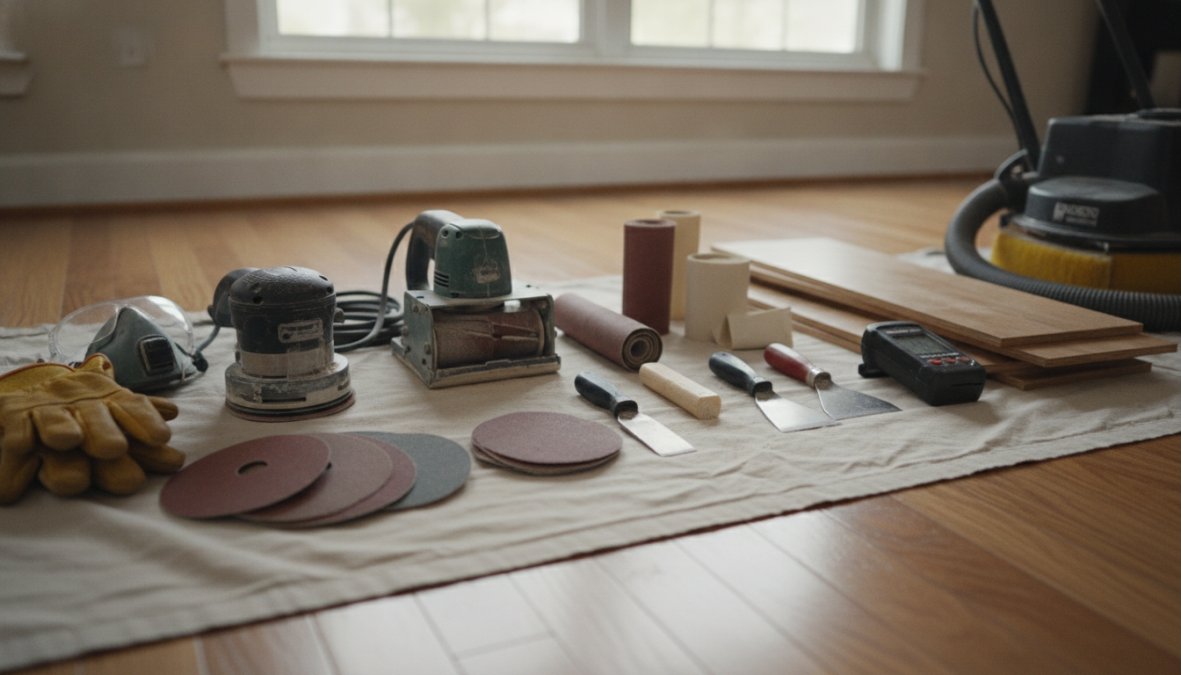
- Measure moisture content. Use a pin-type or pinless moisture meter; target readings within 2-4% of the subfloor moisture content before proceeding.
- Stabilize the environment. Run dehumidification at 45% relative humidity. This step alone can take two to eight weeks depending on severity.
- Reassess after stabilization. Mild cupping (boards raised less than 1/8 inch) often resolves on its own once moisture normalizes.
- Sand if necessary. Begin with a drum sander at 36-40 grit, working diagonally across boards to flatten evenly. Follow with progressively finer grits (60, 80, 100) and an edge sander for perimeter areas.
- Apply a compatible finish. Oil-modified polyurethane offers good moisture resistance; water-based finishes cure faster but require more coats for equivalent protection. Test stain matching on an inconspicuous area first.
- Allow full cure time. Most finishes need 24-72 hours of light-traffic cure and up to 30 days for full hardness. Avoid wet mopping during this period.
When Cupping Can Be Reversed vs. When Boards Must Be Replaced
Mild to moderate cupping without structural separation or subfloor damage is almost always reversible. Boards that have split, developed deep grain cracks, or show signs of rot need replacement. When sourcing replacements, reclaimed hardwood matching the original species and width is worth the effort, new lumber milled at modern moisture content often looks noticeably different from aged original wood, especially in historic homes.
How to Maintain Hardwood in Humid Climates: Daily and Seasonal Habits
Long-term hardwood maintenance in humid climates comes down to consistent habits rather than occasional heroic interventions. The homes with the best-looking floors after 20 years are the ones where humidity was managed every single year.
Cleaning Routines That Protect Finish Compatibility
- Use a dry or slightly damp microfiber mop for daily cleaning. Never use a soaking-wet mop on hardwood.
- Avoid steam mops entirely, steam drives moisture directly into the wood grain and beneath finish layers, accelerating cupping and delamination.
- Choose pH-neutral, hardwood-specific cleaners. Ammonia, bleach, or oil soaps degrade polyurethane and wax finishes over time.
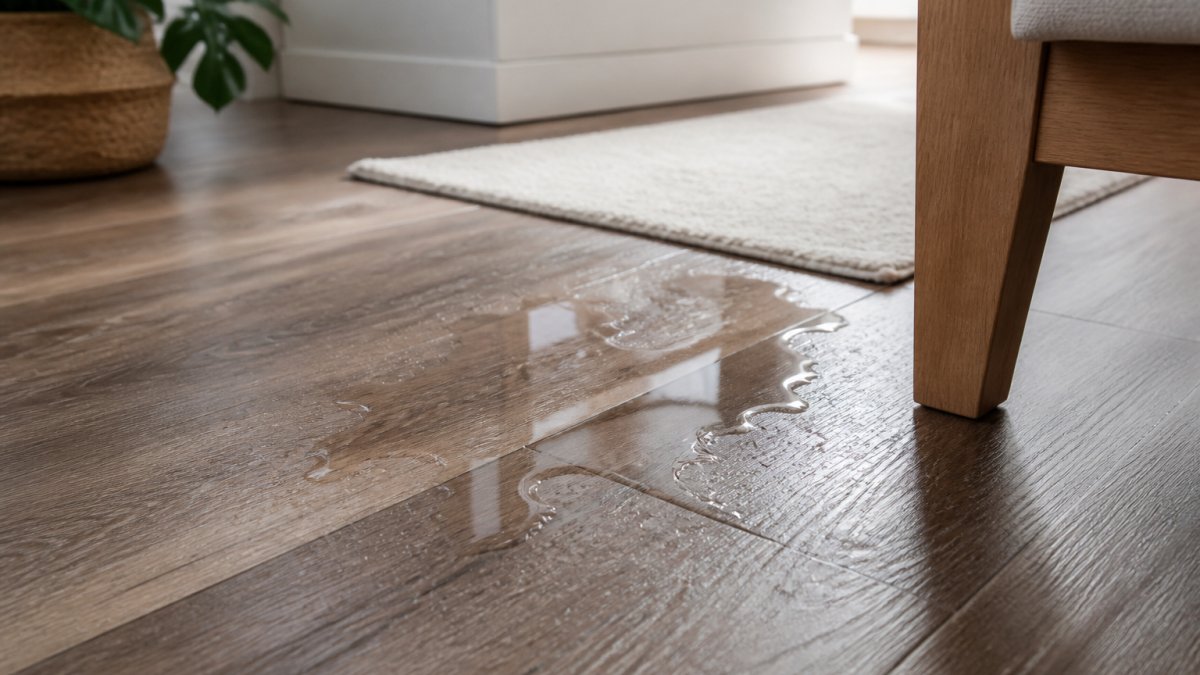
- Wipe up spills within minutes. Standing liquid is the fastest path to localized moisture damage and finish clouding.
- Place moisture-absorbing mats at all exterior entry points, especially during summer months when tracked-in humidity is highest.
Moisture Barrier and Subfloor Preparation Best Practices
A moisture barrier limits moisture migration from below, skipping it in humid climates causes problems years after installation. For new installations or restoration projects, 6-mil polyethylene sheeting over concrete subfloors provides baseline protection; over wood subfloors, 15-lb asphalt-saturated felt or a dedicated moisture-control underlayment is appropriate. Subfloor leveling matters too: any variation greater than 3/16 inch over 10 feet creates stress points where boards flex and finish cracks, opening pathways for moisture intrusion.
According to the EPA's guidance on indoor moisture and building materials, controlling moisture at the source is more effective than any surface treatment applied after installation.
Engineered Hardwood vs. Solid Wood in Humid Conditions
Engineered hardwood handles humidity better than solid wood in most coastal environments. Its cross-ply core resists expansion and contraction across the grain, the primary failure mechanism in solid wood under humidity stress, and it can be installed directly over concrete with an appropriate moisture barrier, which solid wood cannot. For Long Island homes where year-round humidity management is challenging, engineered hardwood is often the more practical choice for ground-floor and basement-adjacent installations.
That said, solid wood can be sanded and refinished multiple times over its lifespan, meaning a well-maintained solid floor can outlast several generations of engineered product. For historic homes where period-appropriate appearance matters, solid wood with proper climate control is often the right call. As noted in the Wood Floor Business technical resource library, engineered hardwood with a veneer thickness of at least 3mm can be refinished two to three times, extending its useful life significantly compared to thinner-veneer products.
Common Mistakes Homeowners Make With Hardwood in Humid Homes
Most hardwood failures in humid climates are predictable results of avoidable errors.
Skipping acclimation before installation. New hardwood needs three to seven days to acclimate to the home's temperature and humidity before installation. Boards installed without acclimation expand or contract after the fact, causing gapping or buckling regardless of installation quality.
Using the wrong finish for the environment. Not all finishes perform equally in high-humidity conditions. Some water-based formulations are more permeable to moisture vapor than oil-modified alternatives. Finish compatibility with the existing floor and local climate should be evaluated before any refinishing project.
Neglecting the crawl space or basement. An unconditioned crawl space in a Suffolk County home can maintain 80%+ relative humidity through summer, driving moisture up through floor joists into finish floors regardless of how well the living space is controlled. Encapsulating crawl spaces and installing a dedicated dehumidifier below is often the single most impactful investment a homeowner can make.
Sanding too aggressively or too soon. Solid hardwood has a finite number of sanding cycles before the wear layer is exhausted. Sanding prematurely to address cosmetic issues that would resolve on their own wastes that finite resource.
Ignoring seasonal transitions. The weeks around Memorial Day and Labor Day, when Long Island's humidity shifts most dramatically, are the highest-risk periods for hardwood. Ramping up dehumidification before summer humidity peaks, rather than reacting after damage starts, is the habit that separates floors that age well from floors that need constant repair.
Maintaining hardwood in a humid coastal environment requires consistent climate control, the right product choices, and an honest assessment of what your subfloor and crawl space are doing to the floors above. Hamptons carpet one floor and Home serves homeowners across all of Suffolk County and brings direct experience with the specific humidity challenges of Long Island's coastal climate. Whether you are selecting new flooring, planning a restoration, or troubleshooting existing damage, reach out to our team for guidance specific to your home's conditions and get floors that hold up for decades.
Frequently Asked Questions
Does humidity ruin hardwood floors?
Yes, excessive humidity can seriously damage hardwood floors over time. When wood absorbs moisture from the air, it expands and can lead to cupping, warping, buckling, and finish peeling. In coastal areas like Suffolk County, NY, where summer humidity regularly spikes, this risk is especially real. Maintaining the ideal indoor humidity range and using climate control tools are the most effective ways to prevent long-term damage to your hardwood floors.
What is the ideal indoor humidity level for wood flooring?
The generally recommended indoor relative humidity range for wood flooring is between 35% and 55%, with 45% often cited as the sweet spot. Staying within this range minimizes wood movement and reduces the risk of cupping or gapping. In humid climates or during Long Island summers, a dehumidifier is often necessary to keep levels from climbing above 55%, which is when moisture-related floor damage typically begins to accelerate.
How do you stop hardwood floors from cupping in humidity?
Hardwood floor cupping repair starts with identifying and eliminating the moisture source, whether that's high indoor humidity, a subfloor moisture issue, or a plumbing leak. Once the moisture problem is corrected, mild cupping may reverse naturally as the wood dries. For more severe cupping, floor sanding and refinishing are often needed. Installing a moisture barrier during the original installation and maintaining proper indoor humidity levels are the best preventive steps.
Can a dehumidifier protect hardwood floors?
Absolutely. The best dehumidifier for hardwood floors will keep indoor relative humidity consistently within the safe 35-55% range, preventing wood expansion and contraction cycles that cause cupping and warping. Whole-home dehumidifiers integrated with your HVAC system offer the most consistent protection, while portable units work well for targeted rooms. Look for a unit with a built-in hygrometer so you can monitor levels without guesswork.
Are engineered hardwood floors better for humid climates?
Engineered hardwood is generally more stable than solid hardwood in humid climates because its cross-ply construction resists moisture-driven expansion better. This makes it a practical choice for below-grade installations or rooms prone to humidity swings. However, engineered hardwood is not waterproof and still requires proper humidity management. For homeowners committed to maintaining hardwood in humid climates, engineered options offer a good balance of authentic wood appearance and improved dimensional stability.
This article was written using GrandRanker