 How-to
How to Prepare Your Home for Flooring Installation
Last Updated: October 30, 2026
Quick Summary
To prepare your home for flooring installation, clear the work area of furniture, rugs and décor, and inspect the subfloor for loose boards and moisture a week or two ahead. Preparing early keeps your flooring installation on schedule and protects your belongings.
- Confirm the date and arrival window with your installer a week or two before.
- Clear floors of rugs, toys and loose items, and move furniture out of the work area.
- Take down curtains, blinds and wall decor that could fall or collect dust.
- Inspect the subfloor for loose boards, cracks, soft spots and protruding nails.
- Empty closets and drawers, and ask whether baseboards are included in the job.
Table of Contents
- Why Preparation Shortens Your Flooring Installation
- Flooring Installation Checklist: Before the Crew Arrives
- Moving Furniture Before Flooring Installation
- Subfloor Preparation for New Flooring
- Clearing Closets, Baseboards and Doorways
- How Long Flooring Installation Takes and What to Plan Around
- Booking Your Installation With Hamptons Carpet One Floor and Home
- Frequently Asked Questions
Preparing your home before flooring installation saves time, money and frustration. Most delays in flooring projects come from rooms that were not ready when the crew arrived. Knowing what to do before installation day keeps your project on schedule.
Why Preparation Shortens Your Flooring Installation
Flooring installation goes fastest when the work area is clear, dry and level. When installers spend the first hour moving furniture or hunting for an outlet cover, the whole job runs longer.
Good preparation also protects your belongings. A cleared room means fewer scratches, fewer dust particles settling on your things and less risk of a broken lamp.
Here is what preparation usually gets you:
- A faster start on installation day
- Less dust and mess inside your home
- Fewer surprises once the old floor comes up
- A smoother final walkthrough
Flooring Installation Checklist: Before the Crew Arrives
Use this checklist a week or two before the install date. Each item removes a common delay.
- Confirm the date and arrival window with your installer
- Clear floors of rugs, toys and loose items
- Remove furniture from the work area or plan where it will go
- Take down curtains, blinds and wall decor that could fall or get dusty
- Move pets and young children to a separate room or outside
- Shut off or cover any vents you do not want dust to enter
- Make a clear path from the front door to each work room
- Set aside a spot for tools and materials that stays out of the way
Why this matters: Installers need open floor space to measure, cut and lay material. Anything left behind adds time, and sometimes it gets damaged.
Use this checklist a week or two before the install date. Each item removes a common delay.
| Item | What to do | Timing |
|---|---|---|
| Confirm date | Confirm the date and arrival window with your installer | A week or two before |
| Clear floors | Remove rugs, toys and loose items | Before crew arrives |
| Move furniture | Remove from work area or plan where it goes | Before crew arrives |
| Take down décor | Remove curtains, blinds and wall decor | Before crew arrives |
| Pets and children | Move to a separate room or outside | Installation day |
| Vents | Shut off or cover vents dust should not enter | Before crew arrives |
| Access path | Clear a path from front door to each work room | Before crew arrives |
| Tools and materials | Set aside a spot out of the way | Before crew arrives |
Moving Furniture Before Flooring Installation
Plan to move most furniture out of the room before the crew starts. Heavy pieces like sofas, dressers and beds are the hardest to handle, so ask for help early.
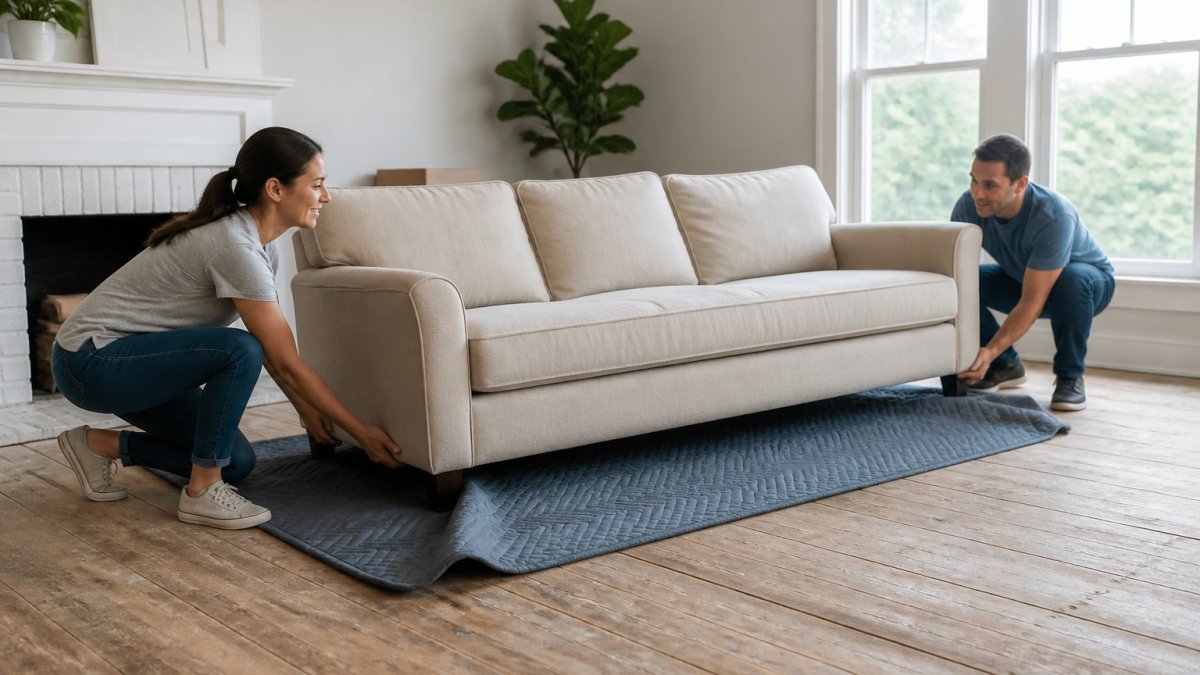
Watch out: Do not drag furniture across the old floor. Grit under the legs can gouge existing surfaces and leave marks on the new flooring.
Empty drawers and cabinets before moving them. Lighter pieces are easier to carry and less likely to break.
Subfloor Preparation for New Flooring
The subfloor is the surface under your flooring. Most installation problems start here, so inspect it before the install date.
Look for these issues:
- Loose or squeaky boards
- Cracks, holes or soft spots
- Old adhesive or leftover debris
- Nails or screws sticking up
Fix loose boards and secure any fasteners. Sweep or vacuum the surface so nothing bumps under new material. If you spot water damage or rot, call your installer before the job starts. Repairs found mid-install cause delays and added costs.
Checking for Moisture and Levelness
Moisture and unevenness affect how well new flooring performs. Check both before installation.
For moisture, look for dark stains, a musty smell or a powdery residue. Moisture testing of concrete slabs is a common step before laying flooring, especially on ground floors.
For levelness, lay a long straight board or a level across the floor. Note any dips or humps. Your installer can tell you what your floor needs.
Why it matters: An uneven or damp subfloor can cause gaps, buckling or early wear, even with good flooring.
Clearing Closets, Baseboards and Doorways
Installers need clear access to every edge of the room. Prepare the tight spots too.
- Closets: Empty the floor of shoes, boxes and storage bins so the crew can lay flooring all the way in.
- Baseboards: Ask your installer whether baseboards are included in the job.
- Doorways: Remove door stops and clear the swing path. Make sure doors open fully once new flooring is down.
Keep a bin nearby for small items you remove from these areas. It helps you avoid losing hardware.
How Long Flooring Installation Takes and What to Plan Around
Installation time depends on the room size, the flooring type, the subfloor condition and how much prep is needed. Contact us for an estimate for your specific home.
Plan around these common factors:
- Room count and size: More rooms and larger spaces take longer.
- Subfloor repairs: Any fixes add time before the new floor goes down.
- Drying and curing: Some adhesives and leveling products need time to set. Ask how long you should avoid foot traffic after installation.
- Access: Stairs, elevators and tight hallways slow down material delivery.
Keep a plan for the household during the job. Pets, children and everyday routines may need to shift for a day or two. Ask your installer what to expect each day so you can adjust your schedule.
Booking Your Installation With Hamptons Carpet One Floor and Home
Ready to schedule? Contact us to discuss preparation for your home. Pricing depends on quantity, dates and delivery, so contact us or visit our website for current prices and a quote.
Start by confirming your measurements, choosing your flooring and booking an installation window. Then use the checklist above to get your home ready. A little preparation goes a long way toward a smooth, on-time installation.
Frequently Asked Questions
How do I prepare my house for flooring installation?
Start by clearing the rooms being covered, including furniture, rugs, lamps, and wall décor. Remove or protect anything you want to keep, and take down items that could be damaged by dust or movement. Next, check that the subfloor is clean, dry, and level, and confirm the installer knows the removal scope, such as whether old flooring and baseboards are included. Ask your installer for a written checklist so you know exactly what to do before the crew arrives.
Do I need to move all the furniture before new flooring is installed?
Most installers ask you to clear the room completely, because heavy furniture can slow the crew and may need to be moved again. Small items should be packed or removed, and anything you cannot move safely should be discussed with your installer ahead of time. Clearing the space before installation day helps keep the schedule on track and reduces the chance of damage to your belongings or the new floor.
Should I remove everything from closets before flooring installation?
Yes, it is best to empty closets that will be covered by the new flooring, since the installer needs clear access to the floor edges and transitions. Store shoes, boxes, and hanging clothes elsewhere to avoid dust and accidental damage. Ask your installer whether closet floors are included in the job so you know whether they need to be cleared for measurement and installation.
How long should I stay off newly installed flooring?
Waiting times depend on the flooring type and adhesive used, so follow the specific instructions your installer provides. Carpet is often walkable soon after installation, while some hard surfaces need more time before heavy foot traffic or furniture returns. Pricing and timing depend on quantity, dates, and delivery, so contact Hamptons Carpet One Floor and Home for a quote and a clear schedule for your Southampton, NY project.