 How-to
How to Prevent Pets From Slipping on Laminate Floors
Table of Contents
- Why Pets Slip on Laminate and What Actually Fixes It
- How to Make Laminate Flooring Less Slippery for Dogs
- Non-Slip Rugs for Dogs on Laminate: Placement That Works
- Dog Nail Trimming for Floor Traction
- Paw Care: Trimming Fur and Improving Paw-Pad Grip
- Toe Grips for Dogs on Slippery Floors and Other Traction Aids
- Cats, Older Pets, and When Slipping Signals a Health Problem
- A Room-by-Room Prevention Plan and How to Measure Results
- Frequently Asked Questions
Last Updated: October 20, 2026
Why Pets Slip on Laminate and What Actually Fixes It
Laminate is one of the slickest floors you can put under a dog.
We hear this complaint constantly from homeowners across Suffolk County. A dog that sprints across the yard freezes up the moment it hits the hallway.
The fix is not one product. It is a stack of small changes: better grip underfoot, shorter nails, trimmed paw hair, and rugs that stay put.
How to Make Laminate Flooring Less Slippery for Dogs
You can make laminate less slippery for dogs in three ways: add a textured surface, change the paw, or change the floor's finish. Surface and paw changes are reversible and safe. Finish changes carry more risk, so treat them carefully.
Start with the least invasive option. A few well-placed rugs usually solve the worst spots before you spend money on anything else.
Why Laminate Behaves Differently From Other Floors
Laminate is not hardwood. Its top layer is a factory-applied wear layer, typically a melamine or acrylic-based resin over a printed decor layer, bonded to a core of high-density fiberboard or similar composite. That wear layer is hard, non-porous, and deliberately smooth.
The practical consequence: anything you apply to laminate sits on top of that sealed film rather than soaking in.
Comparing Floor Treatment Types Safely
There are four broad categories of anti-slip floor treatment, and they are not interchangeable on laminate:
- Grip sprays and mists. These leave a thin, slightly tacky film. They are the least invasive option and usually the easiest to remove, but they wear off in high-traffic lanes and need reapplication. Most practitioners find a spray lasts longest in low-traffic rooms and shortest in hallways and doorways.
- Roll-on anti-slip coatings. These form a more durable textured layer. They offer the strongest grip but are the hardest to reverse, and some formulations can dull or cloud a laminate finish. Treat these as a semi-permanent decision.
- Anti-slip tapes and treads. These are peel-and-stick strips applied to specific spots rather than the whole floor. They are reversible and targeted, which makes them a good fit for stairs and doorway transitions, but adhesive residue can be stubborn on some wear layers.
How to Test and Apply Without Damaging the Finish
Before applying anything across a room, run a patch test:
- Pick a hidden area, such as inside a closet or under a movable appliance.
- Apply the product exactly as directed and let it cure for the full recommended drying time, often 24 hours for coatings, minutes for sprays.
- Check for clouding, tackiness that attracts grit, discoloration, or a change in sheen.
- Walk on it in socks and watch how your dog moves across the patch before committing.
A few application rules that protect the floor:
- Read the laminate manufacturer's care guide first. Many warranties exclude damage from aftermarket coatings, and some specify approved cleaners only.
- Apply in thin, even layers. Heavy coats trap dirt and pet hair and can become slippery once they load up.
- Keep treatment away from seams and edges, where moisture and residue can wick into the core.
The Laminate-Safe Shortlist
If you want the lowest-risk path, prioritize in this order: non-slip rugs in the problem zones, nail and paw care, then targeted anti-slip tape on stairs and transitions. Reserve full-floor coatings for cases where rugs are impractical, and only after a patch test and a warranty check.
Non-Slip Rugs for Dogs on Laminate: Placement That Works
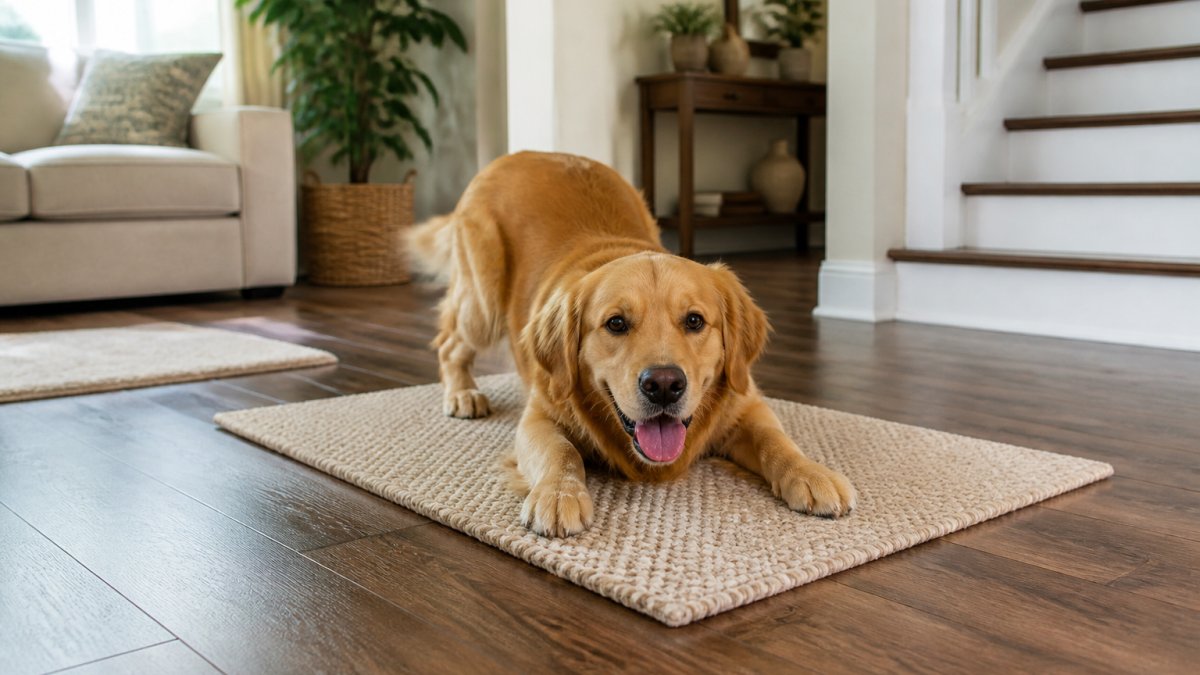
Non-slip rugs work best when they sit exactly where your dog loses control. Watch your pet for a day and mark those spots. It is almost always the same four places.
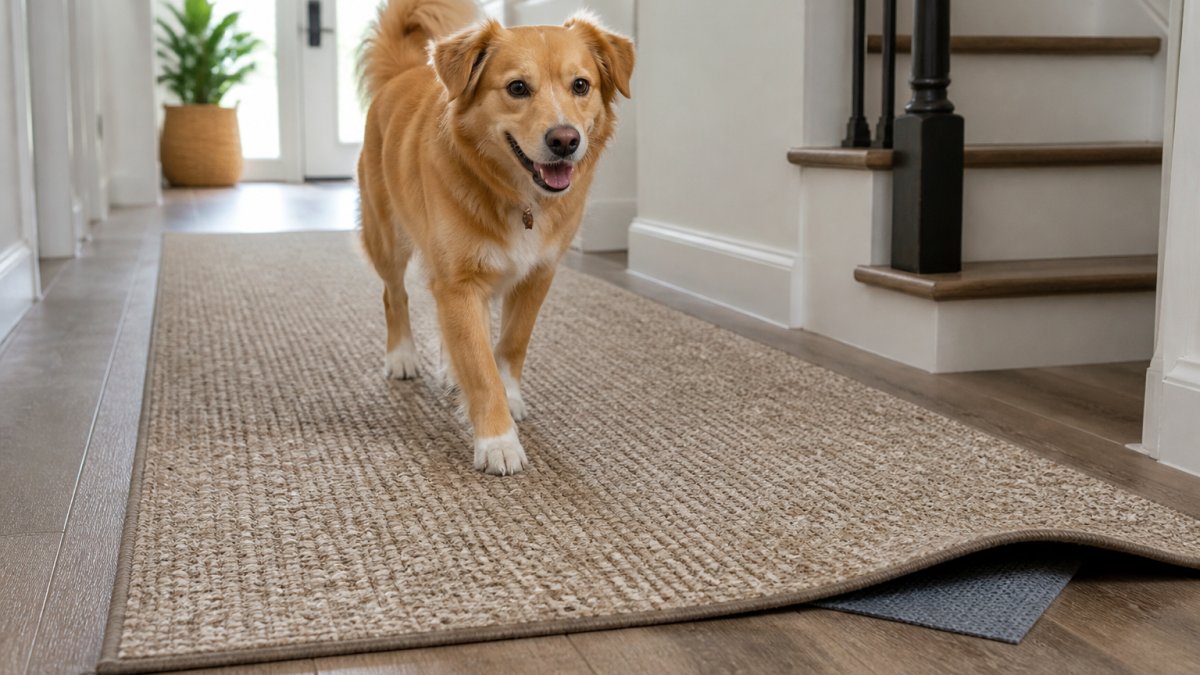
Prioritize these zones:
- Doorways between rooms, where dogs speed up
- Hallways, especially long runs where dogs build momentum
- The top and bottom of stairs, the highest-risk spots for falls
Low-pile rugs with a rubber or felt backing beat thick, plush rugs. Thick rugs bunch and slide, which can trip a dog worse than bare floor.
Securing Rugs So They Stay Put
A rug that slides is a hazard, not a fix. Use a non-skid pad under every rug, sized slightly smaller than the rug itself so the edges do not curl.
For runners, add rug tape or corner grippers. Check the pads monthly, since grit and pet hair break down the grip. A cheap pad is the most common reason a "non-slip" rug fails.
Dog Nail Trimming for Floor Traction
Long nails are the single biggest paw-side cause of slipping, and a key part of how to prevent pets from slipping on laminate.
Dog nail trimming for floor traction comes down to one test. Stand your dog on a hard, flat surface.
Trim in small amounts every two to three weeks rather than one big session. Cut just ahead of the quick, the pink area inside the nail.
Paw Care: Trimming Fur and Improving Paw-Pad Grip
Hair growing between the paw pads reduces contact with the floor. Trim it flush with the pads using rounded safety scissors. This is especially important for long-haired breeds and dogs that slip mostly on turns.
Paw-pad condition matters too. Dry, cracked pads grip poorly.
A common mistake is trimming pad hair too short and irritating the skin. Leave a thin layer and trim only what sticks out past the pads.
Toe Grips for Dogs on Slippery Floors and Other Traction Aids
Toe grips for dogs on slippery floors are small rubber caps that fit over individual nails. They add traction and help senior dogs stay steady. They work, but they need correct sizing and regular replacement.
Other traction aids worth knowing:
- Paw wax, which adds a light grip layer and protects pads
- Grip socks, useful indoors but easy for some dogs to kick off
- Non-skid booties, best for dogs with medical needs
These aids help most as a bridge. Pair them with rugs and nail care rather than relying on them alone.
Cats, Older Pets, and When Slipping Signals a Health Problem
Cats slip on laminate too, and they hide it better. A cat that avoids jumping or slides on landings may be struggling with the floor. The same fixes apply: runners along main paths, trimmed claws, and a stable landing spot near furniture.
Older dogs need extra help. Arthritis and weak hind legs make slipping more likely and more dangerous. Watch for these signs:
- Reluctance to walk on hard floors
- Stiffness after resting
- A changed gait or dragging paws
A Room-by-Room Prevention Plan and How to Measure Results
Build the plan from the room your pet uses most, then work outward. This is a recommended sequence.
| Room | Main Fix | Why It Matters | Check Frequency |
|---|---|---|---|
| Entryways | Washable runner with non-skid pad | Dogs accelerate through doorways and turn sharply on entry | Weekly |
| Hallways | Long runner, secured at both ends | Long runs let dogs build momentum before they need to stop | Monthly |
| Living room | Low-pile area rug under seating | Jumping off furniture and tight turns around legs | Monthly |
| Stairs | Carpet runner or treads on every step | Top and bottom steps are the highest fall-risk spots | Monthly |
| Kitchen | Small mat at bowl station | Pivoting at food and water bowls | Weekly |
Placement Logic: Where Slips Actually Happen
Most slips cluster at transition points, not in open floor. Watch your pet for a day and note where they speed up, turn, or stop suddenly. The pattern is usually consistent:
- Doorway thresholds between rooms, where flooring changes or a dog anticipates a turn.
- The first and last step of any staircase, where stride length changes.
- Feeding and watering stations, where dogs pivot fast and plant their front paws.
Place rugs so the leading edge sits just before the transition, not after it. A runner that starts a foot past the doorway misses the exact spot where the dog loses grip.
A Simple Traction Test
You do not need equipment to assess whether a fix is working. Try this:
- With your pet standing on the bare laminate, gently press a flat hand against the side of a paw and try to slide it a few inches. Note how much resistance you feel.
- Repeat on the rug or treated area.
- Compare. A surface that lets the paw slide easily is still a slip risk; one that resists is doing its job.
This is a rough field test, not a lab measurement, but it gives you a consistent baseline for comparing surfaces in your own home.
Tracking Slips, Confidence, and Mobility
Counting slips is more useful than guessing. Before you change anything, keep a simple one-week log:
- Slip count. Tally visible slips or skids per day, noting the room.
- Confidence signs. Note hesitation at doorways, refusal to walk on bare floor, or a tucked posture on laminate.
- Mobility notes. Record stiffness after rest, reluctance on stairs, or changes in gait.
After each fix, repeat the same log for a week. Most owners see fewer slips once rugs and nail trims are in place. If the count does not drop after rugs, nail care, and paw trimming, the floor itself may be the wrong fit for your pet.
If slipping continues after all of this, the floor itself may be the wrong fit for your pet. We help Suffolk County homeowners compare flooring options that hold up to paws, sand, and heavy traffic. Our team can walk you through samples and installation so you pick a surface that works for your whole household.
Frequently Asked Questions
What can I put on laminate floors to help dogs get traction?
The most reliable options are non-slip rugs and runners with secure backing, placed in high-traffic areas like hallways and doorways. Paw wax adds grip to paw pads, and toe grips fit over individual nails for dogs that need extra help. Avoid abrasive grit coatings that can dull the laminate finish. For a laminate-safe approach, start with rugs and grooming, then add paw products if slipping continues. A flooring retailer can advise on rug backings that won't trap moisture against the laminate surface.
Do non-slip rugs for dogs on laminate really stop slipping?
They help significantly when placed correctly. Dogs slip most on smooth surfaces during turns and stops, so runners along walking paths and mats at doorways give paws something to grip. The key is a secure backing or rug pad so the rug itself doesn't slide. Low-pile rugs work better than thick, plush ones because paws don't sink in and lose footing. Washable mats are practical for households dealing with sand, dirt, and pet accidents, and they protect the laminate underneath from scratches.
Can trimming a dog's nails help prevent slipping on laminate?
Yes. Long nails lift the paw so less of the pad contacts the floor, which reduces grip on smooth surfaces like laminate. Keeping nails short lets the paw pads sit flat and do their job. Trim nails every few weeks or ask a groomer or vet to do it. Pair nail trimming with trimming excess fur between the paw pads, since overgrown hair covers the pads and acts like a sock on a slick floor. Together these two grooming steps are the cheapest traction fix available.
When should I ask a veterinarian about a pet's slipping?
Ask a vet if a pet that used to move easily starts slipping often, drags its feet, or seems reluctant to walk on smooth floors. Slipping can point to arthritis, hip or joint problems, neurological issues, or vision changes, especially in older dogs. Sudden changes in gait or knuckling of the paws warrant a prompt visit. For senior pets, a vet can also recommend mobility aids like toe grips or booties alongside floor changes such as runners and non-slip mats.
Slippery laminate does not have to mean a nervous pet. Start with a runner at the doorway and a nail trim, then build from there. When you are ready to change the floor itself, Hamptons carpet one floor and Home can help you choose a durable, pet-friendly option and handle the installation. Get started with Hamptons carpet one floor and Home and give your pet a floor it can trust.