 How-to
How to Recycle Old Carpet Responsibly
Table of Contents
- Why Carpet Recycling Matters
- How to Prepare Carpet for Recycling
- Handling Carpet Padding and Tack Strips
- Finding Carpet Recycling Centers Near You
- Eco-Friendly Flooring Alternatives to Consider
- Manufacturer Take-Back Programs and Cost Considerations
- How to Recycle Old Carpet: Step-by-Step Process
- Conclusion
- Frequently Asked Questions
Last Updated: September 2, 2026
Why Carpet Recycling Matters
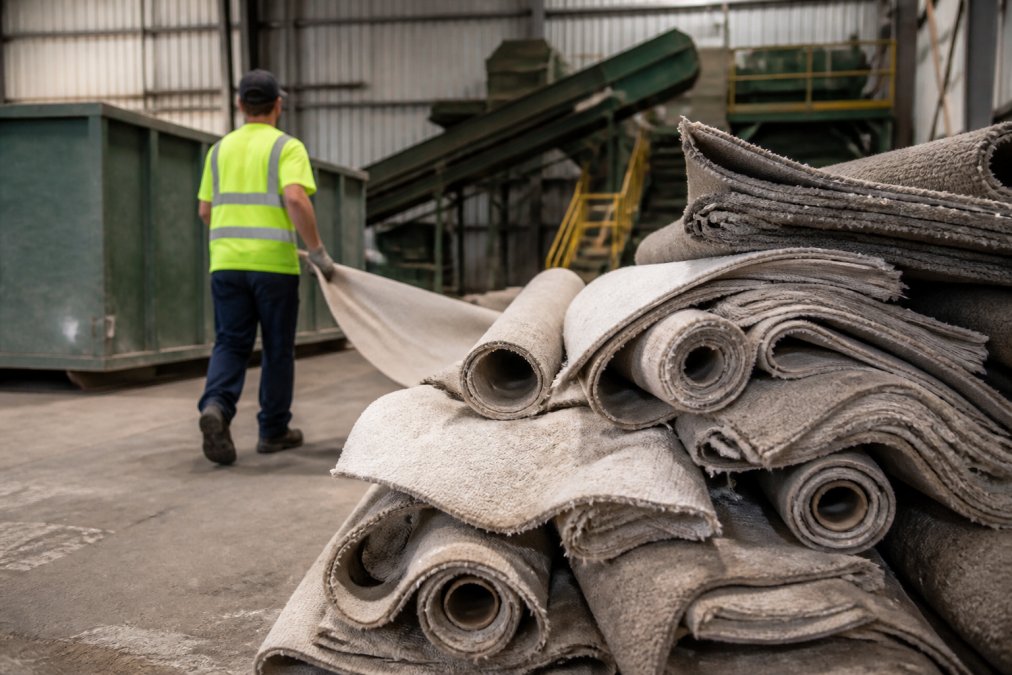
Carpet recycling is essential as landfill waste reaches crisis levels. Approximately 3.5 billion pounds of carpet are discarded in landfills annually, yet only about 5% is recycled nationally (carpet waste statistics). In 2018, the United States generated 3.4 million tons of carpet waste, with only 310,000 tons recycled and 2,460,000 tons sent to landfills, roughly 91% ending up in landfills where decomposition takes decades (carpet waste data).
States with extended producer responsibility (EPR) laws are proving change is possible. California achieved a record 38.5% carpet recycling rate in 2024, exceeding its 34% goal, after building momentum from its 2010 EPR law. Research shows approximately 93% of post-consumer carpet may be recyclable given current technology and end markets. Recycling carpet produces far less greenhouse gas than landfill disposal, reducing emissions by 8,300 pounds of CO2 per ton of carpet recycled. This guide walks you through exactly how to recycle old carpet, from preparation to drop-off.
How to Prepare Carpet for Recycling
Preparing carpet for recycling is critical, most facilities won't accept contaminated, wet, or improperly bundled flooring. Start by removing all furniture and obstacles. If the carpet is wet or damp, allow it to dry completely in a well-ventilated space for at least 48 hours before proceeding, as moisture interferes with the fiber separation process recyclers depend on.
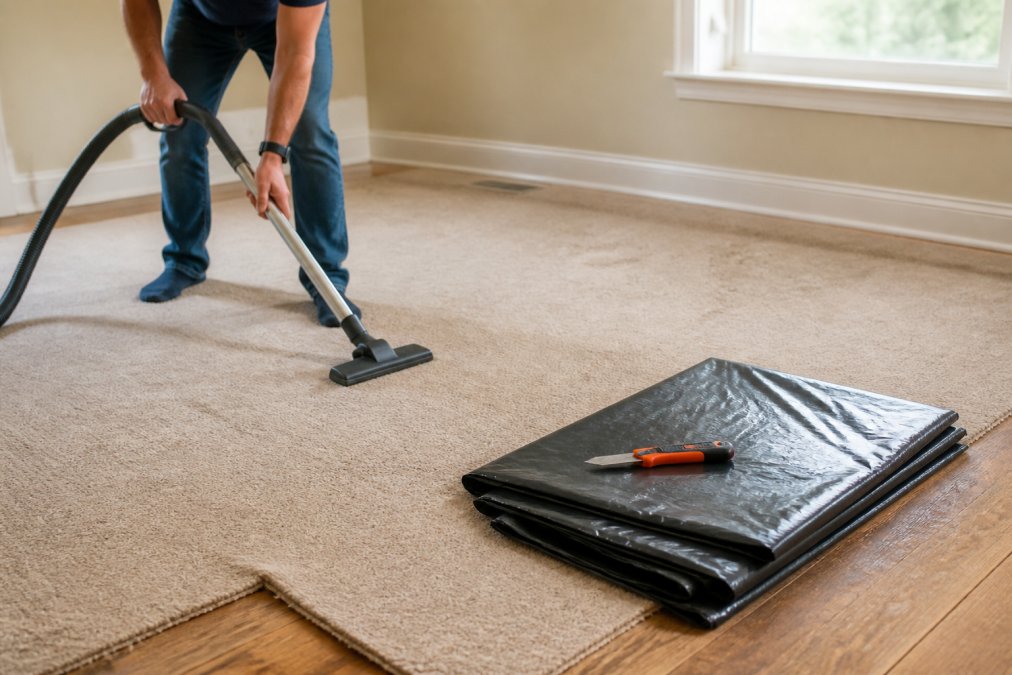
Vacuum the entire carpet surface thoroughly. Recycling facilities charge fees or refuse pickup if debris, dirt, sand, pet hair, or food particles are embedded in fibers. Pay special attention to corners, edges, and areas under furniture. For stubborn dirt, use a stiff brush followed by a second vacuuming pass.
Check for hazardous materials or contaminants. Carpet with mold, mildew, chemical spills, or certain flame-retardant treatments cannot be processed safely. When in doubt, contact your local recycling center before preparing the carpet.
Remove Contaminants and Debris
Inspect the carpet backing for adhesive residue, old padding, or tack strips. Use a utility knife to scrape away old adhesive where possible. Pet stains present a special challenge, fresh urine can be cleaned with enzymatic cleaners, but old, set-in stains may make the carpet unsuitable for recycling. Cut out heavily soiled areas and dispose of them separately.
Cut and Roll the Carpet
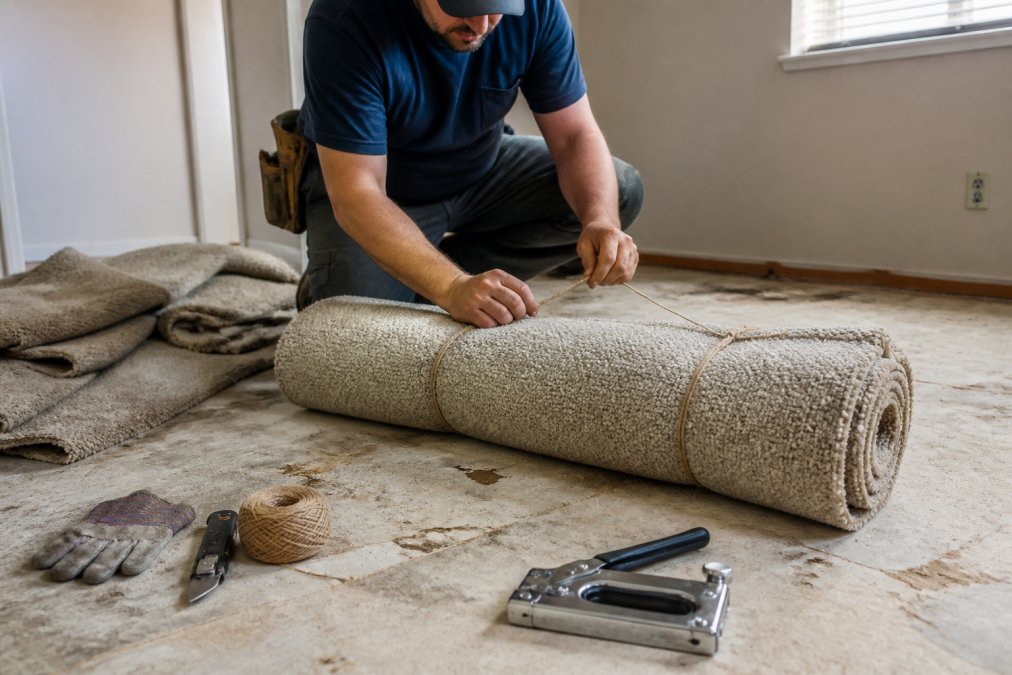
Most recycling facilities require carpet cut into rolls no larger than 4 feet wide and 50-75 pounds per roll. Use a utility knife with a fresh blade to cut the carpet lengthwise into manageable strips on a clean, flat surface. Roll each section tightly, starting from the backing side, and secure with heavy-duty twine or strapping tape at 2-3 points. Avoid plastic wrap, twine is the standard method.
Handling Carpet Padding and Tack Strips
Carpet padding (foam, rubber, or synthetic fibers) typically cannot be recycled through standard carpet programs because it's bonded to the backing. Check with your local facility about their requirements, some accept cleanly separated padding, while others direct you to bulk waste pickup.
Tack strips (wooden or plastic strips nailed to the floor) are not recyclable through carpet programs. Remove them with a pry bar and dispose of them through regular bulk waste services or construction debris channels. The key distinction: recycle the carpet through a dedicated program and handle padding and tack strips through standard bulk waste channels.
Finding Carpet Recycling Centers Near You
The Carpet America Recovery Effort (CARE) directory maintains a searchable database of collection sites and recycling facilities across the United States. Enter your zip code to find nearby options, including retailer drop-off sites and dedicated carpet recyclers.
California and New York lead the nation in carpet recycling infrastructure due to EPR laws. California operates over 175 public drop-off sites and achieved a 38.5% recycling rate. New York's 2022 EPR law requires a 30% recycling rate within five years of program approval and is projected to decrease greenhouse gas emissions by 165,000 tons annually. For homeowners outside EPR states, contact your waste hauler or local solid waste management facility. Ask explicitly whether your carpet will be recycled or landfilled. Some retailers that sell carpet also operate take-back programs, when purchasing new flooring, ask whether old carpet can be picked up and recycled during installation.
Eco-Friendly Flooring Alternatives to Consider
Choosing sustainable flooring prevents future waste. Recycled carpet tile incorporates 25-50% post-consumer recycled content and is ideal for high-traffic areas. Natural fiber flooring, wool, sisal, jute, or seagrass, offers biodegradable alternatives and is fully compostable at end-of-life. Wool carpet lasts 15-20 years compared to 10-12 years for synthetic options, reducing replacement frequency.
Luxury vinyl plank (LVP) and rigid core flooring use recycled vinyl and water-based adhesives. While not biodegradable, durability of 20+ years and manufacturer take-back programs make it reasonable for high-moisture areas. Porcelain tile and polished concrete offer permanent solutions with minimal environmental impact.
The most sustainable choice depends on your use case. For living rooms and bedrooms in dry climates, natural fiber or recycled carpet tile minimizes impact. For kitchens, bathrooms, and coastal properties, durable LVP or porcelain tile reduces replacement frequency.
Manufacturer Take-Back Programs and Cost Considerations
Mohawk Industries and Shaw Industries operate take-back programs through retailers. When purchasing new carpet from a participating retailer, old carpet may be collected during installation. Ask your flooring retailer whether they participate before finalizing your purchase.
Professional carpet removal and recycling typically costs between $0.06 and $0.26 per square foot for recycling, and between $0.60 and $5.10 per square foot for removal, depending on factors like installation method and location. Some municipalities offer free bulk waste pickup including carpet. DIY removal and self-transport to a drop-off facility is often more cost-effective. When budgeting for new flooring, factor in removal and recycling costs. At Hamptons Carpet One Floor and Home, pricing for removal and recycling depends on the specific services required. We recommend contacting us for a personalized quote to ensure your old carpet is diverted from landfills responsibly.
How to Recycle Old Carpet: Step-by-Step Process
Step 1: Assess and Prepare (Days 1-2) Evaluate carpet condition for moisture, mold, stains, or contamination. If wet, allow 48 hours drying time. Remove all furniture and obstacles.
Step 2: Clean Thoroughly (Day 3) Vacuum aggressively, paying special attention to corners and edges. Use a stiff brush for stubborn debris. Inspect backing for adhesive residue and scrape away loose adhesive.
Step 3: Locate a Recycling Facility (Day 4) Search the CARE carpet recycling directory for nearby drop-off sites. Contact at least two facilities to confirm they accept your carpet type and verify preparation requirements, tipping fees, and hours.
Step 4: Cut and Roll (Days 5-6) Cut carpet into strips approximately 4 feet wide. Roll each section tightly from the backing side and secure with twine or strapping tape at 2-3 points. Ensure rolls don't exceed 50-75 pounds.
Step 5: Arrange Transportation (Day 7) Schedule pickup with your chosen facility or plan self-transport. Confirm your vehicle can accommodate rolled carpet.
Step 6: Drop Off or Arrange Pickup (Days 8-10) Deliver carpet to the recycling facility or have it picked up. Request confirmation that material will be recycled and keep any receipts.
Step 7: Verify Recycling (Optional but Recommended) Follow up after 2-4 weeks to confirm processing. Some facilities provide reports showing tonnage recycled and end-use products created.
Conclusion
Recycling old carpet responsibly requires planning, but the environmental impact justifies the effort. Every ton diverted from landfills reduces greenhouse gas emissions by 8,300 pounds of CO2 equivalent and creates demand for innovative recycled products. Whether replacing flooring in a coastal home or updating a commercial space, the disposal method matters as much as the new material you choose.
Hamptons Carpet One Floor and Home helps homeowners and contractors navigate the entire flooring lifecycle, from selecting durable, sustainable options to coordinating responsible removal and recycling. When you're ready to replace your flooring, we'll connect you with local recycling partners and ensure your old carpet is diverted from landfills. Contact us for a consultation to discuss your flooring needs and learn how we can make the transition seamless and environmentally responsible.
| Step | Timeline | Key Action |
|---|---|---|
| Assess & Prepare | Days 1-2 | Check condition, allow drying time |
| Clean Thoroughly | Day 3 | Vacuum aggressively, scrape adhesive |
| Locate Facility | Day 4 | Search CARE directory, confirm requirements |
| Cut & Roll | Days 5-6 | Cut to 4-foot widths, secure with twine |
| Arrange Transport | Day 7 | Schedule pickup or plan self-transport |
| Drop Off | Days 8-10 | Deliver carpet, confirm recycling |
| Verify | Days 14-28 | Follow up to confirm processing |
=== FAQ ANSWERS (audit these too, same rules) ===
[1] Q: What is the best way to dispose of old carpet? A: The best way to dispose of old carpet is through a certified recycling facility or manufacturer take-back program. Approximately 93% of post-consumer carpet is recyclable or reusable with current technology. Check for local drop-off sites, curbside pickup programs, or contact manufacturers about their recycling initiatives. Avoid landfills when possible, 3.5 billion pounds of carpet end up there annually, though only 5% of discarded carpet is currently recycled nationally.
[2] Q: Can carpet padding be recycled with carpet? A: Carpet padding should typically be separated from carpet before recycling. Most recycling facilities require carpet and padding to be handled separately because they are different materials requiring distinct processing methods. Some facilities accept certain types of padding, but it's best to contact your local recycling center first. Removing padding also makes the carpet lighter and easier to transport to your recycling facility.
[3] Q: How do I find carpet recycling centers near me? A: Contact the Carpet America Recovery Effort (CARE) website, which maintains a directory of drop-off sites and recycling facilities across the country. Many states now have Extended Producer Responsibility (EPR) programs, California and New York both have established networks of collection locations. Call your local waste management authority or flooring retailers, who often have partnerships with recycling programs and can direct you to the nearest facility.
[4] Q: What happens to carpet after it's recycled? A: Recycled carpet is transformed into new products through fiber separation and material recovery processes. In 2024, California vendors incorporated recycled carpet material into 113 different products, including new broadloom carpet, carpet tile, underlayment, building insulation, and automotive components. Recycling carpet also reduces environmental impact, one ton of recycled carpet generates 8,300 pounds fewer CO2 emissions than landfilling it.
Frequently Asked Questions
Q: What is the best way to dispose of old carpet?
A: The best way to dispose of old carpet is through a certified recycling facility or manufacturer take-back program. Approximately 93% of post-consumer carpet is recyclable or reusable with current technology. Check for local drop-off sites, curbside pickup programs, or contact manufacturers about their recycling initiatives. Avoid landfills when possible, 3.5 billion pounds of carpet end up there annually, though only 5% of discarded carpet is currently recycled nationally.
Q: Can carpet padding be recycled with carpet?
A: Carpet padding should typically be separated from carpet before recycling. Most recycling facilities require carpet and padding to be handled separately because they are different materials requiring distinct processing methods. Some facilities accept certain types of padding, but it's best to contact your local recycling center first. Removing padding also makes the carpet lighter and easier to transport to your recycling facility.
Q: How do I find carpet recycling centers near me?
A: Contact the Carpet America Recovery Effort (CARE) website, which maintains a directory of drop-off sites and recycling facilities across the country. Many states now have Extended Producer Responsibility (EPR) programs, California and New York both have established networks of collection locations. Call your local waste management authority or flooring retailers, who often have partnerships with recycling programs and can direct you to the nearest facility.
Q: What happens to carpet after it's recycled?
A: Recycled carpet is transformed into new products through fiber separation and material recovery processes. In 2024, California vendors incorporated recycled carpet material into 113 different products, including new broadloom carpet, carpet tile, underlayment, building insulation, and automotive components. Recycling carpet also reduces environmental impact, one ton of recycled carpet generates 8,300 pounds fewer CO2 emissions than landfilling it.
This article was written using GrandRanker