 How-to
How to Remove Paint from Vinyl Plank Flooring Safely
Table of Contents
- Tools and Materials You'll Need Before You Start
- Act Fast: Immediate Steps for Wet Paint Spills on Vinyl Plank Flooring
- Step-by-Step: How to Remove Dried Paint from Vinyl Plank Flooring
- Is Acetone Safe for Vinyl Floors? A Chemical Compatibility Guide
- The Best Cleaner for Luxury Vinyl Plank: What to Use and What to Avoid
- Removing Paint from Textured Vinyl: Techniques That Protect the Grain
- Safety, Ventilation, and Protecting Your Subfloor
- Common Mistakes That Damage the Wear Layer
- Frequently Asked Questions
Last Updated: October 1, 2026
Tools and Materials You'll Need Before You Start
Removing paint from vinyl plank flooring starts with the right tools, not the strongest chemicals. Gather these items before you touch the floor.
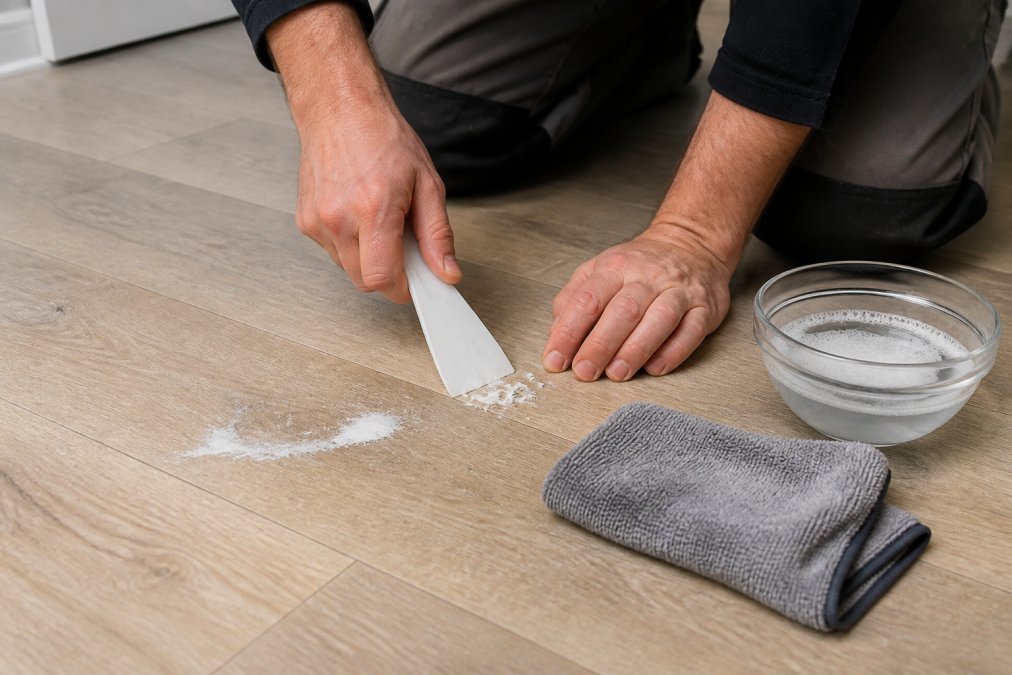
- Plastic scraper or old credit card
- Stiff plastic-bristled brush
- Microfiber cloths (at least three)
- Warm water and mild dish soap
- Rubbing alcohol (isopropyl alcohol)
- Mineral spirits for oil-based paint
- Acetone for tough spots only
- Painter's tape for testing patches
- A spray bottle for misting
Act Fast: Immediate Steps for Wet Paint Spills on Vinyl Plank Flooring
Wet paint is the easy version. Blot it up before it dries and you'll rarely need chemicals at all.
Here's the fast sequence:
- Blot the spill with a damp cloth. Don't wipe, just press.
- Rinse the cloth and blot again until no color transfers.
- Mix a few drops of dish soap in warm water.
- Wipe the area with the soapy cloth using gentle pressure.
- Dry with a clean microfiber cloth.
Step-by-Step: How to Remove Dried Paint from Vinyl Plank Flooring
Dried paint needs patience and the right order of operations. Start gentle, escalate slowly, and test every product first. The single biggest mistake is treating all dried paint the same, acrylic, oil-based, enamel, and spray paint each release differently, and the wrong solvent can smear the paint deeper into the grain.
- Test in an inconspicuous spot. Pick a corner behind a door or under an appliance.
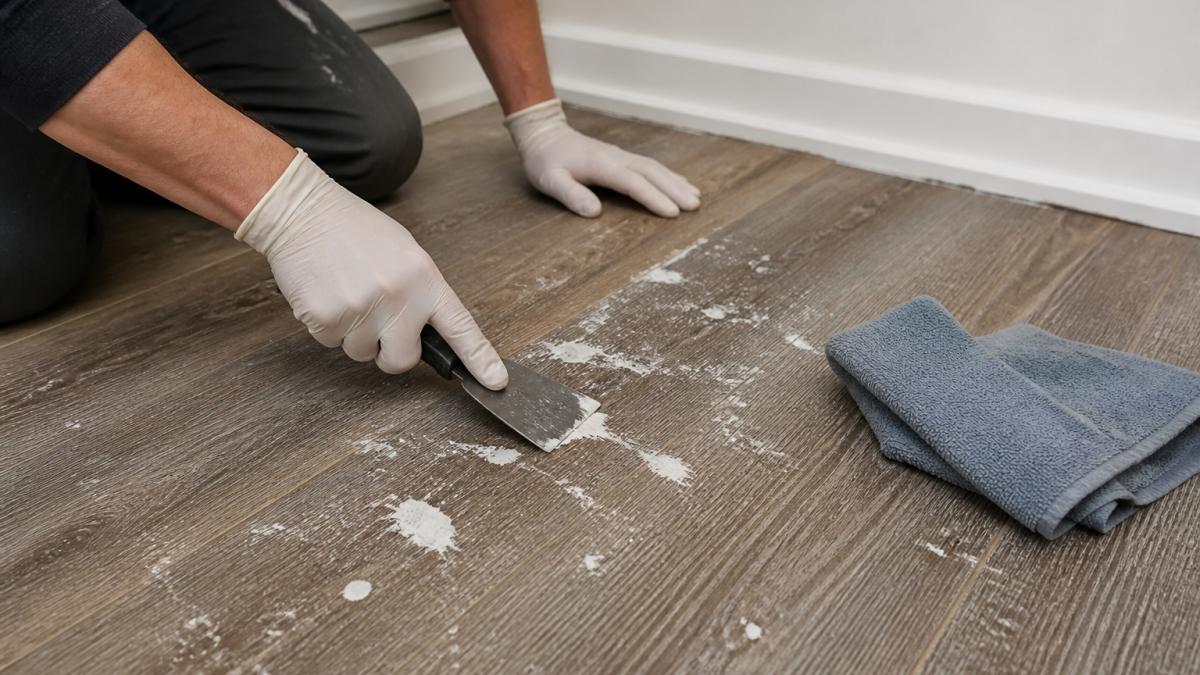
- Scrape first. Use a plastic scraper at a shallow angle. Lift the paint edge, don't dig.
- Soften what's left. Match the solvent to the paint type (see below).
- Wipe with a microfiber cloth. Work in one direction.
- Rinse thoroughly. Leftover solvent dulls the finish over time.
- Dry and inspect. Check the wear layer under good light.
Removing Latex and Acrylic Paint
Latex and acrylic are both water-based, so they respond to water and mild soap. Warm water with a few drops of dish soap handles most spots. Acrylic dries harder than latex and forms a slightly more plastic film, so it often needs a longer soak.
- Soak a microfiber cloth in warm soapy water and lay it over the spot for 5 minutes.
- Scrape with a plastic scraper at a low angle.
- For stubborn patches, switch to isopropyl alcohol on a cloth. Let it sit one minute, then wipe.
- Repeat rather than scrub harder.
Removing Oil-Based Paint and Enamel
Oil-based paint and enamel need a real solvent. Mineral spirits or paint thinner work best. Apply to a cloth, not directly to the floor.
- Let it sit 5 to 10 minutes. The paint should wrinkle and lift.
- Wipe with a clean cloth, then rinse with warm soapy water.
- Enamel that has fully cured may need two or three passes. Do not increase pressure, increase dwell time instead.
Removing Spray Paint Overspray
Spray paint is the hardest to remove because it goes on in a thin, fast-drying film that bonds to texture. It also drifts, so you often find a fine mist over a wide area rather than one blob.
- Start with a clay bar or a melamine foam pad used lightly, these lift overspray film without solvent.
- For heavier spots, use isopropyl alcohol on a cloth.
- For cured spray paint, mineral spirits on a cloth, 5 minutes, then scrape.
- Never use a wire brush on textured planks; it grinds the paint into the grain.
Removing Paint from Textured Grain
Textured vinyl traps paint in the grain, so scraping alone won't finish the job. Use a stiff plastic-bristled brush, not a wire one. Work the bristles into the texture in small circles with warm soapy water. For paint stuck deep in the grain, press a solvent-dampened cloth against the spot for a few minutes, then brush again.
Is Acetone Safe for Vinyl Floors? A Chemical Compatibility Guide
Acetone is safe for vinyl floors only as a last resort, in small amounts, on a short contact time. It is the strongest common solvent, and it can dull the finish if you overdo it. The real question is not "is acetone safe" but "is acetone safe on this plank", and the answer depends on the construction underneath the wear layer.
Why SPC and WPC Respond Differently
Vinyl plank is not one material. The two dominant constructions behave differently around solvents:
- SPC (stone-polymer composite) has a rigid limestone-and-PVC core. It resists moisture and most solvents well, but the core is brittle, flex it and it can crack. Solvent pooling at a seam is less about the core and more about the adhesive holding the plank down.
- WPC (wood-polymer composite) has a foamed core that is softer and more forgiving underfoot but more porous. It absorbs liquids at the seams faster, so a solvent that sits too long can wick under the plank and soften the adhesive.
Safe vs. Unsafe: A Compatibility Chart
| Product | Best For | Contact Time | Risk Level | Notes on SPC vs WPC |
|---|---|---|---|---|
| Warm soapy water | Latex, fresh spills | Immediate | None | Safe on both; dry promptly |
| Isopropyl alcohol (70%) | Latex, light residue | 1-2 minutes | Low | Safe on both; avoid prolonged dwell |
| Mineral spirits | Oil-based paint | 5-10 minutes | Medium | WPC wicks at seams faster, use less |
| Denatured alcohol | Shellac, some enamels | 1-3 minutes | Medium | Test first; can dull low-mil wear layers |
| Acetone | Dried, stubborn paint | Under 1 minute | High | Highest dulling risk on both cores |
| Lacquer thinner | Cured oil and some spray paints | Under 1 minute | Very high | Not recommended on residential wear layers |
| Bleach-based cleaners | (Not for paint) | , | Avoid | Can discolor the print layer |
| Steam (high heat) | (Not for paint) | , | Avoid | Heat softens wear layer and bond |
The pattern is simple. Start at the top and move down only when the row above fails. Every step down the chart buys more cleaning power at the cost of more wear-layer risk.
How to Read a Product Label Before You Buy
- A pH between roughly 7 and 10 for everyday cleaners
- No ammonia, no bleach, no "heavy-duty degreaser" wording
- A manufacturer's own care guide for your specific plank, most publish a PDF with approved cleaners
Acetone and lacquer thinner can soften the wear layer within seconds. If you use either, keep contact under one minute, work on a dampened cloth rather than a puddle, and rinse immediately with warm soapy water.
Always test in an inconspicuous spot first. Vinyl plank from different makers handles chemicals differently, and the wear layer is thinner than most people assume.
The Best Cleaner for Luxury Vinyl Plank: What to Use and What to Avoid
The best cleaner for luxury vinyl plank is warm water with a few drops of mild dish soap. It handles everyday messes without touching the finish.
What to avoid:
- Abrasive pads and steel wool
- Bleach-based cleaners
- Wax and polish products
- Steam mops on high heat
- Anything labeled "heavy-duty degreaser"
Removing Paint from Textured Vinyl: Techniques That Protect the Grain
Textured vinyl traps paint in the grain, so scraping alone won't finish the job. You need a soft brush and patience.
Safety, Ventilation, and Protecting Your Subfloor
Solvents need airflow. Open windows, run a fan, and keep kids and pets out of the room until the floor is dry.
Common Mistakes That Damage the Wear Layer
Most damage happens in the first two minutes, before the paint is even soft. Here's what to skip.
- Reaching for metal tools. Scrapers, knives, and putty knives all gouge vinyl.
- Skipping the spot test. A product that's safe on one plank can dull another.
- Letting solvent pool. Puddles work into seams and break down adhesive.
- Scrubbing dry paint. You'll grind it into the texture instead of lifting it.
- Skipping the rinse. Solvent residue leaves a dull haze.
- Using a steam mop on high heat. Heat softens the wear layer and the bond.
Frequently Asked Questions
What is the best paint remover for vinyl floors?
There is no single best remover for every situation. For fresh latex paint, warm water and a few drops of dish soap usually lift it without chemicals. For dried latex, isopropyl alcohol applied for 5 to 10 minutes softens the bond. Oil-based paint may need mineral spirits. Always test any product on an inconspicuous spot first and avoid abrasive tools that can scratch the wear layer.
Does rubbing alcohol damage vinyl flooring?
Isopropyl alcohol is generally safe on vinyl plank when used briefly and wiped away. Apply it to a cloth rather than pouring it directly on the floor, let it sit for 5 to 10 minutes to soften the paint, then wipe clean. Rinse the area with a damp cloth afterward. Prolonged soaking or repeated heavy use can dull the surface finish over time.
Can you use Goo Gone on luxury vinyl plank?
Goo Gone and similar citrus-based adhesive removers can work on small paint spots, but they leave an oily residue that must be cleaned off completely. Test on an inconspicuous spot first. If the product contains acetone or harsh solvents, skip it. A safer approach for most paint types is isopropyl alcohol or a dedicated vinyl floor cleaner.
How do you remove dried latex paint from vinyl?
Start by applying isopropyl alcohol to the dried paint and letting it sit for 5 to 10 minutes. Use a plastic scraper or your fingernail to lift the softened paint with gentle pressure. Wipe away residue with a microfiber cloth and rinse with warm water. Never use metal scrapers or abrasive pads, which can scratch the wear layer and leave permanent marks.