 How-to
How to Remove Pet Urine From Vinyl Flooring: 7 Steps
Table of Contents
- Step 1: Blot Fresh Pet Urine From Vinyl Flooring Immediately
- Step 2: Choose the Best Enzymatic Cleaner for Vinyl Floors
- Step 3: How to Get Dog Urine Smell Out of Vinyl Plank Flooring
- Step 4: Treat Deep-Set Stains and Urine Crystals in Seams
- Step 5: Is Vinyl Flooring Waterproof for Pet Urine?
- Step 6: Ingredients to Avoid on Vinyl (Ammonia, Bleach, and Vinegar)
- Step 7: Prevent Recurring Odors and Long-Term Wear Layer Damage
- Frequently Asked Questions
Last Updated: September 26, 2026
Step 1: Blot Fresh Pet Urine From Vinyl Flooring Immediately
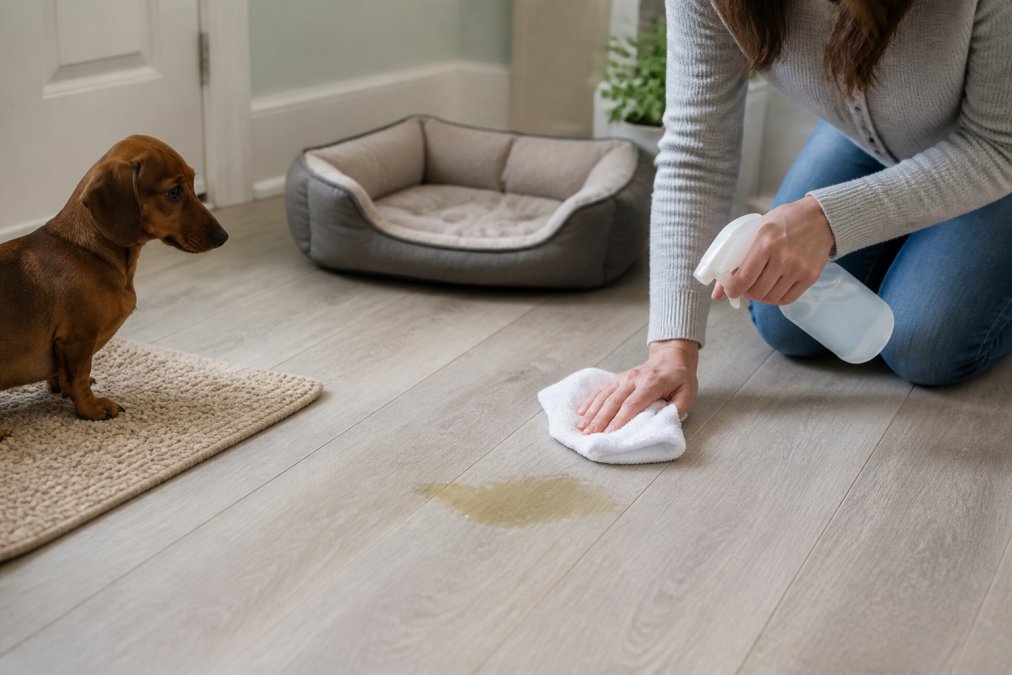
Speed decides whether you get a faint smell or a permanent stain. Pet urine starts bonding with the vinyl wear layer within minutes, so the first move is always the same: soak it up before it spreads. This is the most important part of how to remove pet urine from vinyl flooring.
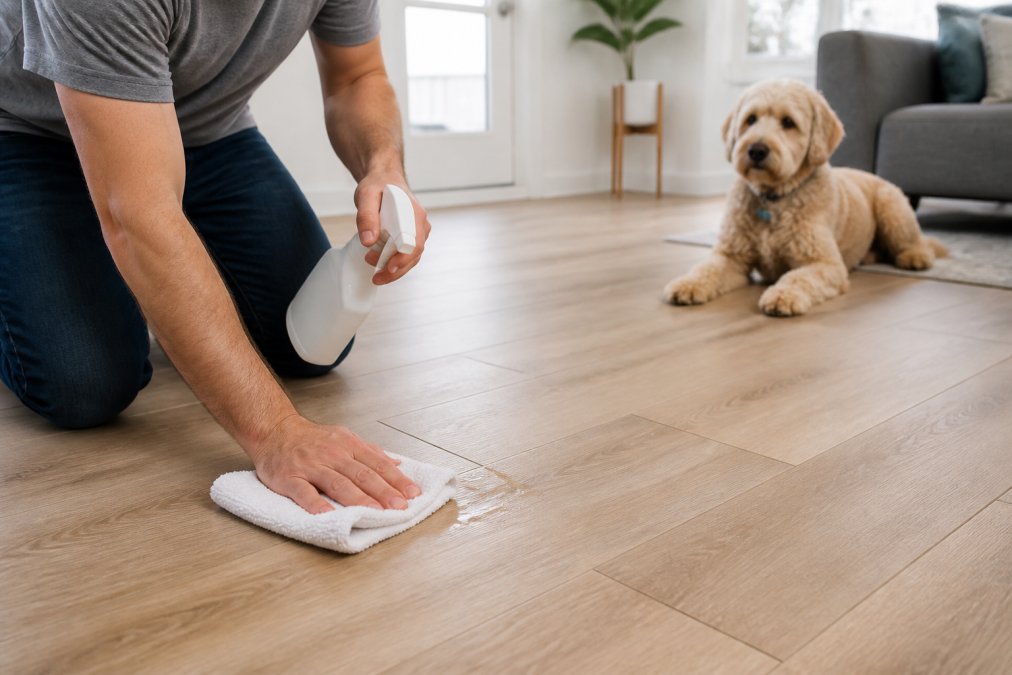
Grab paper towels or a clean microfiber cloth. Press down hard. Do not wipe.
Work in this order:
- Blot until the cloth comes up dry
- Stand on the cloth for 30 seconds to pull liquid from the grain
- Repeat with a fresh cloth
- Rinse with cool water and blot again
Step 2: Choose the Best Enzymatic Cleaner for Vinyl Floors
The best enzymatic cleaner for vinyl floors breaks down uric acid crystals rather than covering them up. Standard all-purpose sprays only mask the smell, and the odor returns on the next humid day.
What to look for:
- "Enzymatic" or "enzyme-based" on the label
- A pH-neutral formula safe for vinyl
- Pet-safe and non-toxic ingredients
- No added fragrance that hides rather than removes
Step 3: How to Get Dog Urine Smell Out of Vinyl Plank Flooring
Knowing how to get dog urine smell out of vinyl plank flooring comes down to repetition, not strength. One pass rarely finishes the job because urine soaks into the seams and subfloor.
Try this routine:
- Flood the spot with enzyme cleaner
- Cover with plastic wrap to stop it drying out
- Wait 30 to 60 minutes
- Blot dry and let the floor air out
- Repeat daily until no odor remains
Step 4: Treat Deep-Set Stains and Urine Crystals in Seams
Deep-set stains need a different approach than fresh spots. Urine wicks into the seams between planks and down to the subfloor, where it forms crusty crystals that release odor for months. This is why a floor can smell clean for a week and then turn on you.
How urine actually travels through vinyl
Vinyl plank is installed as a floating floor with a tongue-and-groove or click-lock system. Those joints are tight but not watertight: liquid finds the seam, capillary action pulls it into the gap, and gravity takes it down to the plywood, OSB, or concrete underneath.
Once urine reaches the subfloor, three things happen:
- Uric acid crystals bind to the porous surface and do not evaporate
- Bacteria feed on the urea and produce the ammonia smell
- Humidity re-activates the crystals, which is why warm, damp days make the odor worse
Diagnosing how far it went
Before treating anything, find the true footprint. A blacklight shows the full extent, usually wider than the visible mark and often past the seam into the next plank.
Then check the subfloor:
- Pull up the affected plank if it is a floating install (most click-lock planks lift with a suction cup or a trim bar at the nearest wall)
- Smell the exposed subfloor directly, if it reeks, the contamination is below the vinyl
- Look for dark staining or a white, crusty residue on the wood or concrete
- Press a paper towel against the subfloor; if it wicks moisture, the area is still wet
Treating seams and edges
For contamination that has not reached the subfloor:
- Use a soft-bristle brush to work enzyme cleaner into the gap
- Let it dwell for at least 20 minutes, the enzymes need contact time to digest the crystals
- Blot with a microfiber mop, not a wet mop, so you do not push liquid deeper
- Dry the seam with a fan to stop moisture sitting in the gap
- Repeat daily for three to five days; crystals release in layers
When the subfloor is contaminated
Seal it. For concrete subfloors, a shellac-based or epoxy sealer can lock in odor once the area is fully dry, common in basements and slab-on-grade homes. It traps the smell rather than removing it, and fails if any moisture remains.
Preventing the next one
Once the floor is clean, seal the seams in high-traffic pet areas with a silicone-based seam sealer designed for vinyl plank, it fills the gap without gluing planks together, so the floor can still expand and contract. Pair that with a waterproof pet mat under bowls to cut the odds of a repeat subfloor soak.
Step 5: Is Vinyl Flooring Waterproof for Pet Urine?
Vinyl flooring is waterproof on the surface, but that does not make it urine-proof.
What this means in practice:
- Clean spills fast, before they reach the seams
- Seal or treat seams in high-traffic pet areas
- Use a moisture barrier under the floor during installation
- Check the subfloor if odor keeps returning
Step 6: Ingredients to Avoid on Vinyl (Ammonia, Bleach, and Vinegar)
Ammonia and bleach are the two biggest mistakes people make on vinyl. Both can dull the finish and damage the wear layer, according to professional guidance on pH-neutral vinyl cleaners.
Skip these:
- Ammonia-based cleaners
- Bleach and other harsh sanitizers
- Abrasive powders and scrub pads
- Steam mops on high heat
- White vinegar in strong concentrations
Why the ingredient list matters for your pet, not just your floor
A cleaner safe for vinyl is not automatically safe for the animal standing on it. Dogs and cats absorb chemicals through their paw pads and groom those paws with their mouths, so a floor that still smells like cleaner after it dries is one your pet is ingesting.
A few categories to treat with caution:
- Quaternary ammonium compounds (quats). Common in disinfecting wipes and floor cleaners. Effective against bacteria, but residue can irritate paws and cause GI upset if ingested. Rinse thoroughly if you use them.
- Phenols. Found in some pine- and coal-tar-based cleaners. Cats are especially sensitive to phenol metabolism, and even small exposures can cause serious illness.
- Benzalkonium chloride. A frequent ingredient in pet-safe sprays, but concentration matters. Follow the label dilution and let the floor dry fully before pets return.
- Essential oils. Tea tree, eucalyptus, citrus, and peppermint are toxic to cats and can cause drooling, tremors, and worse. "Natural" does not mean pet-safe.
What is actually safe to use
For routine cleaning and post-urine treatment on vinyl, the safest combination is:
- A pH-neutral, enzyme-based cleaner formulated for pet stains
- A diluted castile soap solution (a few drops per quart of cool water) for general mopping
- Plain cool water for the final rinse
Reading the label like a pet owner
Three things to check before you buy:
- "Enzymatic" or "enzyme-based", this is the active mechanism, not a marketing word
- pH-neutral, safe for the vinyl wear layer and gentle on paws
- No fragrance, no essential oils, no quats, if you cannot pronounce it and it is not water or an enzyme, look it up
A note on "pet-safe" labels
"Pet-safe" is not a regulated claim in the United States, any brand can print it. Trust labels that list ingredients, carry an EPA registration number for disinfecting claims, and state the dilution ratio. Hidden ingredients are a red flag.
Step 7: Prevent Recurring Odors and Long-Term Wear Layer Damage
Prevention protects the wear layer, the clear top coat that keeps vinyl looking new. Once it wears thin, stains and odor set in faster and the floor is harder to clean.
A few habits go a long way:
- Place washable mats at doors and pet feeding spots
- Wipe paws after beach walks to cut down on sand and salt
- Clean spots the same day, every time
- Use pH-neutral cleaner for routine mopping
- Keep a blacklight handy to catch missed spots early
Frequently Asked Questions
How do you remove old urine stains from vinyl flooring?
Old stains need longer contact time than fresh ones. Saturate the area with an enzyme-based cleaner, cover it with a damp towel, and let it sit for 15 to 30 minutes so the enzymes can break down the urine crystals. Blot with a microfiber cloth, then rinse with a pH-neutral cleaner and dry the plank completely. Repeat the process if a dark ring or odor remains, since deep-set stains often need two or three passes.
What is the best enzymatic cleaner for vinyl floors?
Look for a pet-safe enzyme formula that lists no ammonia, bleach, or harsh solvents on the label. Enzyme-based cleaners are the only type that fully neutralizes pet urine odor on vinyl plank rather than masking it, according to flooring industry guidance. Test any product on a hidden area first, such as inside a closet or under an appliance, to confirm it does not dull the wear layer before treating a visible section.
Is Dawn dish soap safe for vinyl floors?
A few drops of mild dishwashing liquid in warm water can lift surface residue, but it is not a urine neutralizer. It will not break down the uric acid crystals that cause lingering odor, and leaving soap film behind can dull the finish and attract more dirt. Use dish soap only as a light interim wipe, then follow with an enzyme cleaner and a pH-neutral rinse for pet stains.
Can pet urine seep through vinyl plank flooring seams?
Yes. Vinyl plank is waterproof on its surface, but liquid can travel through unsealed seams and reach the subfloor, where it soaks into wood or concrete and keeps releasing odor. That is why blotting fast matters and why deep-set smells sometimes require pulling a plank or calling a flooring professional. A moisture barrier under the plank and tight, properly seated seams reduce how often this happens.