 How-to
How to Restore Shine to Dull Vinyl Floors: 2026 Guide
Table of Contents
- Why Your Vinyl Floors Look Dull (And How to Diagnose It)
- How to Clean Luxury Vinyl Plank Floors Before Restoring Shine
- Removing Wax Buildup from Vinyl Floors Safely
- Choosing the Best Vinyl Floor Polish for Your Floor Type
- Step-by-Step: How to Restore Shine to Dull Vinyl Floors
- What Not to Use on Vinyl Floors: Wax, Ammonia, and Abrasives
- Maintenance Tips to Keep Vinyl Floors Shiny Long-Term
- Frequently Asked Questions
Last Updated: September 28, 2026
Why Your Vinyl Floors Look Dull (And How to Diagnose It)
Dull vinyl floors almost always have a fixable cause, and it is rarely the floor itself wearing out. In most homes, a cloudy film of trapped residue, soap scum, or old wax sits on top of the wear layer and blocks light from bouncing off the surface.
That distinction matters.
Start With a Visual Diagnostic, Not a Product
Before you buy anything, run this three-test diagnostic. Each test points to a different fix, and using the wrong fix is what turns a two-hour job into a floor replacement.
Match the Symptom to the Cause
| What You See | What It Usually Is | First Fix |
|---|---|---|
| Cloudy, streaky haze across the whole room | Residue or old wax buildup | pH-neutral deep clean, then strip if needed |
| Dull patches in traffic lanes only | Surface film from repeated mopping | Switch to a damp microfiber mop and pH-neutral cleaner |
| Fine white scratches that scatter light | Physical wear on the wear layer | Finish or polish; replacement if deep |
| Yellow or brown discoloration | Oxidized old wax or finish | Strip and re-finish |
| Hazy spots that reappear after cleaning | Chemical etching or hard-water film | pH-neutral cleaner and a rinse step |
LVP vs. Sheet Vinyl: The Diagnostic That Changes Everything
Luxury vinyl plank (LVP) and traditional sheet vinyl do not take the same treatment, and most guides skip this. LVP usually has a thicker, more textured wear layer with a factory-applied urethane coating. Sheet vinyl, linoleum, and vinyl composition tile (VCT) are thinner and often finished on site.
Why pH-Neutral Matters More Than You Think
A pH-neutral cleaner sits near 7 on the pH scale, which is the same range as the factory urethane coating on most LVP. Cleaners outside that range, ammonia, bleach, vinegar at full strength, can chemically etch the coating. Etching is permanent dullness: the surface is microscopically pitted, so light scatters instead of reflecting. No polish hides it for long.
Check Your Warranty Before You Touch the Floor
Most LVP manufacturers require pH-neutral cleaning and prohibit wax, ammonia, and abrasive pads. Using the wrong product can void the wear-layer warranty on a floor that is only a few years old. Before you strip or polish anything, find the installation paperwork or the manufacturer's care page and confirm what is approved for your specific product.
How to Clean Luxury Vinyl Plank Floors Before Restoring Shine
Cleaning is the step that decides whether your shine lasts. Skip it and any finish you apply will lock dirt under a clear coat.
Here is the process:
- Vacuum or sweep loose debris first.
- Mix a pH-neutral cleaner with lukewarm water in a bucket.
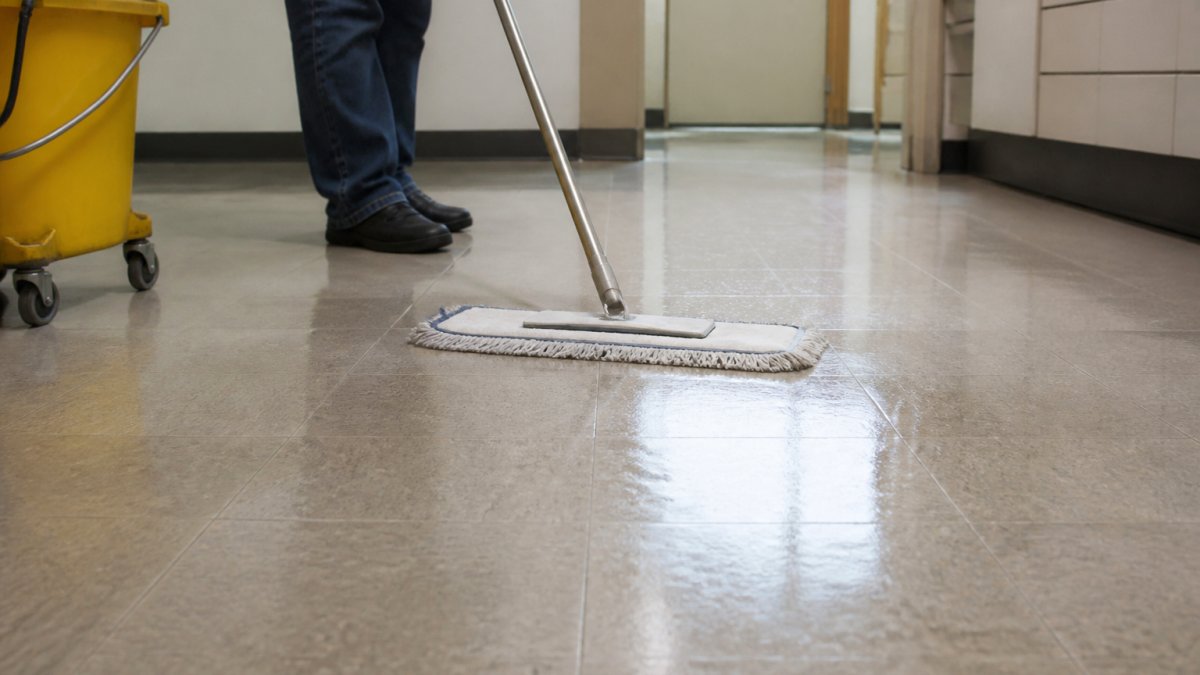
- Damp-mop with a microfiber mop, working in sections.
- Rinse with clean water and let the floor dry fully.
- Check for haze. If it remains, repeat once.
Removing Wax Buildup from Vinyl Floors Safely
Removing wax buildup from vinyl floors means stripping the old finish without touching the wear layer underneath. This is a slow job, not a scrubbing job.
A few rules that keep you out of trouble:
- Test in a closet or corner first
- Work in 3-foot by 3-foot sections
- Never let stripper dry on the floor
- Rinse until the water runs clear
Choosing the Best Vinyl Floor Polish for Your Floor Type
The best vinyl floor polish is the one matched to your floor's wear layer and finish type, not the one with the loudest label. Two product categories dominate: film-forming polish and penetrating or satin finish. Understanding how each one works is the difference between a shine that lasts months and a cloudy mess that has to be stripped.
How Film-Forming Polish Works (And When It Backfires)
Film-forming polish lays a sacrificial acrylic layer on top of the floor. It dries to a gloss and takes the abuse that would otherwise hit the wear layer. On VCT and older sheet vinyl, that is exactly what you want: the polish can be stripped and reapplied as it wears.
How Penetrating and Satin Finishes Differ
Penetrating and satin finishes bond to the surface rather than sitting on it. They add sheen without a heavy sacrificial coat, which is why most LVP manufacturers approve them and prohibit wax. Practitioners apply two thin coats of satin finish to LVP after deep cleaning, letting each coat dry per the label. The result is a soft sheen that reads as clean rather than coated.
The pH-Neutral Rule for Polishing
Whatever finish you choose, the floor underneath must be pH-neutral clean before you apply it. Any alkaline residue left on the surface reacts with the finish and causes the haze you were trying to remove. Rinse with clean water, let the floor dry fully, then apply. If you skip the rinse, you are sealing residue under a clear coat.
Match the Finish to the Floor
| Floor Type | Best Finish | Avoid |
|---|---|---|
| Luxury vinyl plank | Satin finish, 2 thin coats | Wax-based polish, film-forming acrylic |
| Sheet vinyl | Film-forming polish | Abrasive cleaners |
| Vinyl composition tile | Wax or acrylic polish | Ammonia cleaners |
| Linoleum | Water-based sealer | Solvent strippers |
What to Look For on the Label
A polish safe for LVP will say pH-neutral, urethane-safe, or manufacturer-approved for luxury vinyl. If the label says wax, acrylic floor finish, or high-gloss restorer, it is designed for VCT or sheet vinyl, not LVP. When in doubt, the manufacturer's care page is the authority, not the bottle.
Step-by-Step: How to Restore Shine to Dull Vinyl Floors
Restoring shine to dull vinyl floors takes about two hours for an average room, plus drying time between coats. The order matters more than the effort.
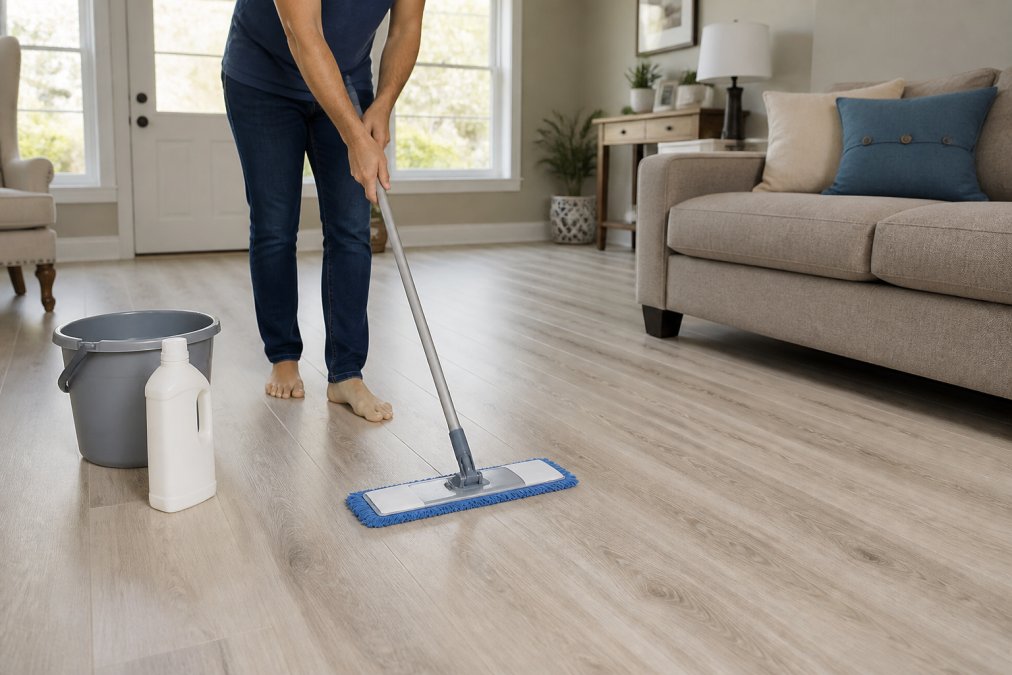
Step 1: Prep the Room and Remove Loose Debris
Clear the furniture and vacuum or sweep the whole floor. Pay attention to corners and under appliance edges, where grit collects and scratches the finish during mopping.
Step 2: Deep Clean with a pH-Neutral Cleaner
Damp-mop with a pH-neutral cleaner and lukewarm water. Rinse and let the floor dry completely. Any haze left now will be sealed under your finish.
Step 3: Apply Finish and Buff to a Satin Sheen
Apply your chosen finish in thin, even coats with a clean applicator. Let each coat dry per the label. Two coats is standard for LVP. Buff with a clean microfiber pad on a low-speed buffer to even out the sheen.
What Not to Use on Vinyl Floors: Wax, Ammonia, and Abrasives
Wax, ammonia, and abrasive cleaners are the three fastest ways to wreck a vinyl floor. Each one causes damage that shows up weeks later, not immediately.
The avoid list:
- Paste or liquid wax
- Ammonia-based cleaners
- Bleach and abrasive powders
- Steel wool and scouring pads
- Steam mops on glued seams
- Vinegar in high concentrations (fine diluted, risky full-strength on some finishes)
Maintenance Tips to Keep Vinyl Floors Shiny Long-Term
Shine lasts when the floor stops collecting the things that dull it. Most of that comes down to prevention, not more cleaning.
A simple routine keeps vinyl floors looking new:
- Sweep or vacuum every 1-2 days in high-traffic areas
- Damp-mop weekly with a pH-neutral cleaner
- Use doormats at every entry to trap grit and sand
- Felt pads under all furniture legs
- Never use a wet mop, only a damp one
- Reapply finish once or twice a year, not monthly
Frequently Asked Questions
Why does my vinyl floor look dull even after mopping?
Dullness usually comes from surface residue left behind by the wrong cleaner. Soap-based products, waxes, and abrasive cleaners leave a film that traps dirt and scatters light. Hot water can also dull the protective finish on vinyl flooring, according to Flacks Flooring (2024). Switch to a pH-neutral cleaner like Zep, use lukewarm water, and rinse with a clean damp mop to remove the film before applying any polish.
What should you not use on vinyl floors?
Avoid waxes, ammonia-based cleaners, abrasive scrubbing pads, and hot water. Waxes and harsh chemicals cause long-term damage and dull the finish of vinyl floors rather than restoring them, according to Clean That Up (2024). Hot water does not clean better and can strip the protective coating. Stick to pH-neutral solutions, microfiber mops, and lukewarm water to protect the wear layer on your vinyl floors.
Can you use floor wax on luxury vinyl plank flooring?
No. Luxury vinyl plank has a factory-applied protective coating that wax cannot bond to properly. Wax sits on top, attracts dirt, and creates a hazy, uneven appearance over time. Removing wax buildup from vinyl floors later requires stripping, which risks damaging the wear layer. Instead, use a satin finish designed for LVP, applied in two thin coats after deep cleaning.
How often should you deep clean vinyl floors to maintain shine?
Deep clean every two to three months in high-traffic areas, and more often in coastal homes where sand and salt get tracked in. Between deep cleans, sweep or vacuum daily and damp mop weekly with a pH-neutral cleaner. This schedule prevents surface residue from building up and keeps the sheen intact without needing frequent polishing. If dull spots appear between deep cleans, spot-treat with a microfiber cloth and lukewarm water.