 How-to
How to Test Indoor Air Quality: A Step-by-Step Guide
Table of Contents
- What Does an Indoor Air Quality Test Measure
- Common Indoor Air Pollutants to Test For
- Choosing an Indoor Air Quality Test Kit for Home Testing
- Step-by-Step: How to Test Indoor Air Quality at Home
- Indoor Air Quality Testing for Mold and Moisture
- Indoor Air Quality Testing for Radon
- When to Hire a Professional for Air Quality Testing
- Interpreting Results and Taking Action
- Frequently Asked Questions
Last Updated: October 14, 2026
What Does an Indoor Air Quality Test Measure
Testing indoor air quality tells you what's actually in the air you breathe at home. Pollutants vary by location, season, and activity, and a proper test identifies which are present and at what levels.
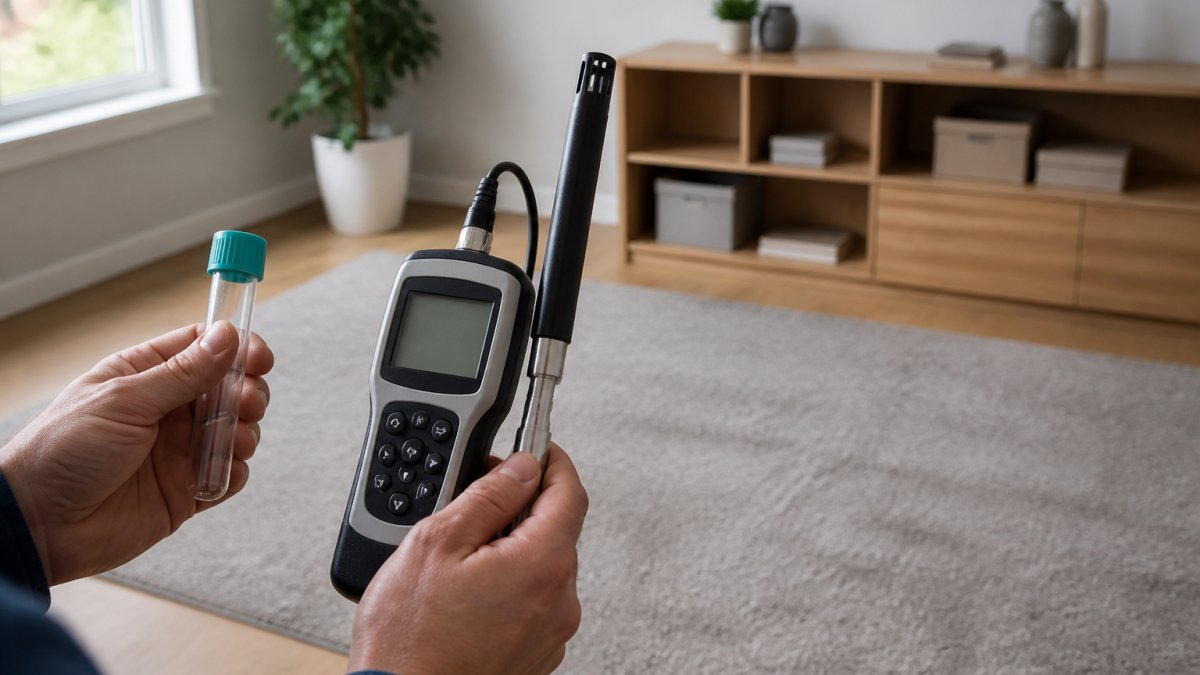
The EPA describes low-cost monitors as using one or more sensors and other components to detect and report on specific air pollutants. U.S. Environmental Protection Agency guidance on low-cost air pollution monitors explains that these devices measure concentration levels across multiple categories.
Particulate Matter and Particle Sensors
Particulate matter (PM) is solid particles and liquid droplets floating in air. The two most common measurements are PM2.5 and PM10, particles 2.5 and 10 micrometers in diameter. Smaller particles penetrate deeper into your lungs, making PM2.5 the more serious health concern. Most consumer monitors use optical sensors that count particles passing through a light beam; they spot trends well but are less precise than lab equipment.
Carbon Dioxide and Ventilation
Carbon dioxide (CO2) levels indicate whether your home has adequate ventilation. High CO2 means stale air and poor outdoor air exchange; most homes should stay below 1,000 parts per million (ppm). CO2 sensors respond quickly, opening windows or running your HVAC drops CO2 within minutes, making it an easy ventilation metric.
Volatile Organic Compounds and Formaldehyde
Volatile organic compounds (VOCs) are gases released from household products, furniture, and building materials. Formaldehyde, the most common VOC tested at home, comes from pressed wood, adhesives, carpets, and paints.
VOC sensors detect these compounds but often cannot identify specific chemicals, a monitor might show "high VOC levels" without saying whether it's from cleaning products, furniture, or paint.
Common Indoor Air Pollutants to Test For
Your home likely contains multiple pollutants at once. Prioritize testing based on symptoms, home age, location, and recent changes. Dust and allergens accumulate in carpets and bedding, mold grows in damp areas, and pet dander, pollen, and cooking byproducts add to the mix. Radon seeps from soil beneath foundations, carbon monoxide comes from gas appliances and attached garages, and lead dust appears in older homes with deteriorated paint.
Choosing an Indoor Air Quality Test Kit for Home Testing
There is no single "best" test kit, because each method answers a different question. The right choice depends on what you suspect, how precise you need to be, and your budget.
Start With the Question, Not the Product
Match your concern to the method that can actually answer it:
- "I want to know if my ventilation is working." A continuous monitor with a carbon dioxide (CO2) sensor is the cheapest, fastest answer. CO2 responds within minutes to opening a window or running an HVAC system.
- "I smell something musty or see water damage." Start with a moisture meter and visual inspection, then use a mail-in mold spore cassette if you need species identification.
- "I'm worried about radon." Use a dedicated radon test kit, a general air monitor will not measure it. Short-term kits run 2 to 7 days; long-term kits run 90 days or more.
One-Time Testing vs. Continuous Monitoring
One-time testing collects a sample at a single moment, read on the spot or sent to a lab (turnaround: a few days to two weeks).
Continuous monitoring leaves a device in place for weeks or months, revealing patterns: CO2 climbing overnight, PM2.5 spiking during cooking, humidity rising after showers.
Airthings describes continuous air quality monitors as the most reliable way to test at home. Airthings guidance on home air quality testing methods explains that ongoing measurement captures the variation that spot testing misses.
Rough Cost and Turnaround by Method
Prices vary by brand and features, but the ranges below reflect typical U.S. consumer options:
- Basic CO2 or particle monitor: roughly $80-$200. Instant readings, no lab. Best for ventilation and trend tracking.
- Multi-sensor monitor (PM, CO2, VOCs, humidity, temperature): roughly $150-$400. Instant readings, no lab. Convenient but each sensor has its own accuracy limits.
- Radon test kit (short- or long-term): roughly $15-$50, including lab analysis. Turnaround is typically 1-2 weeks after the lab receives the kit.
Accuracy and Detection Limits of Consumer Monitors
Consumer-grade monitors are less accurate than lab equipment.
Detection limits matter more than raw accuracy. A CO2 sensor with a detection limit near 400 ppm is fine indoors but useless for outdoor background levels, so check specifications before buying.
Calibration drift affects accuracy over time: sensors lose sensitivity, and budget monitors often skip calibration options entirely.
What Consumer Kits Cannot Tell You
Even a good monitor has blind spots worth understanding before you buy:
- No radon detection. Radon requires a dedicated test, it is radioactive, not a gas a standard sensor can see.
- No species-level mold ID. Spore identification requires microscopy or lab culture.
- No source attribution for VOCs. A high VOC reading tells you something is off-gassing, not what.
If your concern falls into any of these categories, skip the general monitor and go straight to the targeted kit or a professional.
Step-by-Step: How to Test Indoor Air Quality at Home
Testing your own air quality is straightforward once you know the process.
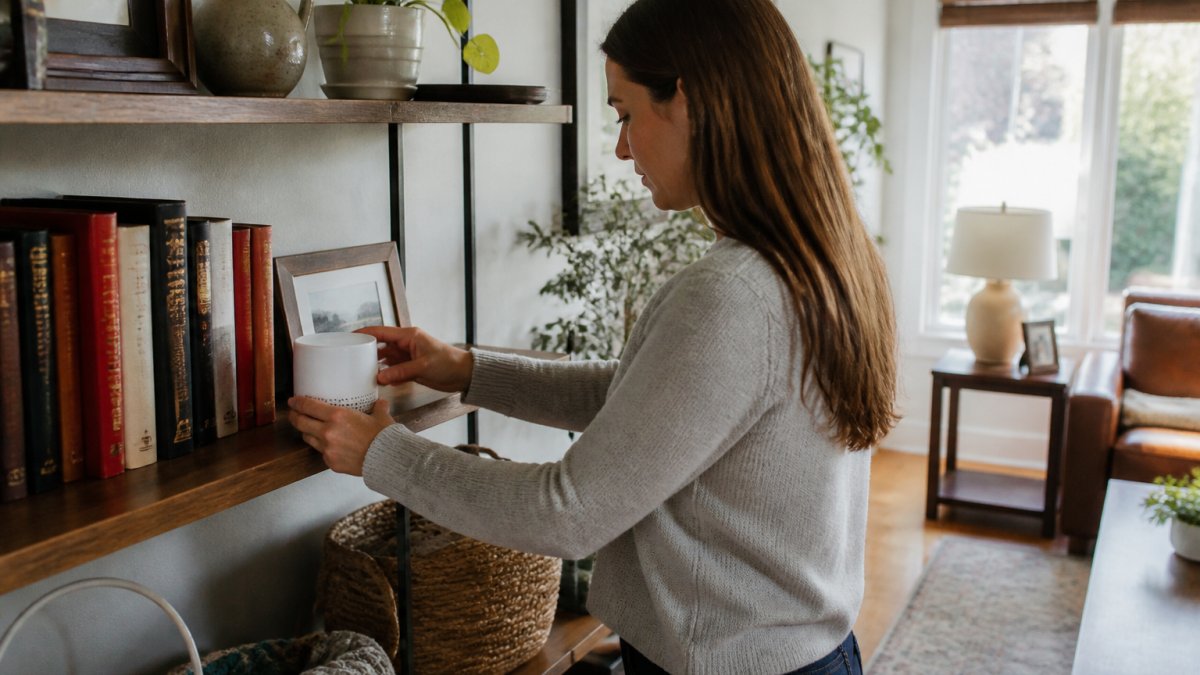
Step 1: Select Your Sampling Locations
Location determines what you measure.
Test multiple rooms if you suspect uneven air quality, bedrooms, basements, and kitchens often differ. Prioritize areas where you spend the most time or notice symptoms.
Avoid HVAC vents, fireplaces, and cooking appliances, which create localized spikes. Let the monitor settle 30 minutes before recording baseline readings.
Step 2: Establish Baseline Conditions
Record conditions when you start testing: outdoor temperature, time of day, window status, HVAC settings, and recent activities like cooking, cleaning, or painting. Close windows and doors for one hour before baseline readings to stabilize indoor conditions, then record starting measurements for each pollutant you're tracking.
Step 3: Collect Air Samples According to Protocol
Follow the manufacturer's instructions for your test kit or monitor, some require activating a chemical reaction, others record data automatically.
For one-time tests, collect samples during typical living conditions, test while cooking for cooking-related pollution, or while sleeping with windows closed for nighttime air quality.
Maintain consistent sampling duration: a 24-hour test captures daily variation a 4-hour test would miss.
Step 4: Record and Calibrate Measurements
Write down all readings with timestamps, plus room temperature and humidity (which affect some pollutant levels) and any activities during testing.
If your monitor supports calibration, perform it per specifications, most consumer monitors calibrate automatically, while professional equipment may need manual calibration before and after testing.
Compare your results to health-based guidance. The EPA provides recommended levels for most common pollutants. Results above guidelines indicate a problem worth addressing.
Indoor Air Quality Testing for Mold and Moisture
Mold grows in damp environments and releases spores into the air. Visual inspection is your first line of defense.
Moisture testing comes before mold testing. Use a humidity meter to check relative humidity. Levels above 60 percent encourage mold growth.
Air sampling for mold spores requires professional laboratory analysis.
Indoor Air Quality Testing for Radon
Radon is a colorless, odorless radioactive gas that seeps from soil into basements and crawl spaces.
Short-term radon tests run 2 to 7 days; long-term tests run 90 days or more.
Radon test kits are inexpensive and widely available. If radon exceeds 4 picocuries per liter (pCi/L), the EPA recommends mitigation (the EPA).
When to Hire a Professional for Air Quality Testing
Professional testing is worth the cost when you need precise results or have complex situations. Professionals use calibrated equipment and strict protocols, identify specific pollutant sources, and recommend targeted solutions.
Hire a professional if:
- You suspect mold but cannot find the source
- Radon short-term results are borderline (2 to 4 pCi/L)
- You need results for a real estate transaction
Professional air quality assessments typically cost between $300 and $800 depending on scope, including sampling, lab analysis, and a written report with recommendations.
Interpreting Results and Taking Action
A number on a screen is not a verdict. The same reading can be normal in one home and a problem in another, depending on the pollutant, exposure duration, and who lives there. Use the framework below to decide whether to act, wait, or call a professional.
First, Separate Signal From Noise
Before reacting to any reading, ask three questions:
- Is it sustained or a spike? A PM2.5 spike while searing a steak is expected; a level that stays elevated for hours with no cooking is a signal.
- Does it repeat? One high reading can be a sensor glitch. A pattern across days or rooms is real.
- Is it consistent with a source you can find? If you can trace the reading to a known activity or material, you have a source-control problem, not a mystery.
Compare Against Health-Based Guidance, Not Just "Good" or "Bad"
Thresholds differ by pollutant and exposure duration. A short exposure to a moderate level is not the same as a long exposure to the same level.
- PM2.5: The EPA's Air Quality Index treats 24-hour average PM2.5 up to 35.4 micrograms per cubic meter as "Moderate" and above that as unhealthy for sensitive groups. Indoor readings should generally be lower than outdoor readings when windows are closed and filtration is running.
- CO2: Most guidance treats indoor CO2 below about 1,000 ppm as adequate ventilation; consistently higher readings suggest the space needs more outdoor air exchange.
- Radon: The EPA recommends mitigation when a long-term test averages 4 picocuries per liter (pCi/L) or higher, and suggests considering it between 2 and 4 pCi/L.
Match the Action to the Pollutant
Once you've confirmed a real problem, the fix depends on the source:
- Elevated PM2.5: Improve filtration and ventilation. Run an HVAC system with a clean, appropriately rated filter, use a portable HEPA purifier sized to the room, and ventilate when cooking or burning candles. Reduce indoor combustion where possible.
- High CO2: This is a ventilation problem, not a filtration problem. Open windows, run exhaust fans, or add mechanical ventilation such as an energy recovery ventilator; opening windows for 15 minutes can drop CO2 significantly.
- High VOCs or formaldehyde: Find and remove the source. Air out new furniture and carpets, switch to low-VOC paints and cleaning products, and ventilate during and after activities that release VOCs. Sealing or removing the source beats filtering the air.
Retest to Confirm the Fix Worked
After any intervention, retest under the same conditions as your baseline, same room, time of day, window and HVAC settings. Compare the new reading to the baseline rather than an absolute number. If it dropped, the fix is working; if not, the source may differ from what you assumed.
When to Stop DIY and Call a Professional
Bring in a qualified professional when:
- A short-term radon result falls between 2 and 4 pCi/L and you need a definitive answer.
- You suspect mold but cannot find the source, or the affected area is larger than roughly 10 square feet.
- Symptoms persist after you've tested, ventilated, and removed obvious sources.
A professional assessment typically costs between $300 and $800 and includes sampling, lab analysis, and a written report with recommendations. Some professionals also offer remediation, though getting a second opinion on solutions is wise.
Frequently Asked Questions
How can I tell if the air in my house is making me sick?
Poor indoor air quality can cause headaches, fatigue, difficulty concentrating, and respiratory irritation. If symptoms worsen indoors and improve when you leave, indoor air pollution may be the cause. Testing for common pollutants like CO2, particulate matter, mold spores, and volatile organic compounds helps identify the source. Consider professional testing if symptoms persist despite ventilation improvements.
Are home indoor air quality test kits accurate?
Consumer air quality monitors using sensors provide reliable trend data and relative measurements, but they have detection limits and calibration variations compared to laboratory analysis. One-time test kits offer snapshot readings at a single point in time, while continuous monitoring reveals patterns over days or weeks. For precise results, especially for radon or formaldehyde, professional laboratory testing delivers higher accuracy than consumer kits.
What should I test for in indoor air?
Priority pollutants include particulate matter (PM2.5 and PM10), carbon dioxide, carbon monoxide, radon, mold and mold spores, volatile organic compounds, formaldehyde, and allergens. Your testing priorities depend on your home's age, location, ventilation, and any health symptoms. Radon testing is essential in many regions; mold testing matters in damp climates or after water damage. Start with CO2 and particulate matter to assess ventilation and air exchange.
When should I hire a professional to test indoor air quality?
Hire a professional for radon testing (requires specialized equipment and lab analysis), mold detection in hard-to-reach areas, or if consumer testing shows elevated levels. Professional testing uses calibrated instruments and laboratory analysis for higher accuracy. It's also recommended if you suspect source identification is needed, if you live in an older home with potential formaldehyde or asbestos concerns, or before buying or renting a property.